What Is a Motion for Blood Test in Arizona?
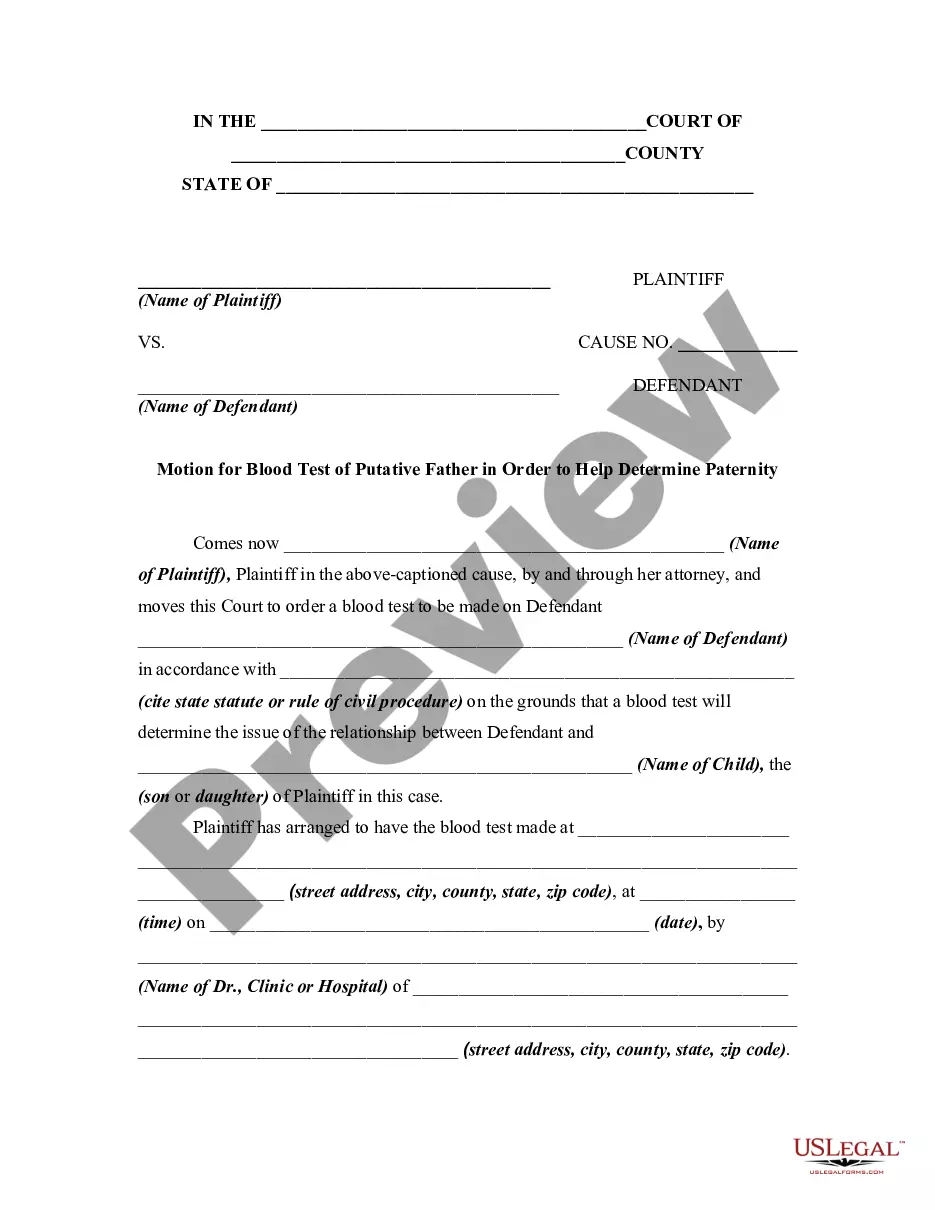
A motion for blood test is a formal request made to the court to order blood tests to establish paternity or non-paternity of a child. This motion is typically filed during legal proceedings regarding child custody, support, or paternity disputes. It allows the court to collect biological evidence that can confirm or deny the relationship between a child and an alleged father.
Who should use this form
This form is essential for individuals involved in legal disputes regarding the parentage of a child. Specifically, it is used by a Petitioner, who is seeking the determination of paternity, or a Respondent, who may contest the claims made by the Petitioner. Additionally, the form may be relevant for parties involved in divorce or custody cases where understanding parentage is critical.
Legal use and context
The motion for blood test is grounded in specific legal statutes, such as Arizona Revised Statutes Section 12-847. This statute guides the court on when and how to order blood tests, emphasizing the need for both the mother and the alleged father, as well as the child, to submit to testing. By submitting this motion, the party seeks to gather necessary evidence to support their claims regarding parentage in the context of legal proceedings.
Key components of the form
The motion for blood test typically includes several key components, such as:
- Name of the parties involved: Clearly identify the Petitioner and Respondent.
- Child's details: Include names and birthdates of the child or children in question.
- Specific request: Indicate whether the motion is for determination of parentage or non-parentage.
- Court authorization: Explicitly request that the court orders the blood tests.
- Financial responsibilities: Suggest which party should bear the costs of the tests, as per legal statutes.
Common mistakes to avoid when using this form
While completing the motion for blood test, individuals should be cautious of common errors that can cause delays or rejections. These include:
- Failing to provide accurate names and details for all parties involved
- Not clearly stating the purpose of the motion
- Omitting necessary legal citations or references
- Not specifying the desired timeline for the tests to be conducted
What documents you may need alongside this one
When filing a motion for blood test, it is important to prepare and include several supporting documents. These may include:
- Petition for Declaration of Paternity/Maternity or other related pleadings
- Any previous court orders or filings related to custody or support
- Documentation demonstrating the relationship between the parties involved
Key takeaways
Understanding a motion for blood test and its implications is essential for parties involved in parentage disputes. To summarize:
- The motion serves as a formal request to determine a child's paternity through biological testing.
- It is typically used in custody and support cases where parentage is in question.
- Accurate completion of the form is crucial to ensure it is accepted by the court.