What is a warranty deed from a corporation and how does it work?
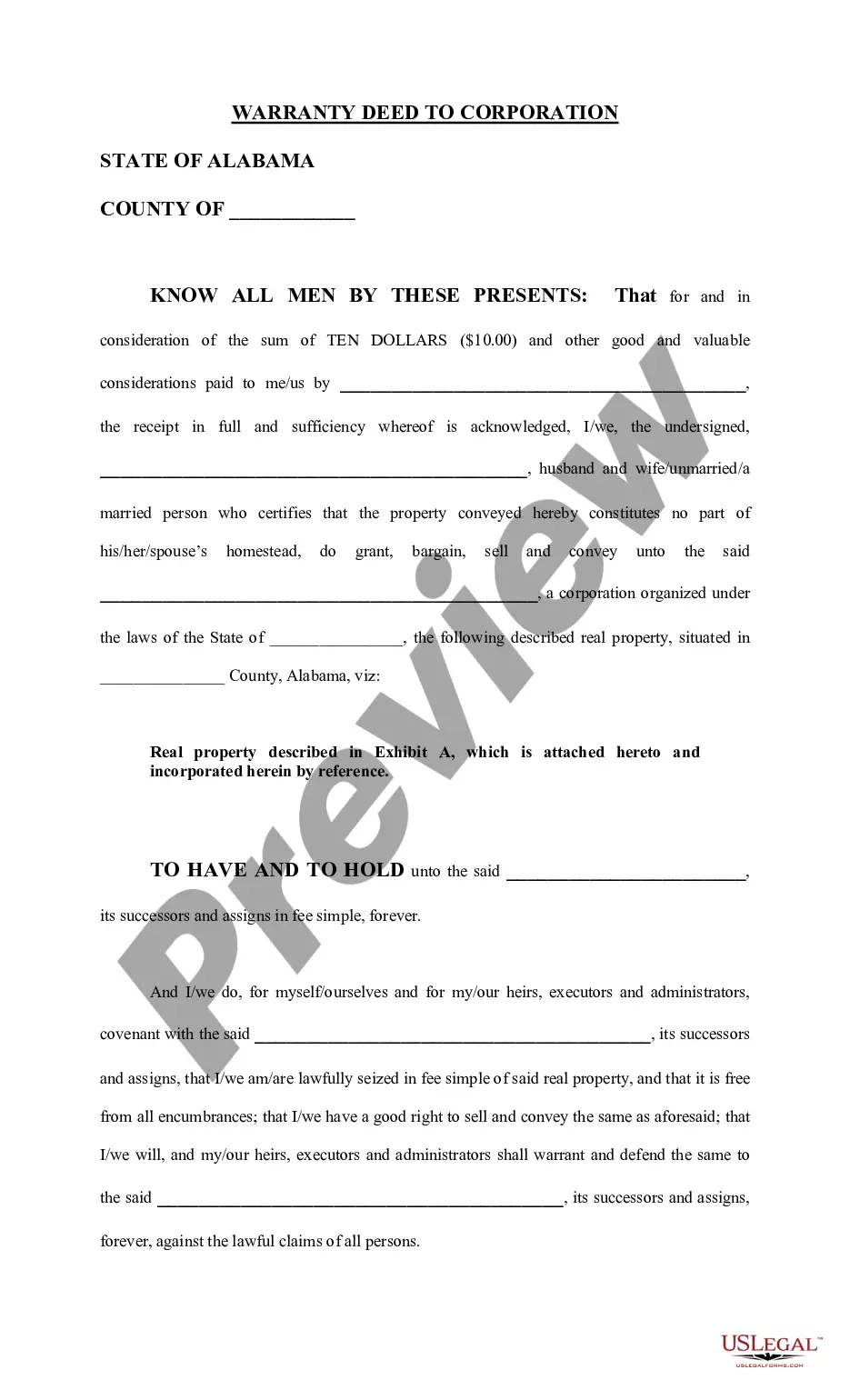
A warranty deed from a corporation is a legal document that transfers ownership of real property from a corporation to an individual or another entity. This document guarantees that the corporation holds clear title to the property, free of any encumbrances. In essence, the corporation affirms that it has the right to sell the property and will defend the buyer against any future claims regarding the ownership of the property.
Key components of the form
The warranty deed typically contains several essential components:
- Grantor and Grantee Information: Identification of the corporation as the grantor and the individual or entity receiving the property as the grantee.
- Property Description: A detailed description of the property being transferred, often found in an attached exhibit.
- Consideration: The amount paid for the property, which is often nominal, such as ten dollars.
- Covenant: A promise by the corporation that it holds clear title and will defend the property against future claims.
- Execution and Notarization: Signatures of authorized officers of the corporation and notarization to validate the transaction.
How to complete a form
Follow these steps to complete a warranty deed from a corporation:
- Identify the Grantor: Clearly state the name of the corporation granting the deed.
- Provide Grantee Information: Enter the name of the individual or entity receiving the property.
- Describe the Property: Include a detailed description of the property, which might involve referencing an attached exhibit.
- State Consideration: Indicate the amount being paid for the property, even if it is a nominal sum.
- Sign the Document: Ensure the deed is signed by a duly authorized officer of the corporation.
- Notarization: Have the document notarized to affirm its legitimacy.
Legal use and context
A warranty deed from a corporation is used primarily in real estate transactions. It provides security to the buyer by ensuring that the corporation has the legal authority to transfer ownership and that the property is free from liens or other claims. This document is essential when corporations engage in buying, selling, or conveying real estate, as it legally protects all parties involved in the transaction.
What to expect during notarization or witnessing
During the notarization process, the officer of the corporation must appear before a registered notary public. The notary will verify the identity of the person signing the deed, ensuring they are authorized to do so. The notary will then sign and affix their seal to the document, helping to confirm its authenticity. It's crucial that all parties are present, and proper identification is provided to avoid delays.
Common mistakes to avoid when using this form
Be mindful of these common pitfalls when completing a warranty deed:
- Incomplete Property Description: Ensure that the property description is thorough and accurately reflects the boundaries and details of the property.
- Missing Signatures: Verify that the deed is signed by a duly authorized representative of the corporation.
- Inadequate Notarization: Make sure the notarization is completed before submitting or recording the deed.