What Is a Lender's Objection to a Bond in Construction Liens?
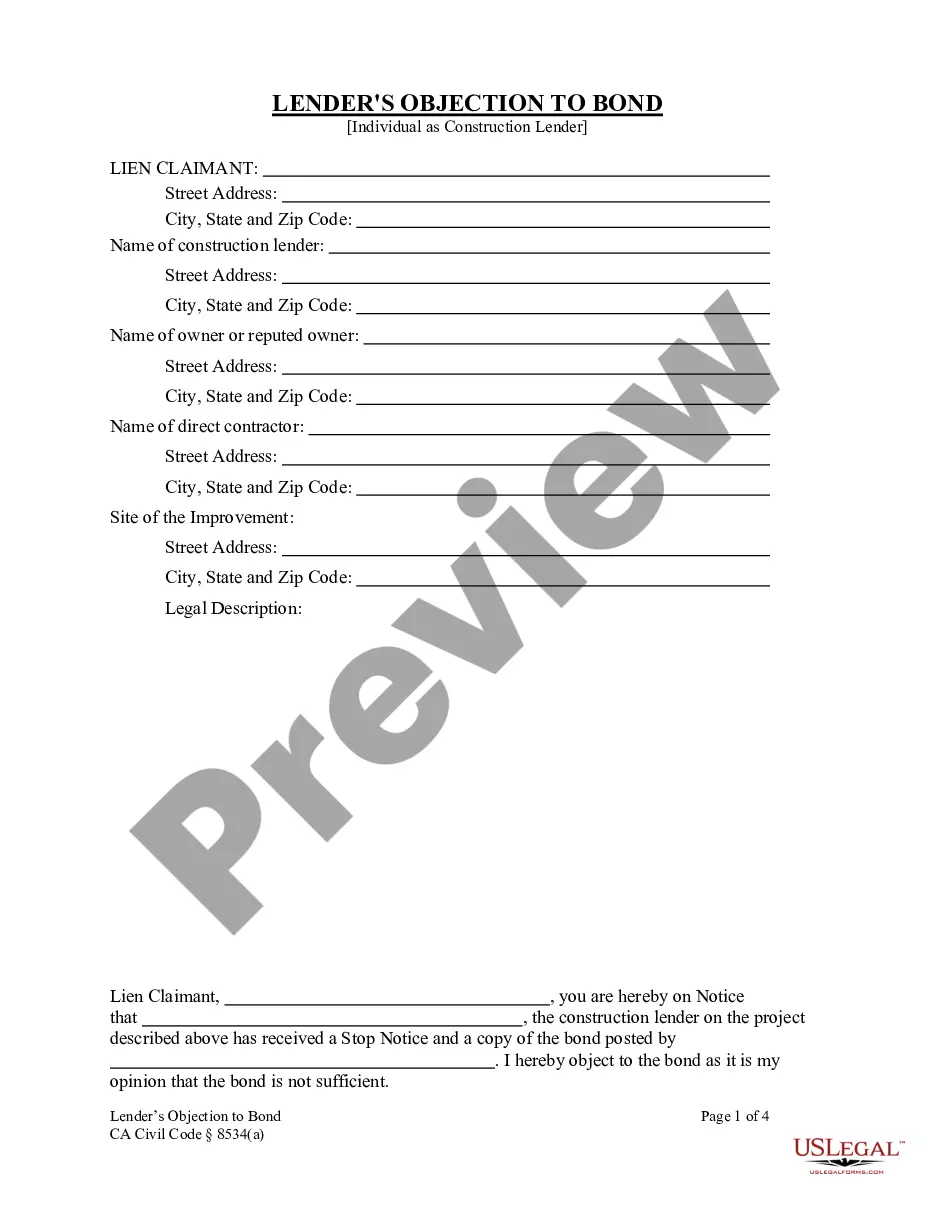
A lender's objection to a bond in construction liens occurs when a construction lender disputes the adequacy of a bond that has been posted to secure payment for work done on a construction project. This objection can arise due to various reasons such as the bond amount being insufficient or concerns regarding the bonding company's reliability.
Legal use and context
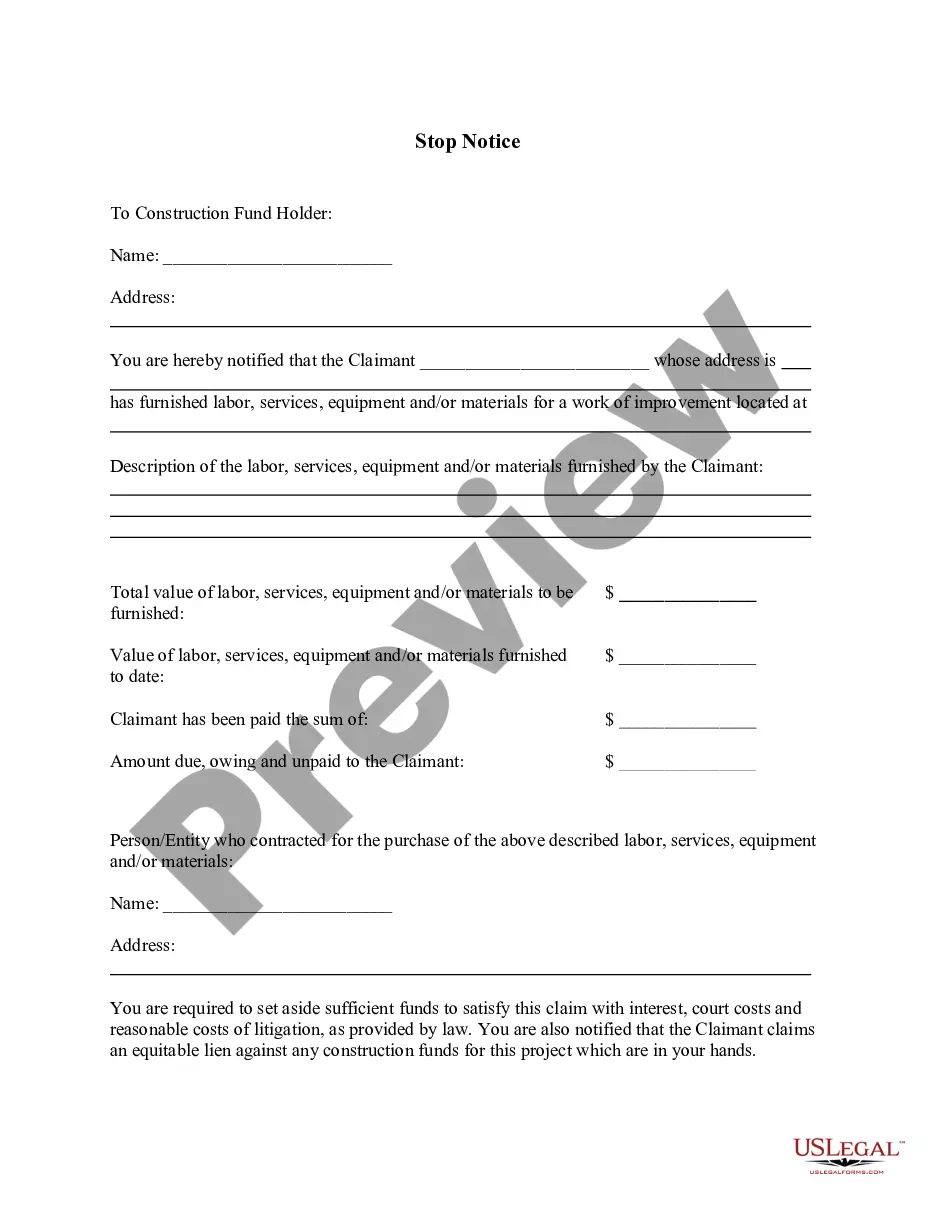
This form is crucial in the context of construction law, particularly under California Civil Code § 8534(a), which outlines the procedures for posting bonds in response to stop notices. It is typically filed by the construction lender who has received a stop notice and believes the bond does not meet legal requirements.
Who should use this form
This form is designed for construction lenders who need to formally object to the bond posted for a construction project. It is important for lenders to use this form to protect their financial interests and ensure proper procedures are followed during construction disputes.
Key components of the form
The primary components of the lender's objection to a bond include:
- Lien Claimant Information: Details about the lien claimant including their name and address.
- Construction Lender Information: Name and address of the construction lender.
- Owner Information: Name and address of the owner or reputed owner of the property.
- Direct Contractor Information: Name and address of the direct contractor involved in the project.
- Legal Description of Property: A formal description of the property where the construction takes place.
- Proof of Notice Declaration: A section where the objection's delivery to relevant parties is affirmed.
What to expect during notarization or witnessing
During the notarization process for this form, the signer will need to present valid identification to the notary public. The notary will verify the identity of the signer and witness the signing of the document. Following this, the notary public will attach a notary seal confirming the authenticity of the signature and the date on which the document was signed.
Common mistakes to avoid when using this form
When filling out the lender's objection to a bond, be sure to avoid these common errors:
- Providing incomplete or incorrect information about the lien claimant, lender, or property.
- Failing to sign the form or not having the required signatures from authorized individuals.
- Not completing the proof of notice declaration accurately, which could lead to complications in the legal process.
What documents you may need alongside this one
When submitting a lender's objection to a bond, you may need other documents such as:
- A copy of the stop notice received.
- Documentation proving service of the objection to other parties involved.
- Any relevant contracts or agreements related to the construction project.