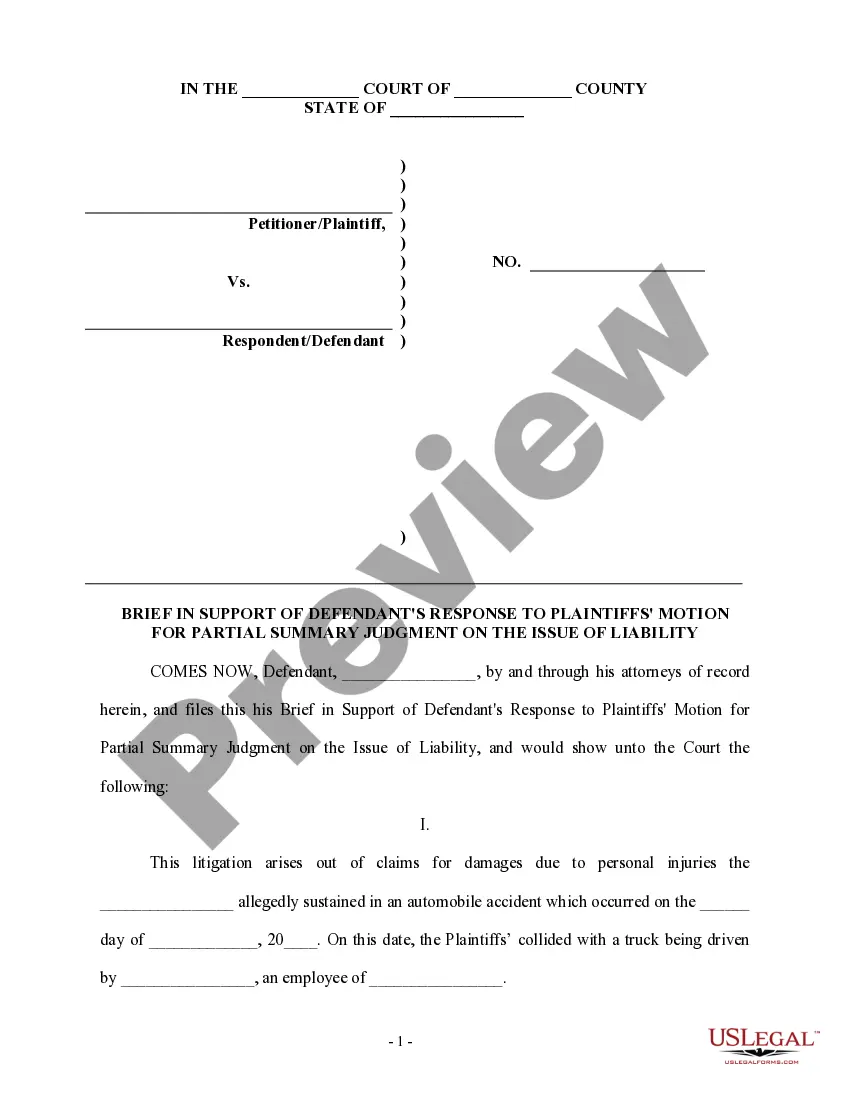
How to write a brief in support of defendant's motion for summary disposition
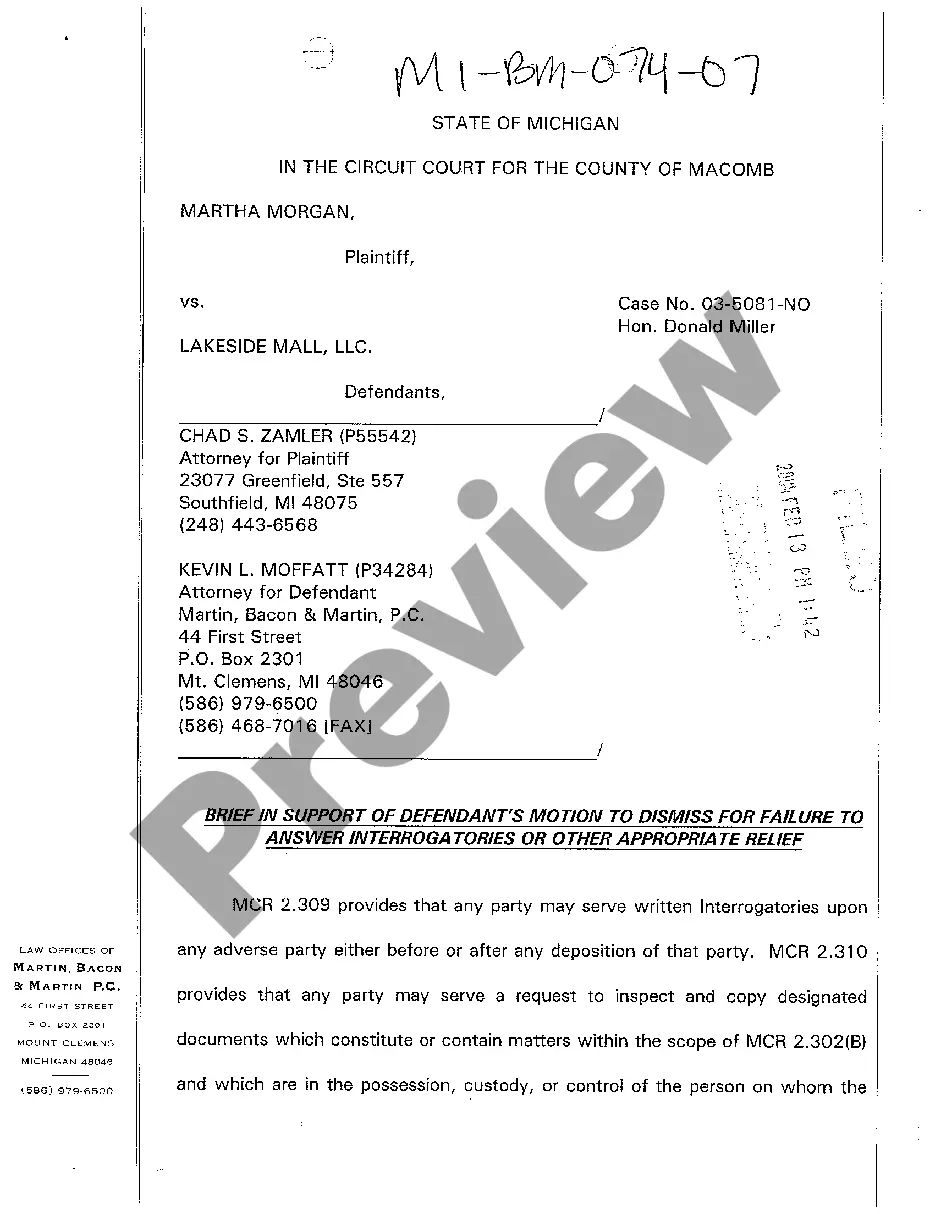
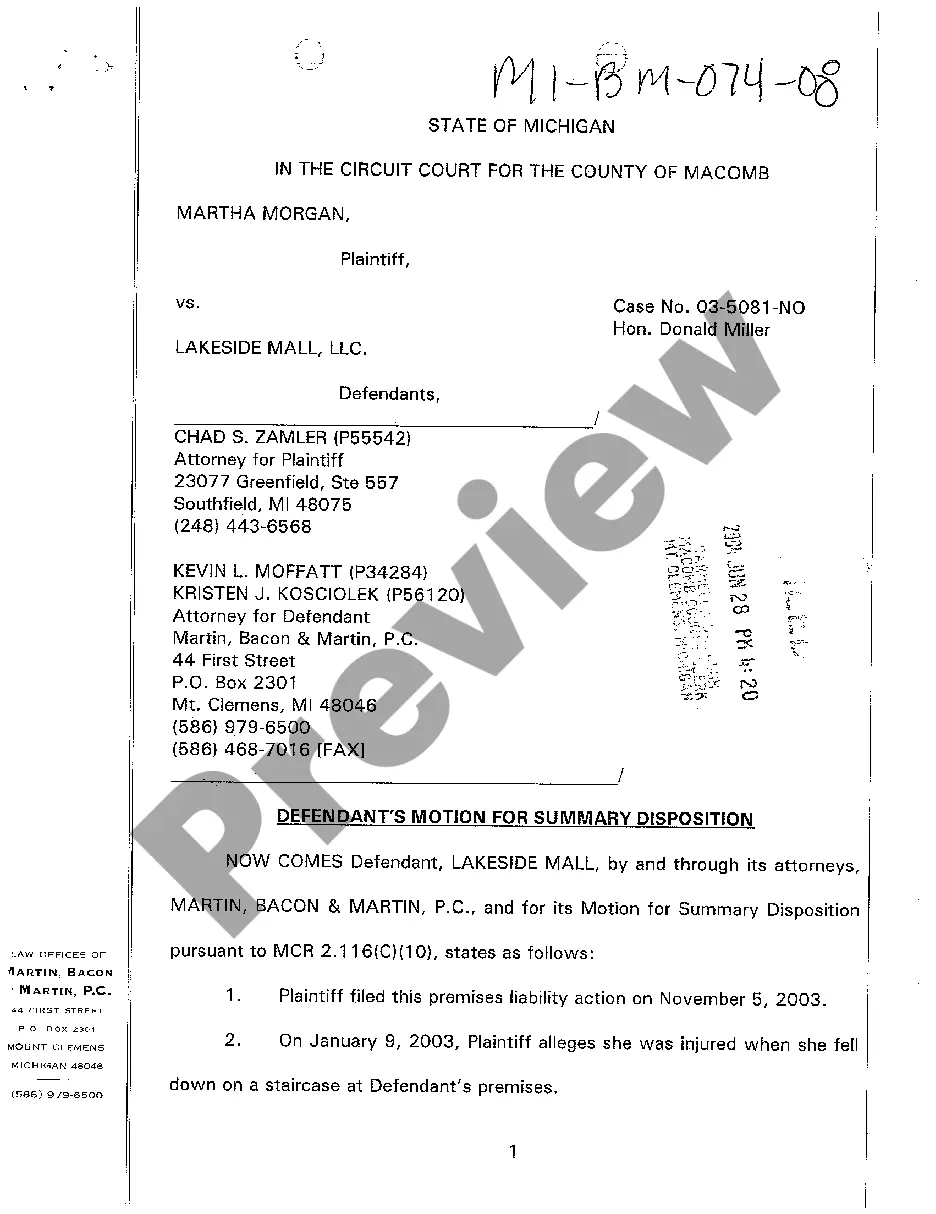
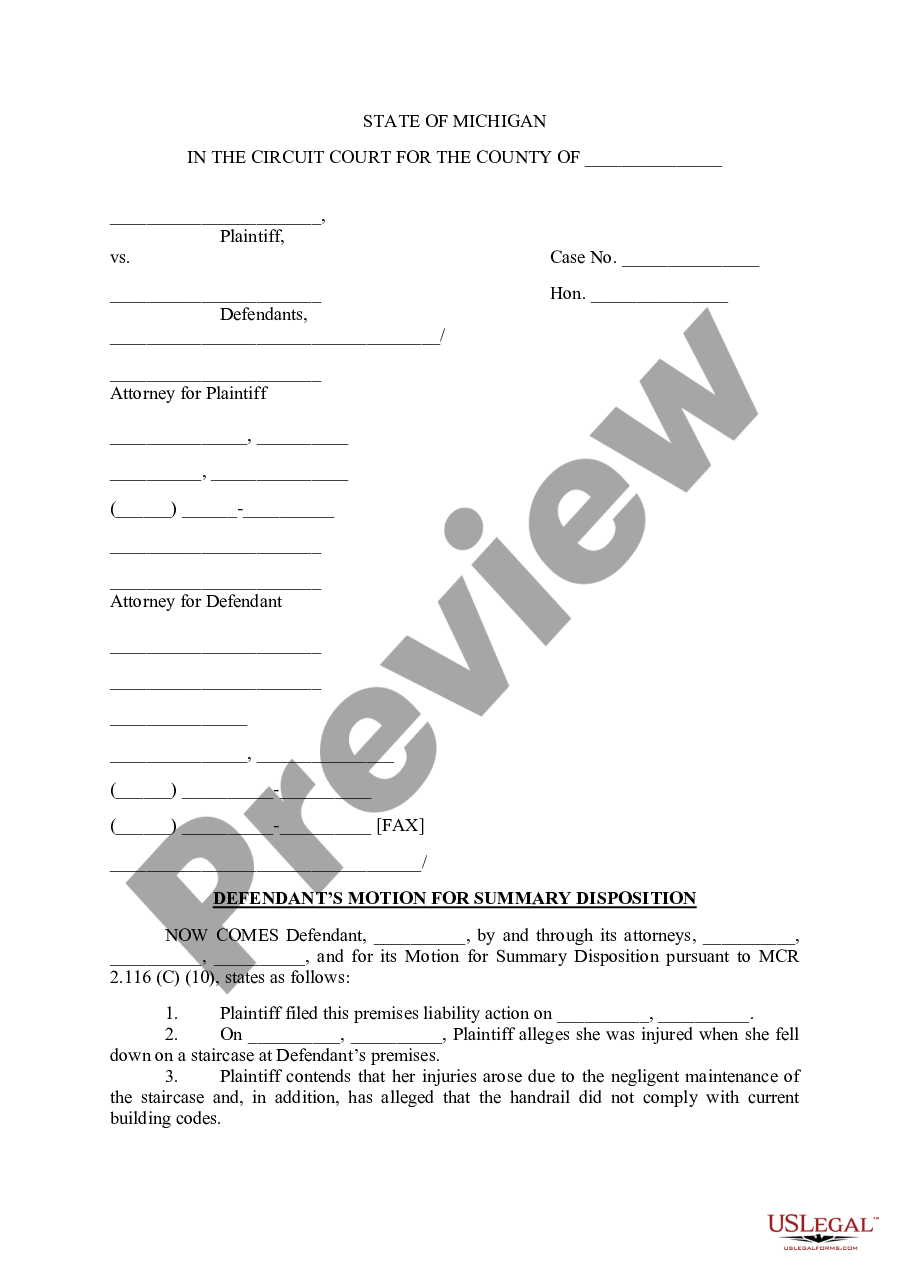
In legal terminology, a brief in support of a defendant's motion for summary disposition is a document filed in court that outlines the reasons and arguments why the defendant believes the case should be dismissed without a trial. This type of brief asserts that there are no genuine issues of material fact requiring a trial and that the defendant is entitled to judgment as a matter of law.
How to complete a form
When writing a brief in support of a defendant's motion for summary disposition, it is crucial to follow a structured approach. Here are the steps involved:
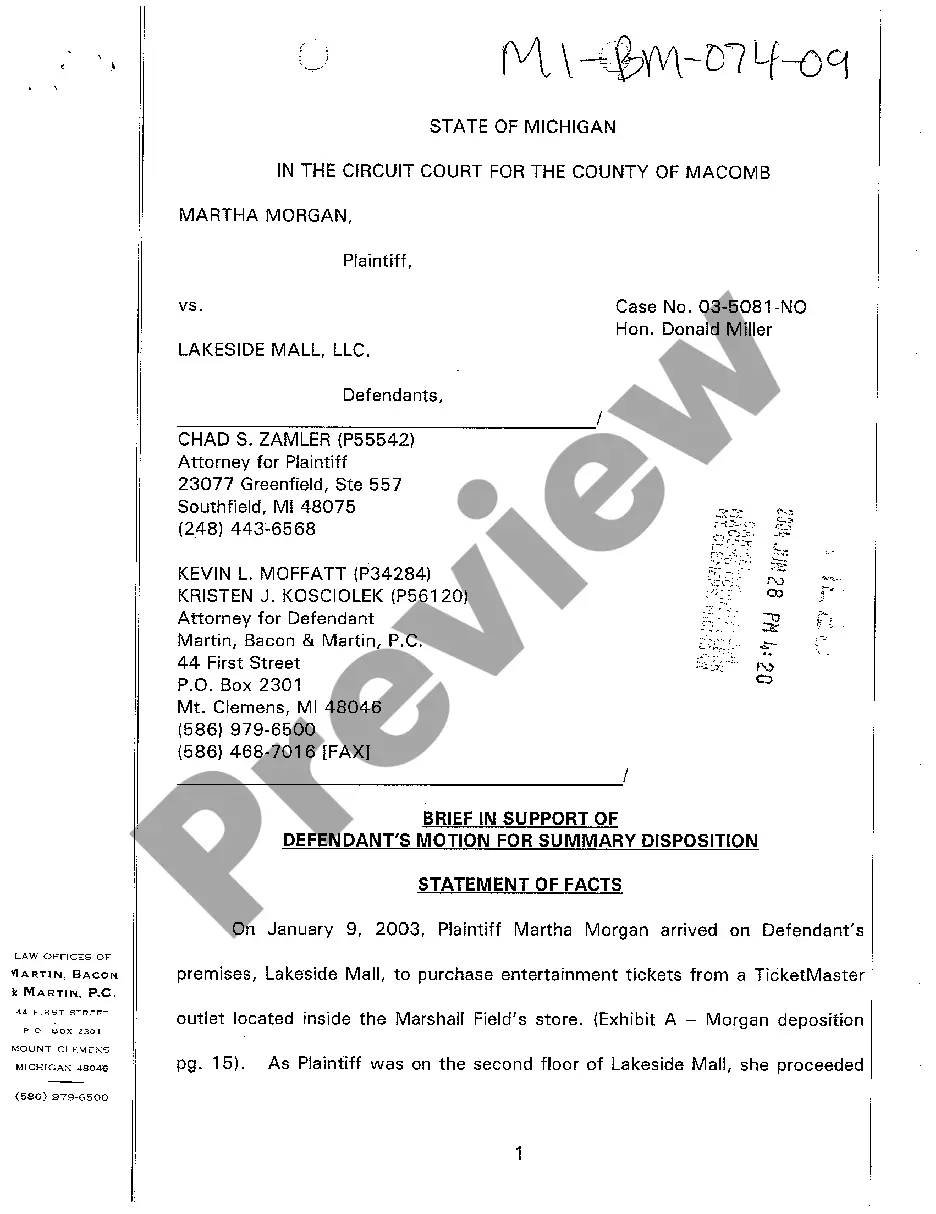
- Title the Document: Clearly indicate the purpose by titling the document as 'Brief in Support of Defendant's Motion for Summary Disposition.'
- Case Information: Include the case number, court name, and the names of the parties involved.
- Statement of Facts: Present a concise and factual account of the circumstances leading to the motion. It should be backed by evidence such as depositions, photographs, or incident reports.
- Legal Arguments: Outline the legal basis for the motion, including relevant statutes, prior cases, and principles of law.
- Conclusion: Clearly state the request for the court to grant the motion and dismiss the case.
Key components of the form
A comprehensive brief should include the following key components:
- Introduction: A brief introduction that states the purpose of the document and the specific relief sought.
- Factual Background: A section that outlines the relevant facts supporting the argument for dismissal.
- Legal Standards: Define the legal standards applicable to the motion for summary disposition.
- Argument: This is the main section where the legal arguments are laid out, supported by citations of precedent cases or statutes.
- Conclusion: A concise recapitulation of the request for summary disposition accompanied by a summary of key points made in the brief.
Common mistakes to avoid when using this form
When preparing a brief in support of a defendant's motion for summary disposition, avoid the following frequent pitfalls:
- Insufficient Evidence: Failing to provide adequate evidence to support claims can undermine the motion.
- Overcomplicated Language: Using overly complex legal jargon can confuse the court; clarity and simplicity are essential.
- Lack of Structure: Not organizing the brief logically makes it harder to follow; maintain a clear structure with headings and sections.
- Ignoring Deadlines: Failing to adhere to filing deadlines can result in the motion being dismissed or denied.
Legal use and context
A brief supporting a defendant's motion for summary disposition is often utilized in civil litigation where a party seeks to resolve a case efficiently without trial. This is particularly crucial in cases where the facts are undisputed and the law is clear. Understanding the legal context is vital, as courts examine whether the elements of a legal claim can be established, determining if a summary judgment is appropriate.
What to expect during notarization or witnessing
While notarization is not typically required for legal briefs, any accompanying declarations or affidavits may need to be notarized. Here’s what to expect:
- Identification: Present valid identification to the notary.
- Complete the Affidavit: Fill out the affidavit clearly, ensuring that it aligns with the information in the brief.
- Signature: Sign the document in the presence of the notary.
- Notary Seal: The notary will affix their seal, affirming the authenticity of the document.