How to file a motion to enforce settlement in Alabama
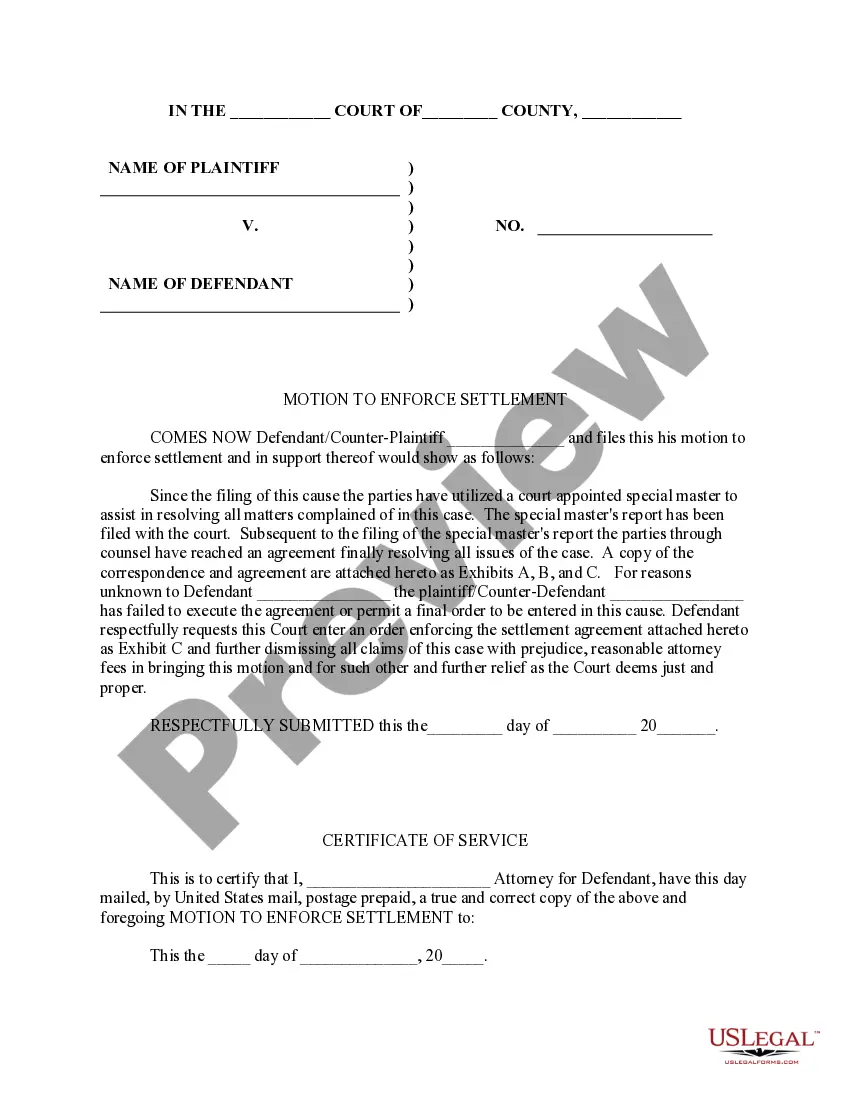
A motion to enforce settlement is a legal request made to a court asking it to ensure that a settlement agreement reached between parties in a dispute is honored and executed. Such motions typically arise when one party believes the other has failed to comply with the terms of the agreement, which may include payment of amounts owed, the transfer of property, or the completion of specific actions. This legal process is intended to compel compliance and ensure that the settlement, which may have been beneficial for both parties, is upheld.
Who should use this form
This form is typically used by any party involved in a legal settlement who believes the other party has not complied with the terms of that settlement. This includes:
- Individuals in civil disputes, such as divorce or contractual disagreements.
- Businesses that have entered into settlement agreements that require specific performance from another party.
- Legal representatives or attorneys acting on behalf of their clients seeking enforcement of a settlement agreement.
Legal use and context
Filing a motion to enforce settlement is a common legal practice used in various civil cases. It arises predominantly during disputes where parties have previously reached a settlement that satisfies both parties but where one party fails to fulfill their obligations. Legal contexts for this motion include divorce proceedings, property disputes, personal injury settlements, and more. Courts encourage parties to resolve disputes amicably, and thus, compliance with settlement agreements is a priority. By filing this motion, a party seeks the court's assistance in enforcing the terms agreed upon.
Key components of the form
When preparing a motion to enforce settlement, several key components should be included:
- Title of the Motion: Clearly label the document as a motion to enforce.
- Identification of Parties: Clearly state the names of the parties involved in the original settlement.
- Description of the Settlement: Provide a brief overview of the settlement agreement, including any pertinent terms that are being violated.
- Request for Relief: Specify what you are asking the court to do, such as ordering the other party to complete their obligations.
- Supporting Evidence: Include any evidence, such as emails or documents, that demonstrate the failure to comply with the settlement agreement.
Ensuring these components are complete and correctly formatted increases the likelihood of a favorable outcome.
Common mistakes to avoid when using this form
When filing a motion to enforce settlement, parties should be cautious of the following common mistakes:
- Incomplete Information: Failing to provide all necessary details about the case and the settlement can lead to delays.
- Insufficient Evidence: Not including supporting documentation can weaken the case.
- Missed Deadlines: Ensure that you file the motion within the appropriate time frame set by the court rules.
- Lack of Clarity: Using vague language can confuse the court; clarity in your requests and descriptions is essential.
Avoiding these mistakes can help streamline the process and improve the chances of enforcement.
What documents you may need alongside this one
When filing a motion to enforce settlement, it may be necessary to include several supporting documents to strengthen the case:
- The Original Settlement Agreement: A copy of the agreement can provide evidence of what was promised.
- Proof of Communication: Emails, letters, or other correspondence regarding non-compliance.
- Financial Statements: If applicable, documents that show any financial transactions related to the settlement.
- Affidavit: A statement under oath supporting your claim of non-compliance.
Gathering these documents before filing can facilitate the process and support your motion effectively.
Key takeaways
Understanding how to file a motion to enforce settlement is crucial for individuals seeking compliance with a settlement agreement. Consider the following key takeaways:
- Ensure clarity and completeness in your motion.
- Include all necessary supporting documents.
- Avoid common pitfalls such as incomplete information or missed deadlines.
- Consult a legal professional if needed to maximize the effectiveness of your filing.
By following these guidelines, you can increase your chances of successfully enforcing a settlement agreement.