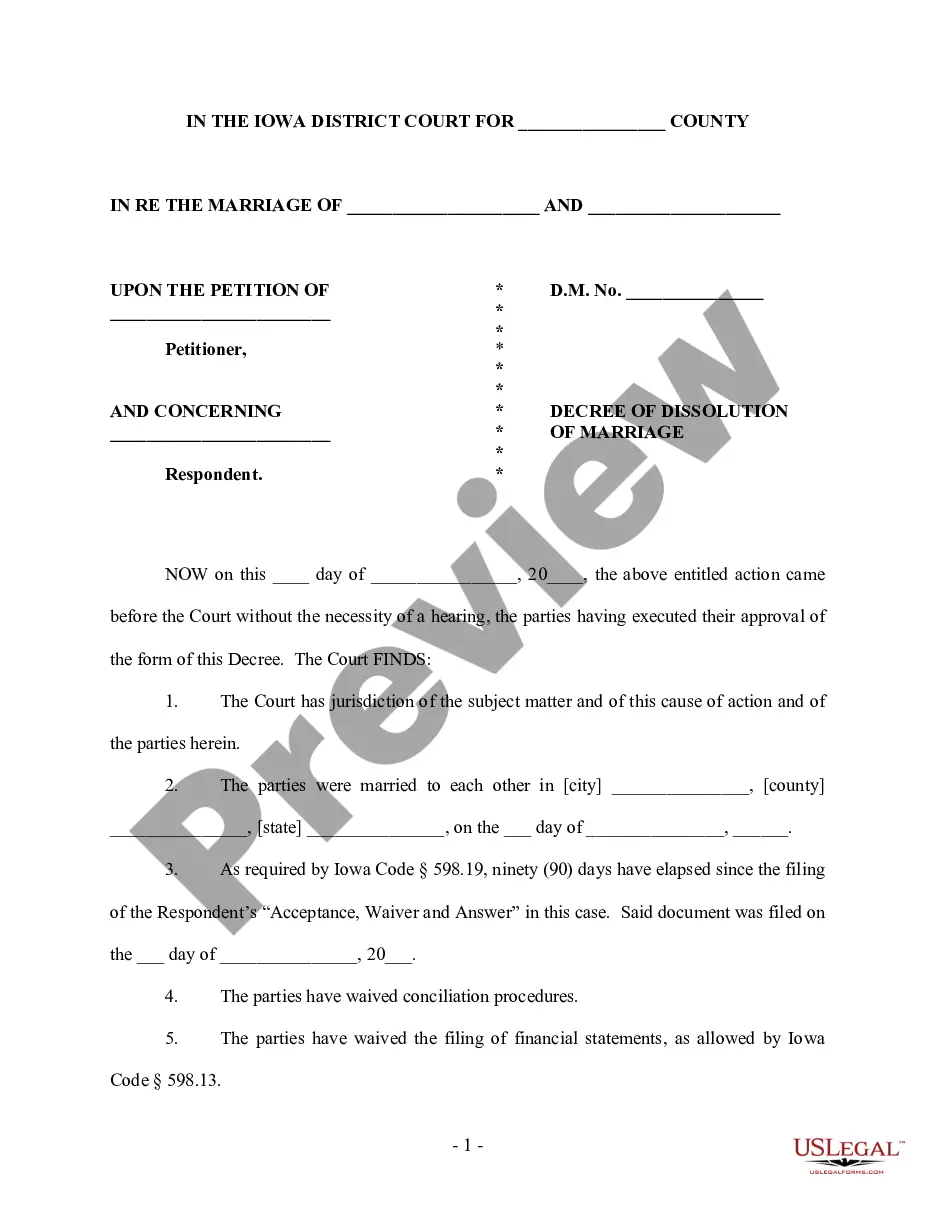
What is a decree of dissolution involving minor children?
A decree of dissolution involving minor children is a legal ruling issued by a court that officially ends a marriage while also addressing the rights and responsibilities concerning any children born from that union. This decree outlines custody arrangements, visitation rights, and child support obligations. The court ensures that the best interests of the children are prioritized throughout the process.
Who should use this form
This form is intended for individuals who are going through a divorce and have minor children. It is particularly relevant for parents who need to formalize arrangements regarding custody, visitation, and child support as part of the dissolution of their marriage. If you are the legal parent or guardian and wish to ensure that your children's needs are met during and after the divorce, this form is essential.
Key components of the form
The decree includes several crucial elements that address the welfare of minor children:
- Custody arrangements: Specifies primary and secondary custody details.
- Visitation rights: Outlines when the non-custodial parent can visit the children.
- Child support: Details the financial support expected from the non-custodial parent.
- Health care responsibilities: Addresses medical coverage and responsibilities for the children.
These components are essential for clear communication and enforcement of responsibilities post-dissolution.
Common mistakes to avoid when using this form
When completing a decree of dissolution involving minor children, it is crucial to avoid certain common errors:
- Not addressing all children: Ensure all minor children from the marriage are included in the decree.
- Overlooking state-specific requirements: Different states may have unique forms or additional requirements.
- Inadequate details about custody and support: Vague wording can lead to misunderstandings and disputes later.
- Failing to sign or notarize: Ensure all necessary parties sign the document to ensure its validity.
Being mindful of these mistakes can help avoid complications and ensure enforcement of the decree.
What to expect during notarization or witnessing
When finalizing your divorce decree, notarization or witnessing may be required. Here’s what to anticipate:
- Meeting with a notary: You will present your completed document to a notary public who will verify your identity and witness your signature.
- Providing identification: Have a valid form of identification accessible, such as a driver’s license or passport.
- Notarization fees: Be prepared to pay a nominal fee for the notarization service.
- Document retention: The notary will keep a record of the notarization, and you will receive a copy of the notarized document.
Understanding the notarization process can help ensure smooth completion of your decree.