How to complete a financial disclosure form in Minnesota
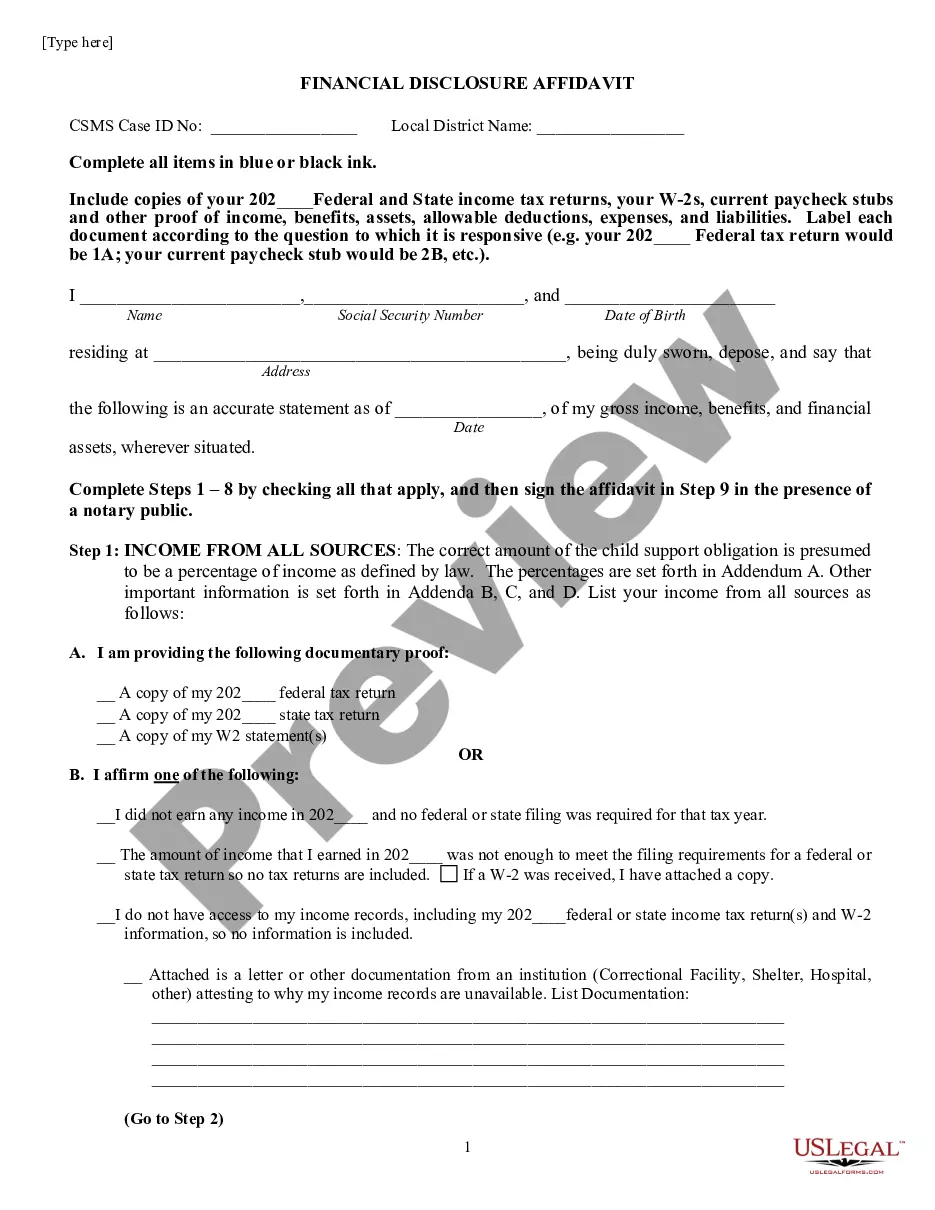
A financial disclosure form is a legal document used to provide a comprehensive overview of an individual’s financial situation. This form typically includes details about income, expenses, assets, debts, and other financial obligations. It is often required in legal contexts, such as divorce proceedings or bankruptcy cases, to assess a person’s financial standing and ensure transparency between parties involved.
How to complete a form
Completing a financial disclosure form involves several key steps. Follow these instructions to ensure accurate and thorough completion:
- Gather necessary information: Collect all financial documents relevant to your income, expenses, assets, and debts. This may include pay stubs, bank statements, credit card statements, and property deeds.
- Fill out the form: Start by entering your personal information at the top of the form, such as your name, address, and contact details.
- Detail your income: List all sources of income, including salary, bonuses, and any additional earnings.
- Outline your expenses: Record all monthly expenses, including rent or mortgage, utilities, groceries, and healthcare costs.
- List assets and liabilities: Provide information on your assets (e.g., bank accounts, real estate, investments) and liabilities (e.g., loans, credit card debt).
- Review and sign: Carefully review the completed form for accuracy. Finally, sign and date the document before submission.
Who should use this form
The financial disclosure form is primarily used by individuals involved in legal proceedings that require a clear understanding of their financial status. This includes:
- People undergoing divorce or separation, needing to disclose their financial situation to ensure equitable distribution of assets.
- Individuals filing for bankruptcy, required to provide a comprehensive overview of their financial obligations and assets.
- Parties involved in child support or alimony discussions, where financial disclosure helps determine appropriate payment amounts.
Key components of the form
A financial disclosure form includes several critical components to ensure comprehensive reporting:
- Personal Information: Name, address, and contact details of the person completing the form.
- Income Details: Breakdown of all sources of income.
- Expenses: Listing of regular monthly expenses.
- Assets: Detailed information on all owned assets.
- Liabilities: Comprehensive list of all debts and obligations.
Common mistakes to avoid when using this form
To ensure accuracy and compliance, be mindful of these common mistakes when completing a financial disclosure form:
- Failing to provide complete or accurate information.
- Overlooking specific assets or liabilities.
- Not updating the form when financial circumstances change.
- Submitting the form without reviewing it for errors.
What to expect during notarization or witnessing
If your financial disclosure form requires notarization or witnessing, you should prepare for the following:
- Identification: Bring valid identification, such as a driver’s license or passport, to the notary.
- Presence: All signatories must be present during the notarization process.
- Verification: The notary will verify identities and may ask questions about the document to ensure understanding.
- Signing: You will sign the form in front of the notary, who will then provide their seal and signature to certify the document.
What documents you may need alongside this one
When completing a financial disclosure form, it's beneficial to have the following documents on hand:
- Recent pay stubs or proof of income.
- Bank statements for all accounts.
- Statements for loans and credit cards.
- Tax returns from the previous year.
- Documentation of any property ownership or significant assets.