What Is an Application With Affidavit for Replevin or Repossession Without Notice?
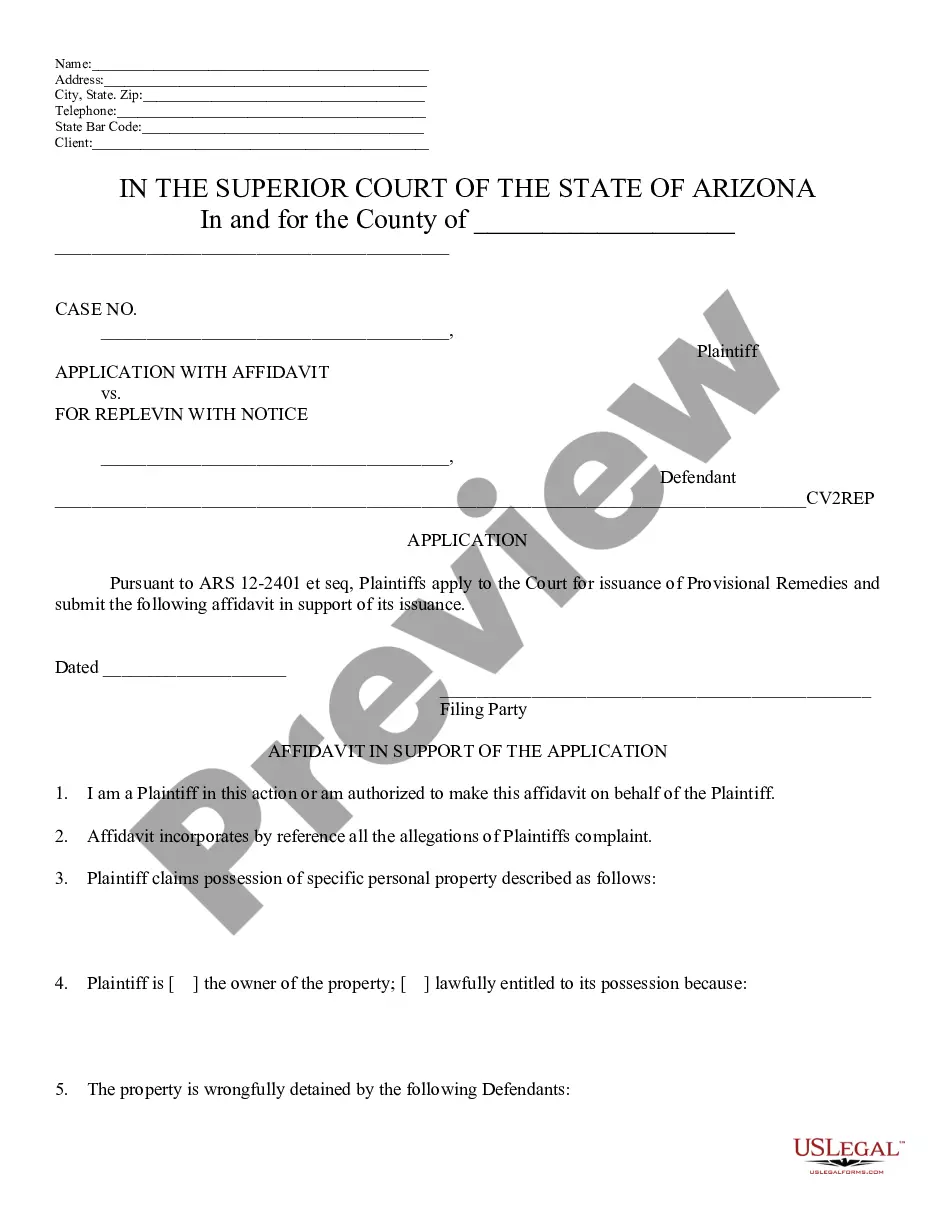
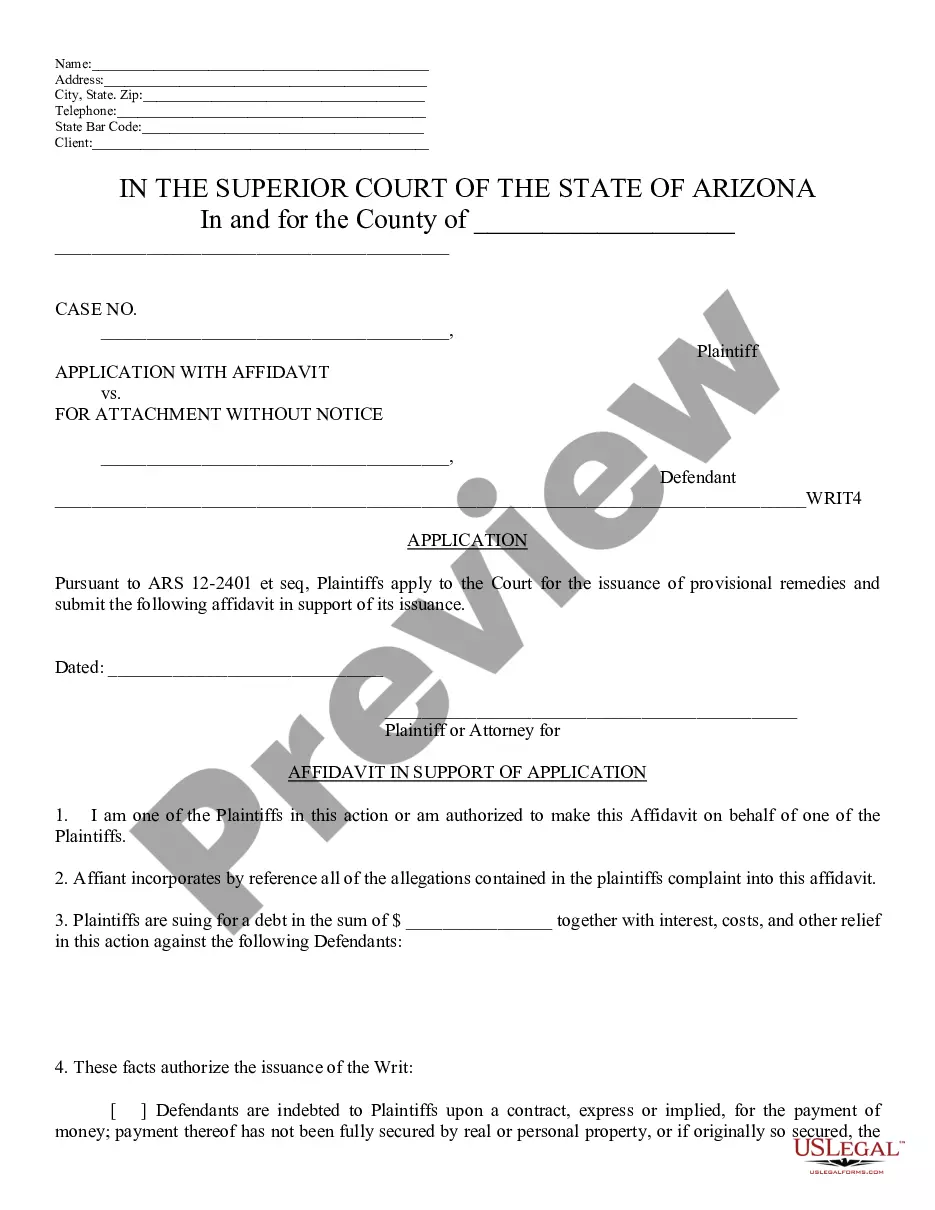
An application with affidavit for replevin or repossession without notice is a legal request made to a court by a plaintiff seeking immediate recovery of personal property that they claim to own or have a right to possess. This application is typically filed when the property is wrongfully held by another party, known as the defendant. The term 'replevin' refers to a specific legal procedure that allows someone to recover tangible personal property before a final decision is made in the case.
How to complete a form
To successfully complete an application with affidavit for replevin, follow these key steps:
- Identify yourself as the plaintiff and provide your contact information.
- Clearly describe the property you are seeking to recover.
- State your claim to ownership or lawful possession of the property.
- Include details of how the property is currently being held by the defendant.
- Sign the affidavit in front of a notary public.
Ensure that each section is filled out accurately to avoid delays in processing your application.
Who should use this form
This form is designed for individuals or entities that believe they have a rightful claim to specific personal property wrongfully held by another party. Typical users include:
- Individuals seeking recovery of personal items, such as vehicles, furniture, or equipment.
- Businesses trying to reclaim leased property from defaulting clients.
- Collectors or sellers looking to recover goods that have not been paid for.
If you find yourself in a situation where your property is being held without just cause, this form may be appropriate for your needs.
Key components of the form
The application with affidavit for replevin consists of several essential components that must be completed:
- Identification of the plaintiff: Full name and contact information.
- Description of the property: Detailed information about the item you are seeking to recover.
- Claim of ownership: A statement asserting your legal right to the property.
- Defendant information: Name and contact details of the person who currently holds the property.
- Signature and notary acknowledgment: The form must be signed and notarized to be valid.
Each section must be clear and concise to facilitate court processing.
What to expect during notarization or witnessing
When your application is ready for submission, it must be notarized. During notarization:
- You will need to present valid identification to the notary.
- The notary will verify your identity and witness your signature on the application.
- The document will be stamped with the notary's seal to certify that it has been properly executed.
Ensure that all signatures are done in the presence of the notary to avoid any issues with the form's validity.
Key takeaways
Utilizing an application with affidavit for replevin or repossession without notice is a critical step for individuals seeking to reclaim their property. Here are the essential points to remember:
- Ensure all sections of the application are fully completed.
- Clearly detail your claim to the property.
- Obtain notarization to validate your affidavit.
Success in this legal proceeding can depend on the clarity and thoroughness of your application.