Indiana Out of Hospital - Do not Resuscitate Declaration - DNR - Statutory Form
Understanding this form
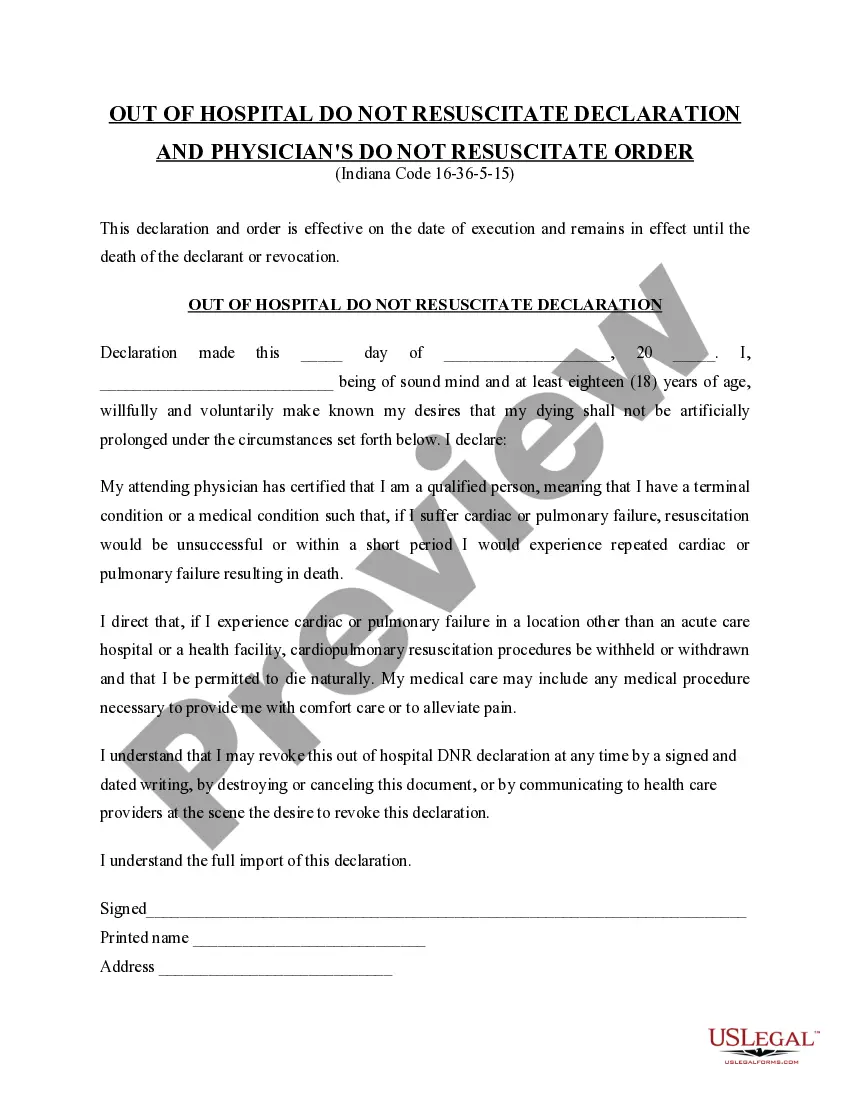
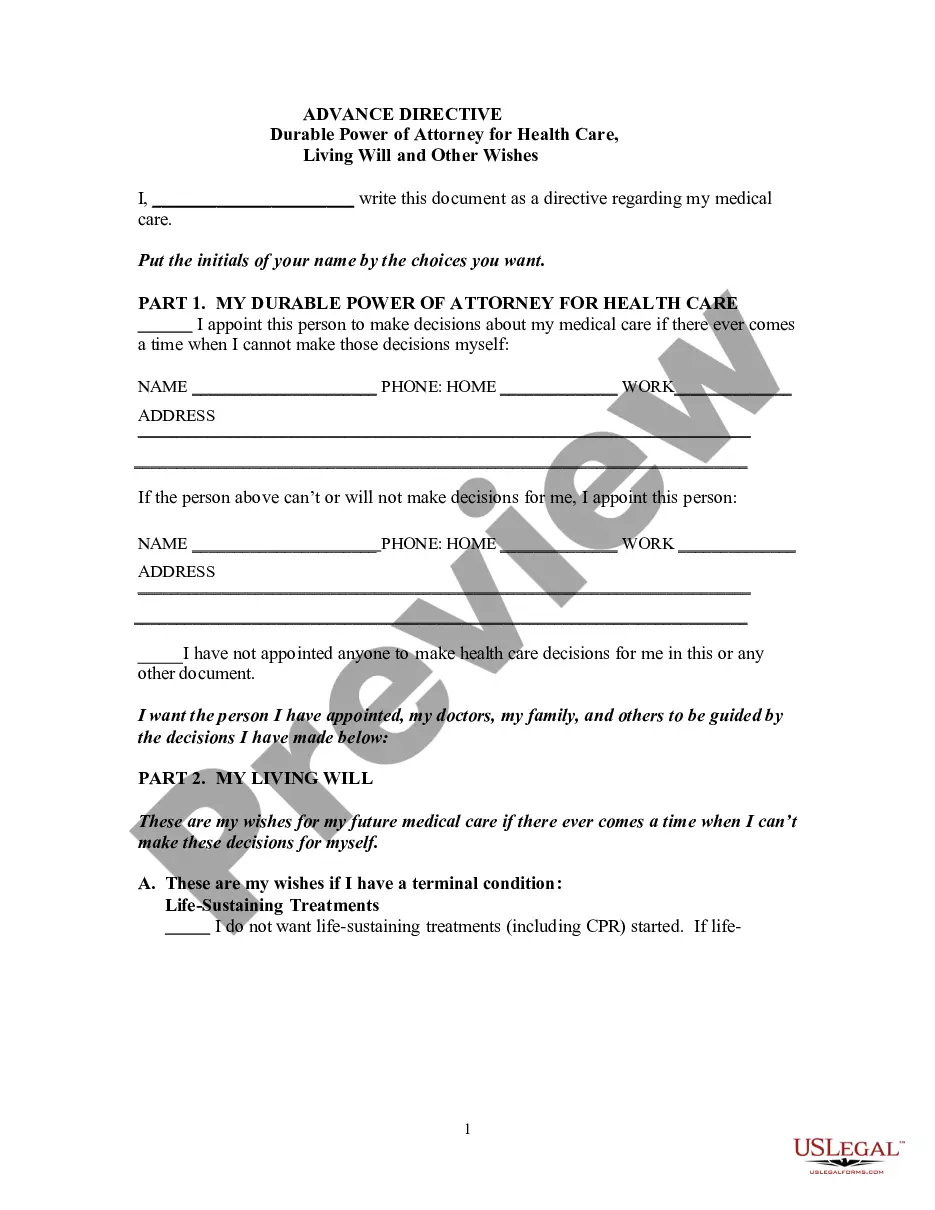
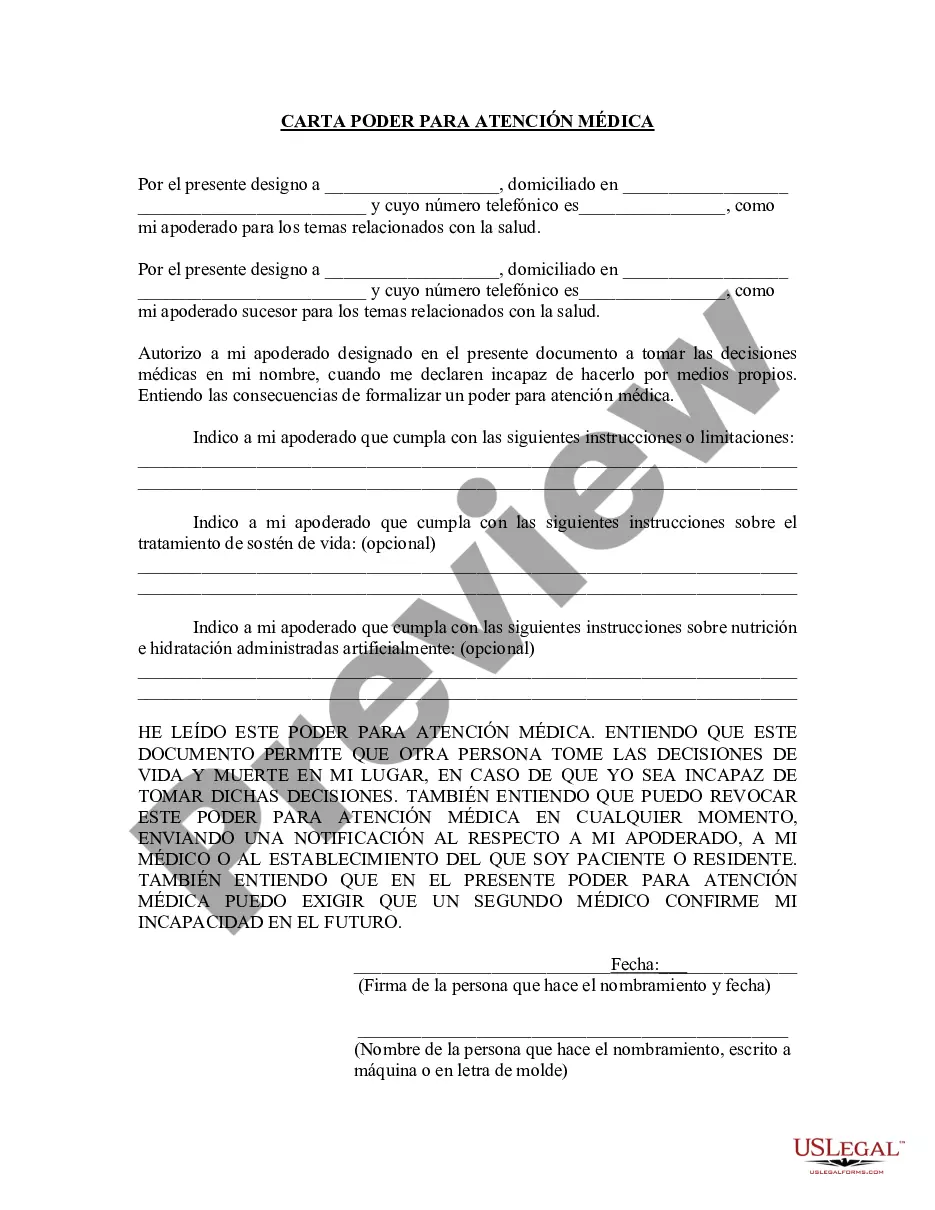
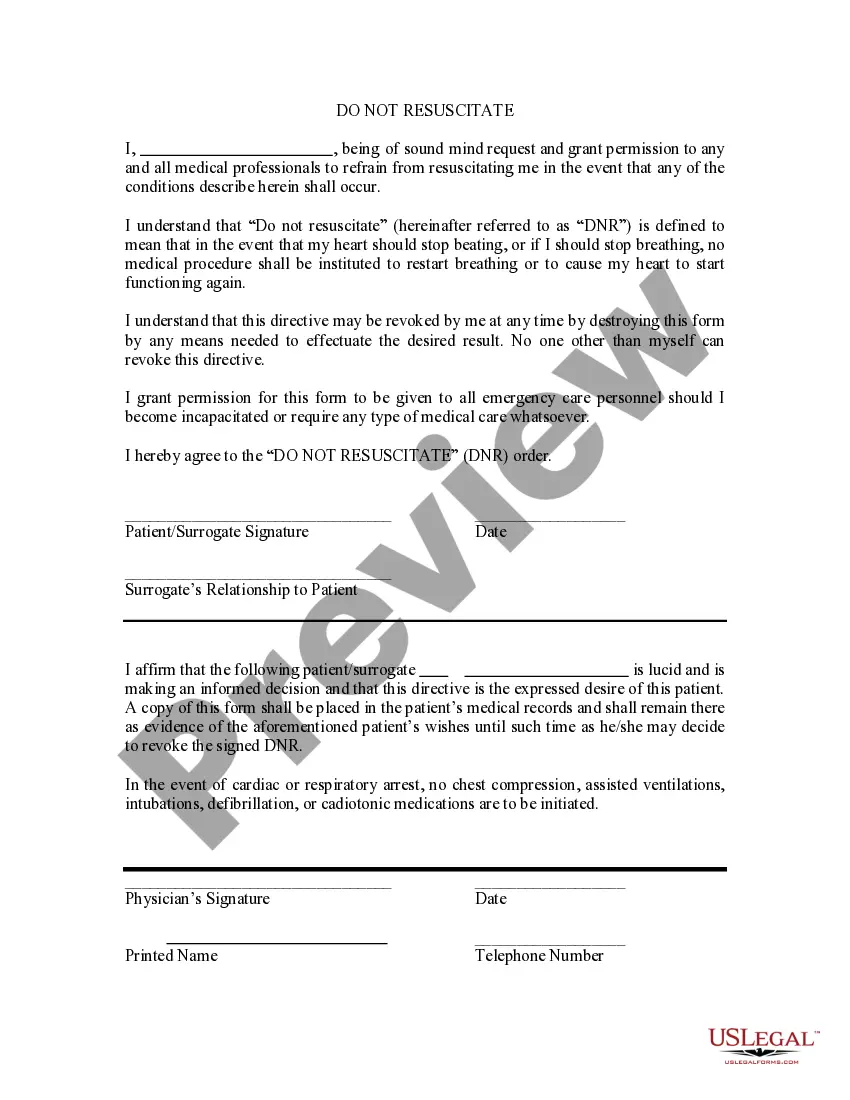
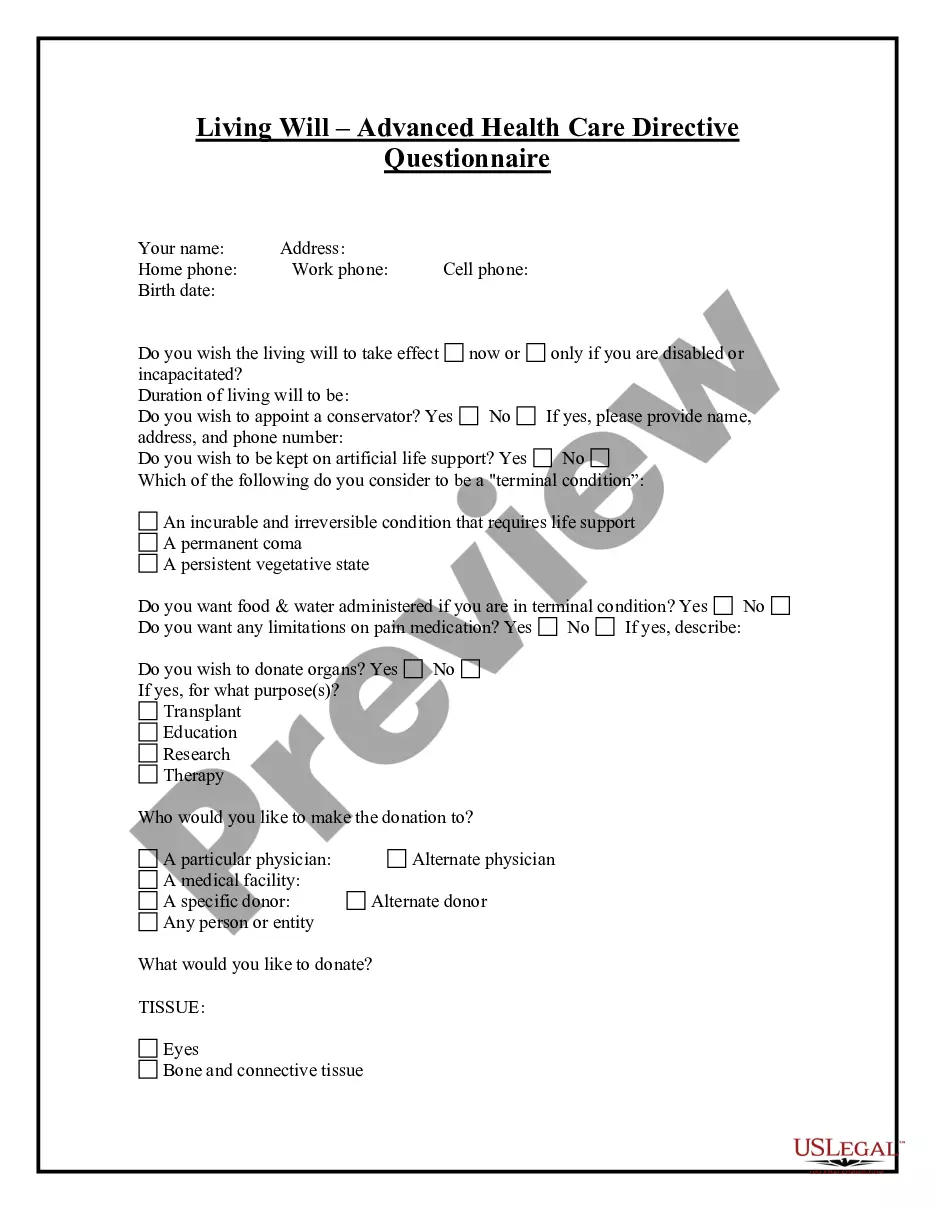
The Out of Hospital - Do Not Resuscitate Declaration (DNR) is a legal document that expresses your wishes regarding resuscitation efforts in non-hospital settings. This form ensures that if you experience cardiac or pulmonary failure outside of an acute care hospital, resuscitation measures will not be initiated, allowing you to pass naturally. Unlike other advance directives, this form specifically addresses situations outside of healthcare facilities.
What’s included in this form
- Declaration of intent regarding resuscitation procedures.
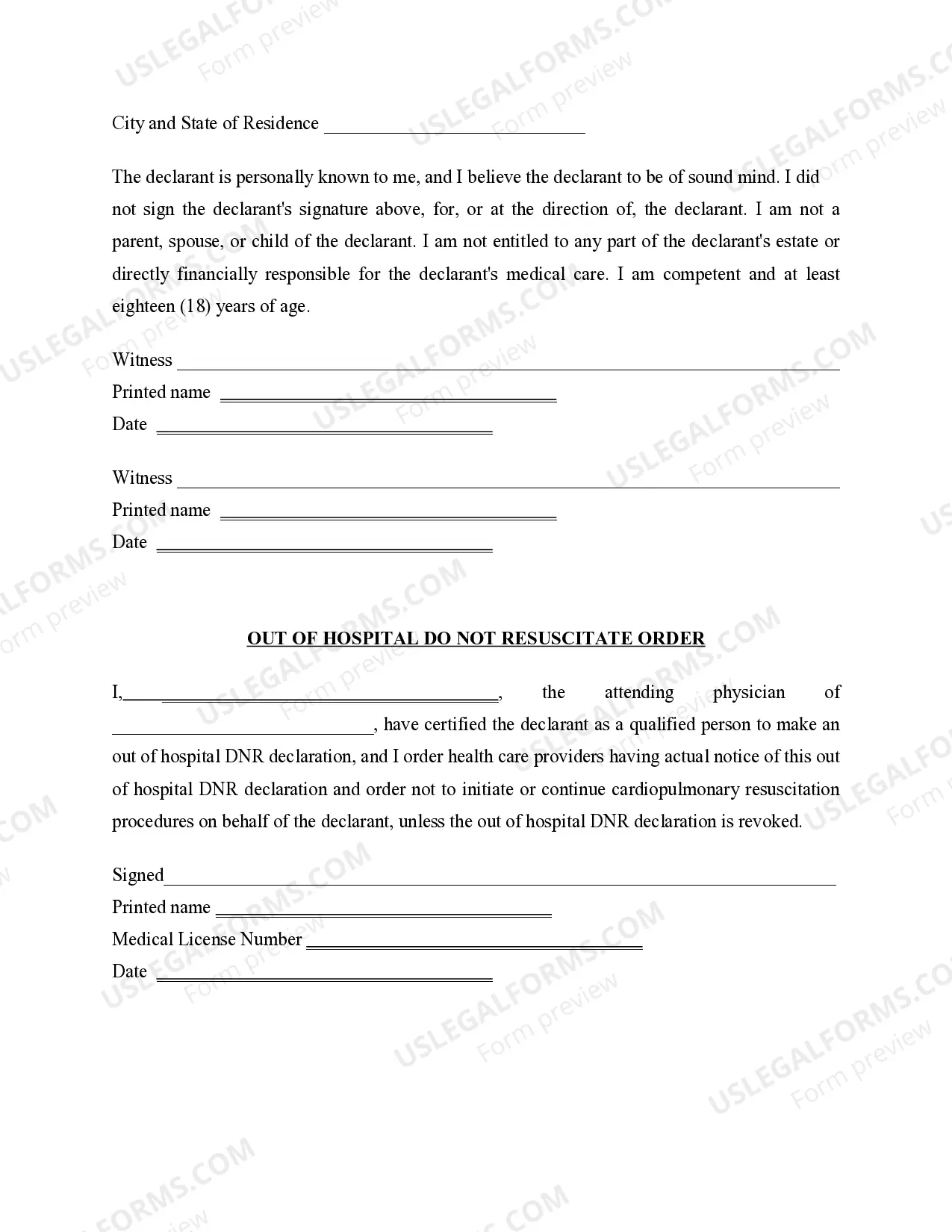
- Certification of qualification by an attending physician.
- Specify circumstances under which resuscitation will be withheld.
- Provision for revoking the DNR declaration.
- Signature requirements from the declarant and witnesses.
Common use cases
This form should be used when you want to ensure your healthcare wishes are respected in situations where you may not be in a hospital or medical facility. It is particularly relevant for individuals with terminal conditions or severe health issues who wish to avoid unnecessary life-prolonging treatments in a non-hospital setting.
Intended users of this form
- Adults aged eighteen and older who are of sound mind.
- Individuals diagnosed with a terminal illness or a severe health condition.
- Anyone wishing to clarify their end-of-life preferences with respect to resuscitation in non-hospital situations.
How to complete this form
- Begin by filling out the declaration date and your personal information.
- Ensure your attending physician certifies you as qualified for this DNR declaration.
- Clearly specify that you do not wish to receive cardiopulmonary resuscitation in non-hospital settings.
- Sign the form and include the printed name and address; ensure it is witnessed appropriately.
- Keep a copy for your records and share copies with relevant healthcare providers.
Does this form need to be notarized?
Notarization is generally not required for this form. However, certain states or situations might demand it. You can complete notarization online through US Legal Forms, powered by Notarize, using a verified video call available anytime.
Get your form ready online
Our built-in tools help you complete, sign, share, and store your documents in one place.
Make edits, fill in missing information, and update formatting in US Legal Forms—just like you would in MS Word.
Download a copy, print it, send it by email, or mail it via USPS—whatever works best for your next step.
Sign and collect signatures with our SignNow integration. Send to multiple recipients, set reminders, and more. Go Premium to unlock E-Sign.
If this form requires notarization, complete it online through a secure video call—no need to meet a notary in person or wait for an appointment.
We protect your documents and personal data by following strict security and privacy standards.

Make edits, fill in missing information, and update formatting in US Legal Forms—just like you would in MS Word.

Download a copy, print it, send it by email, or mail it via USPS—whatever works best for your next step.

Sign and collect signatures with our SignNow integration. Send to multiple recipients, set reminders, and more. Go Premium to unlock E-Sign.

If this form requires notarization, complete it online through a secure video call—no need to meet a notary in person or wait for an appointment.

We protect your documents and personal data by following strict security and privacy standards.
Common mistakes to avoid
- Not having the declaration witnessed or signed correctly.
- Failing to notify healthcare providers of the DNR status.
- Not updating or revoking the DNR when circumstances change.
Why complete this form online
- Easy access to downloadable and printable forms.
- Complete privacy and security when expressing your healthcare preferences.
- Ability to edit and customize the document to reflect your specific wishes.
Legal use & context
- This form allows you to legally express your wishes regarding resuscitation efforts.
- It remains enforceable until revoked by the declarant or until the declarant's death.
- Healthcare providers are required to comply with this declaration in accordance with Indiana law.
Quick recap
- The Out of Hospital DNR Declaration allows individuals to refuse resuscitation outside of healthcare facilities.
- Legal compliance varies by state; this document is tailored for use in Indiana.
- It is crucial to complete the form correctly to ensure your wishes are honored.
- Review and update your declaration as needed to reflect your current healthcare preferences.
Looking for another form?



Form popularity
FAQ
It is legal but it may not be ethical, said Craig Klugman, a professor of bioethics at DePaul University in Chicago. It is done out of fear of harming patients and the liability. He notes that several medical associations have concluded that asking patients to sign blanket DNR overrides is not appropriate.
A do-not-resuscitate order (DNR) is a legally binding physician's order stating that no steps will be taken to restart a patient's heart or restore breathing if the patient experiences cardiac arrest or respiratory arrest.
The doctors should have considered the individual, their health and what is in their best interests. This is a medical decision about whether resuscitation would be successful and how much additional harm it would cause the person.
The American Heart Association in 2005 moved from the traditional do not resuscitate (DNR) terminology to do not attempt resuscitation (DNAR). DNAR reduces the implication that resuscitation is likely and creates a better emotional environment to explain what the order means.
DNR stands for Do Not Resuscitate and tells health care providers and emergency medical personnel not to do CPR on your older adult if they stop breathing or if their heart stops beating. The DNR is only a decision about CPR (cardiopulmonary resuscitation).
A Do Not Attempt Resuscitation form is a document issued and signed by a doctor, which tells your medical team not to attempt cardiopulmonary resuscitation (CPR).It's not a legally binding document.
Do Not Resuscitate (DNR)/Do Not Attempt Resuscitation (DNAR) is defined as the withholding of cardiopulmonary resuscitation (CPR) in the event of a patient's sudden cardiopulmonary arrest.
The patient's physician must approve of a DNR, confirming the patient's condition by signing the DNR form. Aside from the patient's and physician's signatures, two (2) witnesses are required to make a DNR order valid. Required to Sign Patient, physician and two (2) witnesses.
A do-not-resuscitate (DNR) order placed in a person's medical record by a doctor informs the medical staff that cardiopulmonary resuscitation (CPR) should not be attempted.