Indiana Standby Temporary Guardian Legal Documents Package
About this form package
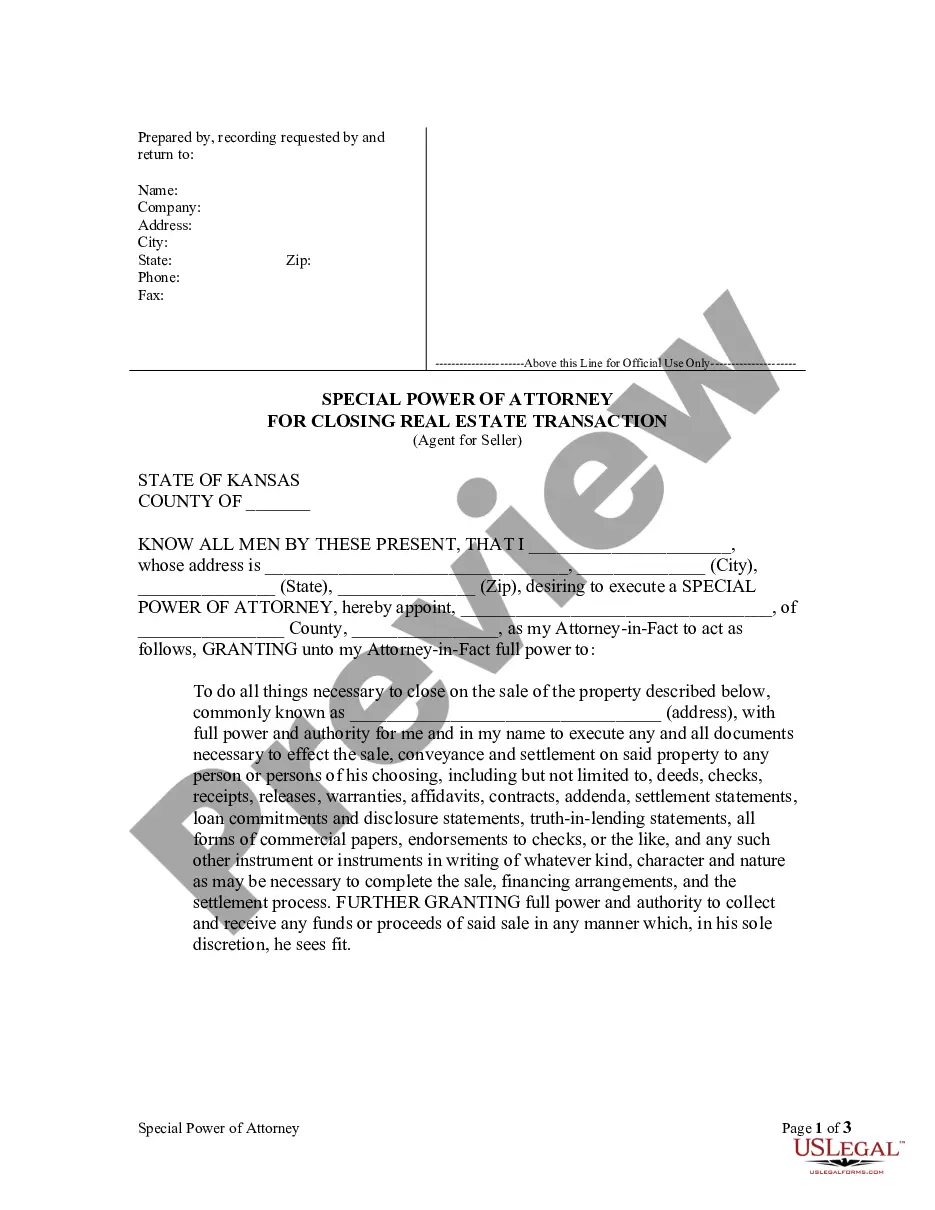
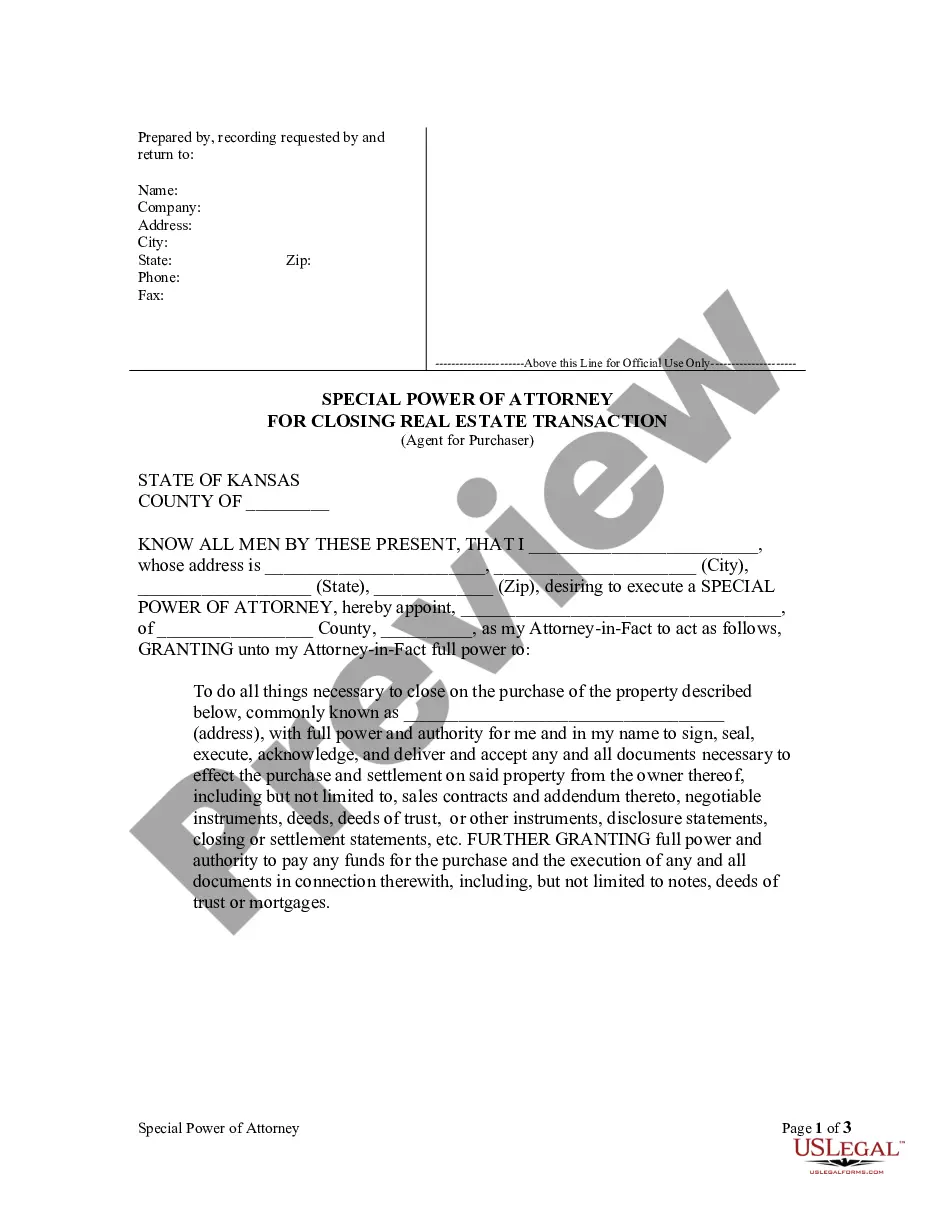
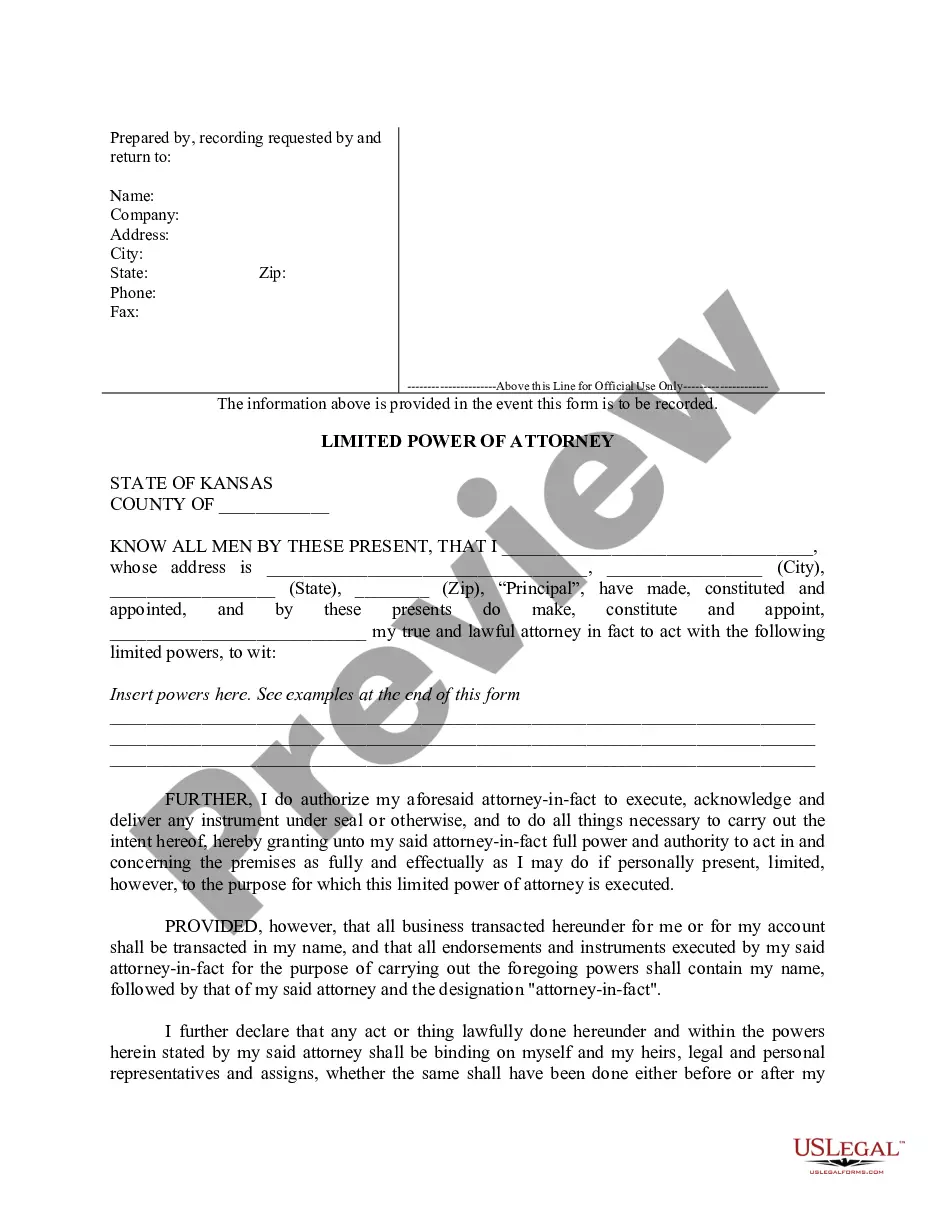
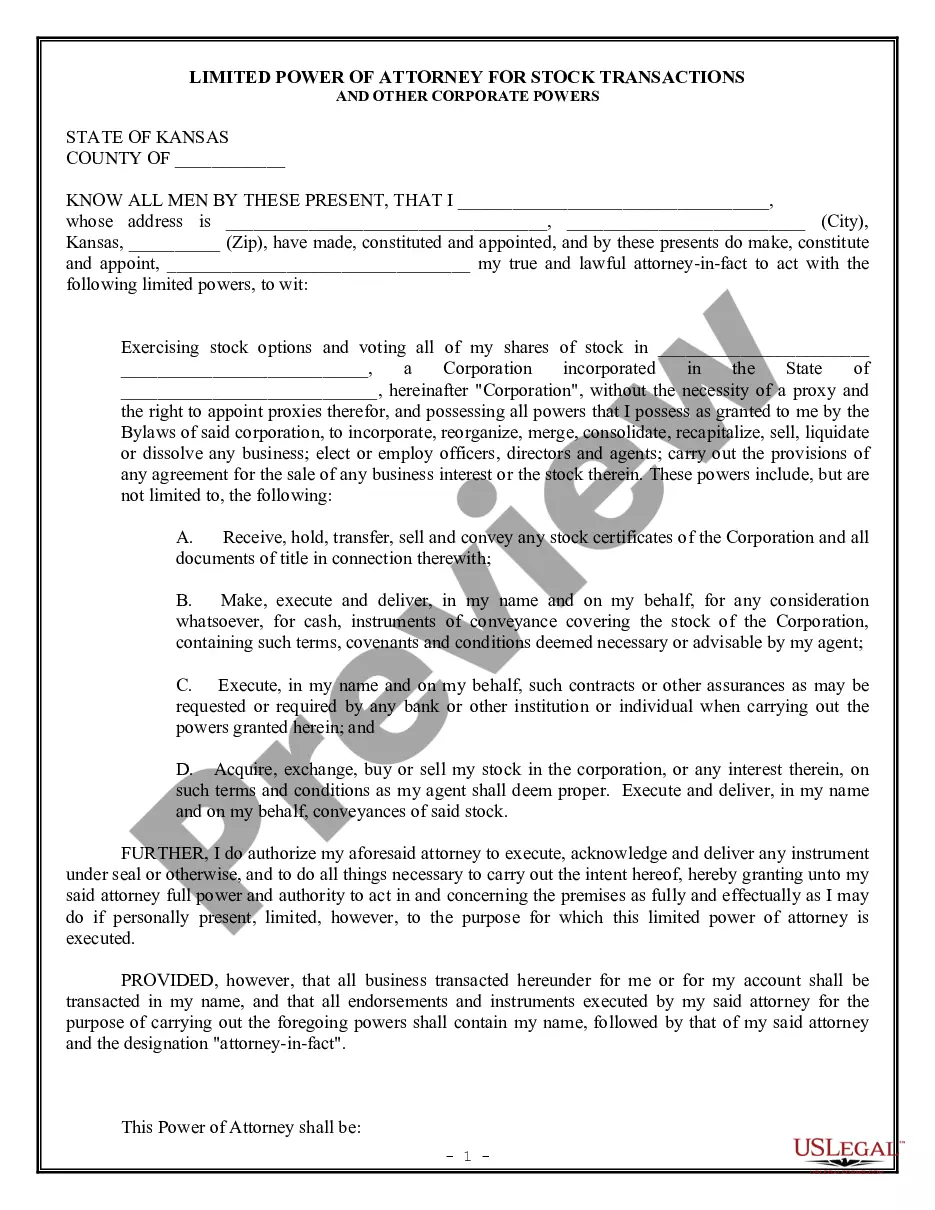
The Indiana Standby Temporary Guardian Legal Documents Package provides essential legal forms and resources for establishing a standby guardianship. Unlike other guardianship packages, it includes specific information tailored to Indiana laws that allow a parent or court to appoint a standby guardian for a minor child or a disabled person. This package includes forms that facilitate proper legal procedures, ensuring that appointed guardians can effectively manage care and custody when necessary.
Forms provided in this package

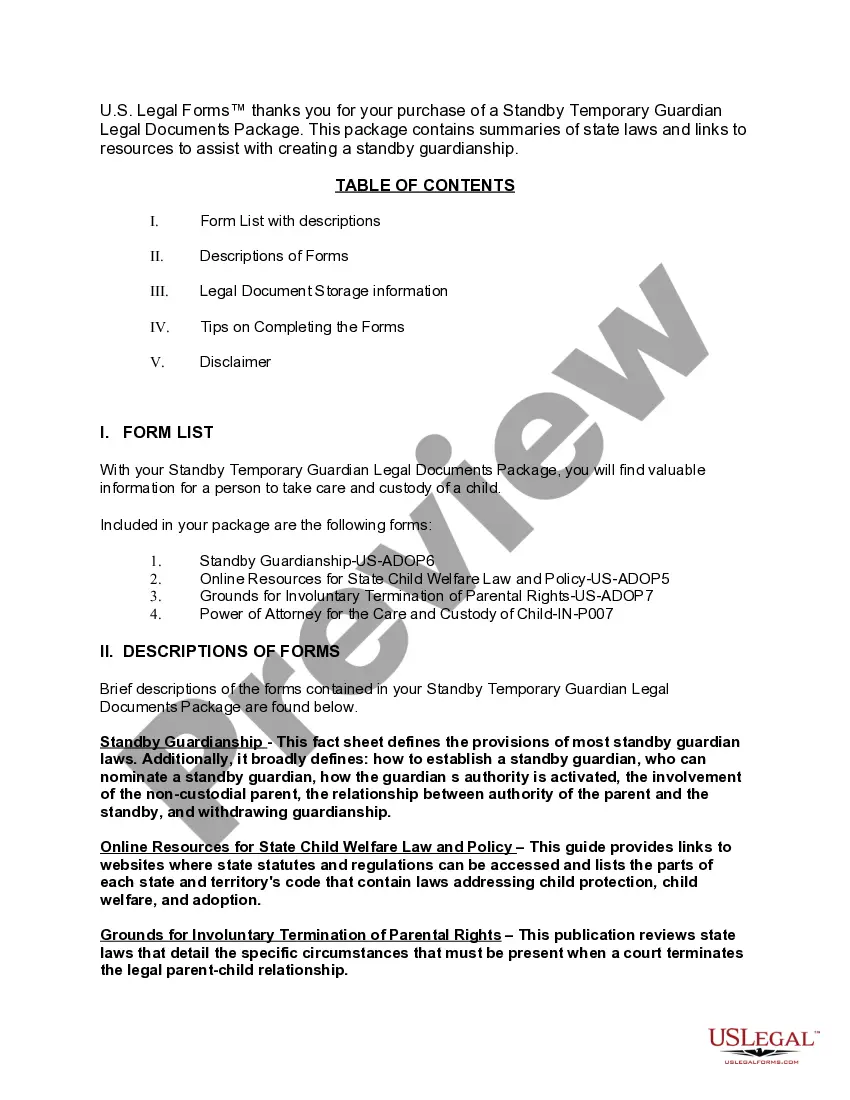
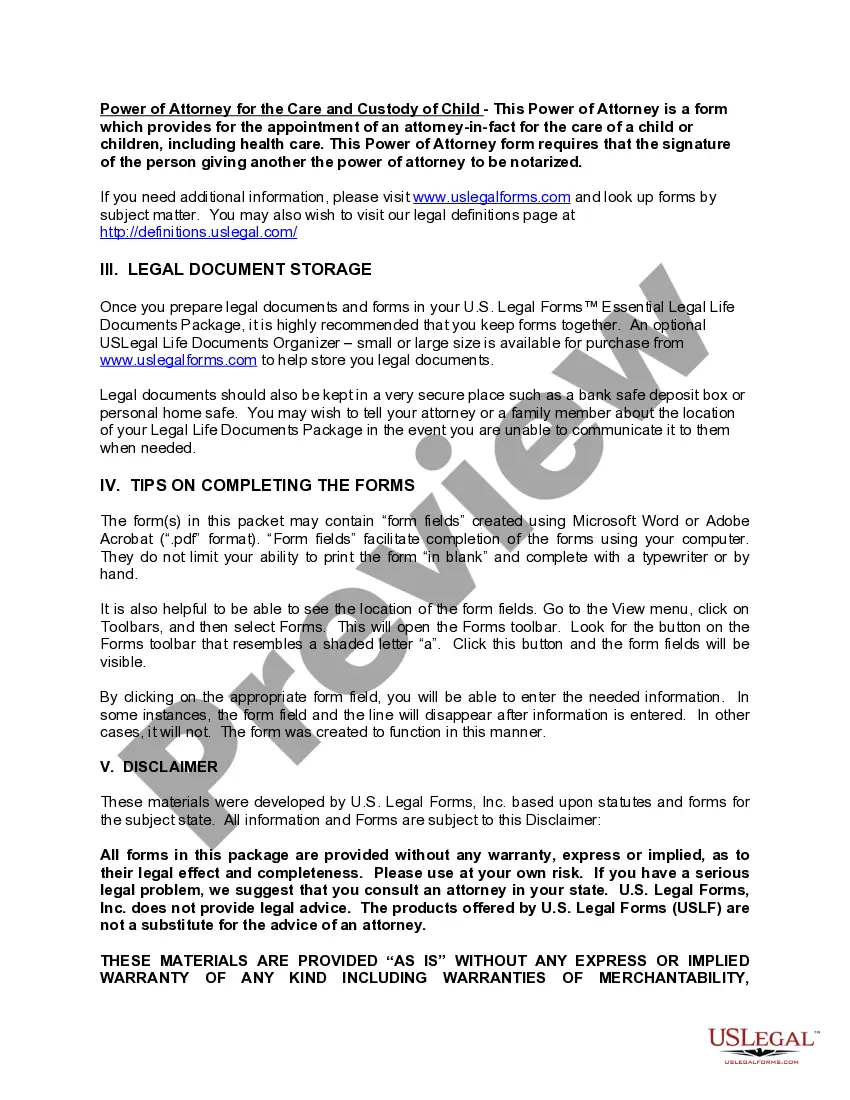




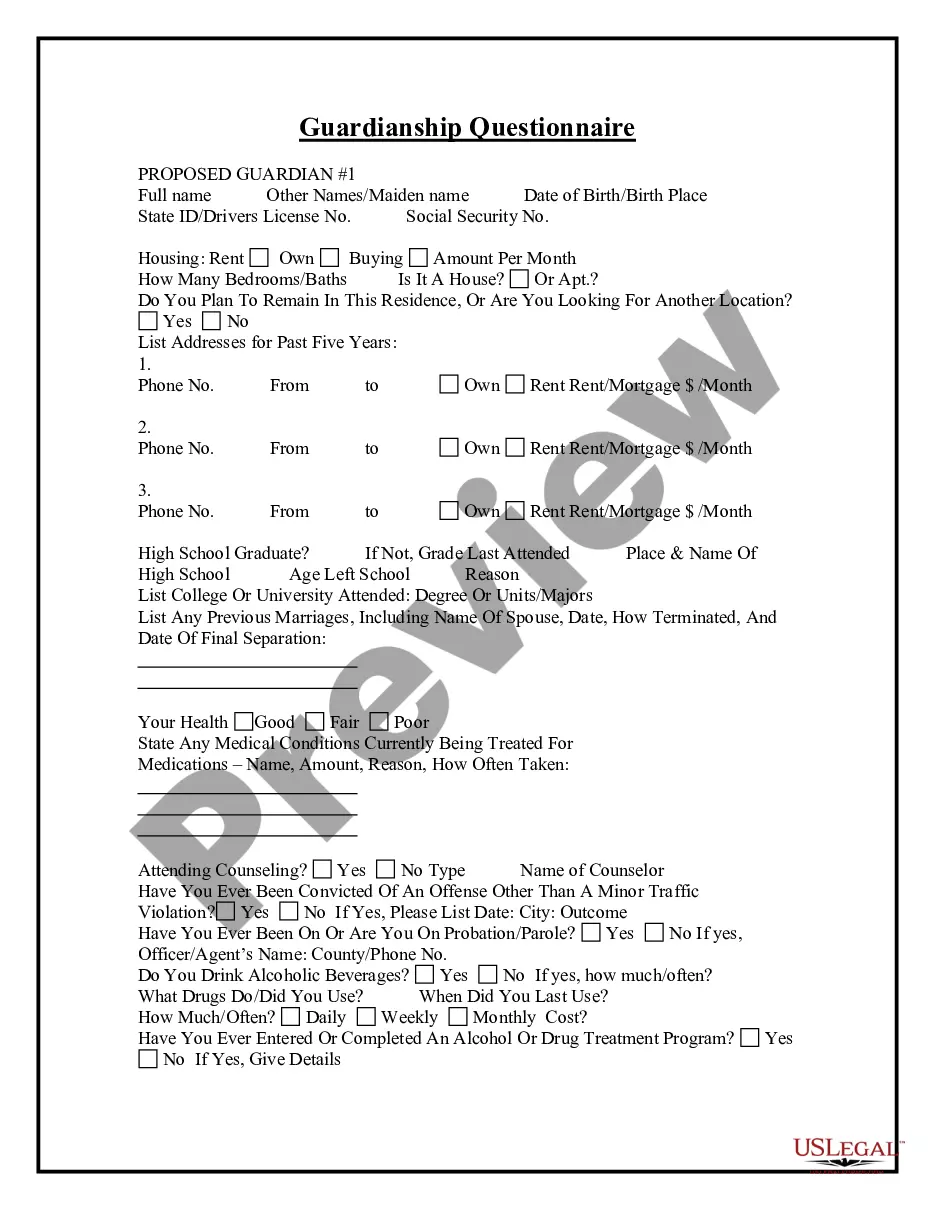
When to use this form package
This form package is useful in scenarios such as:
- When a parent wants to designate someone to take care of their child in the event of their incapacity.
- When parents are seeking a legal framework to appoint a standby guardian to ensure their child is protected.
- When guardianship is needed due to the unexpected death or incapacity of the parents.
Who this form package is for
- Parents wishing to establish a standby guardian for their children.
- Individuals acting as standby guardians who need a legal framework to fulfill their role.
- Family members or friends involved in the guardianship process who require guidance on their legal rights and responsibilities.
How to prepare this document
- Review the included forms and resources to understand the legal requirements.
- Identify and select the individual you wish to appoint as the standby guardian.
- Complete the Power of Attorney form, ensuring all necessary information is filled out accurately.
- Obtain the required notarization for the Power of Attorney if needed.
- Store the completed documents in a secure location, informing relevant family members of their whereabouts.
Do documents in this package require notarization?
Some forms in this package need notarization to be legally binding. Our online notarization service, powered by Notarize, lets you verify and sign documents remotely through an encrypted video session, available 24/7.
Get your form ready online
Our built-in tools help you complete, sign, share, and store your documents in one place.
Make edits, fill in missing information, and update formatting in US Legal Forms—just like you would in MS Word.
Download a copy, print it, send it by email, or mail it via USPS—whatever works best for your next step.
Sign and collect signatures with our SignNow integration. Send to multiple recipients, set reminders, and more. Go Premium to unlock E-Sign.
If this form requires notarization, complete it online through a secure video call—no need to meet a notary in person or wait for an appointment.
We protect your documents and personal data by following strict security and privacy standards.

Make edits, fill in missing information, and update formatting in US Legal Forms—just like you would in MS Word.

Download a copy, print it, send it by email, or mail it via USPS—whatever works best for your next step.

Sign and collect signatures with our SignNow integration. Send to multiple recipients, set reminders, and more. Go Premium to unlock E-Sign.

If this form requires notarization, complete it online through a secure video call—no need to meet a notary in person or wait for an appointment.

We protect your documents and personal data by following strict security and privacy standards.
Avoid these common issues
- Failing to clearly define the powers granted to the standby guardian.
- Not obtaining notarization for the Power of Attorney form when required.
- Neglecting to inform the appointed guardian about their role and responsibilities.
Why use this package online
- Convenient access to forms that are fully drafted by licensed attorneys.
- Editability allows users to customize documents according to specific needs.
- Reliable resources and state law summaries ensure informed decision-making.
Legal use & context
- The forms provided in this package enable parents to legally appoint a standby guardian.
- All documents comply with Indiana law concerning guardianship.
- Proper completion and notarization lead to enforceable legal arrangements.
What to keep in mind
- The Indiana Standby Temporary Guardian Legal Documents Package includes essential resources for establishing standby guardianship.
- Carefully follow the steps outlined for completing and notarizing the forms.
- Understanding state laws is crucial for ensuring legal validity and addressing potential issues.
Looking for another form?









Form popularity
FAQ
A temporary guardianship appointment gives a third party temporary permission to take care of and manage the rights of a minor. It is for temporary and voluntary use and does not cover petitions for temporary guardianship or court-appointed guardians. It is for a limited time (normally not exceeding 30 days).
You can establish guardianship of a child by filing papers in court. Initially, file a petition stating your interest in obtaining guardianship along with a filing fee. You'll also want to file a letter of consent from the child's parents.
The legal guardianship document is a formal declaration to the court system that another party is responsible for the well-being of the minors. No one can predict when an accident or other disaster may occur. Some include a legal guardianship document in their wills to determine who will raise their children.
The main difference between custody and guardianship is the child's parents - custody is provided to the child's biological parents while guardianship is given to a non-biological parent.
A standby guardianship enables a parent to plan for the future care of a minor child without terminating his or her parental or legal rights.
A standby guardianship can be accomplished by parental designation where a parent signs a document entitled Parental Designation and Consent to Beginning the Standby Guardianship (Designation Form) in the presence of two witnesses, which announces the parent's intention to appoint the standby guardian.
The names of the forms are usually: Petition for Appointment of Guardian (or Petition for Appointment of Guardian of Minor) Petition for Conservatorship (when dealing with an incompetent adult) Order Appointing Guardian.
Directly ask the person you would like to name as a temporary guardian if he or she is available, willing, and up to the task of temporary guardianship. If a person agrees to become your child's or children's temporary guardian, be sure to inform him or her regarding any medical concerns such as allergies.
The Court may appoint an emergency guardian when it appears that an individual lacks capacity, is in need of a guardian, and failure to make such an appointment will result in irreparable harm to the person and/or estate of the alleged incapacitated person (note the term incompetent is no longer used in guardianship