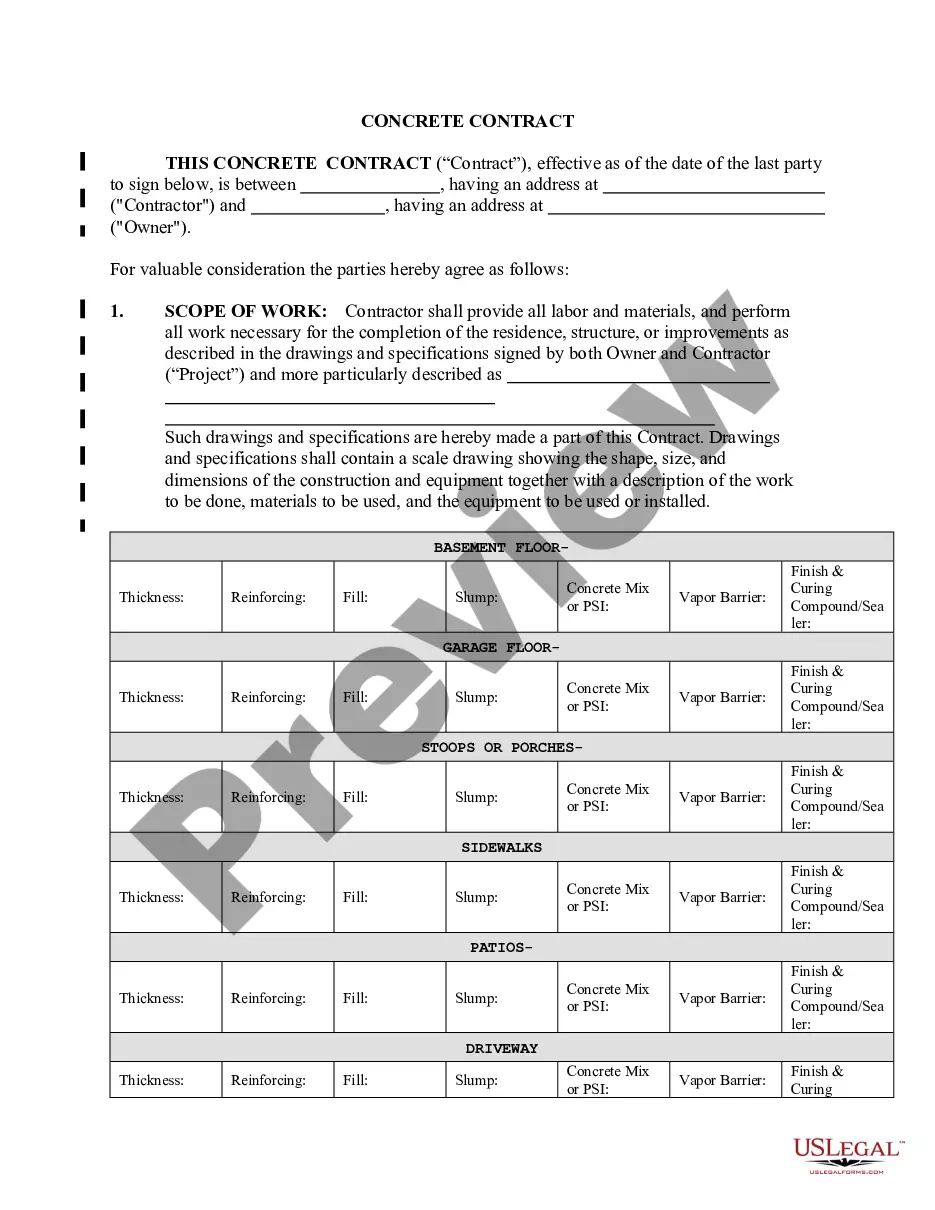
Indiana Quitclaim Deed from Corporation to Individual
Understanding this form
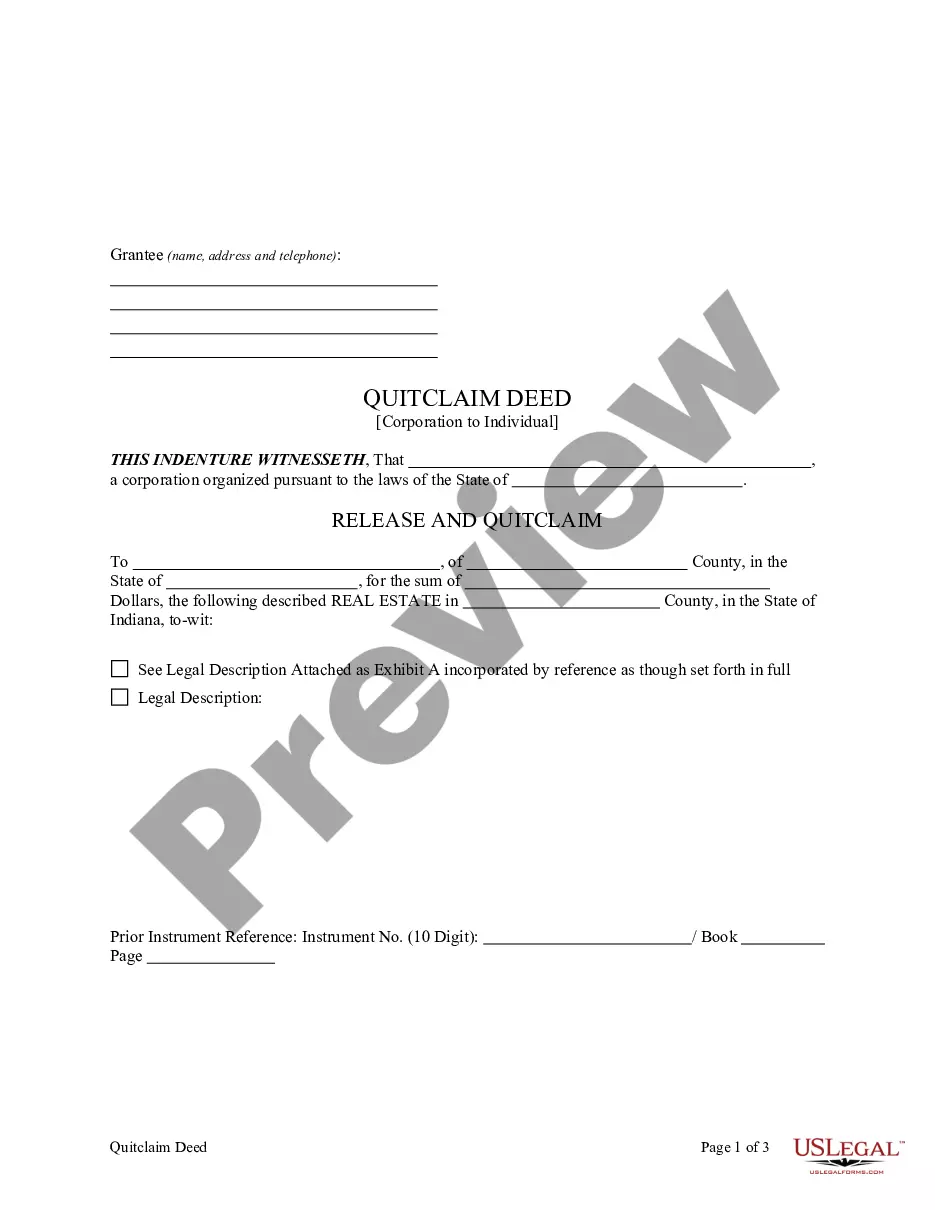
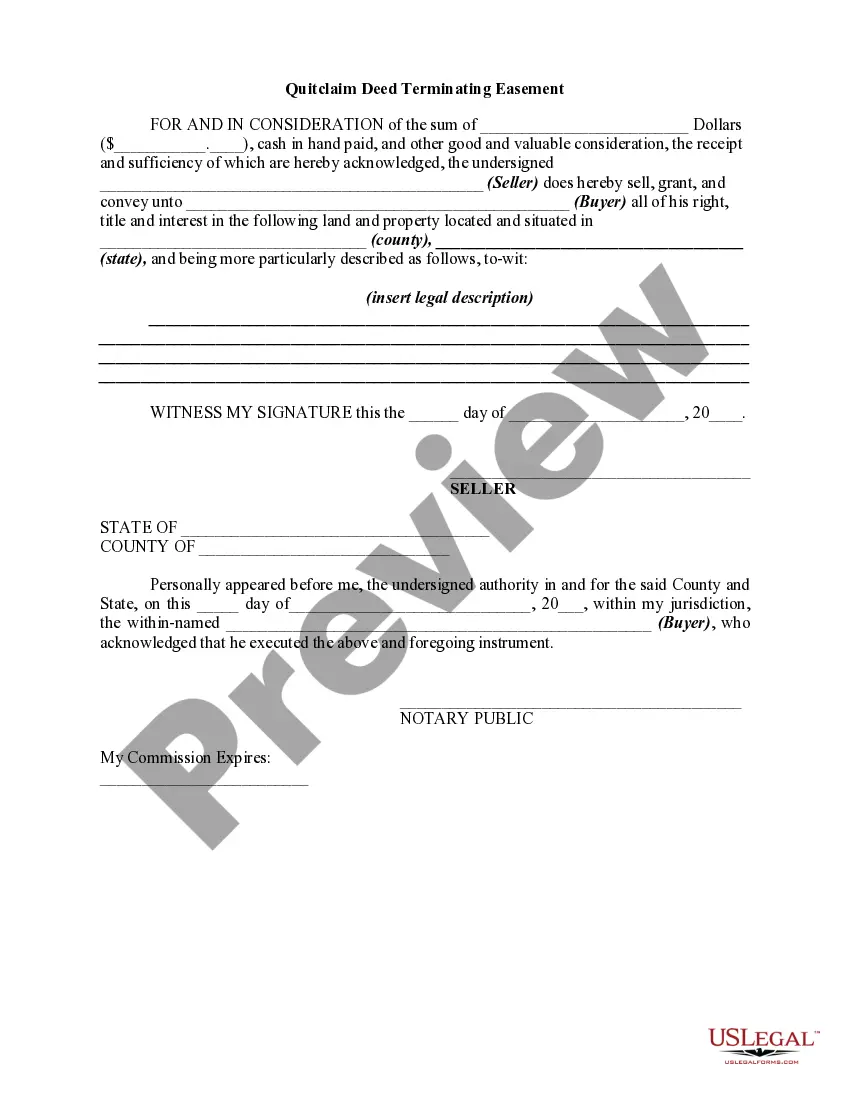
A Quitclaim Deed from Corporation to Individual is a legal document used to transfer property ownership from a corporation to an individual, without providing any warranties or guarantees regarding the property title. This form is distinct from other types of property transfer deeds, such as a warranty deed, which does guarantee a clear title. The quitclaim deed is often used in situations where the grantor does not want to make any assurances about the status of the property title.
Key components of this form
- Grantor and Grantee Information: Includes names and addresses of the corporation and the individual receiving the property.
- Property Description: Clearly identifies the property being transferred, usually with a legal description.
- Date of Transfer: Specifies the effective date of the property transfer.
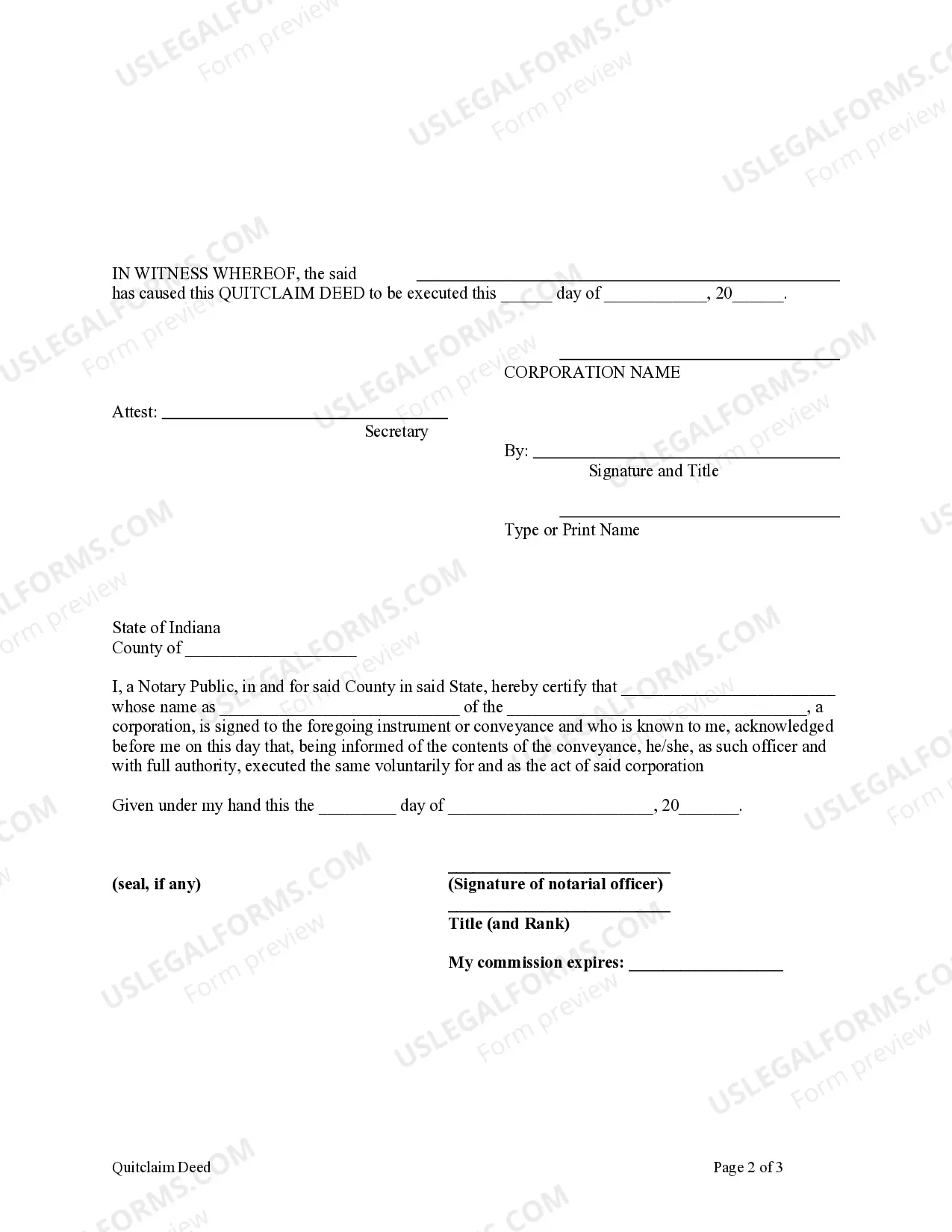
- Signatures: Requires signatures from authorized representatives of the corporation and the individual to validate the transfer.
- Notarization Clause: Indicates if the deed needs to be notarized for legal effect.



Situations where this form applies
This form is commonly utilized when a corporation is transferring property to an individual, often in situations such as dissolving a business, reallocation of assets, or gifting property. It can also be relevant when the corporation no longer needs the property or when an individual is purchasing property from a corporation without requiring a title guarantee.
Who should use this form
This quitclaim deed is intended for:
- Corporations transferring property to individuals
- Individuals who are receiving property from a corporation
- Legal professionals assisting in the property transfer process
Completing this form step by step
Follow these steps to complete the Quitclaim Deed:
- Identify the parties: Enter the full names and addresses of the grantor (corporation) and the grantee (individual).
- Specify the property: Include a detailed description of the property being transferred to ensure clarity.
- Enter the transfer date: Write the date that the property transfer will take effect.
- Obtain necessary signatures: Have an authorized representative of the corporation and the individual sign the deed.
- Notarize the document: Ensure that the deed is notarized if required by your jurisdiction.
Does this document require notarization?
This form must be notarized to be legally valid. Using US Legal Forms, you can take advantage of our integrated online notarization service, which is available 24/7 through secure video calls, making it convenient to complete your property transfer without the need for travel.
Get your form ready online
Our built-in tools help you complete, sign, share, and store your documents in one place.
Make edits, fill in missing information, and update formatting in US Legal Forms—just like you would in MS Word.
Download a copy, print it, send it by email, or mail it via USPS—whatever works best for your next step.
Sign and collect signatures with our SignNow integration. Send to multiple recipients, set reminders, and more. Go Premium to unlock E-Sign.
If this form requires notarization, complete it online through a secure video call—no need to meet a notary in person or wait for an appointment.
We protect your documents and personal data by following strict security and privacy standards.

Make edits, fill in missing information, and update formatting in US Legal Forms—just like you would in MS Word.

Download a copy, print it, send it by email, or mail it via USPS—whatever works best for your next step.

Sign and collect signatures with our SignNow integration. Send to multiple recipients, set reminders, and more. Go Premium to unlock E-Sign.

If this form requires notarization, complete it online through a secure video call—no need to meet a notary in person or wait for an appointment.

We protect your documents and personal data by following strict security and privacy standards.
Common mistakes
- Failing to include a complete legal description of the property.
- Not obtaining the necessary signatures from authorized representatives.
- Omitting the date of transfer.
- Neglecting to notarize the deed if required by local law.
Advantages of online completion
- Convenience of downloading the form immediately in various formats (Word, Rich Text, WordPerfect).
- Editable templates allow for easy customization.
- Access to legal forms drafted by licensed attorneys ensures reliability and accuracy.
Main things to remember
- The Quitclaim Deed allows a corporation to transfer property without warranties about the title.
- Proper completion and notarization are crucial for the deed's validity.
- Understanding state-specific requirements is essential for compliance.
- This form is convenient to use and access online, ensuring legal accuracy and ease of customization.
Looking for another form?




Form popularity
FAQ
Retrieve your original deed. Get the appropriate deed form. Draft the deed. Sign the deed before a notary. Record the deed with the county recorder. Obtain the new original deed.
Quitclaim Deeds are used when the transfer of ownership in the property does not occur as the result of a traditional sale.Under a warranty deed, if it turns out that the property is not what the seller promised or there's an uncleared lien or other block to the title, the buyer can sue the seller and recover damages.
Step 1: Find your IN quitclaim deed form. Step 2: Gather the information you need. Step 3: Enter the information about the parties. Step 4: Enter the legal description of the property. Step 5: Have the grantor sign the document in the presence of a Notary Public.
A Quitclaim Deed must be notarized by a notary public or attorney in order to be valid.Consideration in a Quitclaim Deed is what the Grantee will pay to the Grantor for the interest in the property.
But you might be wondering if an owner can transfer a deed to another person without a real estate lawyer. The answer is yes. Parties to a transaction are always free to prepare their own deeds.A quitclaim deed, for example, is far simpler than a warranty deed.
It's usually a very straightforward transaction, but it's possible for a quitclaim deed to be challenged. If a quitclaim deed is challenged in court, the issue becomes whether the property was legally transferred and if the grantor had the legal right to transfer the property.
The general way to convey real property in Indiana is through a warranty deed. In certain cases, you may also use a quitclaim deed, a deed of trust or a grant deed. Most deeds require the name of the grantor who is the current owner; the grantee (the new owner) as well as the legal property description.
A quitclaim deed is a legal instrument that is used to transfer interest in real property.The owner/grantor terminates (quits) any right and claim to the property, thereby allowing the right or claim to transfer to the recipient/grantee.
Locate the prior deed to the property. Create the new deed. Sign the new deed. Record the original deed.