Idaho Last Will for a Widow or Widower with no Children
Understanding this form
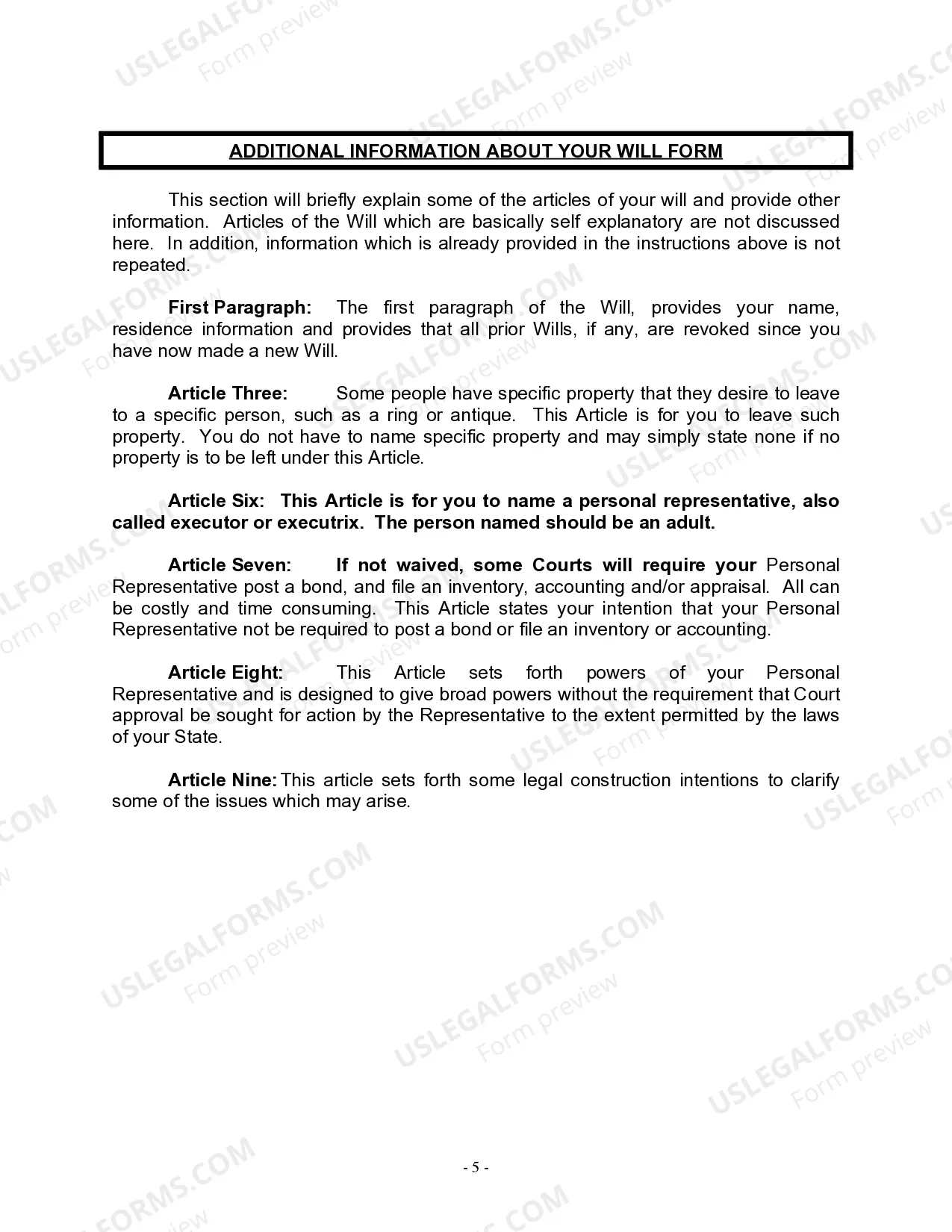
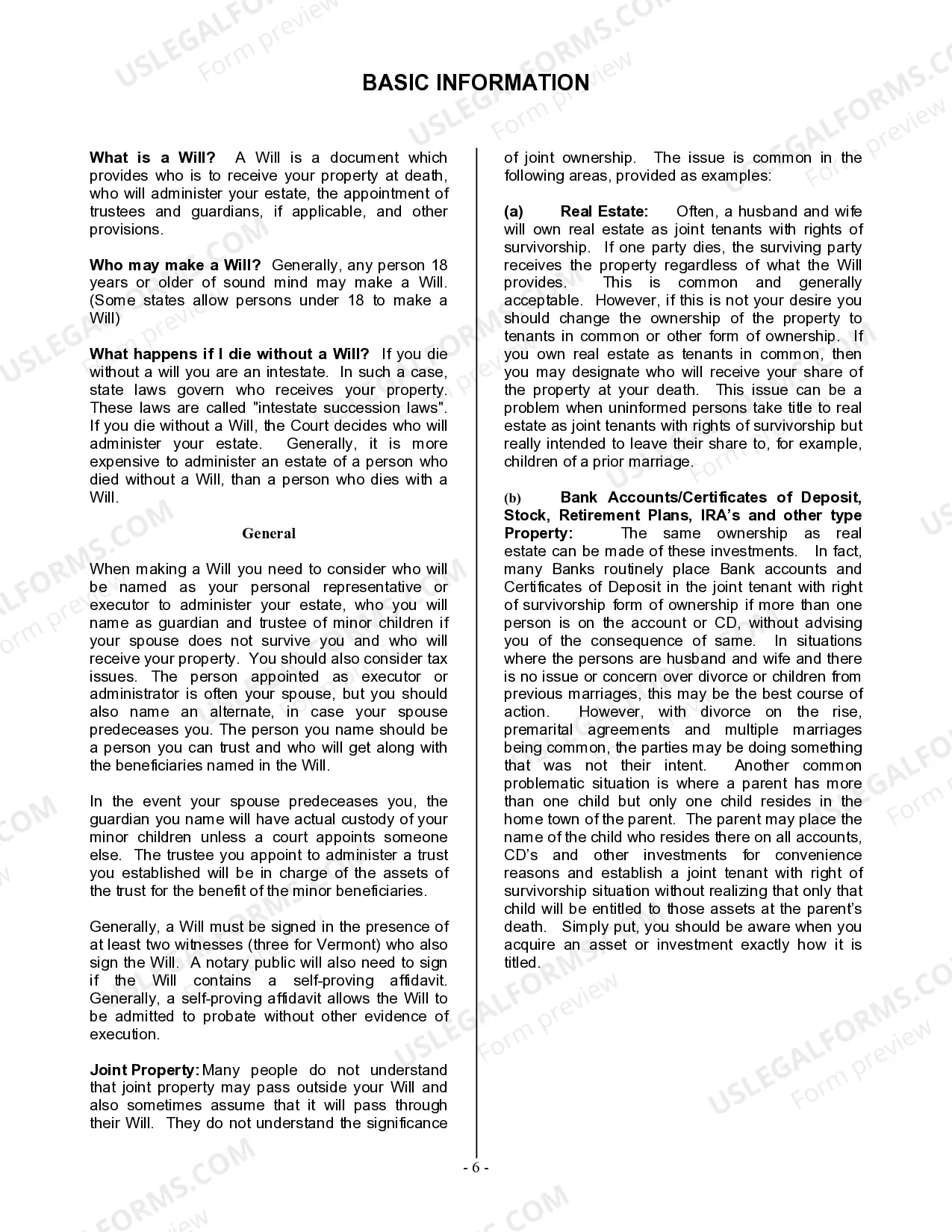
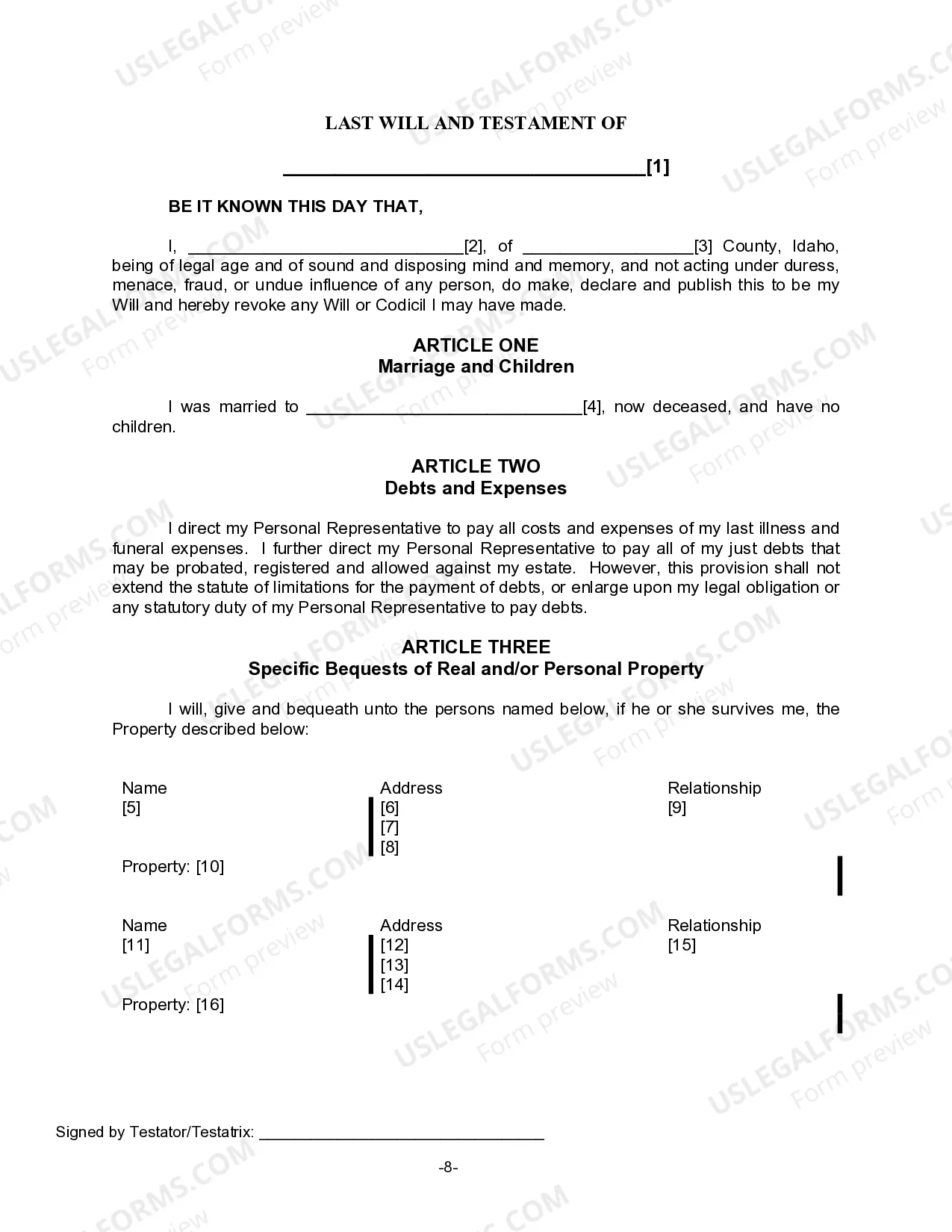
This Last Will for a Widow or Widower with No Children is a legal document that specifies how your property will be distributed after your death. It is particularly designed for individuals who have lost their spouse and do not have children. Unlike standard wills, this form addresses unique considerations for widowed individuals, ensuring that your wishes are clearly articulated and legally recognized.
Form components explained
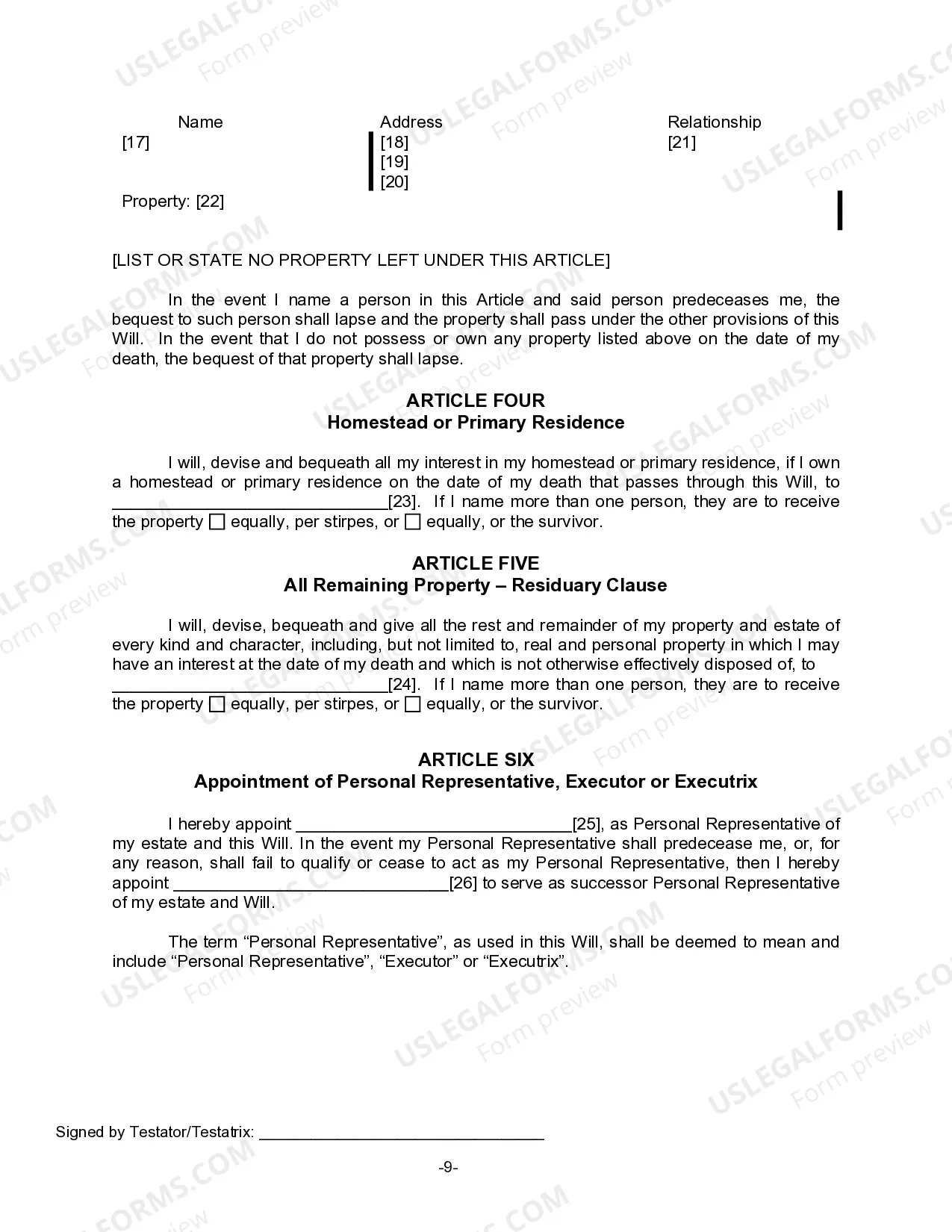
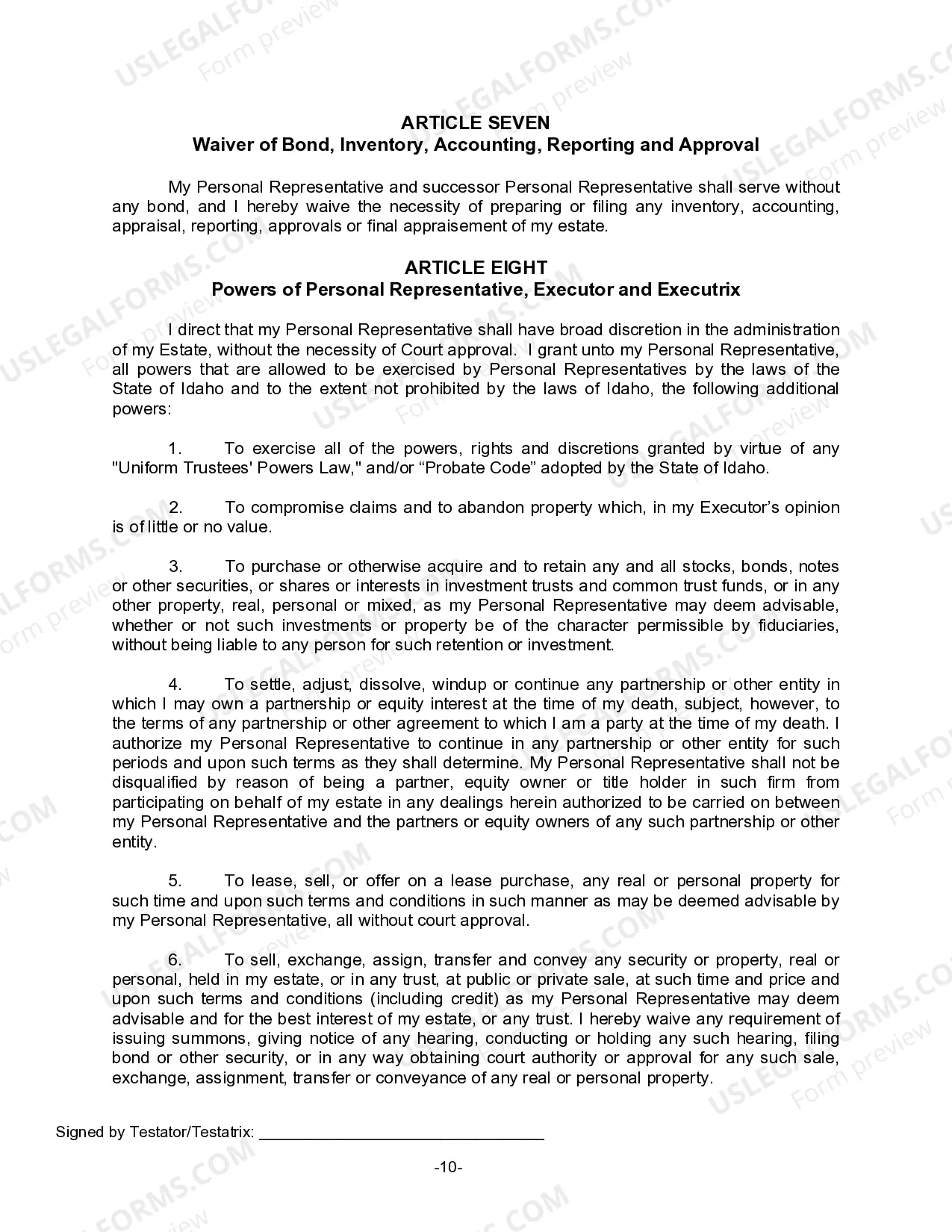
- Your personal representative or executor appointment details.
- Specific property bequests to designated individuals.
- Homestead distribution instructions.
- Residual estate clause for remaining assets.
- Personal representative's powers and waivers of bond.
- Signature and witness requirements for validity.



When this form is needed
This form is suitable when a widow or widower wishes to ensure their property is distributed according to their wishes after passing away. It is particularly useful for those who want to designate who inherits their assets, manage debts, and appoint someone to administrate their estate without the complexities that may arise from intestate succession laws.
Who should use this form
- Widows or widowers without children.
- Individuals seeking to outline their estate distribution.
- Those wanting to appoint an executor for their estate.
- People who have experienced the loss of a spouse and need a clear legal framework for asset distribution.
Completing this form step by step
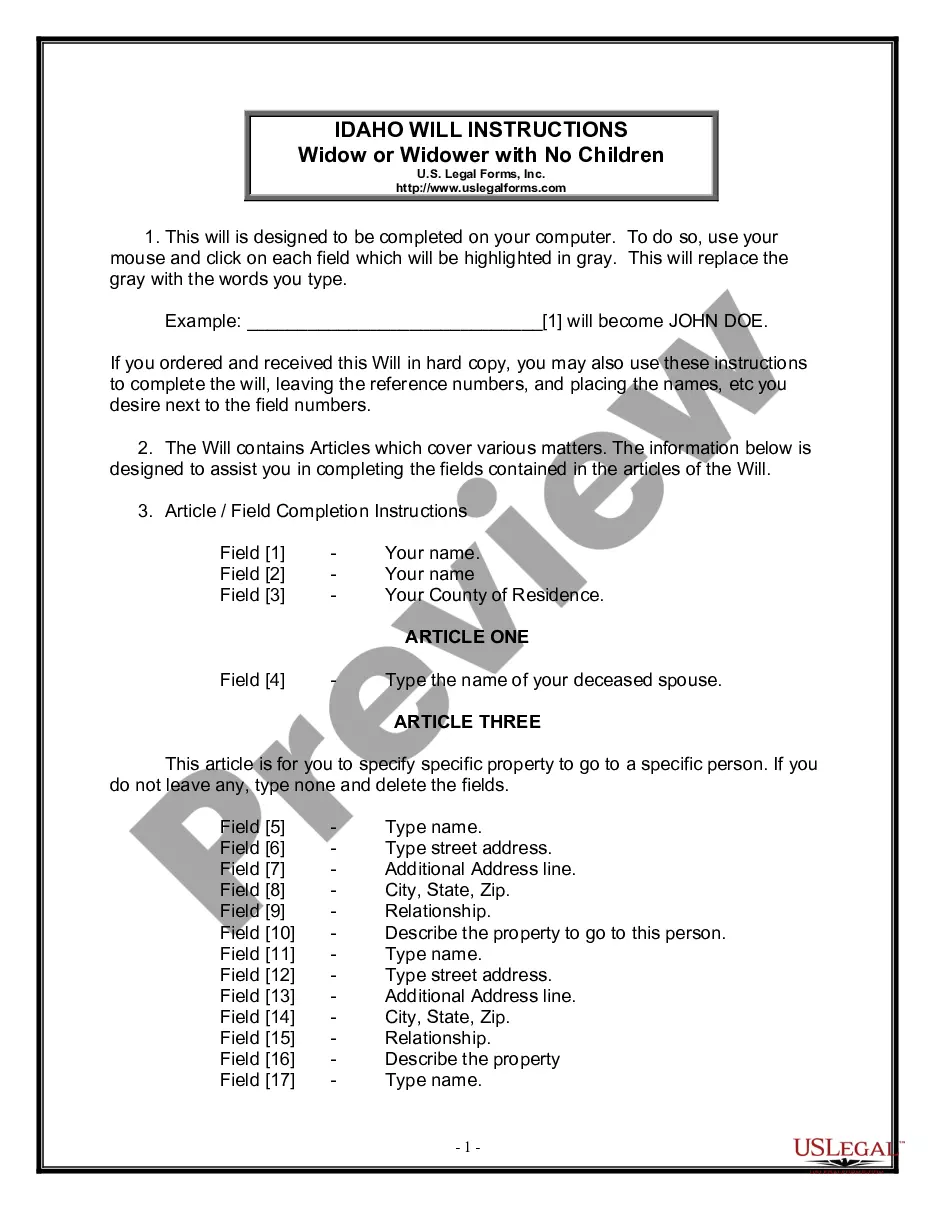
- Enter your full name and county of residence in the designated fields.
- Specify the name of your deceased spouse in the appropriate section.
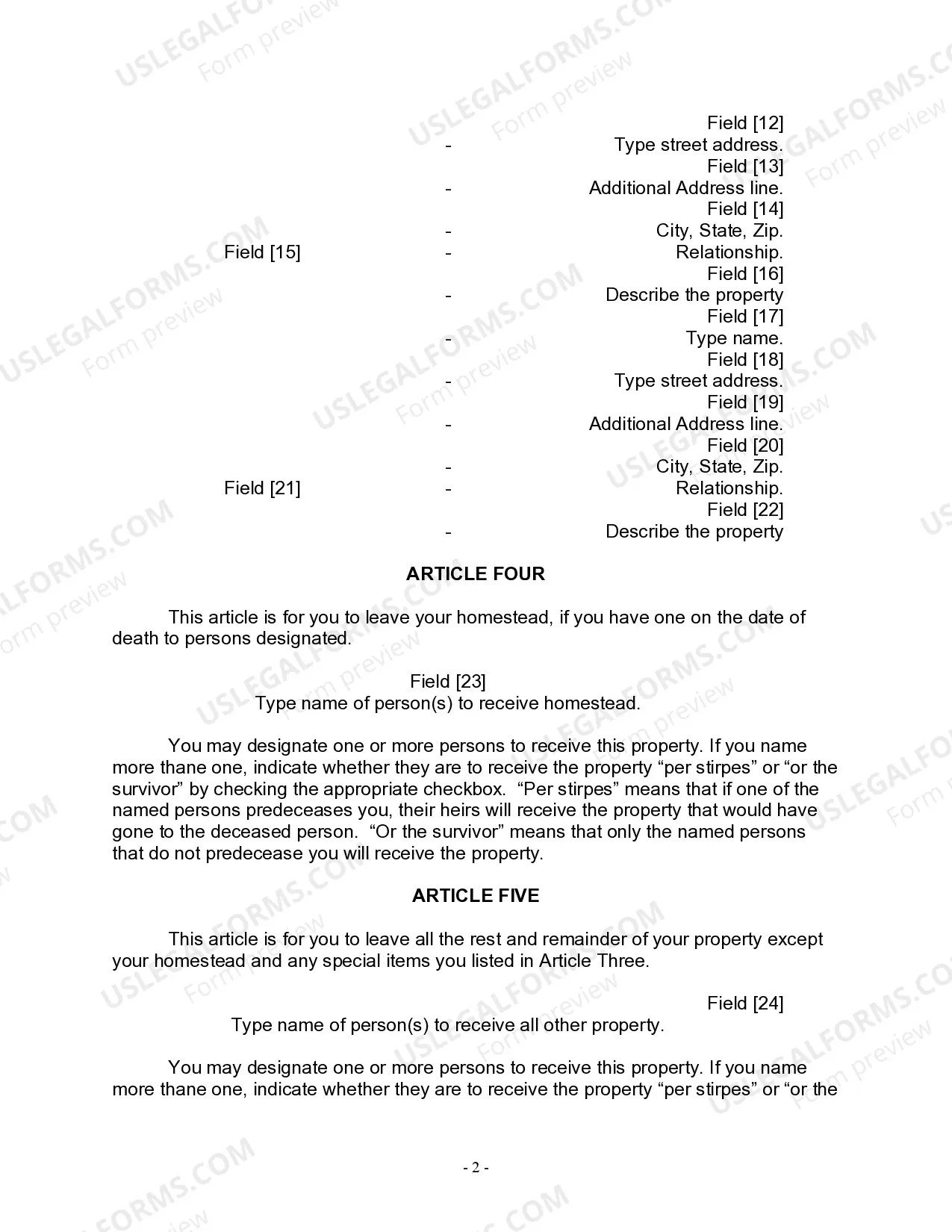
- Detail any specific property bequests, including names and addresses of recipients.
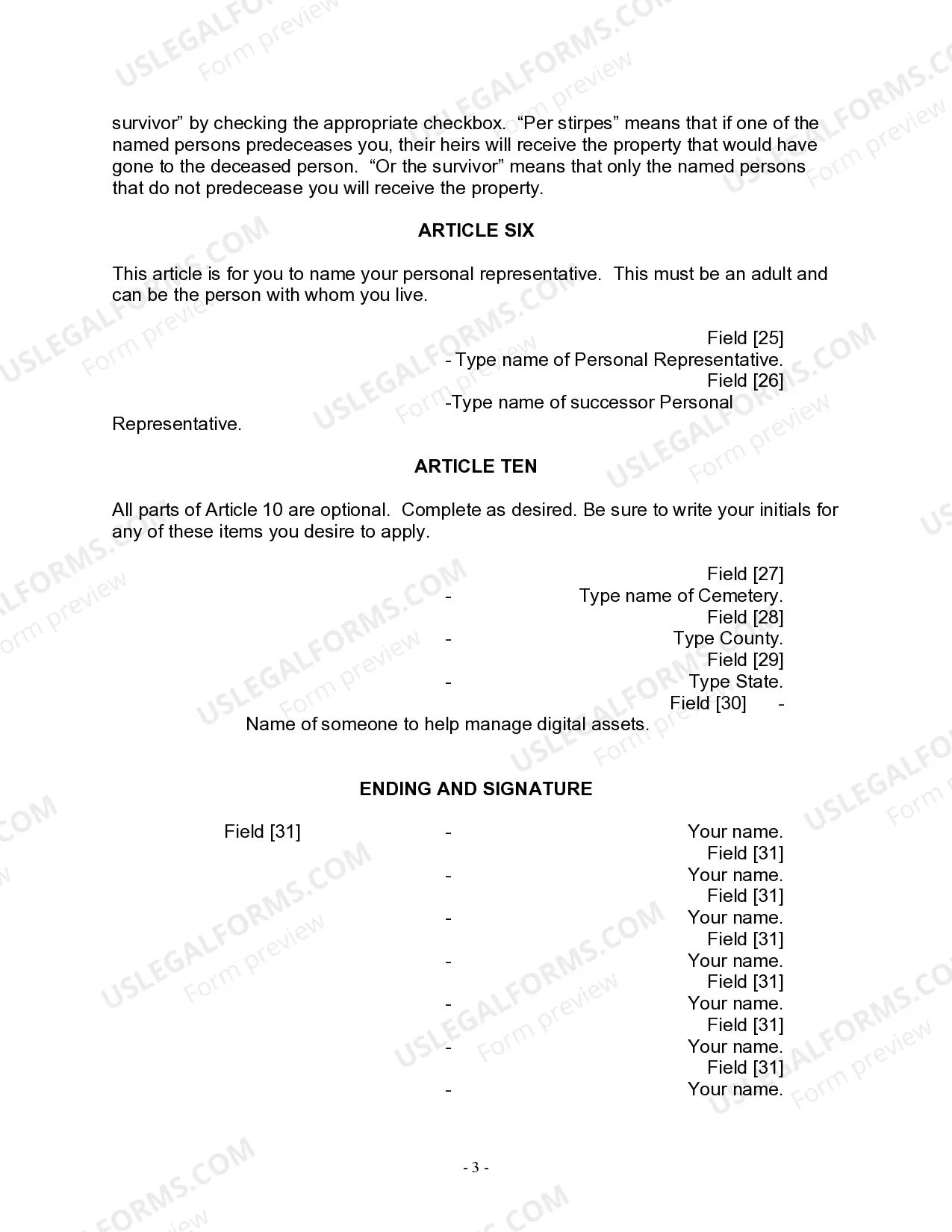
- Designate your personal representative and provide their contact information.
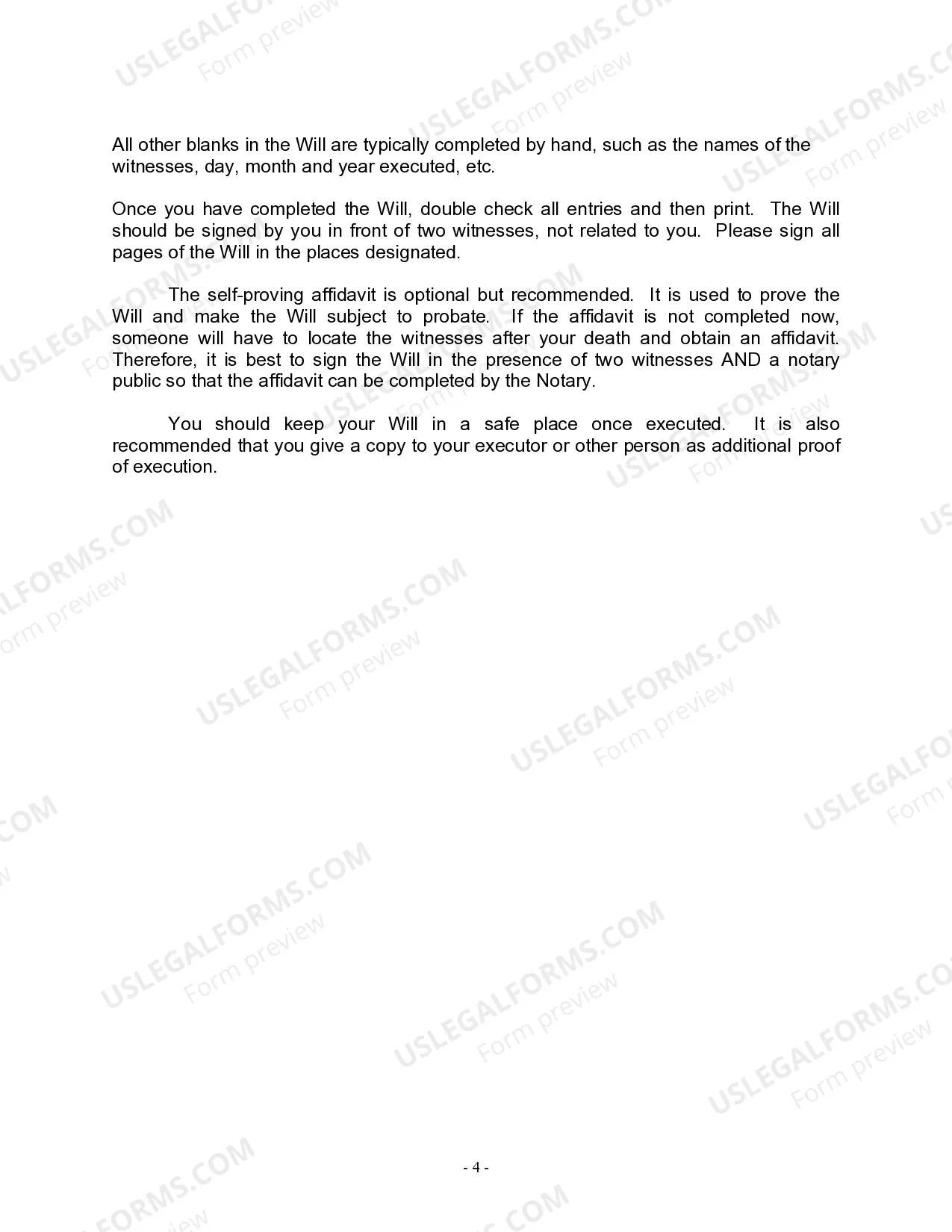
- Ensure that the will is signed in front of two witnesses who are not beneficiaries.
Is notarization required?
To make this form legally binding, it must be notarized. Our online notarization service, powered by Notarize, lets you verify and sign documents remotely through an encrypted video session.
Get your form ready online
Our built-in tools help you complete, sign, share, and store your documents in one place.
Make edits, fill in missing information, and update formatting in US Legal Forms—just like you would in MS Word.
Download a copy, print it, send it by email, or mail it via USPS—whatever works best for your next step.
Sign and collect signatures with our SignNow integration. Send to multiple recipients, set reminders, and more. Go Premium to unlock E-Sign.
If this form requires notarization, complete it online through a secure video call—no need to meet a notary in person or wait for an appointment.
We protect your documents and personal data by following strict security and privacy standards.

Make edits, fill in missing information, and update formatting in US Legal Forms—just like you would in MS Word.

Download a copy, print it, send it by email, or mail it via USPS—whatever works best for your next step.

Sign and collect signatures with our SignNow integration. Send to multiple recipients, set reminders, and more. Go Premium to unlock E-Sign.

If this form requires notarization, complete it online through a secure video call—no need to meet a notary in person or wait for an appointment.

We protect your documents and personal data by following strict security and privacy standards.
Mistakes to watch out for
- Failing to have the will witnessed correctly, which can invalidate the document.
- Not specifying a backup executor in case the primary executor cannot serve.
- Leaving out important details about property bequests, which may lead to disputes.
- Not keeping the will in a secure and accessible location for your executor.
Why use this form online
- Conveniently fill out the form on your computer, ensuring clarity and accuracy.
- Edit the document as needed until you are satisfied with the final version.
- Receive guidance in completing each section, reducing the likelihood of errors.
- Access and download the form at any time, allowing for quick and efficient planning.
Summary of main points
- This will is specifically tailored for widows or widowers without children.
- Creating a will ensures your assets are distributed according to your wishes.
- Proper execution and notarization are crucial for the will's legal effectiveness.
Looking for another form?


Form popularity
FAQ
Simply put, probate is the court-supervised process of inventorying the decedent's assets, prioritizing and paying the decedent's proper debts, and re-titling and distributing assets to the decedent's rightful heirs.
In Idaho, you can make a living trust to avoid probate for virtually any asset you ownreal estate, bank accounts, vehicles, and so on. You need to create a trust document (it's similar to a will), naming someone to take over as trustee after your death (called a successor trustee).
No, in Idaho, you do not need to notarize your will to make it legal. However, Idaho allows you to make your will "self-proving" and you'll need to go to a notary if you want to do that. A self-proving will speeds up probate because the court can accept the will without contacting the witnesses who signed it.
The decision to draft your own will should be made hesitantly and only after careful consideration. Idaho law recognizes handwritten wills, referred to as holographic wills. Material provisions of the will and the signature must be in the handwriting of the person making the will.
An individual can draft a will in order to document who shall receive all or a portion of their estate upon death. In Idaho, wills must be signed by two (2) witnesses who observed the testator sign the document. Though optional, a testator can have the document notarized for additional legal protection.
Wills Law in Idaho: Overview In the state of Idaho, testators must have their wills signed by at least two witnesses who either witnessed the actual signing, or the testator's own acknowledgment of the signing.Valid if signature and material provisions are in handwriting of testator; does not need witnesses.
No, in Idaho, you do not need to notarize your will to make it legal. However, Idaho allows you to make your will "self-proving" and you'll need to go to a notary if you want to do that. A self-proving will speeds up probate because the court can accept the will without contacting the witnesses who signed it.
You don't need a lawyer to create a will if you have a straightforward financial situation.You can use online templates or software to write a will yourself. In order to legalize the will, it needs to be signed and dated by you and at least two other witnesses.
As long as it was properly signed and witnessed by two adult independent witnesses who are present at the time you sign your will, it should be legally binding.Using the wrong wording could mean that your instructions aren't followed, or even that your will isn't valid.