Idaho Revocation of Statutory Living Will and Durable Power of Attorney for Health Care
Overview of this form
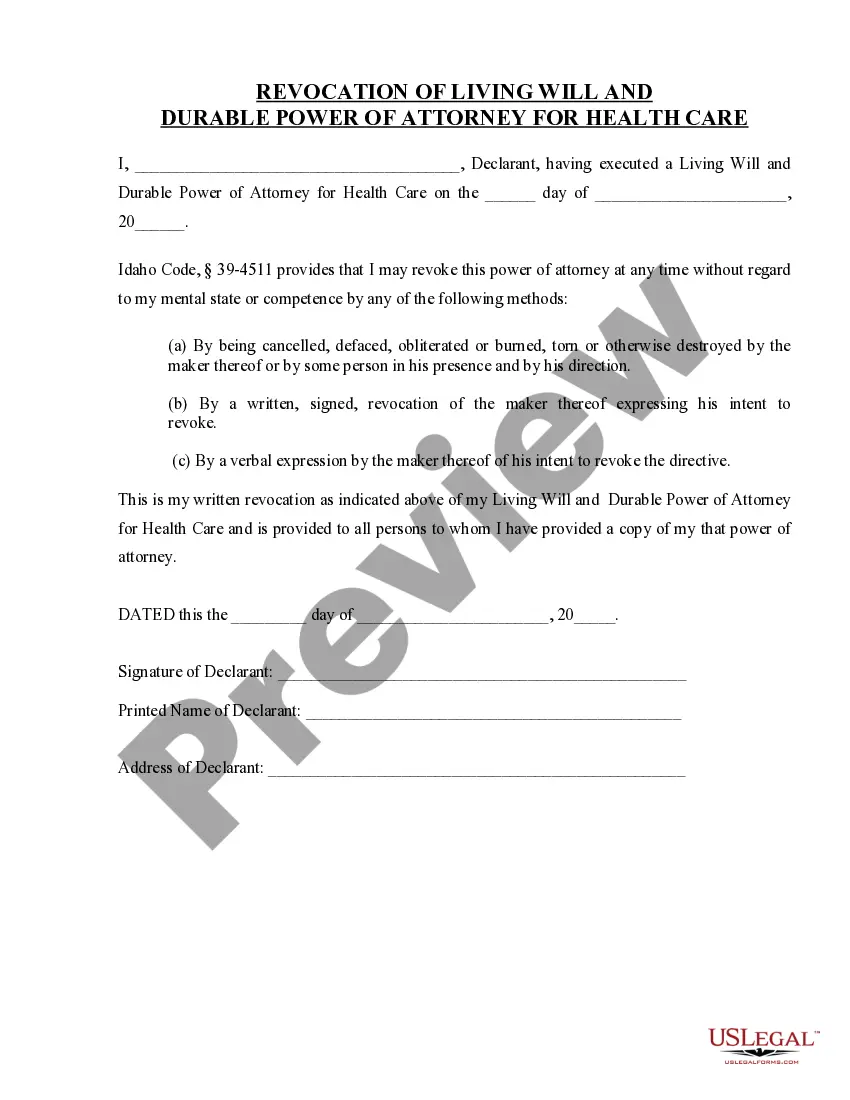
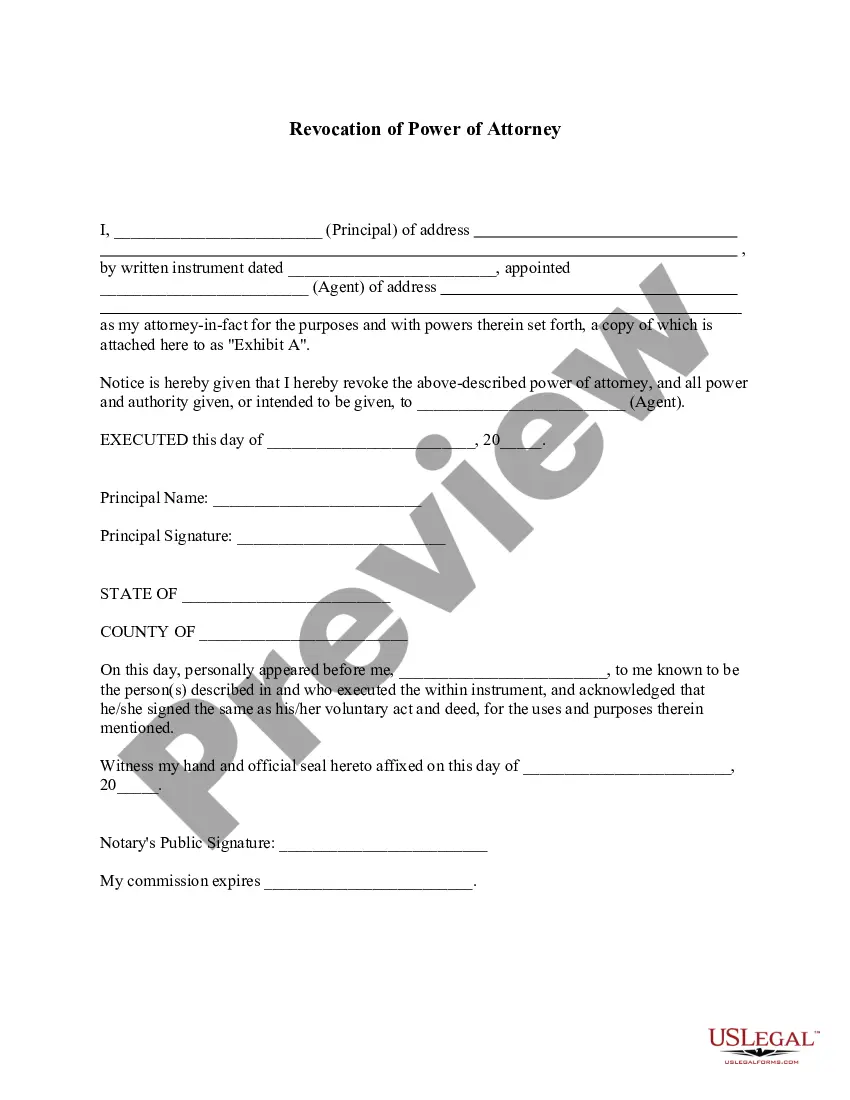
The Revocation of Statutory Living Will and Durable Power of Attorney for Health Care is a legal document that allows an individual, known as the declarant, to formally revoke their previously executed living will and durable power of attorney for health care. This form is essential for those who wish to change their health care directives or appoint a different agent for their health care decisions. Unlike a typical power of attorney, this revocation specifically addresses the cancellation of existing health care directives, ensuring that prior instructions are no longer in effect.
Key parts of this document
- Declarant's name and details to identify the individual revoking their previous directives.
- Date of the original Living Will and Durable Power of Attorney for Health Care.
- Clear statement of intent to revoke the previously executed documents.
- Methods of revocation, including written, verbal, or physical destruction of the original documents.
- Signature requirements for the declarant to validate the revocation.
- Address of the declarant for identification purposes.
When this form is needed
This form should be used when an individual decides to revoke their living will or durable power of attorney for health care for any reason. Common circumstances include a change in personal preferences regarding health care treatment, a change in the designated health care agent, or a desire to replace the previous documents with new directives. It can also be utilized if the declarant believes that their previous instructions no longer reflect their wishes.
Who this form is for
This form is intended for:
- Individuals who have previously executed a living will or a durable power of attorney for health care.
- People who wish to change their health care directives or agents.
- Declarants who want to ensure that their past instructions are no longer valid.
- Anyone who is legally competent and of sound mind to make such decisions.
How to complete this form
- Enter your full name as the declarant at the top of the form.
- Specify the date on which your original living will and durable power of attorney were executed.
- Clearly state your intent to revoke these documents in the designated section.
- Sign and date the form to validate your revocation.
- Provide your current address for identification purposes.
Does this document require notarization?
Notarization is required for this form to take effect. Our online notarization service, powered by Notarize, lets you verify and sign documents remotely through an encrypted video session, available 24/7.
Get your form ready online
Our built-in tools help you complete, sign, share, and store your documents in one place.
Make edits, fill in missing information, and update formatting in US Legal Forms—just like you would in MS Word.
Download a copy, print it, send it by email, or mail it via USPS—whatever works best for your next step.
Sign and collect signatures with our SignNow integration. Send to multiple recipients, set reminders, and more. Go Premium to unlock E-Sign.
If this form requires notarization, complete it online through a secure video call—no need to meet a notary in person or wait for an appointment.
We protect your documents and personal data by following strict security and privacy standards.

Make edits, fill in missing information, and update formatting in US Legal Forms—just like you would in MS Word.

Download a copy, print it, send it by email, or mail it via USPS—whatever works best for your next step.

Sign and collect signatures with our SignNow integration. Send to multiple recipients, set reminders, and more. Go Premium to unlock E-Sign.

If this form requires notarization, complete it online through a secure video call—no need to meet a notary in person or wait for an appointment.

We protect your documents and personal data by following strict security and privacy standards.
Common mistakes
- Failing to sign and date the form, which may render it invalid.
- Not providing the original date of the living will and durable power of attorney, causing confusion.
- Not communicating the revocation to relevant parties, such as health care providers or family members.
- Using ambiguous language that may not clearly convey the intent to revoke.
Benefits of using this form online
- Convenience of accessing and downloading the form from home.
- Editable format allows for easy customization to fit individual needs.
- Reliable templates drafted by licensed attorneys ensure legal compliance.
Legal use & context
- This revocation complies with Idaho law regarding health care directives.
- It allows the declarant to alter their advance healthcare decisions legally.
- Failure to properly complete the form may result in continued enforcement of existing directives.
Key takeaways
- The Revocation of Statutory Living Will and Durable Power of Attorney for Health Care allows for the cancellation of previous directives.
- Filling out this form ensures clear communication of your current health care wishes.
- It is crucial to distribute copies to relevant parties after revocation.
Looking for another form?
Form popularity
FAQ
The key difference lies in their functions. A living will outlines your preferences regarding medical treatments when you cannot communicate your wishes, while a durable power of attorney for health care allows you to designate someone to make those decisions on your behalf. This distinction is crucial in Idaho Revocation of Statutory Living Will and Durable Power of Attorney for Health Care situations, as both documents serve different roles in health care decision-making.
Advance directives are legally binding, so doctors have to follow them. False. Advance directives are legally recognized documents and doctors must respect your known wishes, but doctors can always refuse to comply with your wishes if they have an objection of conscience or consider your wishes medically inappropriate.
Even though they are not required to follow your wishes, most will do so.In an emergency, a physician's choices could override your living will for another reason; if proper care dictates you to be treated in a certain way or there is an ethical obligation, that could override your wishes.
With what is known as a durable power of attorney for health care, you can designate an agent that will make decisions that weren't covered by your living will. It is important to note that your health care agent can't overrule any of the provisions of your living will.
A living will is only valid if you are unable to communicate your wishes. A health care power of attorney gives someone else (the proxy) the ability to make decisions for you regarding your health care. Unlike a living will, it applies to both end-of-life treatment as well as other areas of medical care.
Can you have both a living will and healthcare power of attorney? Yes. Since a living will generally covers very specific issues like DNR (or do not resuscitate), it may not deal with other important medical concerns you might have.
Although it is not required, it is recommended that your Living Will and Power of Attorney for Health Care be witnessed or notarized.
With what is known as a durable power of attorney for health care, you can designate an agent that will make decisions that weren't covered by your living will. It is important to note that your health care agent can't overrule any of the provisions of your living will.
A living will is a vital part of the estate plan. You can alter it as your preferences and needs change over time.But your family cannot override your living will. They cannot take away your authority to make your own treatment and care plans.
In California and in many other states, there are POA forms specific to healthcare, and medical decisions are excluded from the general durable POAs. This means you can designate one person to be your agent for health decisions, and another for financial or legal decisions.