Idaho Letter from Tenant to Landlord containing Notice to landlord to withdraw improper rent increase due to violation of rent control ordinance
Overview of this form
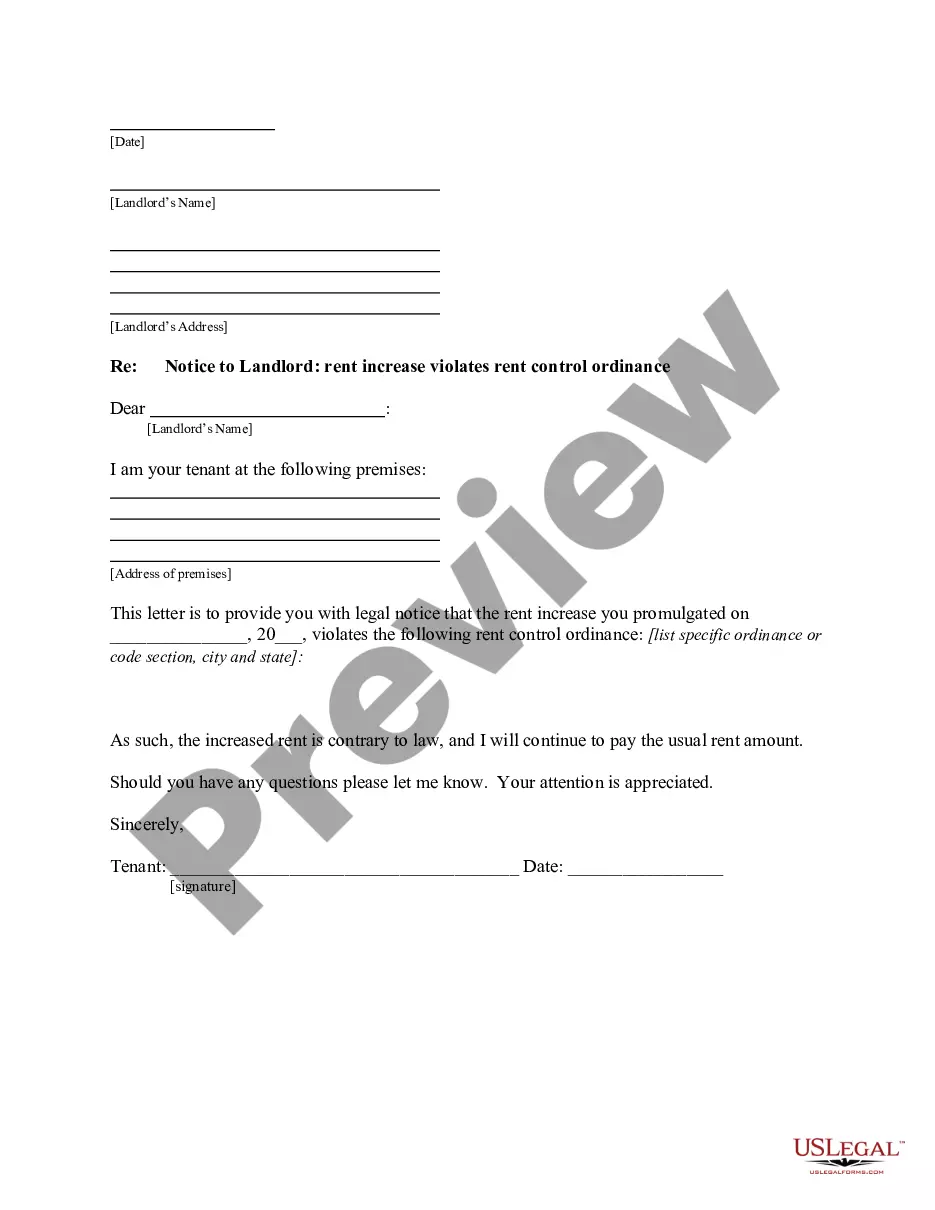
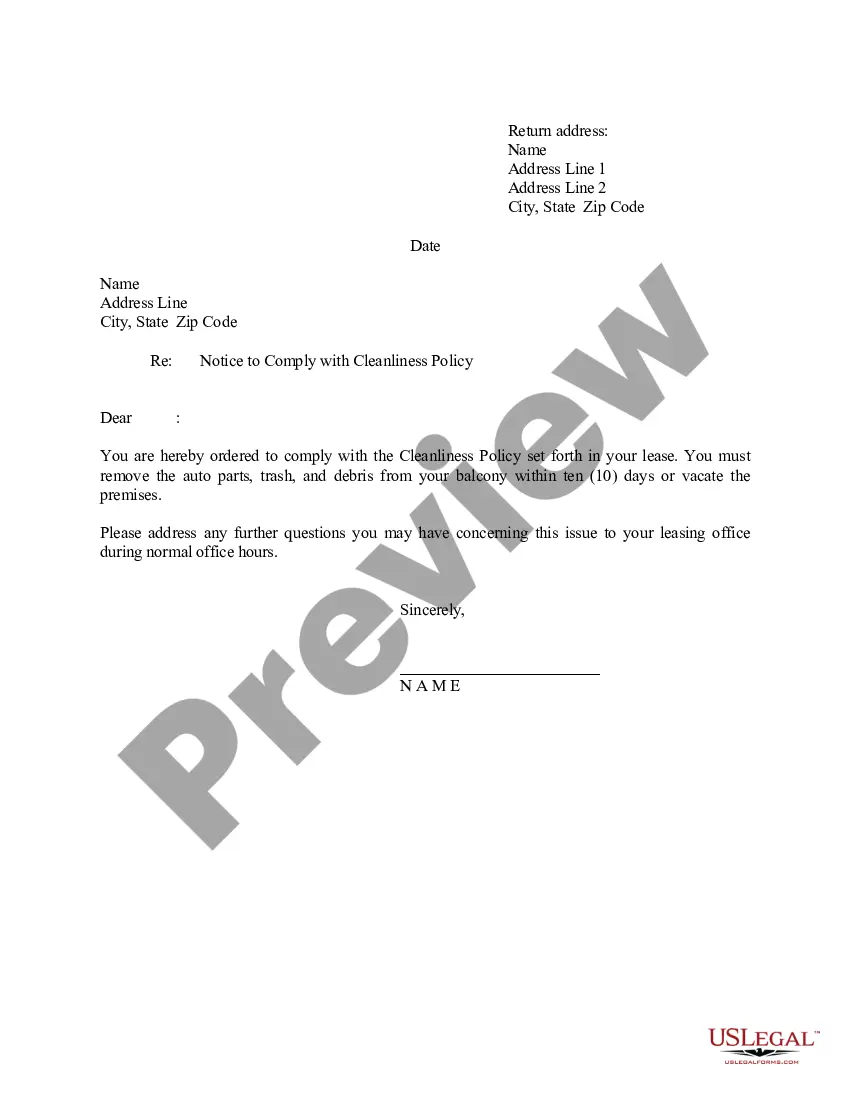
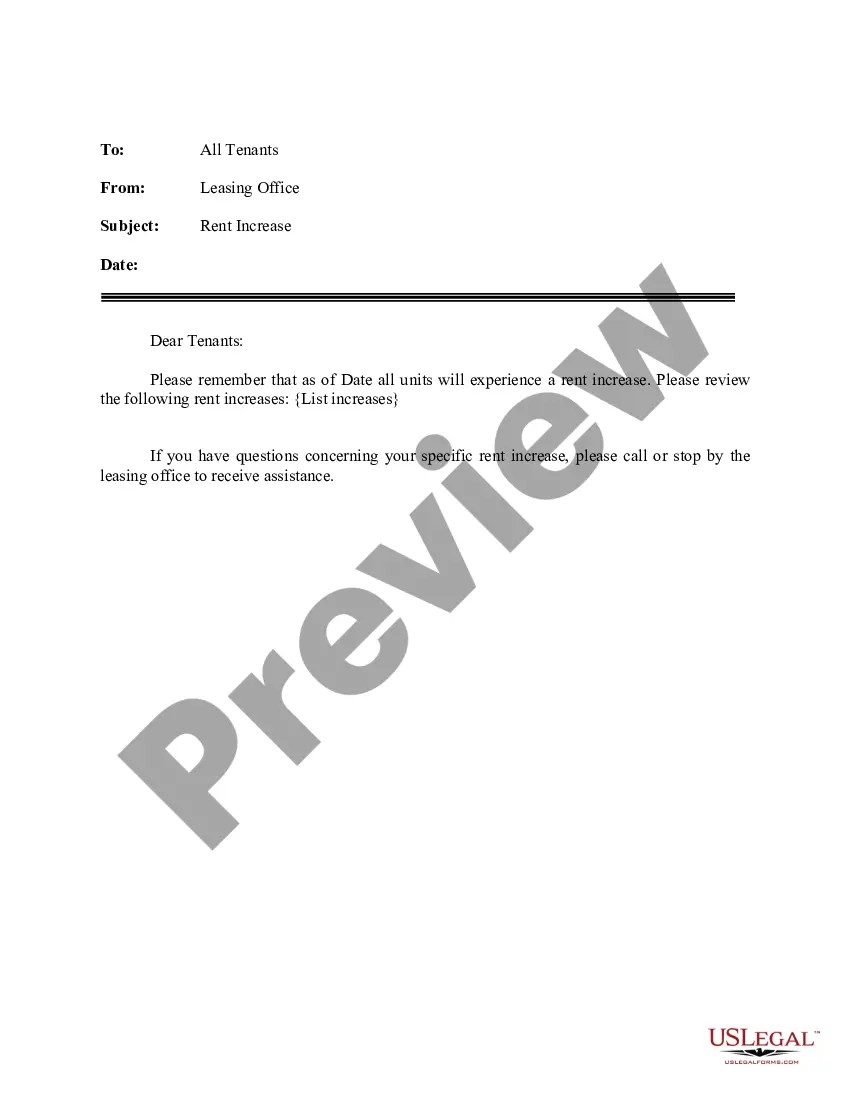
This form is a letter from the tenant to the landlord, specifically serving as a notice to withdraw an improper rent increase due to a violation of rent control ordinances. It is a formal way for tenants to communicate that a rent increase may be unlawful, thereby differentiating itself from other standard tenant-landlord communication letters.
Key parts of this document
- Introduction: States the purpose of the letter and the violation of rent control.
- Identification: Includes the tenant's name and contact information.
- Notice of improper rent increase: Clearly outlines the specific rent increase being contested.
- Legal reference: Mentions the relevant rent control ordinance or law that is allegedly violated.
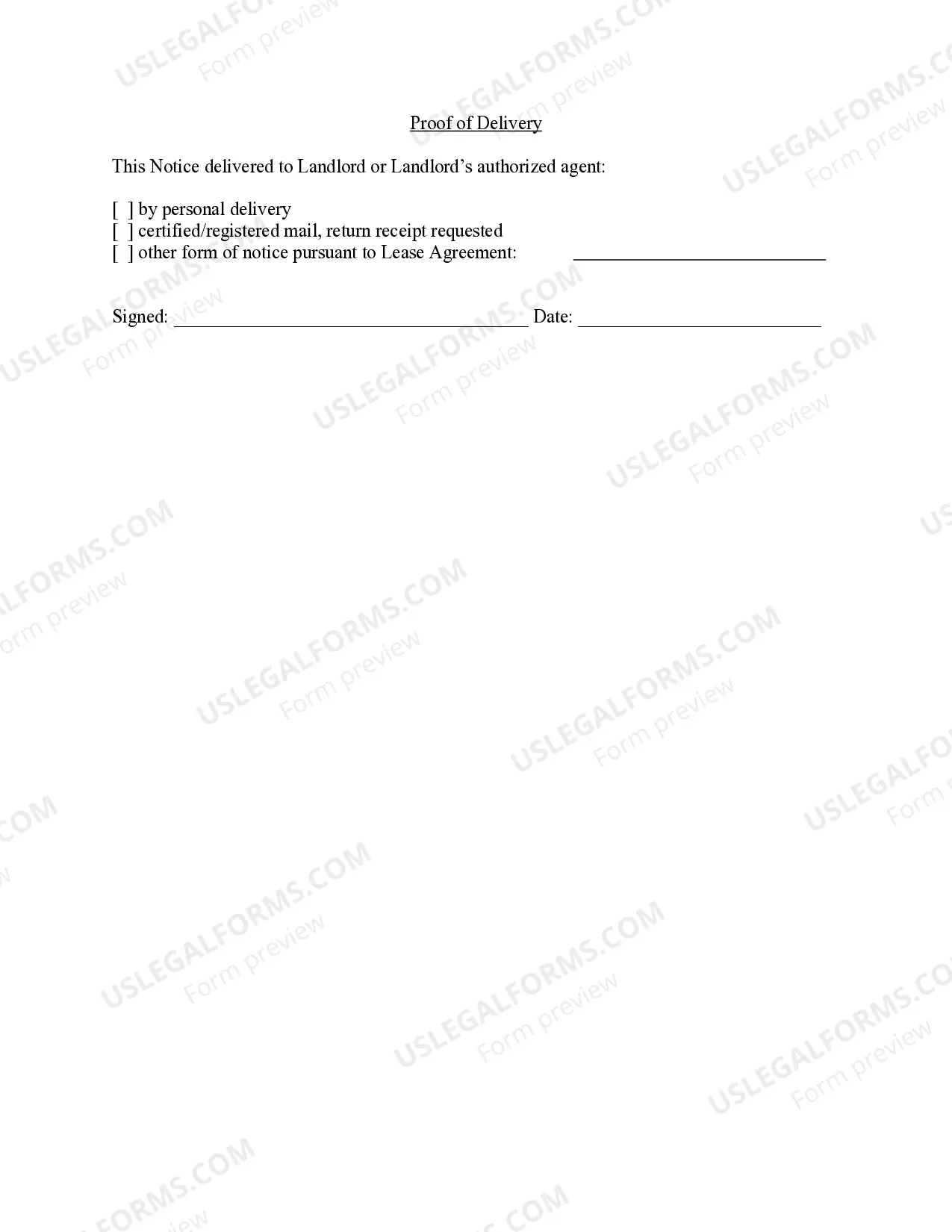
- Delivery method: Specifies how the notice is delivered to the landlord.

When to use this form
This form should be used when a tenant receives a notice of a rent increase that they believe violates local rent control laws. It is essential to notify the landlord formally in writing, indicating the specific legal reasons why the increase is improper. This letter acts as a protective measure for tenants and documents their stance regarding the rent increase.
Who needs this form
- Tenants who have received an unjustified rent increase.
- Individuals residing in areas with established rent control laws.
- Renters seeking to formally notify their landlord regarding rent disputes.
Steps to complete this form
- Identify the parties involved: Write your name as the tenant and the name of the landlord.
- Specify the property: Include the address of the rental property affected by the rent increase.
- Enter the details of the improper rent increase: Clearly state the amount of the increase and reference the rent control ordinance.
- Sign and date the letter: Provide your signature and the date of completion.
- Choose the method of delivery: Indicate whether you will deliver the notice in person or by certified mail.
Notarization requirements for this form
Notarization is not commonly needed for this form. However, certain documents or local rules may make it necessary. Our notarization service, powered by Notarize, allows you to finalize it securely online anytime, day or night.
Get your form ready online
Our built-in tools help you complete, sign, share, and store your documents in one place.
Make edits, fill in missing information, and update formatting in US Legal Forms—just like you would in MS Word.
Download a copy, print it, send it by email, or mail it via USPS—whatever works best for your next step.
Sign and collect signatures with our SignNow integration. Send to multiple recipients, set reminders, and more. Go Premium to unlock E-Sign.
If this form requires notarization, complete it online through a secure video call—no need to meet a notary in person or wait for an appointment.
We protect your documents and personal data by following strict security and privacy standards.

Make edits, fill in missing information, and update formatting in US Legal Forms—just like you would in MS Word.

Download a copy, print it, send it by email, or mail it via USPS—whatever works best for your next step.

Sign and collect signatures with our SignNow integration. Send to multiple recipients, set reminders, and more. Go Premium to unlock E-Sign.

If this form requires notarization, complete it online through a secure video call—no need to meet a notary in person or wait for an appointment.

We protect your documents and personal data by following strict security and privacy standards.
Common mistakes
- Failing to specify the exact violation of the rent control ordinance.
- Not including necessary identification details such as tenant or property address.
- Neglecting to keep a copy of the notice for personal records.
Why use this form online
- Convenience: Downloadable at any time, eliminating the need for in-person visits.
- Editability: Easily customize the form to suit your specific situation.
- Reliability: Form templates are drafted by licensed attorneys to ensure legal compliance.
Legal use & context
This notice serves as a legal document that can be used in potential disputes regarding rent increases. It can protect tenants by providing evidence of their attempt to resolve the issue amicably. However, it is advisable to seek legal counsel for further assistance based on individual circumstances.
Key takeaways
- This form is essential for tenants disputing unjust rent increases under rent control laws.
- Proper completion ensures clarity and strengthens your position against improper rent increases.
- Always keep a copy of the notification for your records as documentation of your actions.
Looking for another form?





Form popularity
FAQ
Benefits of Suing Your Landlord Filing a lawsuit does have some potential advantages for tenants. Could Motivate a Landlord to Settle Outside of Court: Notifying your landlord of your intention to sue him or her could motivate your landlord to do everything in their power to avoid actually going to court.
If your landlord breaches the warranty of habitability or the warranty of quiet enjoyment, you may be able to sue her to recover monetary damages.In some states, such as California and Arizona, you may be able to seek emotional distress damages if the landlord's actions were particularly egregious.
Tenant's name. Property address. Landlord name and contact information. Date the letter is written. Date the rent increase will take effect. Amount of rent increase. Current cost of rent.
The landlord had a duty to reasonably maintain the property; The landlord knew or should have known of the dangerous condition; The landlord breached their duty by failing to repair/fix the dangerous condition;
There are no limits on the number of times or the amount a landlord can increase the rent unless there is a provision in the lease. A tenant can move rather than pay the increase. Idaho Code Section 55-307.
Know your state's landlord/tenant laws. Read and respond to the court summons. Try to work out a settlement. Consider legal counsel. Show up for court. Look sharp and provide evidence.
If you're seeking damages for emotional distress caused by a landlord's discrimination, or punitive damages for especially blatant and intentional discrimination, a lawsuit may well be your best bet. Understand what's involved in suing your landlord. You may file a lawsuit in either federal or state court.
In most states, a landlord must give tenants notice at least 30 days before they'll enforce a rent increase. However, in other states like California, the notice can increase to 60 days' notice if the increase is more than 10% of the current rent rate.