Idaho Warranty Deed from two Individuals to Corporation
What is this form?
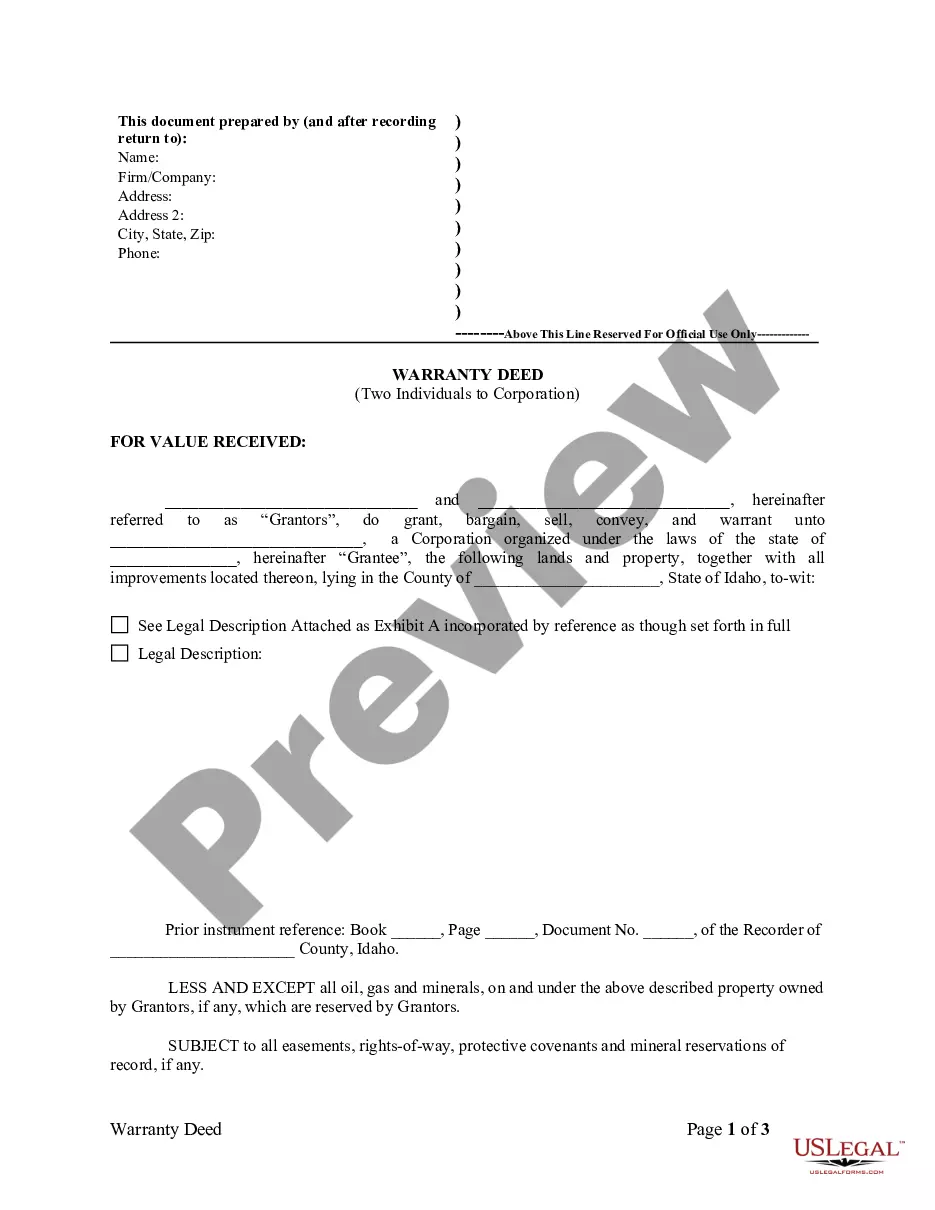
This Warranty Deed from two Individuals to Corporation is a legal document used to transfer ownership of real property from two individuals (the Grantors) to a corporation (the Grantee). This form specifically ensures that the Grantors convey the property while reserving any oil, gas, and minerals beneath the surface. Unlike a quitclaim deed, which provides no warranty of title, this warranty deed comes with a guarantee that the title is clear of encumbrances, making it a more secure option for property transactions.
Key components of this form
- Identification of Grantors and Grantee.
- Description of the property being conveyed.
- Reservation of oil, gas, and minerals by Grantors.
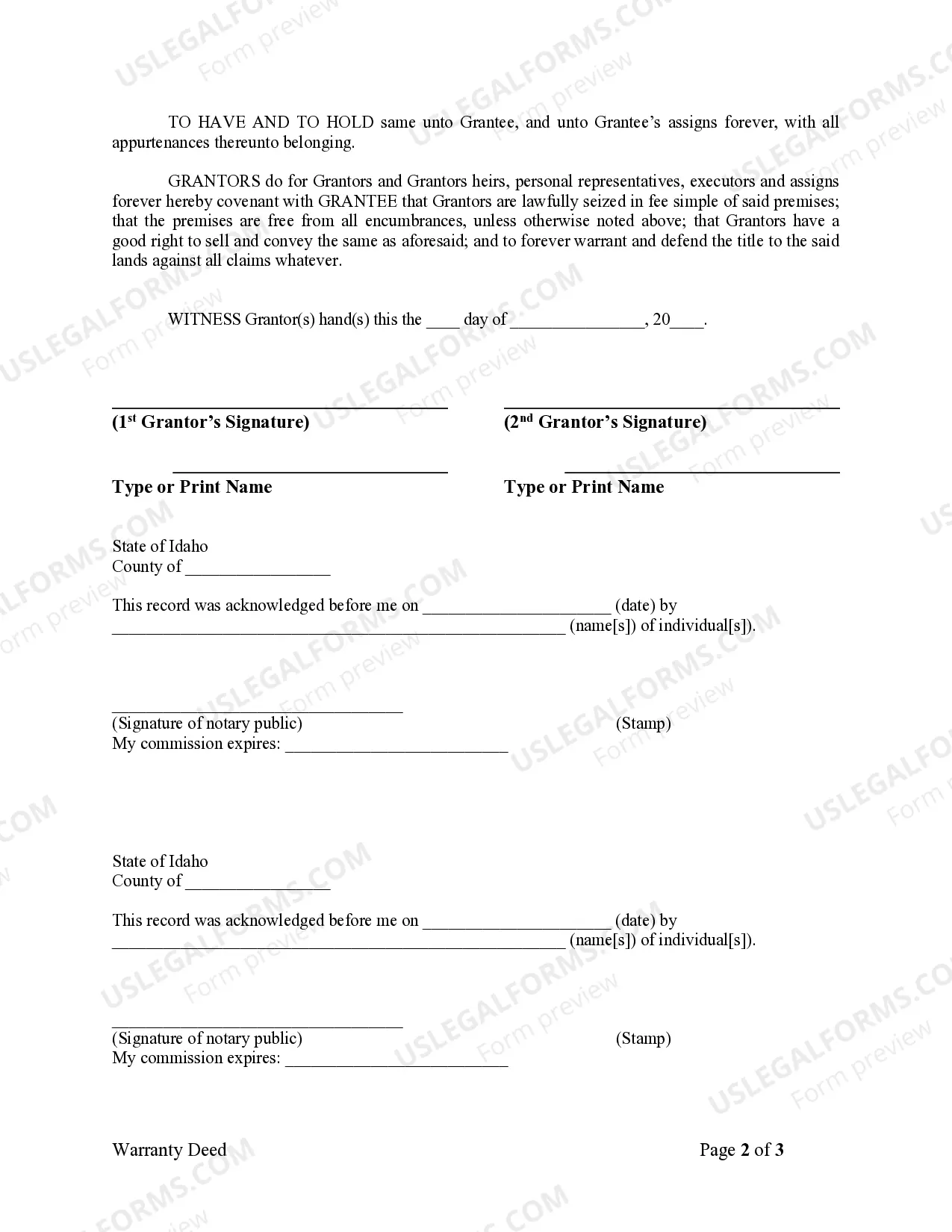
- Covenant ensuring the Grantors have clear title to the property.
- Signatures of Grantors and notarization details.


Situations where this form applies
This form is necessary when two individuals wish to transfer real property to a corporation. It is commonly used in scenarios such as business partnerships where property is being moved into a corporate entity, or in estate planning where property held by individuals is to be transferred into a corporate structure for liability protection or operational ease.
Who can use this document
- Individuals transferring property ownership to a corporation.
- Business owners forming a company that requires real estate assets.
- Estate planners moving assets into a corporate structure.
- Real estate professionals facilitating property transactions involving corporations.
How to complete this form
- Identify the parties involved: both Grantors and the Grantee.
- Provide a detailed description of the property being transferred.
- Include any reservations or exceptions, such as the mineral rights.
- Fill in the date of execution and the notarization sections.
- Ensure all Grantors sign the document before a notary public.
Is notarization required?
Notarization is required for this form to take effect. Our online notarization service, powered by Notarize, lets you verify and sign documents remotely through an encrypted video session, available 24/7.
Get your form ready online
Our built-in tools help you complete, sign, share, and store your documents in one place.
Make edits, fill in missing information, and update formatting in US Legal Forms—just like you would in MS Word.
Download a copy, print it, send it by email, or mail it via USPS—whatever works best for your next step.
Sign and collect signatures with our SignNow integration. Send to multiple recipients, set reminders, and more. Go Premium to unlock E-Sign.
If this form requires notarization, complete it online through a secure video call—no need to meet a notary in person or wait for an appointment.
We protect your documents and personal data by following strict security and privacy standards.

Make edits, fill in missing information, and update formatting in US Legal Forms—just like you would in MS Word.

Download a copy, print it, send it by email, or mail it via USPS—whatever works best for your next step.

Sign and collect signatures with our SignNow integration. Send to multiple recipients, set reminders, and more. Go Premium to unlock E-Sign.

If this form requires notarization, complete it online through a secure video call—no need to meet a notary in person or wait for an appointment.

We protect your documents and personal data by following strict security and privacy standards.
Avoid these common issues
- Failing to provide a complete legal description of the property.
- Not properly reserving oil, gas, and minerals when needed.
- Omitting signatures from either Grantor.
- Not having the deed notarized, potentially invalidating the transfer.
Advantages of online completion
- Convenient access to the document from anywhere.
- Editable format allows customization to fit specific needs.
- Reliability of attorney-reviewed forms ensures legal compliance.
Quick recap
- This Warranty Deed transfers property ownership from individuals to a corporation.
- It includes provisions to reserve mineral rights and ensure clear title.
- Proper notarization is crucial for the validity of the deed.
Looking for another form?
Form popularity
FAQ
Quitclaim deeds are most often used to transfer property between family members. Examples include when an owner gets married and wants to add a spouse's name to the title or deed, or when the owners get divorced and one spouse's name is removed from the title or deed.
In order to transfer ownership of the marital home pursuant to a divorce, one spouse is going to need to sign a quitclaim deed, interspousal transfer deed, or a grant deed, in order to convey the title to the property.
It is also crucial that a spouse know about the loan, even if he or she is not on the mortgage. In general, the spouse must sign a deed of trust, the Truth in Lending and Right to Cancel documents. By signing these documents, they are simply acknowledging the existence of the mortgage.
The name and address of the seller (called the grantor) The name and address of the buyer (called the grantee) A legal description of the property (found on the previous deed) A statement that the grantor is transferring the property to the grantee.
A warranty deed, also known as a general warranty deed, is a legal real estate document between the seller (grantor) and the buyer (grantee). The deed protects the buyer by pledging that the seller holds clear title to the property and there are no encumbrances, outstanding liens, or mortgages against it.
A warranty deed contains a guarantee that the grantor has legal title and rights to the real estate. A quitclaim deed offers little to no protection to the grantee.Warranty deeds ensure that the grantor has the right to sell the property, and guarantees that there are no liens or encumbrances against the land.
Quitclaim Deeds are used when the transfer of ownership in the property does not occur as the result of a traditional sale.Under a warranty deed, if it turns out that the property is not what the seller promised or there's an uncleared lien or other block to the title, the buyer can sue the seller and recover damages.
The drawback, quite simply, is that quitclaim deeds offer the grantee/recipient no protection or guarantees whatsoever about the property or their ownership of it. Maybe the grantor did not own the property at all, or maybe they only had partial ownership.
A warranty deed, also known as a general warranty deed, is a legal real estate document between the seller (grantor) and the buyer (grantee). The deed protects the buyer by pledging that the seller holds clear title to the property and there are no encumbrances, outstanding liens, or mortgages against it.