Iowa Notice of Dishonored Check - Civil - Keywords: bad check, bounced check
Overview of this form
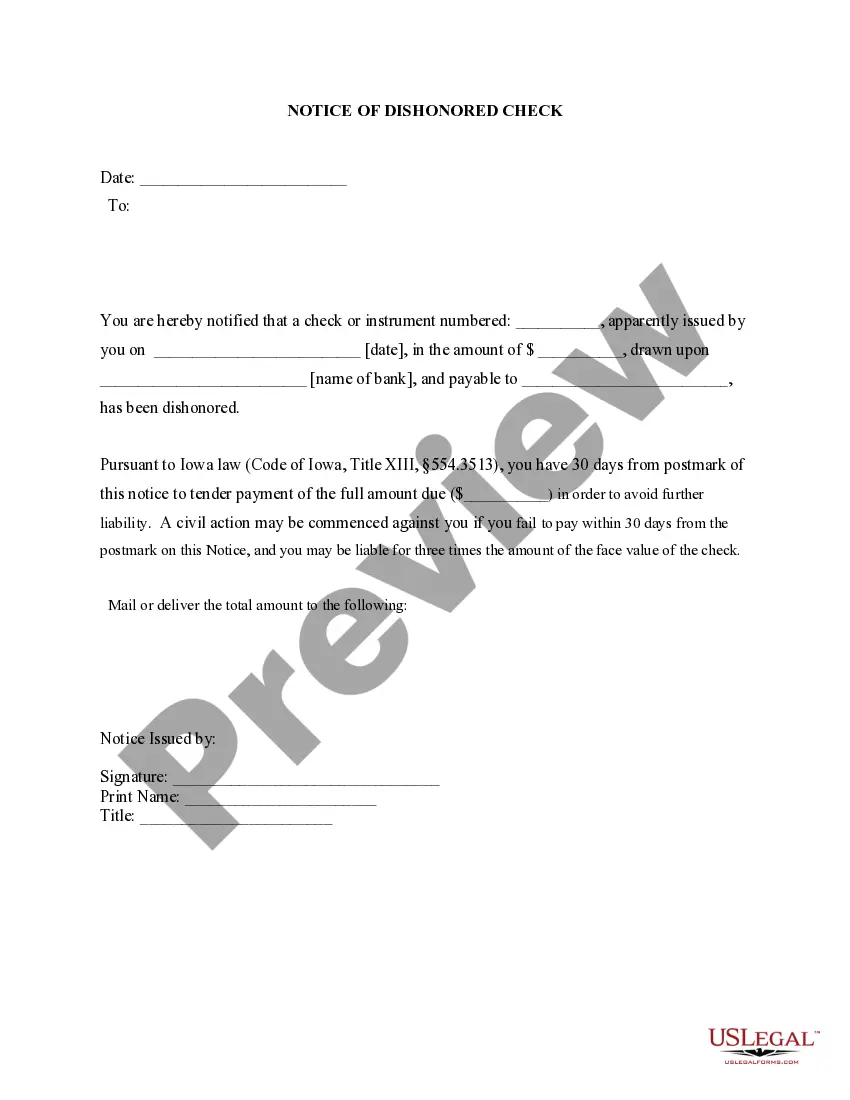
This Notice of Dishonored Check - Civil is a formal notification about a bounced or bad check that a bank refuses to pay due to insufficient funds or an invalid account. This form serves a crucial purpose in legal proceedings, as it typically fulfills a state requirement for the payee to notify the debtor of the dishonor before pursuing further action. By using this form, you can initiate the process of recovery on the dishonored check, ensuring that you comply with legal obligations and potentially recover the funds owed to you.
What’s included in this form
- Details of the check: including the date, amount, and the reason for dishonor.
- Debtor's information: names and contact details of the individual who issued the check.
- Amount due: specify the total amount owed, including any applicable fees.
- Payment timeline: outlines the 30-day period for payment to avoid legal action.
- Consequences of non-payment: potential legal ramifications including possible triple damages.

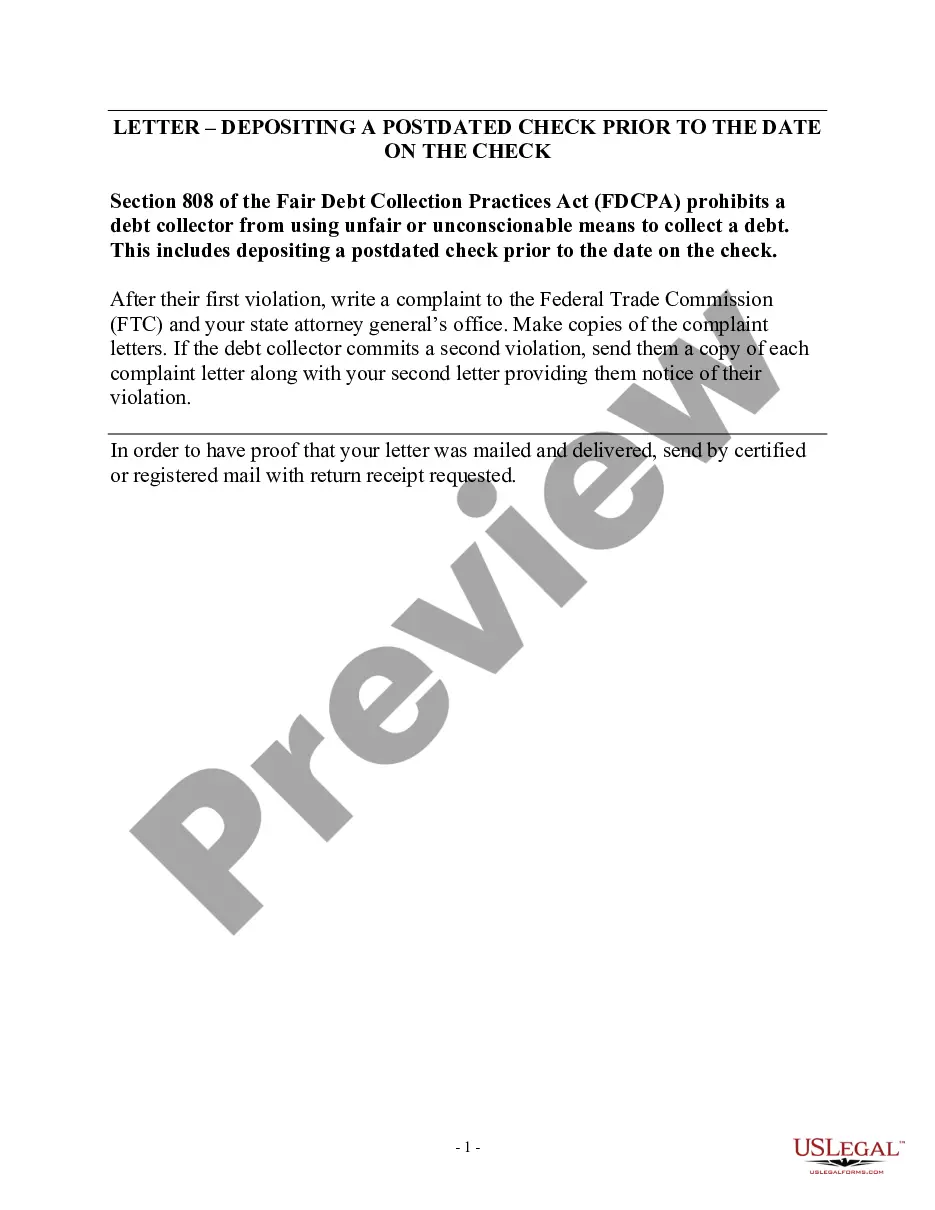
When this form is needed
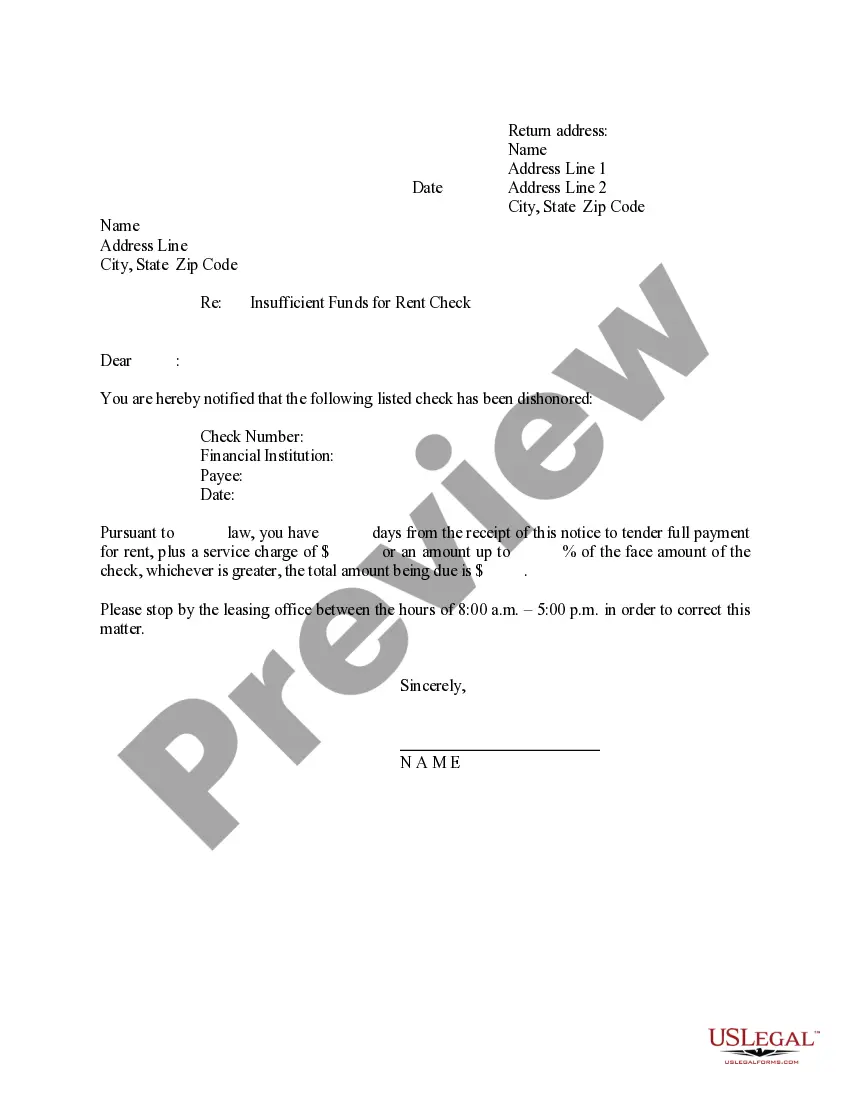
This form should be used when you receive a bounced check from a debtor. If a check is returned due to insufficient funds or if there is no account associated with the check, it is important to send this notice promptly. Using this form allows you to formally notify the debtor of the dishonor and provides them an opportunity to rectify the situation. Additionally, it establishes a record of communication which may be beneficial should you need to take further legal action.
Who can use this document
This form is designed for:
- Business owners who receive checks from customers that bounce.
- Individuals who hold a bad check from another party.
- Anyone needing to formally notify a debtor about insufficient funds on a check.
How to prepare this document
- Identify the parties involved: enter your name and the debtor's name as indicated.
- Provide the details of the check: include the date, amount, and reason for dishonor.
- Specify the total amount due: clarify any additional fees if applicable.
- Note the payment deadline: ensure the debtor understands they have 30 days to respond.
- Send the notice: mail the completed form to the debtorâs address and keep a copy for your records.
Is notarization required?
This form does not typically require notarization unless specified by local law. Ensure you check any state-specific regulations that might affect this requirement.
Get your form ready online
Our built-in tools help you complete, sign, share, and store your documents in one place.
Make edits, fill in missing information, and update formatting in US Legal Forms—just like you would in MS Word.
Download a copy, print it, send it by email, or mail it via USPS—whatever works best for your next step.
Sign and collect signatures with our SignNow integration. Send to multiple recipients, set reminders, and more. Go Premium to unlock E-Sign.
If this form requires notarization, complete it online through a secure video call—no need to meet a notary in person or wait for an appointment.
We protect your documents and personal data by following strict security and privacy standards.

Make edits, fill in missing information, and update formatting in US Legal Forms—just like you would in MS Word.

Download a copy, print it, send it by email, or mail it via USPS—whatever works best for your next step.

Sign and collect signatures with our SignNow integration. Send to multiple recipients, set reminders, and more. Go Premium to unlock E-Sign.

If this form requires notarization, complete it online through a secure video call—no need to meet a notary in person or wait for an appointment.

We protect your documents and personal data by following strict security and privacy standards.
Common mistakes
- Failing to include all necessary information about the check.
- Not sending the notice within the required timeframe after the check is dishonored.
- Incorrectly calculating the total amount due, including fees.
- Sending the notice to an incorrect address.
Why complete this form online
- Convenience: easily download and complete the form at your own pace.
- Editability: customize the form to include specific details related to your situation.
- Reliability: the forms are drafted by licensed attorneys to ensure legal compliance.
Main things to remember
- A Notice of Dishonored Check is crucial for notifying debtors about bounced checks.
- The form helps protect your rights for recovering funds owed.
- It is necessary to act within 30 days of postmark to avoid further legal action.
Looking for another form?

Form popularity
FAQ
Writing a bad check over $500 in Iowa can result in serious legal consequences, including potential criminal charges. The law treats larger amounts more severely, and you may face fines or even imprisonment. It’s crucial to rectify the situation promptly by settling the debt or seeking legal assistance through services like US Legal Forms.
The bad check law in Iowa addresses circumstances under which writing a check without sufficient funds can lead to legal repercussions. Typically, if a check is returned unpaid, you may have avenues to seek restitution. Utilizing resources like US Legal Forms can aid you in understanding your rights and obligations related to bounced checks.
To dispute a bounced check, first, contact your bank for clarification. Document all communications and gather evidence, such as receipts or emails. If the situation does not resolve, you may pursue legal recourse, including an Iowa Notice of Dishonored Check - Civil.
Yes, you can dispute a bounced check if you believe there is a legitimate reason. You should gather any relevant documentation to support your claim. If necessary, consult legal resources like US Legal Forms to guide you through the dispute process effectively.
A check may be returned for several reasons, such as insufficient funds or a closed bank account. Other common reasons include a signature mismatch or a stop payment order by the issuer. Understanding these factors can help you avoid complications when dealing with bad checks.
If you receive a bounced check, reach out to the payer to notify them. It’s essential to give them a chance to rectify the situation, either by providing funds or issuing a new check. If they fail to respond, you can file for an Iowa Notice of Dishonored Check - Civil to seek recovery.
To resolve a bounced check, contact the check issuer directly. Clear communication can often lead to a repayment arrangement. If discussions do not yield results, you may need to consider legal action, such as pursuing an Iowa Notice of Dishonored Check - Civil through platforms like US Legal Forms.
In Iowa, the statute of limitations for filing a claim related to a bounced check is generally five years. This time frame begins from the date of the dishonor. Understanding this timeline is crucial for effectively pursuing your rights under the Iowa Notice of Dishonored Check - Civil. If you wait too long to act, you might lose your ability to seek compensation for damages incurred due to the bad check.
When someone writes you a bad check, the check is not honored by the bank due to insufficient funds or an account closure. You can take legal action under Iowa Notice of Dishonored Check - Civil, which allows you to seek damages. It's essential to notify the check writer and provide an opportunity to remedy the situation. If not addressed, you may consider filing a complaint, as unresolved bounced checks can lead to further complications.
In Iowa, the laws surrounding a bad check are primarily covered under code 713.3, which outlines the legal ramifications of issuing checks without sufficient funds. If you are involved in a bounced check situation, this code is essential for understanding your legal position. Knowing this law can help you navigate the complexities of your case. For those needing assistance, US Legal Forms offers valuable resources to guide you through the process.