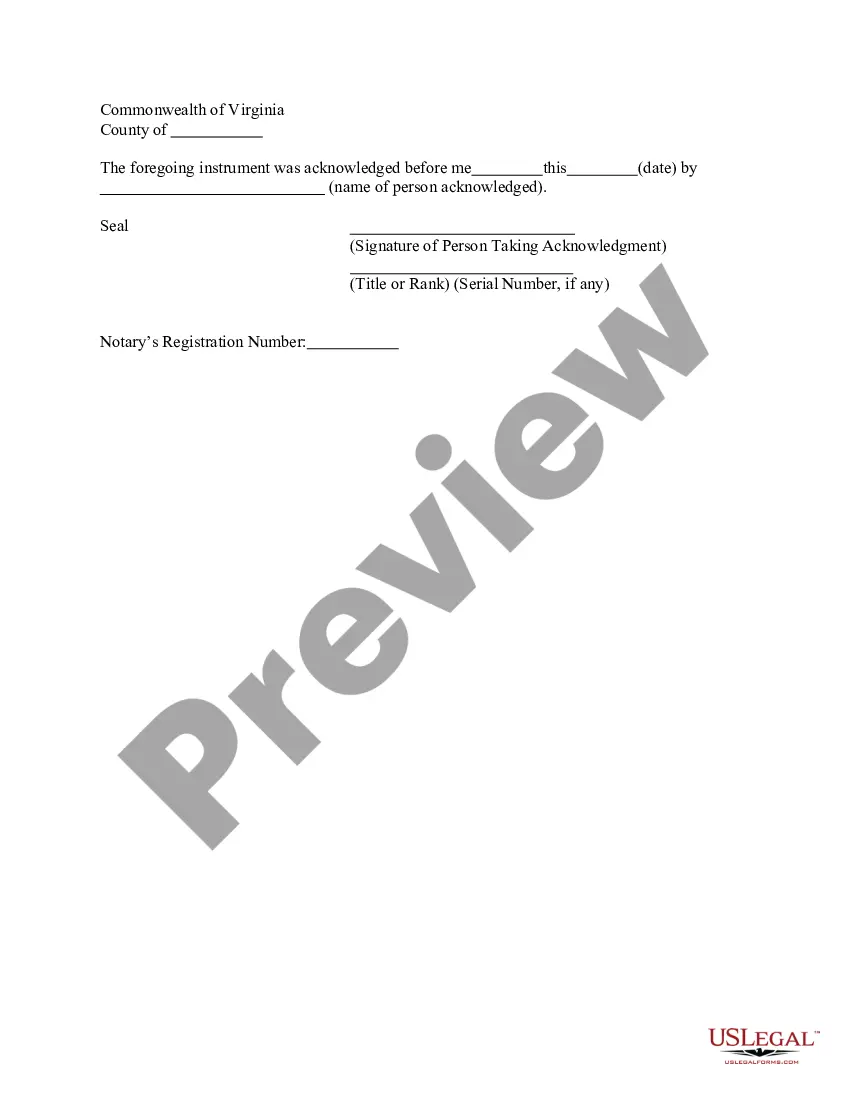
Iowa Quitclaim Deed from Corporation to Two Individuals
Overview of this form
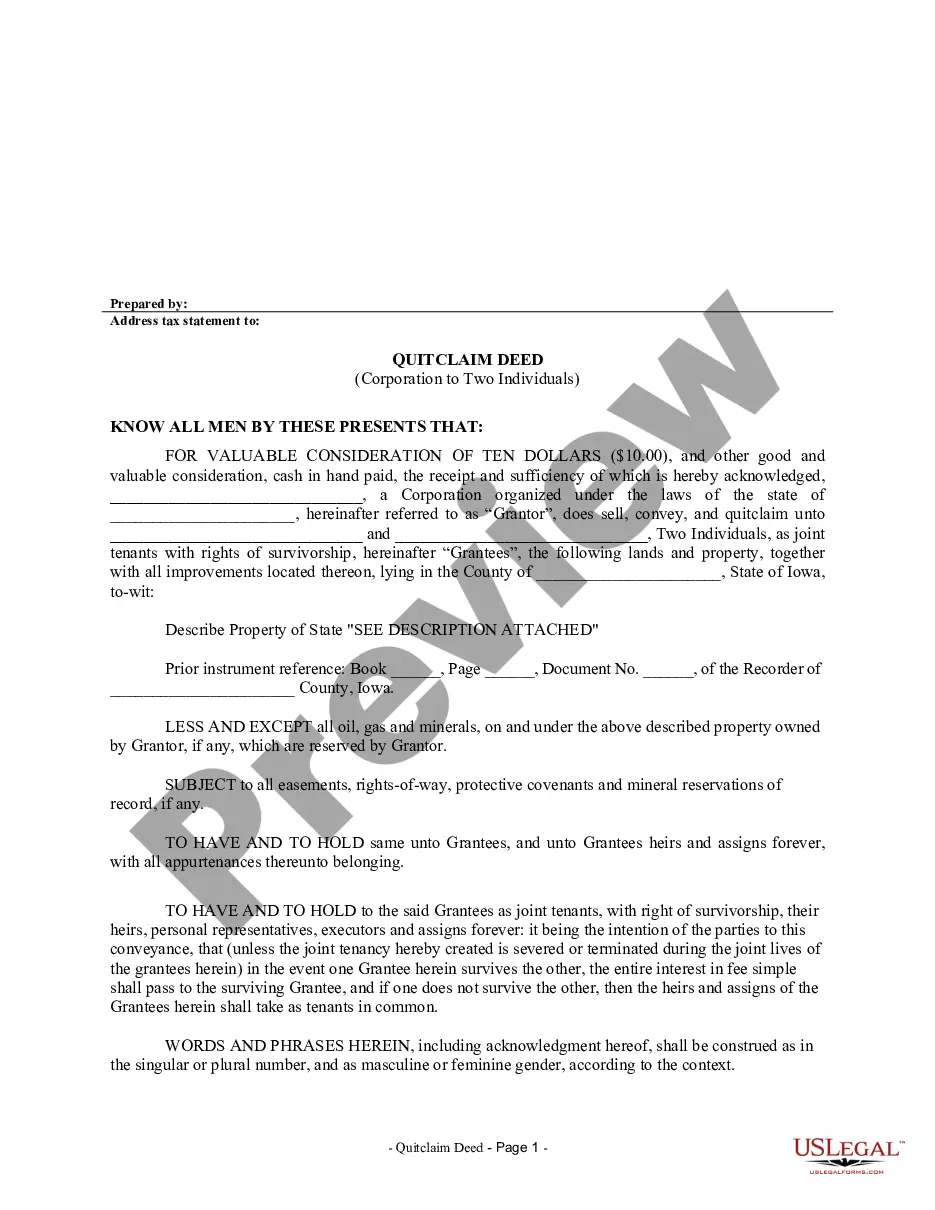
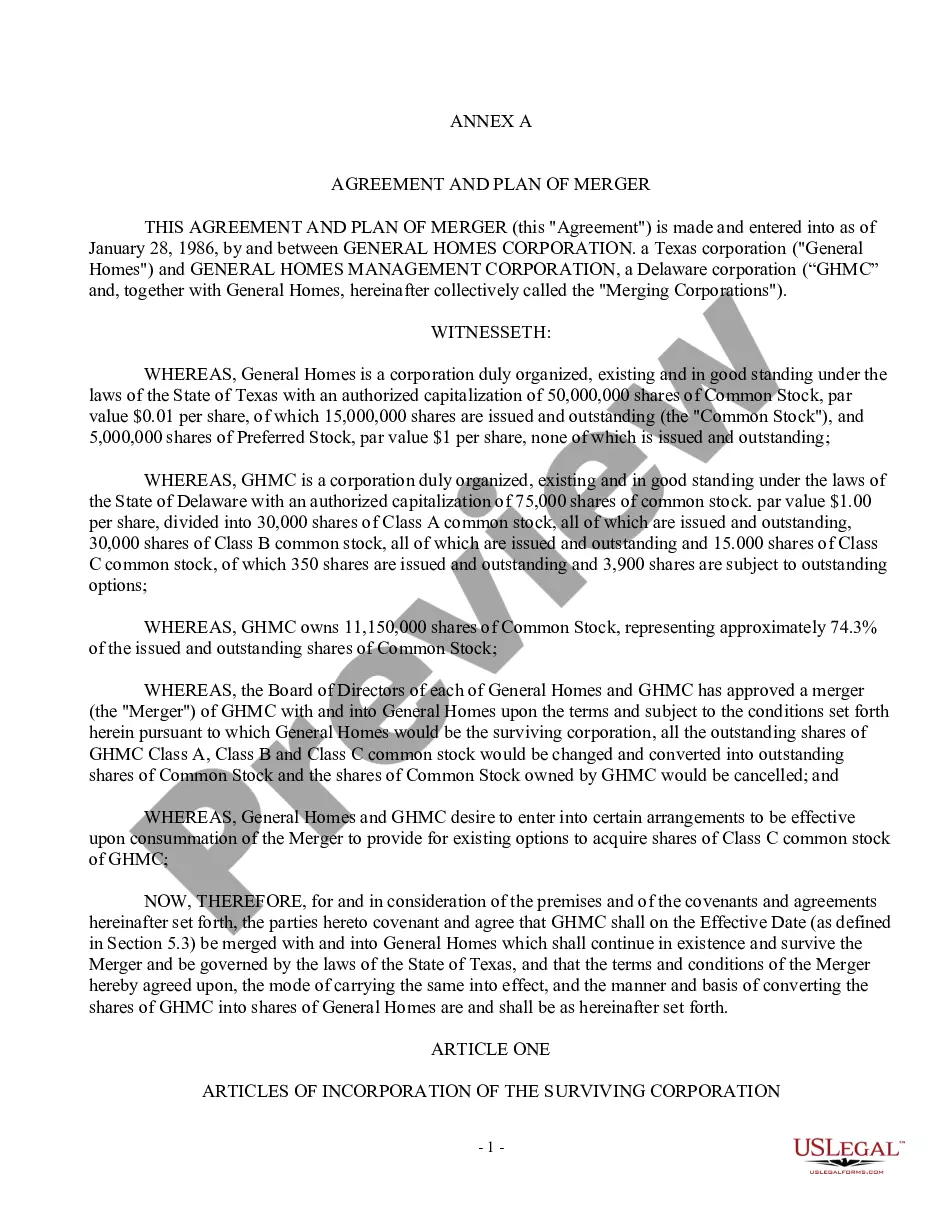
The Quitclaim Deed from Corporation to Two Individuals is a legal document that allows a corporation to transfer property ownership to two individual grantees. This form specifically differs from other deeds by its structure, indicating that the grantor is a corporation and the grantees are joint tenants. The grantor conveys their interest in the property while excluding any rights to oil, gas, or minerals beneath the land. This deed complies with relevant state laws to ensure valid transfer of title.
Form components explained
- Grantor and grantee information: Identification of the corporation transferring property and the two individuals receiving it.
- Property description: Exact details of the property being conveyed.
- Consideration statement: Acknowledgment of the value exchanged, typically set at ten dollars.
- Joint tenancy clause: Specification of ownership type for grantees, including survivorship rights.
- Exclusions: Reservation of any oil, gas, and minerals beneath the property by the grantor.
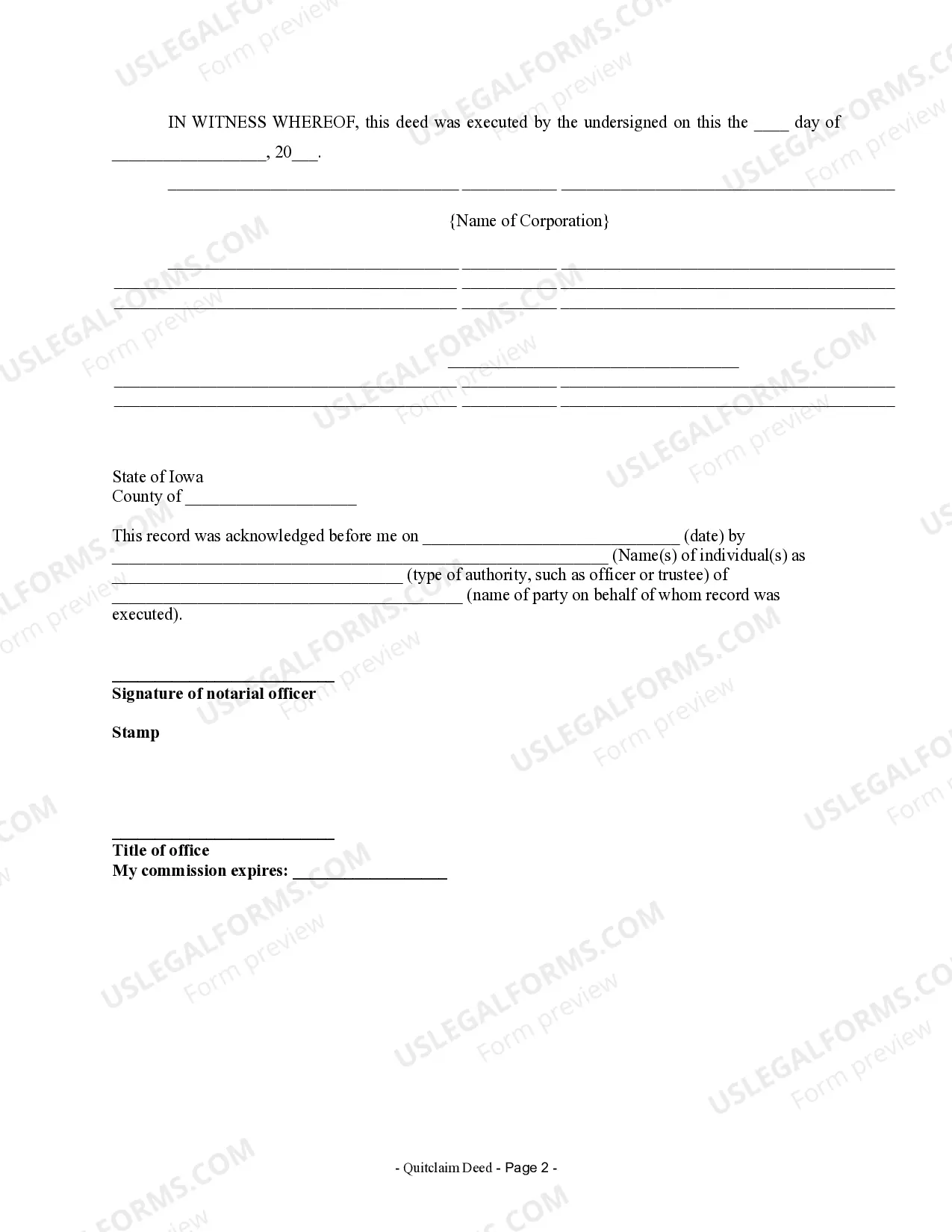
- Notarization section: Space for notarization to authenticate the deed.




When to use this document
This form is needed when a corporation wishes to transfer ownership of real property to two individuals either as a gift or in exchange for a nominal value. It is commonly used in situations where corporate property is being divested or when securing joint ownership between two parties is desired. It can be particularly useful in estate planning or business restructuring scenarios.
Intended users of this form
- Corporations transferring real estate to individuals.
- Individuals seeking to acquire property from a corporation with joint ownership.
- Attorneys or legal representatives assisting clients in property transactions.
How to complete this form
- Identify the parties: Complete the names and addresses of both the corporation (grantor) and the individuals (grantees).
- Specify the property: Describe the property being conveyed accurately, ensuring it matches records.
- Enter the consideration: Record the nominal value recognized for the transaction, typically ten dollars.
- Indicate joint tenancy: Clearly state that the grantees are to hold the property as joint tenants with rights of survivorship.
- Sign and notarize: Ensure the deed is signed by authorized representatives of the corporation and that it is notarized to validate the transfer.
Does this document require notarization?
This form needs to be notarized to ensure legal validity. US Legal Forms provides secure online notarization powered by Notarize, allowing you to complete the process through a verified video call, available anytime.
Get your form ready online
Our built-in tools help you complete, sign, share, and store your documents in one place.
Make edits, fill in missing information, and update formatting in US Legal Forms—just like you would in MS Word.
Download a copy, print it, send it by email, or mail it via USPS—whatever works best for your next step.
Sign and collect signatures with our SignNow integration. Send to multiple recipients, set reminders, and more. Go Premium to unlock E-Sign.
If this form requires notarization, complete it online through a secure video call—no need to meet a notary in person or wait for an appointment.
We protect your documents and personal data by following strict security and privacy standards.

Make edits, fill in missing information, and update formatting in US Legal Forms—just like you would in MS Word.

Download a copy, print it, send it by email, or mail it via USPS—whatever works best for your next step.

Sign and collect signatures with our SignNow integration. Send to multiple recipients, set reminders, and more. Go Premium to unlock E-Sign.

If this form requires notarization, complete it online through a secure video call—no need to meet a notary in person or wait for an appointment.

We protect your documents and personal data by following strict security and privacy standards.
Typical mistakes to avoid
- Failing to provide an accurate property description, leading to potential disputes.
- Not securing the necessary signatures from corporate officers.
- Omitting the notarization, which could invalidate the deed in certain jurisdictions.
- Misidentifying the type of property ownership, which can affect the rights of the grantees.
Why use this form online
- Convenience of downloading and filling out the form from home.
- Editable templates that allow for easy modification to meet specific needs.
- Access to forms drafted by licensed attorneys ensuring legal compliance.
Looking for another form?

Form popularity
FAQ
In the context of an Iowa Quitclaim Deed from Corporation to Two Individuals, you can list numerous names on the deed. However, practicality and clarity should guide your decision-making. Each person's name contributes to the joint ownership of the property, so ensure that everyone involved understands their rights and responsibilities. If you are uncertain, using platforms like uslegalforms can simplify the process, making it clearer and legally sound.
When dealing with an Iowa Quitclaim Deed from Corporation to Two Individuals, the number of people that can be named on the deed can vary. Typically, you can include multiple individuals, as there is no set limit. However, it is essential to ensure that all parties involved agree to the terms of the transfer. Consulting with legal expertise may help clarify any complexities related to naming multiple individuals.
One of the significant disadvantages of an Iowa Quitclaim Deed from Corporation to Two Individuals is the lack of warranties. This means that if any title issues arise after the transfer, the individuals may have no recourse against the corporation. Furthermore, quitclaim deeds don't offer protection against future claims. Therefore, it’s crucial for you to ensure that the corporation holds clear title before proceeding.
Yes, you can have multiple names on a house deed. An Iowa Quitclaim Deed from Corporation to Two Individuals allows you to list both individuals, giving them joint ownership. This can enhance the legal standing when selling or managing the property. Ensure that all co-owners are aware of their responsibilities and rights regarding the property.
Adding someone to a deed, such as in an Iowa Quitclaim Deed from Corporation to Two Individuals, can have some drawbacks. This action gives the added individual an ownership stake in the property, which may lead to complications in decision-making. Additionally, if the new co-owner faces financial troubles, creditors may claim part of the property. It’s vital to fully understand these implications before proceeding.
There is no strict limit to the number of people you can put on a land deed in Iowa. The Iowa Quitclaim Deed from Corporation to Two Individuals can typically accommodate multiple names. While including more people can complicate decision-making, it also provides shared responsibility for the property. Always ensure that all parties understand their rights and obligations.
Yes, you can put multiple people on a deed. In the case of an Iowa Quitclaim Deed from Corporation to Two Individuals, the deed can list both individuals as co-owners. This arrangement allows shared ownership and equal rights to the property. It simplifies the transfer of property rights and makes management easier if both individuals agree.
A quitclaim deed can include multiple parties on both the grantor and grantee sides. In the context of an Iowa Quitclaim Deed from Corporation to Two Individuals, it is common to see a corporation transferring property to more than one individual. Just ensure proper identification and roles for all parties involved in the deed.
A quitclaim deed can be deemed invalid if it lacks essential elements like a clear property description, required signatures from both parties, or proper notarization. Additionally, if the document contains errors or is not properly recorded with the county, it may not hold up in legal terms. Always ensure correctness and compliance with local laws.
In Minnesota, a quitclaim deed allows one party to transfer their interest in a property to another without any warranties or guarantees. This type of deed is often used to clear title issues or transfer ownership between family members. However, it’s crucial to understand that the recipient receives whatever interest the grantor has in the property.