Hawaii Last Will and Testament for a Married Person with No Children
What is this form?
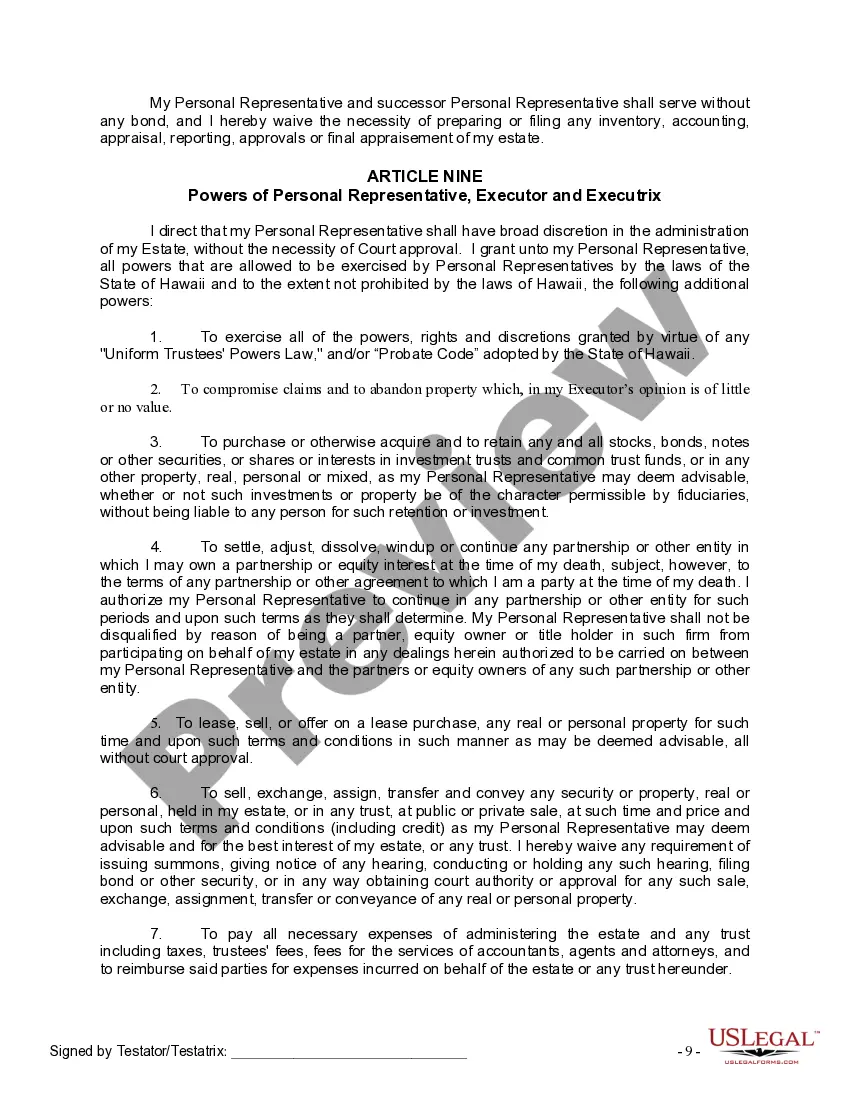
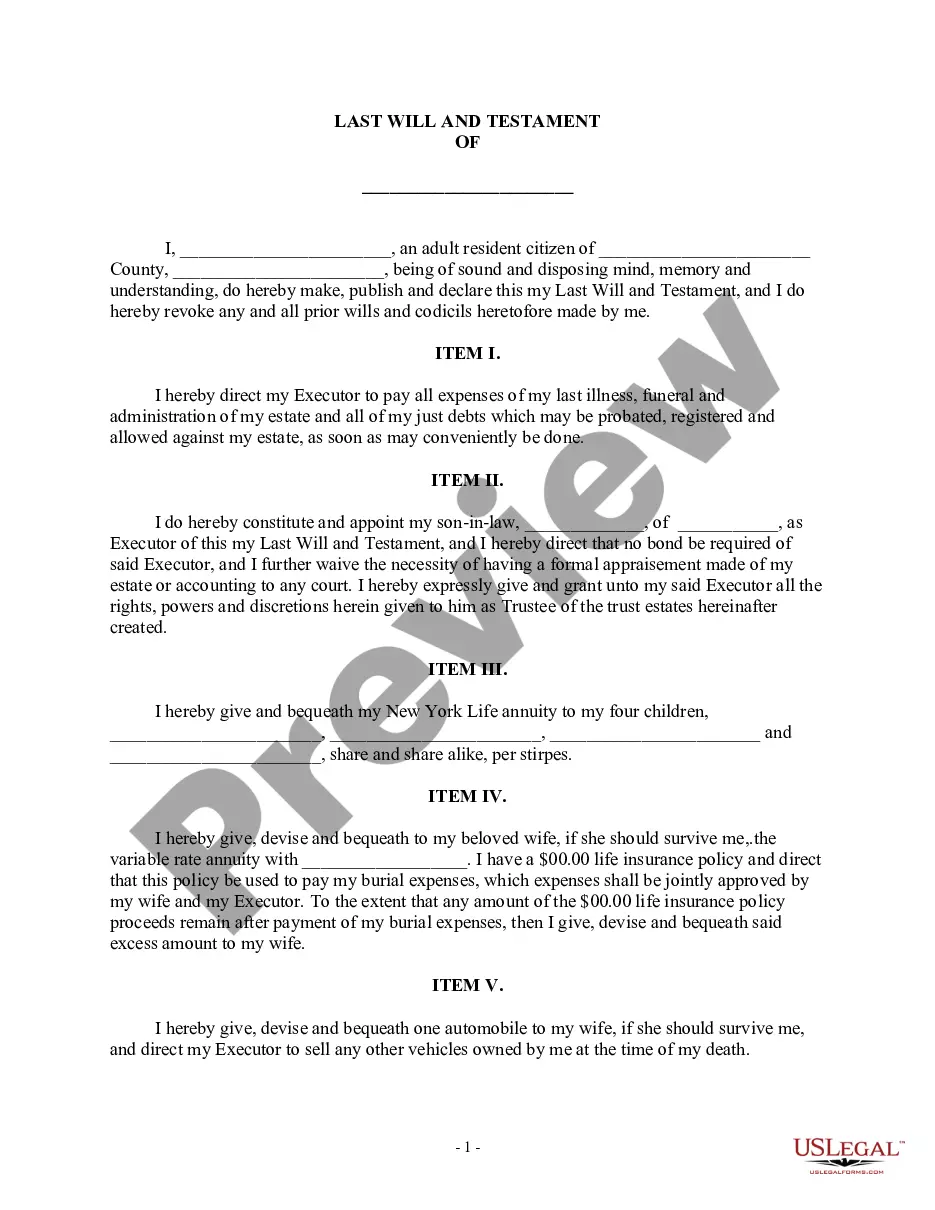
This form is a Last Will and Testament specifically designed for married individuals without children. Its purpose is to outline how your assets will be distributed after your death and to appoint a personal representative to manage your estate. This will includes provisions for your spouse and ensures your wishes are legally documented and enforceable. It differs from other wills by focusing on the needs and circumstances of married individuals who do not have any children to consider in their estate planning.
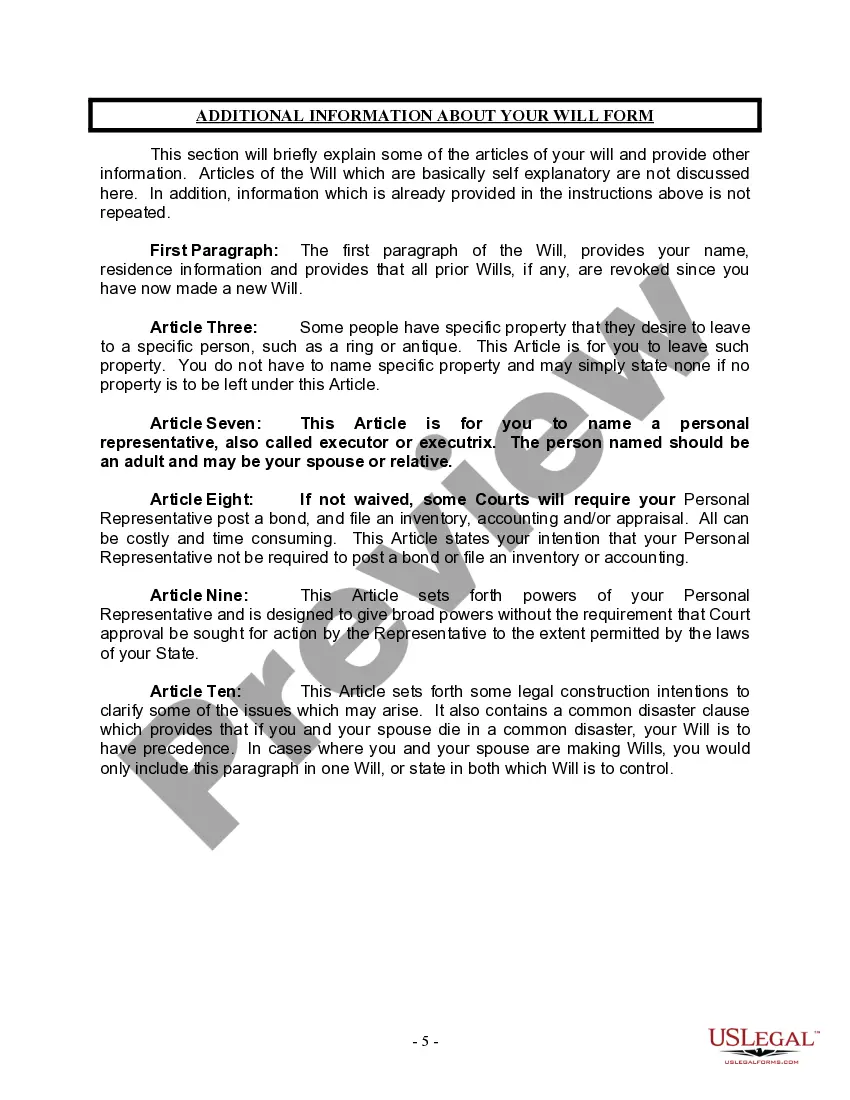
Main sections of this form
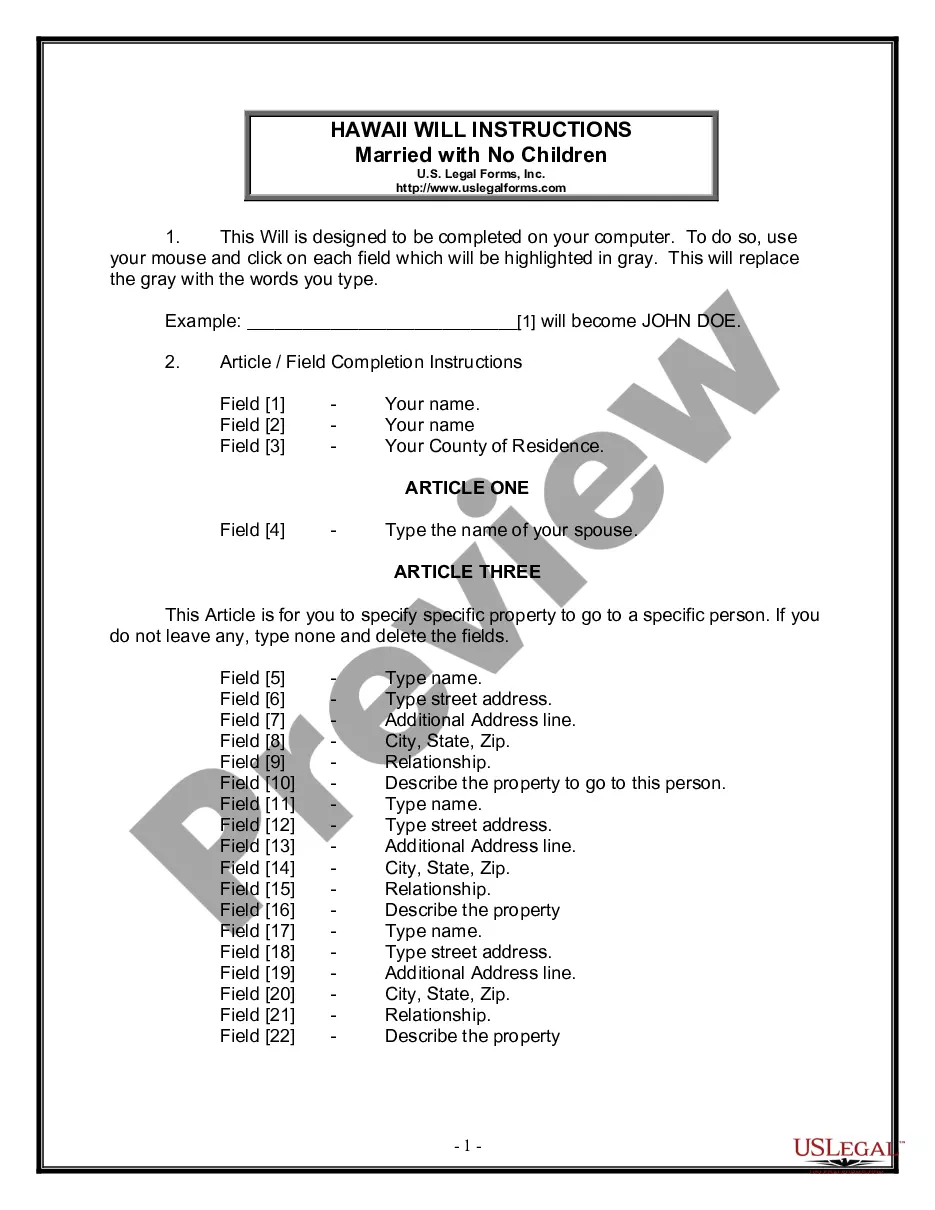
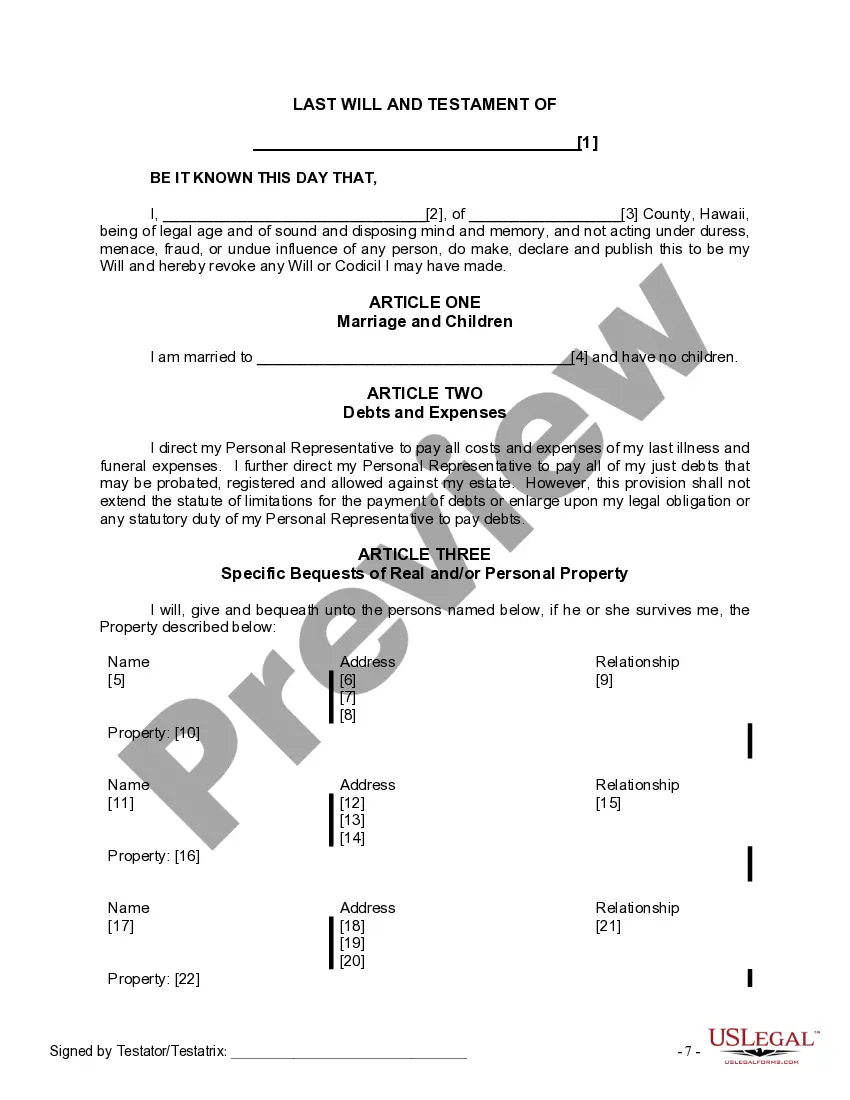
- Article One: States your marital status and confirms you have no children.
- Article Three: Allows you to designate specific property bequests to individuals.
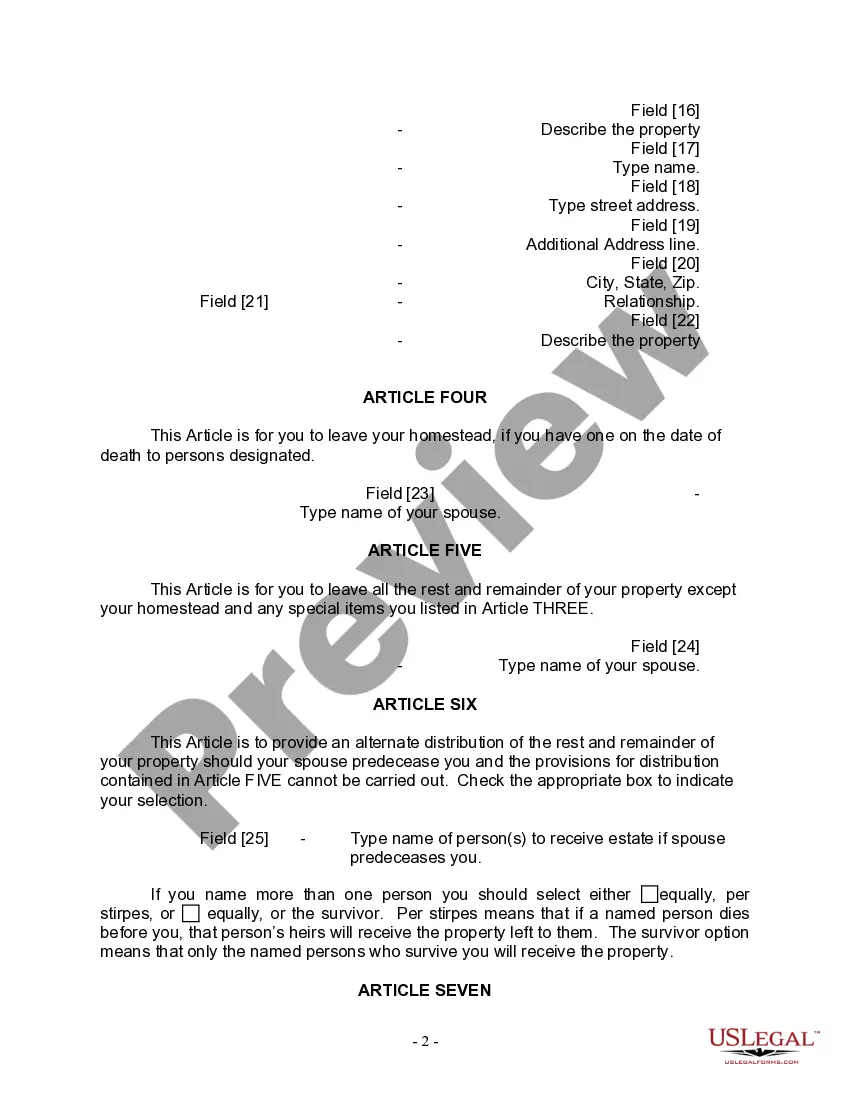
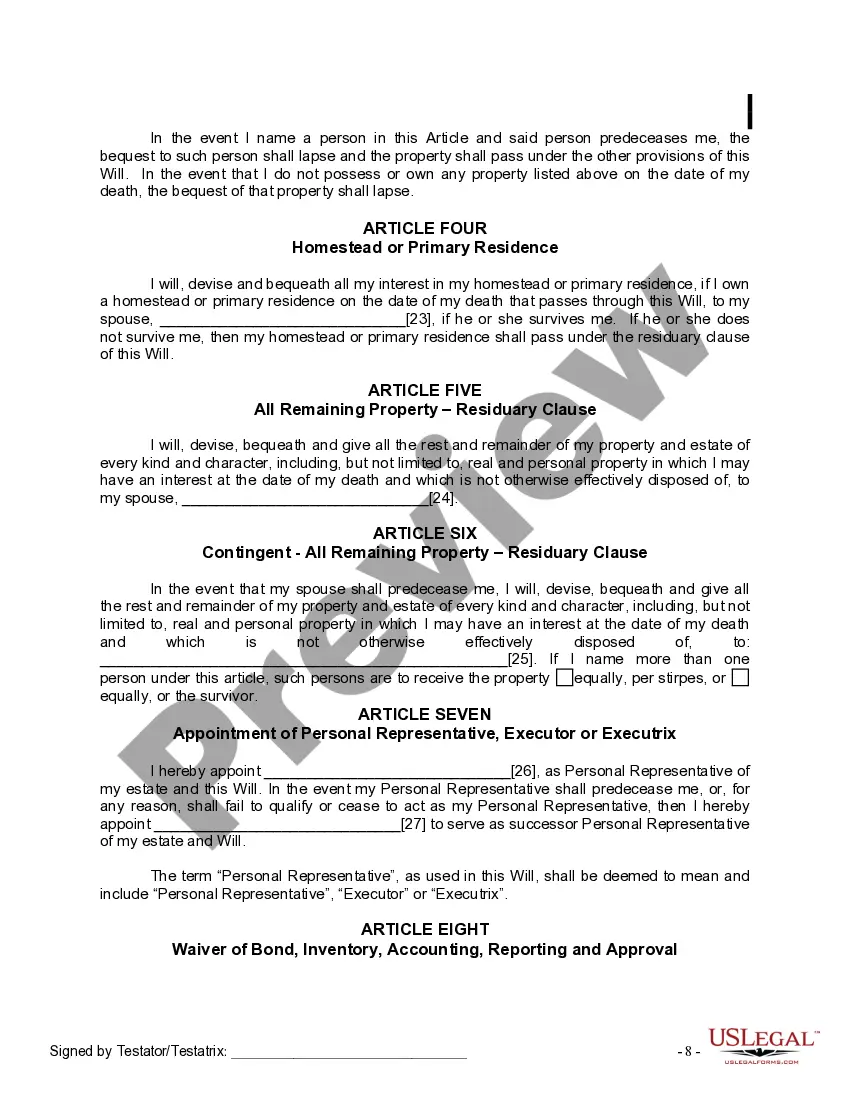
- Article Four: Outlines the distribution of your primary residence or homestead to your spouse.
- Article Five: Specifies the distribution of all remaining assets to your spouse.
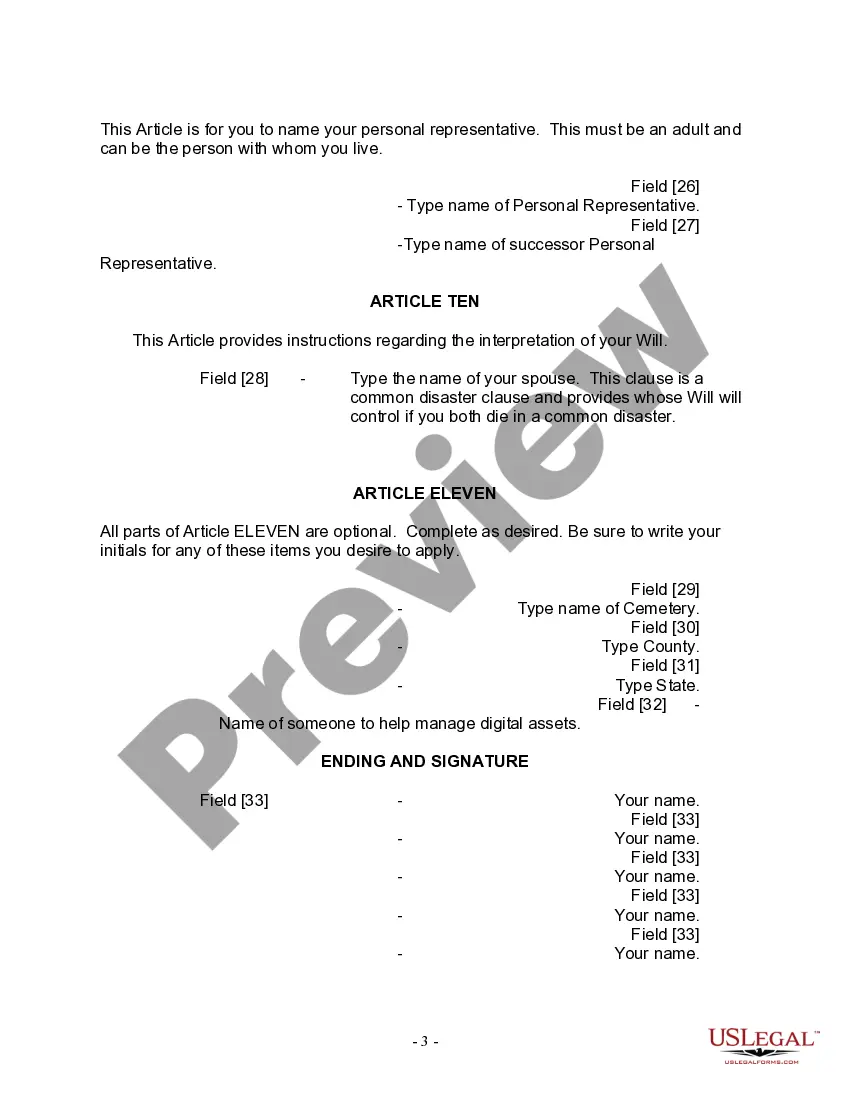
- Article Seven: Appoints your personal representative and establishes a successor if needed.
- Article Eleven: Includes optional provisions for burial and debt management.





Common use cases
This form is necessary when a married person without children wants to establish a clear plan for the distribution of their assets after death. Use this will if you wish to ensure that your spouse is provided for without the complications that might arise from not having a will or from using a generic will that does not address your specific situation.
Who needs this form
- Married individuals with no dependent children.
- Those who wish to specify how their property and assets should be distributed.
- Anyone looking to appoint a trusted personal representative to manage their estate.
- Individuals seeking to streamline the probate process for their loved ones.
Steps to complete this form
- Start by entering your name and county of residence at the beginning of the will.
- Designate your spouse's name, ensuring to complete the sections that specify your assets and property.
- Fill in any specific bequests you want to make to individuals other than your spouse.
- Identify your personal representative and an alternate, if desired.
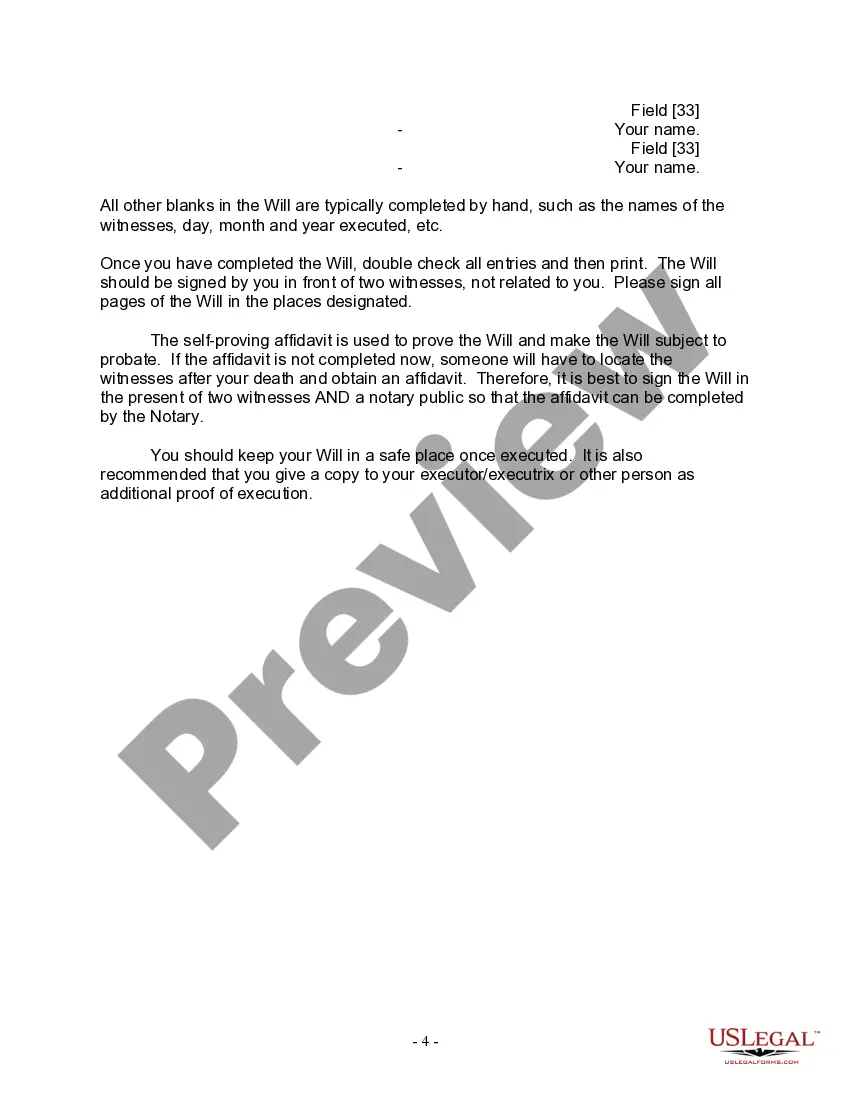
- Ensure that the will is signed in the presence of two witnesses, who must not be related to you or named in the will.
- Consider having the will notarized if your state requires it for a self-proving affidavit.
Is notarization required?
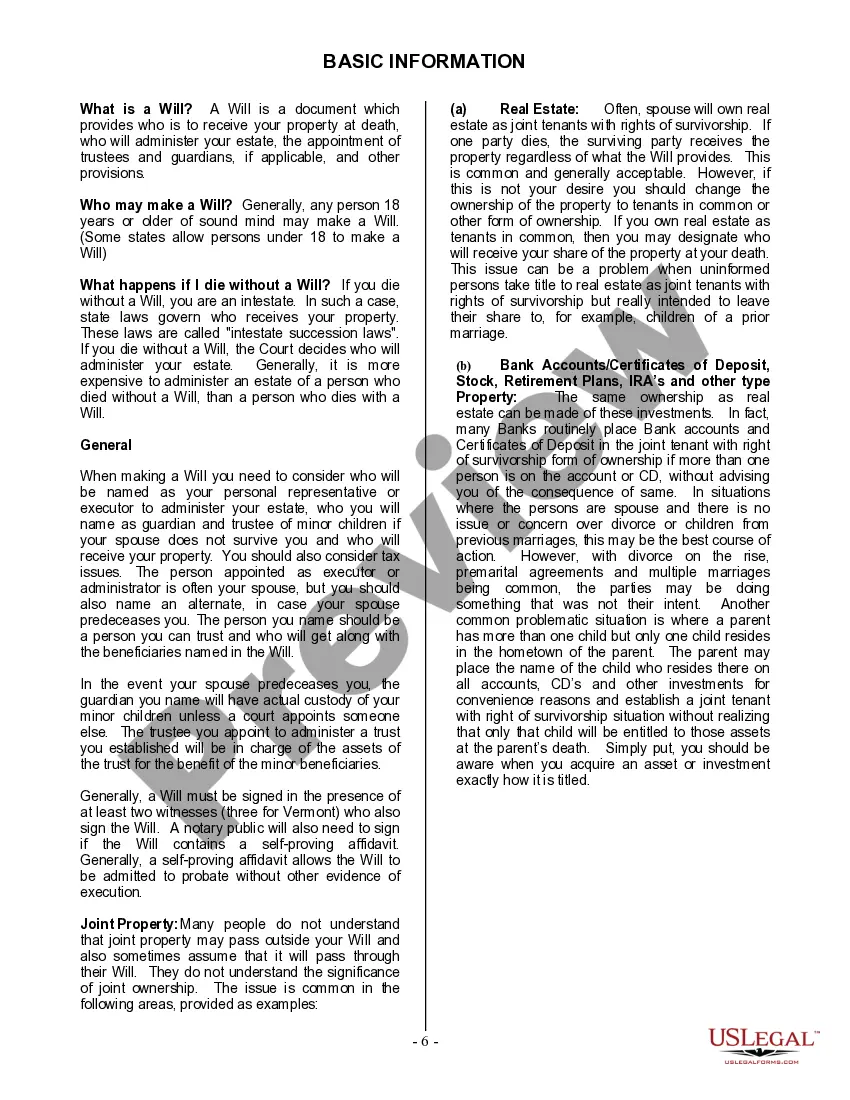
Yes, this form must be notarized to be legally valid if it includes a self-proving affidavit. This process involves signing your will in front of a notary public who will also witness your signature, reinforcing its legitimacy.
Get your form ready online
Our built-in tools help you complete, sign, share, and store your documents in one place.
Make edits, fill in missing information, and update formatting in US Legal Forms—just like you would in MS Word.
Download a copy, print it, send it by email, or mail it via USPS—whatever works best for your next step.
Sign and collect signatures with our SignNow integration. Send to multiple recipients, set reminders, and more. Go Premium to unlock E-Sign.
If this form requires notarization, complete it online through a secure video call—no need to meet a notary in person or wait for an appointment.
We protect your documents and personal data by following strict security and privacy standards.

Make edits, fill in missing information, and update formatting in US Legal Forms—just like you would in MS Word.

Download a copy, print it, send it by email, or mail it via USPS—whatever works best for your next step.

Sign and collect signatures with our SignNow integration. Send to multiple recipients, set reminders, and more. Go Premium to unlock E-Sign.

If this form requires notarization, complete it online through a secure video call—no need to meet a notary in person or wait for an appointment.

We protect your documents and personal data by following strict security and privacy standards.
Mistakes to watch out for
- Failing to have the will signed in front of witnesses can invalidate it.
- Neglecting to include a self-proving affidavit if your state requires one.
- Not updating the will after significant life changes, such as marriage or acquiring new assets.
- Overlooking the importance of clearly defining specific bequests to prevent confusion.
Benefits of completing this form online
- Convenience of completing the form at your own pace from the comfort of your home.
- Editability allows you to make changes easily before finalizing your will.
- Access to legal language and formats that comply with local laws ensures reliability.
- Immediate downloadable access saves time and simplifies record-keeping.
Looking for another form?
Form popularity
FAQ
To be legal in Hawaii, a will must fulfill specific criteria, including being written, signed by the testator, and witnessed by at least two people. It's also essential that the testator is of sound mind and not under duress when creating the document. For peace of mind, consider using US Legal Forms to draft your Hawaii Last Will and Testament for a Married Person with No Children to ensure compliance with state laws.
A valid will in Hawaii must meet three basic requirements: it must be in writing, signed by the testator, and witnessed by at least two individuals. These witnesses should not be beneficiaries, as this may invalidate certain bequests. By following these criteria, you can create a Hawaii Last Will and Testament for a Married Person with No Children that holds up in court.
You can write your own Hawaii Last Will and Testament for a Married Person with No Children and have it notarized. Notarization adds an extra layer of authenticity and can help validate your intentions. However, ensure that the will contains all necessary elements to comply with state laws, possibly by using templates from US Legal Forms.
In Hawaii, it is not necessary to register a will for it to be valid. However, probate court requires the will to be submitted after your death to initiate the distribution of your estate. It may be beneficial to keep your Hawaii Last Will and Testament for a Married Person with No Children in a safe place and inform your loved ones about its location.
Yes, you can write your Hawaii Last Will and Testament for a Married Person with No Children on a piece of paper. However, it is crucial to follow specific guidelines to ensure its validity. Your document should be clearly labeled as a will, signed by you, and ideally witnessed by two individuals who are not beneficiaries of the will.
To write a Hawaii Last Will and Testament for a Married Person with No Children, start by outlining your assets and how you want them distributed. Ensure you include your full name, address, and a declaration that this is your last will. Consider consulting an attorney or using an online service like US Legal Forms to guide you through the process and make sure your will meets all state requirements.
No, a will does not take precedence over the legal rights afforded by marriage. Spouses are entitled to inherit under state laws, which can affect how your assets are distributed after your passing. A Hawaii Last Will and Testament for a Married Person with No Children should be crafted with an understanding of these legal rights to achieve harmony between your wishes and marital obligations. Consulting a legal professional can provide clarity on these matters.
No, a will does not generally override a spouse's rights to inherit. In Hawaii, spouses hold certain rights to a portion of each other's estate, even if a will states otherwise. A Hawaii Last Will and Testament for a Married Person with No Children should consider these rights to ensure your spouse receives their fair share, while still following your wishes regarding other assets. Discussing your intentions with your spouse can foster understanding and communication.
Typically, a last will and testament does not override named beneficiaries on accounts or insurance policies. If you designate a beneficiary, they generally receive the asset directly, regardless of the provisions in your will. However, a Hawaii Last Will and Testament for a Married Person with No Children can clarify your wishes and is essential for any assets without designated beneficiaries. It's wise to review both documents and consult a legal professional for comprehensive estate planning.
Yes, a married couple with no children should consider having a will. A Hawaii Last Will and Testament for a Married Person with No Children ensures that your assets are distributed according to your wishes, even in the absence of children. Creating a will prevents confusion and potential disputes among family members after your passing. It also allows you to name guardians for pets or designate specific beneficiaries.