Hawaii Landlord Tenant Closing Statement to Reconcile Security Deposit
Overview of this form
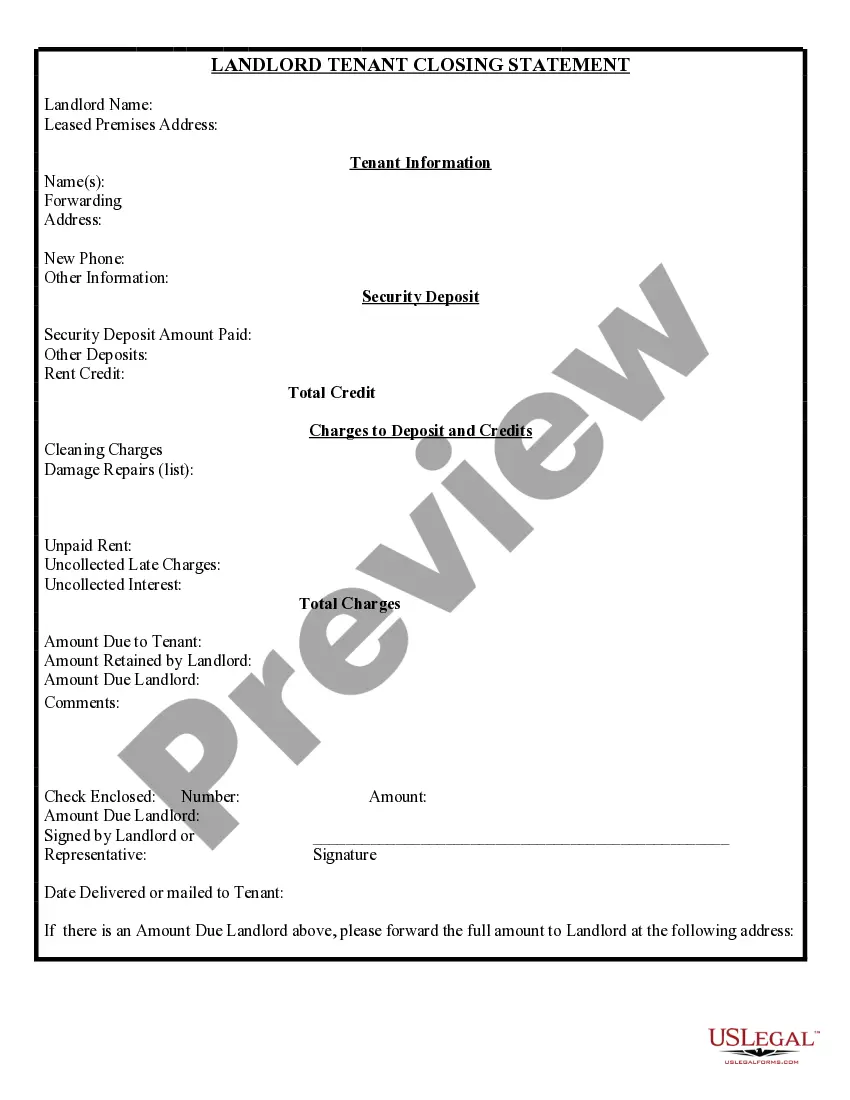
The Landlord Tenant Closing Statement to Reconcile Security Deposit is a legal document that facilitates the reconciliation of the security deposit between a landlord and a tenant. This form records the deposits and credits, outlining any deductions for damages or other charges. Its primary purpose is to ensure transparency by documenting the financial transactions related to the security deposit, distinguishing it from rental agreements or lease contracts. This form is essential for both parties to clearly understand the financial aspects of their rental relationship.
Form components explained
- Identification of landlord and tenant
- Details of the security deposit amount
- Itemized list of deductions for damages or other charges
- Total credits and deposits
- Final balance due to the tenant or from the tenant
- Signatures of both parties
When to use this form
This form is needed when a tenant is vacating a rental property and the landlord must reconcile the security deposit. It helps clarify the amounts owed, whether the landlord will retain part of the deposit for damages, and ensures both parties are aware of the financial implications of the tenancy. Using this statement can prevent disputes regarding the return of the security deposit.
Who this form is for
This form should be used by:
- Landlords who manage rental properties
- Tenants who are vacating a rental premises
- Property managers acting on behalf of landlords
- Anyone involved in a landlord-tenant relationship requiring a reconciliation of the security deposit
Completing this form step by step
- Identify the parties involved by entering the names and contact information of the landlord and tenant.
- Specify the property by providing the rental address and details.
- Enter the total security deposit amount collected from the tenant.
- Itemize any deductions, detailing reasons for each deduction and the associated dollar amounts.
- Calculate the final balance due to the tenant and include any applicable credits.
- Ensure both parties sign and date the form to acknowledge the reconciliation.
Is notarization required?
In most cases, this form does not require notarization. However, some jurisdictions or signing circumstances might. US Legal Forms offers online notarization powered by Notarize, accessible 24/7 for a quick, remote process.
Get your form ready online
Our built-in tools help you complete, sign, share, and store your documents in one place.
Make edits, fill in missing information, and update formatting in US Legal Forms—just like you would in MS Word.
Download a copy, print it, send it by email, or mail it via USPS—whatever works best for your next step.
Sign and collect signatures with our SignNow integration. Send to multiple recipients, set reminders, and more. Go Premium to unlock E-Sign.
If this form requires notarization, complete it online through a secure video call—no need to meet a notary in person or wait for an appointment.
We protect your documents and personal data by following strict security and privacy standards.

Make edits, fill in missing information, and update formatting in US Legal Forms—just like you would in MS Word.

Download a copy, print it, send it by email, or mail it via USPS—whatever works best for your next step.

Sign and collect signatures with our SignNow integration. Send to multiple recipients, set reminders, and more. Go Premium to unlock E-Sign.

If this form requires notarization, complete it online through a secure video call—no need to meet a notary in person or wait for an appointment.

We protect your documents and personal data by following strict security and privacy standards.
Common mistakes to avoid
- Failing to itemize deductions clearly, which can lead to disputes.
- Not obtaining signatures from both parties, making the document less enforceable.
- Incorrect calculations of the final balance owed.
- Neglecting to provide necessary contact information for both landlord and tenant.
- Not adhering to state-specific regulations regarding security deposits.
Why complete this form online
- Convenient access to the form from any device without the need for physical paperwork.
- Editable fields allow for easy customization according to your situation.
- Reliability of templates created by licensed attorneys, ensuring legal validity.
Key takeaways
- The closing statement is crucial for reconciling the security deposit at the end of a tenancy.
- Clear documentation helps prevent disputes between landlords and tenants.
- Understanding and following state-specific laws is vital to ensure compliance.
Looking for another form?

Form popularity
FAQ
To write an effective return request for your security deposit, address the letter to your landlord or management company. Clearly state your request for the return, including your account details, the original deposit amount, and the move-out date. Additionally, refer to the Hawaii Landlord Tenant Closing Statement to Reconcile Security Deposit, as this can help clarify any deductions that may apply. This approach fosters clarity and increases the likelihood of a prompt return.
Writing a letter to request your security deposit return is straightforward. Start by clearly stating your intent to receive your deposit, and include your rental address, the amount of the deposit, and any relevant dates. Mention the use of the Hawaii Landlord Tenant Closing Statement to Reconcile Security Deposit to finalize any deductions and ensure an efficient process. Including these details supports your request and helps maintain a positive relationship with your landlord.
When a landlord returns a security deposit, it typically includes any deductions for damages or unpaid rent. For example, if a tenant pays a $1,000 deposit and owes $200 in back rent, the landlord should return $800. To ensure proper documentation, using a Hawaii Landlord Tenant Closing Statement to Reconcile Security Deposit is recommended. This statement clearly outlines any deductions, making the process transparent for both parties.
A rental closing statement details the financial transactions occurring at the end of a rental term. It includes information regarding security deposits, damages, and adjustments for utilities or rent. Familiarizing yourself with your Hawaii Landlord Tenant Closing Statement to Reconcile Security Deposit can prepare you for any potential disputes and ensure that you understand your financial responsibilities. This document is essential for a smooth transition out of your rental.
Your closing statement should accurately reflect the condition of the property, any deductions made from the security deposit, and any outstanding obligations. It's crucial to ensure that it aligns with the terms outlined in your lease agreement. When you review your Hawaii Landlord Tenant Closing Statement to Reconcile Security Deposit, look for transparency and accuracy. A well-prepared statement protects both you and your landlord.
The purpose of the closing statement is to summarize the financial transactions between landlords and tenants, especially when settling security deposits. It helps to clarify any deductions or disputes to avoid miscommunication. Understanding your Hawaii Landlord Tenant Closing Statement to Reconcile Security Deposit ensures a transparent conclusion to your rental agreement. This document serves as a legal record for both parties.
To obtain your closing statement, first reach out to your landlord or property management company directly. They are typically responsible for providing this documentation once your lease concludes. If you face challenges, using platforms like US Legal Forms can guide you in obtaining your Hawaii Landlord Tenant Closing Statement to Reconcile Security Deposit efficiently. This way, you can ensure that you receive all necessary details timely.
A close statement, or closing statement, serves as a detailed financial summary between landlords and tenants at the end of a lease. It outlines any adjustments made for security deposits, repairs, or outstanding payments. Understanding your Hawaii Landlord Tenant Closing Statement to Reconcile Security Deposit can help ensure clarity in financial obligations. This allows both parties to interpret the conditions of the lease accurately.
To write a dispute letter regarding your security deposit, start with your personal information and the rental details. Clearly state the reasons for disputing the charges listed on your Hawaii Landlord Tenant Closing Statement to Reconcile Security Deposit. Ensure to include your contact information for further clarity. Finally, maintain a polite tone and request a timely response.
Sending a security deposit back to a tenant involves clear and documented communication. First, draft the Hawaii Landlord Tenant Closing Statement to Reconcile Security Deposit, detailing any deductions for damages or unpaid rent. Follow this by sending the refund promptly, along with supporting documents, to maintain a positive relationship and comply with legal obligations.