Georgia Last Will and Testament for a Married Person with No Children
What this document covers
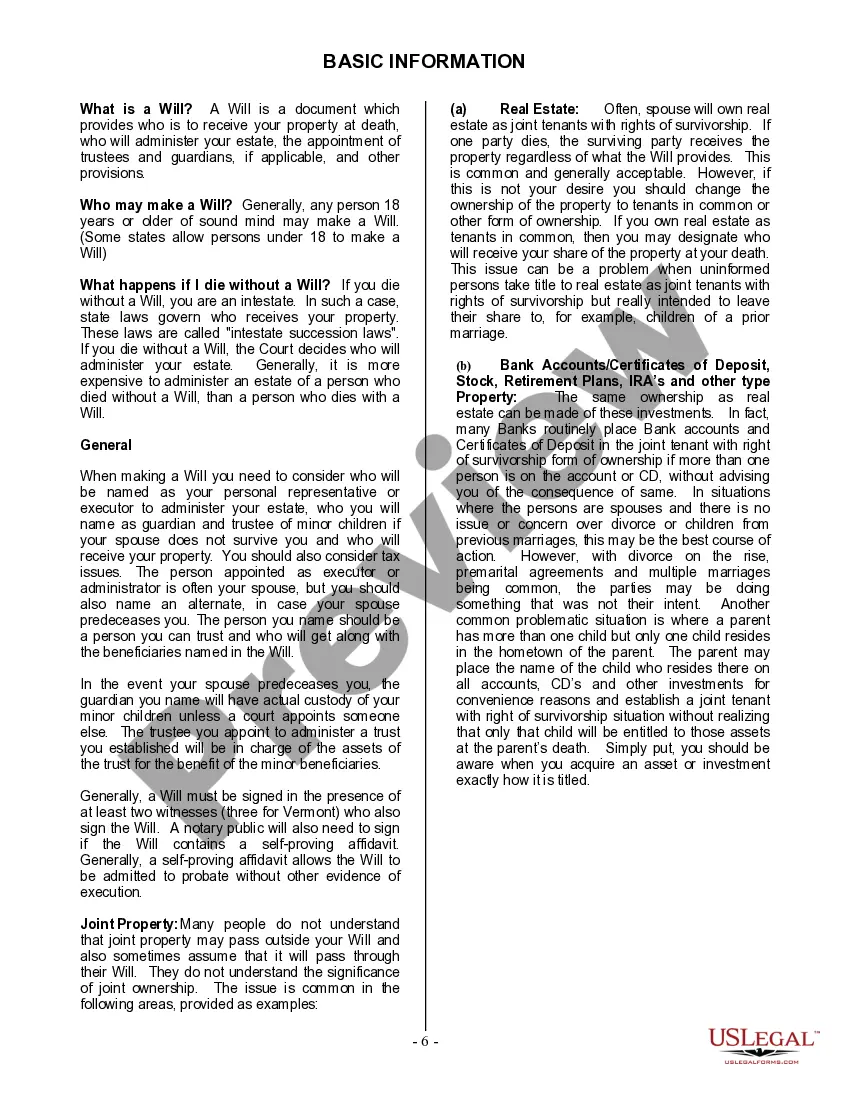
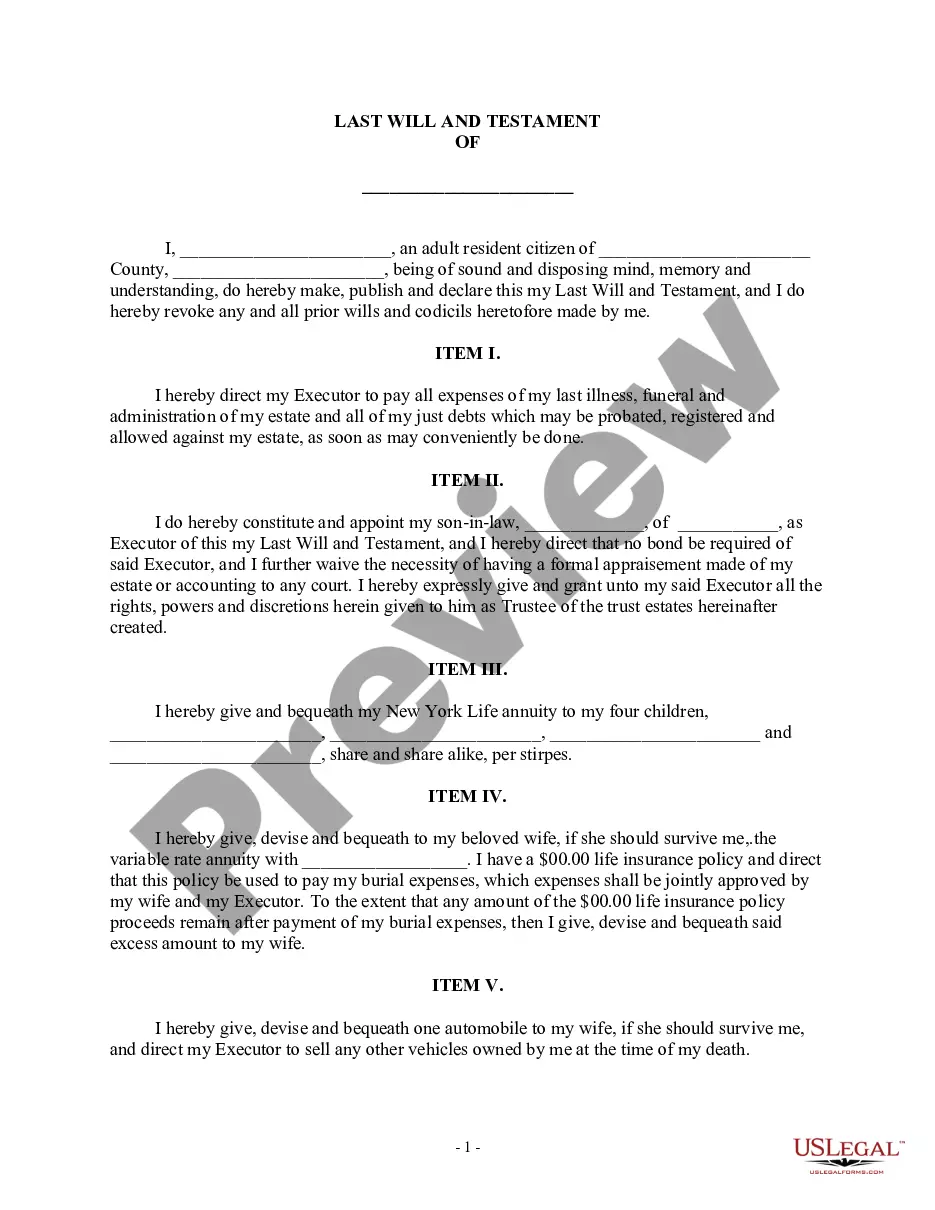
The Last Will and Testament for a Married Person with No Children is a legal document that specifies how a person's estate will be distributed upon their death. This will is specifically designed for individuals who are married and do not have children. It includes provisions for appointing a personal representative, detailing specific bequests, and outlining the distribution of property to the spouse. Unlike other wills that may include provisions for children or guardianship, this will focuses solely on the interests of the spouse.
Form components explained
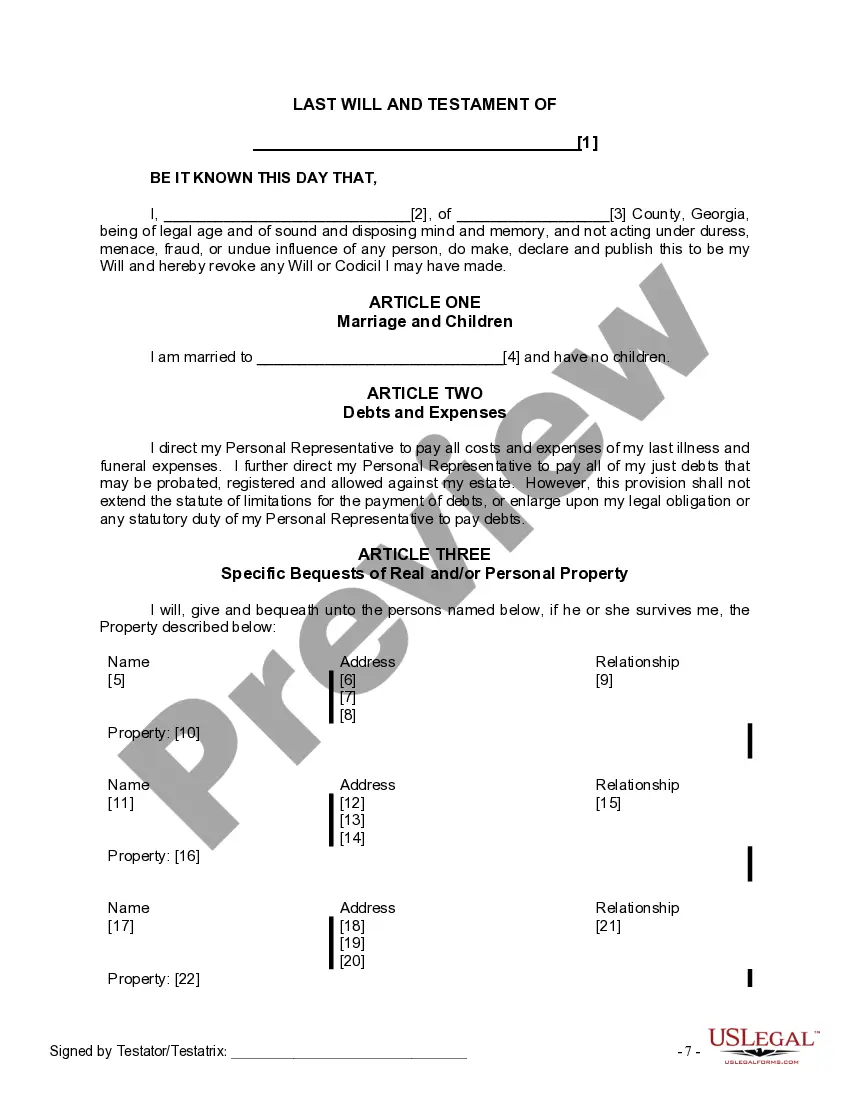
- Identification of the testator and revocation of prior wills
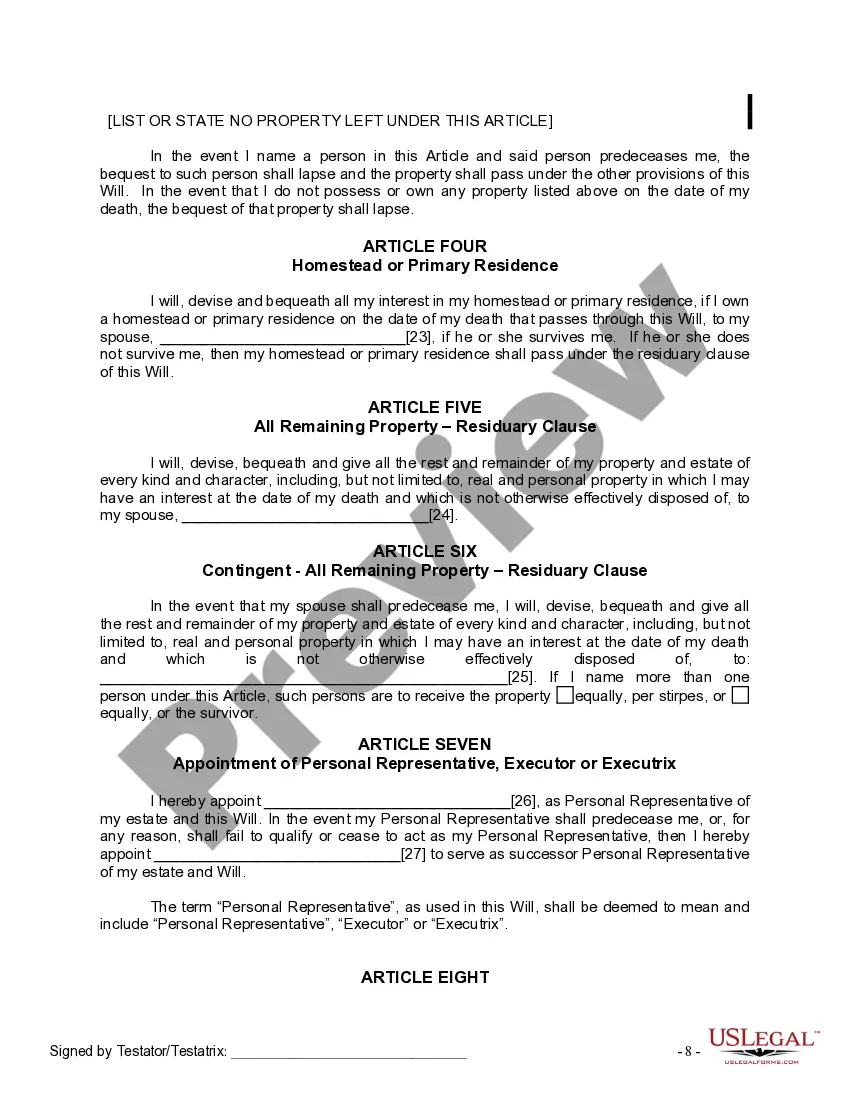
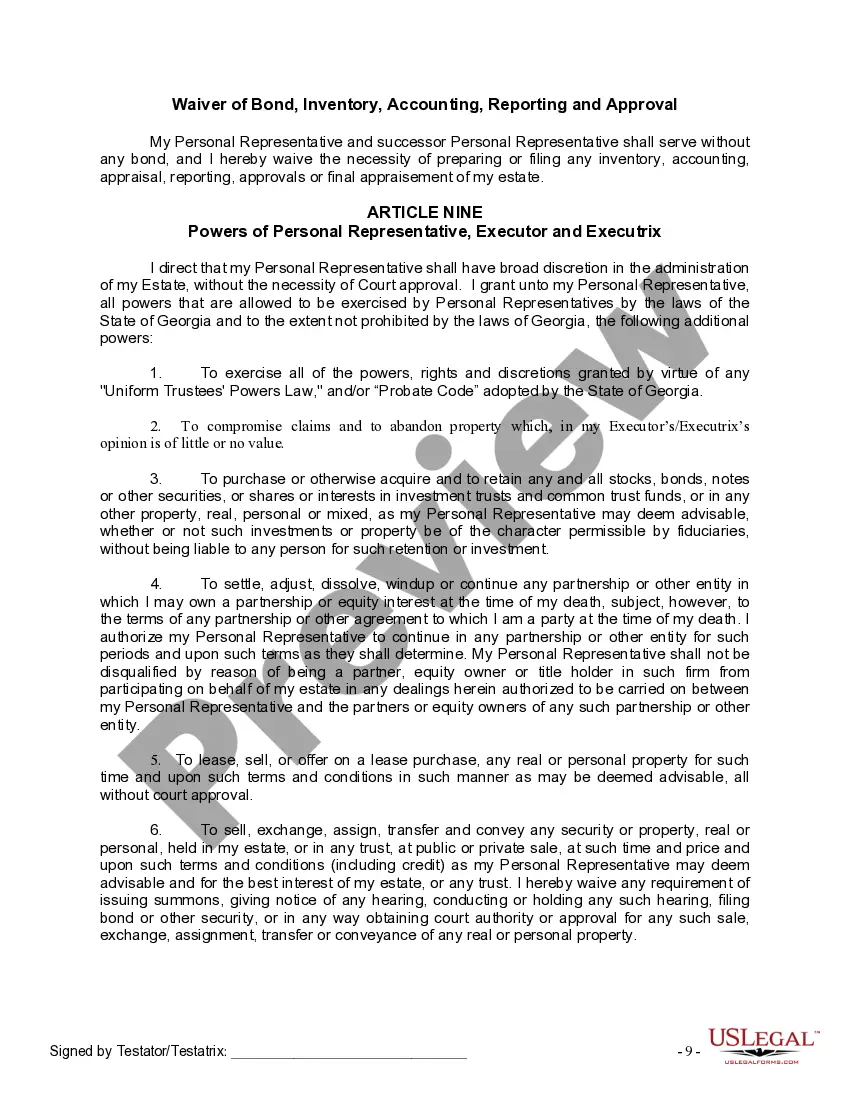
- Appointment of a personal representative to manage the estate
- Specific bequests of property to designated individuals
- Provisions regarding the homestead or primary residence
- Distribution of remaining property to the spouse
- Instructions for handling debts and expenses





When to use this form
This will is useful in various life situations, such as when a married person wishes to ensure their spouse inherits their entire estate without complication. It is also appropriate if you want to specify particular items of personal property for designated individuals, even in the absence of children. This document is essential for making your final wishes clear and avoiding potential disputes among surviving family members.
Who needs this form
- Married individuals without children who wish to create a Last Will and Testament
- People wanting to ensure their spouse is the primary beneficiary of their estate
- Individuals seeking to specify how particular items of property should be distributed
- Those who want to appoint a personal representative for their estate
Instructions for completing this form
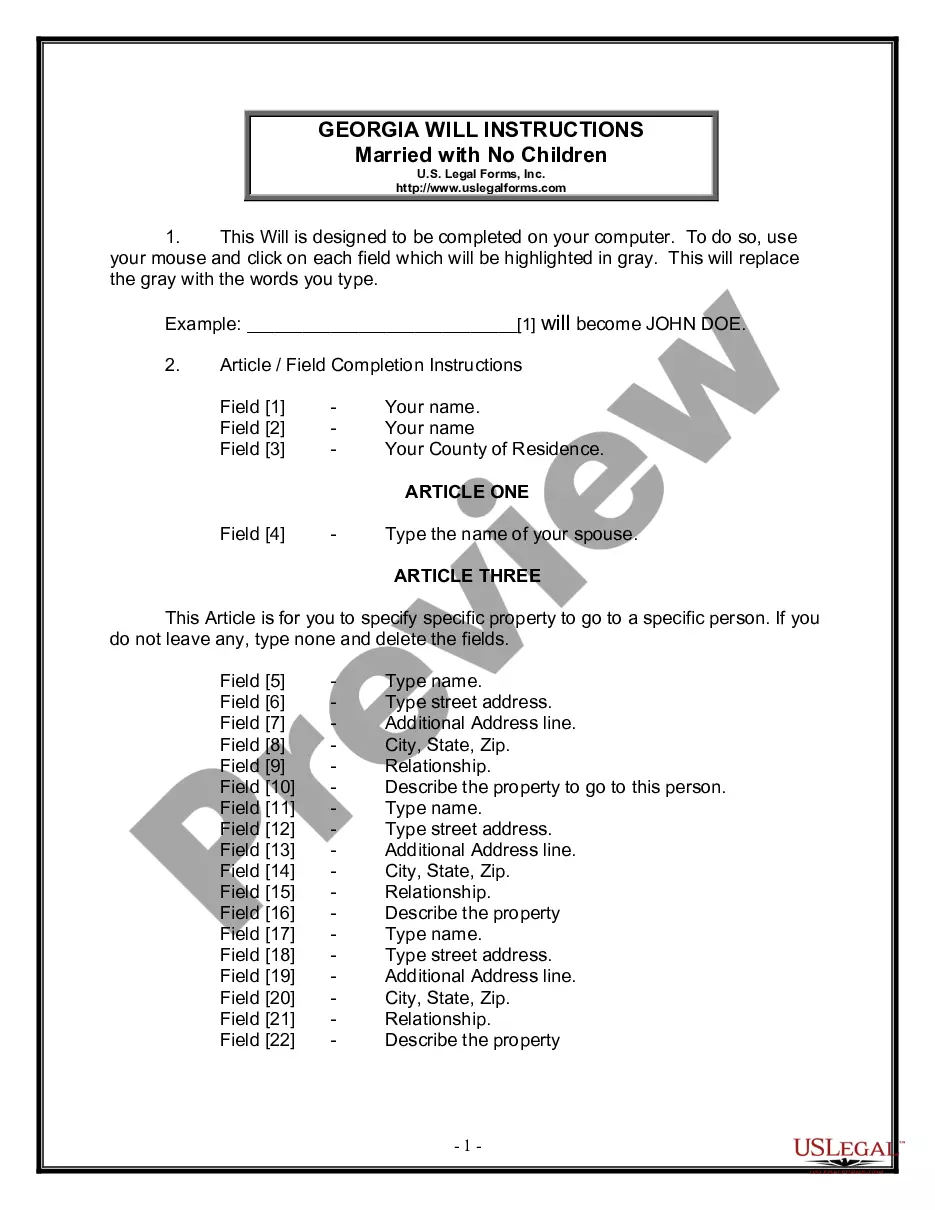
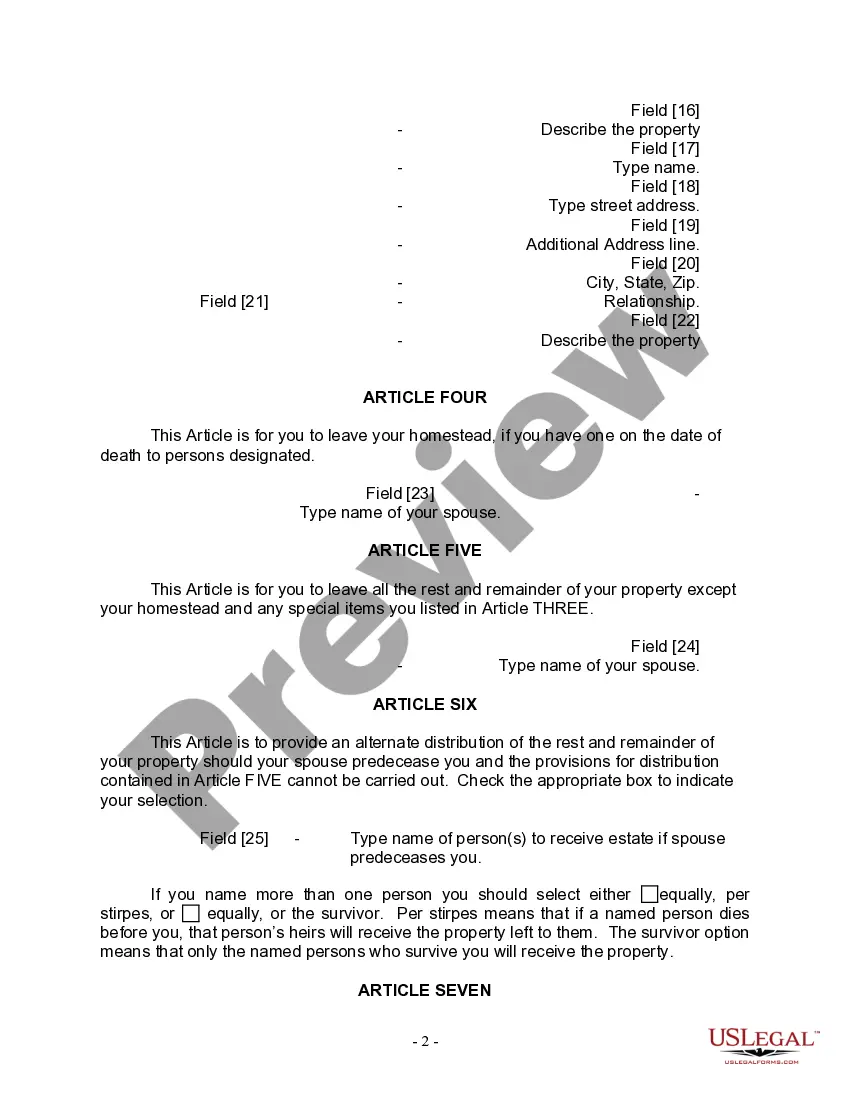
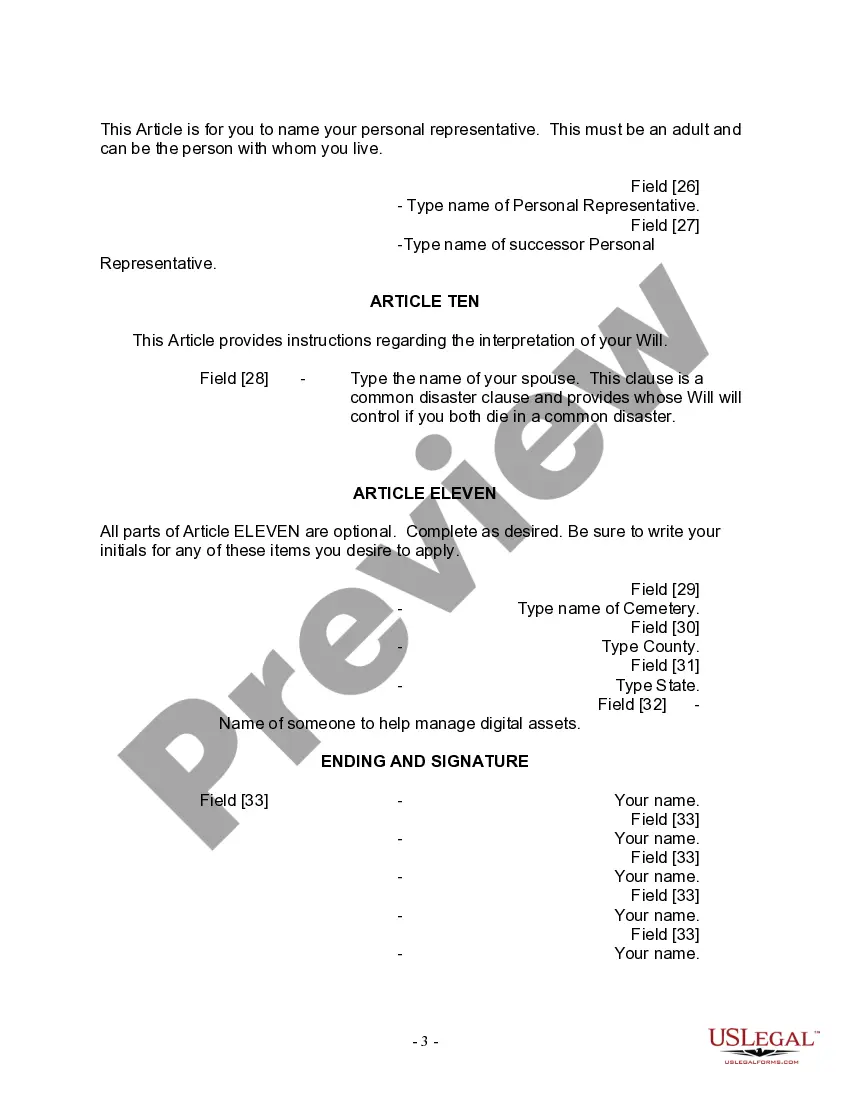
- Identify yourself by filling your name, county of residence, and details of your spouse.
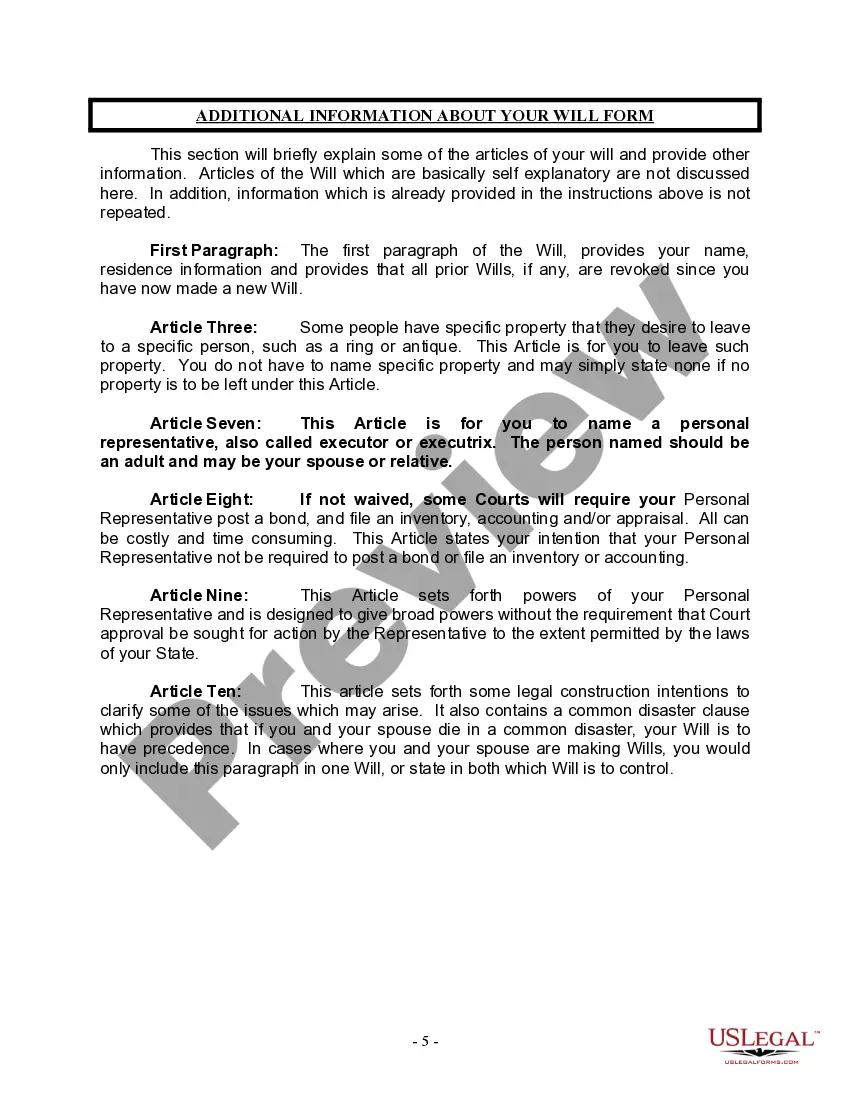
- Specify any specific property you wish to bequeath, including names and addresses of the beneficiaries.
- Designate a personal representative and a successor, who will handle your estate.
- Review all fields for accuracy and make necessary corrections to ensure clarity.
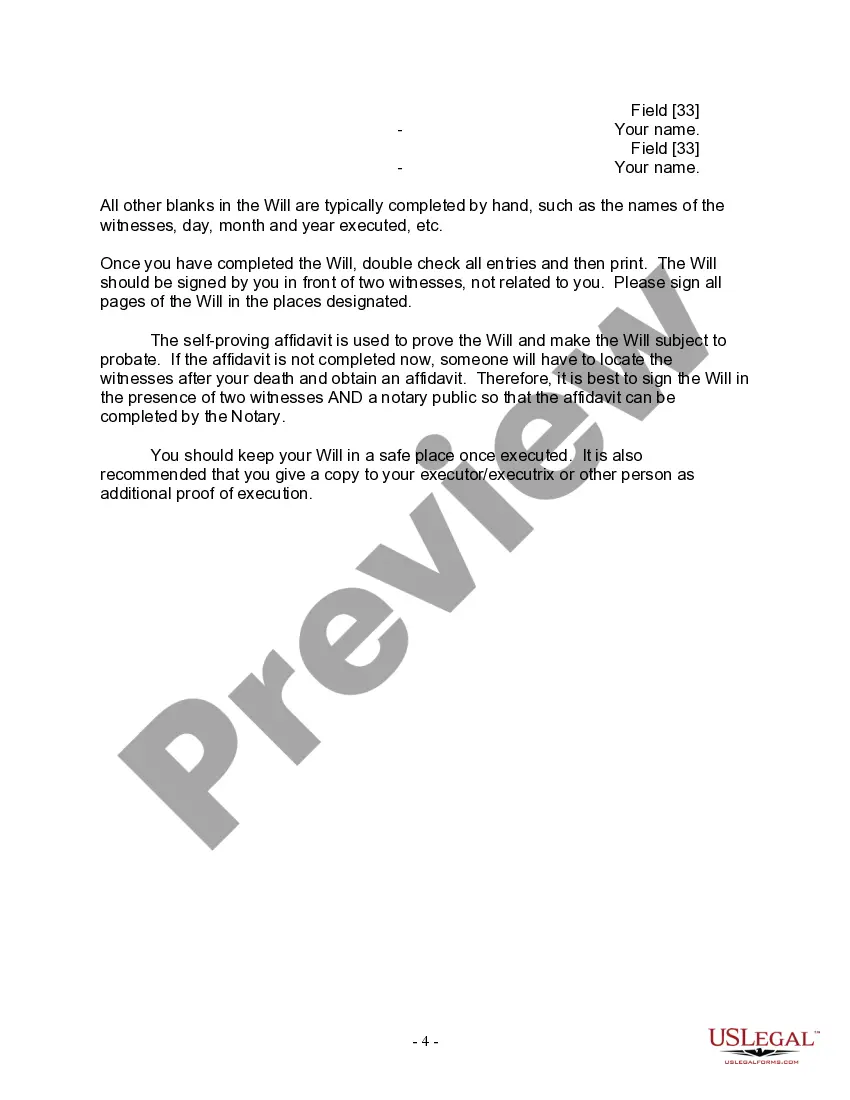
- Sign the document in the presence of two witnesses and a notary public, if applicable.
Does this document require notarization?
Yes, this form must be notarized to be legally valid. It is important to sign the will in front of a notary public, especially if a self-proving affidavit is included. This ensures the document meets all legal requirements and can be admitted to probate without additional evidence of execution.
Get your form ready online
Our built-in tools help you complete, sign, share, and store your documents in one place.
Make edits, fill in missing information, and update formatting in US Legal Forms—just like you would in MS Word.
Download a copy, print it, send it by email, or mail it via USPS—whatever works best for your next step.
Sign and collect signatures with our SignNow integration. Send to multiple recipients, set reminders, and more. Go Premium to unlock E-Sign.
If this form requires notarization, complete it online through a secure video call—no need to meet a notary in person or wait for an appointment.
We protect your documents and personal data by following strict security and privacy standards.

Make edits, fill in missing information, and update formatting in US Legal Forms—just like you would in MS Word.

Download a copy, print it, send it by email, or mail it via USPS—whatever works best for your next step.

Sign and collect signatures with our SignNow integration. Send to multiple recipients, set reminders, and more. Go Premium to unlock E-Sign.

If this form requires notarization, complete it online through a secure video call—no need to meet a notary in person or wait for an appointment.

We protect your documents and personal data by following strict security and privacy standards.
Mistakes to watch out for
- Failing to sign the will in front of the required witnesses.
- Not appointing a successor personal representative, which can lead to complications.
- Leaving out important details about specific bequests or properties.
- Assuming the will is valid without notarization, if required by local law.
Why use this form online
- Convenience of completing the form from home without attorney fees.
- Editability allows for easy updates as personal circumstances change.
- Access to professionally drafted templates ensures legal accuracy.
- Instant download provides immediate availability for use.
- The Last Will and Testament is crucial for outlining your final wishes regarding asset distribution.
- It is specifically tailored for married individuals without children, addressing their unique estate planning needs.
- Proper completion and notarization of the form ensure its validity and enforceability.
Looking for another form?


Form popularity
FAQ
A will can be voided in Georgia for several reasons, including if the testator lacked the mental capacity at the time of signing. Additionally, if the will was created under undue influence or coercion, it may be considered invalid. It's essential to understand these factors when drafting a Georgia Last Will and Testament for a Married Person with No Children to ensure your wishes are honored.
For a will to be valid in Georgia, it must be in writing and signed by the testator, that is the person making the will. The will must also be signed in the presence of two witnesses, who likewise must sign it. Creating a Georgia Last Will and Testament for a Married Person with No Children ensures that your intent is clear and legally upheld.
In Georgia, certain documents can supersede a will, such as a valid prenuptial or postnuptial agreement. Trust documents, particularly if they contain specific asset allocations, may also take precedence over a will. Always remember, a Georgia Last Will and Testament for a Married Person with No Children should clearly outline your wishes to help prevent confusion later on.
To avoid probate in Georgia, consider creating a Georgia Last Will and Testament for a Married Person with No Children. You can also use a revocable living trust, which allows you to transfer assets into the trust while you are alive. Additionally, designating beneficiaries on accounts and using joint ownership can help bypass the probate process, ensuring that your assets go directly to your loved ones without unnecessary delays.
In Georgia, when a husband dies, his wife is generally entitled to a share of his estate, regardless of the will. If there are no children, she may receive the entire estate. However, having a well-drafted Georgia Last Will and Testament for a Married Person with No Children can help ensure her rights are protected and clarify the estate distribution.
In Georgia, your marital status may give you rights to property even if your name is not on the deed. As a spouse, you may have rights to a share of the property acquired during the marriage, regardless of whose name is on the title. If you want to ensure your property arrangements are clear, consider creating a Georgia Last Will and Testament for a Married Person with No Children.
Marriage does not override a will, but it can affect how your estate is distributed. If you acquire a spouse after making a will, your spouse may have inheritance rights. Creating a Georgia Last Will and Testament for a Married Person with No Children ensures your spouse and any other beneficiaries are clearly defined.
Yes, you can write your own will in Georgia, but it must meet specific legal requirements to be valid. Your will should be in writing, signed by you, and witnessed by at least two individuals. Crafting a Georgia Last Will and Testament for a Married Person with No Children allows you to express your wishes clearly and legally.
No, marriage does not automatically revoke a will in Georgia. However, if you marry after creating a will, your new spouse may have rights to a share of your estate. To ensure your wishes are clear, it's essential to update your Georgia Last Will and Testament for a Married Person with No Children after you marry.
In Georgia, your spouse typically has a right to inherit from you, even if you do not include them in your will. This means that unless you take specific legal steps, your spouse can claim a portion of your estate under Georgia law. However, having a Georgia Last Will and Testament for a Married Person with No Children helps clarify your intentions regarding inheritance.