Georgia Revocation of Statutory Advance Directive for Healthcare
About this form
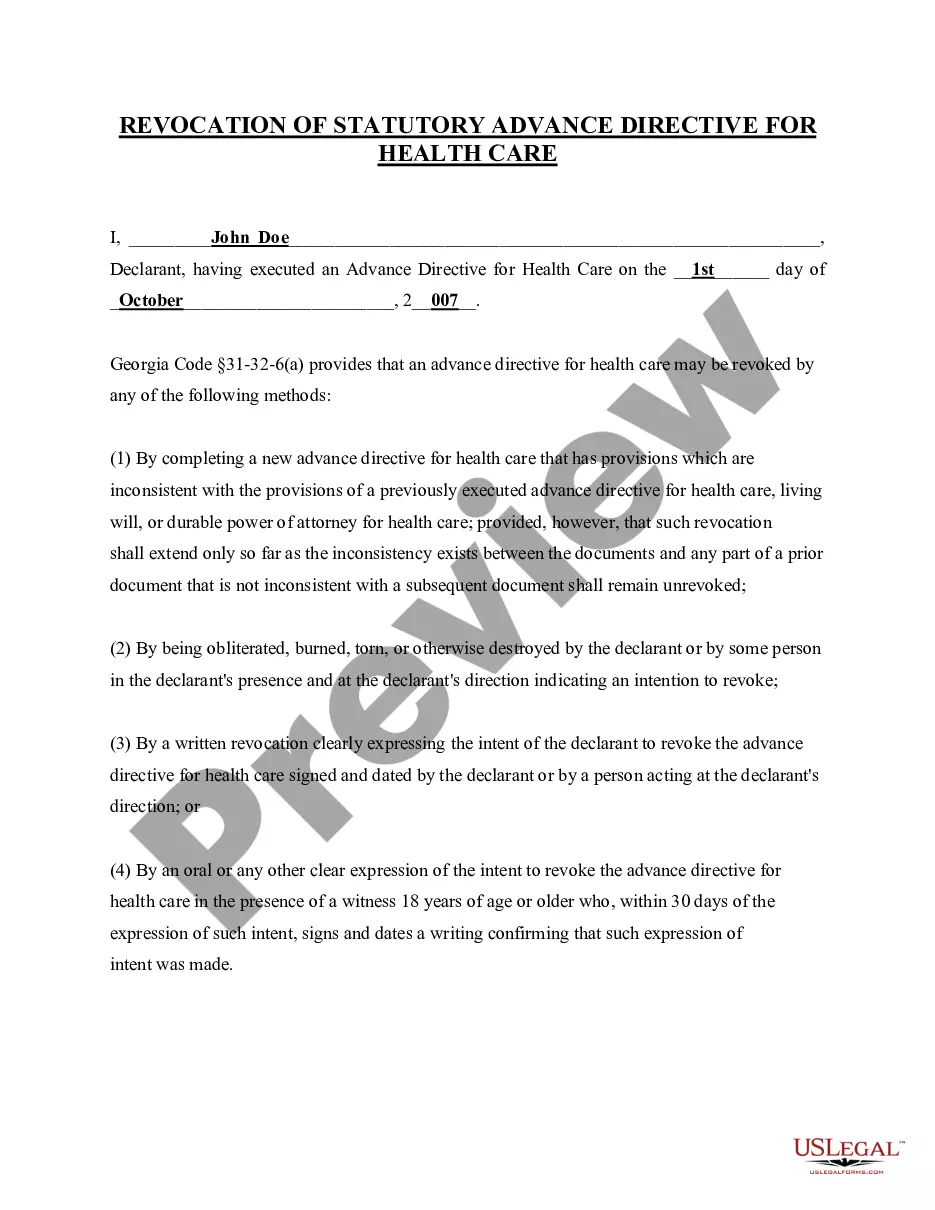
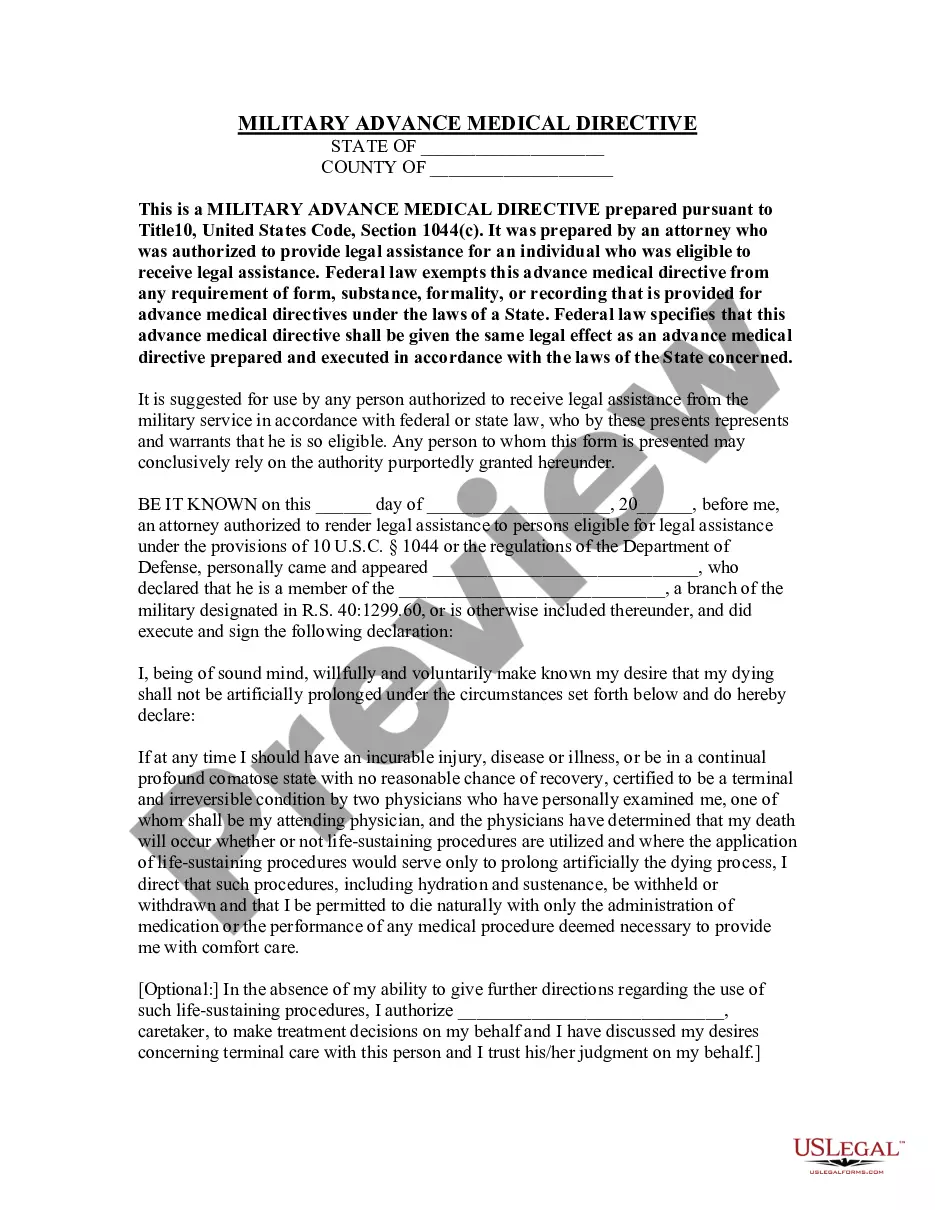
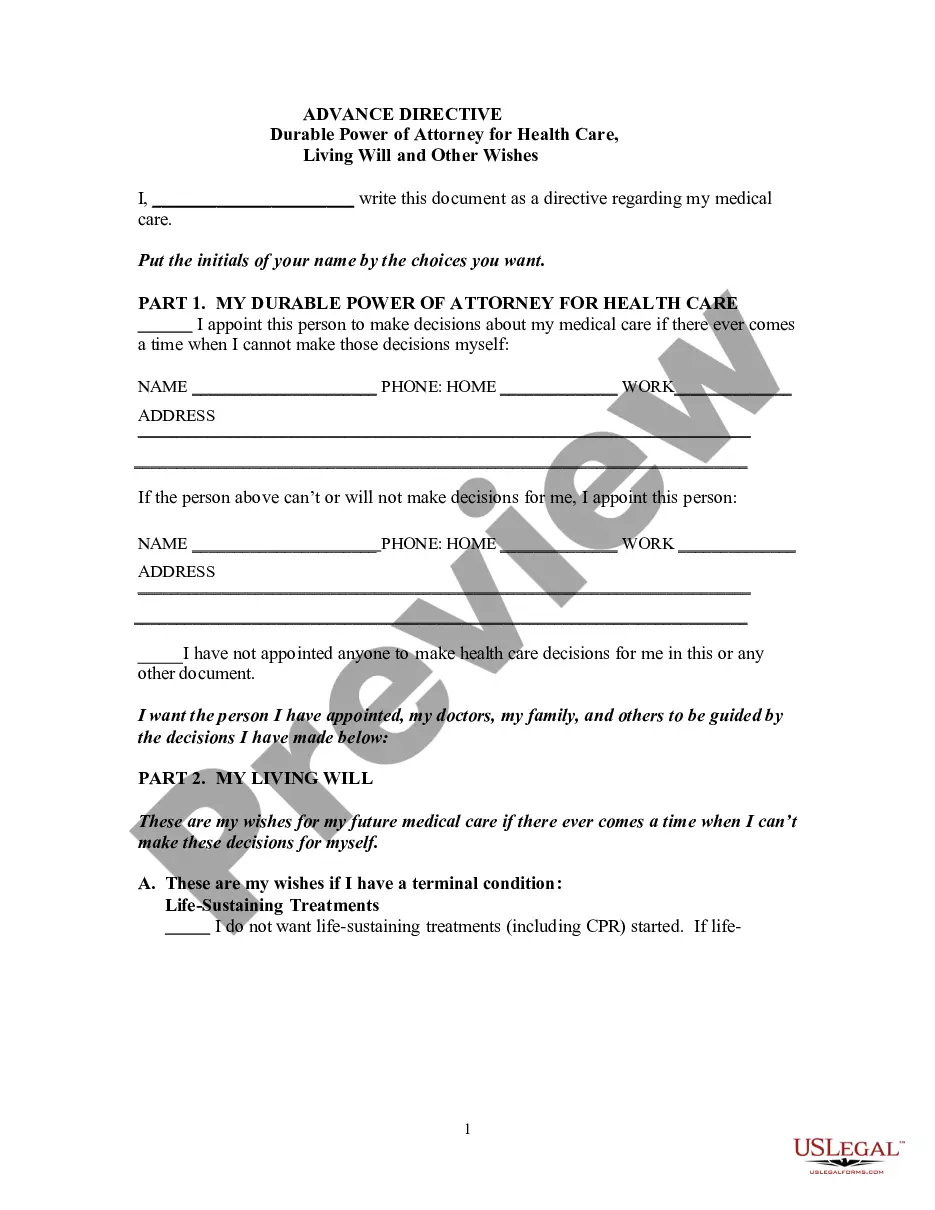
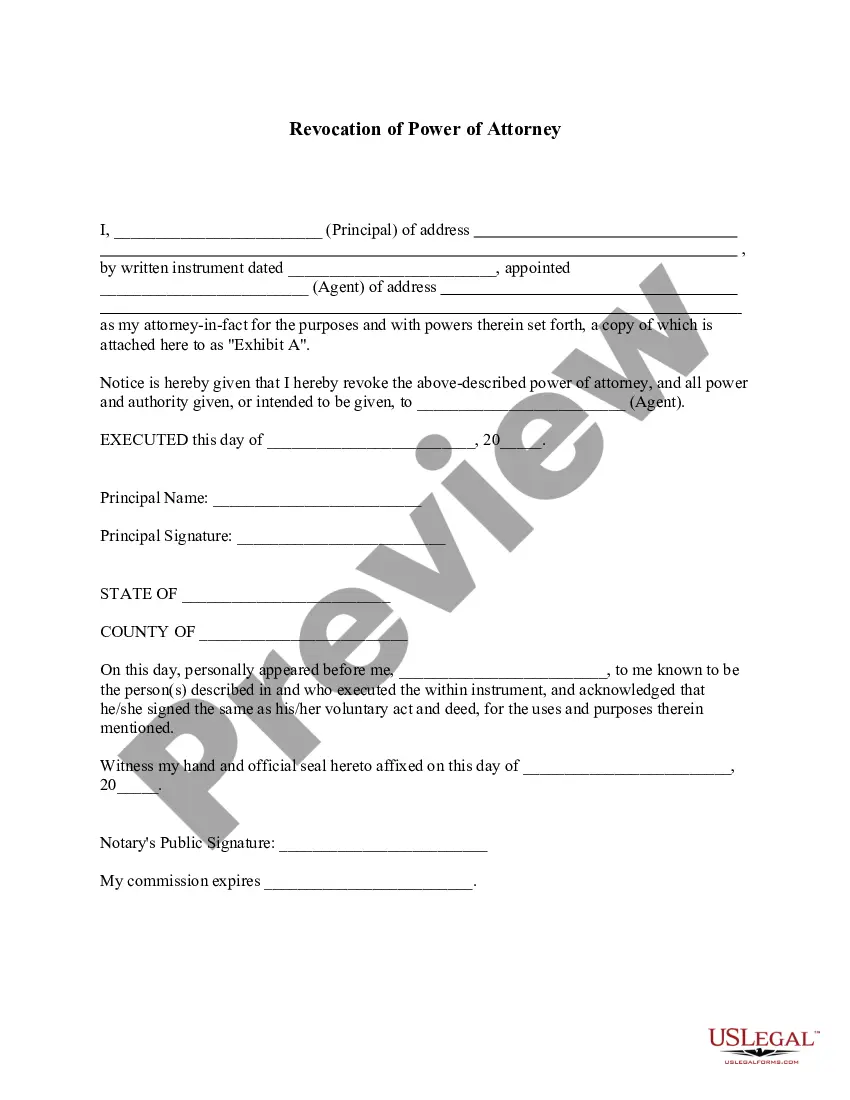
The Revocation of Statutory Advance Directive for Healthcare is a legal document that allows a person to formally cancel a previously executed advance directive. This form is essential for anyone who wishes to revoke their authority granted to an agent for healthcare decisions, change their treatment preferences, or alter guardianship designations. It ensures that your healthcare decisions reflect your current wishes and preferences.
Form components explained
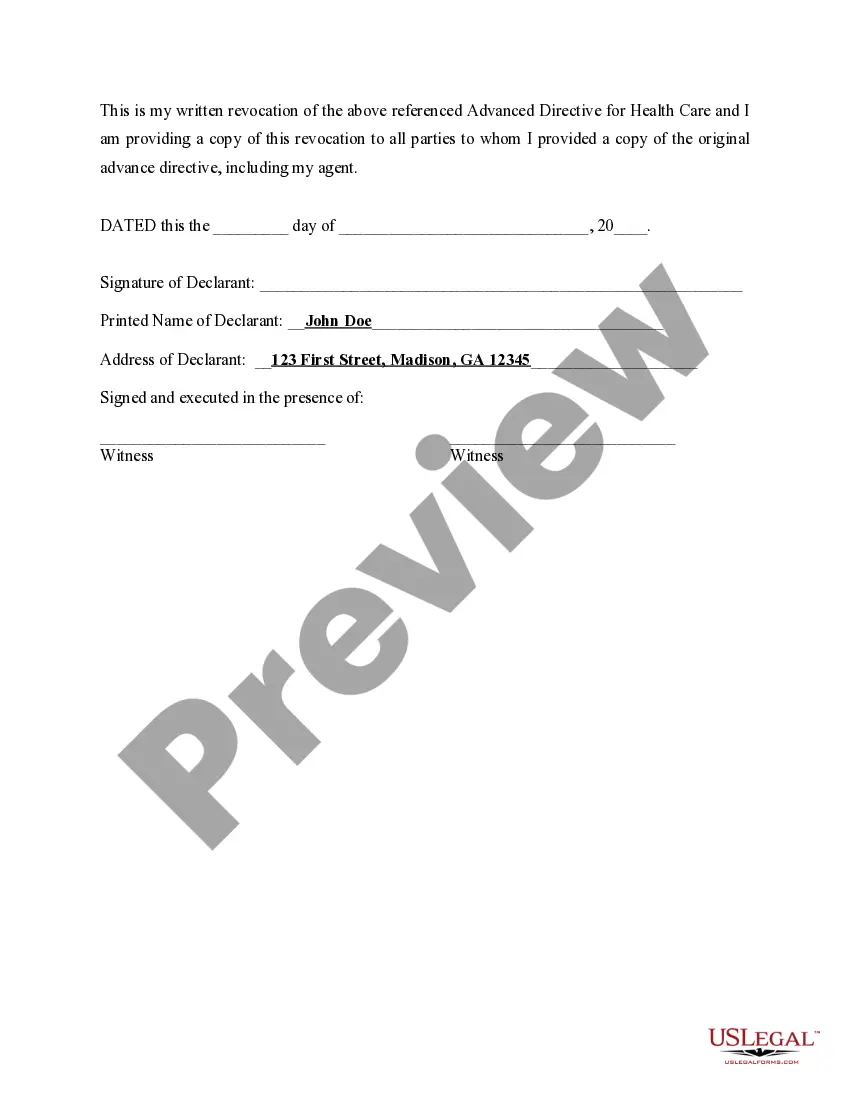
- Declarant's information and signature.
- Date of the original advance directive.
- Methods of revocation outlined in accordance with Georgia law.
- Witness signatures confirming the revocation.
- Declaration of intent to revoke the original advance directive.
Common use cases
This form is needed when you want to revoke an already existing advance directive for healthcare. You might consider using this form if your health care preferences have changed, if you wish to appoint a new agent, or if you want to remove your advance directive altogether. It is important to communicate these changes to your healthcare provider and any involved agents.
Intended users of this form
This form is intended for:
- Individuals who have previously executed an advance directive for healthcare.
- People experiencing changes in their healthcare preferences.
- Those wishing to appoint a new healthcare agent.
- Patients looking to ensure their medical decisions align with their current wishes.
Completing this form step by step
- Enter your full name as the declarant.
- Provide the date on which you executed the original advance directive.
- Read through the methods of revocation and affirm the approach you wish to take.
- Sign and date the form to confirm your intent to revoke the advance directive.
- Have at least two witnesses sign the document to validate your revocation.
Is notarization required?
This form does not typically require notarization unless specified by local law. However, having the document notarized can provide an additional layer of verification, ensuring your wishes are well-documented and respected.
Get your form ready online
Our built-in tools help you complete, sign, share, and store your documents in one place.
Make edits, fill in missing information, and update formatting in US Legal Forms—just like you would in MS Word.
Download a copy, print it, send it by email, or mail it via USPS—whatever works best for your next step.
Sign and collect signatures with our SignNow integration. Send to multiple recipients, set reminders, and more. Go Premium to unlock E-Sign.
If this form requires notarization, complete it online through a secure video call—no need to meet a notary in person or wait for an appointment.
We protect your documents and personal data by following strict security and privacy standards.

Make edits, fill in missing information, and update formatting in US Legal Forms—just like you would in MS Word.

Download a copy, print it, send it by email, or mail it via USPS—whatever works best for your next step.

Sign and collect signatures with our SignNow integration. Send to multiple recipients, set reminders, and more. Go Premium to unlock E-Sign.

If this form requires notarization, complete it online through a secure video call—no need to meet a notary in person or wait for an appointment.

We protect your documents and personal data by following strict security and privacy standards.
Common mistakes
- Failing to provide accurate dates regarding the original advance directive.
- Not including witness signatures, which may invalidate the form.
- Not clearly expressing the intent to revoke the advance directive.
- Using vague or ambiguous language in the revocation statement.
Advantages of online completion
- Convenience of downloading and completing the form at your own pace.
- Access to professionally drafted templates ensuring legality and compliance.
- Ability to easily edit and customize your document as needed.
- Instant access to legal resources and information related to advance directives.
- The revocation is legally binding once properly executed according to state law.
- All previously appointed agents must be notified of the revocation to avoid any confusion regarding your healthcare decisions.
Key takeaways
- This form allows you to formally revoke a prior advance directive for healthcare.
- Completing the form properly ensures clarity about your current healthcare preferences.
- Compliance with Georgia law is necessary for the revocation to be valid.
Looking for another form?



Form popularity
FAQ
In Georgia, an advance healthcare directive does not need to be notarized but must be signed in front of two witnesses who are not related to you. This process affirms your intent and ensures that your directive is valid. Opting for a Georgia Revocation of Statutory Advance Directive for Healthcare is a thoughtful decision that helps clarify your wishes. If you have further questions about the process, the US Legal Forms platform can provide the necessary resources and templates to guide you.
The Georgia Advance Directive for Health Care Statute allows you to outline your healthcare preferences and appoint a decision-maker in the event that you cannot communicate your wishes. This statute is designed to support your rights in specifying the types of medical treatment you want or do not want. Understanding this statute is crucial for effectively using a Georgia Revocation of Statutory Advance Directive for Healthcare. With this legal framework, you can ensure your choices are respected.
In Georgia, the person designated as your healthcare agent is responsible for ensuring that your advance directive is honored. This individual should fully understand your wishes regarding medical treatment, as outlined in your Georgia Revocation of Statutory Advance Directive for Healthcare. It is important to communicate your preferences clearly and regularly. If your agent is unable or unwilling to act, the healthcare provider will refer to the advance directive itself.
Generally, an advance directive can be overridden under certain circumstances, particularly if the person who created it is deemed to be incapable of making decisions. In Georgia, the Revocation of Statutory Advance Directive for Healthcare allows for such changes if the individual expresses a new preference or if a legally designated representative acts on their behalf. It is important to have a clear understanding of the legal framework governing these decisions. US Legal Forms provides tools that help clarify these processes, ensuring compliance and peace of mind.
Yes, advance directives are primarily governed by state laws, which can vary significantly across the United States. In Georgia, the Revocation of Statutory Advance Directive for Healthcare is defined by specific state legislation that outlines the requirements and process. This means that it is essential for individuals to understand Georgia's regulations to ensure their advance directive meets legal standards. If you need guidance on navigating these laws, US Legal Forms offers resources to assist you.
An advance directive is a legal document stating your healthcare wishes, while a power of attorney designates someone to make healthcare decisions on your behalf. In Georgia, these documents work together but serve distinct purposes. Understanding both is key to ensuring your preferences are respected, especially regarding the Georgia Revocation of Statutory Advance Directive for Healthcare, which allows for adjustments to your wishes.
In general, family members cannot override a living will in Georgia. A living will represents the individual's healthcare preferences, which should be honored unless a legal exception applies. However, if there are disputes regarding the living will, a court may need to decide. For clarified wishes, consider the Georgia Revocation of Statutory Advance Directive for Healthcare, allowing you to confirm or amend your directives.
In Georgia, only specific individuals may have the authority to override an advance directive. Typically, this includes the patient themselves if they regain capacity or a designated power of attorney in some situations. However, legal intervention may also play a role if there are disputes. Understanding the Georgia Revocation of Statutory Advance Directive for Healthcare can empower you to reclaim your directive when necessary.
Georgia law allows individuals to create advance directives to outline their healthcare wishes. The laws specify how directives should be executed and what information they must include. It's essential to follow the legal guidelines to ensure these documents are valid. Utilizing the Georgia Revocation of Statutory Advance Directive for Healthcare enables you to manage your healthcare preferences clearly.
In Georgia, certain legal documents can supersede an advance directive, such as a court order or a more recent healthcare directive. Additionally, a power of attorney for healthcare may provide different instructions than an advance directive. It is essential to keep all documents updated to reflect your current wishes. The Georgia Revocation of Statutory Advance Directive for Healthcare allows you to revoke previous directives as needed.