Georgia Quitclaim Deed from Corporation to Two Individuals
What this document covers
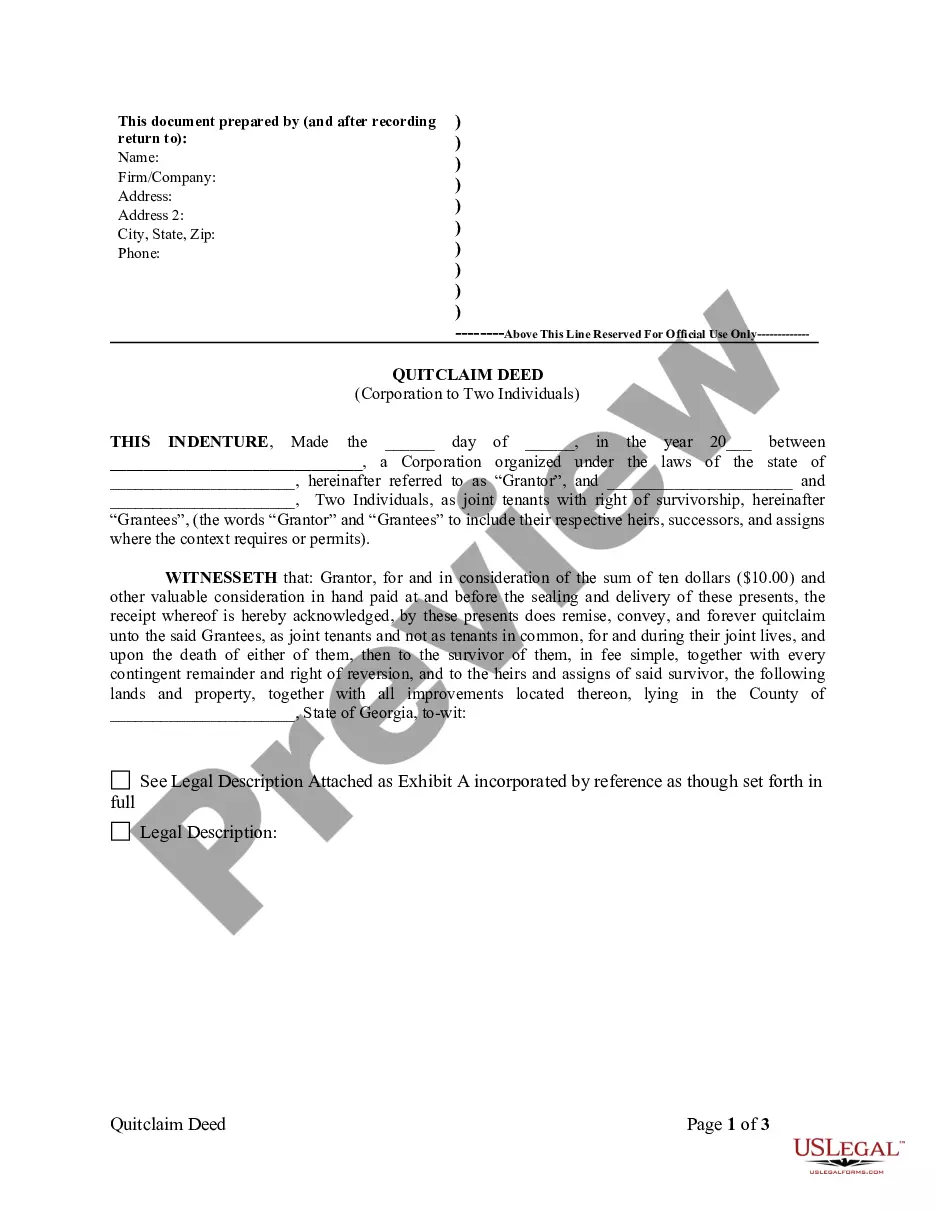
This Quitclaim Deed from Corporation to Two Individuals is a legal document in which a corporation (the Grantor) transfers its interest in a property to two individual Grantees. Unlike other deeds, a quitclaim deed does not guarantee that the Grantor holds clear title to the property; it simply conveys whatever interest the Grantor has. This form is particularly useful when a corporation wishes to transfer property ownership to individuals without extensive legal formalities.
Key components of this form
- Grantor Information: Details about the corporation transferring the property.
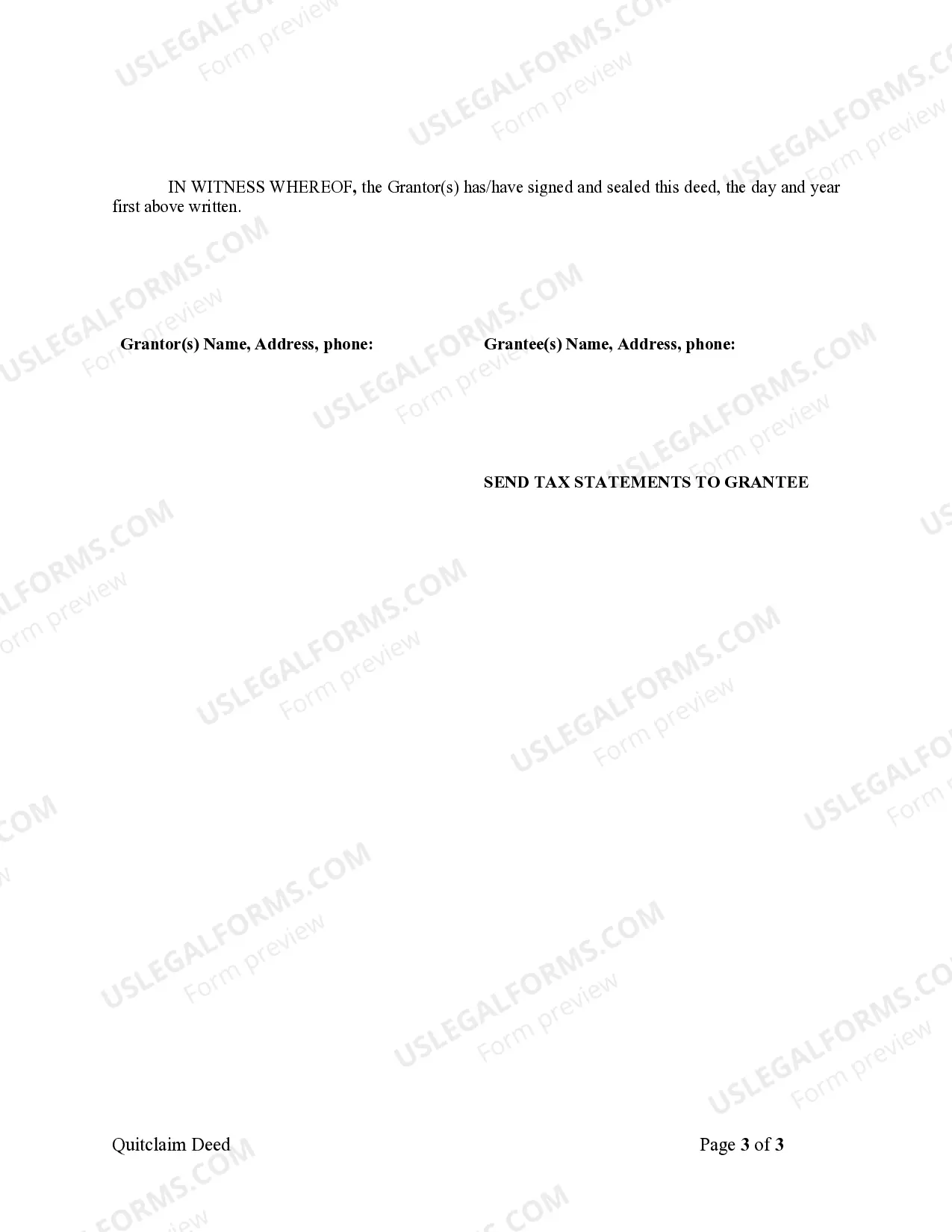
- Grantee Information: Names and addresses of the two individuals receiving the property.
- Property Description: A detailed legal description of the property being transferred.
- Consideration Clause: States the compensation for the transfer, often a nominal amount.
- Rights of Survivorship: Specifies how ownership will be managed upon the death of one Grantee.




When this form is needed
This form is typically used when a corporation is transferring property to two individuals, especially in cases where there is a need to jointly own the property. Common scenarios include family arrangements, gifts of property, or estate planning where a corporation wishes to divest itself of real estate assets. It can also be relevant in business transactions where properties held by corporate entities are being distributed to key stakeholders or principals.
Who this form is for
This form is intended for:
- Corporations transferring property to individual owners.
- Individuals who are beneficiaries of property held by a corporation.
- Lawyers or legal representatives handling property transfers for corporations.
- Anyone involved in estate planning that includes corporate property ownership.
How to prepare this document
- Identify the parties: Fill in the full legal names of the Grantor (corporation) and Grantees (individuals).
- Specify the property: Provide a detailed property description to ensure clarity on what is being transferred.
- Locate the legal description: Attach Exhibit A with the full legal description of the property.
- Enter consideration amount: Indicate the amount of consideration, typically ten dollars, or any other agreed-upon amount.
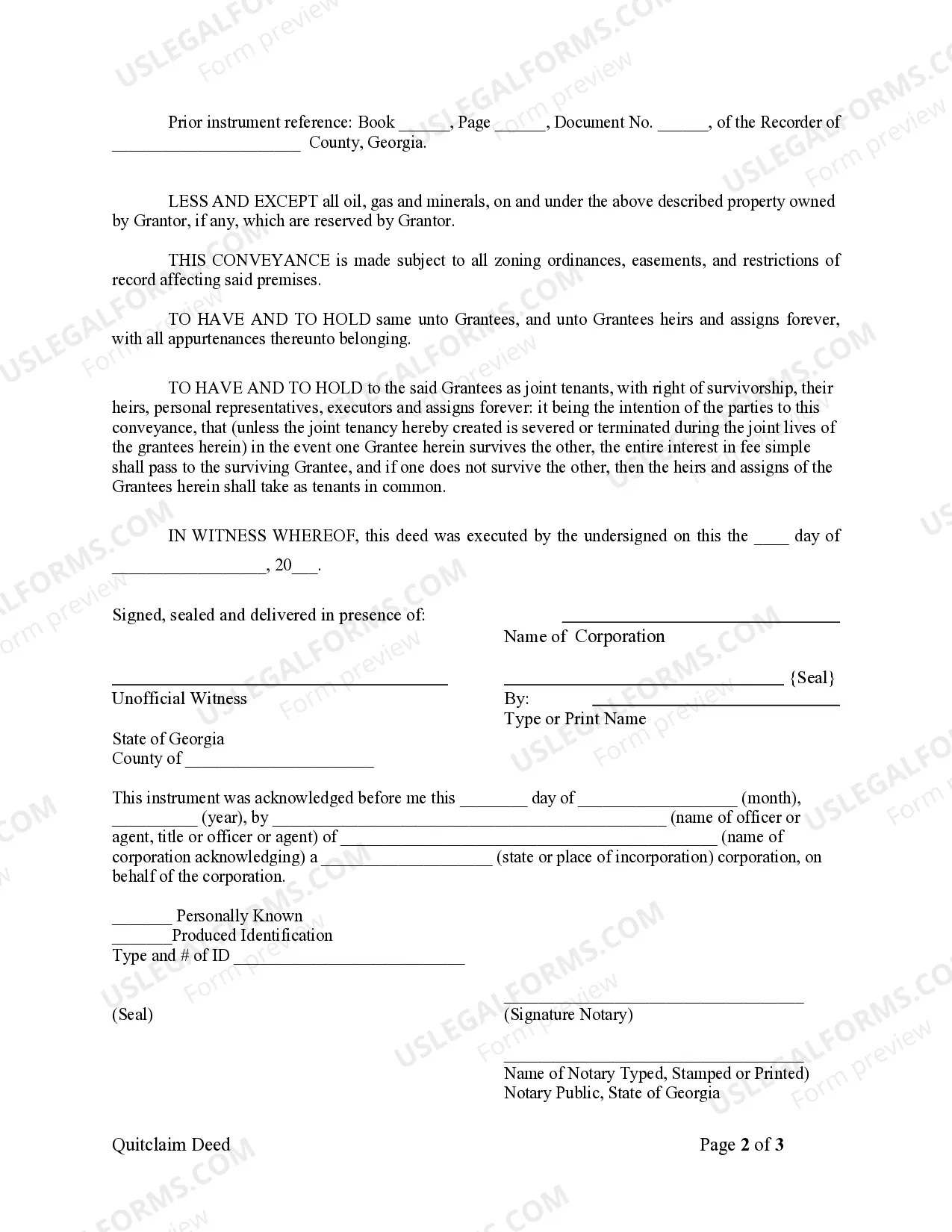
- Sign and date: Ensure that the appropriate representatives of the corporation sign the form and that dates are recorded.
Does this form need to be notarized?
This form needs to be notarized to ensure legal validity. US Legal Forms provides secure online notarization powered by Notarize, allowing you to complete the process through a verified video call, available anytime.
Get your form ready online
Our built-in tools help you complete, sign, share, and store your documents in one place.
Make edits, fill in missing information, and update formatting in US Legal Forms—just like you would in MS Word.
Download a copy, print it, send it by email, or mail it via USPS—whatever works best for your next step.
Sign and collect signatures with our SignNow integration. Send to multiple recipients, set reminders, and more. Go Premium to unlock E-Sign.
If this form requires notarization, complete it online through a secure video call—no need to meet a notary in person or wait for an appointment.
We protect your documents and personal data by following strict security and privacy standards.

Make edits, fill in missing information, and update formatting in US Legal Forms—just like you would in MS Word.

Download a copy, print it, send it by email, or mail it via USPS—whatever works best for your next step.

Sign and collect signatures with our SignNow integration. Send to multiple recipients, set reminders, and more. Go Premium to unlock E-Sign.

If this form requires notarization, complete it online through a secure video call—no need to meet a notary in person or wait for an appointment.

We protect your documents and personal data by following strict security and privacy standards.
Avoid these common issues
- Failing to include a complete property description.
- Not having the form signed by an authorized representative of the corporation.
- Neglecting to attach the legal description as Exhibit A.
- Omitting the consideration amount or not specifying it correctly.
Why complete this form online
- Convenience of immediate download and editing from your home or office.
- Access to accurate and up-to-date legal forms drafted by licensed attorneys.
- Ability to customize the form to fit your specific needs quickly.
- Secure storage and retrieval for future use or legal reference.
Looking for another form?
Form popularity
FAQ
A Georgia quitclaim deed from a corporation to two individuals can include multiple names; there is no strict limit on the number of individuals that can be added. This means you can transfer property rights to several people as needed. Each individual has equal rights to the property once the deed is recorded. It's essential, however, to ensure that all parties understand their shared responsibilities.
While it is not legally required to hire a lawyer for a Georgia quitclaim deed from a corporation to two individuals, having legal assistance can simplify the process. A lawyer can ensure all documentation is prepared correctly, meeting state requirements. They also provide guidance on property rights and implications of the deed. If this is your first time dealing with property transfers, consulting a legal expert can be very beneficial.
A corporation conveys real estate by executing a deed, typically a quitclaim deed, where an authorized representative signs on behalf of the corporation. This formalizes the transfer and indicates the corporation's intent to transfer ownership to the specified individuals. When dealing with a Georgia Quitclaim Deed from Corporation to Two Individuals, ensure the corporation’s bylaws are followed for a smooth transfer.
In Missouri, a quitclaim deed requires a clear description of the property, the names of the grantor and grantee, and the grantor's signature. The deed must also be notarized before it can be filed with the county's recorder of deeds. While Missouri's requirements may differ, using a Georgia Quitclaim Deed from Corporation to Two Individuals requires similar attention to detail.
A quitclaim deed can be deemed invalid if it is not properly executed, such as lacking the necessary signatures, dates, or not being notarized. Additionally, if the grantor does not hold actual interest in the property at the time of signing, the deed can also be invalid. For a valid Georgia Quitclaim Deed from Corporation to Two Individuals, ensure compliance with state laws.
Typically, both parties do not need to be present for signing a quitclaim deed. In a Georgia Quitclaim Deed from Corporation to Two Individuals, the grantor signs the deed, and it can be notarized without the grantee being present. However, involving both parties in the signing can help clarify the intention behind the transfer.
In Pennsylvania, a quitclaim deed operates similarly to other states, allowing the grantor to transfer their interest without warranties. This means that if any issues arise regarding the title, the grantee has limited recourse against the grantor. If you are considering a Georgia Quitclaim Deed from Corporation to Two Individuals, understand that each state's laws may vary, and legal guidance is advisable.
In Minnesota, a quitclaim deed allows the grantor to transfer their interest in property without guaranteeing clear title. The recipient, also known as the grantee, receives whatever interest the grantor holds at the time of transfer, which can be beneficial for informal property transfers. Always consider legal advice when dealing with Georgia Quitclaim Deed from Corporation to Two Individuals, to ensure all aspects are properly handled.
To add a person to a deed in Georgia, you can execute a Georgia Quitclaim Deed from Corporation to Two Individuals. The current property owner should complete a new deed, listing the new individual as an additional grantee. After completing the deed, you must file it with the county clerk's office to formalize the change.
Yes, when a corporation transfers ownership of property through a Georgia Quitclaim Deed from Corporation to Two Individuals, the deed must be signed by the authorized signer of the corporation. This signature confirms the corporation's intent to convey the property. Not signing the deed can lead to legal complications and delays.