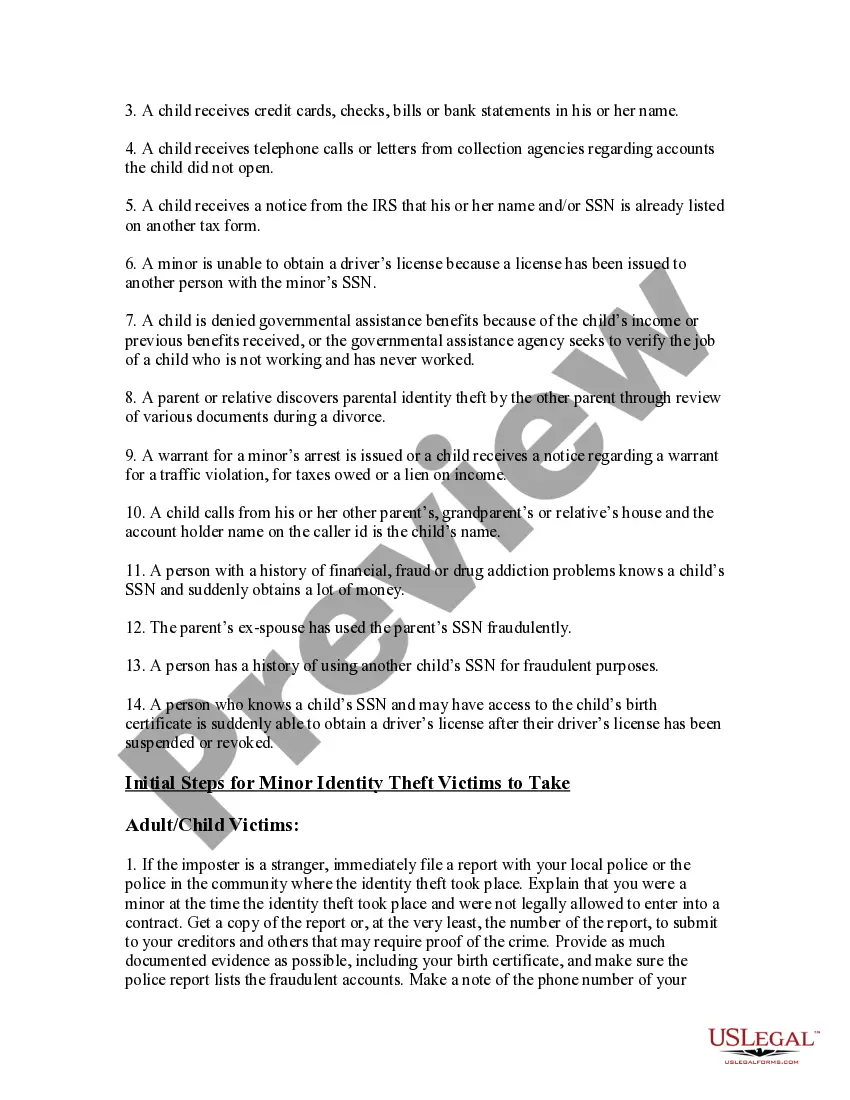
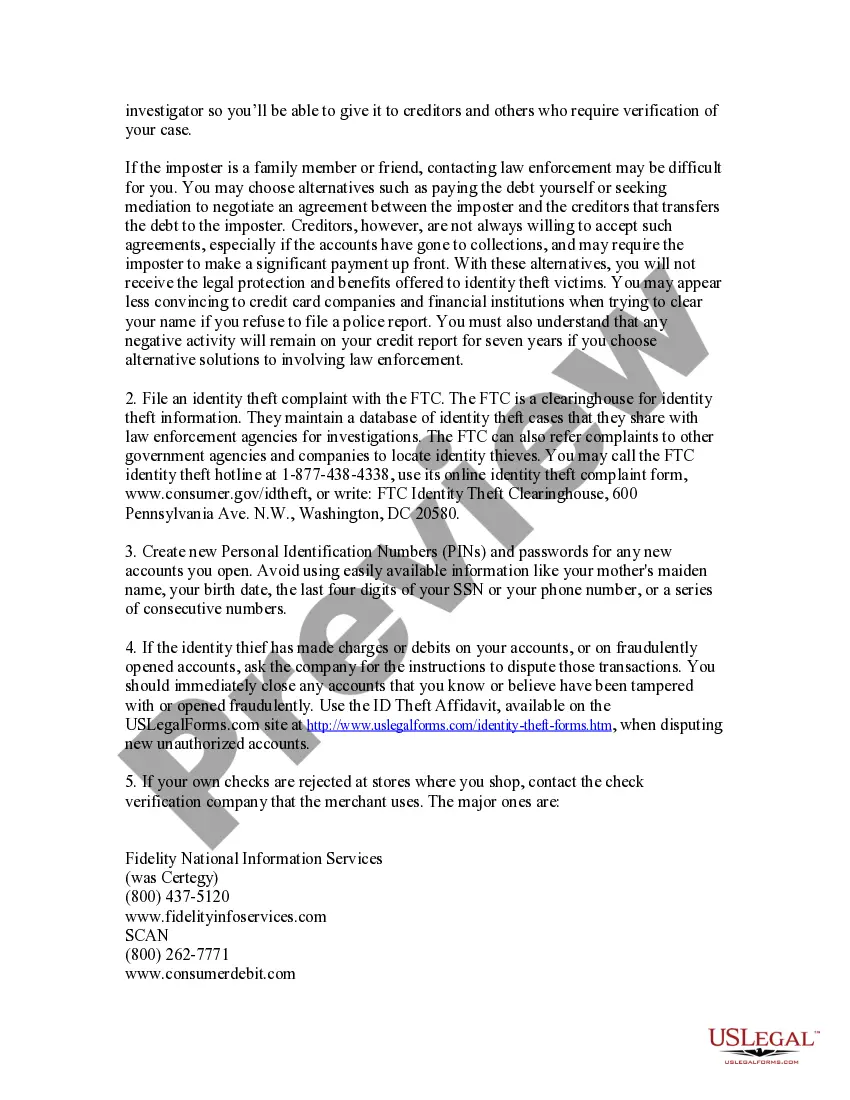
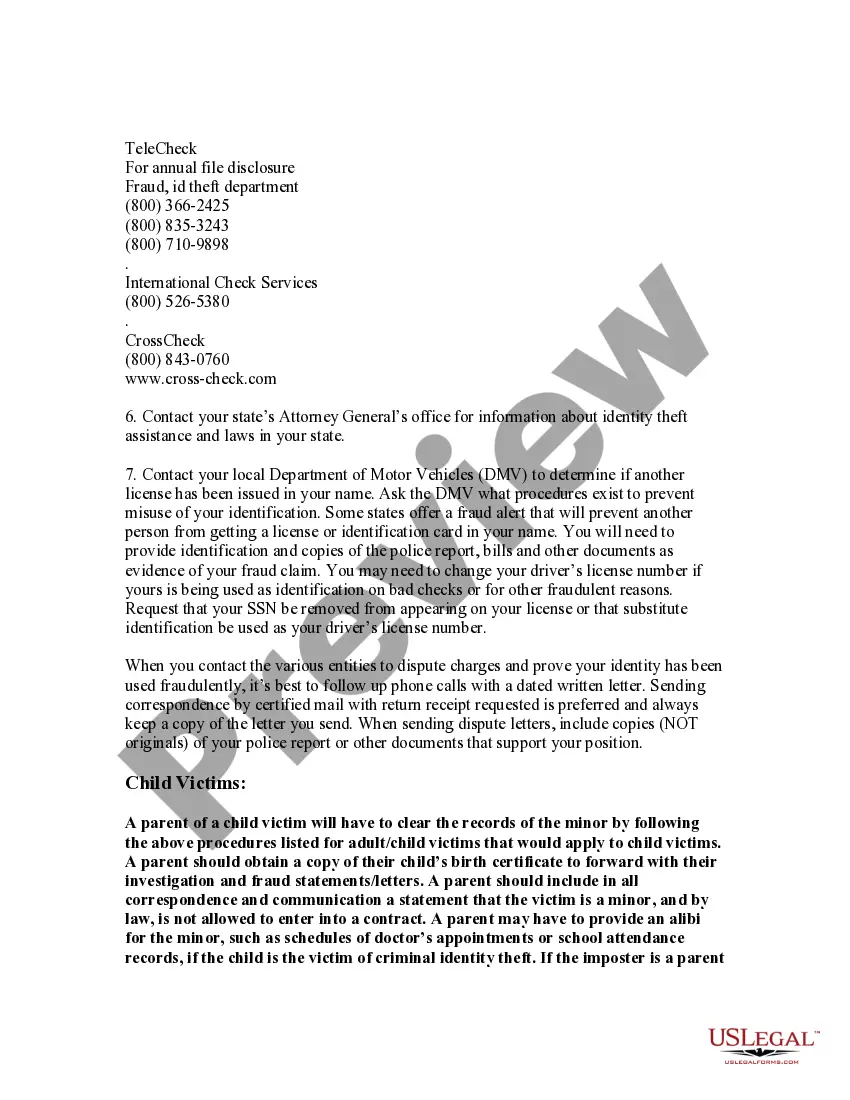
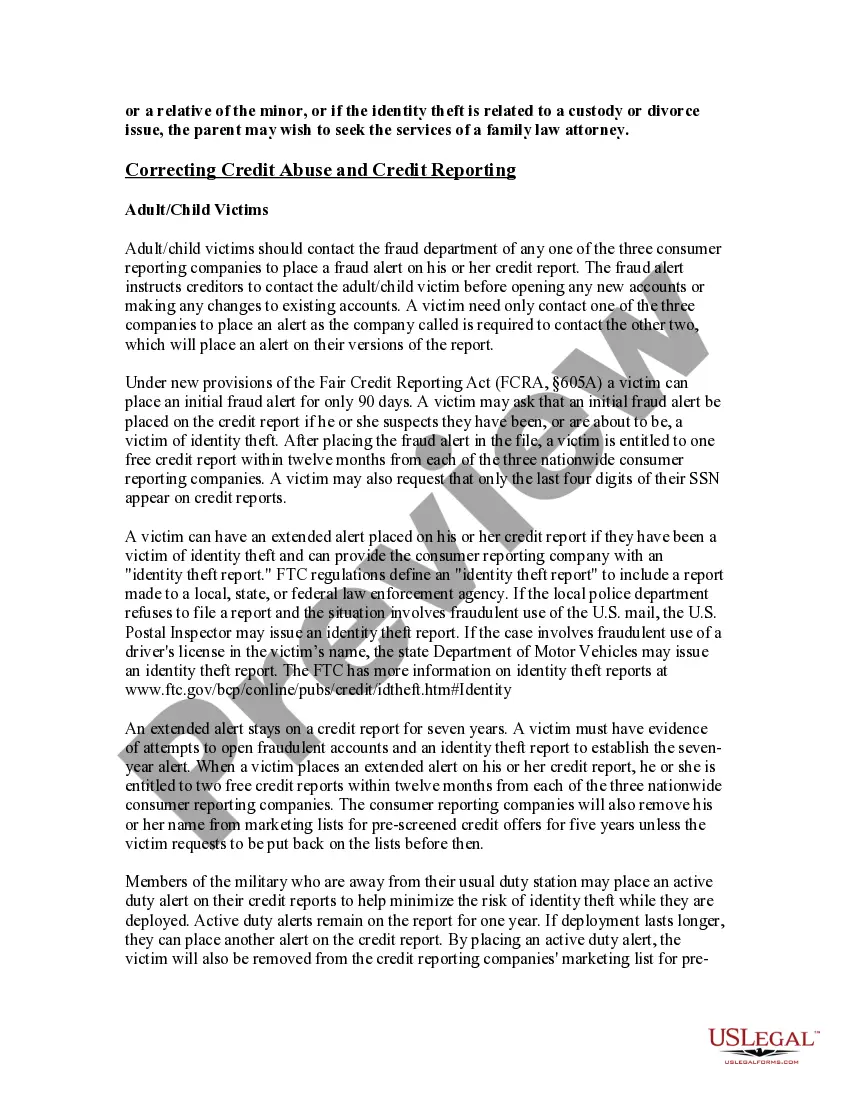
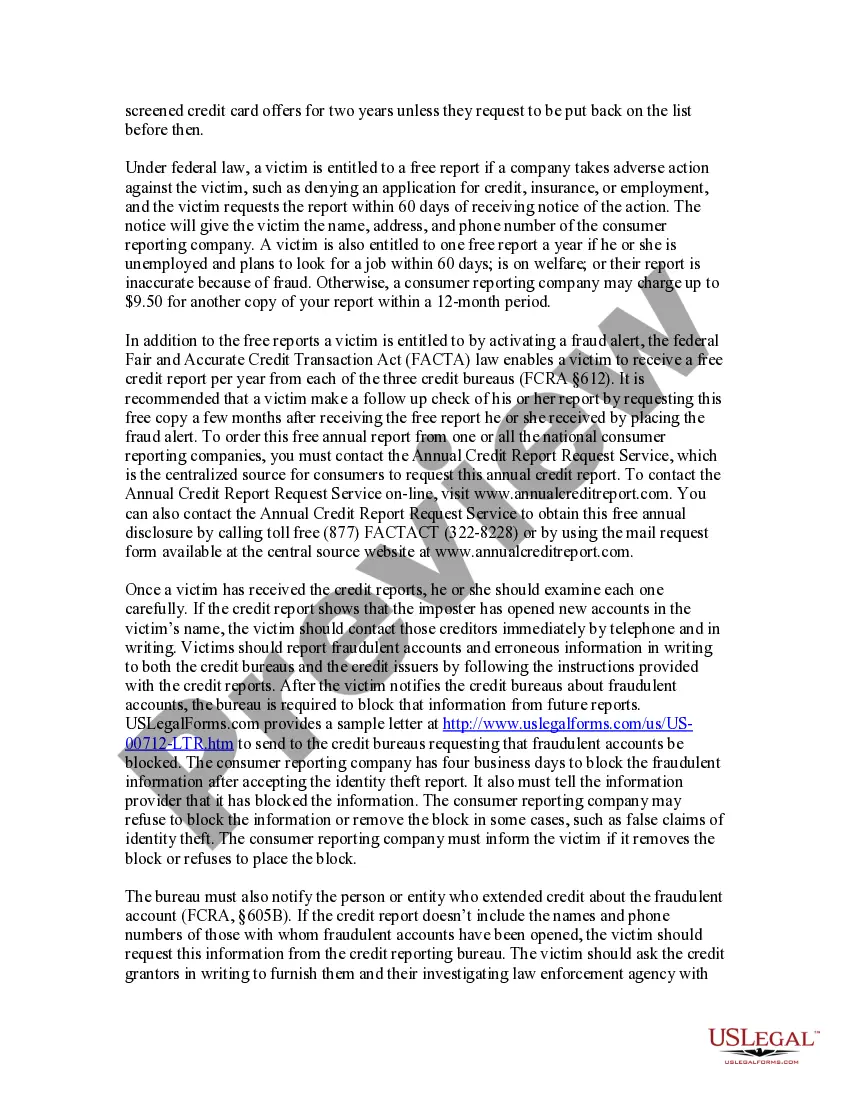
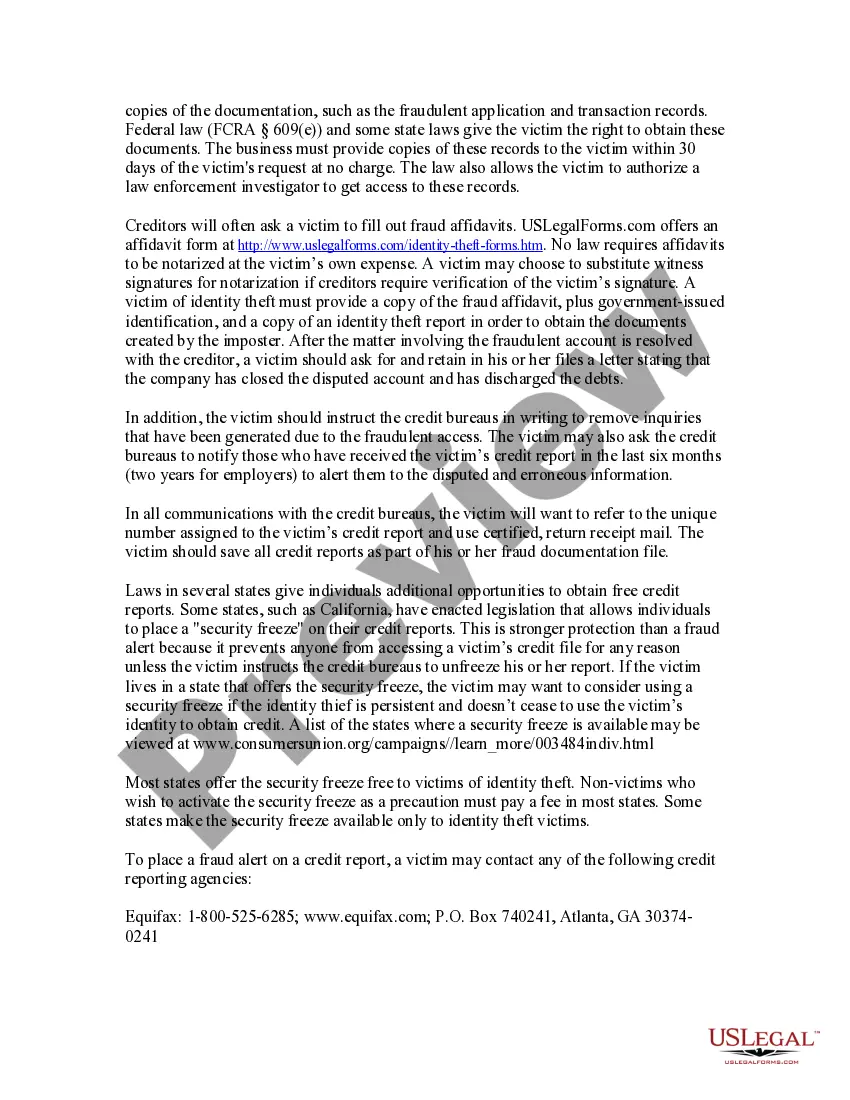
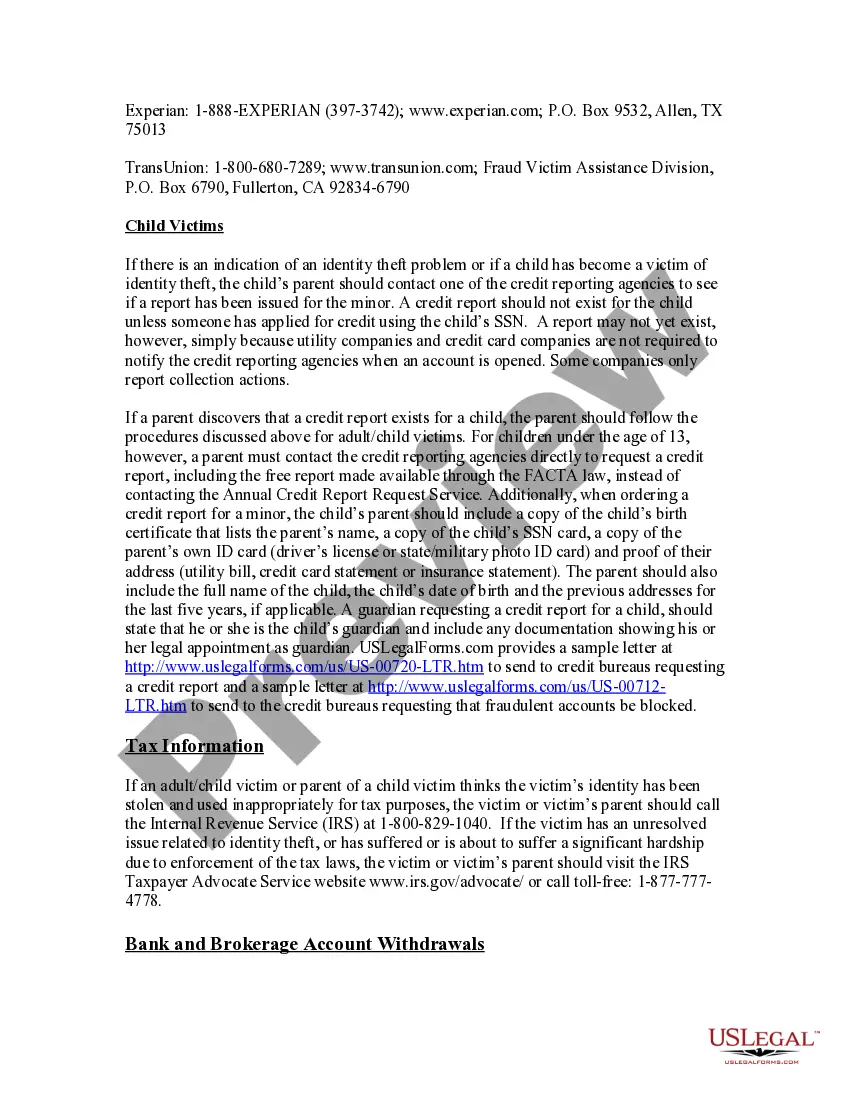
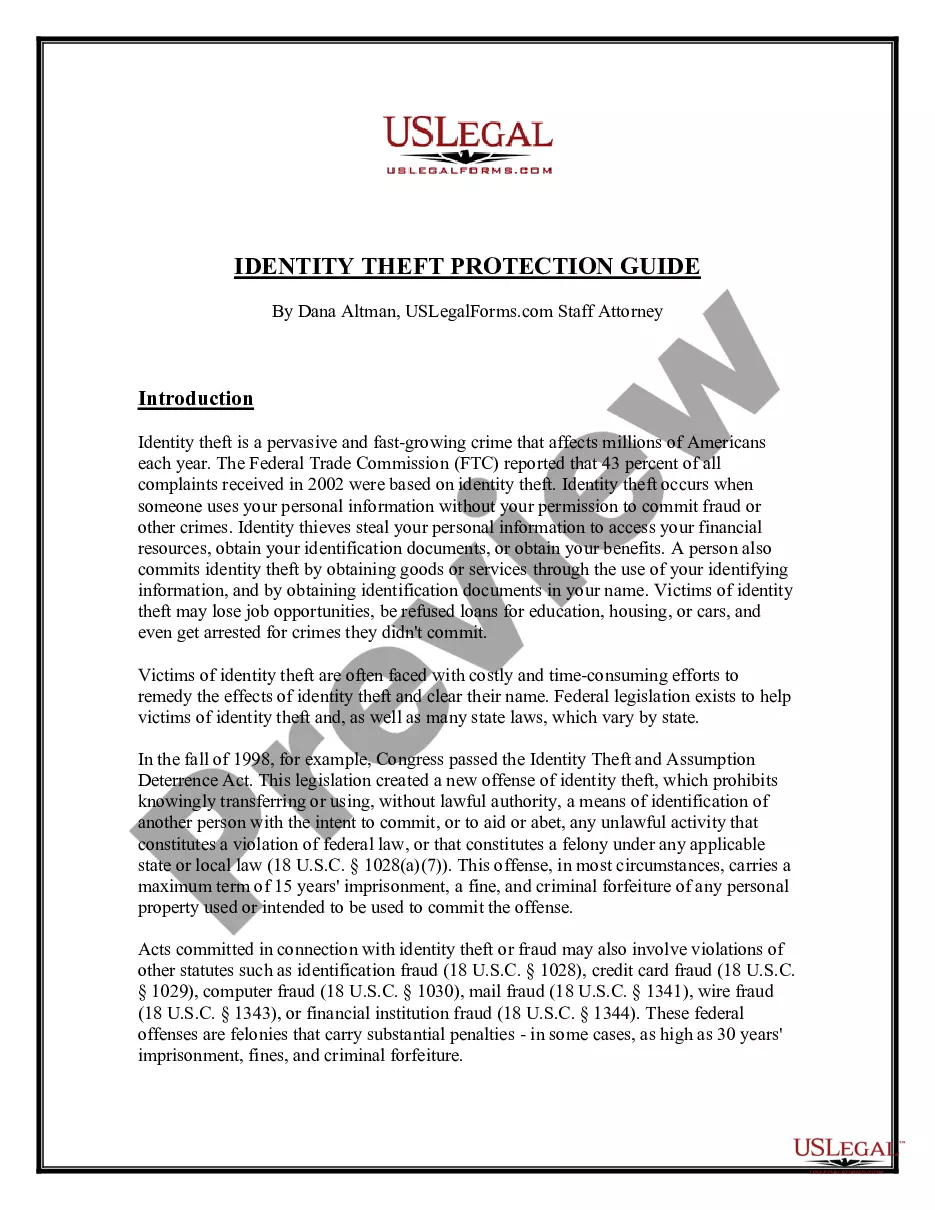
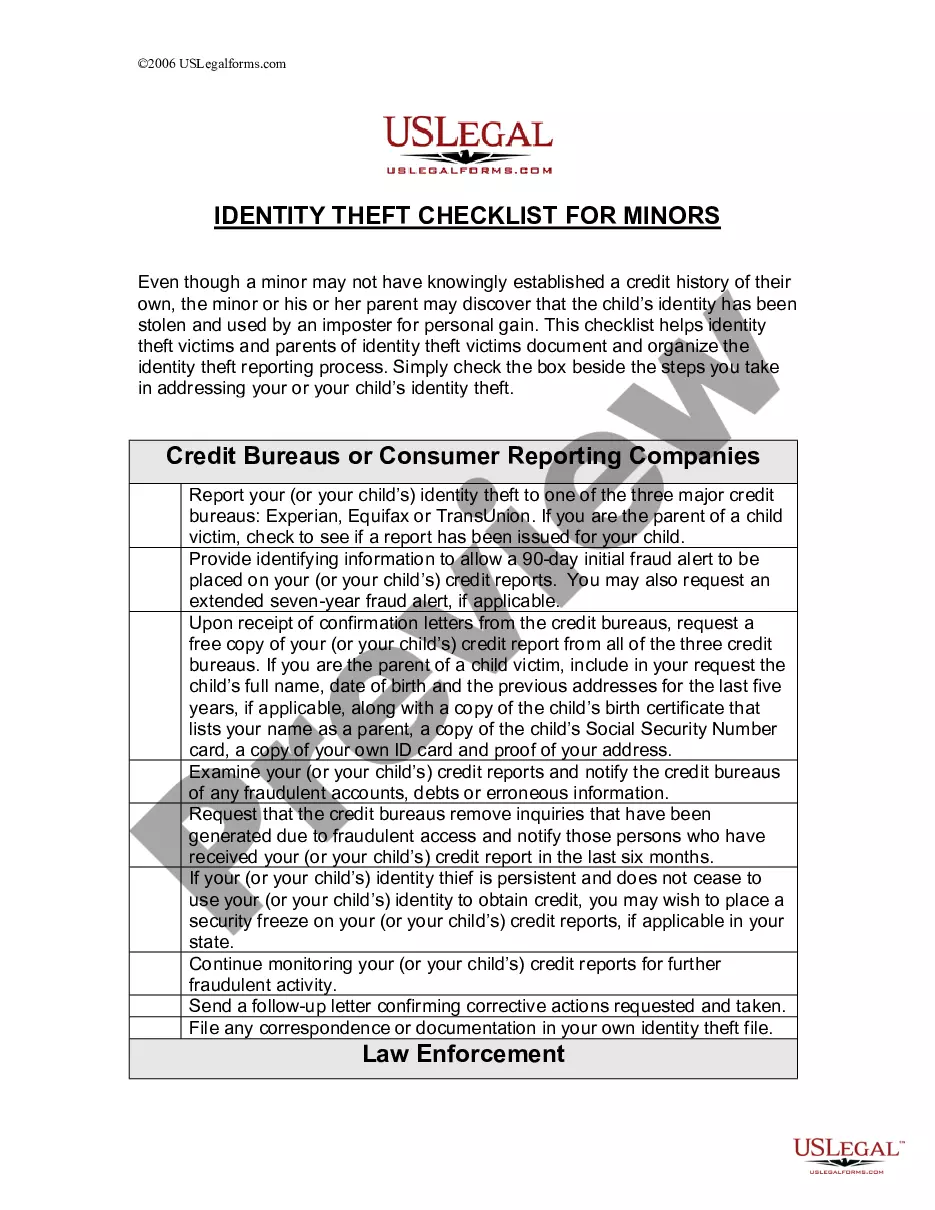
Identity theft of minors is a fast-growing and largely unreported crime that affects many Americans each year. With this Guide for Protecting Minors from Identity Theft, minors and parents of minors will learn how to effectively deal with creditors and government agencies after the minor's identification is lost or stolen. This guide is designed to help a minor or the minor's parent clear the minor's name, and reduce the time and expense involved with dealing with identity thieves. The information in this guide is essential to assist in remedying and protecting a minor's credit, financial assets, and job opportunities, as well as preventing misuse of benefits, false arrests, and other fraudulent uses of a minor's identification. Helpful tips on preventing identity theft, useful links, and more, are also included.
Wyoming Guide for Protecting Minors from Identity Theft
Instant download
Description
Free preview

Get your form ready online
Our built-in tools help you complete, sign, share, and store your documents in one place.
Built-in online Word editor
Make edits, fill in missing information, and update formatting in US Legal Forms—just like you would in MS Word.
Export easily
Download a copy, print it, send it by email, or mail it via USPS—whatever works best for your next step.
E-sign your document
Sign and collect signatures with our SignNow integration. Send to multiple recipients, set reminders, and more. Go Premium to unlock E-Sign.
Notarize online 24/7
If this form requires notarization, complete it online through a secure video call—no need to meet a notary in person or wait for an appointment.
Store your document securely
We protect your documents and personal data by following strict security and privacy standards.

Make edits, fill in missing information, and update formatting in US Legal Forms—just like you would in MS Word.

Download a copy, print it, send it by email, or mail it via USPS—whatever works best for your next step.

Sign and collect signatures with our SignNow integration. Send to multiple recipients, set reminders, and more. Go Premium to unlock E-Sign.

If this form requires notarization, complete it online through a secure video call—no need to meet a notary in person or wait for an appointment.

We protect your documents and personal data by following strict security and privacy standards.
Looking for another form?




How to fill out Guide For Protecting Minors From Identity Theft?
US Legal Forms - one of the largest repositories of legal documents in the United States - offers a diverse selection of legal form templates that you can download or print. By using the site, you can access thousands of forms for business and personal purposes, categorized by types, states, or keywords. You can find the latest forms such as the Wyoming Guide for Protecting Minors from Identity Theft in just a few minutes.
If you already have a monthly subscription, Log In and download the Wyoming Guide for Protecting Minors from Identity Theft from your US Legal Forms library. The Download button will appear on every form you view. You can access all previously saved forms in the My documents section of your account.
If you are using US Legal Forms for the first time, here are simple instructions to help you get started: Make sure you have selected the correct form for your city/state. Click the Preview button to check the form's details. Review the form summary to ensure you have chosen the right one. If the form does not meet your needs, use the Search field at the top of the screen to find one that does. If you are satisfied with the form, confirm your selection by clicking the Get now button. Then, choose the pricing plan you prefer and provide your information to register for an account. Process the payment. Use your credit card or PayPal account to complete the transaction. Choose the format and download the form to your device. Edit. Fill out, modify, and print and sign the downloaded Wyoming Guide for Protecting Minors from Identity Theft. Every template you save to your account has no expiration date and is yours indefinitely. So, if you wish to download or print another copy, simply visit the My documents section and click on the form you want.
- Access the Wyoming Guide for Protecting Minors from Identity Theft with US Legal Forms, the most extensive library of legal document templates.
- Utilize thousands of professional and state-specific templates that fulfill your business or personal requirements and standards.
Form popularity
FAQ
What is child identity theft? Adults are not the only targets of identity theft. In fact, children under the age of 18 can also become victims. Child identity theft happens when someone uses a minor child's personal information, such as name and Social Security number, usually to obtain credit or employment.
Are My Children at Risk Of Identity Theft? Highlights: Check your child's credit reports. Consider a free security freeze. Consider a credit monitoring product. Keep your child's documents in a safe place. Don't share your child's personal information unless it's absolutely necessary.
Warning Signs of Child Identity Theft Unexpected bills addressed to your child. Collection notices that arrive by mail or phone, targeting your child. Denial of government benefits for your child on the basis that they've already been paid to someone using your child's Social Security number.
In the US, the most common victims of identity theft are aged 30-39 years old. This is closely followed by those aged 40-49 years old. The least likely age group to fall victim to identity theft by raw numbers are 80+.
Identity theft can happen to anyone, but you can reduce the risk of becoming a victim by taking some simple steps to protect your personal information. Keep Your Personal Information Secure. ... Monitor Your Credit Reports, Bank and Credit Accounts. ... Ask Questions Before You Share Your Information.
Child identity theft happens when someone uses a minor child's personal information, such as name and Social Security number, usually to obtain credit or employment.
The Truth About Child Identity Theft. Axton Betz-Hamilton's story may seem unbelievable, but only if you don't know anything about child identity theft, which ensnares nearly one in 50 children in the U.S. yearly, ing to a 2021 Javelin Strategy & Research report.
Contact the three major credit bureaus and ask for them to check for files relating to your child's name and social security number. Note: Only parents/guardians of children may ask to see a child's credit file.