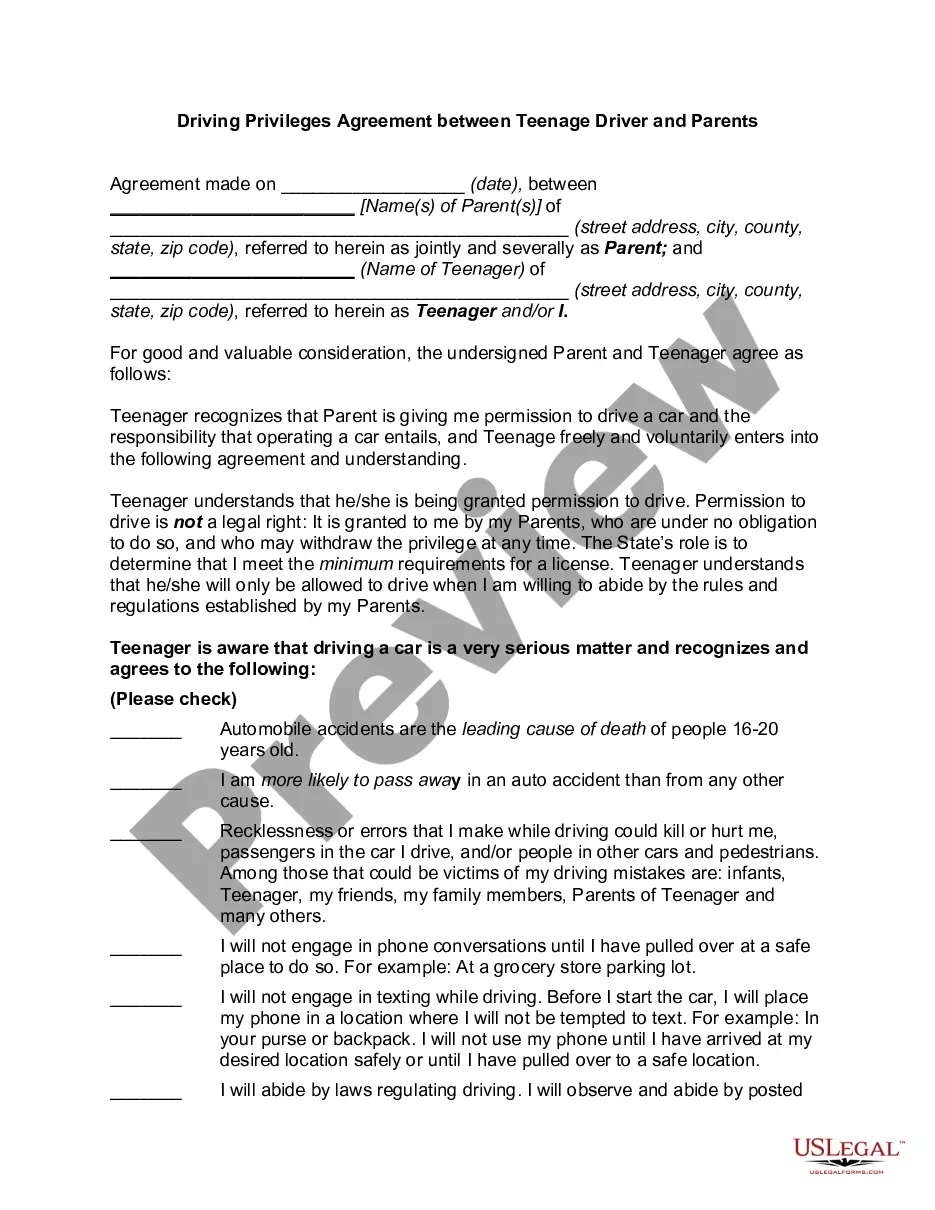
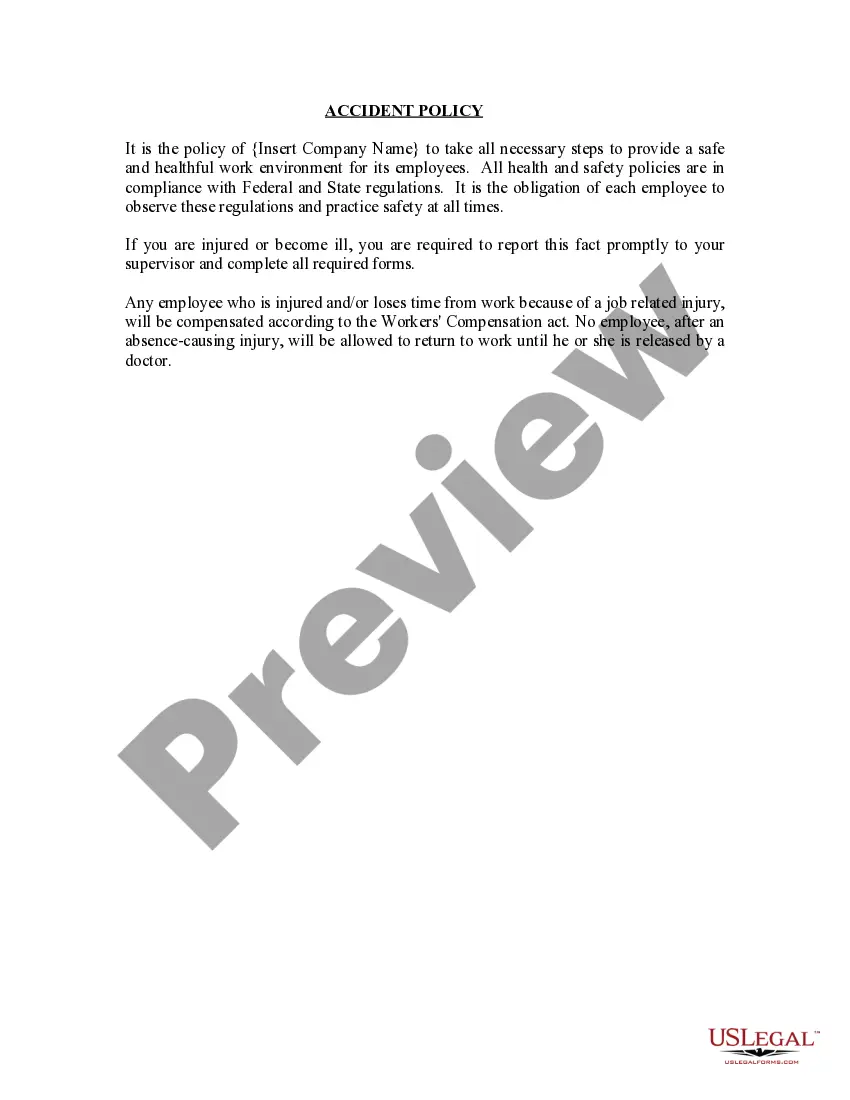
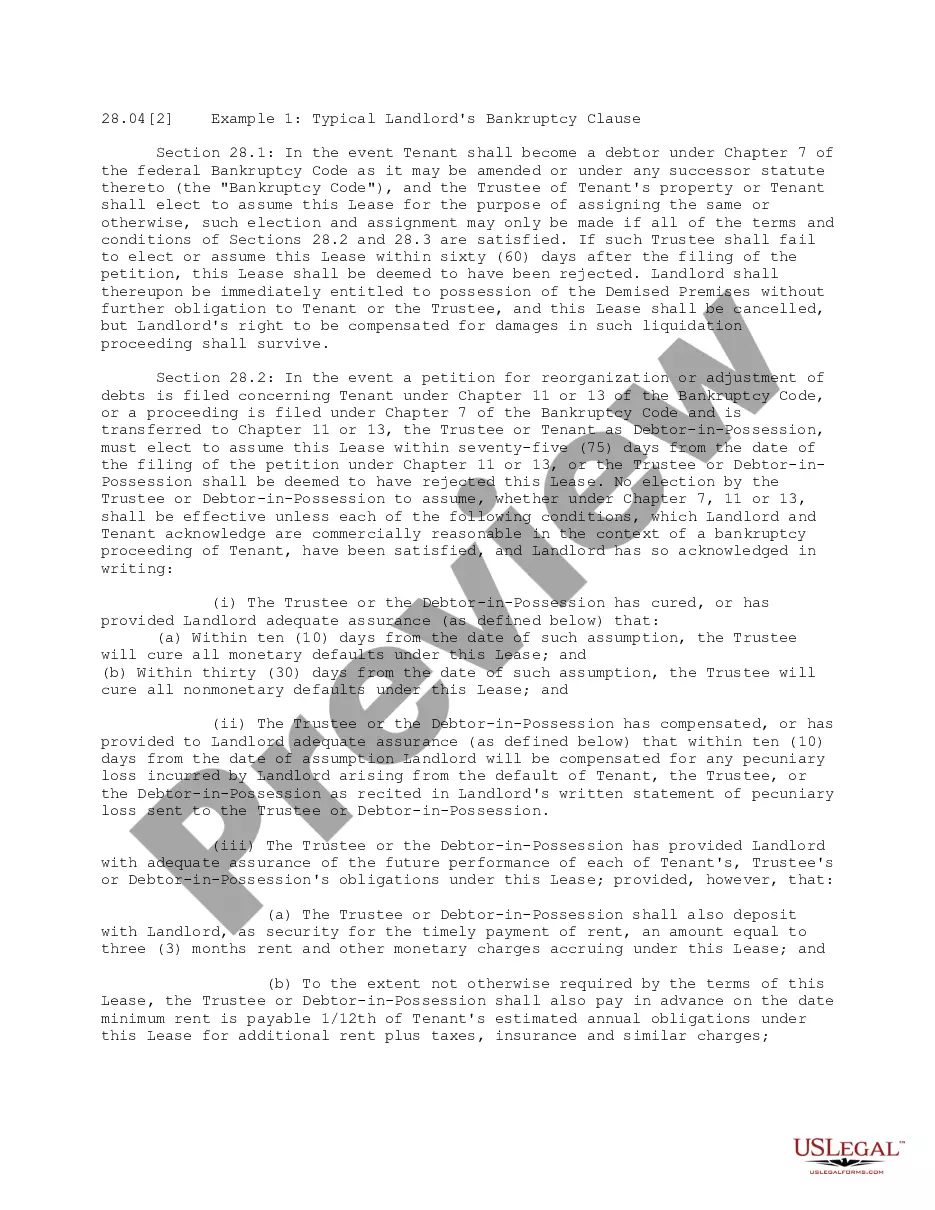
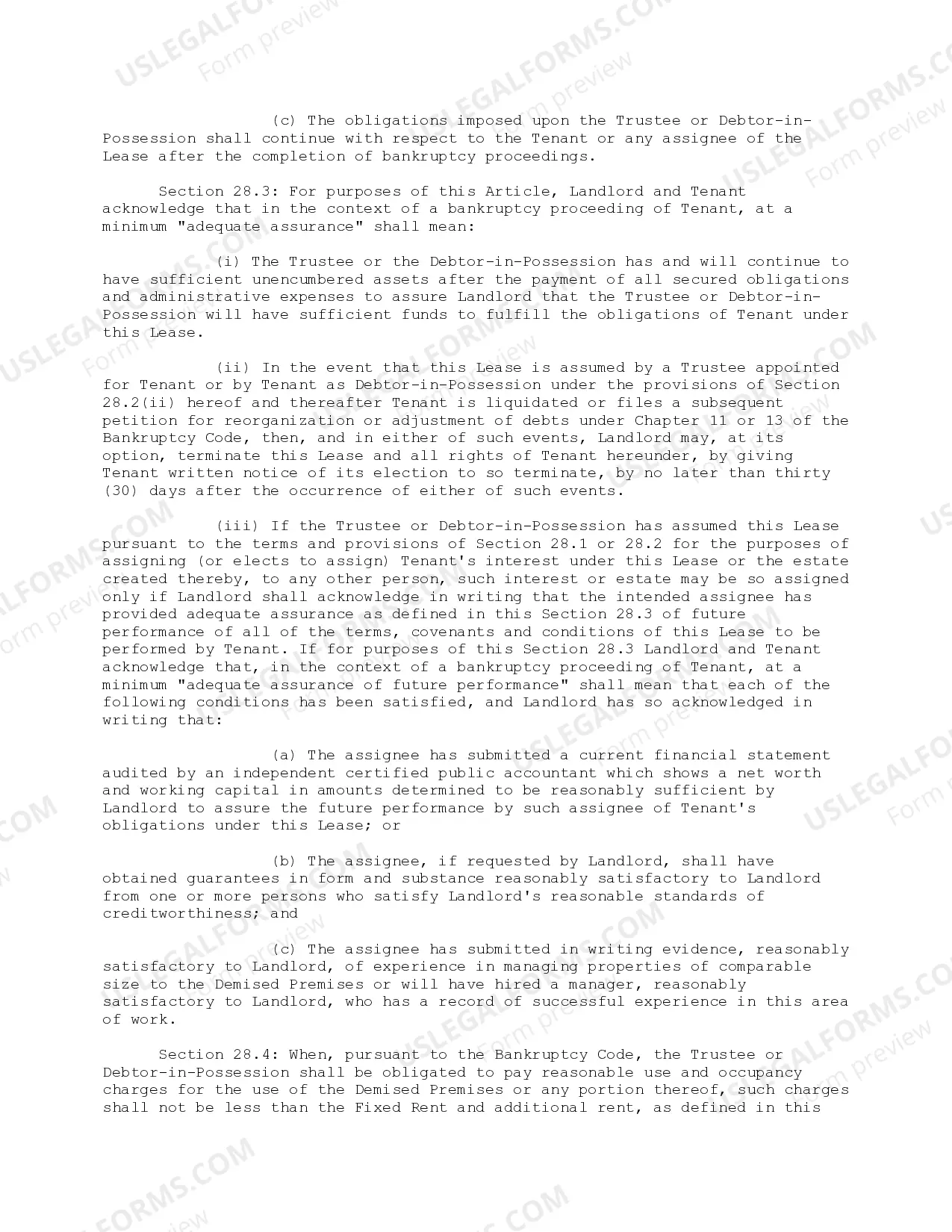
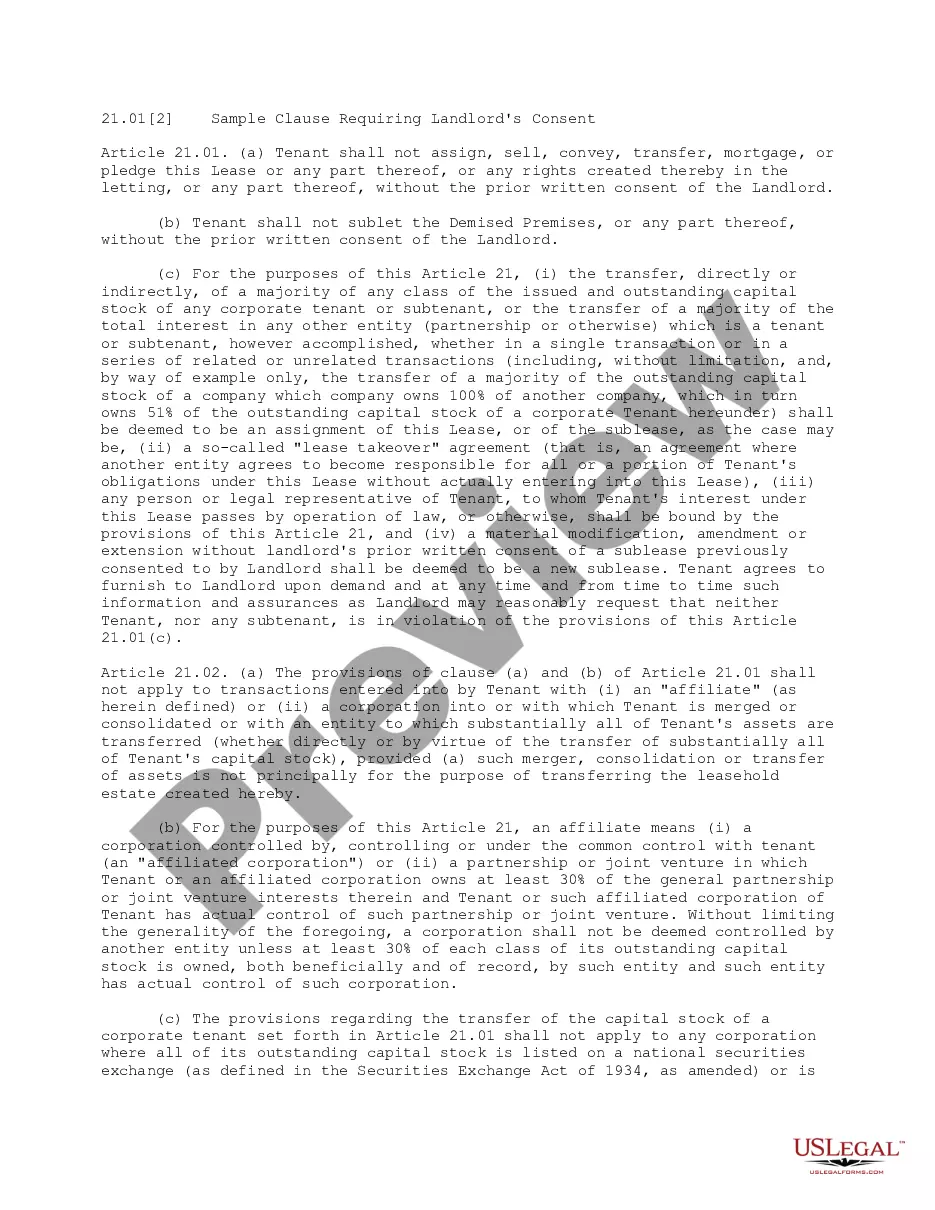
This office lease clause states that in the event the tenant becomes a debtor under Chapter 7 of the federal Bankruptcy Code and the Trustee of the tenant's property or the tenant elects to assume the lease for the purpose of assigning the same or otherwise, such election and assignment may only be made if all of the terms and conditions are satisfied. If such Trustee shall fail to elect or assume the lease within sixty (60) days after the filing of the petition, the lease shall be deemed to have been rejected.
West Virginia Landlord Bankruptcy Clause
Category:
State:
Multi-State
Control #:
US-OL28042
Format:
Word;
PDF
Instant download
Description
Free preview
Get your form ready online
Our built-in tools help you complete, sign, share, and store your documents in one place.
Built-in online Word editor
Make edits, fill in missing information, and update formatting in US Legal Forms—just like you would in MS Word.
Export easily
Download a copy, print it, send it by email, or mail it via USPS—whatever works best for your next step.
E-sign your document
Sign and collect signatures with our SignNow integration. Send to multiple recipients, set reminders, and more. Go Premium to unlock E-Sign.
Notarize online 24/7
If this form requires notarization, complete it online through a secure video call—no need to meet a notary in person or wait for an appointment.
Store your document securely
We protect your documents and personal data by following strict security and privacy standards.

Make edits, fill in missing information, and update formatting in US Legal Forms—just like you would in MS Word.

Download a copy, print it, send it by email, or mail it via USPS—whatever works best for your next step.

Sign and collect signatures with our SignNow integration. Send to multiple recipients, set reminders, and more. Go Premium to unlock E-Sign.

If this form requires notarization, complete it online through a secure video call—no need to meet a notary in person or wait for an appointment.

We protect your documents and personal data by following strict security and privacy standards.
Looking for another form?




How to fill out Landlord Bankruptcy Clause?
Are you currently in a place the place you require documents for either enterprise or specific uses nearly every working day? There are tons of legitimate document web templates available on the Internet, but getting versions you can depend on isn`t simple. US Legal Forms provides thousands of form web templates, much like the West Virginia Landlord Bankruptcy Clause, which are created to fulfill federal and state needs.
Should you be previously knowledgeable about US Legal Forms website and possess an account, merely log in. Next, you are able to download the West Virginia Landlord Bankruptcy Clause format.
If you do not come with an account and wish to begin using US Legal Forms, adopt these measures:
- Get the form you want and make sure it is to the appropriate town/county.
- Take advantage of the Preview switch to check the form.
- Look at the information to actually have chosen the proper form.
- If the form isn`t what you are trying to find, make use of the Research field to obtain the form that meets your requirements and needs.
- If you obtain the appropriate form, simply click Buy now.
- Pick the prices plan you need, fill in the desired details to make your bank account, and buy your order using your PayPal or credit card.
- Pick a convenient file formatting and download your version.
Discover all of the document web templates you might have bought in the My Forms menus. You can aquire a additional version of West Virginia Landlord Bankruptcy Clause any time, if necessary. Just click the required form to download or print out the document format.
Use US Legal Forms, probably the most considerable variety of legitimate varieties, in order to save time and steer clear of errors. The support provides skillfully produced legitimate document web templates that can be used for an array of uses. Generate an account on US Legal Forms and commence producing your life easier.
Form popularity
FAQ
Chapter 7 bankruptcy is a liquidation where the trustee collects all of your assets and sells any assets which are not exempt. (see West Virginia Exemptions) The trustee sells the assets and pays you, the debtor, any amount exempted.
In many cases, Chapter 7 bankruptcy is a better fit than Chapter 13 bankruptcy. For instance, not only is Chapter 7 quicker, many people prefer the following two things as well: filers keep all or most of their property, and. filers don't pay creditors through a three- to five-year Chapter 13 repayment plan.
Fees ItemFeeChapter 13 Petition$313Chapter 15$1738Adversary Proceeding$350Application for Removal$35036 more rows
Bankruptcy wipes out many bills, like credit card balances, overdue utility payments, medical bills, personal loans, and more. You can even get rid of a mortgage or car payment if you're willing to give up the house or car that secures the debt.
Examples of nonexempt assets that can be subject to liquidation: Additional home or residential property that is not your primary residence. Investments that are not part of your retirement accounts. An expensive vehicle(s) not covered by bankruptcy exemptions.
Not All Debts Are Discharged Certain debts will remain on your account when you file for Chapter 7 bankruptcy. You will still be responsible for alimony and child support. Tax liens, student loans, and personal injury debts caused by intoxicated drivers are still on the docket, as well.
A Chapter 7 bankruptcy wipes out mortgages, car loans, and other secured debts. But if you don't continue to pay as agreed, the lender will take back the home, car, or other collateralized property using the lender's lien rights.
A chapter 7 bankruptcy case does not involve the filing of a plan of repayment as in chapter 13. Instead, the bankruptcy trustee gathers and sells the debtor's nonexempt assets and uses the proceeds of such assets to pay holders of claims (creditors) in ance with the provisions of the Bankruptcy Code.
The biggest difference between Chapter 7 and Chapter 13 is that Chapter 7 focuses on discharging (getting rid of) unsecured debt such as credit cards, personal loans and medical bills while Chapter 13 allows you to catch up on secured debts like your home or your car while also discharging unsecured debt.