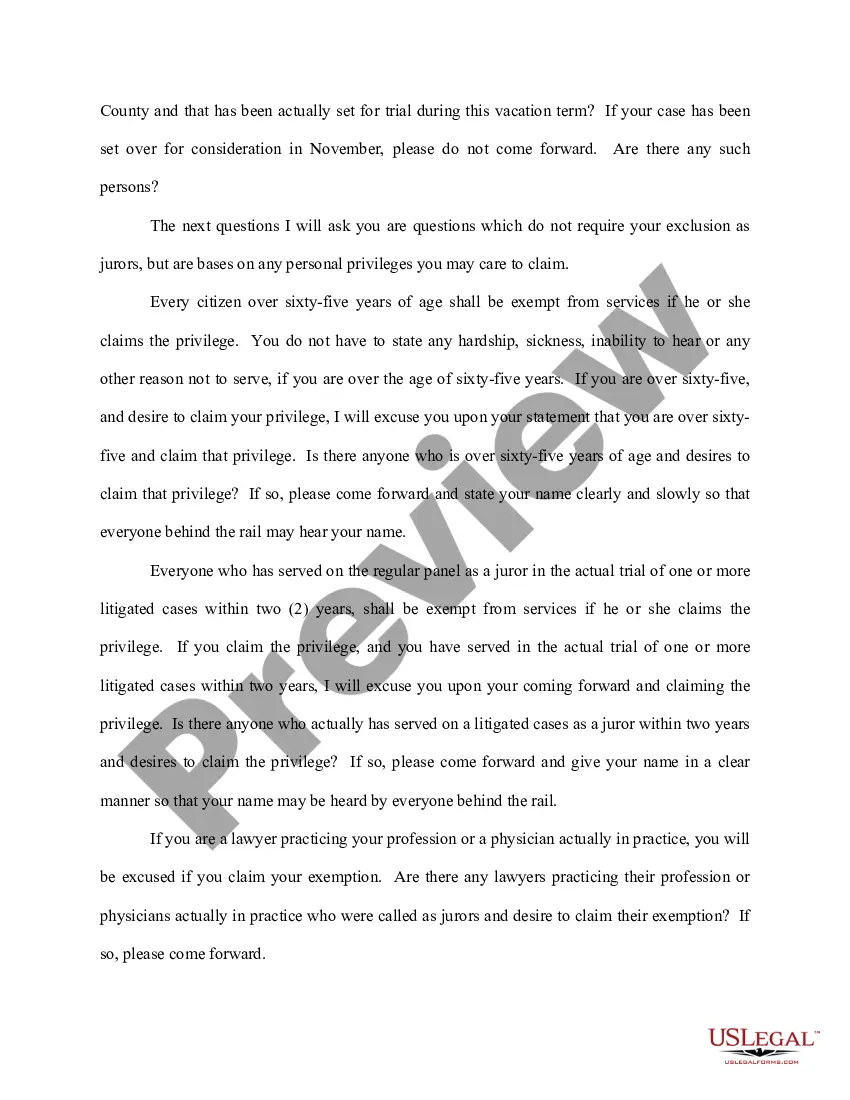
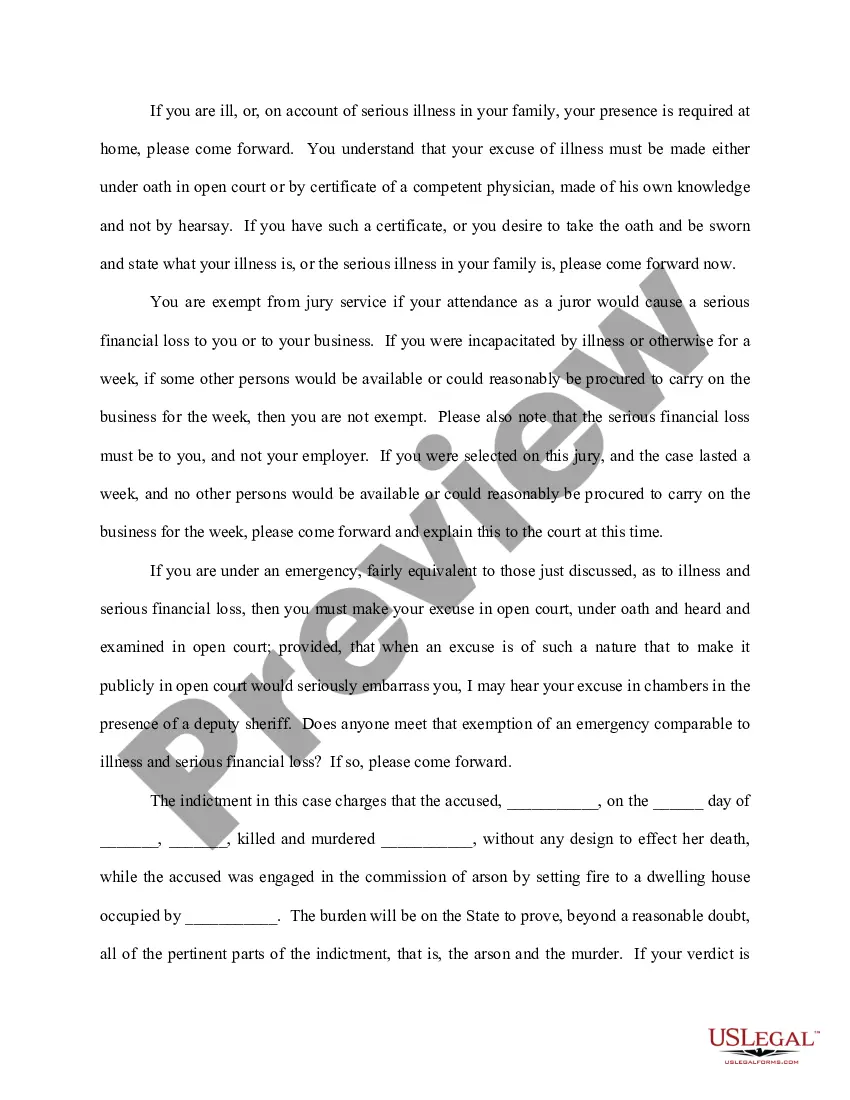
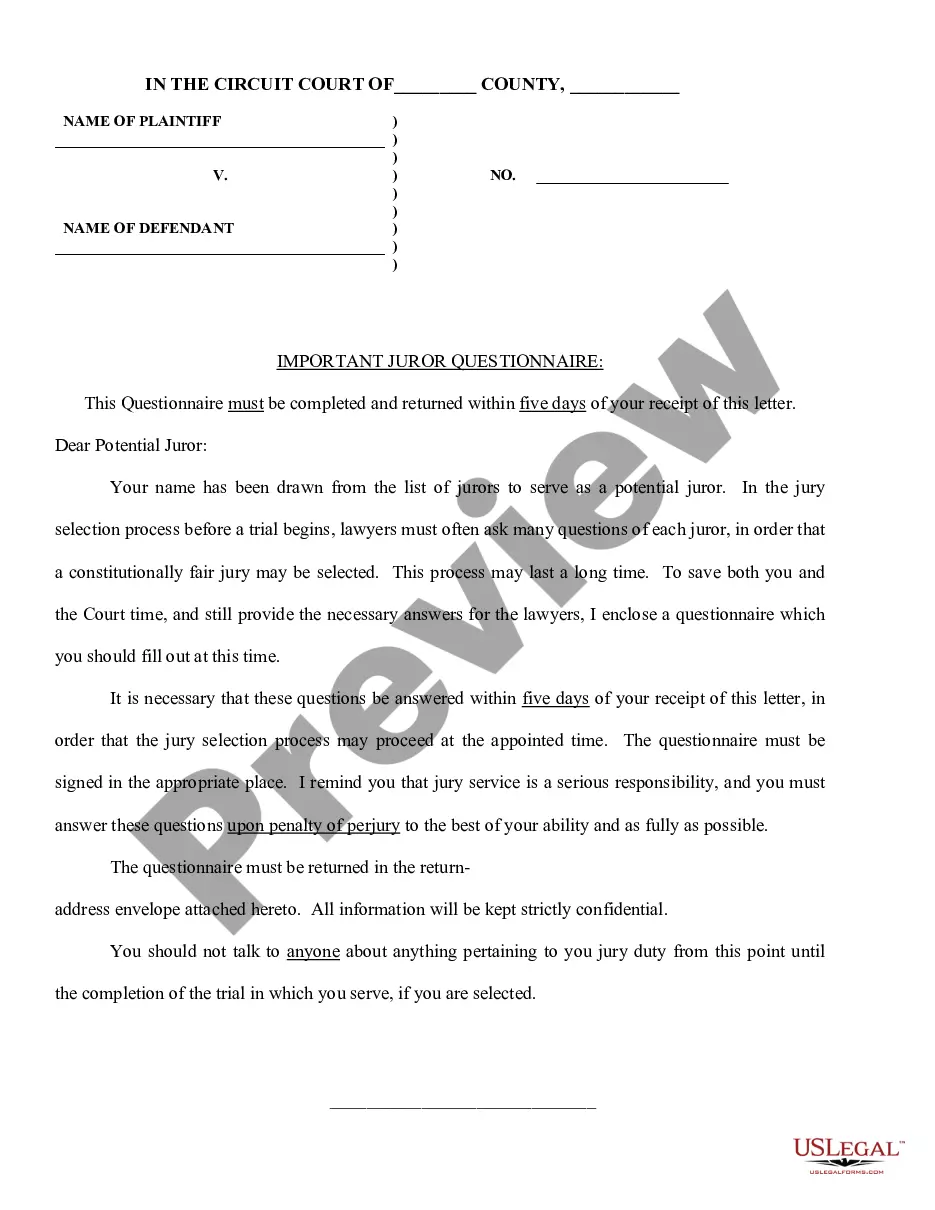
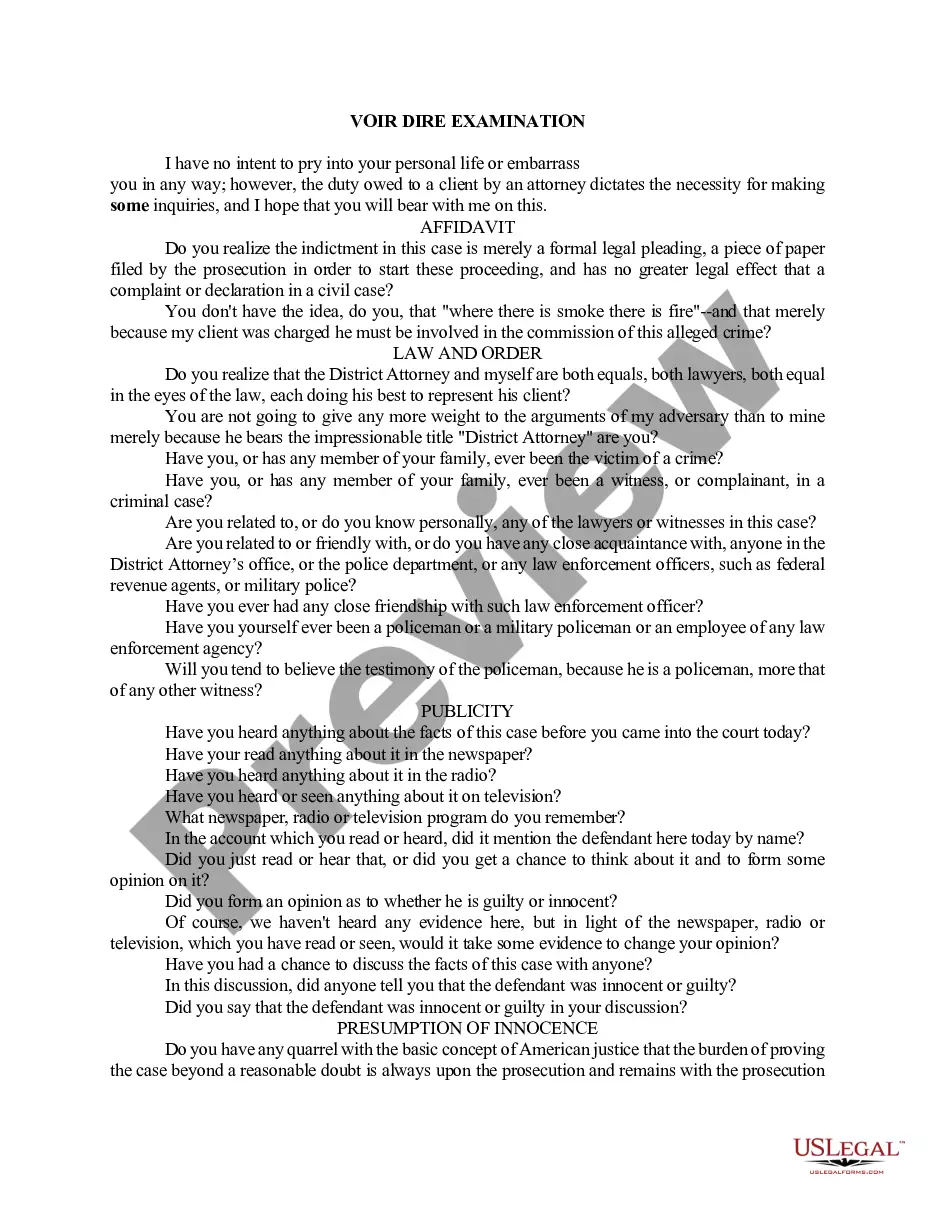
West Virginia Sample Questions, Voir Dire Examination
Description

Get your form ready online
Our built-in tools help you complete, sign, share, and store your documents in one place.
Make edits, fill in missing information, and update formatting in US Legal Forms—just like you would in MS Word.
Download a copy, print it, send it by email, or mail it via USPS—whatever works best for your next step.
Sign and collect signatures with our SignNow integration. Send to multiple recipients, set reminders, and more. Go Premium to unlock E-Sign.
If this form requires notarization, complete it online through a secure video call—no need to meet a notary in person or wait for an appointment.
We protect your documents and personal data by following strict security and privacy standards.

Make edits, fill in missing information, and update formatting in US Legal Forms—just like you would in MS Word.

Download a copy, print it, send it by email, or mail it via USPS—whatever works best for your next step.

Sign and collect signatures with our SignNow integration. Send to multiple recipients, set reminders, and more. Go Premium to unlock E-Sign.

If this form requires notarization, complete it online through a secure video call—no need to meet a notary in person or wait for an appointment.

We protect your documents and personal data by following strict security and privacy standards.
Looking for another form?

How to fill out Sample Questions, Voir Dire Examination?
US Legal Forms - a major repository of legal templates in the United States - offers a variety of legal document templates that you can download or print. By using the website, you will find thousands of forms for commercial and personal purposes, organized by categories, states, or keywords. You can access the latest versions of forms such as the West Virginia Sample Questions, Voir Dire Examination within moments.
If you already have a subscription, Log In and download West Virginia Sample Questions, Voir Dire Examination from your US Legal Forms library. The Download button will appear on each form you view. You can access all previously downloaded forms in the My documents section of your account.
If you would like to use US Legal Forms for the first time, here are some simple steps to help you get started: Ensure you have selected the correct form for your city/state. Click the Preview button to review the form’s content. Check the form description to confirm you have chosen the right form. If the form does not meet your needs, use the Search box at the top of the screen to find one that does. If you are satisfied with the form, confirm your selection by clicking the Buy now button. Then, choose the payment plan you prefer and provide your details to register for the account. Process the payment. Use your Visa or Mastercard or PayPal account to complete the transaction. Select the format and download the form to your device. Make modifications. Complete, alter, and print and sign the downloaded West Virginia Sample Questions, Voir Dire Examination. Every template you added to your account has no expiration date and is yours indefinitely. So, if you wish to download or print another copy, simply go to the My documents section and click on the form you want.
- Access the West Virginia Sample Questions, Voir Dire Examination with US Legal Forms, one of the most extensive collections of legal document templates.
- Utilize a multitude of professional and state-specific templates that cater to your business or personal needs and requirements.
Form popularity
FAQ
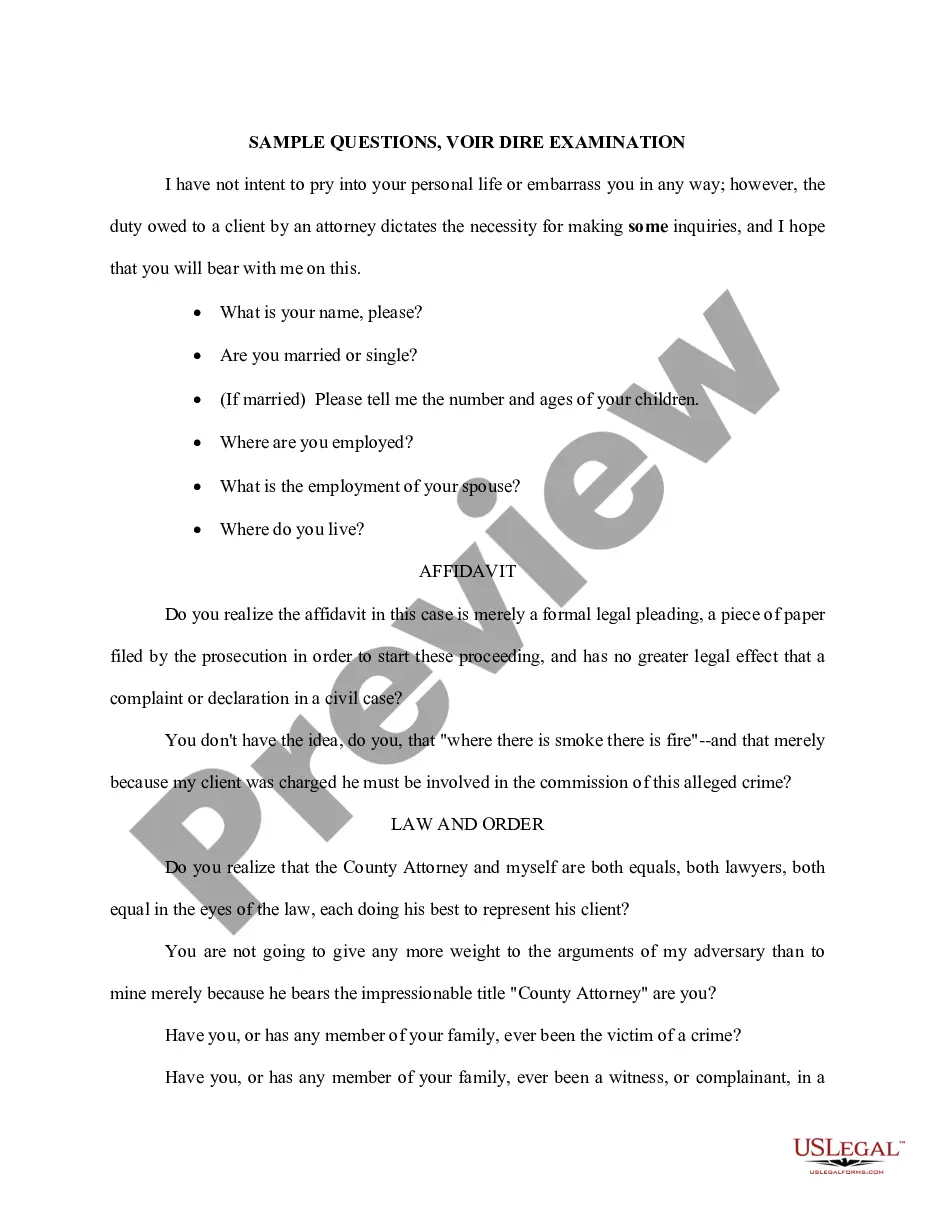
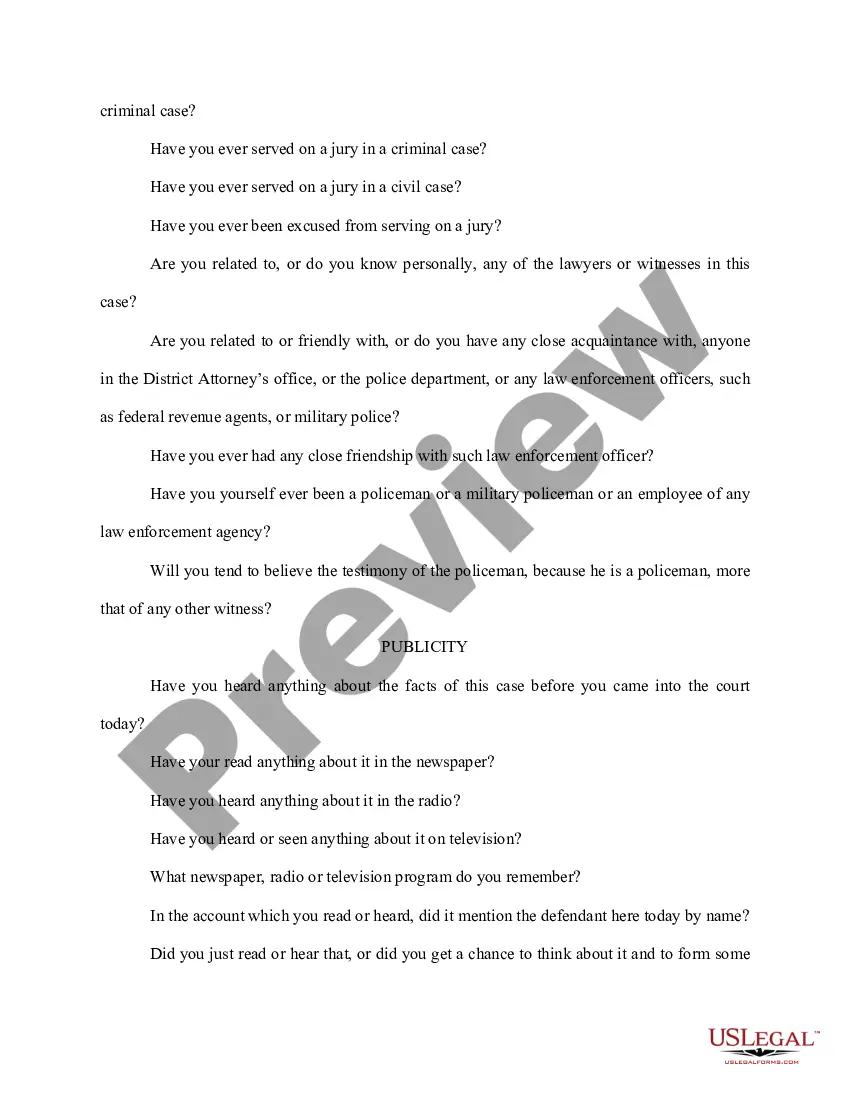
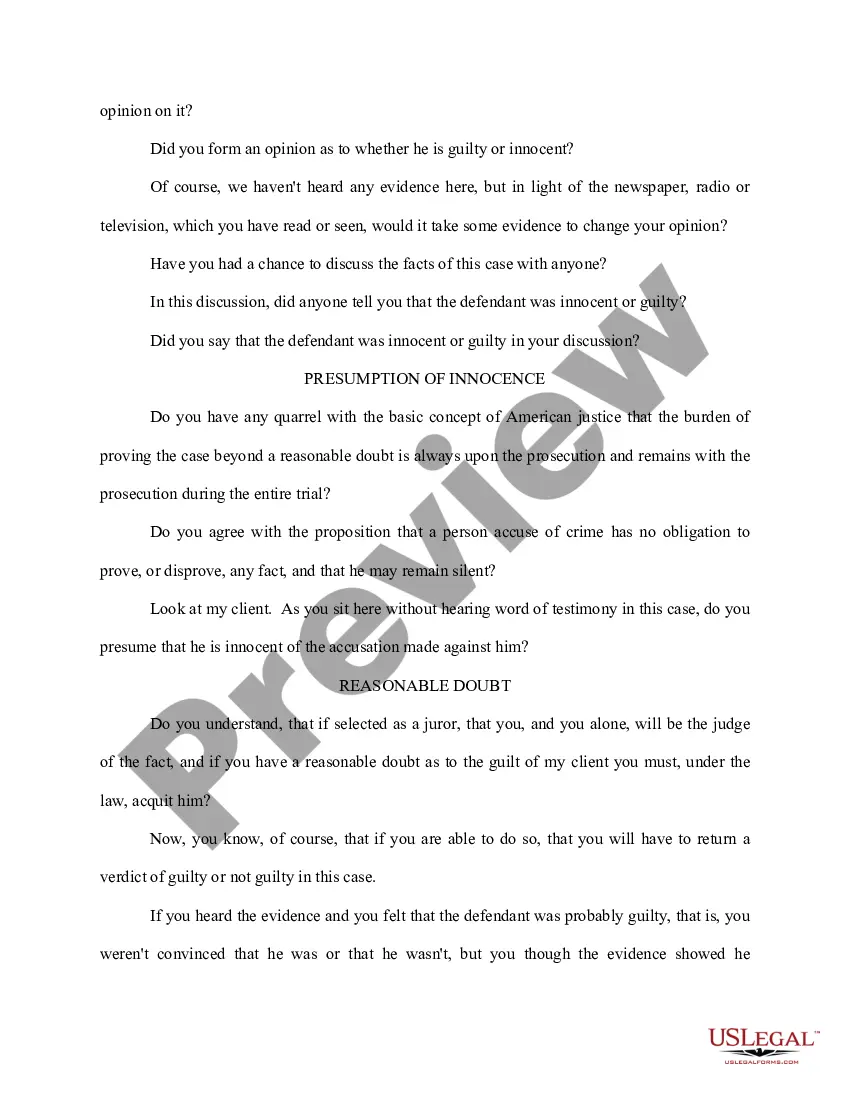
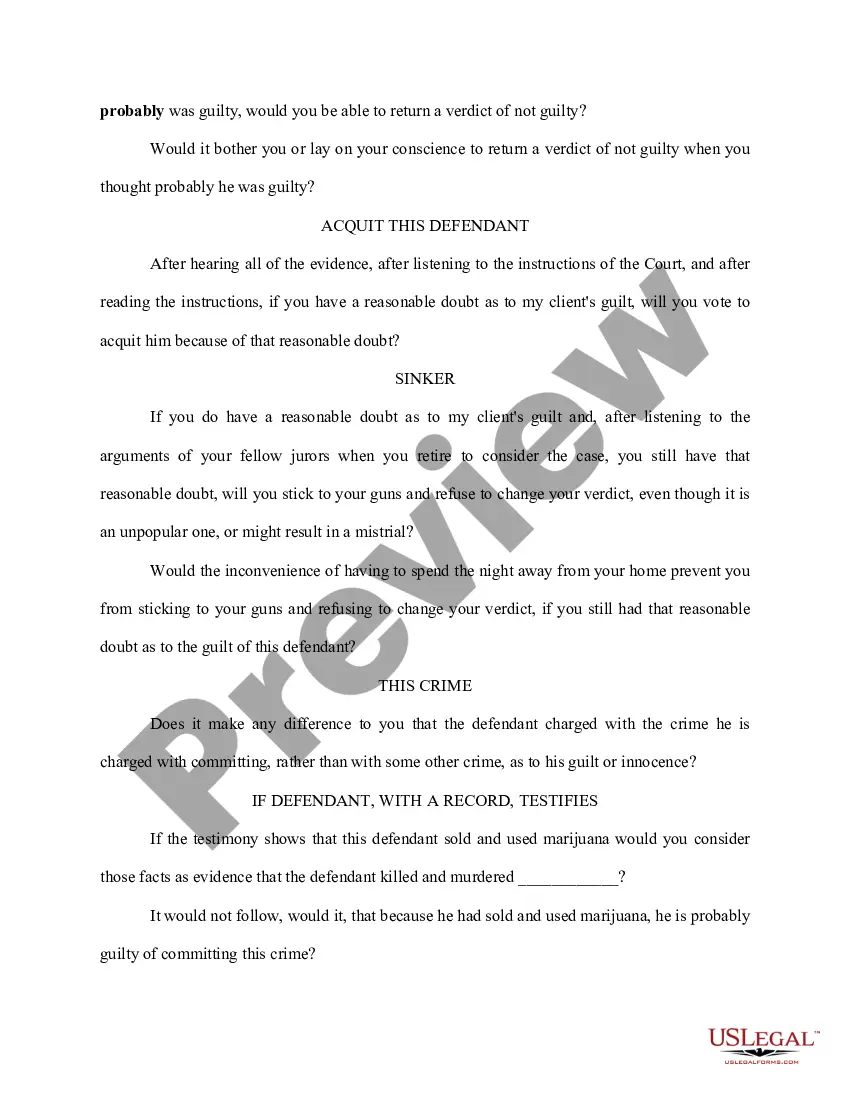
The judge and attorneys ask the potential jurors questions, general or related to the specific case before them, to determine their suitability to serve on the jury. This process is called voir dire, which typically results in some prospective jurors being excused, based on their answers, from serving in that trial.
Often, jurors will be asked to state the neighborhood or area they live in, their profession, whether they have children, are married, and so on. This kind of information helps the judge and lawyers get a feel for the potential jurors, and might even inform an attorney's decision to use a challenge on someone.
(27) If a new prospective juror is seated, the court should ask him or her: (A) Have you heard my questions to the other prospective jurors? (B) Have any of the questions I have asked raised any doubt in your mind as to whether you could be a fair and impartial juror in this case?
During voir dire the lawyers may ask the judge to excuse a juror from sitting on the case. This is called "challenging a juror". There are two types of challenges: a challenge for cause and a peremptory challenge.
The judge and the attorneys ask jurors questions to determine if the jurors are free of bias (prejudice) or whether there is any other reason why they cannot be fair and impartial; this process is called voir dire.
Judges fulfill this responsi- bility during voir dire by questioning jurors about their ability to be fair and impartial, listening care- fully to their responses, and excusing those individuals whom the judge and lawyers agree would have difficulty serving.
When selecting a jury, both parties may remove potential jurors using an unlimited number of challenges for cause (e.g., stated reasons such as bias) and a limited number of peremptory challenges (i.e., do not need to state a reason).
Do you think there are too many, too few or about the right number of lawsuits? What is a ?frivolous lawsuit?? How can you determine what is a ?real? case and what is a ?frivolous? case? Do you think some people file ?frivolous lawsuits?? Why or why not?