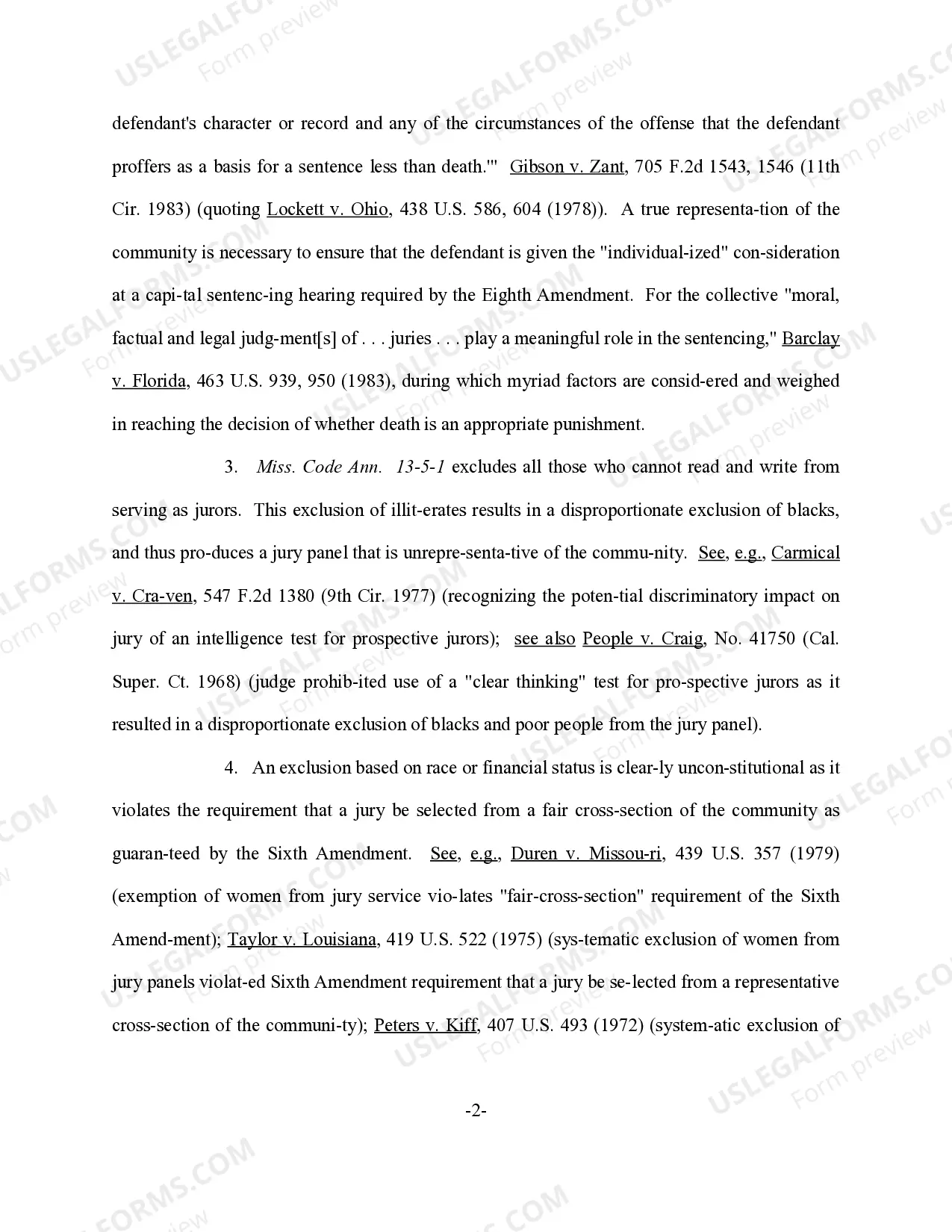
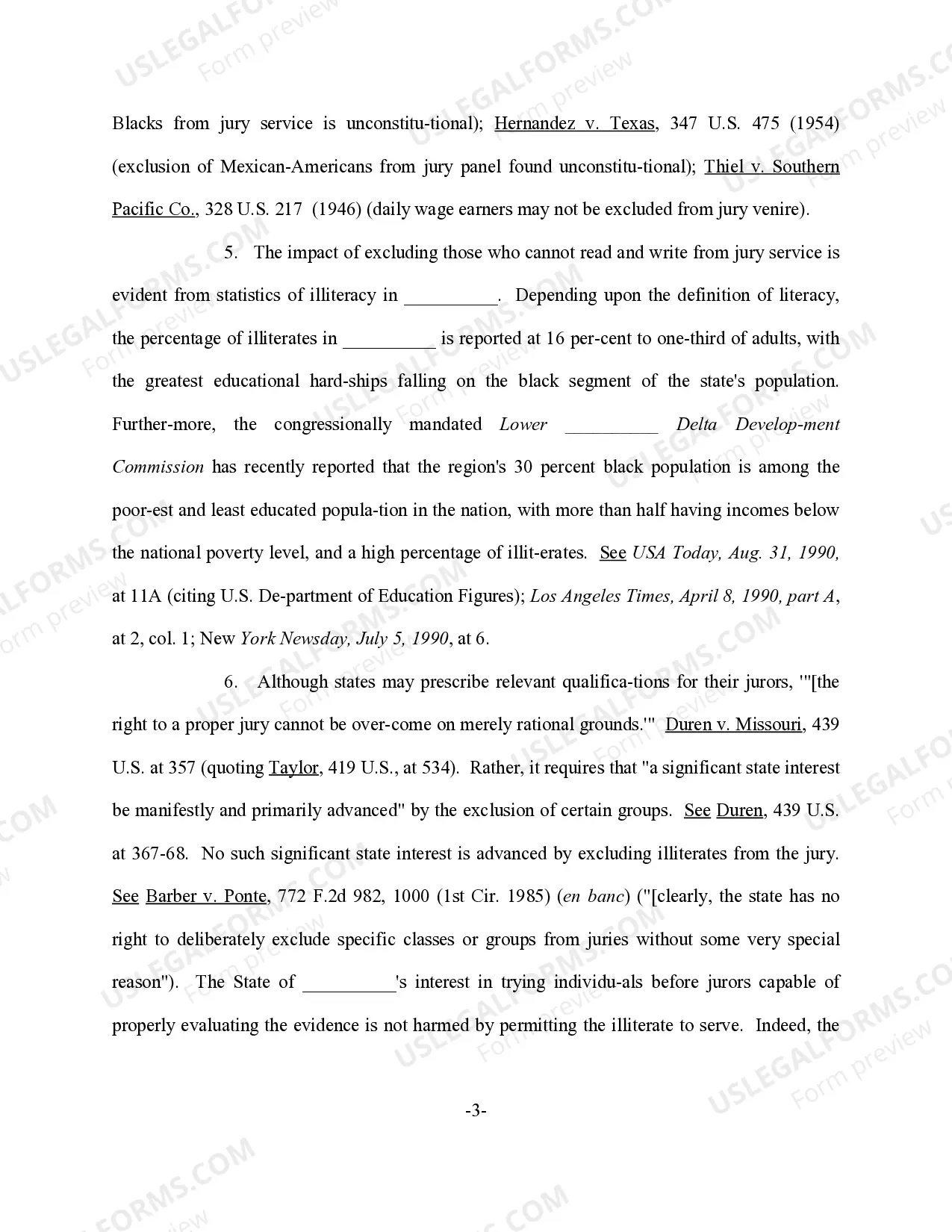
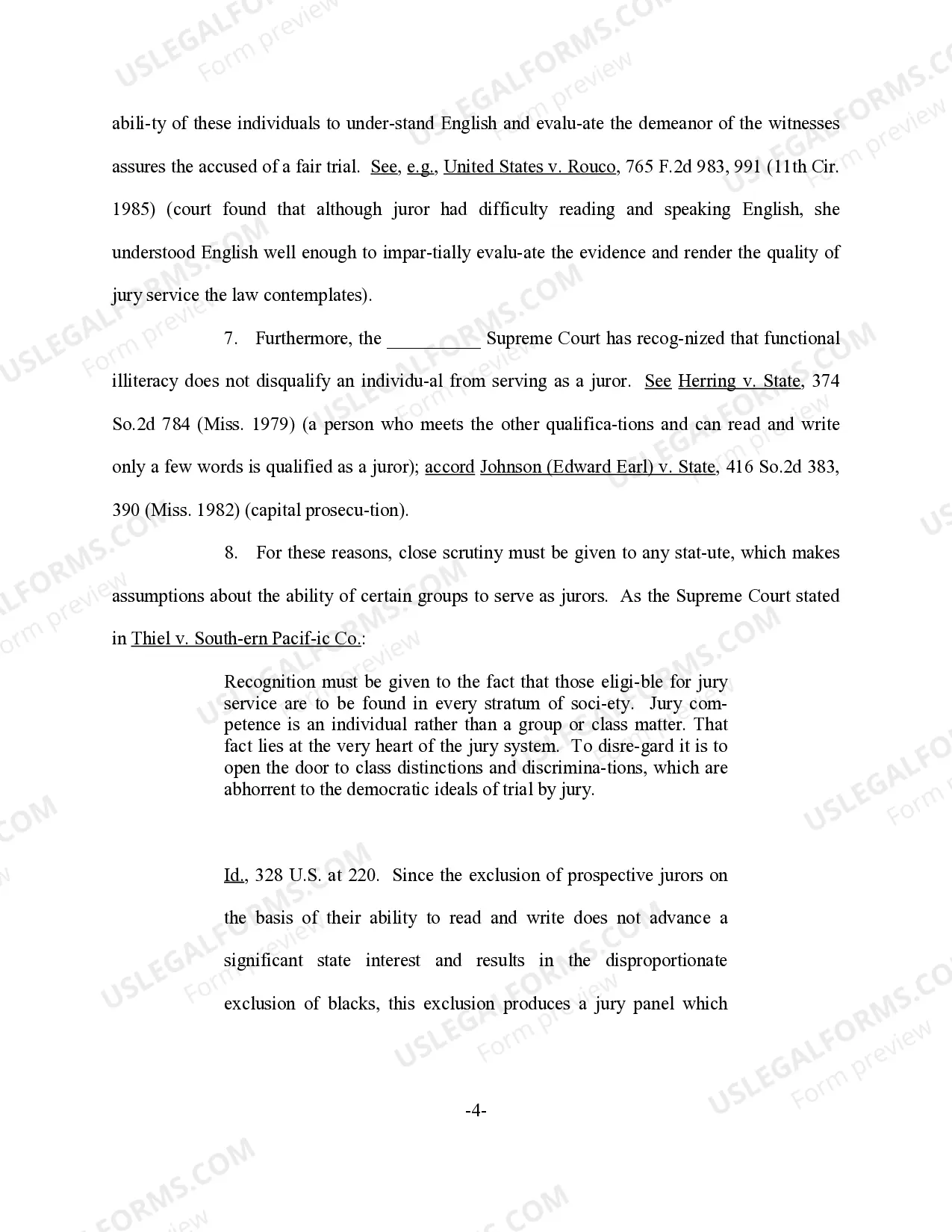
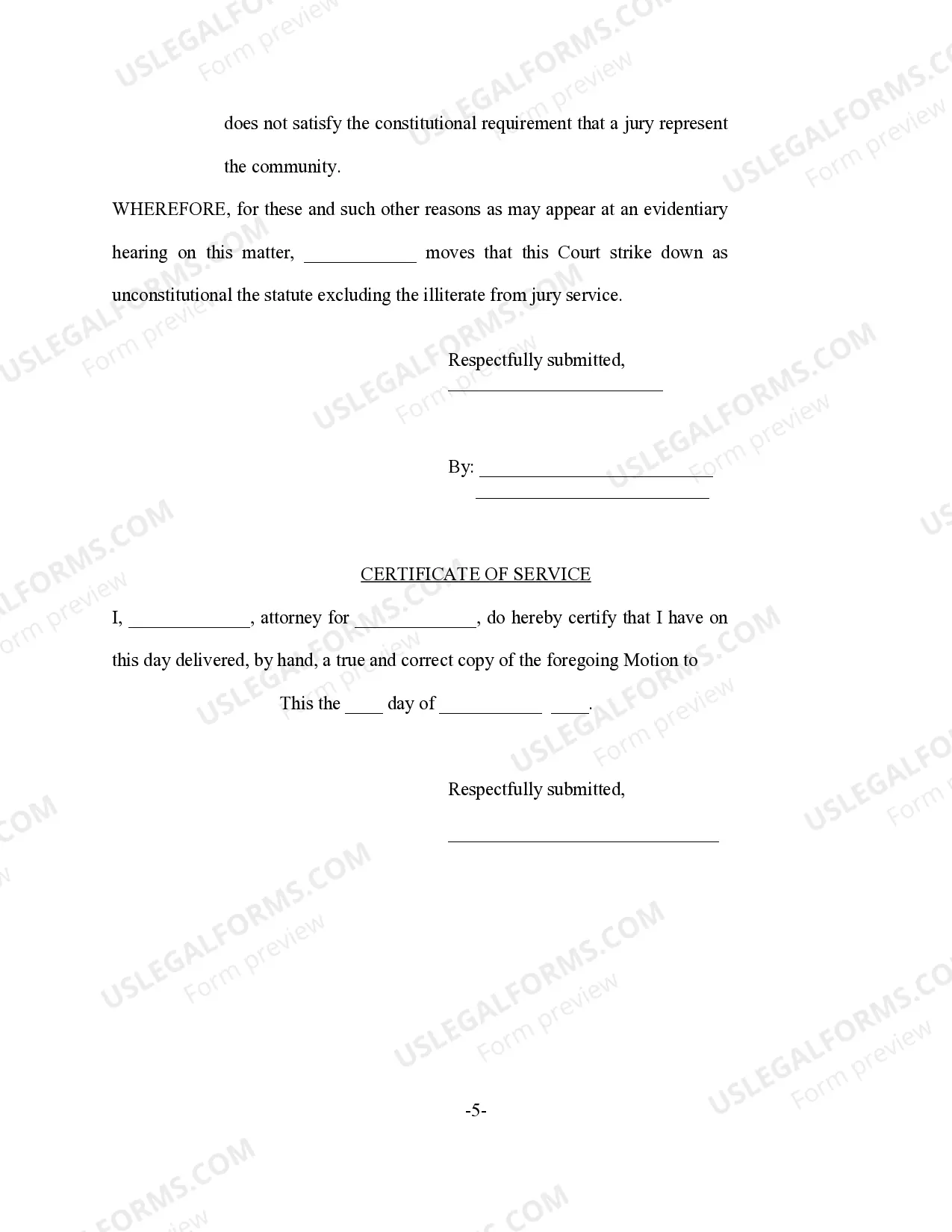
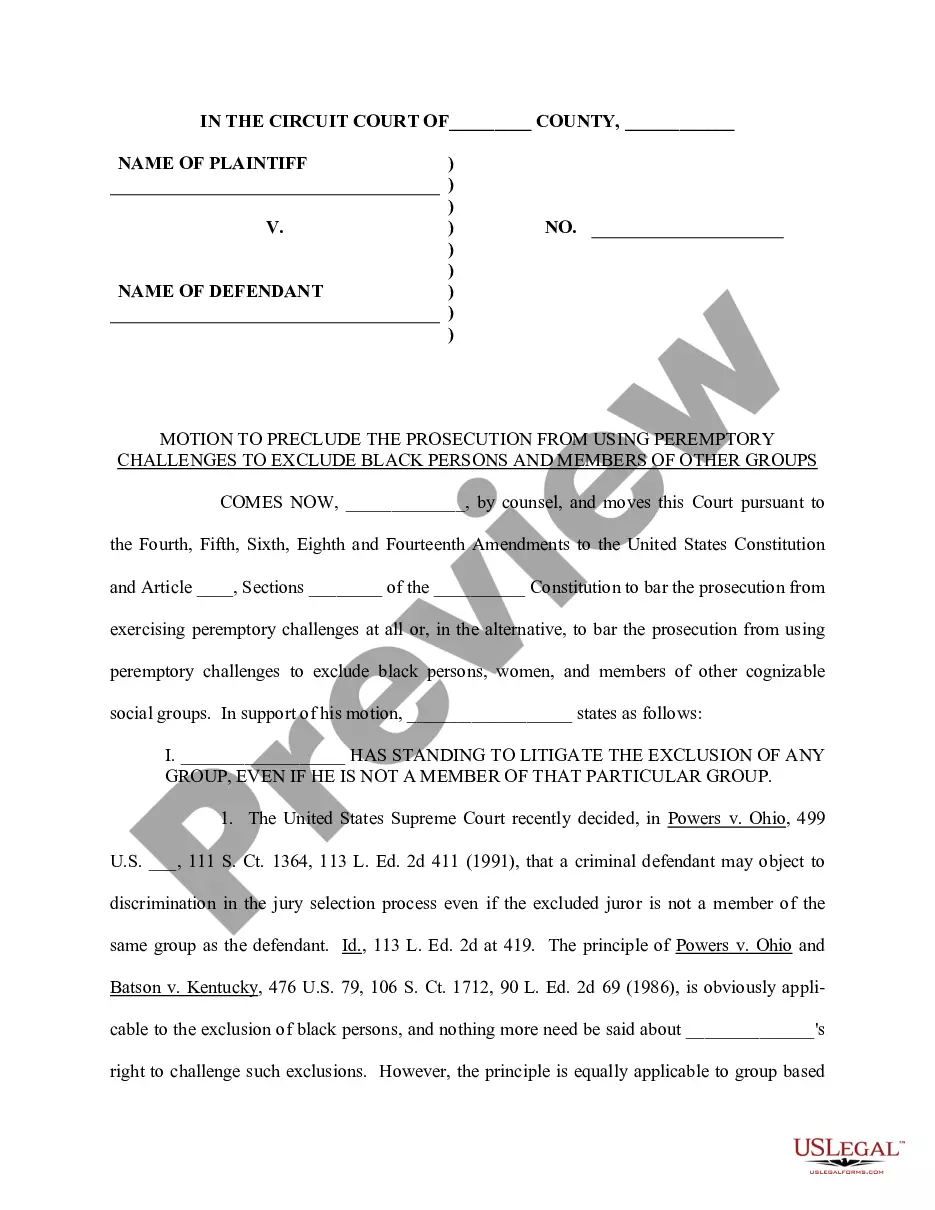
West Virginia Motion to Declare Unconstitutional the Discriminatory Exclusion of Illiterates from the Jury
Description
Get your form ready online
Our built-in tools help you complete, sign, share, and store your documents in one place.
Make edits, fill in missing information, and update formatting in US Legal Forms—just like you would in MS Word.
Download a copy, print it, send it by email, or mail it via USPS—whatever works best for your next step.
Sign and collect signatures with our SignNow integration. Send to multiple recipients, set reminders, and more. Go Premium to unlock E-Sign.
If this form requires notarization, complete it online through a secure video call—no need to meet a notary in person or wait for an appointment.
We protect your documents and personal data by following strict security and privacy standards.

Make edits, fill in missing information, and update formatting in US Legal Forms—just like you would in MS Word.

Download a copy, print it, send it by email, or mail it via USPS—whatever works best for your next step.

Sign and collect signatures with our SignNow integration. Send to multiple recipients, set reminders, and more. Go Premium to unlock E-Sign.

If this form requires notarization, complete it online through a secure video call—no need to meet a notary in person or wait for an appointment.

We protect your documents and personal data by following strict security and privacy standards.
Looking for another form?






How to fill out Motion To Declare Unconstitutional The Discriminatory Exclusion Of Illiterates From The Jury?
Selecting the appropriate legal document template can be quite a challenge. Of course, there are numerous templates available online, but how can you find the legal form you require? Utilize the US Legal Forms website. The service offers thousands of templates, including the West Virginia Motion to Declare Unconstitutional the Discriminatory Exclusion of Illiterates from the Jury, which can be used for business and personal purposes. All the forms are reviewed by experts and comply with state and federal regulations.
If you are already registered, Log In to your account and click the Download button to obtain the West Virginia Motion to Declare Unconstitutional the Discriminatory Exclusion of Illiterates from the Jury. Use your account to browse through the legal forms you have purchased previously. Visit the My documents section of your account to get another copy of the document you need.
If you are a new user of US Legal Forms, here are simple instructions for you to follow: First, ensure you have selected the correct form for your location/state. You can review the form using the Review button and read the form description to confirm this is suitable for you. If the form does not meet your requirements, use the Search field to find the appropriate form. Once you are certain that the form is suitable, click on the Purchase now button to acquire the form. Choose the pricing plan you prefer and enter the required information. Create your account and pay for the order using your PayPal account or credit card. Select the file format and download the legal document template to your device. Complete, edit, print, and sign the received West Virginia Motion to Declare Unconstitutional the Discriminatory Exclusion of Illiterates from the Jury.
Take advantage of the company to obtain well-designed documents that adhere to legal standards.
- US Legal Forms is the largest collection of legal forms that you will find various document templates.
- Utilize the service to obtain professionally-crafted documents that comply with state regulations.
- Thousands of templates available for different needs.
- Expert-reviewed forms to ensure compliance.
- User-friendly interface for easy navigation.
- Secure payment options for your convenience.
Form popularity
FAQ
If Defendant obtained an advantage that he otherwise would not have, such as trade secrets stolen from Plaintiff, then Defendant was unjustly enriched.
The Supreme Court invalidated the state statute because it denied citizens the equal right to be jurors on the basis of race, directly contravening the Fourteenth Amendment.
Unjust enrichment is an equitable cause of action not governed by any statute of limitations in West Virginia (Dunn, 689 S.E.2d at 266-67).
The elements of unjust enrichment exist if: 1) you provided something of value to the defendant; 2) the defendant acknowledged, accepted and benefitted from what you provided; and 3) it would be inequitable for the defendant to enjoy the benefit you provided without compensating you.
Under West Virginia law, "[a] claim of unjust enrichment generally entails the establishment of three elements: (1) a benefit conferred upon the [defendant], (2) an appreciation or knowledge by the defendant of such benefit, and (3) the acceptance or retention by the defendant of the benefit under such circumstances as ...
Passed by the Senate on June 8, 1866, and ratified two years later, on July 9, 1868, the Fourteenth Amendment granted citizenship to all persons "born or naturalized in the United States," including formerly enslaved people, and provided all citizens with ?equal protection under the laws,? extending the provisions of ...
You are disqualified from service if you have served as a petit, grand or magistrate court juror within the previous two years; lost the right to vote because of a criminal conviction; or, been convicted of perjury, false swearing, or other serious crime.
Unjust enrichment occurs when Party A confers a benefit upon Party B without Party A receiving the proper restitution required by law. This typically occurs in a contractual agreement when Party A fulfills his/her part of the agreement and Party B does not fulfill his/her part of the agreement.