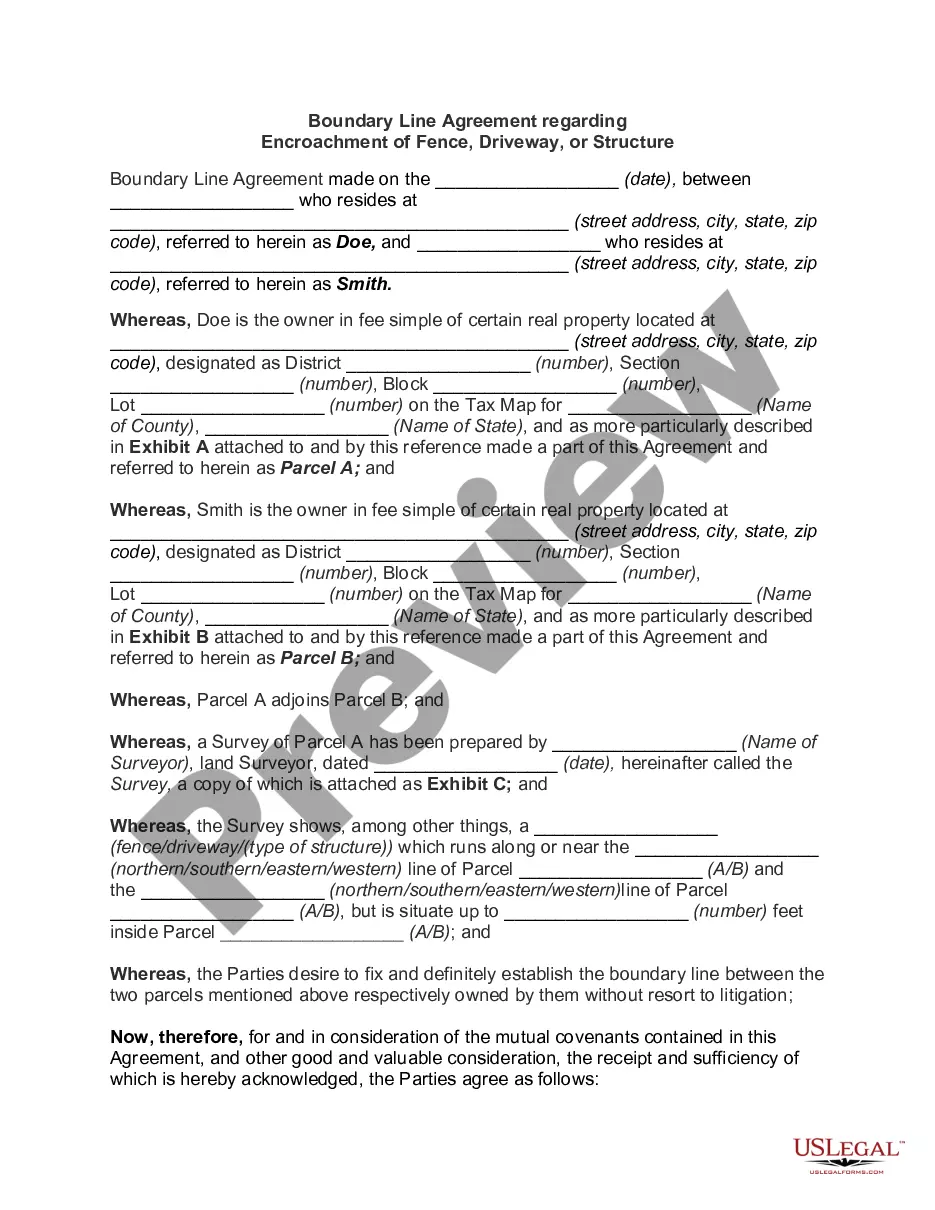
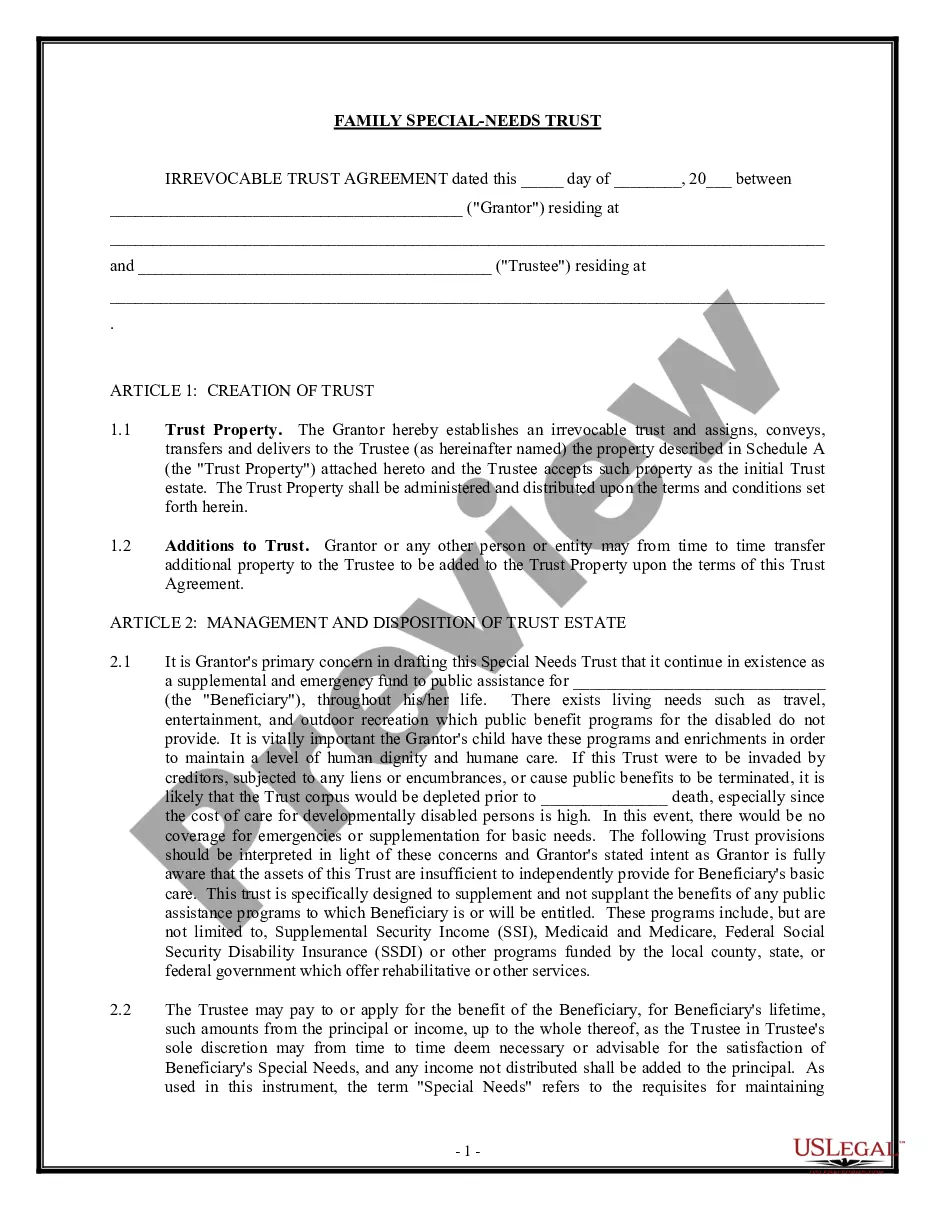
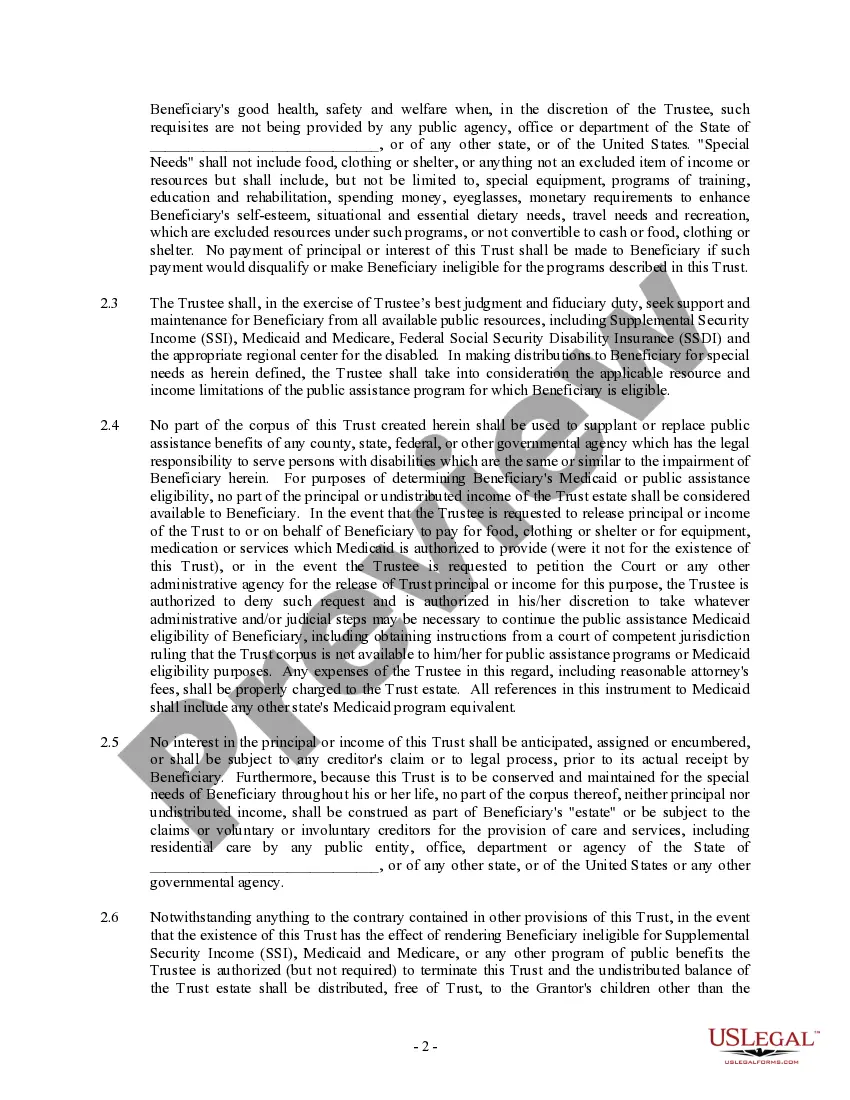
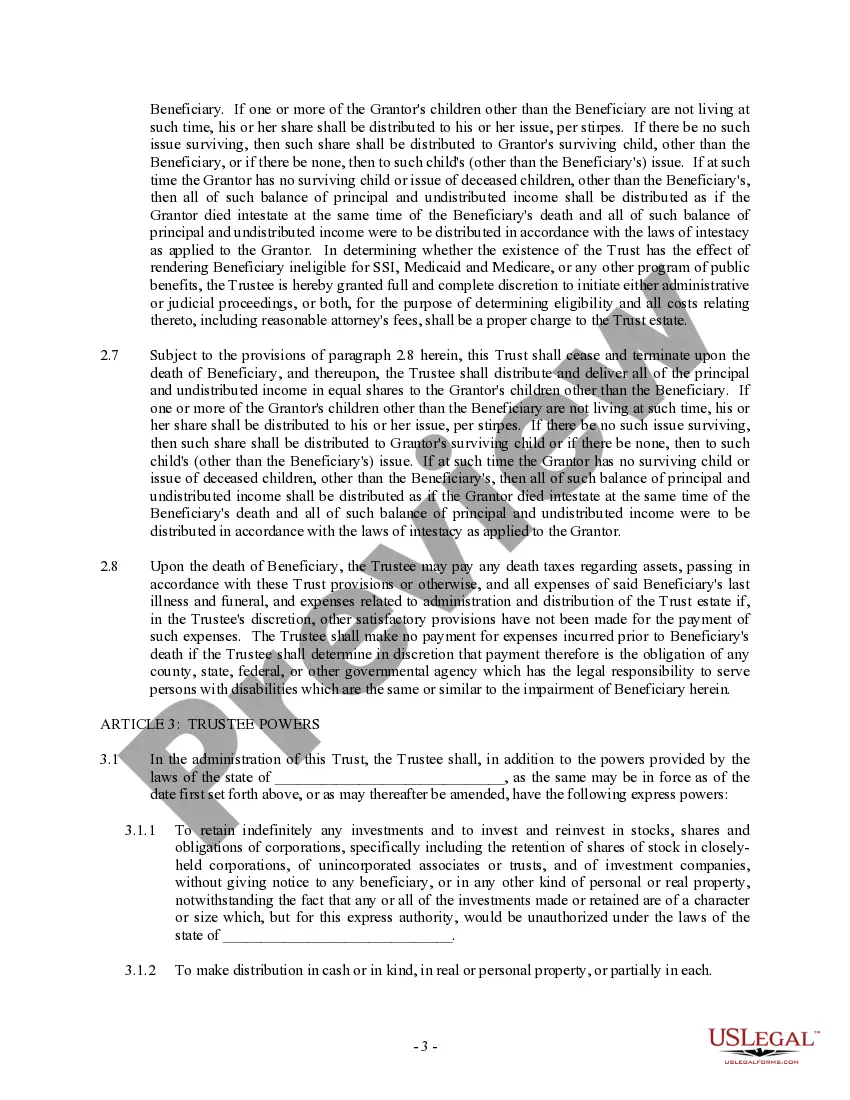
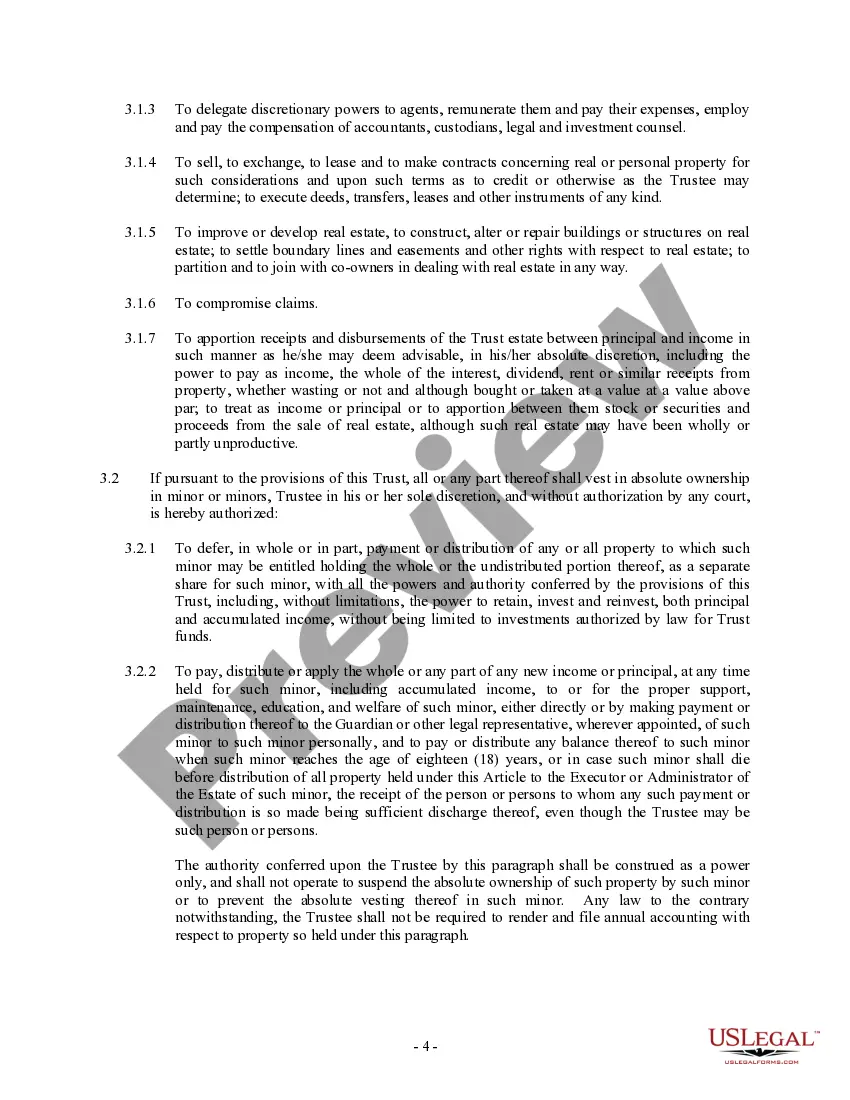
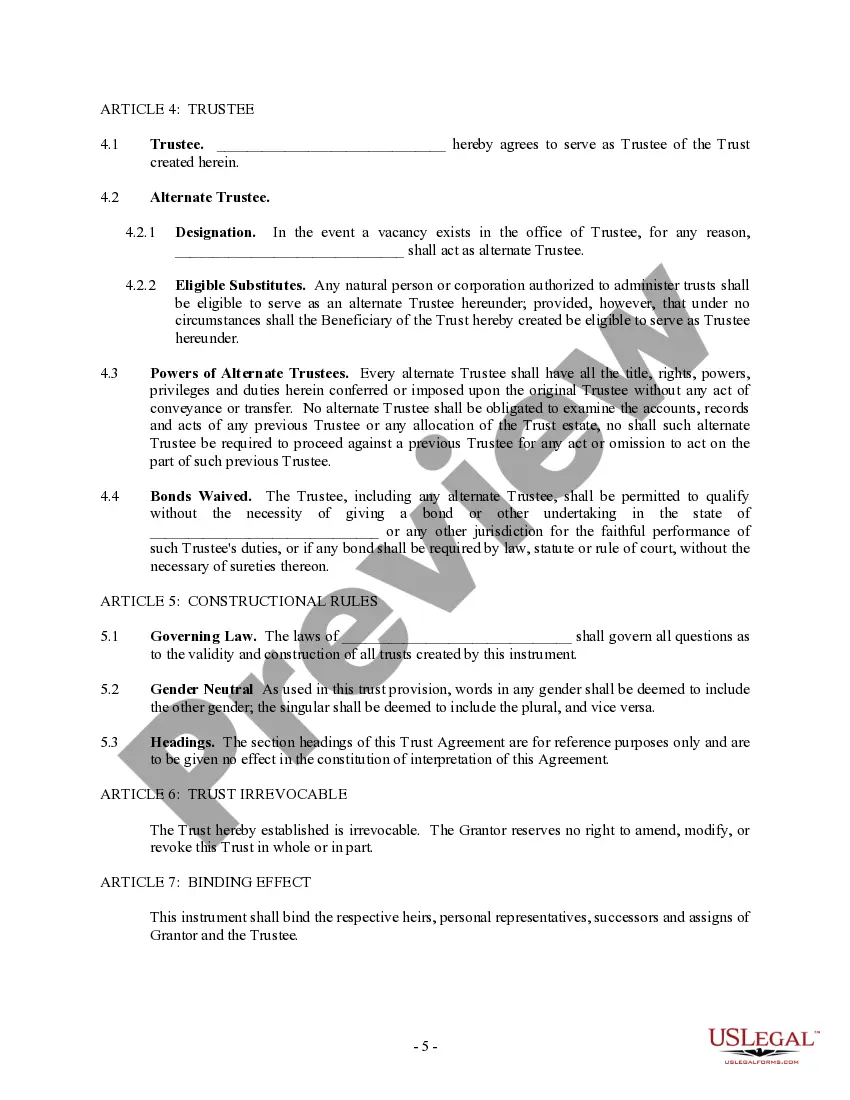
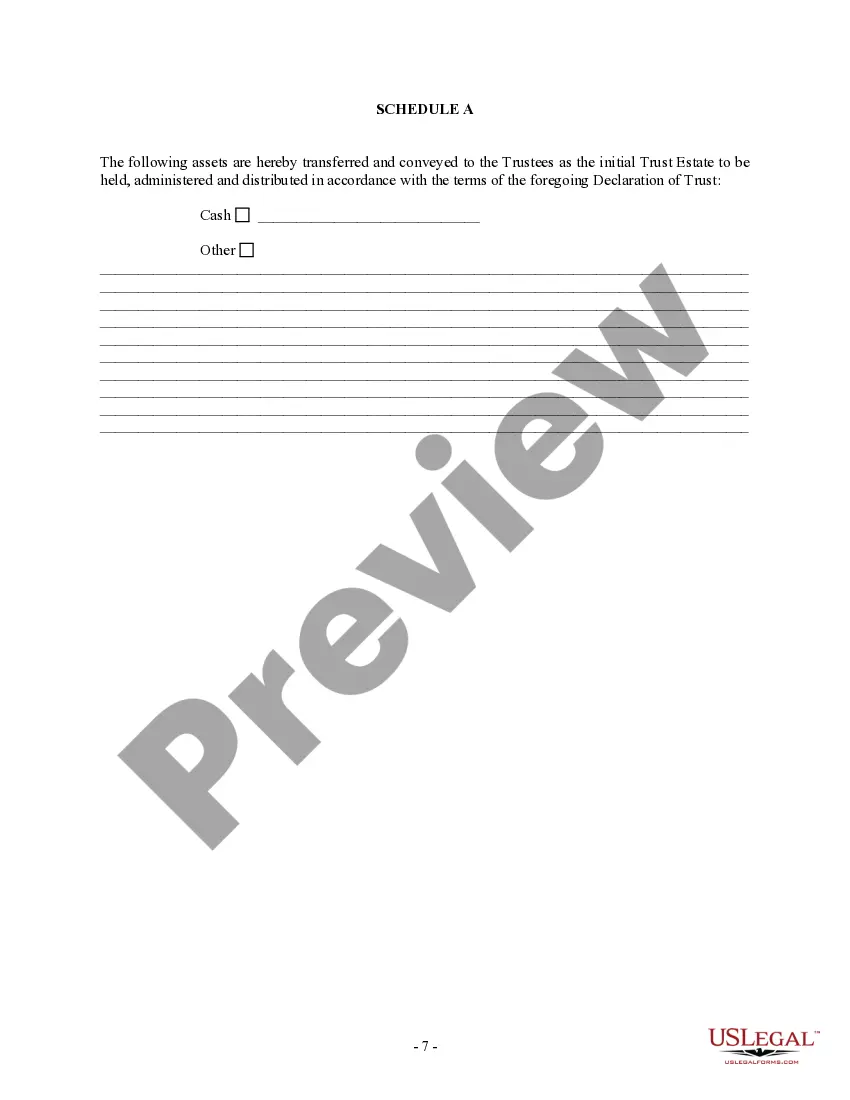
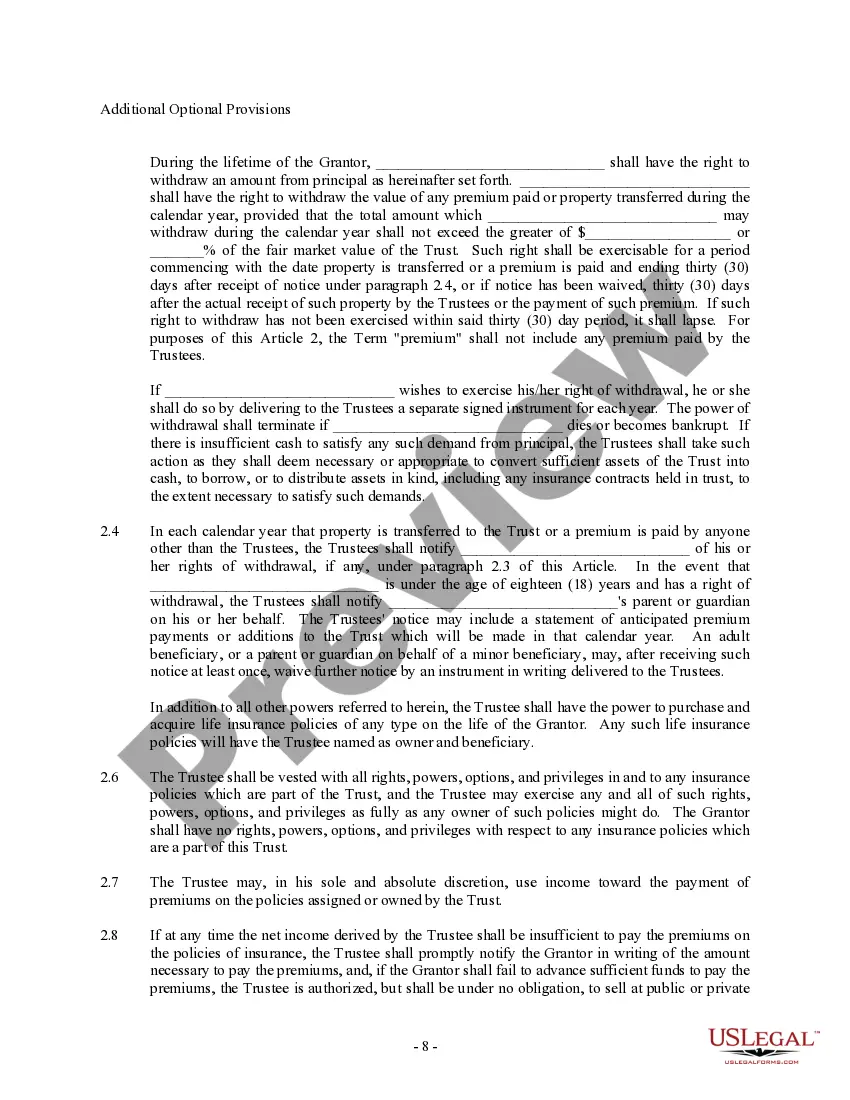
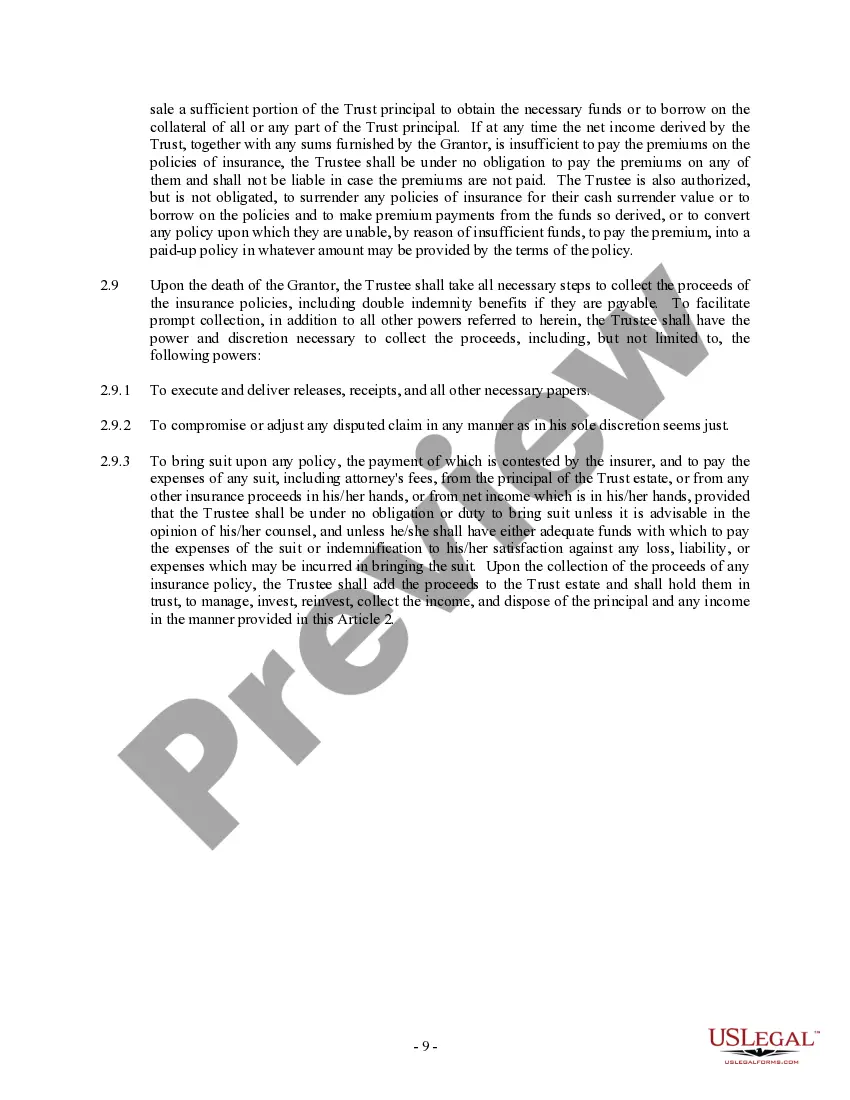
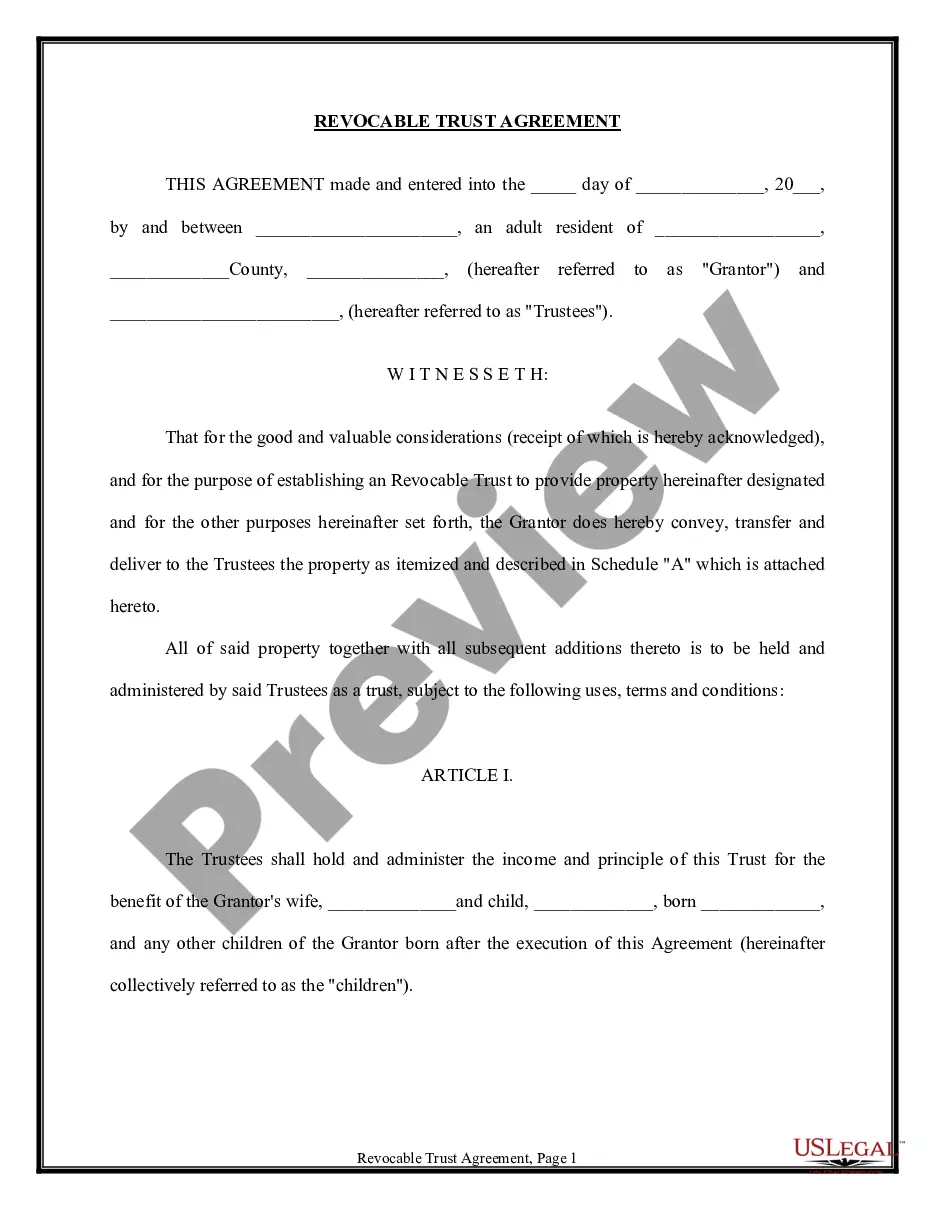
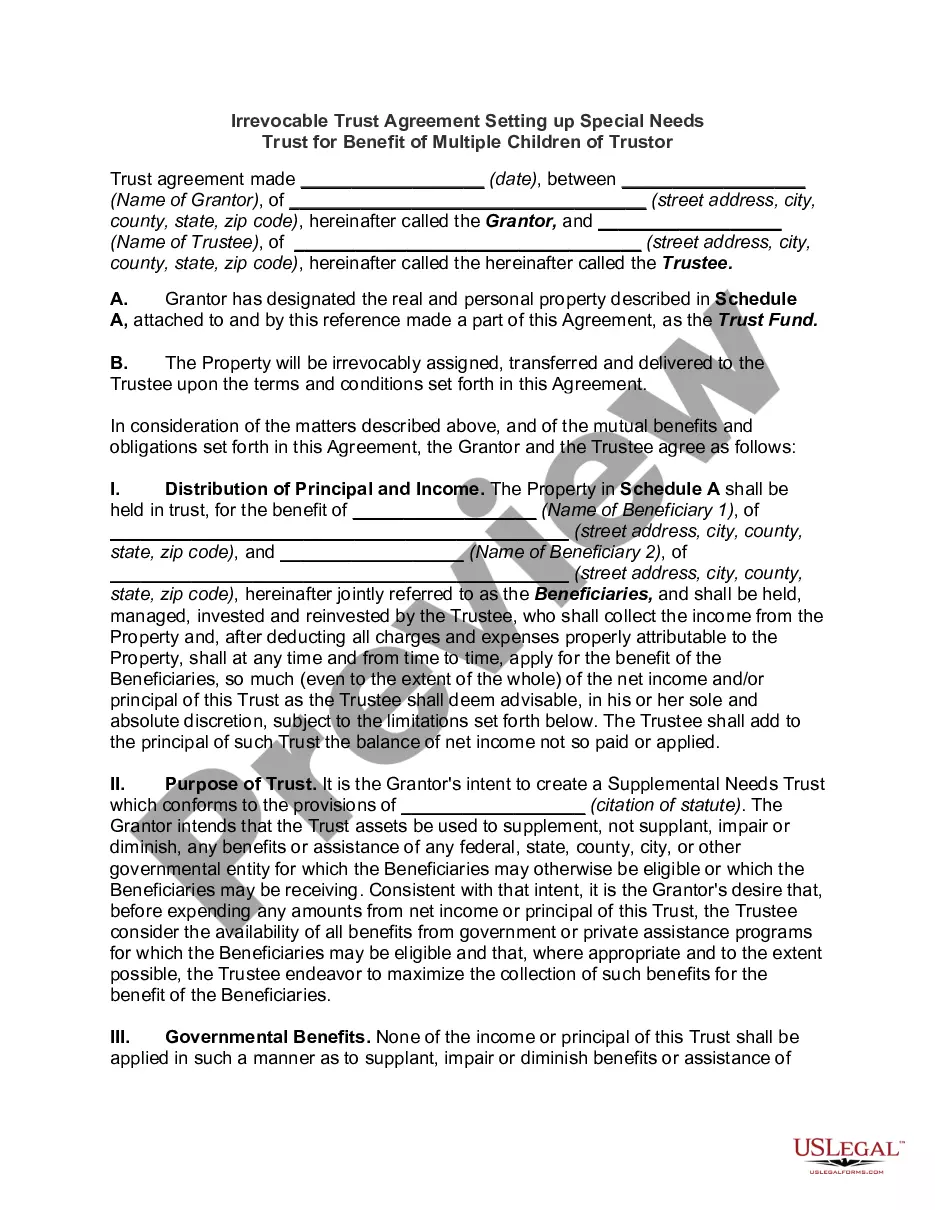
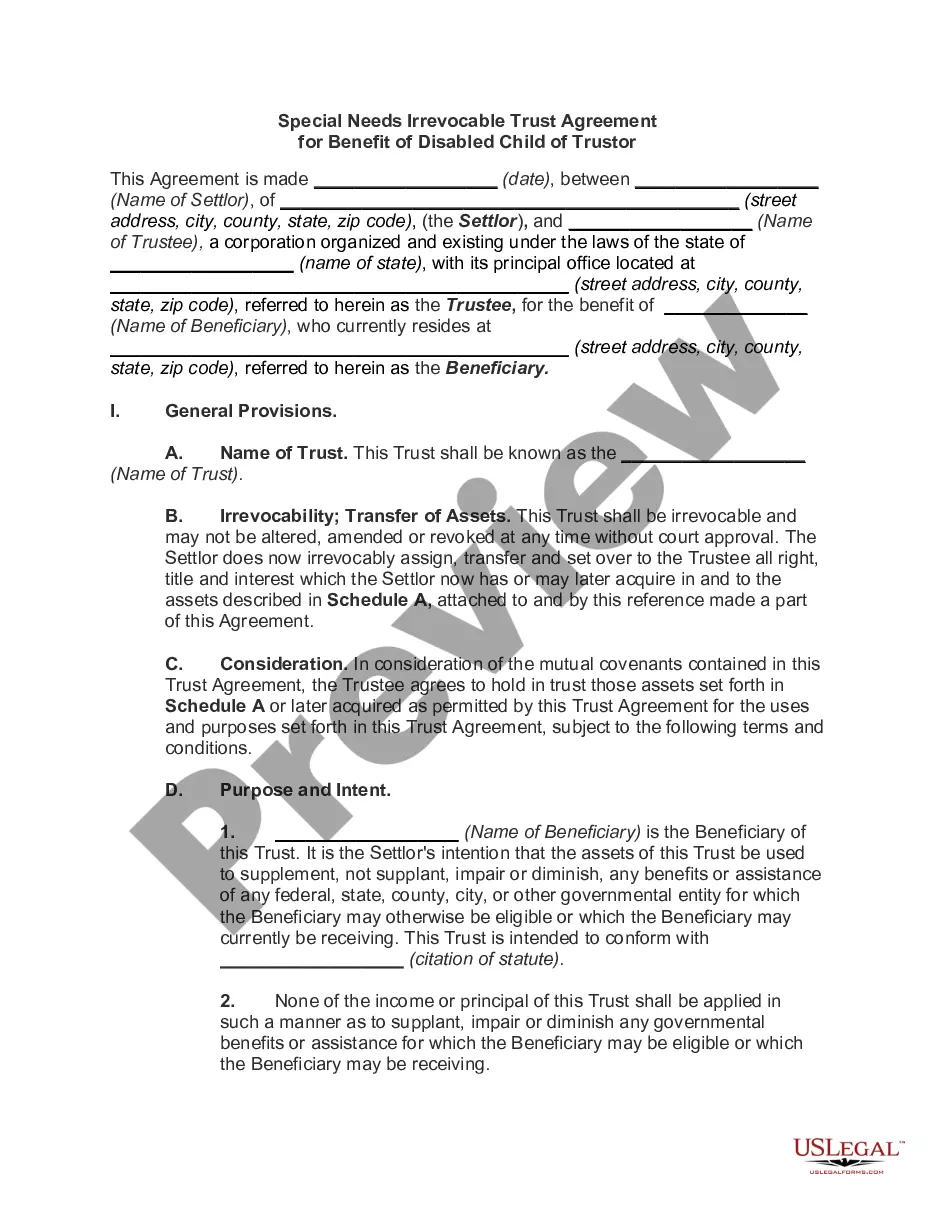
The grantor establishes an irrevocable trust and assigns, conveys, transfers and delivers to the trustee certain property and the trustee accepts such property as the initial trust estate. It is the grantor's primary concern that the trust continue in existence as a supplemental and emergency fund to public assistance for the sake of the beneficiary throughout his/her life. Other provisions of the trust agreement include: the management and disposition of the trust estate, trustee powers, and additional optional clauses.
West Virginia Trust Agreement - Family Special Needs
949 downloads
Description
Free preview
Get your form ready online
Our built-in tools help you complete, sign, share, and store your documents in one place.
Built-in online Word editor
Make edits, fill in missing information, and update formatting in US Legal Forms—just like you would in MS Word.
Export easily
Download a copy, print it, send it by email, or mail it via USPS—whatever works best for your next step.
E-sign your document
Sign and collect signatures with our SignNow integration. Send to multiple recipients, set reminders, and more. Go Premium to unlock E-Sign.
Notarize online 24/7
If this form requires notarization, complete it online through a secure video call—no need to meet a notary in person or wait for an appointment.
Store your document securely
We protect your documents and personal data by following strict security and privacy standards.

Make edits, fill in missing information, and update formatting in US Legal Forms—just like you would in MS Word.

Download a copy, print it, send it by email, or mail it via USPS—whatever works best for your next step.

Sign and collect signatures with our SignNow integration. Send to multiple recipients, set reminders, and more. Go Premium to unlock E-Sign.

If this form requires notarization, complete it online through a secure video call—no need to meet a notary in person or wait for an appointment.

We protect your documents and personal data by following strict security and privacy standards.
Looking for another form?
How to fill out Trust Agreement - Family Special Needs?
Finding the appropriate legal document format can be challenging.
There are numerous templates accessible online; however, how can you acquire the legal document you need.
Utilize the US Legal Forms website.
For new users of US Legal Forms, here are simple steps to follow: First, ensure you select the correct document for your city/state.
- This platform offers thousands of templates, including the West Virginia Trust Agreement - Family Special Needs, suitable for both business and personal purposes.
- All forms are reviewed by professionals and meet federal and state regulations.
- If you are already a registered user, Log In to your account and click the Download option to retrieve the West Virginia Trust Agreement - Family Special Needs.
- You can access previously acquired legal documents through your account.
- Go to the My documents tab in your account to download another copy of the document you need.
Form popularity
FAQ
Certain assets typically cannot be placed in a trust. For instance, retirement accounts often require specific beneficiary designations and cannot be transferred into a trust directly. Personal property that you want to keep control over during your lifetime, like vehicles or your primary residence, may also have constraints. Using a West Virginia Trust Agreement - Family Special Needs, however, allows you to manage these assets wisely while still providing for your family's future.
A trust is a legal arrangement where one party holds property for the benefit of another. A living trust is a specific type of trust created during your lifetime, allowing you to manage your assets and set terms for their distribution. West Virginia Trust Agreement - Family Special Needs can help you establish a living trust that provides support for your loved ones while avoiding probate. This arrangement ensures your beneficiaries receive their inherited assets smoothly and efficiently.
The three primary types of trusts include revocable trusts, irrevocable trusts, and special needs trusts. Revocable trusts allow for changes during the grantor's lifetime, while irrevocable trusts offer less flexibility but can provide tax benefits and asset protection. Special needs trusts, such as the West Virginia Trust Agreement - Family Special Needs, help individuals with disabilities access additional funds while maintaining governmental assistance eligibility.
While trusts offer many benefits, there are some disadvantages to consider. Trusts can involve complex administration and may incur setup and management fees, depending on the type selected, including the West Virginia Trust Agreement - Family Special Needs. Additionally, mismanagement of trust funds may lead to unintended consequences, so it is vital to choose a trustworthy, knowledgeable trustee who understands their responsibilities.
Setting up a trust in West Virginia involves several key steps. First, decide on the specific type of trust you need, like a West Virginia Trust Agreement - Family Special Needs for a loved one with disabilities. Next, choose a competent trustee, draft the trust document with or without legal assistance, and complete the required funding process. Using platforms such as uslegalforms can provide you with the necessary tools to ensure the trust is established correctly.
Yes, Canada has special needs trusts designed to protect the financial interests of individuals with disabilities. While these trusts share similarities with the West Virginia Trust Agreement - Family Special Needs, regulations may vary. It is essential to consult a legal expert in Canada to ensure compliance with local laws while establishing this important financial resource.
To set up a trust in West Virginia, begin by determining the type of trust that best fits your needs, such as a West Virginia Trust Agreement - Family Special Needs. Next, gather necessary information, choose a trustee, and draft the trust document, either with the help of an attorney or using a reliable platform like uslegalforms. After executing the trust document, be sure to fund the trust and keep all records organized.
The best trust for a disabled person is often a special needs trust, which allows them to maintain eligibility for government benefits while receiving additional support. This type of trust, guided by the West Virginia Trust Agreement - Family Special Needs, ensures that funds are used for the individual's benefit without jeopardizing their financial assistance. By establishing this trust, you can provide security and peace of mind for your loved one.
Yes, a special needs trust can own a house in Florida, but there are important regulations to consider. The property must be used for the benefit of the trust's beneficiary, ensuring it does not affect eligibility for government benefits. Families can confidently navigate these complexities by utilizing resources like the West Virginia Trust Agreement - Family Special Needs to create a solid and compliant plan.
A special type of trust includes a special needs trust, which is engineered to support individuals with disabilities. It ensures that beneficiaries can receive financial assistance without jeopardizing their access to vital government programs. Families often explore the advantages of establishing such a trust under a West Virginia Trust Agreement - Family Special Needs for tailored financial planning.