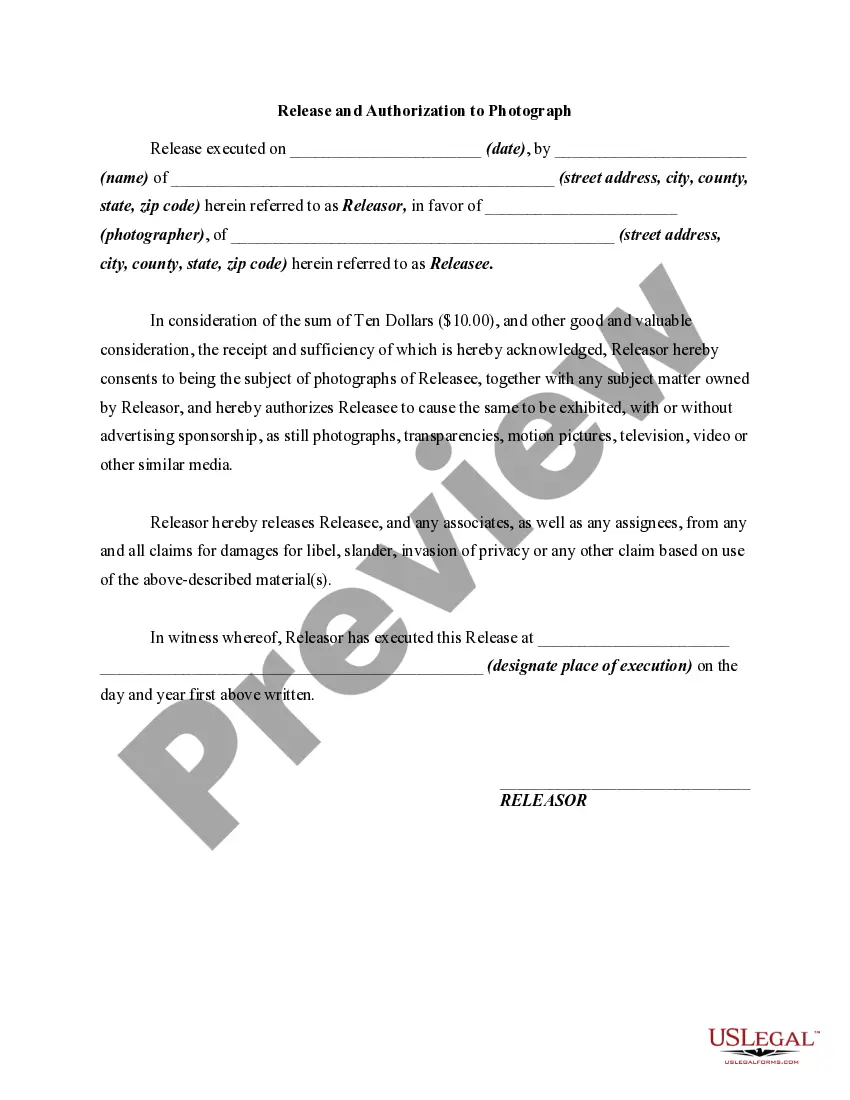
West Virginia Personal Injury Release By Individual From Responsibility for Participation in Inherently Dangerous Activity
Description
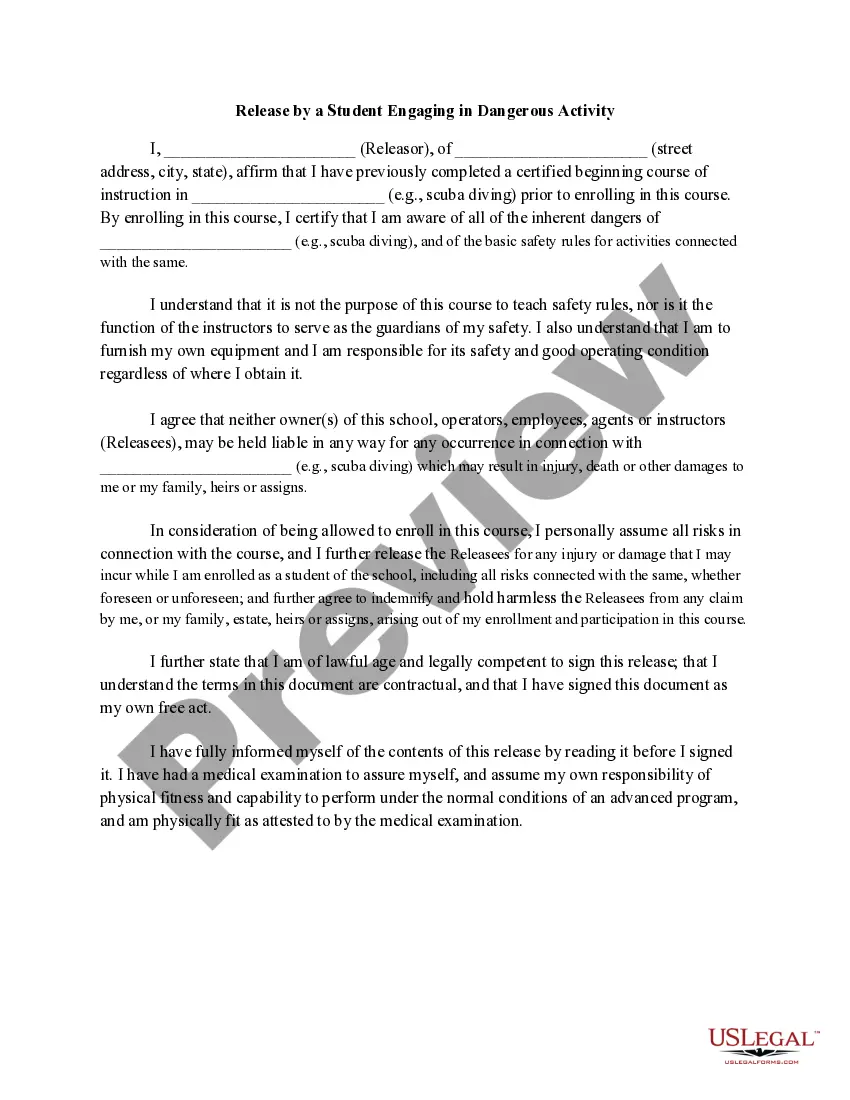
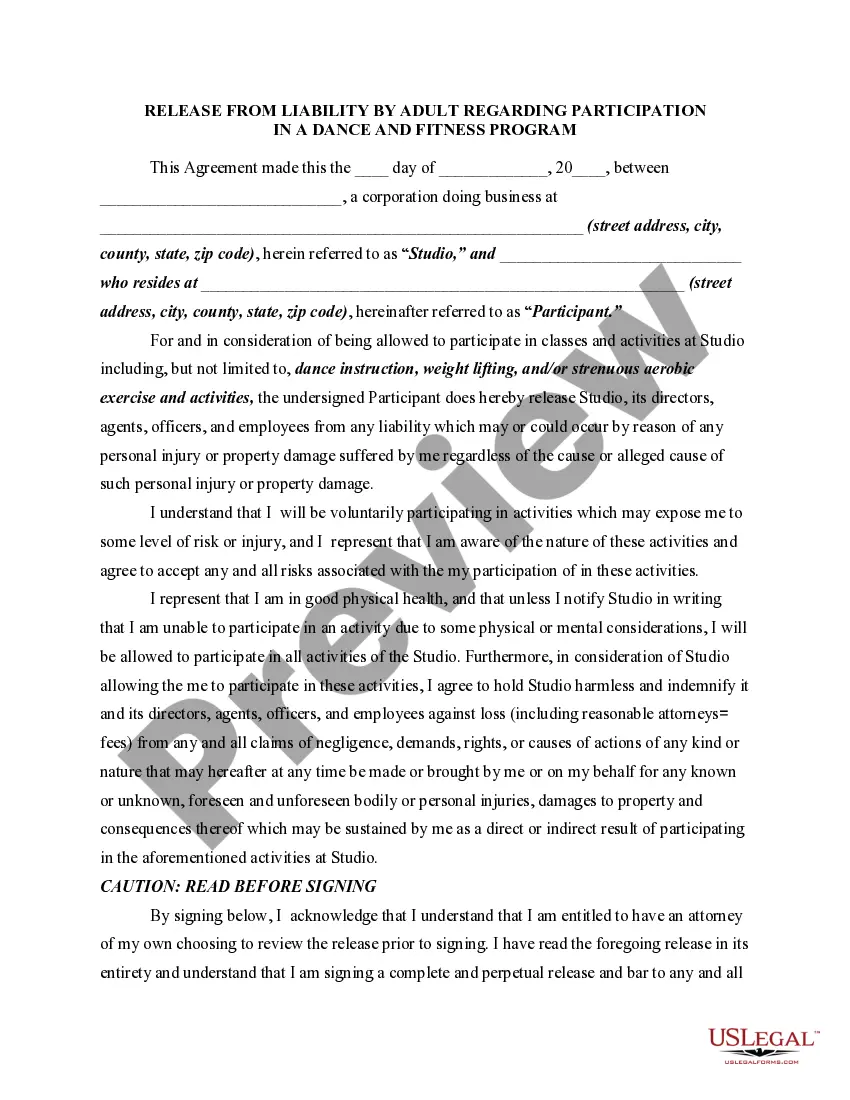
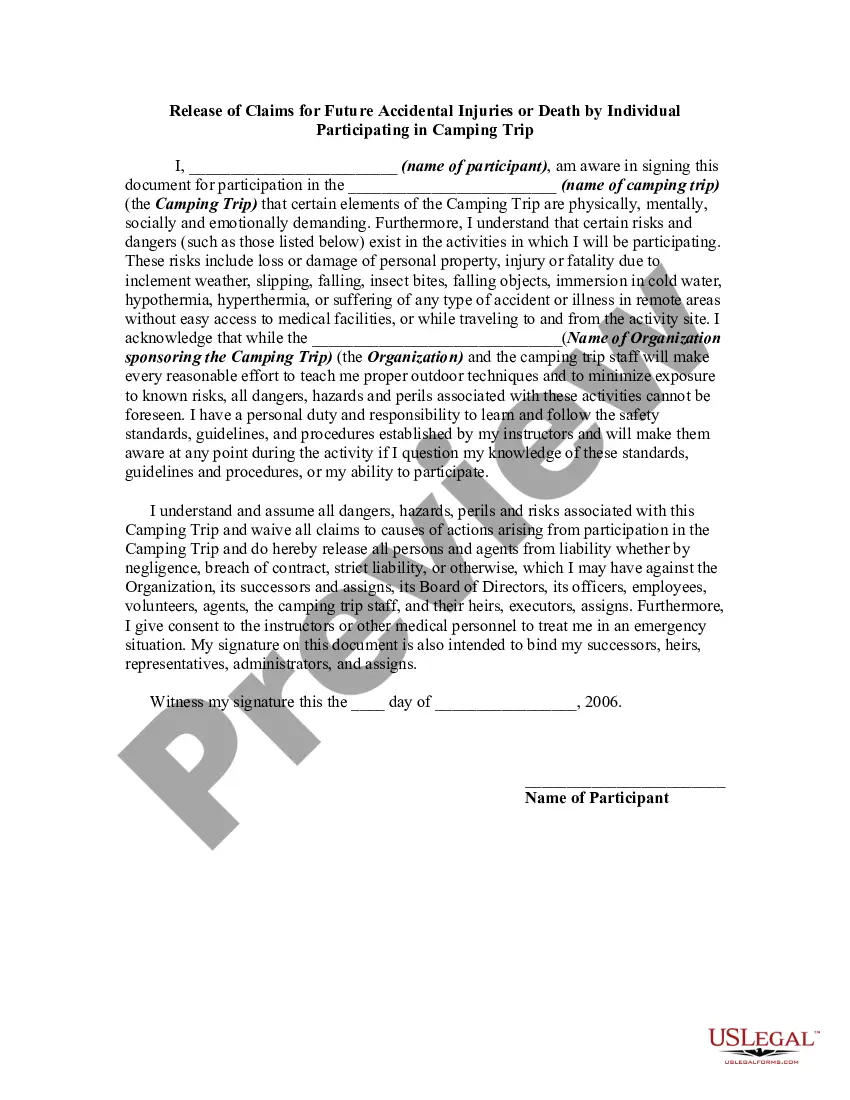
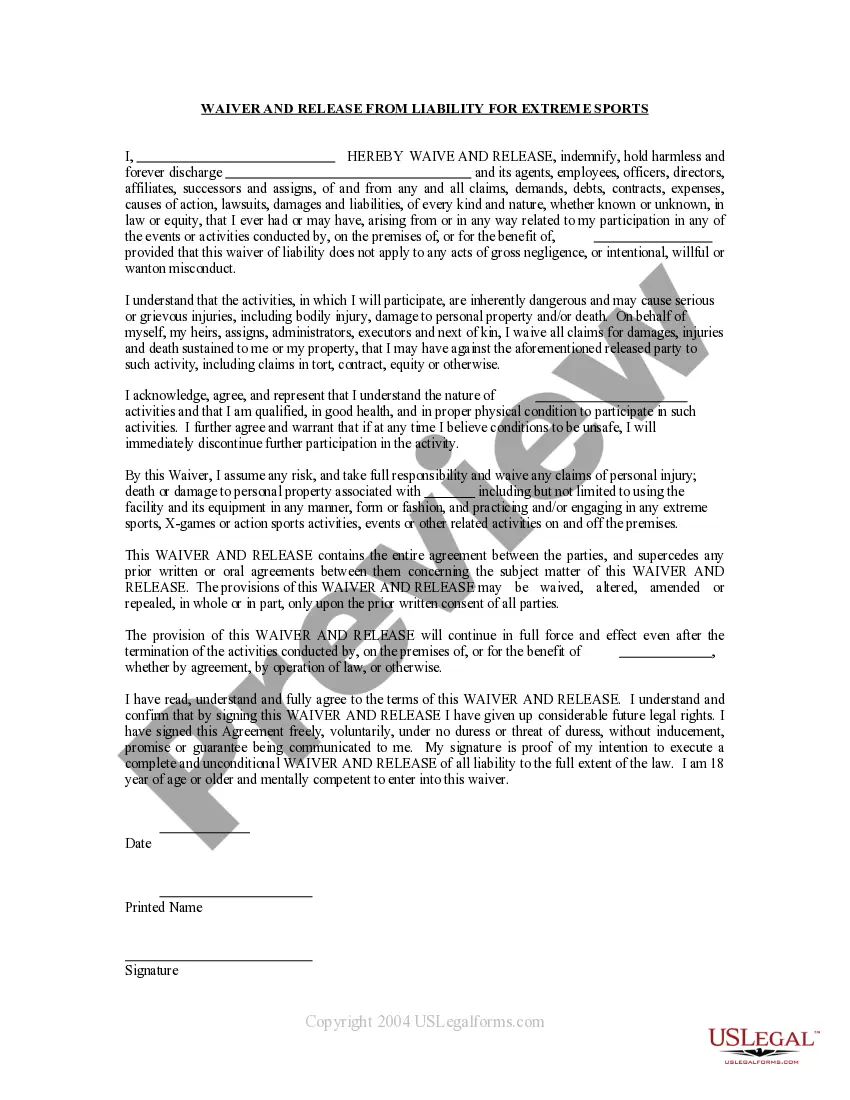
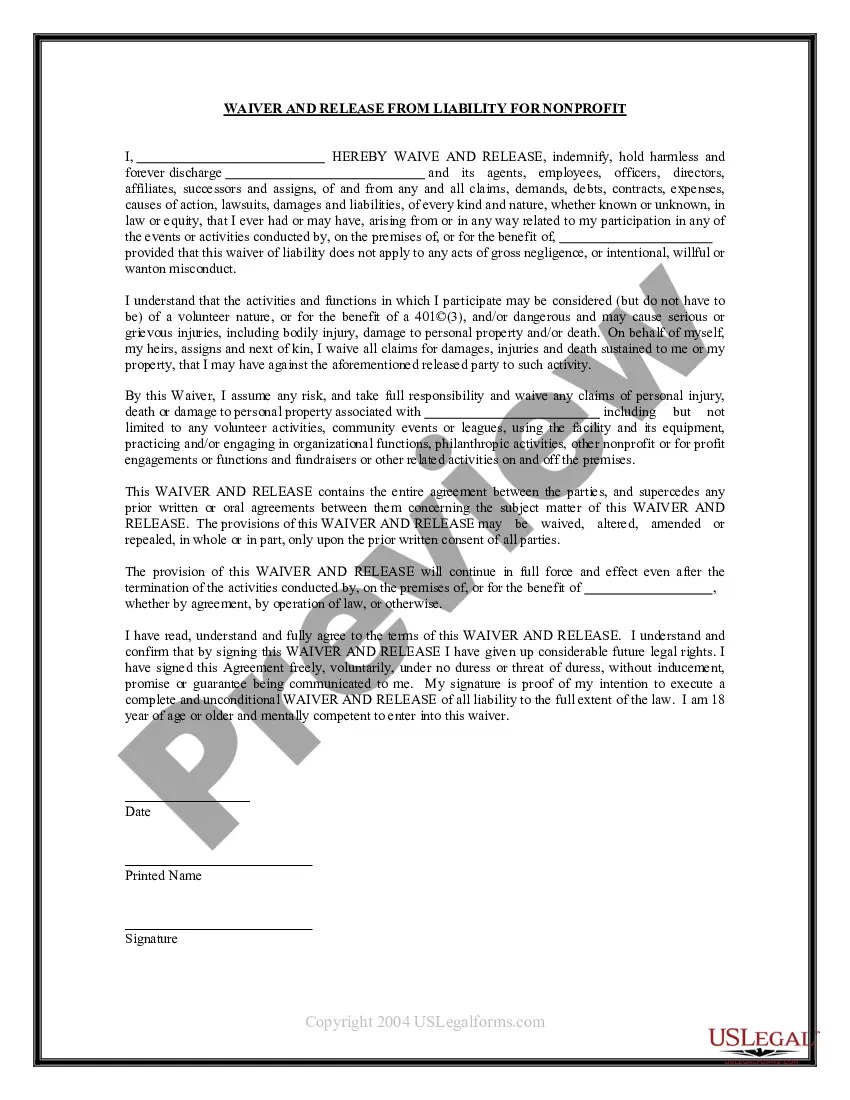
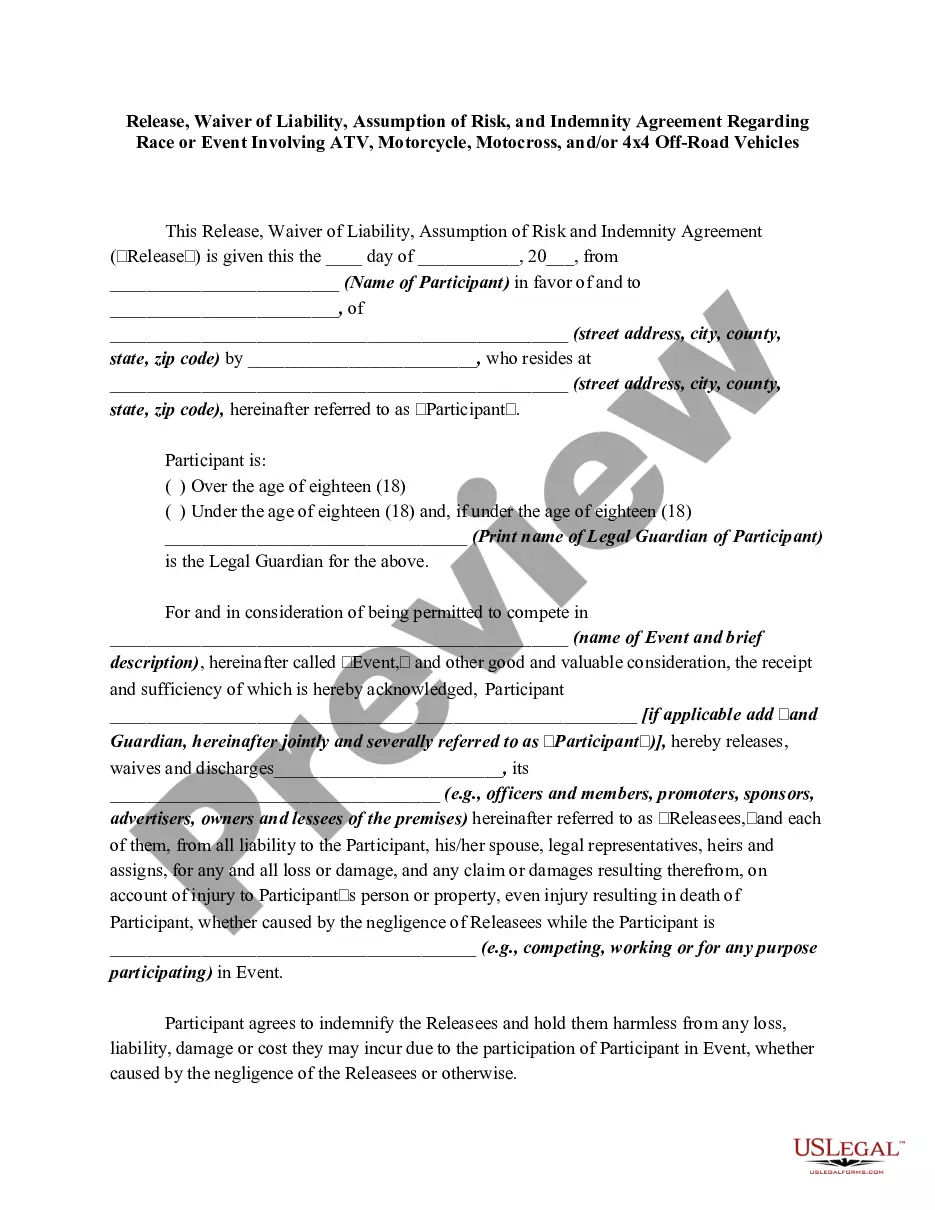
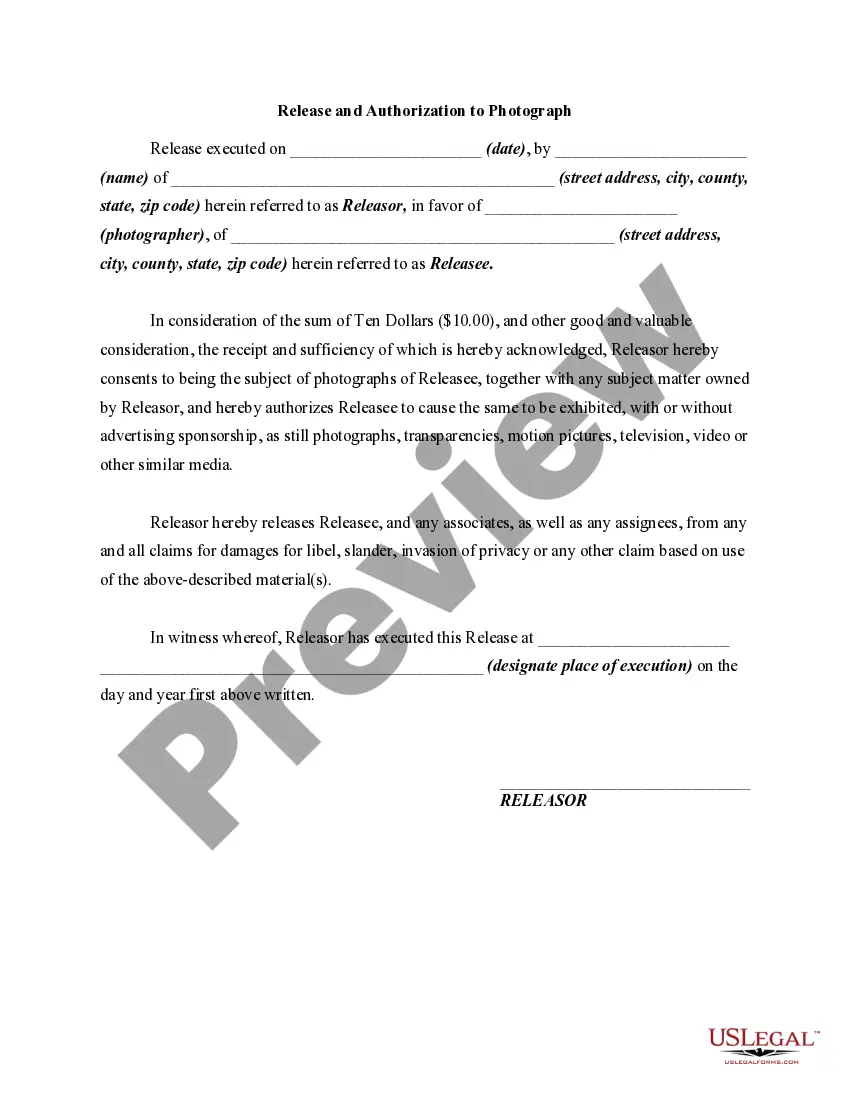

How to fill out Personal Injury Release By Individual From Responsibility For Participation In Inherently Dangerous Activity?
If you need to accomplish, obtain, or print legal document templates, utilize US Legal Forms, the largest collection of legal forms available on the Web.
Employ the site`s straightforward and user-friendly search feature to locate the documents you need.
Different templates for business and personal purposes are categorized by type and state, or keywords. Utilize US Legal Forms to find the West Virginia Personal Injury Release By Individual From Liability for Participation in Inherently Dangerous Activity in just a few clicks.
Every legal document template you purchase is yours to keep permanently. You have access to each form you acquired in your account. Click on the My documents section and select a form to print or download again.
Compete, download, and print the West Virginia Personal Injury Release By Individual From Liability for Participation in Inherently Dangerous Activity with US Legal Forms. There are numerous professional and state-specific forms you can use for your personal business or individual needs.
- If you are already a US Legal Forms user, sign in to your account and click the Download button to obtain the West Virginia Personal Injury Release By Individual From Liability for Participation in Inherently Dangerous Activity.
- You can also access forms you previously downloaded from the My documents tab of your account.
- If you are using US Legal Forms for the first time, follow these steps.
- Step 1. Ensure you have chosen the form for the correct region/state.
- Step 2. Use the Preview option to review the form`s details. Remember to read the outline.
- Step 3. If you are not satisfied with the form, utilize the Search field at the top of the screen to find alternative versions in the legal form category.
- Step 4. Once you have located the form you need, click the Get now button. Choose your desired pricing plan and enter your information to register for an account.
- Step 5. Complete the transaction. You can use your credit card or PayPal account to finalize the payment.
- Step 6. Choose the format of the legal form and download it to your device.
- Step 7. Complete, edit and print or sign the West Virginia Personal Injury Release By Individual From Liability for Participation in Inherently Dangerous Activity.
Form popularity
FAQ
Yes, West Virginia follows a modified comparative negligence rule. This means that you can recover damages even if you are partially at fault for an accident, as long as your share of negligence does not exceed 50%. Therefore, in cases involving a West Virginia Personal Injury Release By Individual From Responsibility for Participation in Inherently Dangerous Activity, understanding your level of fault is essential to determine the possible compensation.
In Virginia, the statute of limitations for filing a personal injury claim is typically two years from the date of the injury. This timeline is crucial, as failing to file within this period may result in losing your right to seek compensation. If your case involves a West Virginia Personal Injury Release By Individual From Responsibility for Participation in Inherently Dangerous Activity, it's essential to act promptly to ensure your legal rights are protected.
An act of negligence occurs when a person fails to exercise the standard of care that a reasonably cautious person would in similar circumstances. This failure can result in harm to another individual, forming the basis for a claim. In cases related to a West Virginia Personal Injury Release By Individual From Responsibility for Participation in Inherently Dangerous Activity, clear evidence of this conduct can be vital in determining liability and potential compensation.
To prove negligence, you must establish four key elements: duty, breach, causation, and damages. First, show that the other party owed you a duty of care. Second, demonstrate that they breached that duty, leading to an incident covered under a West Virginia Personal Injury Release By Individual From Responsibility for Participation in Inherently Dangerous Activity. Gathering evidence, witness testimonies, and expert opinions can strengthen your case.
The negligence rule in West Virginia holds individuals accountable for any harm caused by their failure to act with reasonable care. This rule is crucial in personal injury cases, including those involving a West Virginia Personal Injury Release By Individual From Responsibility for Participation in Inherently Dangerous Activity. Essentially, if you can prove that someone's lack of care led to your injuries, you may have a valid claim for damages.
An example of a personal injury disclaimer could be a statement that participants in a sporting event acknowledge the risks involved and agree not to hold the organizers accountable for any injuries. This type of disclaimer is often included in waivers, providing legal protection for those hosting potentially dangerous activities. In the context of a West Virginia Personal Injury Release By Individual From Responsibility for Participation in Inherently Dangerous Activity, such disclaimers help clarify the participant's understanding and acceptance of the risks.
The two required elements for assumption of risk include knowledge of the risk and voluntary participation in the activity. First, you must be aware of the potential dangers associated with the activity, and second, you must willingly engage in it despite those risks. These principles are crucial when discussing a West Virginia Personal Injury Release By Individual From Responsibility for Participation in Inherently Dangerous Activity, as they help determine liability in personal injury cases.
In simple terms, assumption of risk means that if you participate in a risky activity, you accept the possibility of injury. This legal concept is important when considering claims related to accidents or injuries, especially those involving inherently dangerous activities. If you have signed a West Virginia Personal Injury Release By Individual From Responsibility for Participation in Inherently Dangerous Activity, it often demonstrates that you were aware of the risks and chose to participate anyway.
Assumption of risk driving involves accepting the inherent dangers associated with driving, such as accidents or collisions. When a driver knowingly engages in risky behavior, like exceeding speed limits or driving under adverse weather conditions, they may be waiving their right to make a personal injury claim for accidents resulting from those choices. This principle applies under the framework of a West Virginia Personal Injury Release By Individual From Responsibility for Participation in Inherently Dangerous Activity, emphasizing the importance of understanding risks before driving.
The assumption of risk in West Virginia refers to a legal doctrine that recognizes that individuals can accept certain risks associated with activities. When you engage in inherently dangerous activities, you may be held responsible for injuries resulting from those activities if you understood the risks involved. This is particularly relevant in the context of a West Virginia Personal Injury Release By Individual From Responsibility for Participation in Inherently Dangerous Activity, where individuals voluntarily participate despite knowing the potential dangers.