West Virginia Amendment of Residential Lease
Overview of this form
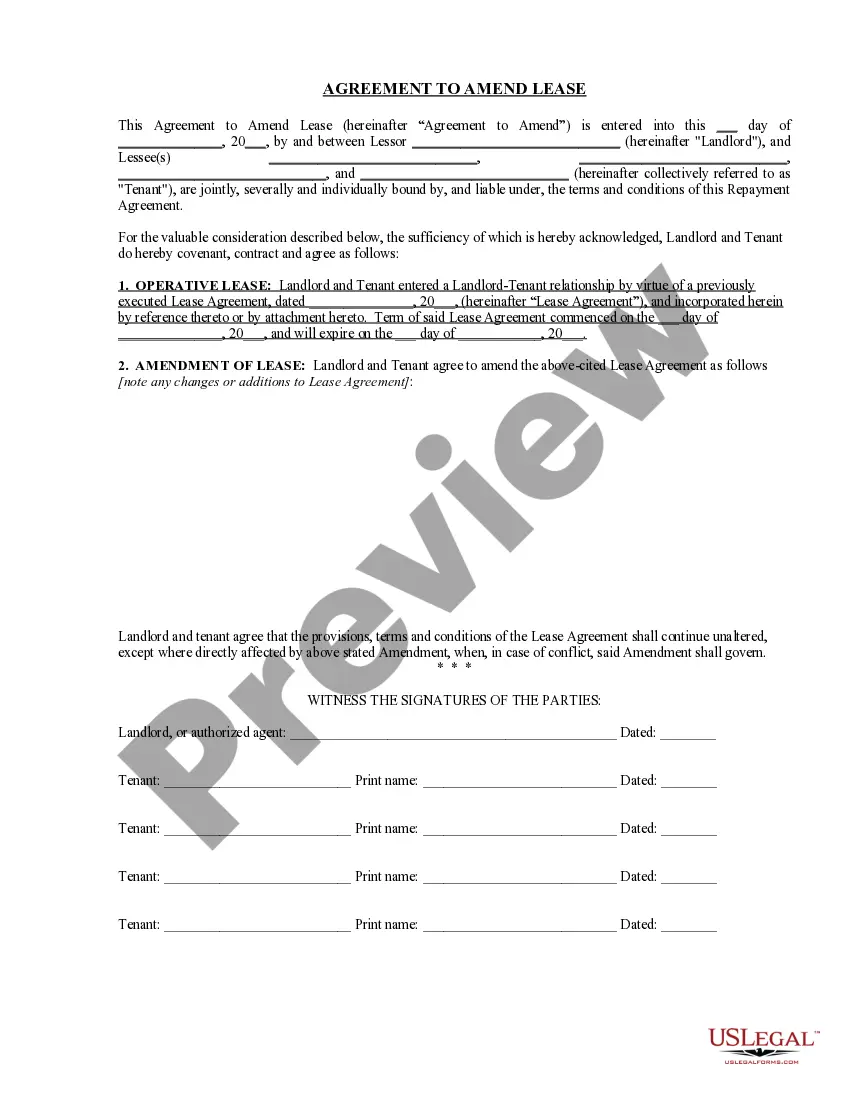
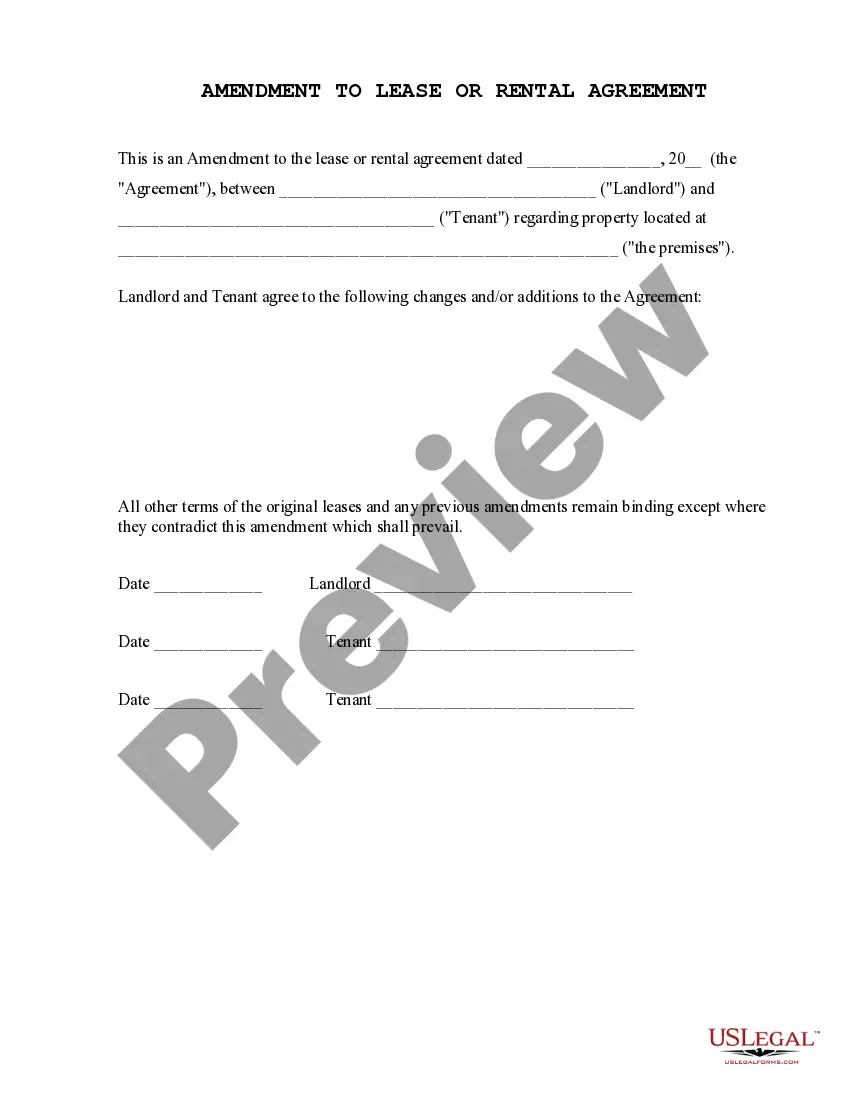
The Amendment of Residential Lease is a legal document used to modify the terms of an existing residential lease agreement. This form allows landlords and tenants to incorporate agreed changes into their lease contract, ensuring clarity and compliance with state laws. Unlike other forms, this document specifically addresses amendments to residential leases, making it essential for maintaining updated rental agreements.
Key components of this form
- Identification of the landlord (Lessor) and tenants (Lessee(s)) involved in the amendment.
- Details of the original lease agreement, including the start and expiration dates.
- Section for the specific changes being made to the lease terms.
- Signature lines for all parties to confirm the agreement to the changes.
When to use this document
This form is needed when either the landlord or the tenants wish to change specific terms of a residential lease. Common situations include adjusting rent amounts, extending the lease term, or modifying responsibilities for repairs. Using this form helps prevent disputes by ensuring all changes are agreed upon in writing.
Who should use this form
This amendment form is intended for:
- Landlords looking to formally change lease terms.
- Tenants who agree to alterations in their lease agreement.
- Property managers involved in maintaining accurate lease documentation.
Completing this form step by step
- Identify and enter the names of all parties involved (landlord and tenants).
- Specify the original lease dates, including start and expiration dates.
- Detail the specific amendments to the lease terms within the designated section.
- Ensure all parties sign and date the form to confirm agreement.
Notarization guidance
This form does not typically require notarization unless specified by local law.
Get your form ready online
Our built-in tools help you complete, sign, share, and store your documents in one place.
Make edits, fill in missing information, and update formatting in US Legal Forms—just like you would in MS Word.
Download a copy, print it, send it by email, or mail it via USPS—whatever works best for your next step.
Sign and collect signatures with our SignNow integration. Send to multiple recipients, set reminders, and more. Go Premium to unlock E-Sign.
If this form requires notarization, complete it online through a secure video call—no need to meet a notary in person or wait for an appointment.
We protect your documents and personal data by following strict security and privacy standards.

Make edits, fill in missing information, and update formatting in US Legal Forms—just like you would in MS Word.

Download a copy, print it, send it by email, or mail it via USPS—whatever works best for your next step.

Sign and collect signatures with our SignNow integration. Send to multiple recipients, set reminders, and more. Go Premium to unlock E-Sign.

If this form requires notarization, complete it online through a secure video call—no need to meet a notary in person or wait for an appointment.

We protect your documents and personal data by following strict security and privacy standards.
Typical mistakes to avoid
- Failing to obtain signatures from all parties involved in the lease.
- Not clearly specifying the changes, leading to ambiguity.
- Using the form without confirming it complies with local laws.
Benefits of completing this form online
- Convenient access to legal forms at any time.
- Editable format to customize the document as needed.
- Reliable templates drafted by licensed attorneys, ensuring legal compliance.
Legal use & context
- The form is legally binding once signed by all parties.
- Amendments must comply with state landlord-tenant laws to be enforceable.
- Using this form reduces the risk of disputes by documenting agreed-upon changes clearly.
What to keep in mind
- The Amendment of Residential Lease allows for formal changes to an existing lease.
- It is essential for landlords and tenants to document any modifications to avoid future disputes.
- Understanding and completing this form correctly is crucial for legal compliance.
Looking for another form?
Form popularity
FAQ
Give the landlord/agent a written termination notice and vacate move out and return the keys according to your notice, and/or. apply to the NSW Civil & Administrative Tribunal (NCAT) for a termination order.
Unless such a condition is explicitly stated in the lease or there is a rare jurisdictional law that requires a cooling period, your lease is binding the second you sign your name. The landlord has the right to decide whether to mutually agree to terminate the lease or to hold you to the terms.
Pursuant to §37-6-5. Notice to Terminate Tenancy Week to Week Lease: For any lease under the term of one year, either party can terminate the lease by providing the other party written notice prior to the end of the lease. For a week to week lease, 7 days notice must be provided in accordance with A§37-6-5.
Declare a Constructive Eviction. Point Out Landlord Breaches to Reduce Your Debt. Landlords Have a Duty to Mitigate Their Damages. Consequences for Breaking Your Lease. Look for These Clauses in Your Lease. Your Landlord May Have a Duty to Mitigate. Declare a Constructive Eviction.
As a renter in Virginia, you have legal protections under the Virginia Residential Landlord and Tenant Act (VRLTA) that include the right to: A fair application fee. A fair security deposit. A decent and safe place to live.
Except for an emergency or scheduled maintenance, your landlord must give you at least 24 hours of notice before entering the rental unit. If your landlord repeatedly violates your privacy by entering your unit, you may be able to break your lease without penalty.
In some circumstances, a tenant can break a fixed-term agreement early without penalty. A tenant can give 14 days' written notice to end an agreement early without penalty if: they have accepted an offer of social housing (e.g. from DCJ Housing)
Notice to terminate a lease with no end date. 3 months prior to the end of the lease (§ 55-222(A)) Notice to terminate a month-to-month lease. 30 days or less if both parties agreed to a shorter notice period in the lease. (A§ 55-222(B))
Give the landlord/agent a written termination notice and vacate move out and return the keys according to your notice, and/or. apply to the NSW Civil & Administrative Tribunal (NCAT) for a termination order.