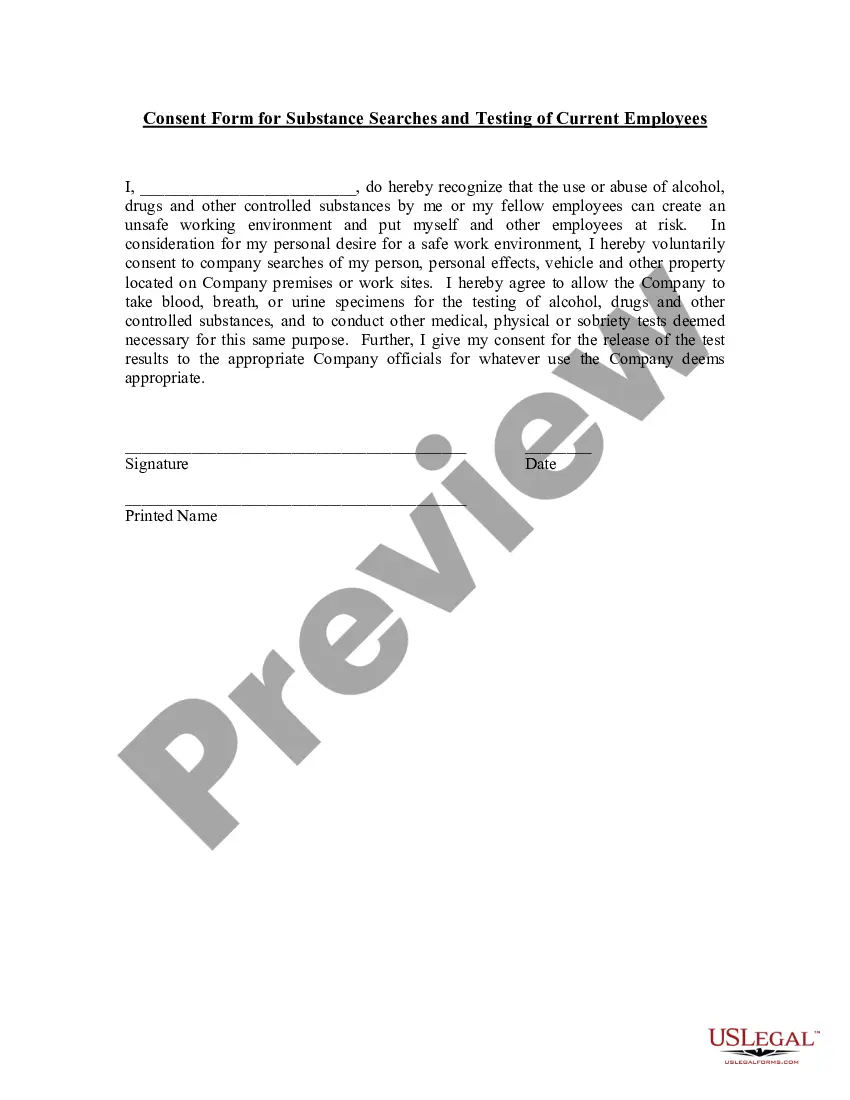
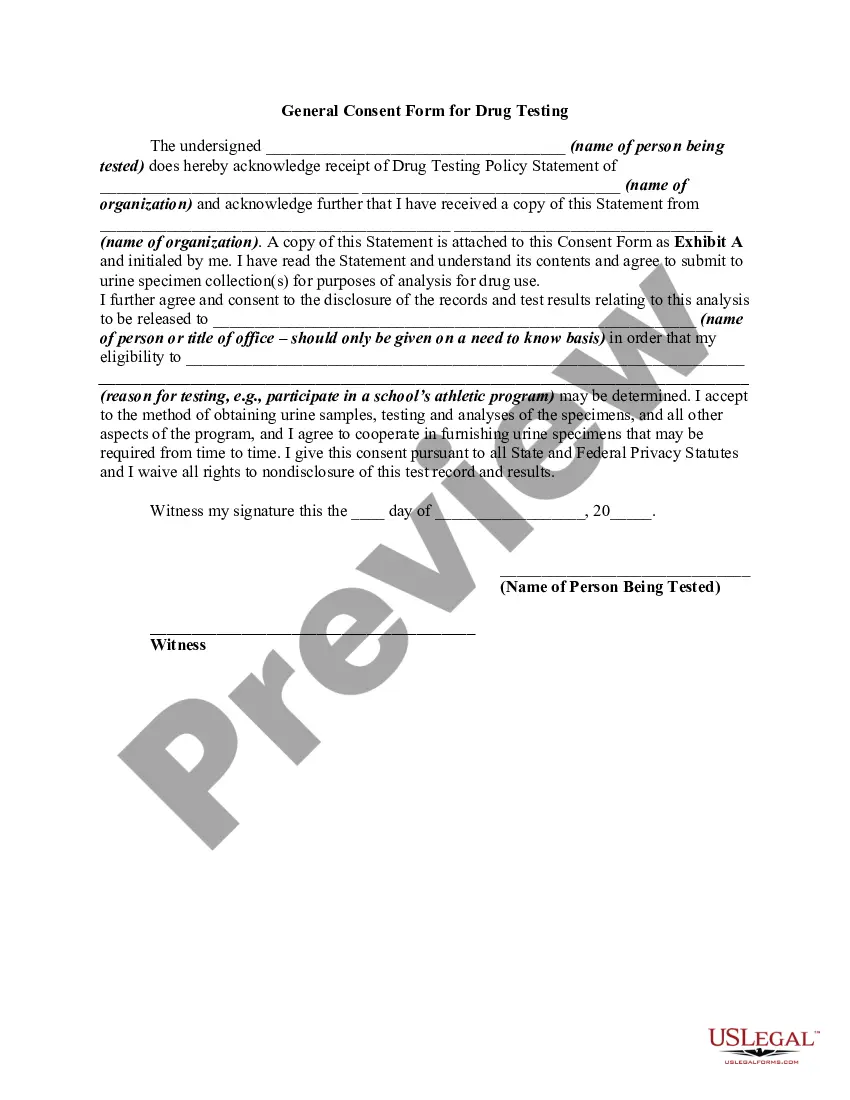
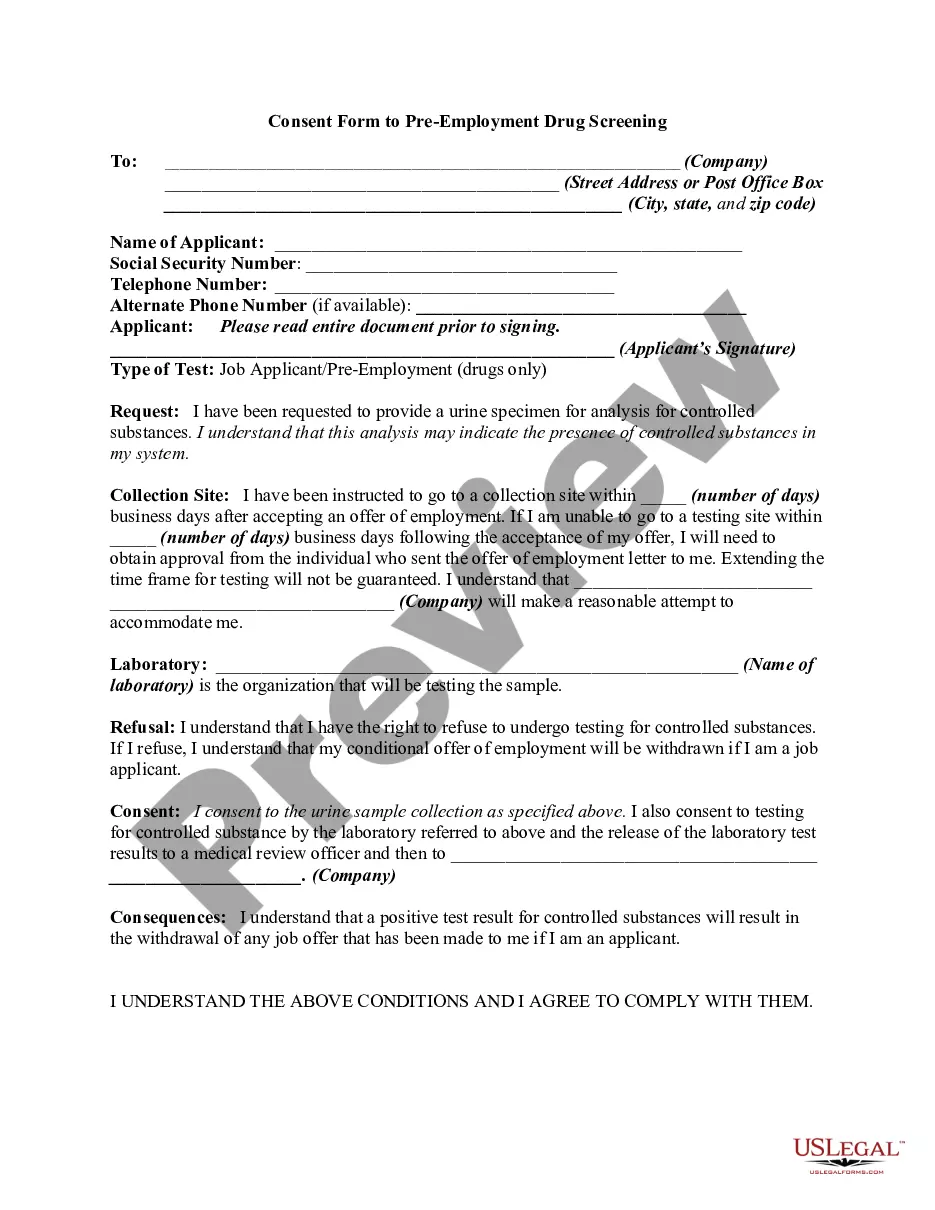
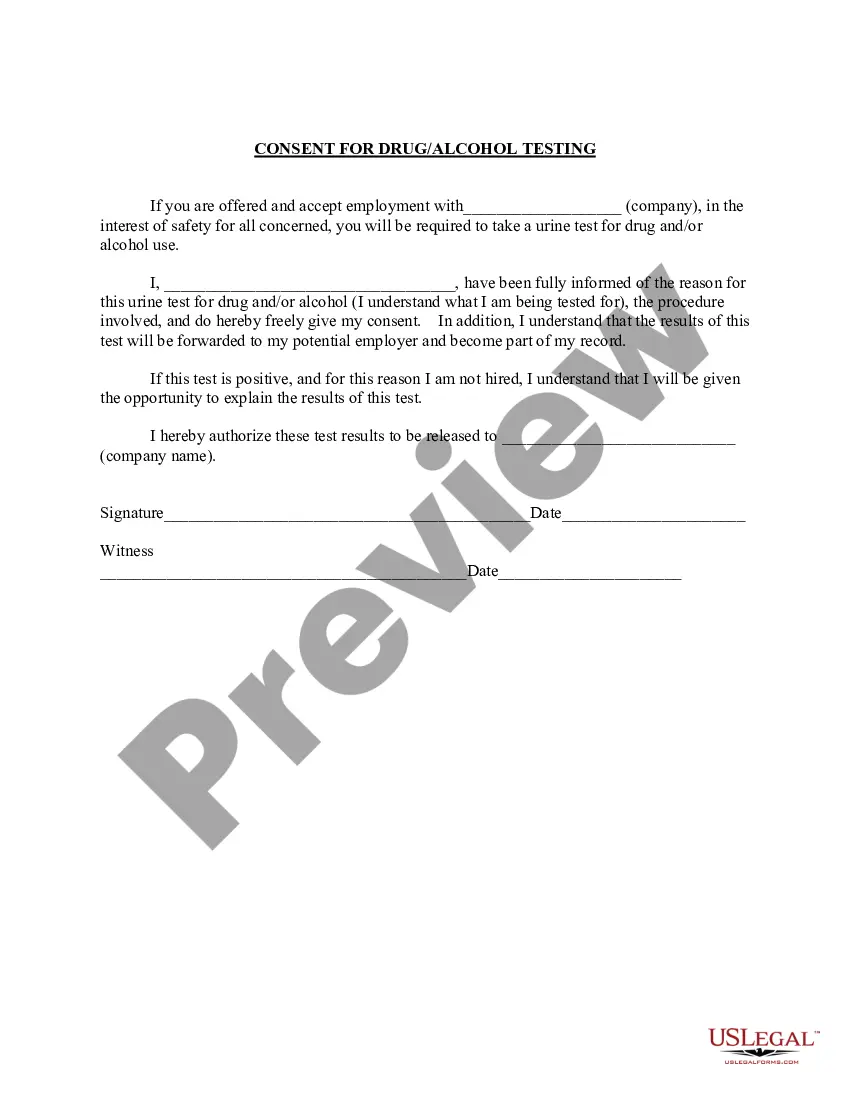
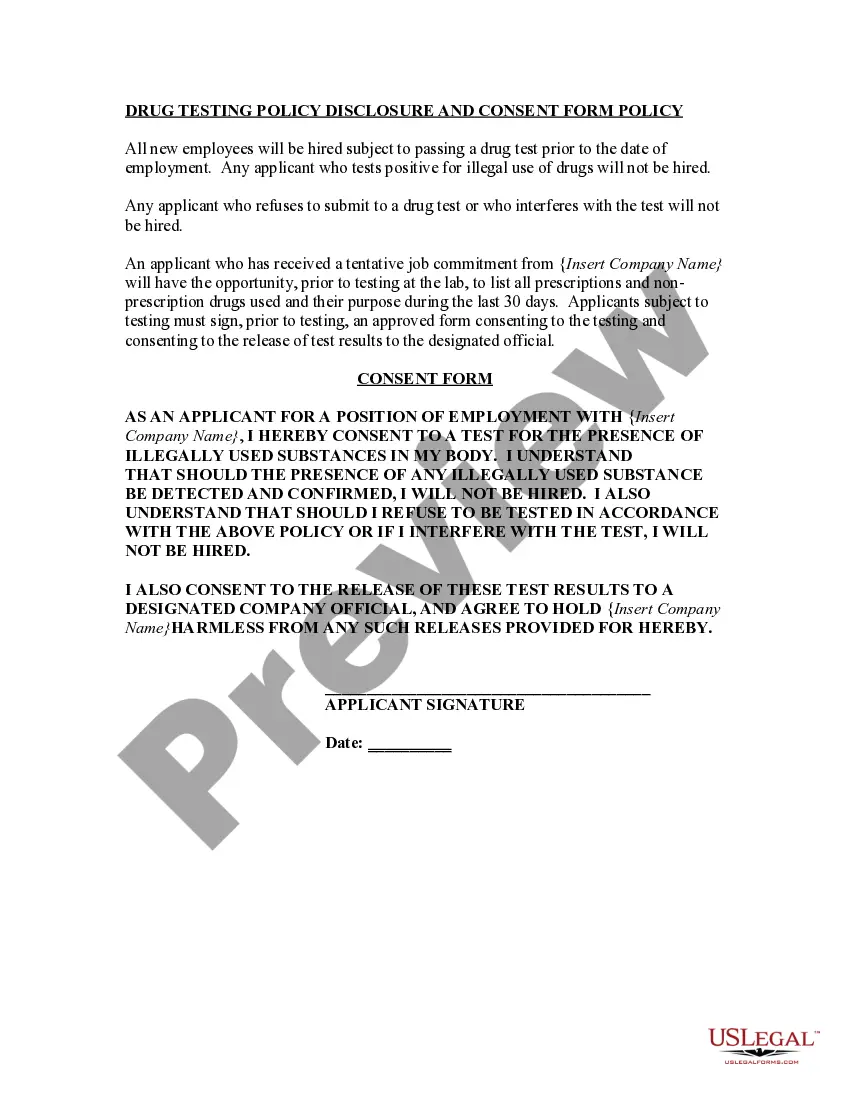
Wisconsin Consent Form for Substance Searches of Vehicles and Personal Effects and for Testing of Employees
Description
Get your form ready online
Our built-in tools help you complete, sign, share, and store your documents in one place.
Make edits, fill in missing information, and update formatting in US Legal Forms—just like you would in MS Word.
Download a copy, print it, send it by email, or mail it via USPS—whatever works best for your next step.
Sign and collect signatures with our SignNow integration. Send to multiple recipients, set reminders, and more. Go Premium to unlock E-Sign.
If this form requires notarization, complete it online through a secure video call—no need to meet a notary in person or wait for an appointment.
We protect your documents and personal data by following strict security and privacy standards.

Make edits, fill in missing information, and update formatting in US Legal Forms—just like you would in MS Word.

Download a copy, print it, send it by email, or mail it via USPS—whatever works best for your next step.

Sign and collect signatures with our SignNow integration. Send to multiple recipients, set reminders, and more. Go Premium to unlock E-Sign.

If this form requires notarization, complete it online through a secure video call—no need to meet a notary in person or wait for an appointment.

We protect your documents and personal data by following strict security and privacy standards.
Looking for another form?
How to fill out Consent Form For Substance Searches Of Vehicles And Personal Effects And For Testing Of Employees?
Are you currently in a location where you need documents for business or personal reasons almost every day.
There are numerous legal document templates accessible online, but finding reliable ones can be challenging.
US Legal Forms offers a vast array of form templates, such as the Wisconsin Consent Form for Substance Searches of Vehicles and Personal Effects and for Employee Testing, that are designed to comply with state and federal regulations.
Once you locate the appropriate form, click Purchase now.
Select the payment plan you prefer, enter the necessary information to create your account, and complete the transaction using your PayPal or Visa or Mastercard.
- If you are already familiar with the US Legal Forms website and possess an account, simply Log In.
- Then, you can download the Wisconsin Consent Form for Substance Searches of Vehicles and Personal Effects and for Employee Testing template.
- If you lack an account and wish to start using US Legal Forms, follow these steps.
- Select the form you desire and ensure it is for your specific city/county.
- Utilize the Preview button to review the document.
- Examine the description to confirm that you have selected the correct form.
- If the form is not what you need, use the Search field to find the form that meets your requirements.
Form popularity
FAQ
The Constitution, through the Fourth Amendment, protects people from unreasonable searches and seizures by the government. The Fourth Amendment, however, is not a guarantee against all searches and seizures, but only those that are deemed unreasonable under the law.
The Fourth Amendment to the U.S. Constitution protects personal privacy, and every citizen's right to be free from unreasonable government intrusion into their persons, homes, businesses, and property -- whether through police stops of citizens on the street, arrests, or searches of homes and businesses.
The Fourth Amendment to the U.S. Constitution protects personal privacy, and every citizen's right to be free from unreasonable government intrusion into their persons, homes, businesses, and property -- whether through police stops of citizens on the street, arrests, or searches of homes and businesses.
The right of the people to be secure in their persons, houses, papers, and effects, against unreasonable searches and seizures, shall not be violated, and no warrants shall issue, but upon probable cause, supported by oath or affirmation, and particularly describing the place to be searched, and the persons or things
Corporations are not without some constitutional protection in an investigation. The Fourth Amendment, which recognizes the right of the people to be free from unreasonable searches and seizures, protects the privacy of a business to the same extent as an individual.
Sec. 48.23(1m) and 938.23(1m). Juveniles 12 years of age or older may consent to some limited alcohol and other drug treatment services without the knowledge of their parents/guardians. Information about these limited services may be disclosed only with the written consent of the juvenile.
The guarantees of the Bill of Rights apply only to state and federal government action. They do not limit what a company or person in the private sector may do.
It protects against arbitrary arrests, and is the basis of the law regarding search warrants, stop-and-frisk, safety inspections, wiretaps, and other forms of surveillance, as well as being central to many other criminal law topics and to privacy law.
The right of the people to be secure in their persons, houses, papers, and effects, against unreasonable searches and seizures, shall not be violated, and no Warrants shall issue, but upon probable cause, supported by Oath or affirmation, and particularly describing the place to be searched, and the persons or things