Wisconsin Discovery - Sample Letter to Opposing Counsel regarding Deposition and Subpoena Duces Tecum
Description
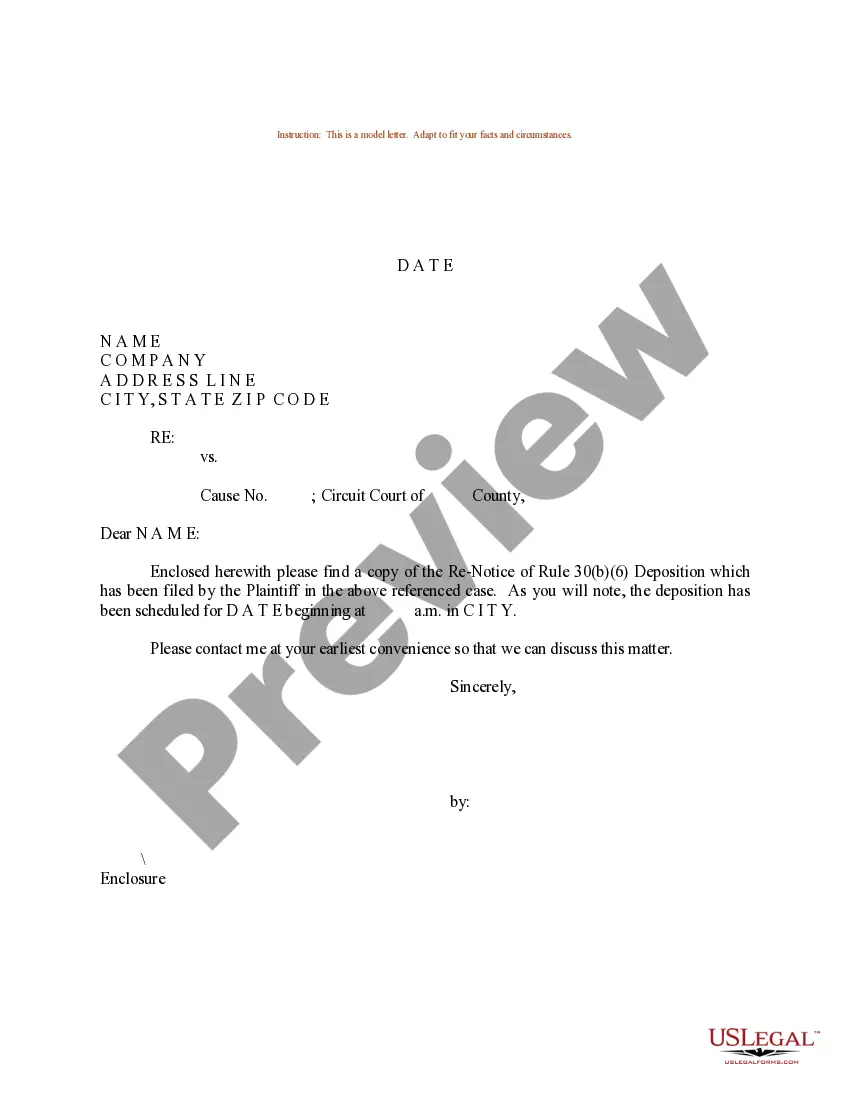
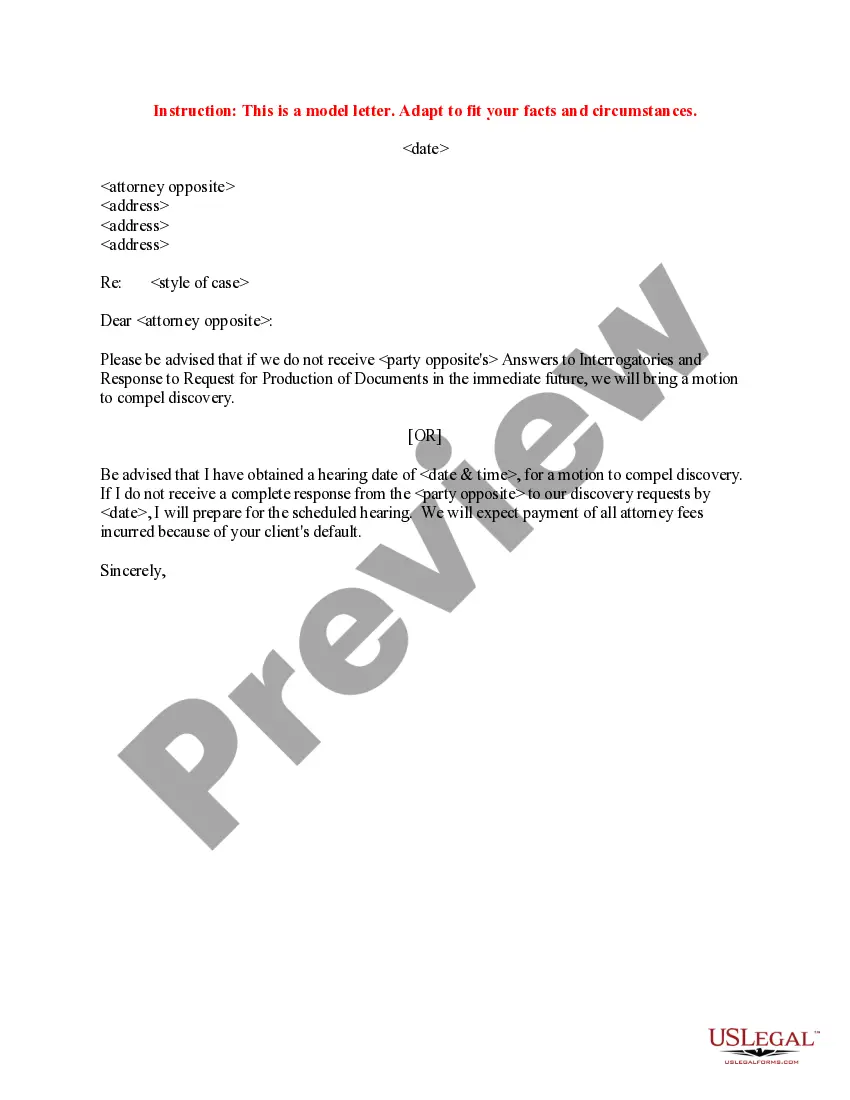
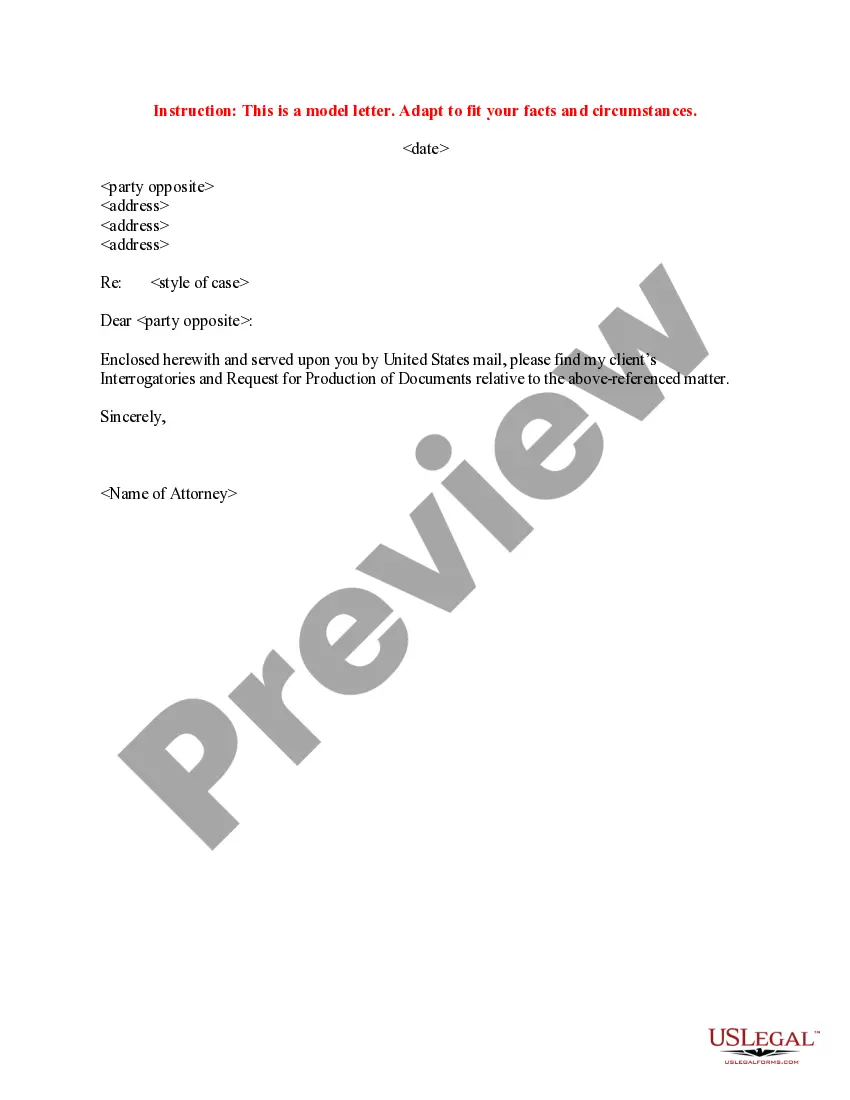
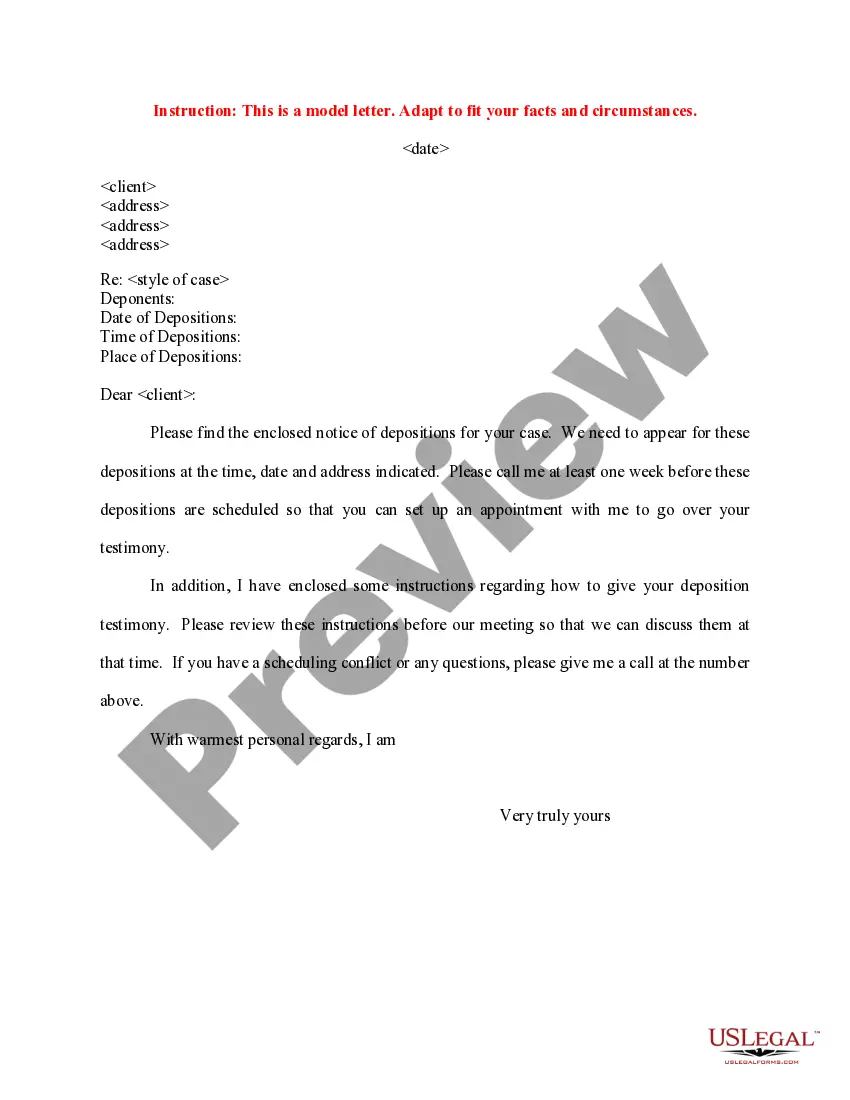
Get your form ready online
Our built-in tools help you complete, sign, share, and store your documents in one place.
Make edits, fill in missing information, and update formatting in US Legal Forms—just like you would in MS Word.
Download a copy, print it, send it by email, or mail it via USPS—whatever works best for your next step.
Sign and collect signatures with our SignNow integration. Send to multiple recipients, set reminders, and more. Go Premium to unlock E-Sign.
If this form requires notarization, complete it online through a secure video call—no need to meet a notary in person or wait for an appointment.
We protect your documents and personal data by following strict security and privacy standards.

Make edits, fill in missing information, and update formatting in US Legal Forms—just like you would in MS Word.

Download a copy, print it, send it by email, or mail it via USPS—whatever works best for your next step.

Sign and collect signatures with our SignNow integration. Send to multiple recipients, set reminders, and more. Go Premium to unlock E-Sign.

If this form requires notarization, complete it online through a secure video call—no need to meet a notary in person or wait for an appointment.

We protect your documents and personal data by following strict security and privacy standards.
Looking for another form?





How to fill out Discovery - Sample Letter To Opposing Counsel Regarding Deposition And Subpoena Duces Tecum?
Have you been inside a placement where you will need files for possibly company or specific purposes nearly every working day? There are tons of lawful record web templates accessible on the Internet, but getting ones you can trust is not straightforward. US Legal Forms gives 1000s of type web templates, much like the Wisconsin Discovery - Sample Letter to Opposing Counsel regarding Deposition and Subpoena Duces Tecum, that are published in order to meet state and federal specifications.
Should you be already acquainted with US Legal Forms site and also have an account, merely log in. After that, it is possible to obtain the Wisconsin Discovery - Sample Letter to Opposing Counsel regarding Deposition and Subpoena Duces Tecum template.
Should you not have an accounts and need to begin to use US Legal Forms, abide by these steps:
- Obtain the type you will need and make sure it is to the appropriate area/state.
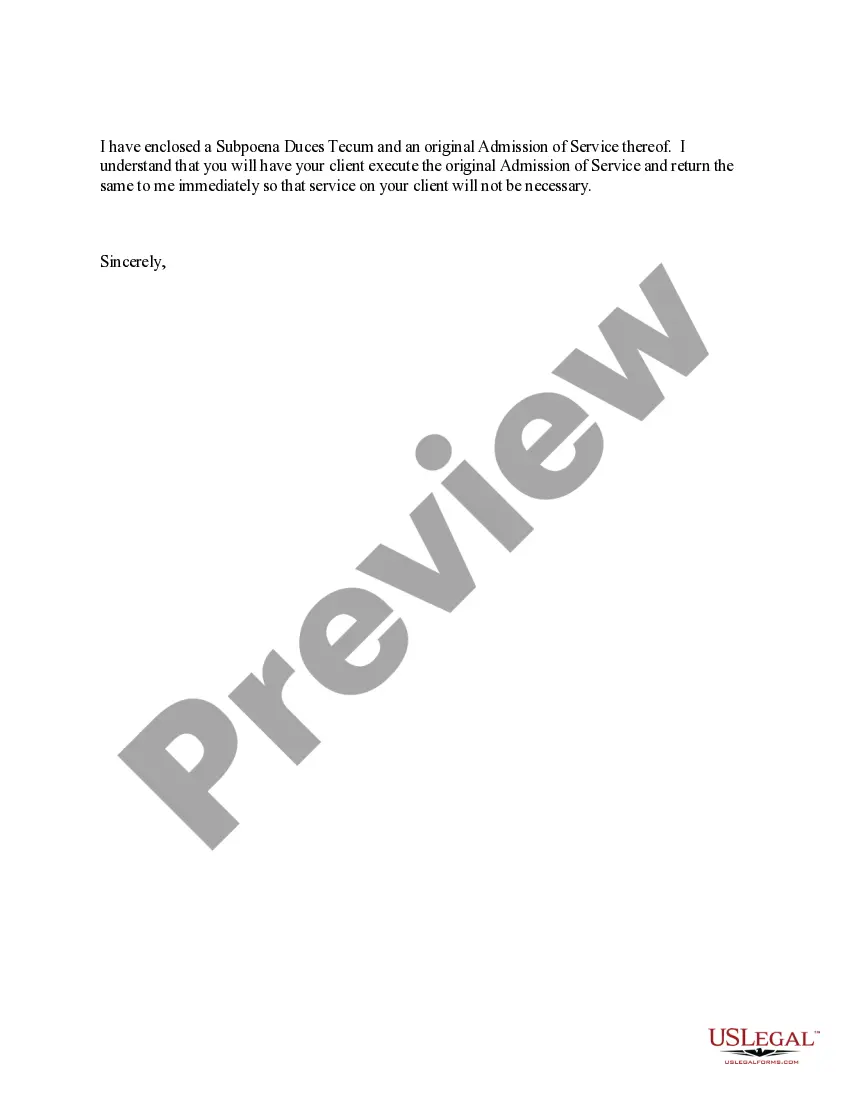
- Use the Preview switch to review the shape.
- See the description to ensure that you have chosen the appropriate type.
- In case the type is not what you are trying to find, take advantage of the Research discipline to obtain the type that suits you and specifications.
- Whenever you discover the appropriate type, simply click Buy now.
- Choose the pricing strategy you want, submit the desired information and facts to generate your account, and pay money for your order with your PayPal or Visa or Mastercard.
- Pick a practical paper structure and obtain your backup.
Locate all the record web templates you have bought in the My Forms food selection. You can aquire a additional backup of Wisconsin Discovery - Sample Letter to Opposing Counsel regarding Deposition and Subpoena Duces Tecum any time, if needed. Just go through the needed type to obtain or printing the record template.
Use US Legal Forms, by far the most considerable collection of lawful forms, in order to save time and prevent faults. The service gives professionally made lawful record web templates that can be used for an array of purposes. Make an account on US Legal Forms and start generating your way of life easier.
Form popularity
FAQ
Discovery is how you gather the evidence you will need to prove your case as plaintiff, or defeat the plaintiff's case as a defendant. You use discovery to find out things like: What the other side plans to say about an issue in your case. What facts or witnesses support their side.
A sample discovery deficiency letter that a party to a civil action in a Pennsylvania court of common pleas may use to inform another party or a subpoena recipient that they have failed to provide an adequate document production, deposition testimony, or set of responses to written discovery requests.
While the Wisconsin rule specifies that 25 is the maximum number of interrogatories a party may serve, the rule actually limits a party to ?a reasonable number of requests.? Conversely, Federal Rule 33(a)(1) grants at least 25 written interrogatories.
Rule 26(f)(3)(C) - Any Issues About Disclosure or Discovery of Electronically Stored Information, Including the Form or Forms in Which It Should Be Produced. The parties request the Court to stay discovery as well as the initial disclosure requirements until the Court has decided the Pending Motions.
(b) Each interrogatory shall be answered separately and fully in writing under oath, unless it is objected to, in which event the reasons for objection shall be stated in lieu of an answer. The answers are to be signed by the person making them, and the objections signed by the attorney making them.
You may create a list of questions (called ?written interrogatories?) that you want the other party to answer. Mail this document to the other party. They must respond to your questions within 30 days.
Parties may obtain discovery regarding any nonprivileged matter that is relevant to any party's claim or defense and proportional to the needs of the case, considering the importance of the issues at stake in the action, the amount in controversy, the parties' relative access to relevant information, the parties' ...
804.015, any party may take the testimony of any person, including a party, by deposition upon written questions. The attendance of witnesses may be compelled by subpoena as provided in s. 805.07.