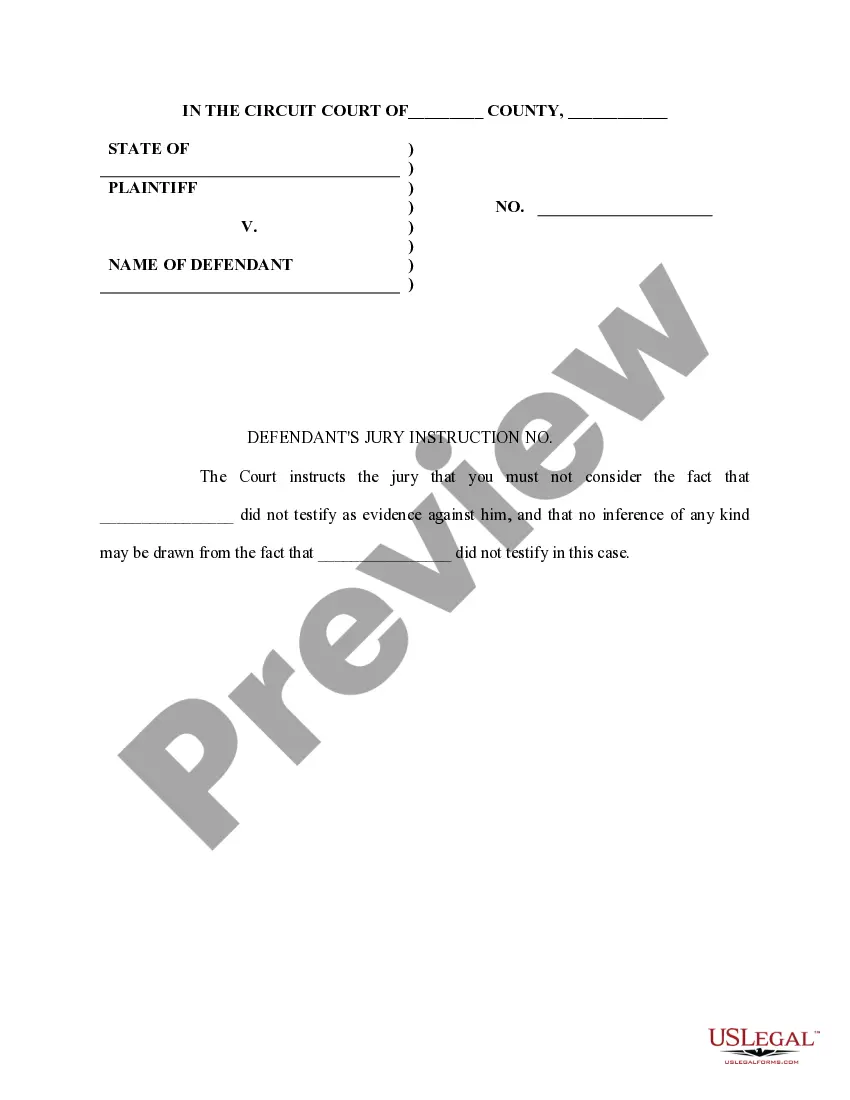
Wisconsin Jury Instructions - Defendant's Failure to Testify
Description
Get your form ready online
Our built-in tools help you complete, sign, share, and store your documents in one place.
Make edits, fill in missing information, and update formatting in US Legal Forms—just like you would in MS Word.
Download a copy, print it, send it by email, or mail it via USPS—whatever works best for your next step.
Sign and collect signatures with our SignNow integration. Send to multiple recipients, set reminders, and more. Go Premium to unlock E-Sign.
If this form requires notarization, complete it online through a secure video call—no need to meet a notary in person or wait for an appointment.
We protect your documents and personal data by following strict security and privacy standards.
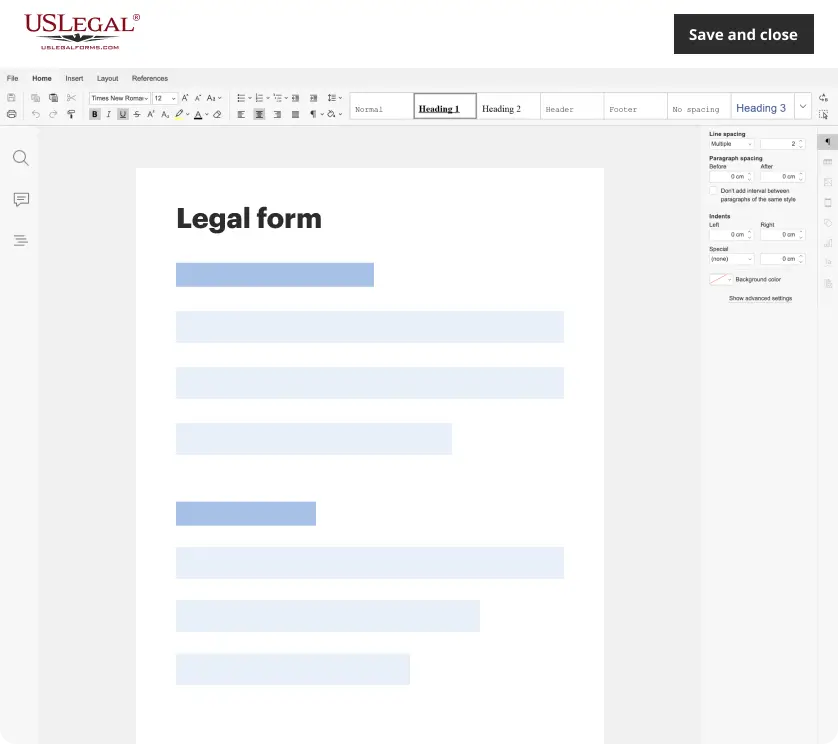
Make edits, fill in missing information, and update formatting in US Legal Forms—just like you would in MS Word.
Download a copy, print it, send it by email, or mail it via USPS—whatever works best for your next step.
Sign and collect signatures with our SignNow integration. Send to multiple recipients, set reminders, and more. Go Premium to unlock E-Sign.
If this form requires notarization, complete it online through a secure video call—no need to meet a notary in person or wait for an appointment.
We protect your documents and personal data by following strict security and privacy standards.
Looking for another form?
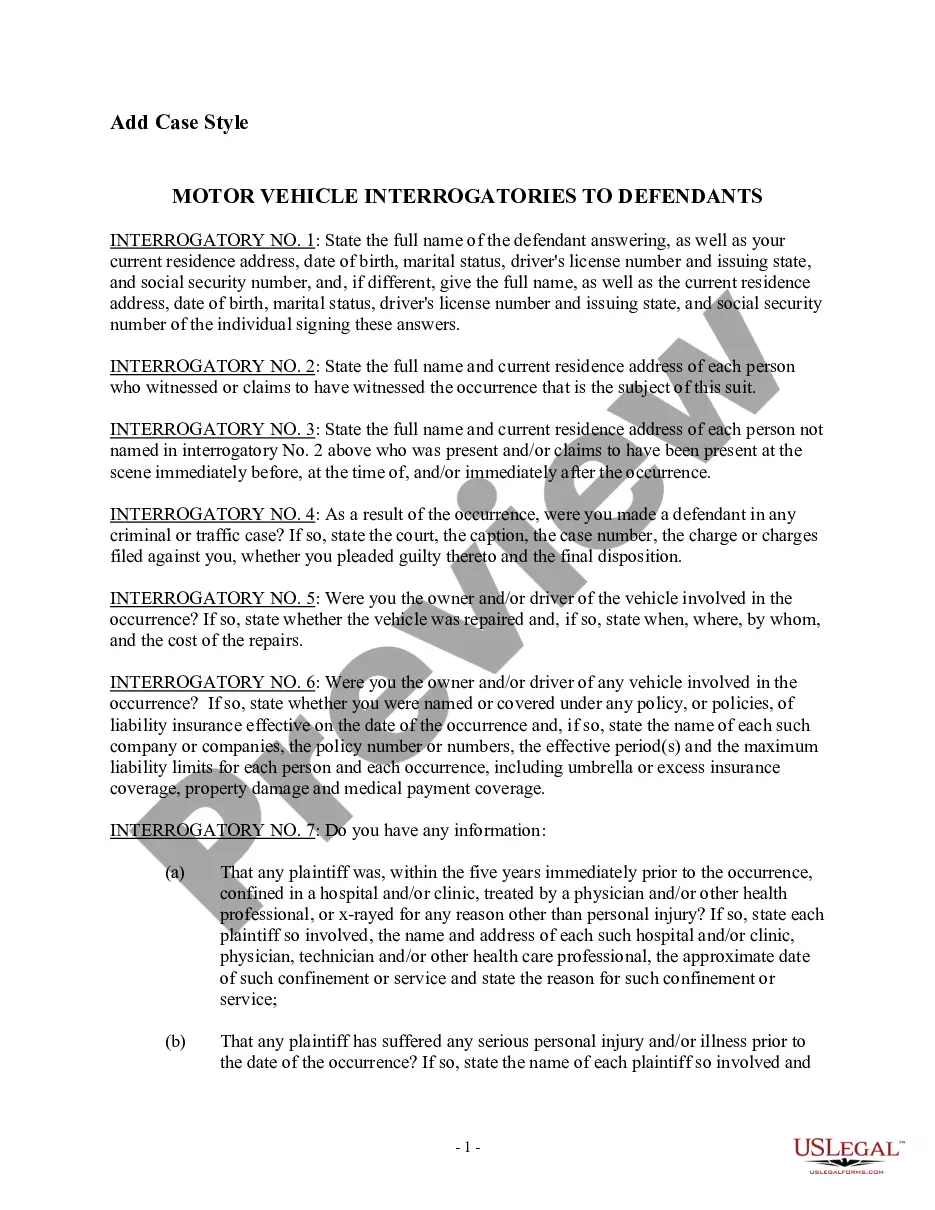

How to fill out Jury Instructions - Defendant's Failure To Testify?
Are you currently in a location where you require documents for either business or personal purposes daily.
There are numerous legal document templates available online, but finding reliable ones can be challenging.
US Legal Forms provides thousands of form templates, including the Wisconsin Jury Instructions - Defendant's Failure to Testify, designed to comply with federal and state regulations.
Utilize US Legal Forms, the most extensive collection of legal forms, to save time and avoid mistakes.
The service offers professionally crafted legal document templates that can be used for various purposes. Create an account on US Legal Forms and start simplifying your life.
- If you are already familiar with the US Legal Forms website and have an account, simply Log In.
- Then, you can download the Wisconsin Jury Instructions - Defendant's Failure to Testify template.
- If you do not have an account and wish to use US Legal Forms, follow these steps.
- Find the form you need and ensure it is for the correct city/state.
- Use the Review button to inspect the form.
- Check the details to confirm that you have selected the correct form.
- If the form is not what you are looking for, use the Lookup field to find the form that meets your needs and criteria.
- If you locate the correct form, click Purchase now.
- Choose the payment plan you want, fill in the required information to create your account, and complete the order using your PayPal or Visa or Mastercard.
- Select a suitable file format and download your copy.
- Access all the form templates you have purchased in the My documents section. You can obtain another copy of the Wisconsin Jury Instructions - Defendant's Failure to Testify at any time, if needed. Just click on the necessary form to download or print the document template.
Form popularity
FAQ
The Fifth Amendment breaks down into five rights or protections: the right to a jury trial when you're charged with a crime, protection against double jeopardy, protection against self-incrimination, the right to a fair trial, and protection against the taking of property by the government without compensation.
' The Court holds that upon a defendant's proper request, a state trial judge has a constitutional obligation to instruct the jury that no adverse inference is to be drawn from the defendant's failure to testify.
The attorney general?in most states and in most cases, the duty to preserve evidence remains even after a defendant has been convicted. Therefore, the duty applies to a state's Attorney General's office (which typically handles appeals and post-conviction matters).
It is not required that the government prove guilt beyond all possible doubt. A reasonable doubt is a doubt based upon reason and common sense and is not based purely on speculation. It may arise from a careful and impartial consideration of all the evidence, or from lack of evidence.
Invoke the their Fifth Amendment protection. The Framers included this amendment to protect both the guilty and the innocent. And, in a criminal case, the defendant's refusal to testify cannot be used against him. The jury is specifically instructed that they are to draw no adverse conclusions from this fact.
Scholars consider the Fifth Amendment as capable of breaking down into the following five distinct constitutional rights: The right to indictment by the grand jury before any criminal charges for felonious crimes. A prohibition on double jeopardy. A right against forced self-incrimination.
The judge may or may not order the defendant to be released. Really depends on circumstances involving the mistrial. If the judge is highly upset with the prosecution he may order the defendant to be released, probably with conditions, as the matter has not been settled.
Party to a Crime Section 939.05 of the Criminal Code of Wisconsin provides that whoever is concerned in the commission of a crime is a party to that crime and may be convicted of that crime although that person did not directly commit it.