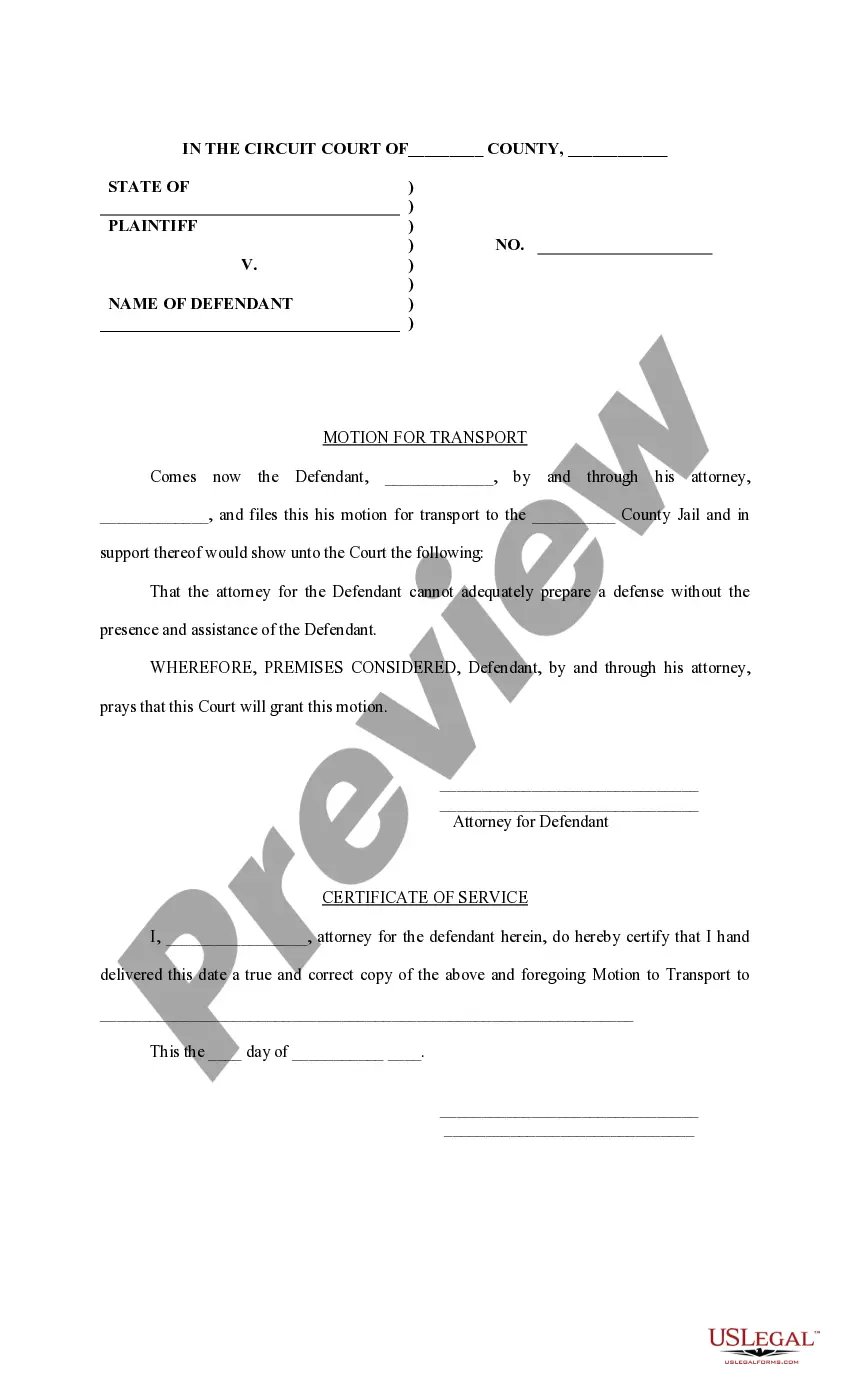
Wisconsin Motion for Transport
Description
Get your form ready online
Our built-in tools help you complete, sign, share, and store your documents in one place.
Make edits, fill in missing information, and update formatting in US Legal Forms—just like you would in MS Word.
Download a copy, print it, send it by email, or mail it via USPS—whatever works best for your next step.
Sign and collect signatures with our SignNow integration. Send to multiple recipients, set reminders, and more. Go Premium to unlock E-Sign.
If this form requires notarization, complete it online through a secure video call—no need to meet a notary in person or wait for an appointment.
We protect your documents and personal data by following strict security and privacy standards.

Make edits, fill in missing information, and update formatting in US Legal Forms—just like you would in MS Word.

Download a copy, print it, send it by email, or mail it via USPS—whatever works best for your next step.

Sign and collect signatures with our SignNow integration. Send to multiple recipients, set reminders, and more. Go Premium to unlock E-Sign.

If this form requires notarization, complete it online through a secure video call—no need to meet a notary in person or wait for an appointment.

We protect your documents and personal data by following strict security and privacy standards.
Looking for another form?



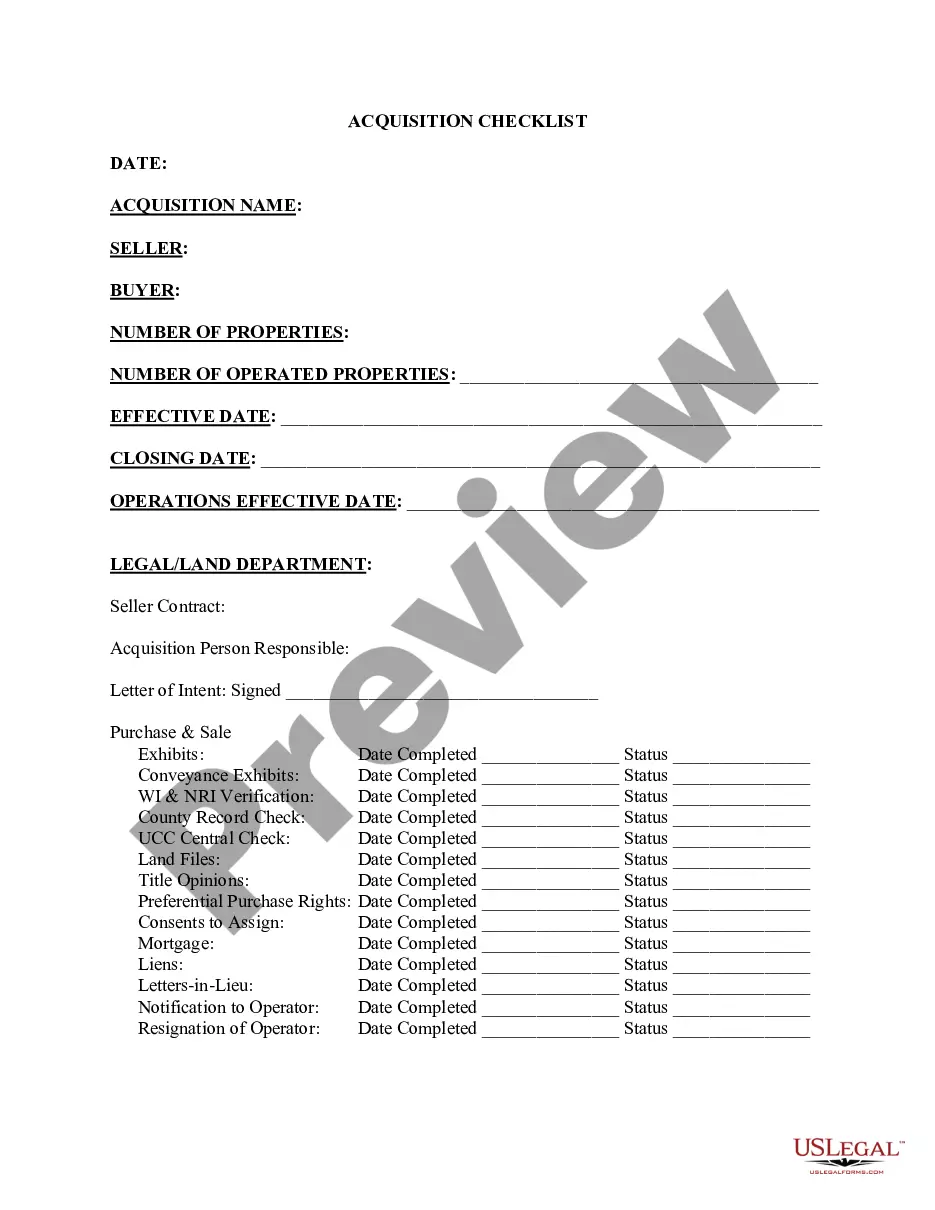
How to fill out Motion For Transport?
It is feasible to spend hours online searching for the legal document template that satisfies the state and federal criteria you require. US Legal Forms offers thousands of legal templates that have been reviewed by experts.
You can easily download or print the Wisconsin Motion for Transport from our services. If you already possess a US Legal Forms account, you can Log In and click on the Acquire button. After that, you can complete, modify, print, or sign the Wisconsin Motion for Transport. Every legal document template you obtain is yours indefinitely.
To obtain another copy of any acquired document, visit the My documents tab and click on the relevant option. If you are using the US Legal Forms website for the first time, follow the simple instructions below: First, ensure that you have selected the correct document template for the state/city you choose. Review the document outline to confirm you have chosen the appropriate form. If available, utilize the Review button to browse through the document template as well.
Utilize professional and state-specific templates to address your business or personal needs.
- To find another version of your document, use the Search field to locate the template that meets your needs and specifications.
- Once you have found the template you want, click Get now to proceed.
- Choose the pricing plan you prefer, enter your details, and register for an account on US Legal Forms.
- Complete the transaction. You can use your credit card or PayPal account to pay for the legal document.
- Select the format of your document and download it to your device.
- Make adjustments to your document if necessary. You can complete, edit, sign, and print the Wisconsin Motion for Transport.
- Access and print thousands of document templates using the US Legal Forms website, which offers the largest collection of legal forms.
Form popularity
FAQ
Necessary for a Chapter 51 commitment: that the subject has a mental illness, is dangerous to him/herself or others, and is treatable. The Court makes these findings based on the reports and/or testimony of the psychiatrists and/or psychologists and any relevant testimony from witnesses. hearing.
The petition must include notarized statements from three adults that describe the person's dangerous or violent behavior. All three statements must tell about events that the witnesses have personally seen within the past 60 days leading up to the petition.
Emergency Detention: in Wisconsin, emergency detention is used when a person is a significant danger to themselves or others, and the police are contacted. The police will take the person into custody, and there will be a 72-hour hold, during which the party will be evaluated at a mental health facility.
?[Chapter] 55 was specifically tailored by the legislature to provide for long-term care of individuals with incurable disorders, while ch. 51 was designed to facilitate the treatment of mental illnesses suffered by those capable of rehabilitation,? wrote Justice Michael Gableman. The court explained that ch.
Emergency Detentions - (51.15, WI STATS) These are initiated when an individual is presently a danger to themselves or others. The detention is obtained by contacting law enforcement.
Pursue legal, administrative and other appropriate remedies to ensure the protection of the rights of persons with developmental disabilities or mental illness and to provide information on and referral to programs and services addressing the needs of persons with developmental disabilities or mental illness.
Chapter 51 of the Wisconsin Statutes restricts availability of protected health information. This information can only be released to parties producing proper authorization and authority. In all other cases a court order is required to access this information. emergency phone call to authorities.