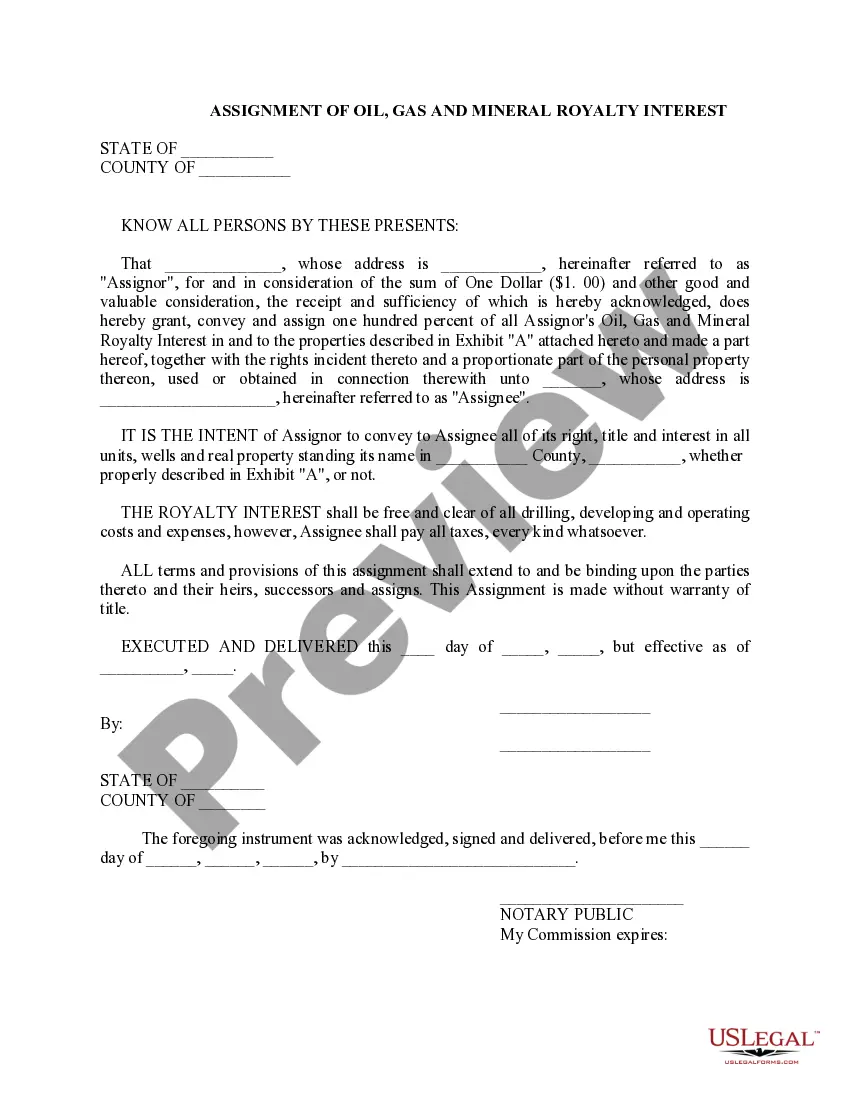
Wisconsin Oil, Gas and Mineral Royalty Transfer
Description
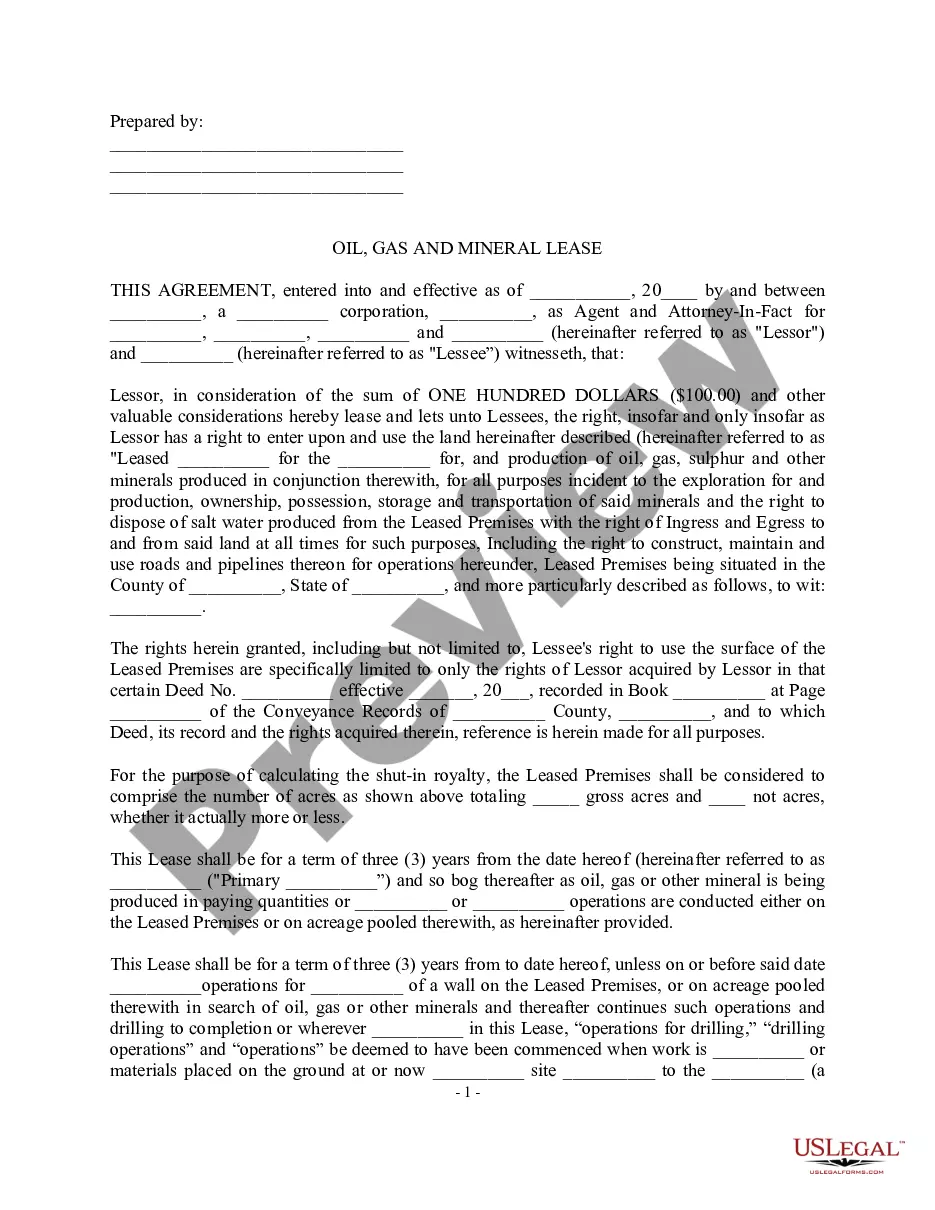
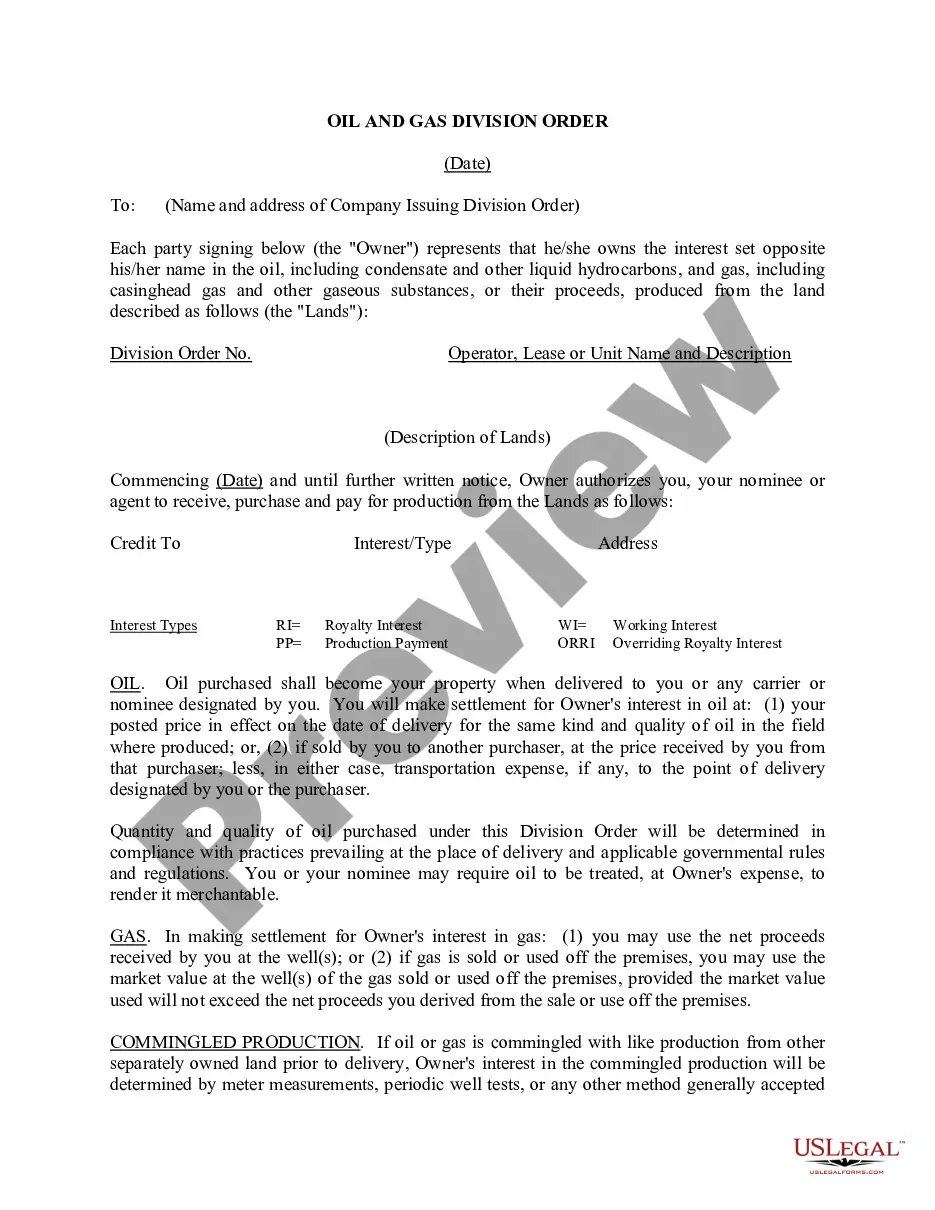
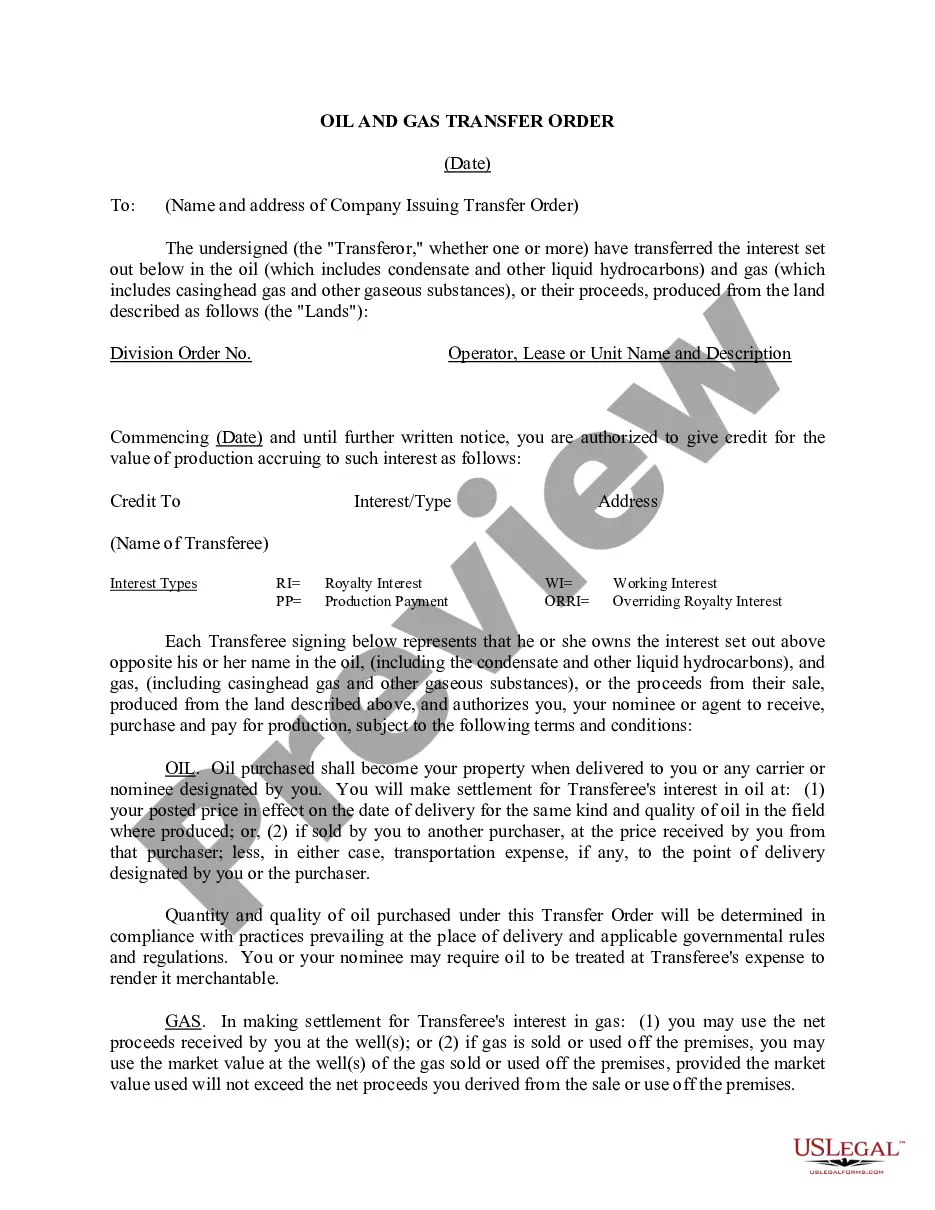
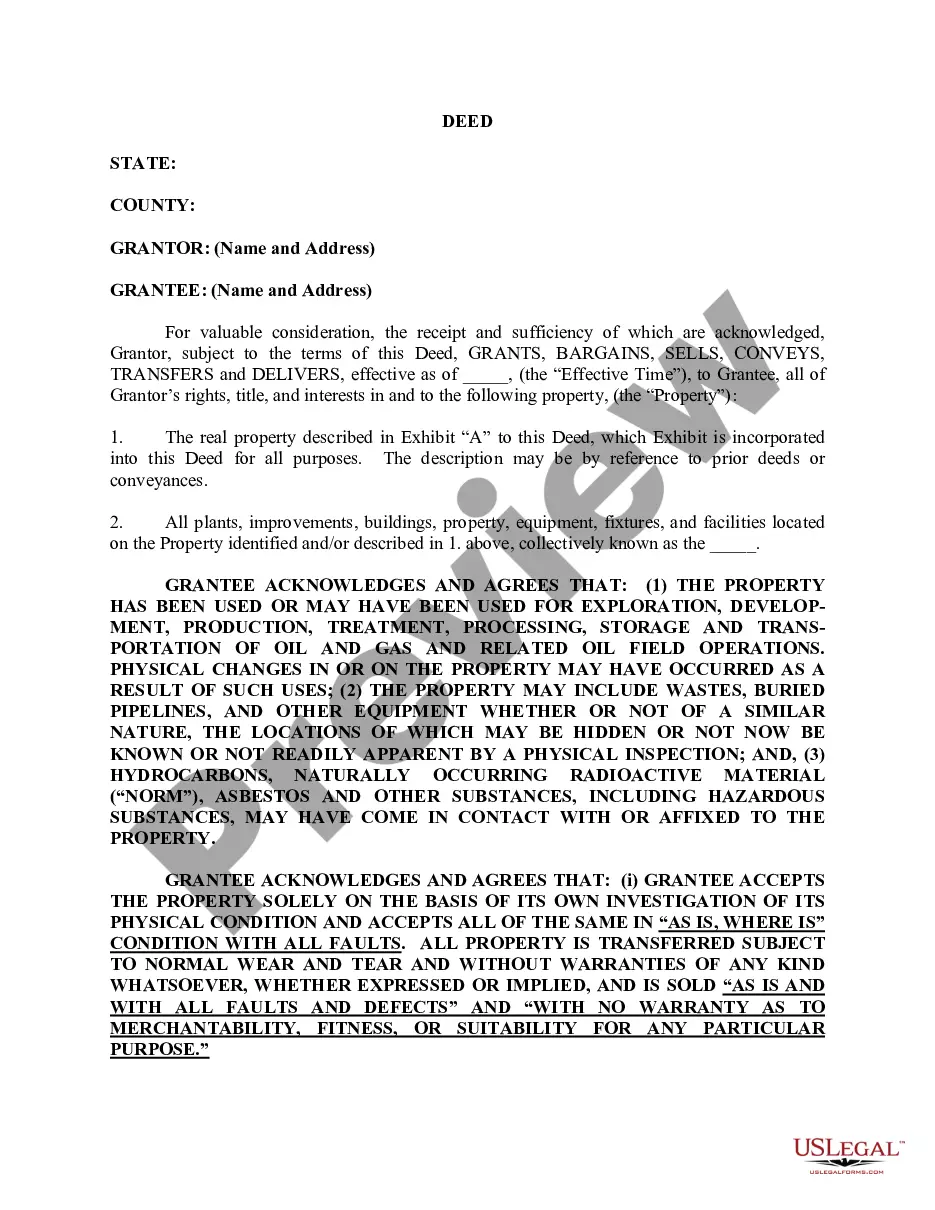


How to fill out Oil, Gas And Mineral Royalty Transfer?
You can spend hours online trying to locate the proper document format that meets the federal and state requirements you need.
US Legal Forms provides a vast array of legal forms that can be reviewed by experts.
You can download or print the Wisconsin Oil, Gas and Mineral Royalty Transfer from the platform.
If available, use the Review button to examine the document format as well. If you wish to find another version of your form, utilize the Search field to locate the format that fulfills your needs and specifications. Once you have found the format you require, click Buy now to proceed. Select the pricing plan you need, enter your details, and register for your account on US Legal Forms. Complete the transaction. You can use your Visa or Mastercard or PayPal account to pay for the legal form. Find the format of your document and download it to your device. Make changes to your document if possible. You can fill out, edit, and sign and print the Wisconsin Oil, Gas and Mineral Royalty Transfer. Download and print a multitude of document templates using the US Legal Forms website, which offers the largest selection of legal forms. Utilize professional and state-specific templates to address your business or personal needs.
- If you already possess a US Legal Forms account, you can Log In and click the Download button.
- Subsequently, you can fill out, modify, print, or sign the Wisconsin Oil, Gas and Mineral Royalty Transfer.
- Every legal document format you purchase is yours permanently.
- To obtain another copy of the purchased form, navigate to the My documents tab and click the corresponding button.
- If you are using the US Legal Forms website for the first time, follow the simple instructions below.
- First, ensure that you have selected the correct document format for your chosen state/city.
- Review the form details to confirm you have chosen the right one.
Form popularity
FAQ
The legal process for inheriting royalties involves obtaining a deed from the deceased's estate and transferring ownership.
If you sign a mineral rights lease, then you are on your way to earning oil and gas royalties. As a mineral rights owner, you can receive royalty compensation. This is from the sale of crude oil, natural gas, and other valuable resources found on your property.
Leases less than 99 years are not conveyances of real property per state law (sec. 77.21(1), Wis. Stats.). If an original lease of 50 years expires and is then renewed for another 50 years, it is considered to be less than 99 years and is exempt from transfer return and the transfer fee.
It represents the amount the resource owner is expected to receive from the sale of the oil and gas. Royalty rates are between 12.5% to 15%. Price per Unit: This is the current market price of oil and gas at a particular period.
It really comes down to your personal decision. Figuring out whether to sell oil and gas royalties can be challenging for some. Here are some of the most common reasons for selling an oil and gas royalty: Taxes: You will save substantial money if you inherited mineral rights by selling your oil royalties.
The royalty percentage is usually 12.5% to 15% but can change based on regional regulations or negotiations. Types of Leases: There are different types of oil and gas leases, and they affect royalty calculations differently.
Mineral rights may also be subject to transfers by way of a will. In the event of death, the right to the minerals passes to the person(s) named as beneficiaries. In the absence of specific heirs, the mineral rights pass to the beneficiary of the residual surface estate and real estate.
Taxability of Inherited Mineral Rights If they are transferred through a will or estate plan, they are considered a part of the estate and are subject to taxation. If they are transferred through a lease, the value of the mineral rights may be taxable. However, this will depend on the terms of the lease agreement.