Wisconsin Affidavit of Domicile
Description
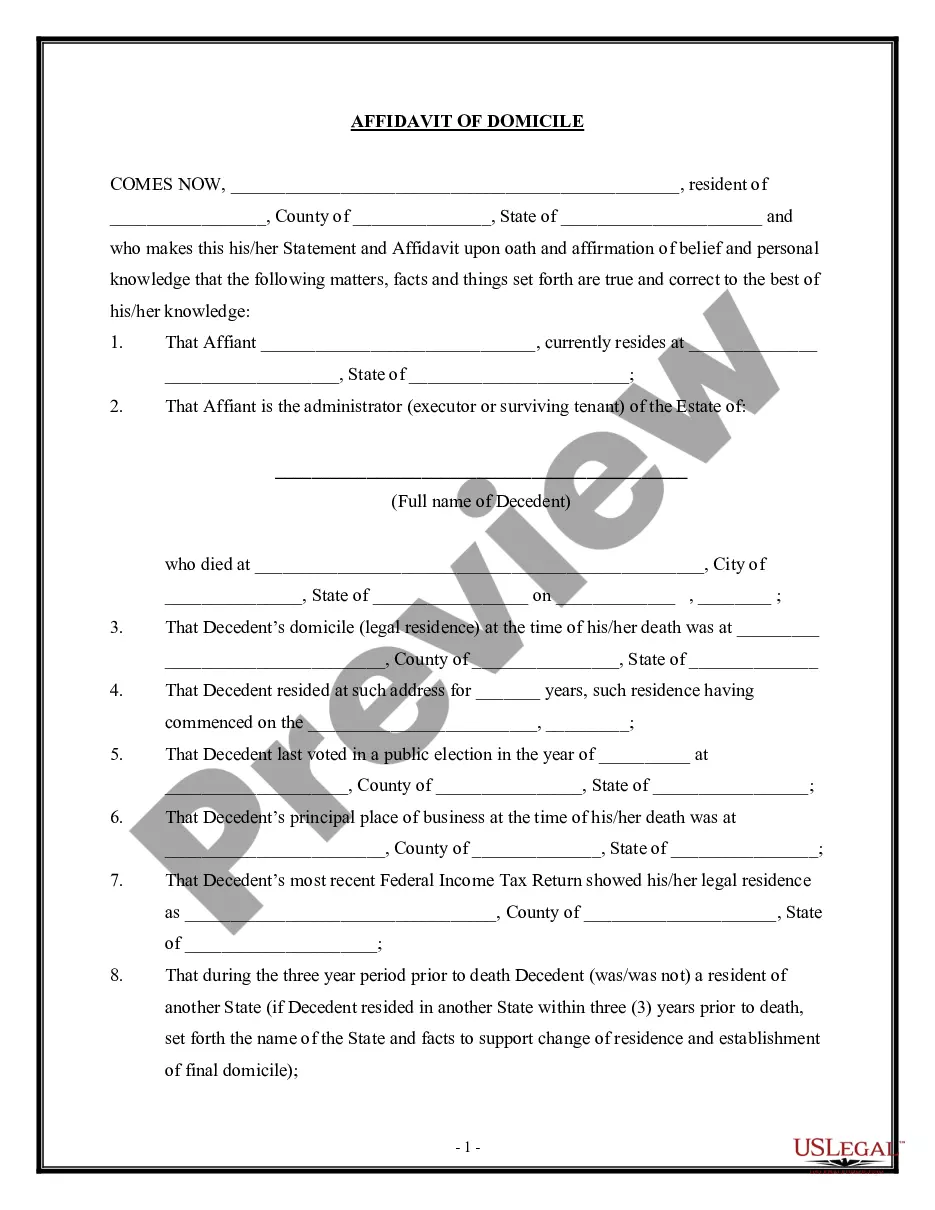
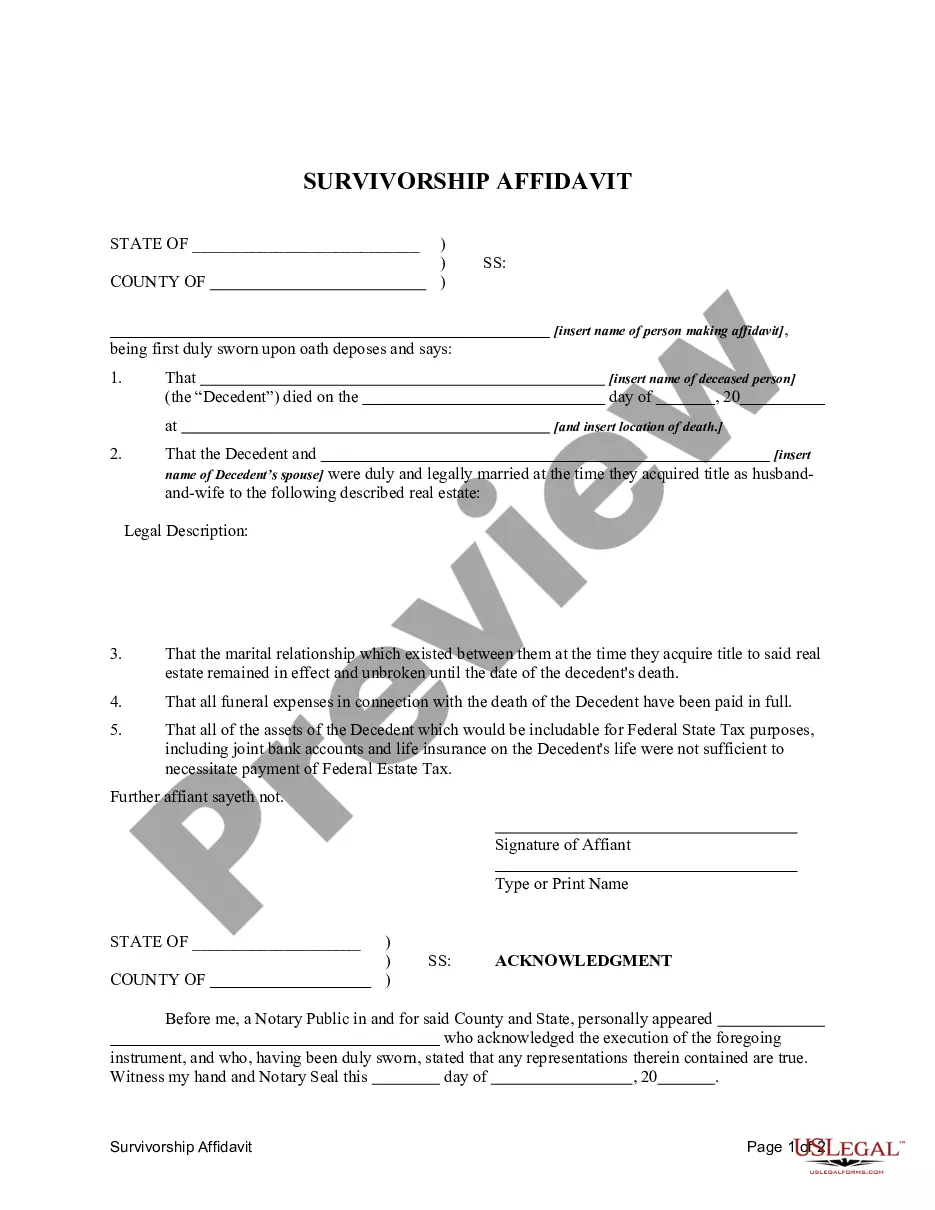
Get your form ready online
Our built-in tools help you complete, sign, share, and store your documents in one place.
Make edits, fill in missing information, and update formatting in US Legal Forms—just like you would in MS Word.
Download a copy, print it, send it by email, or mail it via USPS—whatever works best for your next step.
Sign and collect signatures with our SignNow integration. Send to multiple recipients, set reminders, and more. Go Premium to unlock E-Sign.
If this form requires notarization, complete it online through a secure video call—no need to meet a notary in person or wait for an appointment.
We protect your documents and personal data by following strict security and privacy standards.

Make edits, fill in missing information, and update formatting in US Legal Forms—just like you would in MS Word.

Download a copy, print it, send it by email, or mail it via USPS—whatever works best for your next step.

Sign and collect signatures with our SignNow integration. Send to multiple recipients, set reminders, and more. Go Premium to unlock E-Sign.

If this form requires notarization, complete it online through a secure video call—no need to meet a notary in person or wait for an appointment.

We protect your documents and personal data by following strict security and privacy standards.
Looking for another form?

How to fill out Affidavit Of Domicile?
If you need to finish, obtain, or produce legitimate document templates, utilize US Legal Forms, the largest collection of legal forms available online. Take advantage of the site's straightforward and user-friendly search to locate the documents you require. Various templates for business and personal purposes are organized by categories and states, or keywords. Utilize US Legal Forms to find the Wisconsin Affidavit of Domicile with just a few clicks.
If you are already a US Legal Forms customer, sign in to your account and click on the Download button to obtain the Wisconsin Affidavit of Domicile. You can also access forms you have previously downloaded in the My documents section of your account.
If you are using US Legal Forms for the first time, follow the steps below: Step 1. Ensure you have selected the form for the correct city/state. Step 2. Use the Preview option to review the form's content. Don’t forget to read the summary. Step 3. If you are not satisfied with the form, utilize the Search field at the top of the screen to find alternative versions of the legal form template. Step 4. Once you have found the form you need, click the Download now button. Choose the payment plan you prefer and enter your details to register for the account. Step 5. Process the transaction. You may use your Visa or MasterCard or PayPal account to finalize the transaction. Step 6. Select the format of the legal form and download it to your device. Step 7. Fill out, edit, and print or sign the Wisconsin Affidavit of Domicile.
Ensure you follow all instructions provided to maximize your experience on US Legal Forms.
Utilize the resources available to you for your legal documentation needs.
- Every legal document you download is yours indefinitely.
- You will have access to all forms you downloaded in your account.
- Click on the My documents section and select a form to print or download again.
- Complete and obtain, and print the Wisconsin Affidavit of Domicile using US Legal Forms.
- There are millions of professional and state-specific forms available for your business or personal needs.
- Make sure to follow the steps carefully for a smooth experience.
- Your satisfaction with the forms is our priority.
Form popularity
FAQ
Writing an affidavit of domicile involves stating your name, address, and confirming your intent to reside at that location. You should also include details about any relevant property or assets. Ensure you sign the document in front of a notary public to validate it. For guidance and templates, the US Legal platform provides helpful tools to streamline the creation of your Wisconsin Affidavit of Domicile.
A letter of domicile in Wisconsin serves as a formal declaration of your primary residence. It is often used to confirm where you live for legal purposes, such as tax filings or estate management. This document can be essential if you need to assert your residency status in various legal scenarios. To facilitate this process, consider using the US Legal platform, which offers resources and templates for creating a Wisconsin Affidavit of Domicile.
To obtain a domiciliary letter in Wisconsin, you should start by drafting a Wisconsin Affidavit of Domicile that includes your current address and relevant personal details. This letter typically requires signatures from witnesses or notarization to ensure its authenticity. You can find resources and templates on the US Legal Forms platform to help you create an effective domiciliary letter. By following the proper steps, you can secure your letter efficiently and accurately.
In Wisconsin, any individual who is a resident or has knowledge of the residence can complete a Wisconsin Affidavit of Domicile. This includes the property owner, a family member, or a legal representative. It is important to provide accurate information regarding the domicile to ensure the affidavit serves its purpose effectively. Utilizing a platform like US Legal Forms can simplify this process, providing templates and guidance tailored to your needs.
To be eligible for in-state tuition, a student must be a bona fide resident of Wisconsin for at least the 12 months immediately prior to enrollment, or must qualify as a resident for tuition purposes under one of the provisions in the Statutes that waives the 12-month requirement.
Domicile refers to someone's true, principal, and permanent home. In other words, the place where a person has physically lived, regards as home, and intends to return even if currently residing elsewhere. Determining where a party is domiciled is of particular importance in the field of civil procedure.
What Is the Difference Between a Residence and a Domicile? A residence is a location where you may live part-time or full-time. A domicile is your legal address, and your domicile is located in the state where you pay taxes.
Domicile is a fancy word for the place where you live. Whether it's a mansion on 5th Avenue or a tee-pee in the desert, if you live in it, it's your domicile.
Section 29.001(69) of the Wisconsin Statutes defines residency: "Resident" means a person who has maintained his or her place of permanent abode in this state for a period of 30 days immediately preceding his or her application for an approval.
What's the Difference between Residency and Domicile? Residency is where one chooses to live. Domicile is more permanent and is essentially somebody's home base. Once you move into a home and take steps to establish your domicile in one state, that state becomes your tax home.
