Wisconsin Affidavit of No Probate
Overview of this form
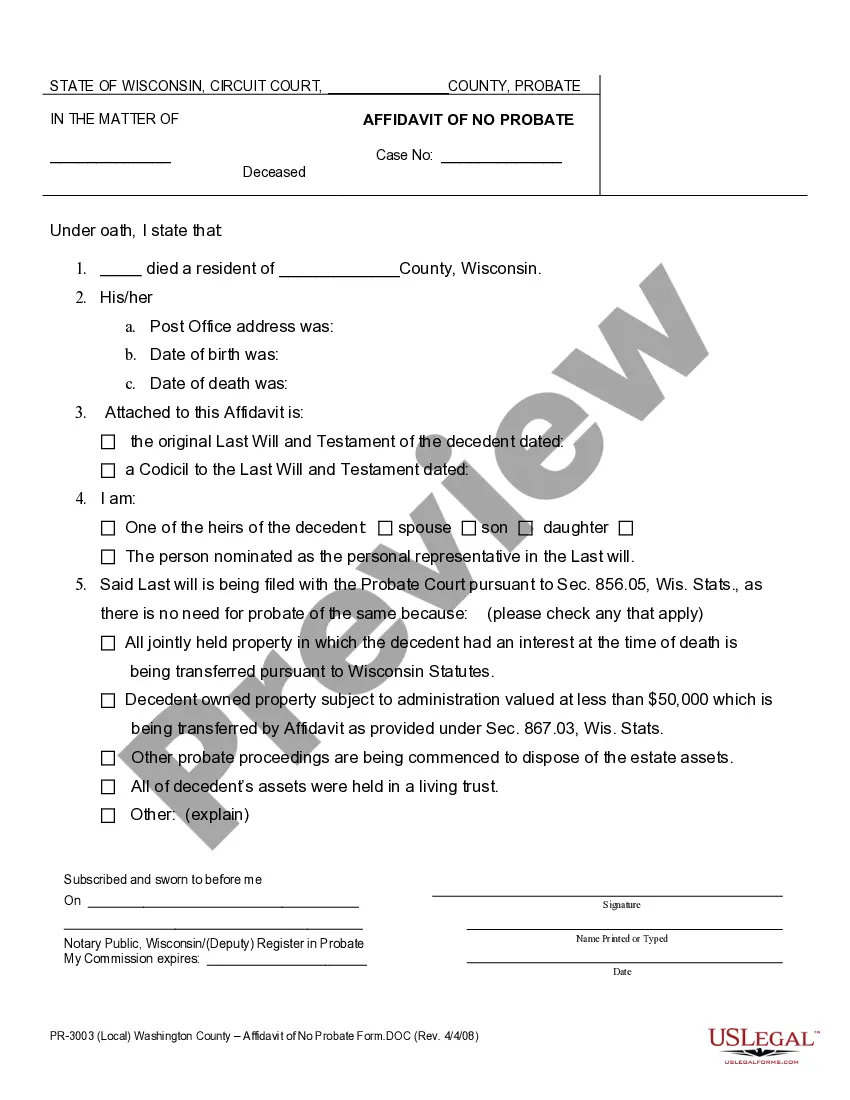
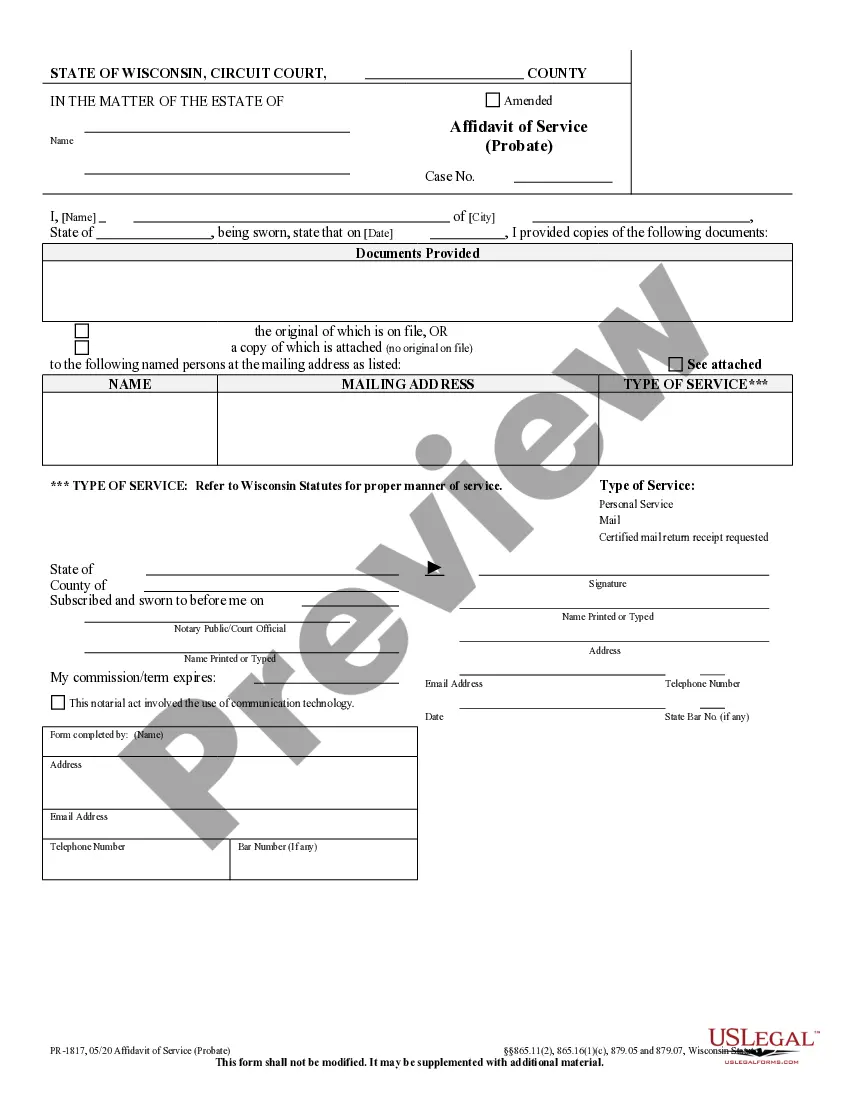
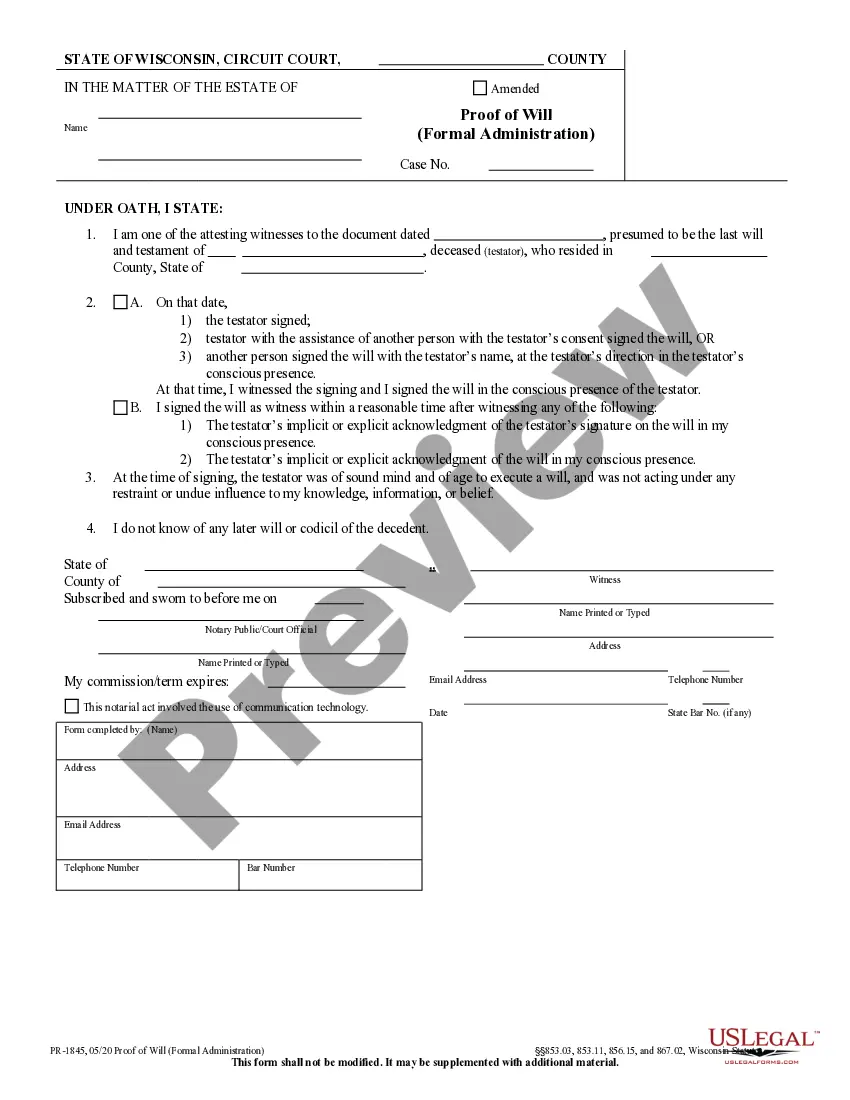
The Affidavit of No Probate is a legal document used in Wisconsin to facilitate the transfer of a decedent's property without the need for formal probate proceedings. This form is particularly relevant when the total gross value of the assets does not exceed $50,000. Unlike traditional probate processes, which can be lengthy and complex, this affidavit allows heirs, trustees, or designated personal representatives to collect the assets and settle the decedent's affairs efficiently.
Key components of this form
- Decedent's name and details including date of birth and death.
- Affirmation of residence in the county at the time of death.
- Identification of the affiant, including their relationship to the decedent.
- References to any attached will or codicils.
- Indication of reasons for filing the affidavit, selecting from specified options.
- Notarization section for legal validation.

Situations where this form applies
This form is commonly used in situations where a deceased person leaves behind property that has a total gross value of $50,000 or less, and the heirs do not wish to go through the standard probate process. Scenarios may include collecting bank accounts, personal property, or other small assets, where the estate is simple, and an expedited process is desired.
Who needs this form
- Heirs of the decedent such as spouses, children, or other relatives.
- Trustees of any revocable trusts established by the decedent.
- Individuals nominated as personal representatives in the decedent's will.
Steps to complete this form
- Identify and enter the full name of the deceased and relevant dates.
- State the affiant's relationship to the decedent.
- Attach any relevant wills or codicils as needed.
- Select applicable reasons for filing the affidavit from the provided options.
- Sign the affidavit in the presence of a notary public.
Does this form need to be notarized?
Yes, this form must be notarized to be legally valid. The signature should be witnessed by a notary public to confirm its authenticity, ensuring that the affidavit meets the legal requirements of Wisconsin law.
Get your form ready online
Our built-in tools help you complete, sign, share, and store your documents in one place.
Make edits, fill in missing information, and update formatting in US Legal Forms—just like you would in MS Word.
Download a copy, print it, send it by email, or mail it via USPS—whatever works best for your next step.
Sign and collect signatures with our SignNow integration. Send to multiple recipients, set reminders, and more. Go Premium to unlock E-Sign.
If this form requires notarization, complete it online through a secure video call—no need to meet a notary in person or wait for an appointment.
We protect your documents and personal data by following strict security and privacy standards.

Make edits, fill in missing information, and update formatting in US Legal Forms—just like you would in MS Word.

Download a copy, print it, send it by email, or mail it via USPS—whatever works best for your next step.

Sign and collect signatures with our SignNow integration. Send to multiple recipients, set reminders, and more. Go Premium to unlock E-Sign.

If this form requires notarization, complete it online through a secure video call—no need to meet a notary in person or wait for an appointment.

We protect your documents and personal data by following strict security and privacy standards.
Typical mistakes to avoid
- Failing to accurately identify the decedent's information, including date of death.
- Not providing a relationship to the decedent or selecting the incorrect affiant.
- Omitting necessary signatures or notarization.
Benefits of completing this form online
- Convenient access to the form enables users to fill it out at their own pace.
- Editable templates allow for accurate completion before printing.
- Reliable and compliant forms created by licensed attorneys ensure legal validity.
Looking for another form?
Form popularity
FAQ
Pursuant to Wisconsin State Statute Section 867.03, Transfer by Affidavit is used for solely owned property within this state valued under $50,000. Any heir, trustee, or person who was guardian, may collect and transfer the solely owned assets by completing an affidavit in duplicate.
In Wisconsin, you can make a living trust to avoid probate for virtually any asset you own?real estate, bank accounts, vehicles, and so on. You need to create a trust document (it's similar to a will), naming someone to take over as trustee after your death (called a successor trustee).
If the total value of your estate is under $50,000 then the estate does not need to be probated and can be settled without court involvement.
Some strategies to consider if you wish to avoid probate court include: Transfer Property to Revocable Trusts. Reduce Your Estate. Create A Will. Name Beneficiaries. Take Advantage of Joint Ownership.
If an estate with a will exceeds the small estate threshold in Wisconsin, then it must move forward under probate before the assets of the estate can be transferred to the deceased person's heirs or beneficiaries.
How to Avoid Probate in Wisconsin: Simple Strategies That Work Create a Living Trust.Name Beneficiaries.Payable-on-Death Beneficiaries.Transfer-on-Death Deeds.Joint Property Ownership.Small Estates.Designating a Power of Attorney.
The list can be mailed to the Wisconsin Department of Health Services Estate Recovery Program P.O. Box 309 Madison, WI 53701-0309.
In Wisconsin, Small Estate Affidavits are commonly referred to as Transfer Affidavits. If you are dealing with someone's estate after they have passed, and there is $50,000 or less in probate assets, a transfer affidavit may be a good way to avoid probate, save time, and make the whole process easier for you.