Wisconsin Letter to Lienholder to Notify of Trust
About this form
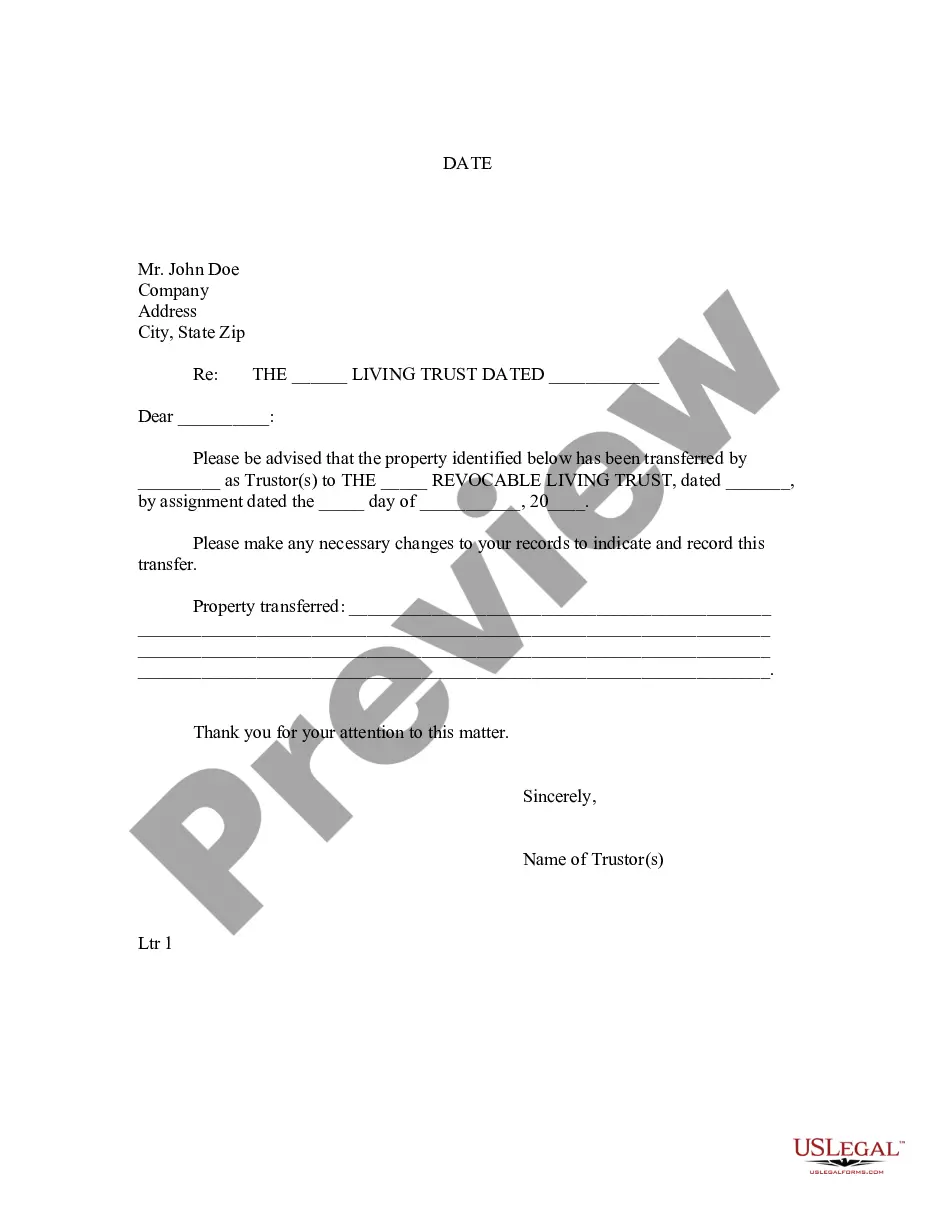
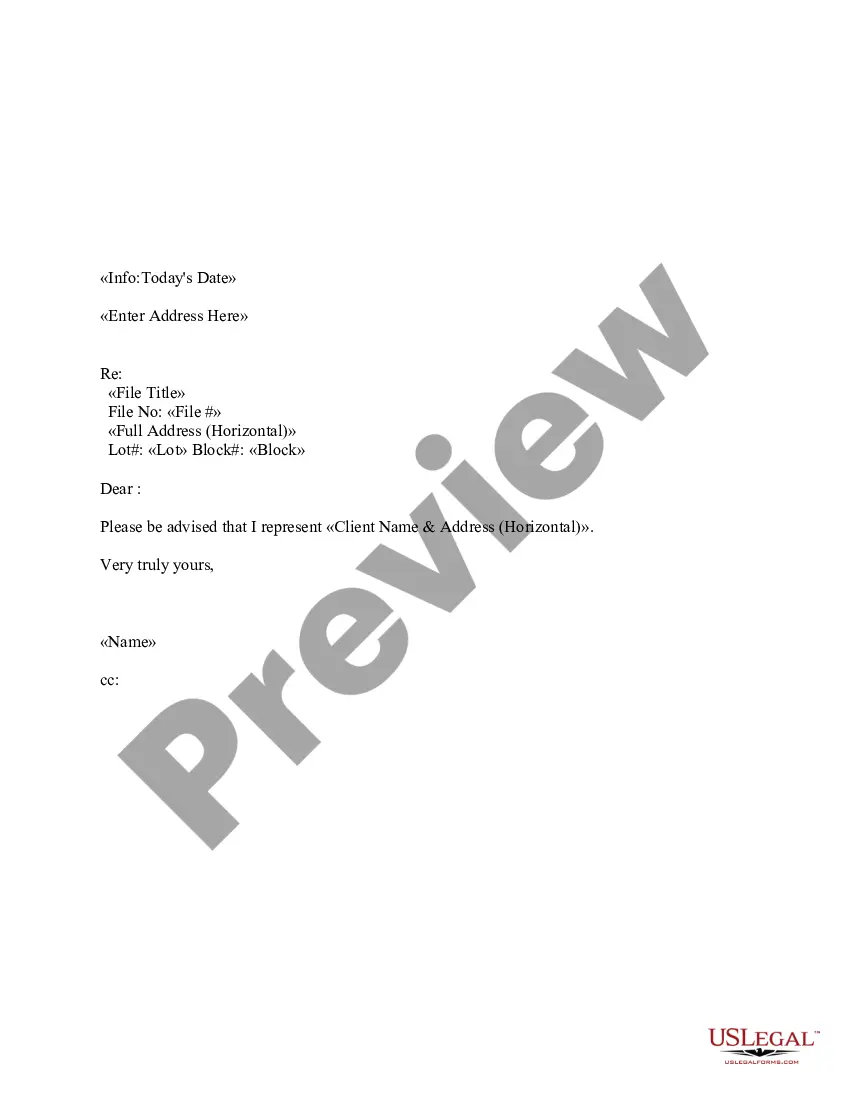
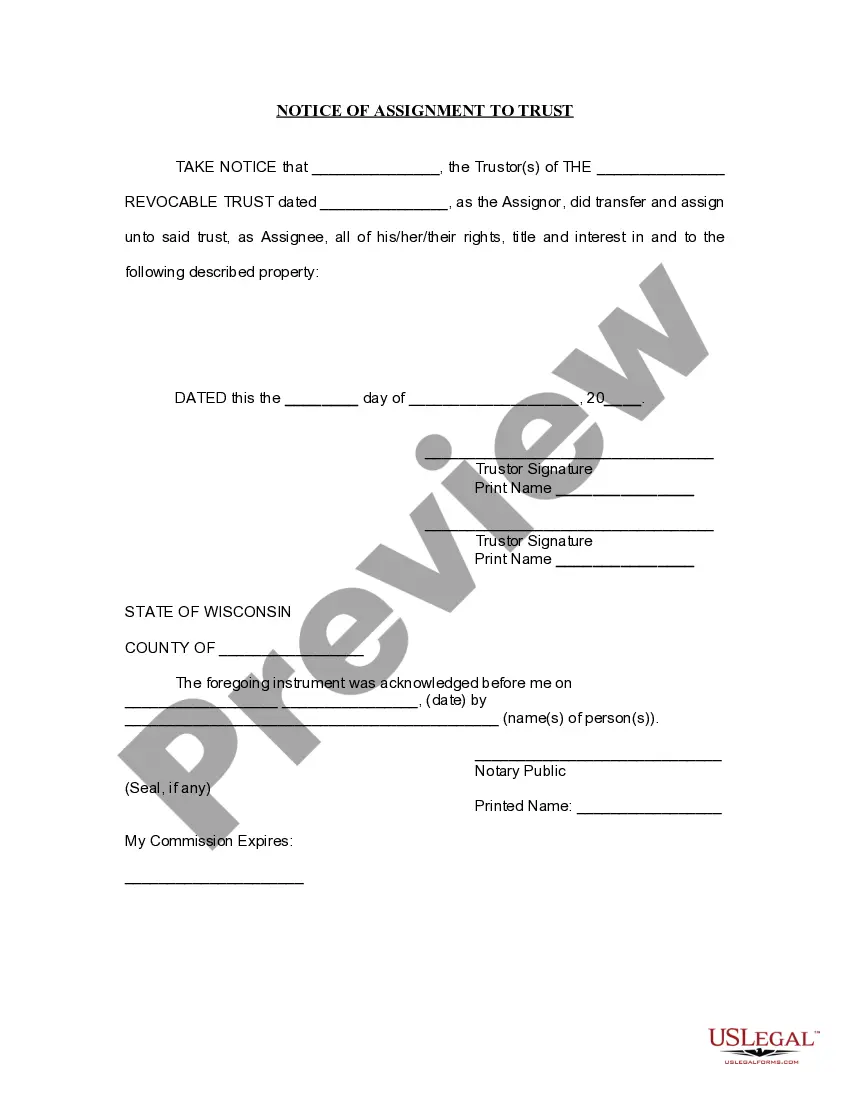
The Letter to Lienholder to Notify of Trust is a document used to inform a lienholder that a property has been placed into a living trust. This form is essential for ensuring that the lienholder updates their records to reflect the new ownership status of the property held within the trust. Unlike general notification letters, this form is tailored to specifically recognize trust transfer, which aids in the estate planning process.
Key parts of this document
- Date of the letter
- Details of the lienholder, including name and address
- Identification of the living trust and trustor(s)
- Specific property details being transferred to the trust
- Signature of the trustor(s)
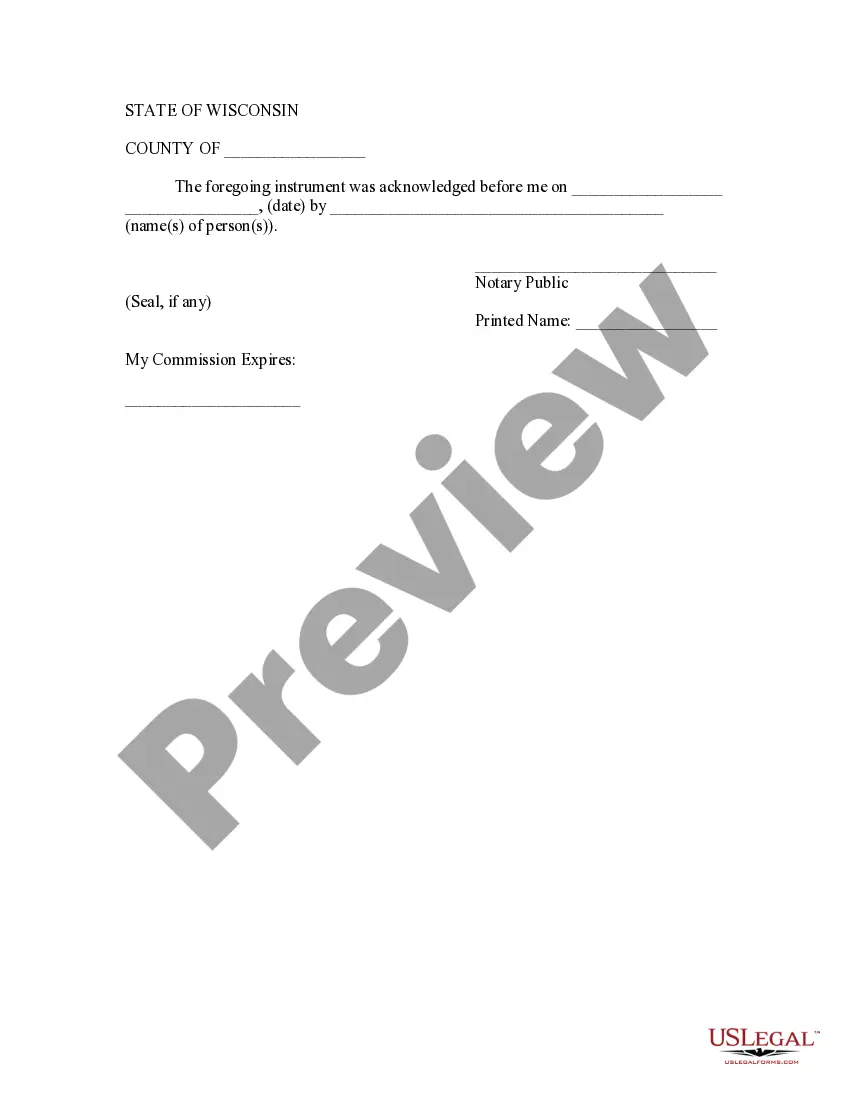
- Notary acknowledgment section
Common use cases
This form should be used when a property owner decides to change the ownership of their property to a living trust. It is particularly useful during estate planning to ensure the smooth transition of assets. Common scenarios include setting up a trust for asset protection, probate avoidance, or facilitating the management of the property by the trust beneficiaries.
Who this form is for
- Property owners who have established a living trust
- Individuals looking to inform their lienholder of a trust transfer
- Estate planners and lawyers assisting clients with asset transfer
- Trustors who wish to ensure compliance with lien requirements
Steps to complete this form
- Enter the date at the top of the letter.
- Fill in the lienholder's name and address in the designated fields.
- Specify the name of the living trust and the date it was created.
- List the property that has been transferred to the living trust.
- Sign the letter and have it notarized as needed.
Is notarization required?
This form must be notarized to be legally valid. Proper notarization helps authenticate the identities of the trustor(s) and provides legal protection during the transfer process. US Legal Forms offers an integrated online notarization service, making it convenient and secure to complete this requirement.
Get your form ready online
Our built-in tools help you complete, sign, share, and store your documents in one place.
Make edits, fill in missing information, and update formatting in US Legal Forms—just like you would in MS Word.
Download a copy, print it, send it by email, or mail it via USPS—whatever works best for your next step.
Sign and collect signatures with our SignNow integration. Send to multiple recipients, set reminders, and more. Go Premium to unlock E-Sign.
If this form requires notarization, complete it online through a secure video call—no need to meet a notary in person or wait for an appointment.
We protect your documents and personal data by following strict security and privacy standards.

Make edits, fill in missing information, and update formatting in US Legal Forms—just like you would in MS Word.

Download a copy, print it, send it by email, or mail it via USPS—whatever works best for your next step.

Sign and collect signatures with our SignNow integration. Send to multiple recipients, set reminders, and more. Go Premium to unlock E-Sign.

If this form requires notarization, complete it online through a secure video call—no need to meet a notary in person or wait for an appointment.

We protect your documents and personal data by following strict security and privacy standards.
Avoid these common issues
- Failing to include all property details, which can lead to confusion.
- Not updating the lienholder with the trust information promptly.
- Overlooking the notary requirement, if applicable.
- Leaving out the signatures of all trustors involved in the property transfer.
Advantages of online completion
- Quick and easy access to a professionally drafted legal document.
- Editable template allows personalization to suit specific needs.
- Provides a reliable, secure means to handle important legal notifications.
- Instant download ensures you can act promptly in informing your lienholder.
Quick recap
- The Letter to Lienholder to Notify of Trust is essential for notifying lenders of property transfers to a living trust.
- Completing this form accurately helps protect your estate planning intentions.
- Always ensure notarization occurs for legal validity.
- Utilizing this form online offers convenience and security.
Looking for another form?
Form popularity
FAQ
The car (vehicle) lien release form is a document that is used by a lending institution or entity after a borrower has paid the loan in full and the borrower would like to retrieve the title to their vehicle.
Lien Holder Authorization Letter A letter from the lien holder, giving permission for the vehicle to be relocated.
Write your name and return address in the top three lines of the letter. Insert the complete date (month, day, year). Enter the recipient's name, title, company name and address on the next five lines. Greet the reader by writing "Dear (recipient's name):" Skip two lines. State the subject in a subject line.
The lender will also notify the Department of Motor Vehicles (DMV) that the loan has been paid in full. If you don't receive the lien release, submit a request to your lender for proof that the loan has been satisfied. This request can be made through the DMV or directly to the lender.
On July 30, 2012, Wisconsin joined other states in becoming a title to lien holder (lender) state.
It basically states that you've paid the subcontractor what is owed, they accept the payment in full, and they waive the right to put a lien on your property. Simply present this form to the subcontractor with your payment and ask them to sign it. Make sure you get their signature!
Depending on state laws, paper titles are generally mailed and electronic titles and/or liens are released to the motor vehicle agency approximately 10 business days after the payoff is received. Allow 15-30 days for receipt of your title based on mail time and/or motor vehicle agency process.
A Lien Release (also considered a Lien Cancellation or Release of Lien) is a legally binding document that is sent by the current lien holder, the individual who has leased the property or provided payment to secure the property, that informs any debt in relation to that property has been fulfilled and they relinquish
Any title with a lien (loan) listed on or after July 30, 2012, is sent to the lien holder. Lien holders may receive titles in a paper or electronic format. Owners of vehicles receive a Confirmation of Ownership200b and will receive the actual title when all liens are paid off.