Wisconsin Revocable Living Trust for Husband and Wife with No Children
Understanding this form
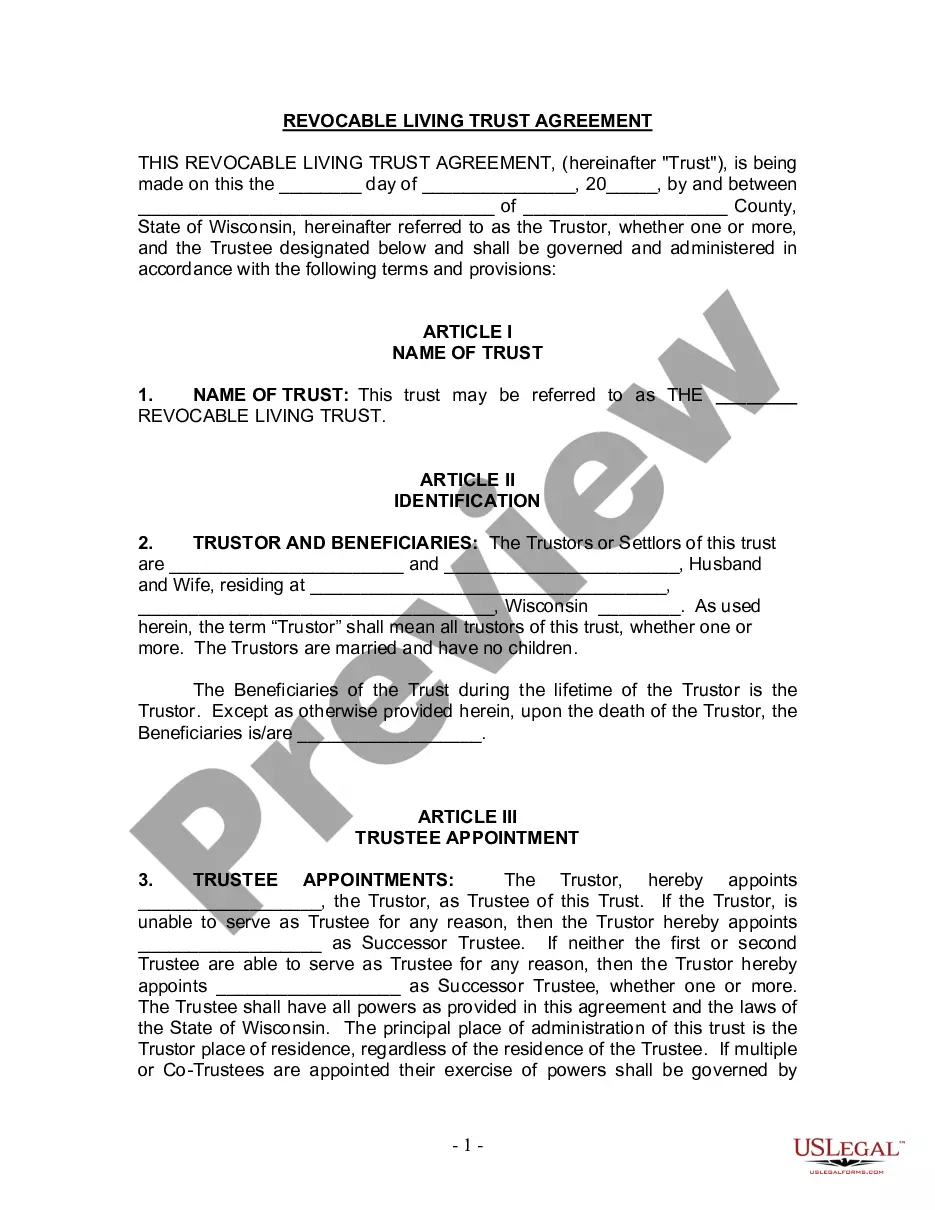
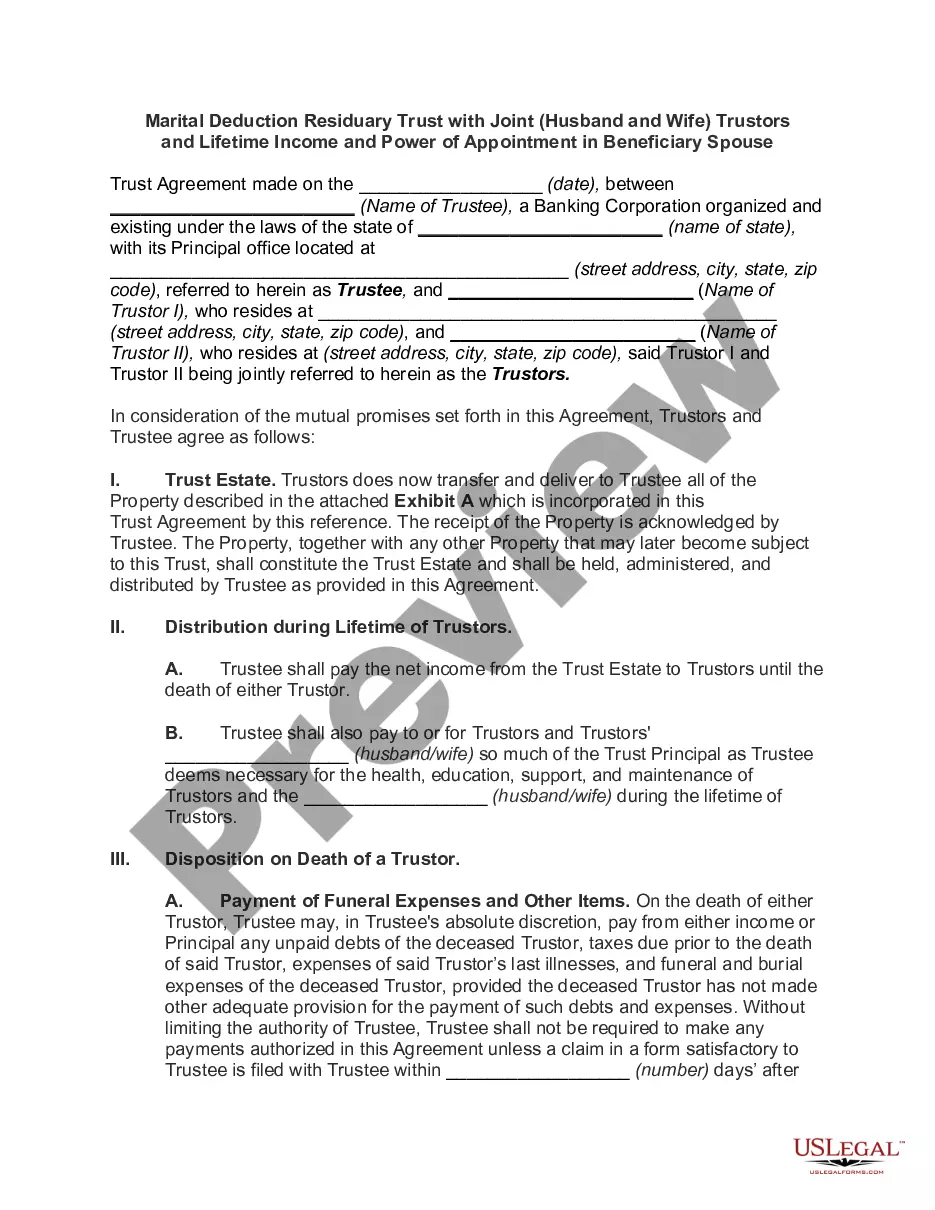
The Revocable Living Trust for Husband and Wife with No Children is a legal document designed to manage and distribute assets during the lifetime of the creators (Trustors). This form allows couples without children to easily control their assets and streamline the transfer of property upon death, bypassing probate. Unlike a will, which only takes effect after death, a living trust is operational while the Trustors are alive, offering them the flexibility to amend it as their needs or circumstances change.
Key parts of this document
- Name of the Trust: Specifies how the trust will be named.
- Trustors and Beneficiaries: Identifies the Trustors and the beneficiaries, typically the Trustors themselves.
- Trustee Appointment: Designates the initial Trustee and any successor Trustees.
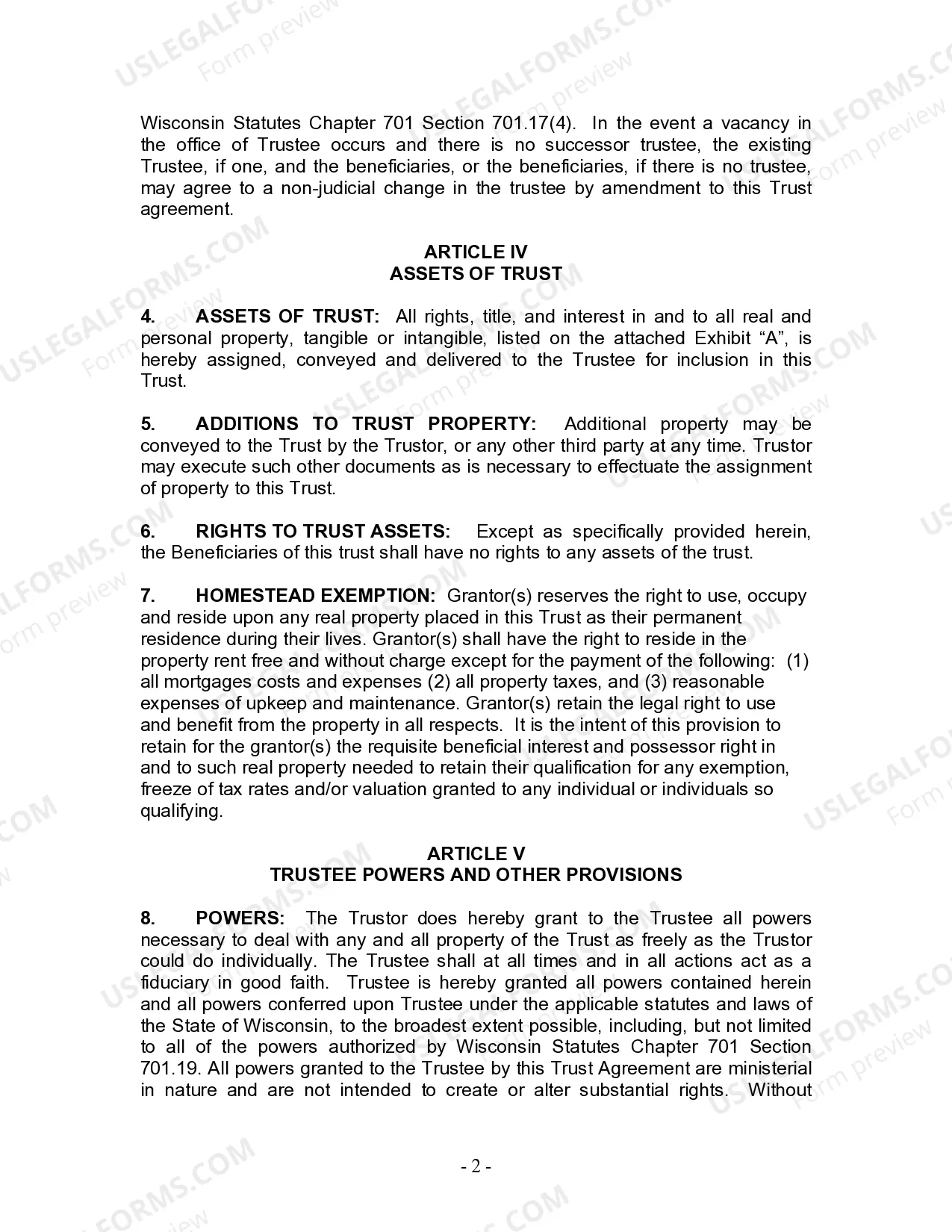
- Assets of the Trust: Lists the property and assets included in the trust.
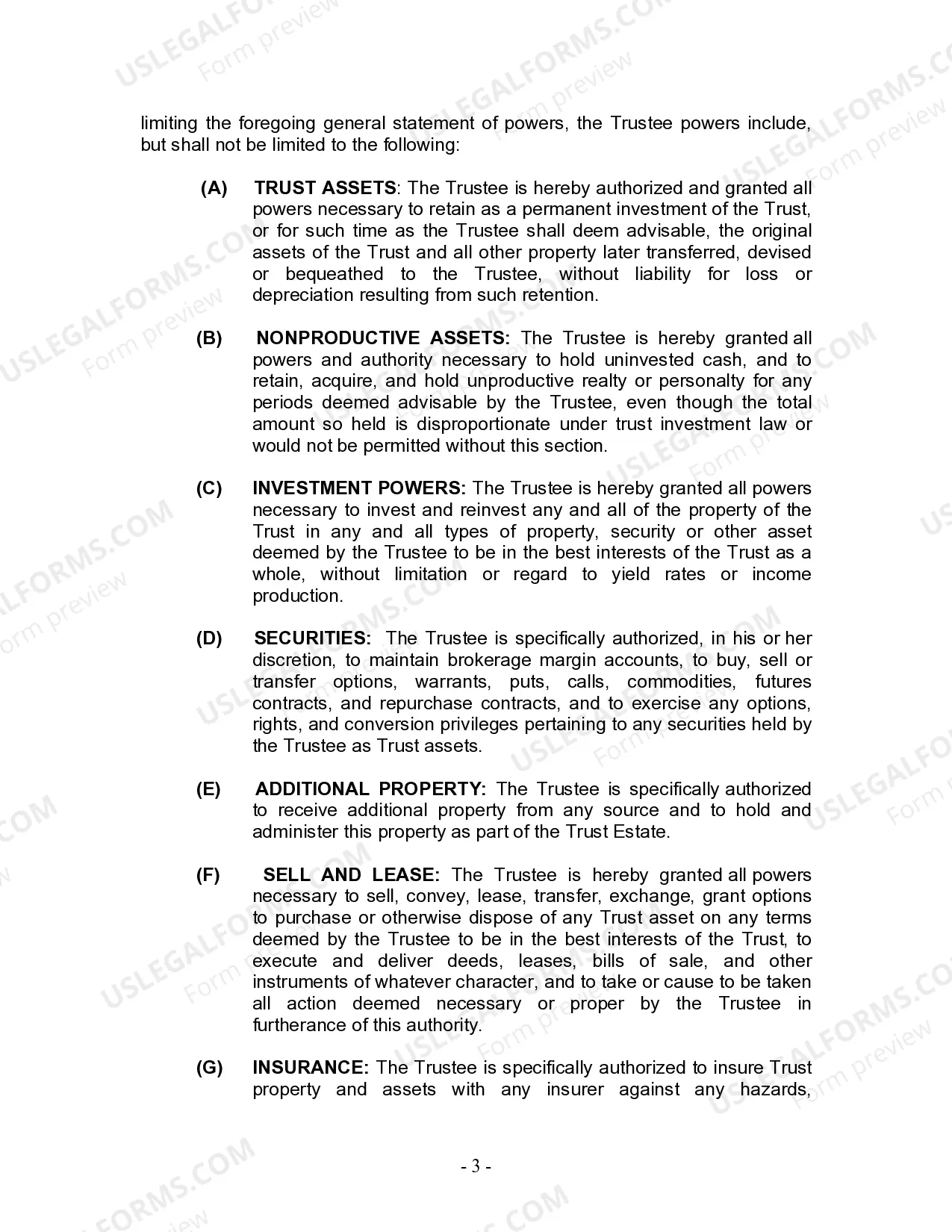
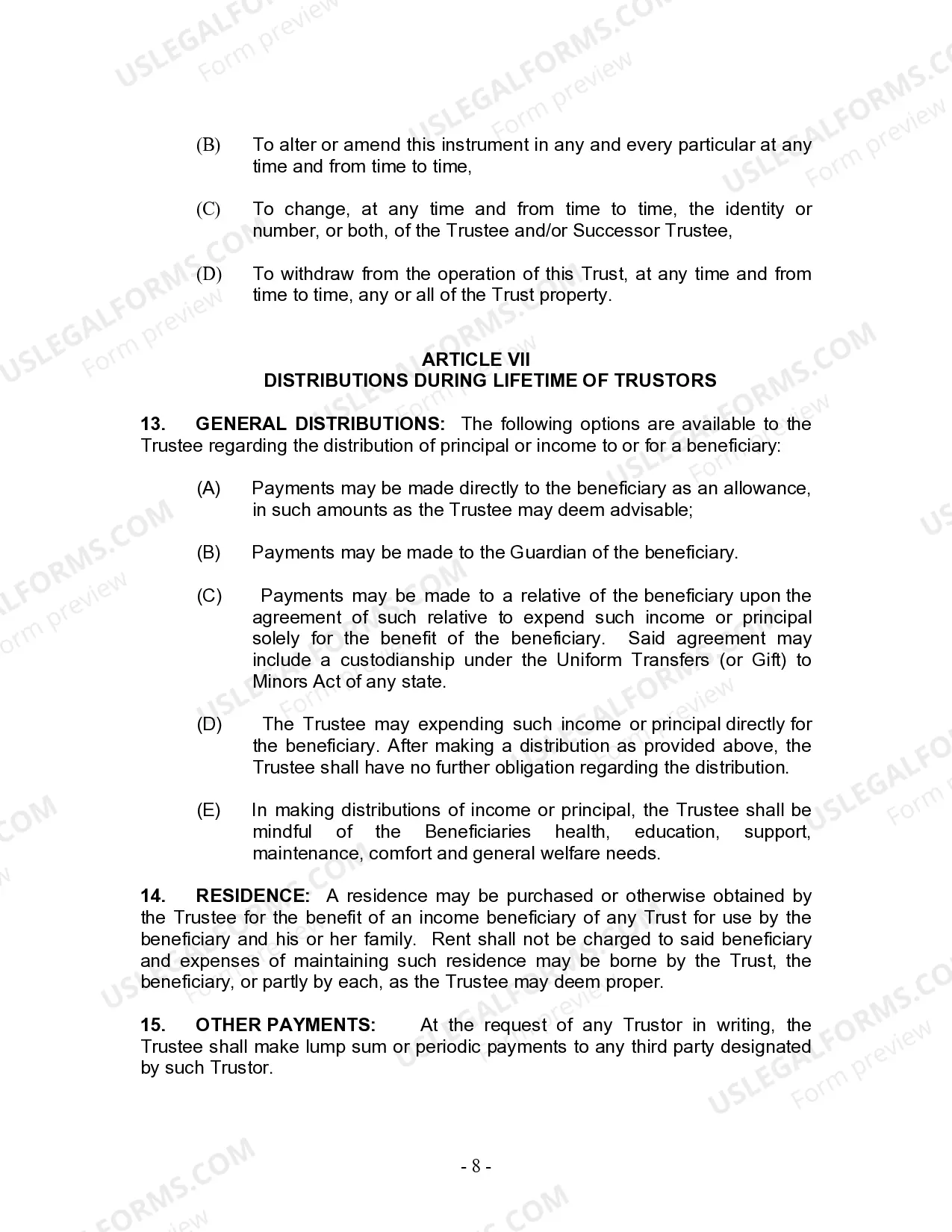
- Trustee Powers: Outlines the authority granted to the Trustee for managing and controlling trust assets.
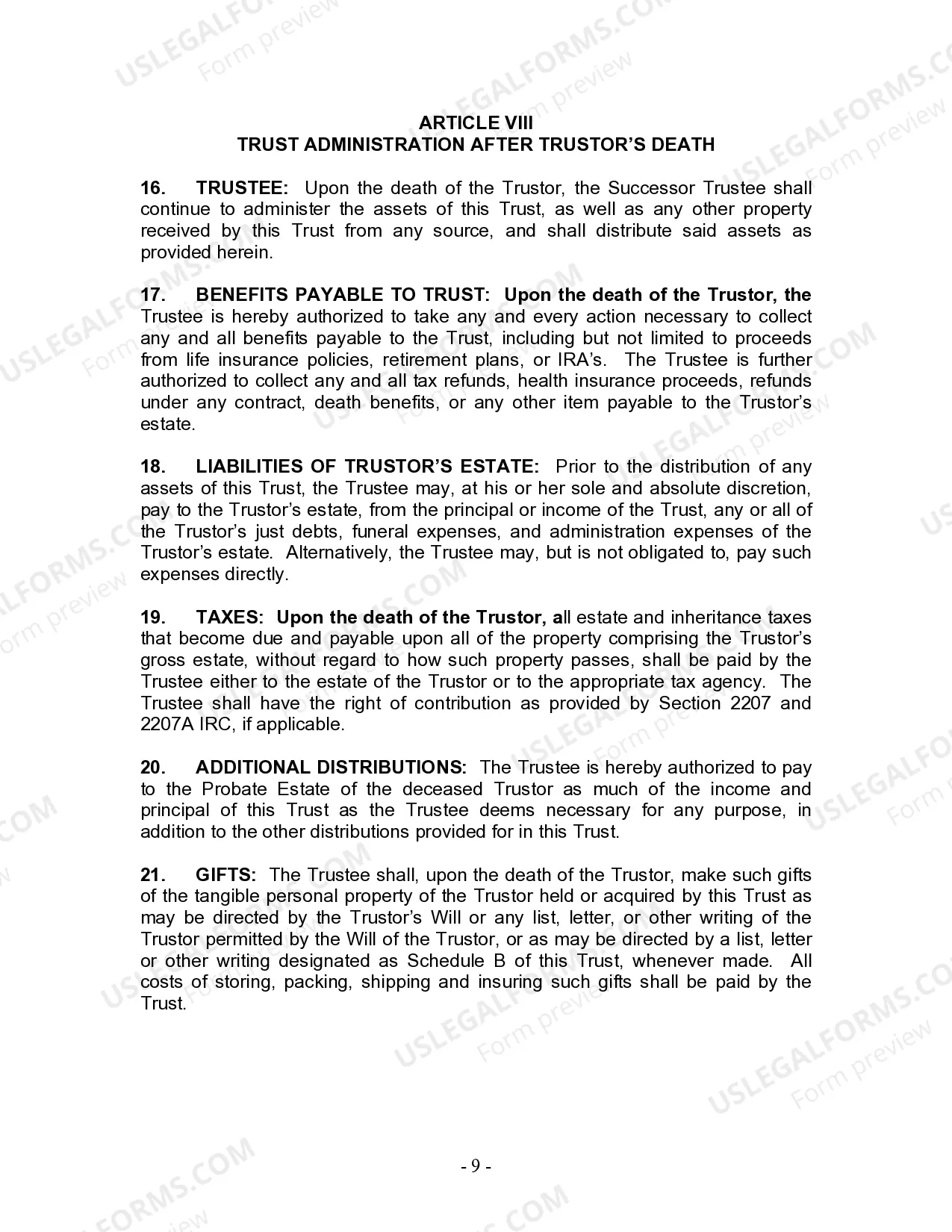
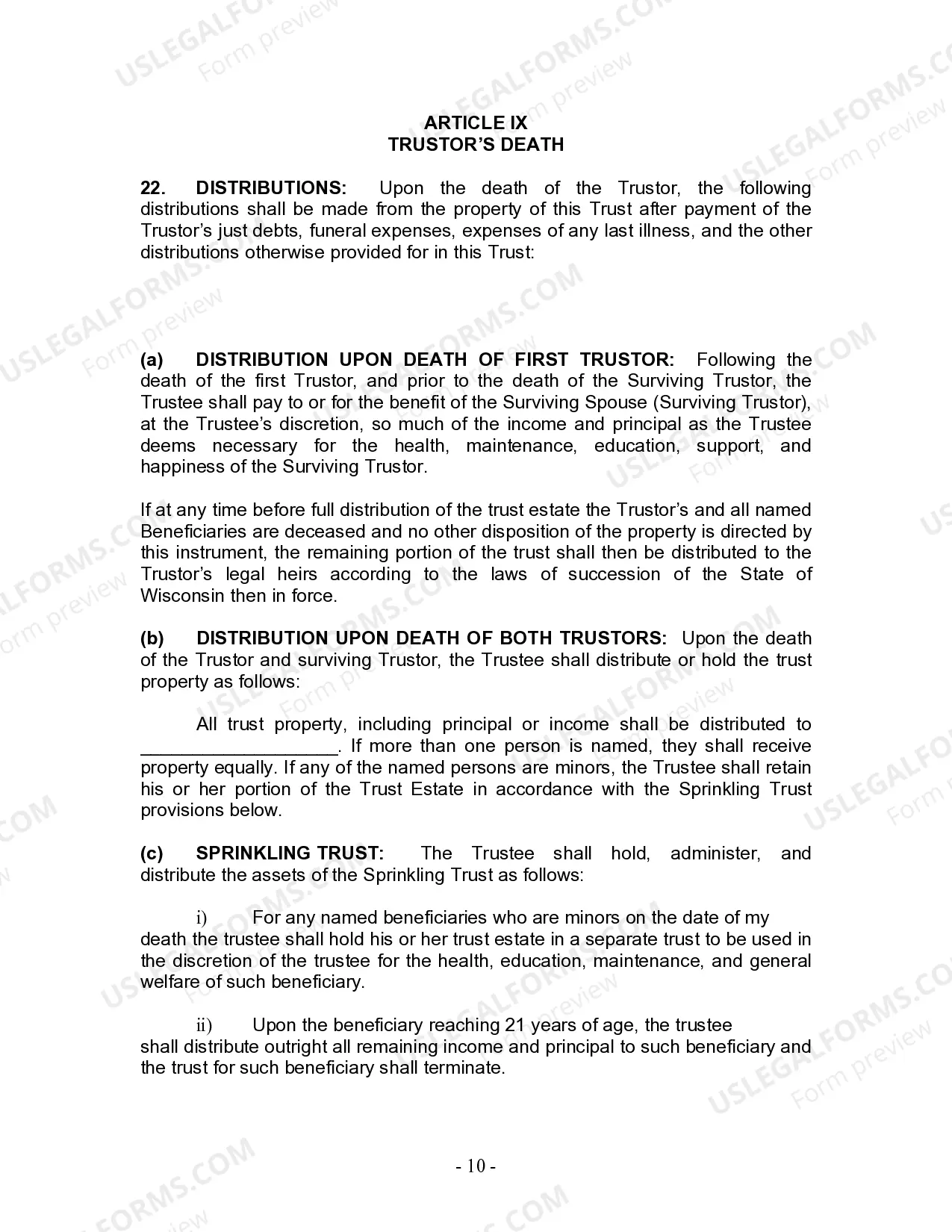
- Distribution upon Death: Details how the assets will be distributed after the death of the Trustors.




When to use this form
This form should be used when a husband and wife wish to establish control over their assets during their lifetime while ensuring an efficient transfer of property upon their passing. It is particularly suitable for couples without children who want to designate specific beneficiaries for their property and avoid the potentially lengthy probate process.
Who needs this form
- Married couples without children seeking to manage their estate with flexibility.
- Couples wanting to avoid probate and simplify the transfer of their assets.
- Individuals looking for a way to maintain control over their property while they are alive.
How to prepare this document
- Identify the Trustors: Fill in the names of both husband and wife.
- Specify the Trustee: Appoint the initial Trustee and any successor Trustees as needed.
- List the Trust Assets: Include all property and assets intended to be placed in the trust.
- Sign and Date the Agreement: Ensure all Trustors sign the document in the designated areas, along with any required witnesses or notary if applicable.
- Additional Provisions: Review any optional clauses regarding distributions, powers, and amendments to ensure they reflect your wishes.
Notarization requirements for this form
This form does not typically require notarization unless specified by local law. However, having the document notarized can lend additional legitimacy and enforceability, especially in matters regarding asset distribution.
Get your form ready online
Our built-in tools help you complete, sign, share, and store your documents in one place.
Make edits, fill in missing information, and update formatting in US Legal Forms—just like you would in MS Word.
Download a copy, print it, send it by email, or mail it via USPS—whatever works best for your next step.
Sign and collect signatures with our SignNow integration. Send to multiple recipients, set reminders, and more. Go Premium to unlock E-Sign.
If this form requires notarization, complete it online through a secure video call—no need to meet a notary in person or wait for an appointment.
We protect your documents and personal data by following strict security and privacy standards.

Make edits, fill in missing information, and update formatting in US Legal Forms—just like you would in MS Word.

Download a copy, print it, send it by email, or mail it via USPS—whatever works best for your next step.

Sign and collect signatures with our SignNow integration. Send to multiple recipients, set reminders, and more. Go Premium to unlock E-Sign.

If this form requires notarization, complete it online through a secure video call—no need to meet a notary in person or wait for an appointment.

We protect your documents and personal data by following strict security and privacy standards.
Common mistakes to avoid
- Forgetting to list all assets meant to be included in the trust.
- Not properly designating a successor Trustee in case of incapacity or death.
- Failing to keep the trust updated with changes in circumstances or laws.
- Omitting notarization or appropriate witnessing where required.
Advantages of online completion
- Convenient access to legal documents from anywhere, at any time.
- Easy to customize to meet specific needs without the need for a lawyer.
- Secure, reliable storage of documents for easy retrieval.
Summary of main points
- A Living Trust helps married couples without children manage their assets and avoid probate.
- Key components include Trustee appointment, asset management instructions, and distribution clauses.
- Completing this form involves identifying parties and assets while ensuring proper notarization.
Looking for another form?

Form popularity
FAQ
Wisconsin, unlike many states, is not a "next of kin" or "family consent" state for adults - Wisconsin law does not authorize family members (except for hospice admissions) to make decisions for incapacitated adult family members.
A marital trust allows the couple's heirs to avoid probate and take less of a hit from estate taxes by taking full advantage of the unlimited marital deductiona provision that enables spouses to pass assets to each other without tax consequences.
Pick a type of living trust. If you're married, you'll first need to decide whether you want a single or joint trust. Take stock of your property. Choose a trustee. Draw up the trust document. Sign the trust. Transfer your property to the trust.
Paperwork. Setting up a living trust isn't difficult or expensive, but it requires some paperwork. Record Keeping. After a revocable living trust is created, little day-to-day record keeping is required. Transfer Taxes. Difficulty Refinancing Trust Property. No Cutoff of Creditors' Claims.
Payment. Current beneficiaries have the right to distributions as set forth in the trust document. Right to information. Right to an accounting. Remove the trustee. Termination of the trust.
Beneficiaries' right to information enables them to act upon another right: to petition the court to remove the trustee if they are not properly carrying out their duties, or to terminate the trust altogether under some circumstances.
A marital trust is a type of irrevocable trust that allows you to transfer assets to a surviving spouse tax free. It can also shield the estate of the surviving spouse before the remaining assets pass on to your children.
Under California law, a marriage automatically invalidates any pre-existing will or trust as to the new spouse's inheritance rights, unless the documents provide for a new spouse, or clearly indicate a new spouse will receive nothing.
Separate trusts provide more flexibility in the event of a death in the marriage. Since the trust property is already divided, separate trusts preserve the surviving spouse's ability to amend or revoke assets held within their own trust, while ensuring that the deceased spouse's trust cannot be amended after death.