Wisconsin Marital Domestic Separation and Property Settlement Agreement Minor Children Parties May have Joint Property or Debts where Divorce Action Filed
What this document covers
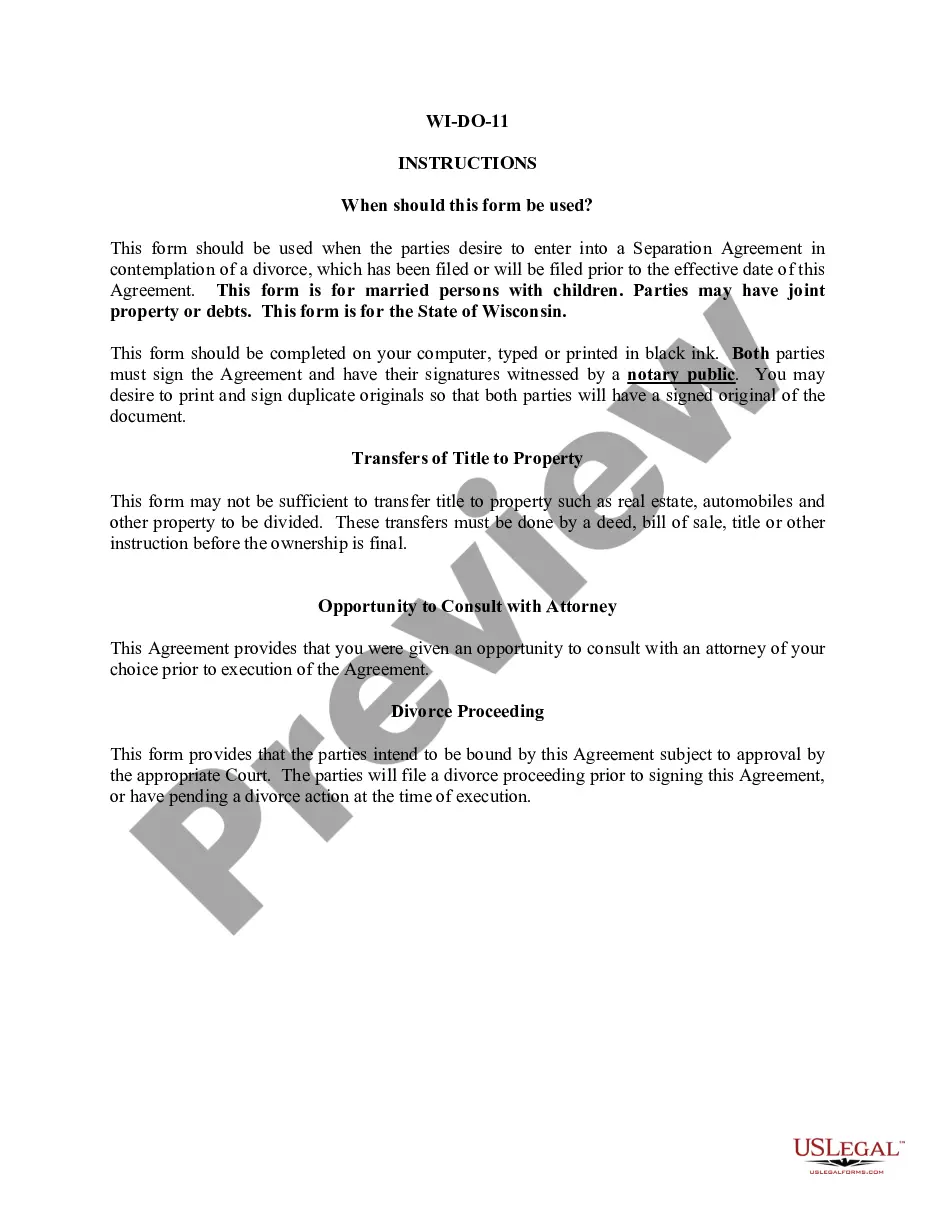
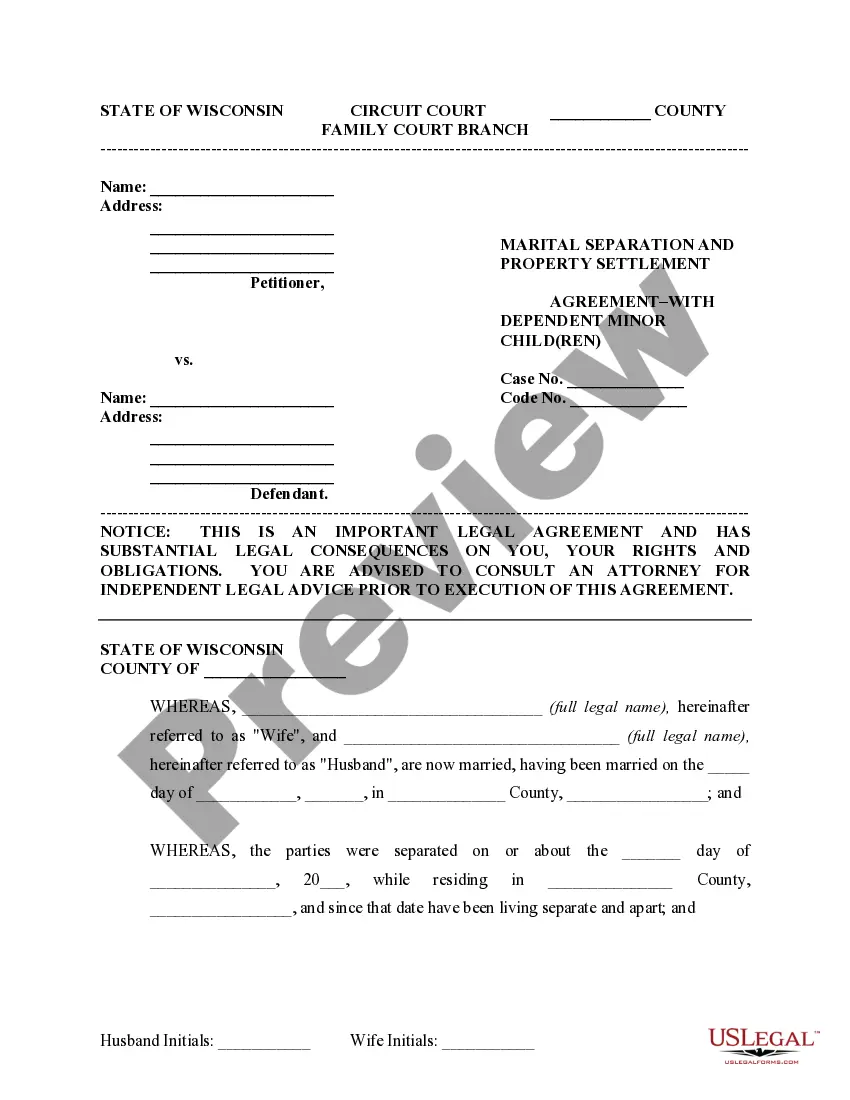
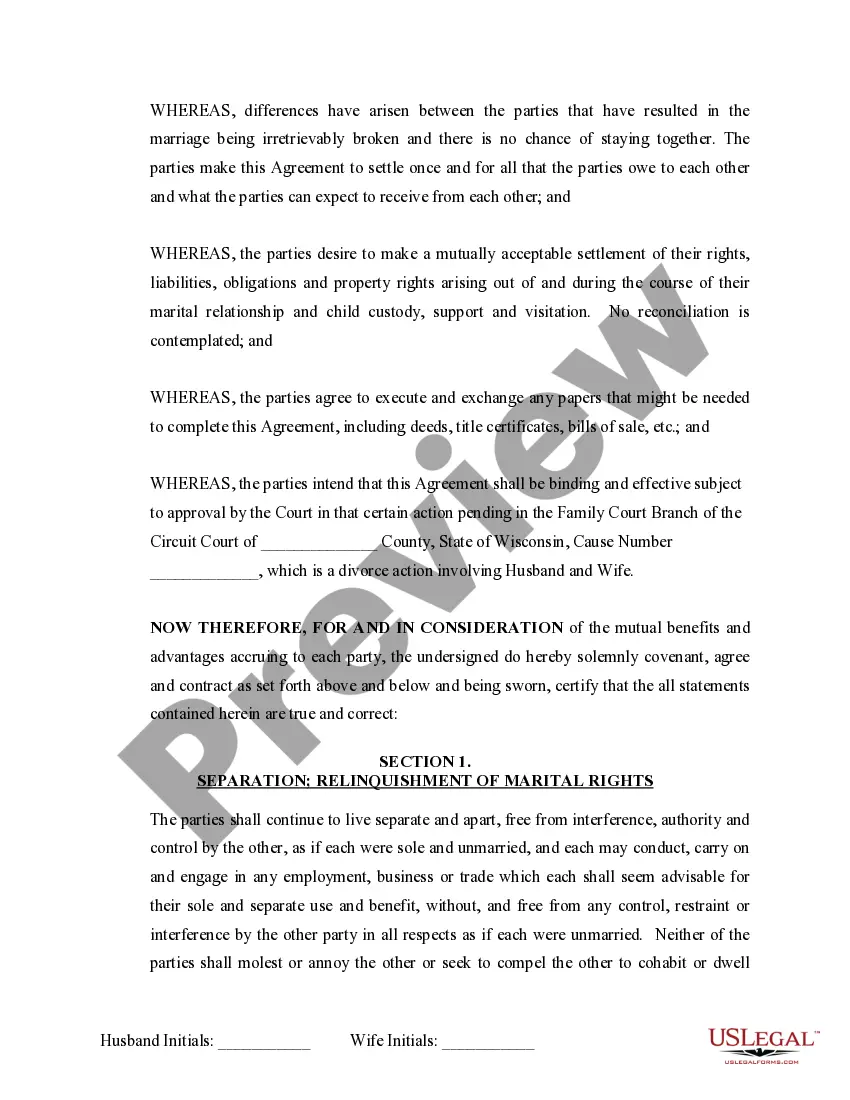
The Marital Domestic Separation and Property Settlement Agreement with Minor Children is a vital legal document designed for couples who are in the process of divorce and have minor children together. It facilitates a comprehensive approach to settling division of property, debts, child custody, visitation rights, and child support obligations. This form aims to provide a clear framework to resolve these issues amicably and is specifically tailored for couples in Wisconsin.
Key components of this form
- Separation clauses detailing the living arrangements of both parties.
- Financial disclosures to ensure transparency regarding assets and liabilities.
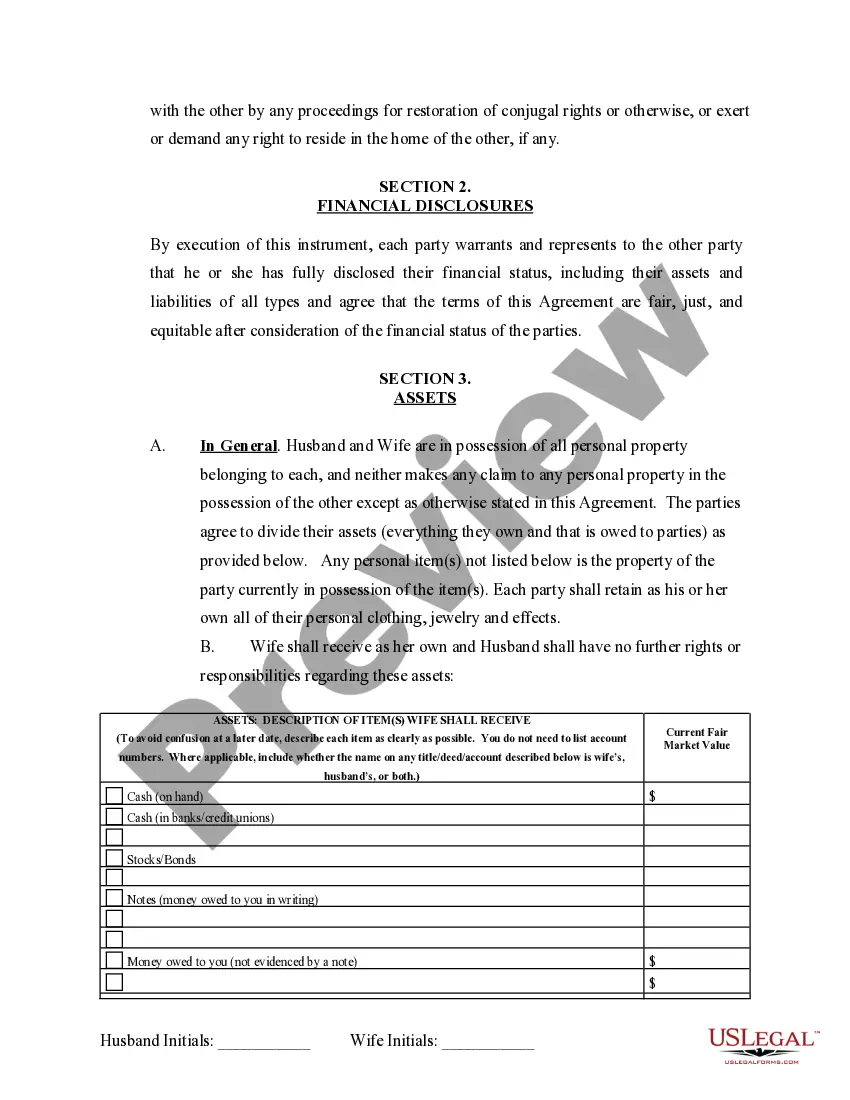
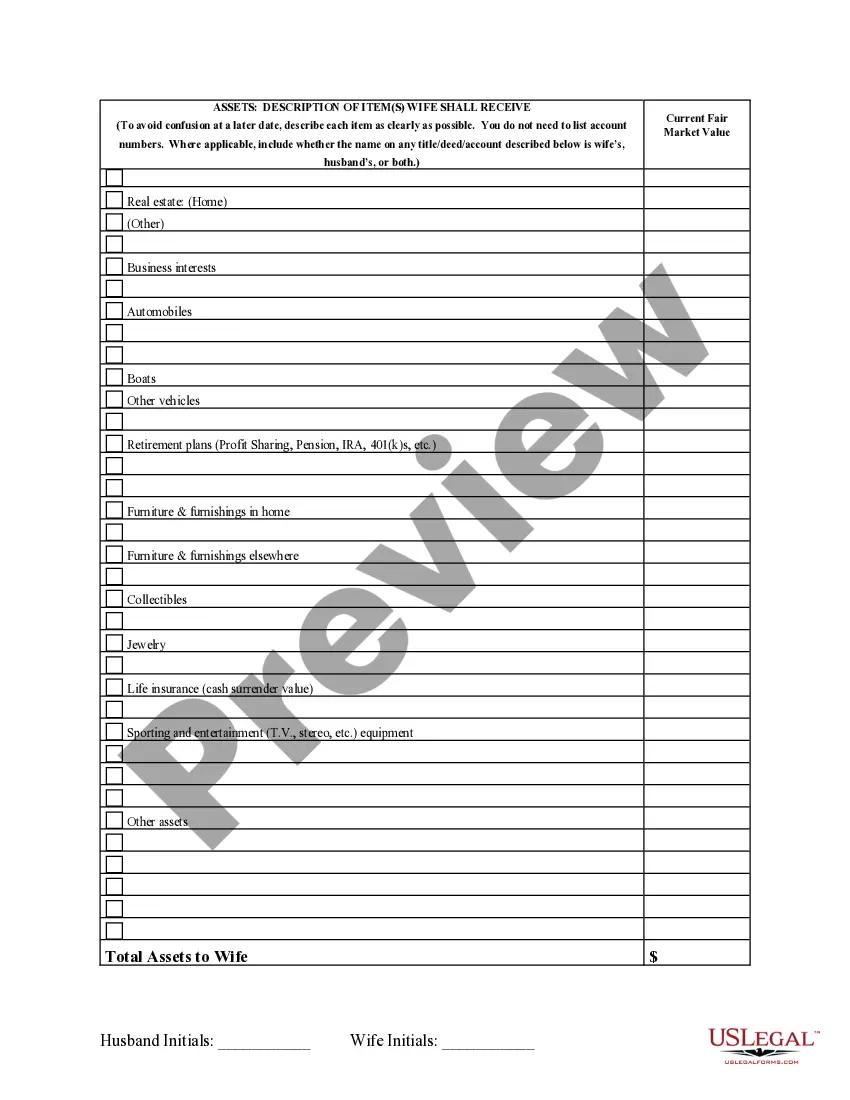
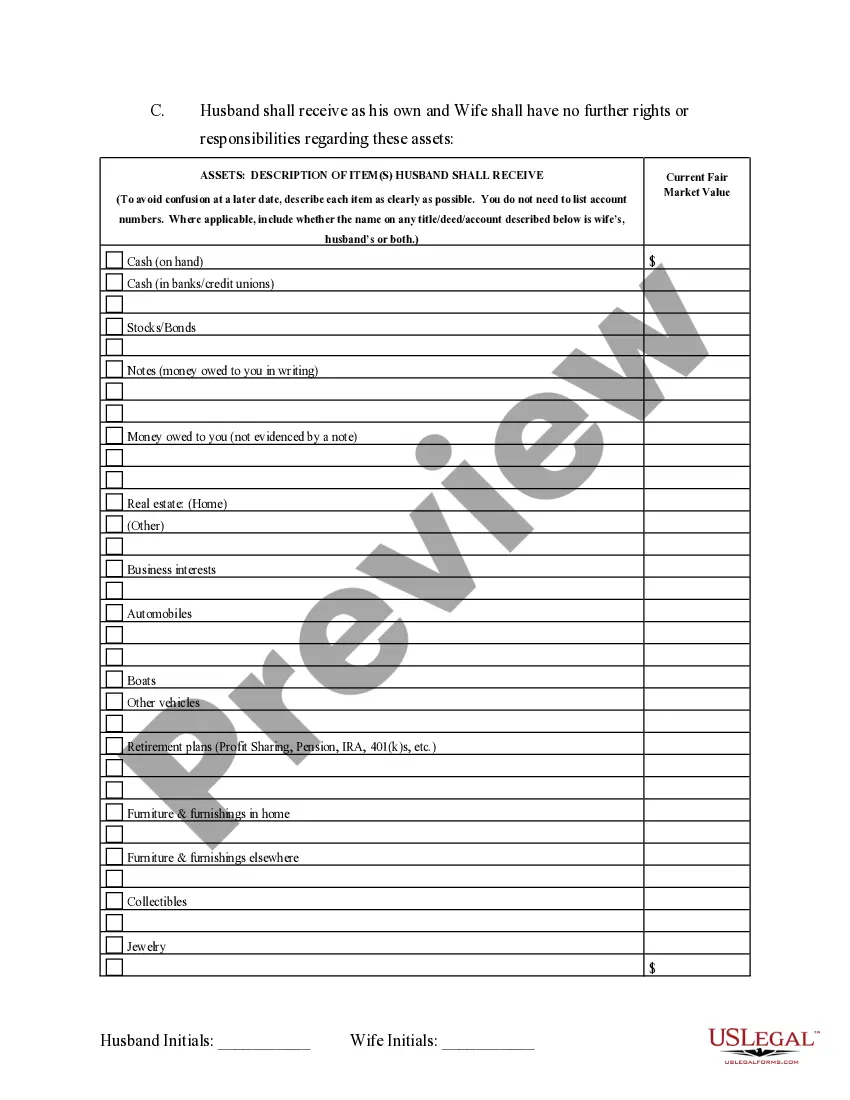
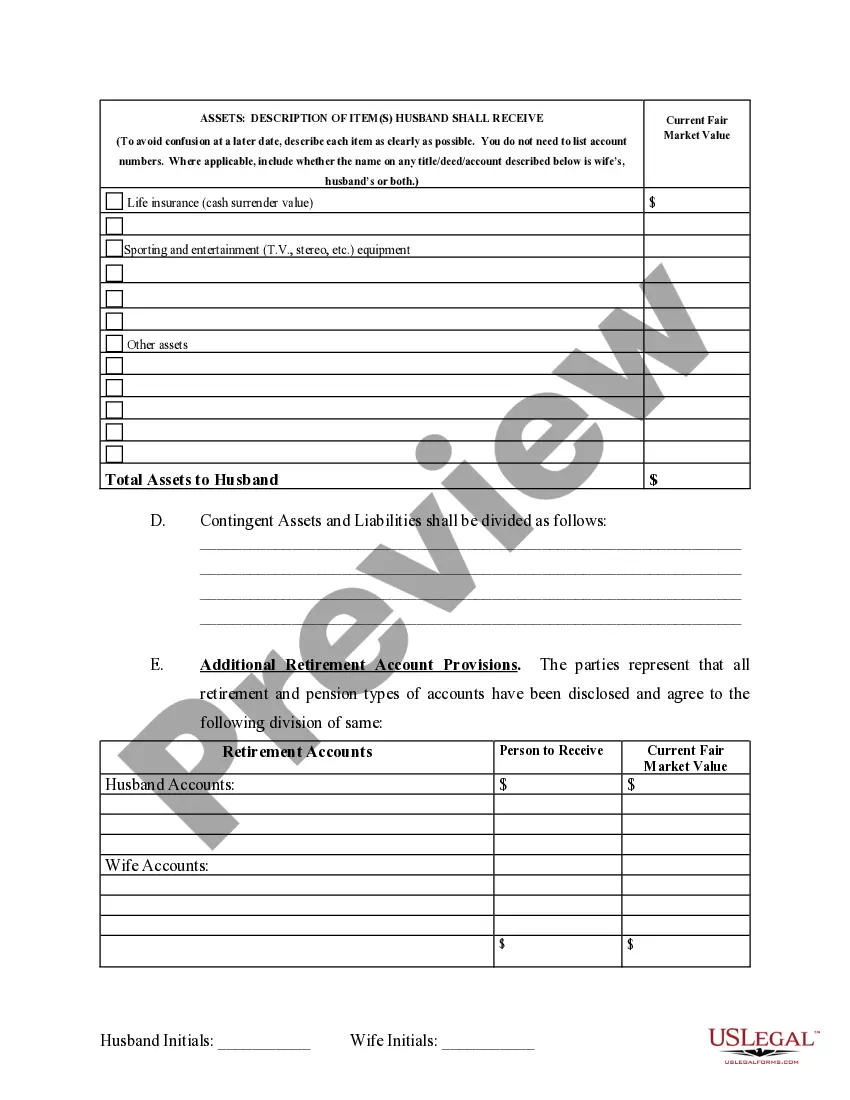
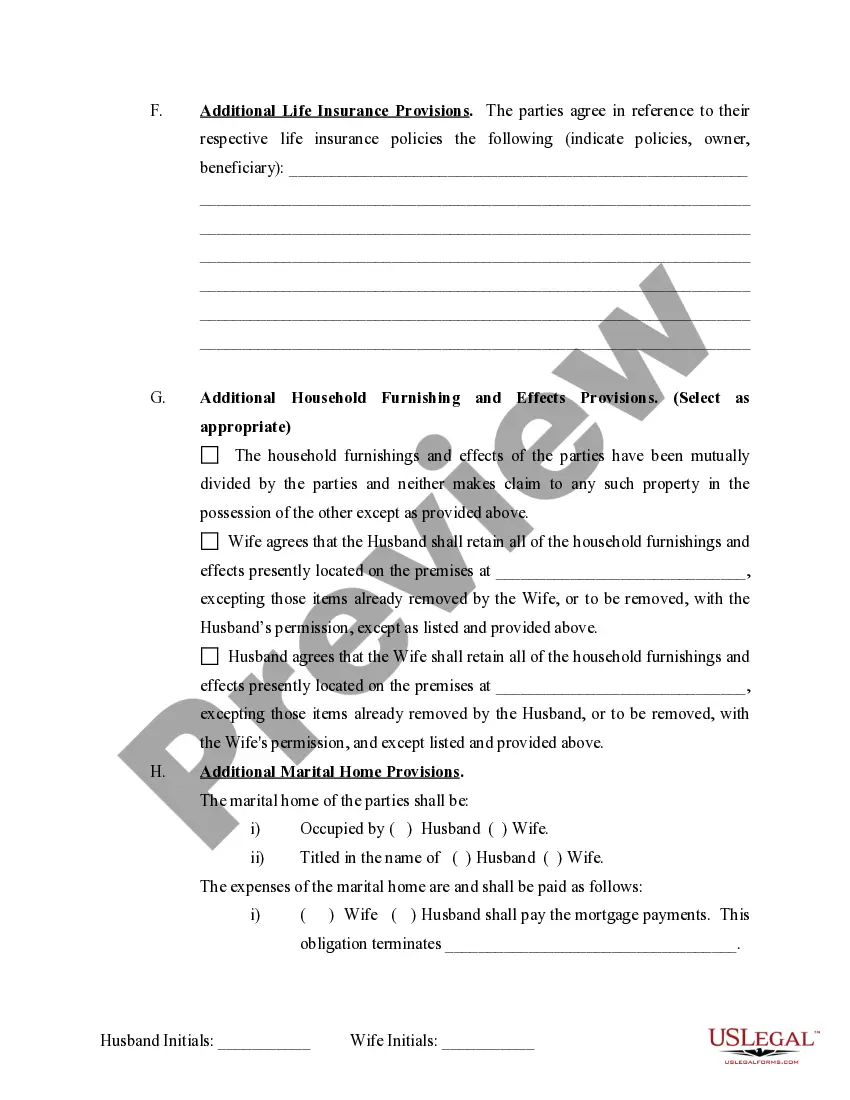
- Comprehensive asset division outlining how property will be divided.
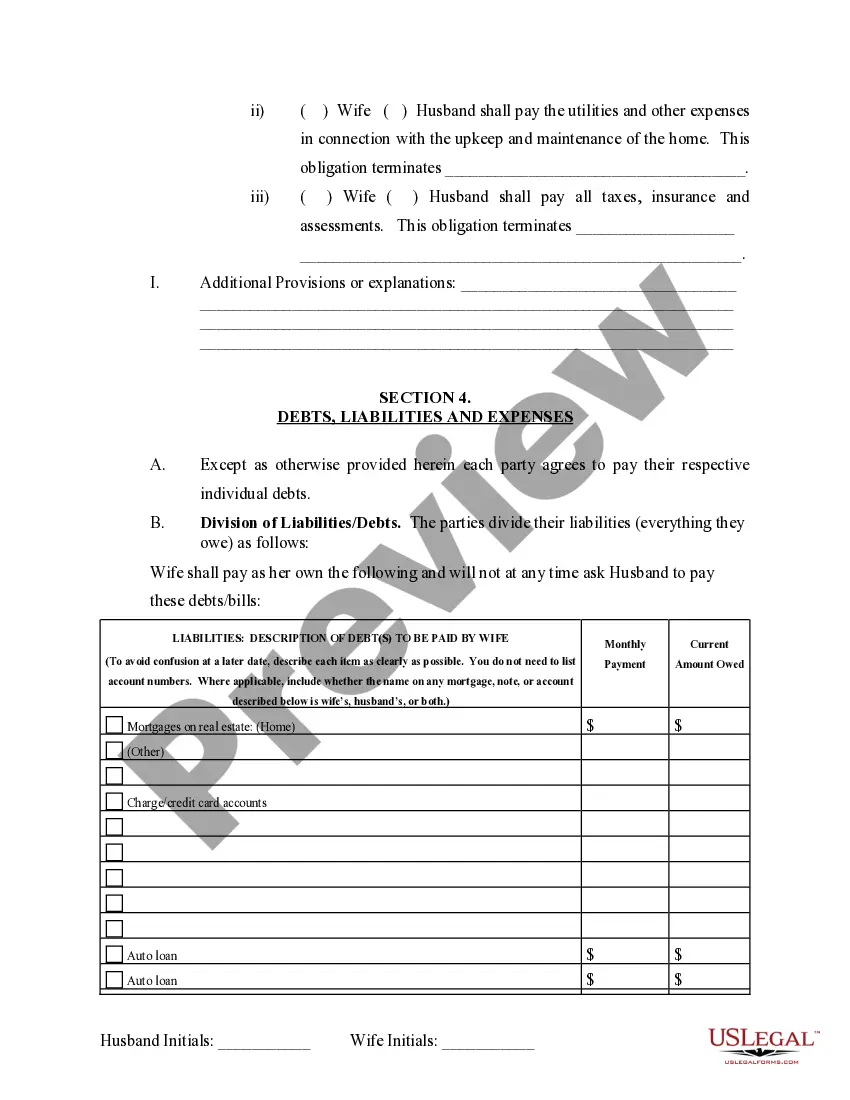
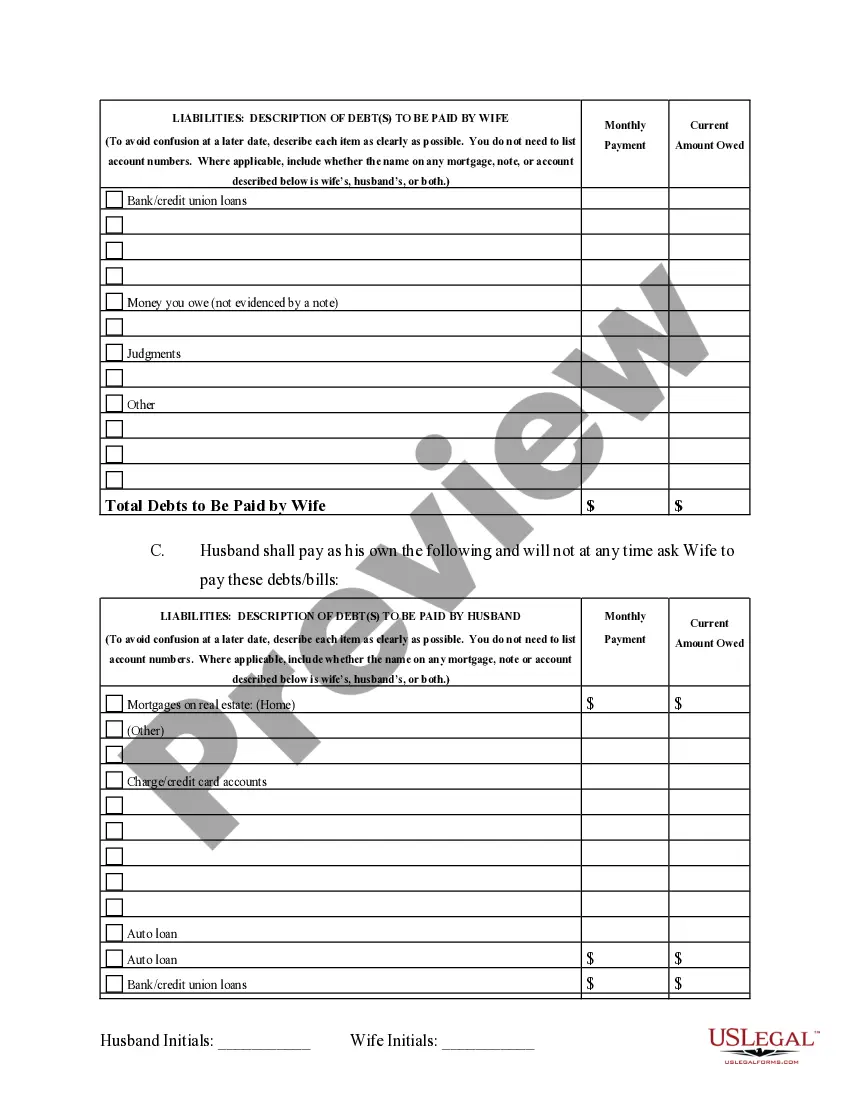
- Debt obligations specifying which party will assume certain debts.
- Child custody arrangements, including primary and joint custody details.
- Child support terms, including amounts and payment schedules.

Common use cases
This form should be used when both parties have decided to undergo a formal separation prior to finalizing a divorce. It is particularly pertinent when there are minor children involved, as it addresses custody, visitation, and support arrangements that are crucial for the wellbeing of the children during and after the divorce process.
Who this form is for
- Married individuals with minor children who are seeking a divorce.
- Couples who share joint property or debts and wish to resolve these matters amicably.
- Parties who want to establish clear custody and support terms for their children.
- Those who are preparing for a divorce action already filed or intending to file.
Steps to complete this form
- Identify the parties involved, including full legal names and addresses.
- Clearly outline the division of assets and debts, listing all items and their corresponding values.
- Detail the custody arrangements and visitation rights for the minor children.
- Specify the terms of child support, including payment amounts and schedule.
- Both parties must sign the agreement and have their signatures notarized to ensure legal validity.
Is notarization required?
Notarization is required for this form to take effect. Our online notarization service, powered by Notarize, lets you verify and sign documents remotely through an encrypted video session, available 24/7.
Get your form ready online
Our built-in tools help you complete, sign, share, and store your documents in one place.
Make edits, fill in missing information, and update formatting in US Legal Forms—just like you would in MS Word.
Download a copy, print it, send it by email, or mail it via USPS—whatever works best for your next step.
Sign and collect signatures with our SignNow integration. Send to multiple recipients, set reminders, and more. Go Premium to unlock E-Sign.
If this form requires notarization, complete it online through a secure video call—no need to meet a notary in person or wait for an appointment.
We protect your documents and personal data by following strict security and privacy standards.

Make edits, fill in missing information, and update formatting in US Legal Forms—just like you would in MS Word.

Download a copy, print it, send it by email, or mail it via USPS—whatever works best for your next step.

Sign and collect signatures with our SignNow integration. Send to multiple recipients, set reminders, and more. Go Premium to unlock E-Sign.

If this form requires notarization, complete it online through a secure video call—no need to meet a notary in person or wait for an appointment.

We protect your documents and personal data by following strict security and privacy standards.
Avoid these common issues
- Failing to include all shared assets and debts can lead to disputes later.
- Not clearly defining custody and visitation can create confusion regarding parenting responsibilities.
- Omitting child support obligations or failing to provide accurate calculations may result in future financial strain.
Why use this form online
- Convenience of filling out the form from home at your own pace.
- Editability allows for easy modifications based on each party's inputs and agreements.
- Reliable guidance ensures that all necessary legal provisions are included for enforceability.
Looking for another form?
Form popularity
FAQ
Once an agreement has been reached, both parties will sign the settlement, and it will be forwarded to a judge who will incorporate the agreement into the final divorce decree.Usually, an attorney will need to file a motion immediately, and present an argument to the court about why the agreement should be rescinded.
A Marital Settlement Agreement, written and signed by both spouses, is a contract that defines the terms of their divorce.The Marital Settlement Agreement assures each parent's continued right to access medical and health related records as well as school related records.
The primary difference between legal separation and divorce is that legal separation leaves the marriage intact.In Wisconsin, a divorced individual may remarry if at least 6 months have passed since the date on which the divorce was granted.
Your divorce settlement agreement should cover everything that is important to you, including custody of your children, child support payments, alimony, and the separation of your property, such as your family home, vehicles, and other assets.
Enforcing an MSA must be done by filing a formal request or motion (legal paperwork) with the court. You will need to show the court how your ex-spouse failed to follow the terms of the agreement. There are many reasons you may need to ask the court to assist you with enforcing your agreement.
Marital Settlement Agreements, reached between the parties in writing and signed by the parties, become legally binding when approved by the court at the time of the final court hearing.Once approved by the court, such post judgment stipulations do become legally binding and enforceable between the parties.
Things You Cannot Change in a Divorce Settlement Agreement In particular, California courts will not reconsider the original property or debt division. However, the parties can agree between themselves to change the terms of the property or debt division by stipulation and order to modify an earlier judgment.
#1. Start with the Basics. #2. Include the Details. #3. Confirm Your Agreement. #4. Identify and Divide Assets and Debts. #5. Create a Parenting Plan for Custody and Visitation. #6. Agree on Child Support and Spousal Support (Alimony) #7. Polishing Your Agreement. Conclusion.