Washington Waiver and Release From Liability For Minor Child for Extreme Sports
Description
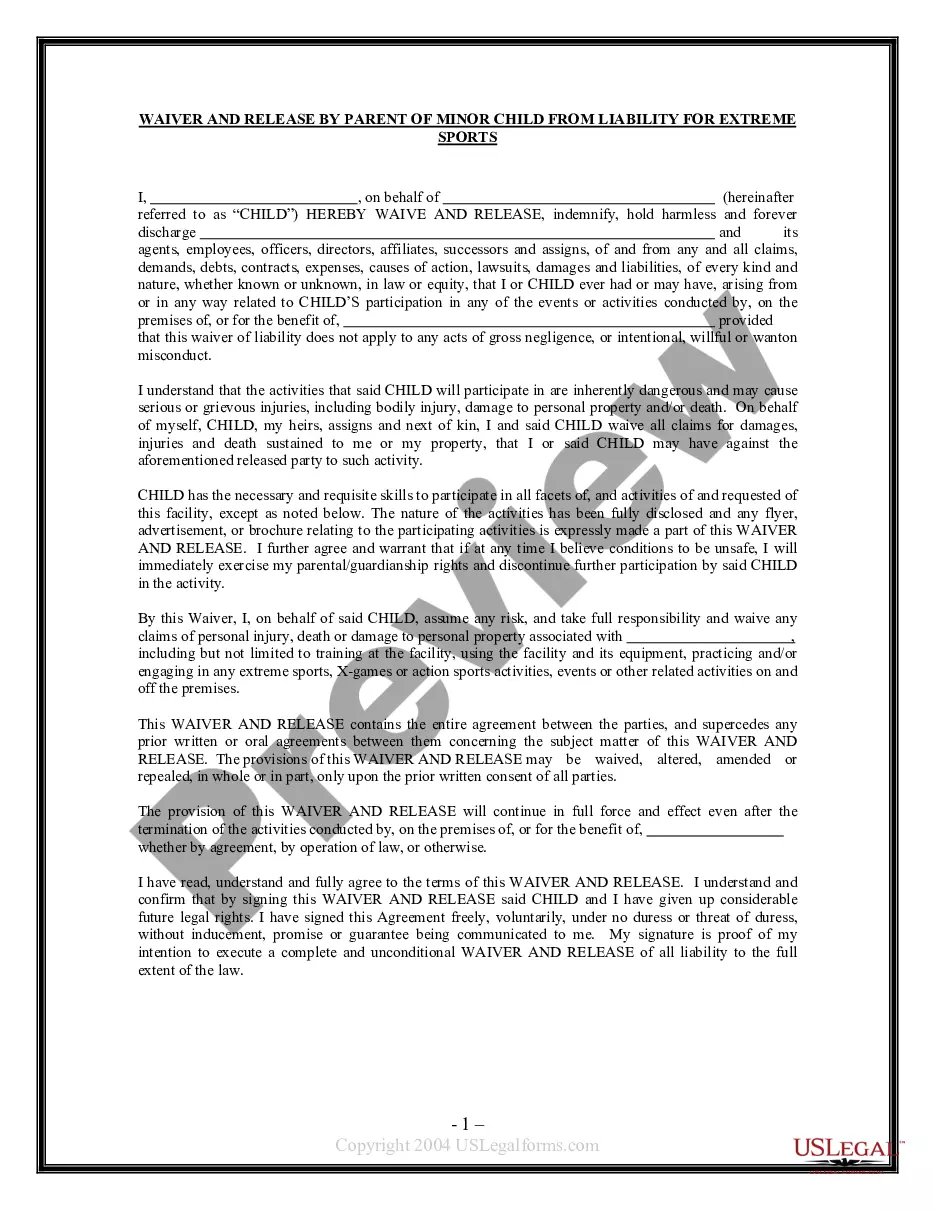
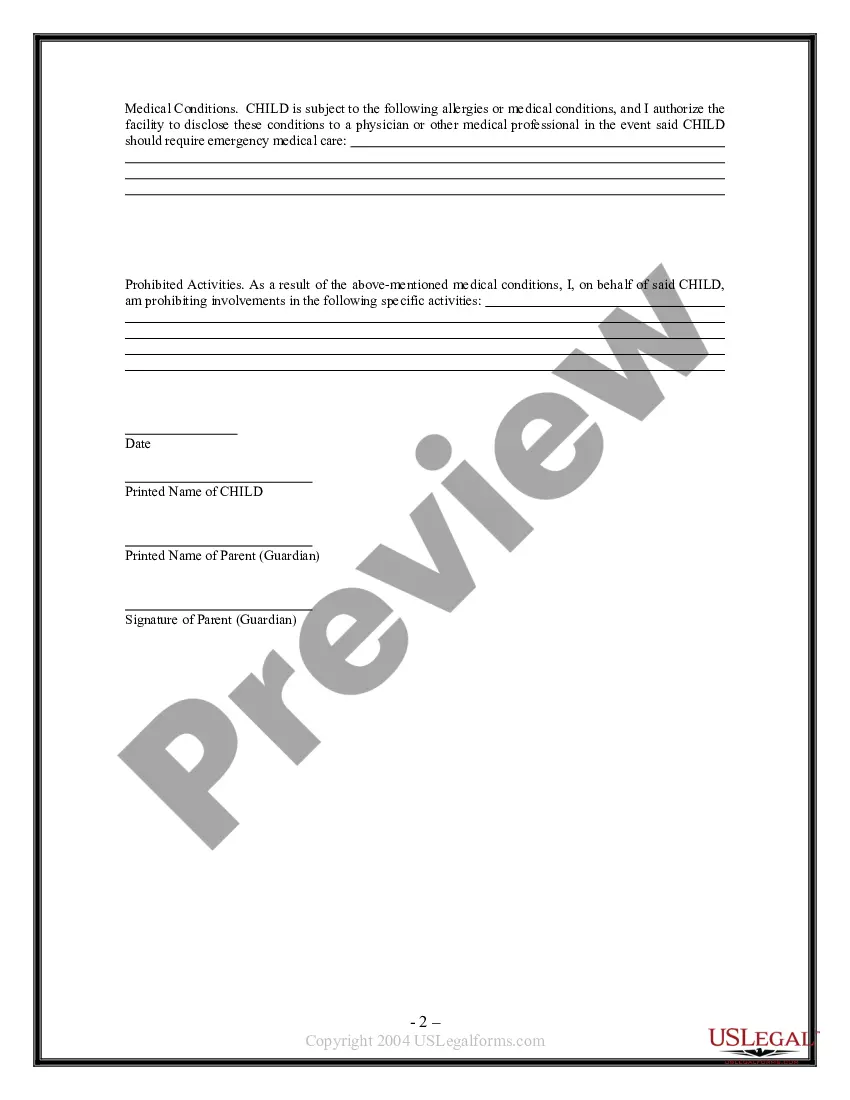
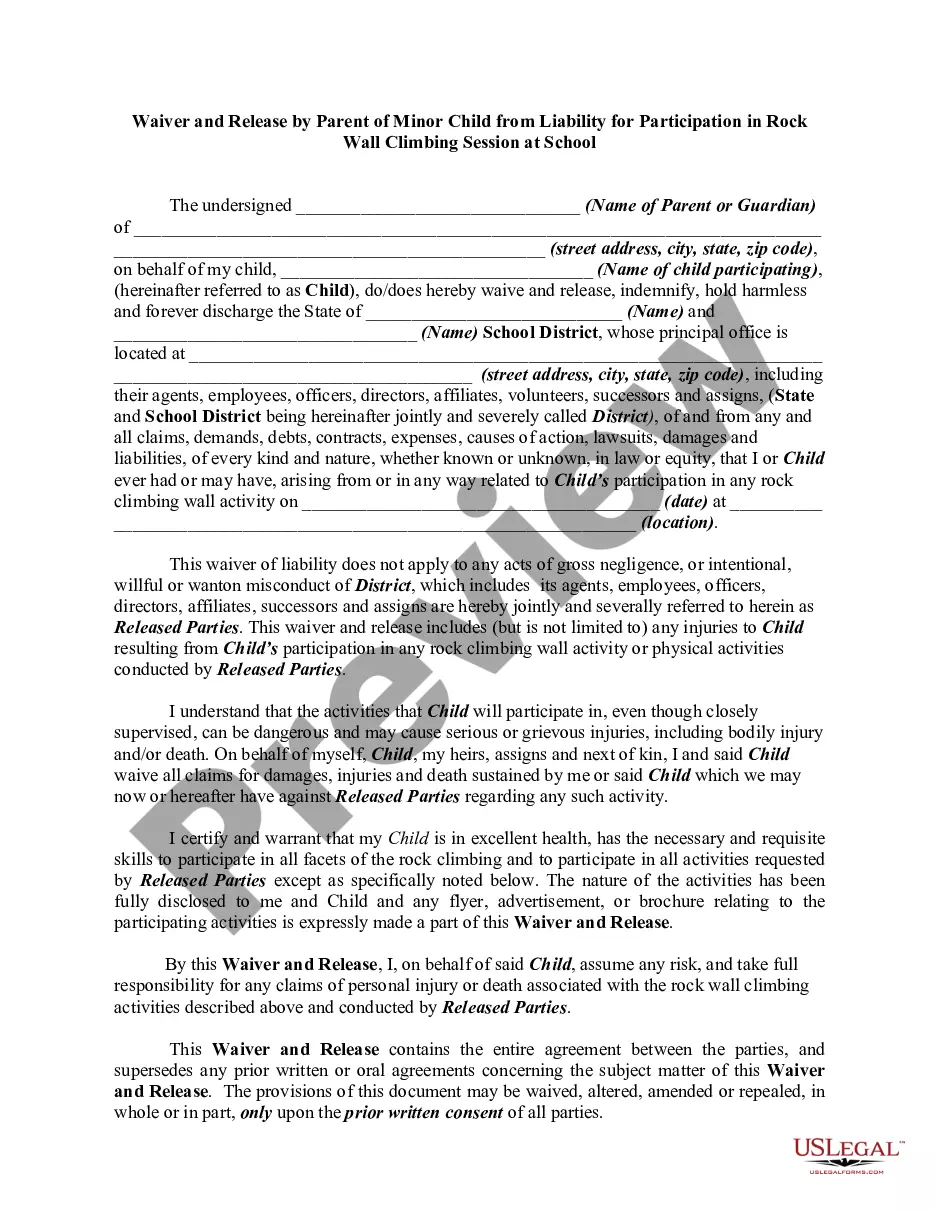
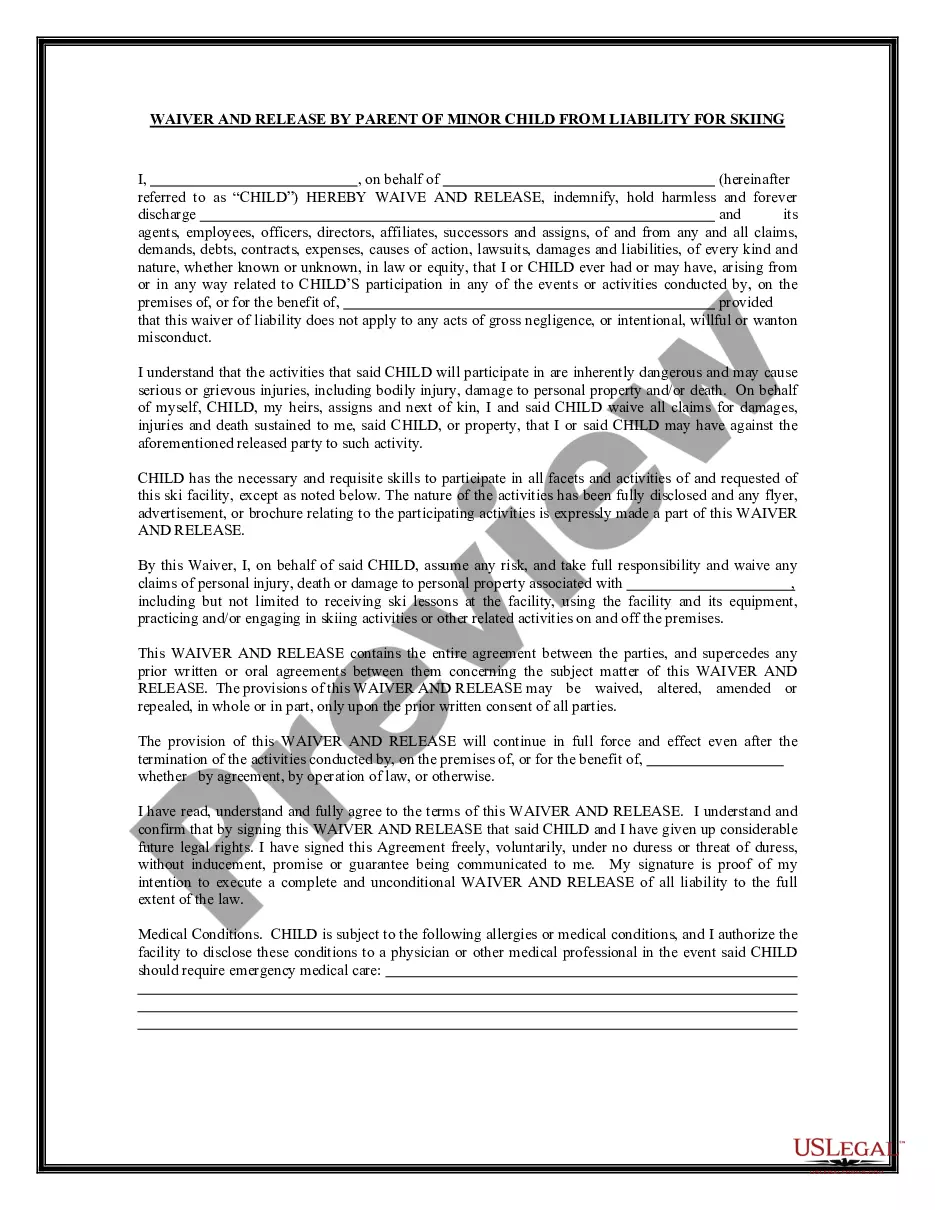
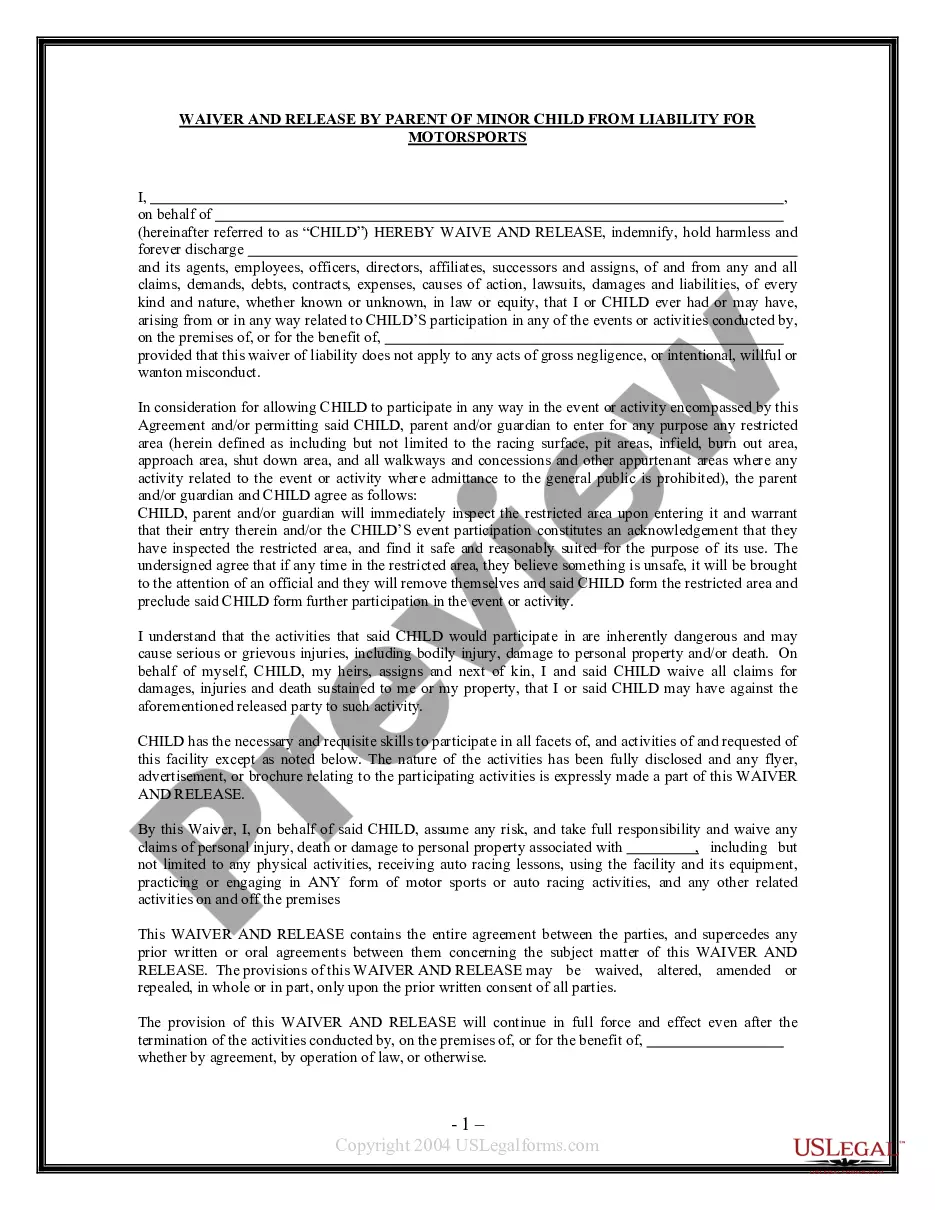
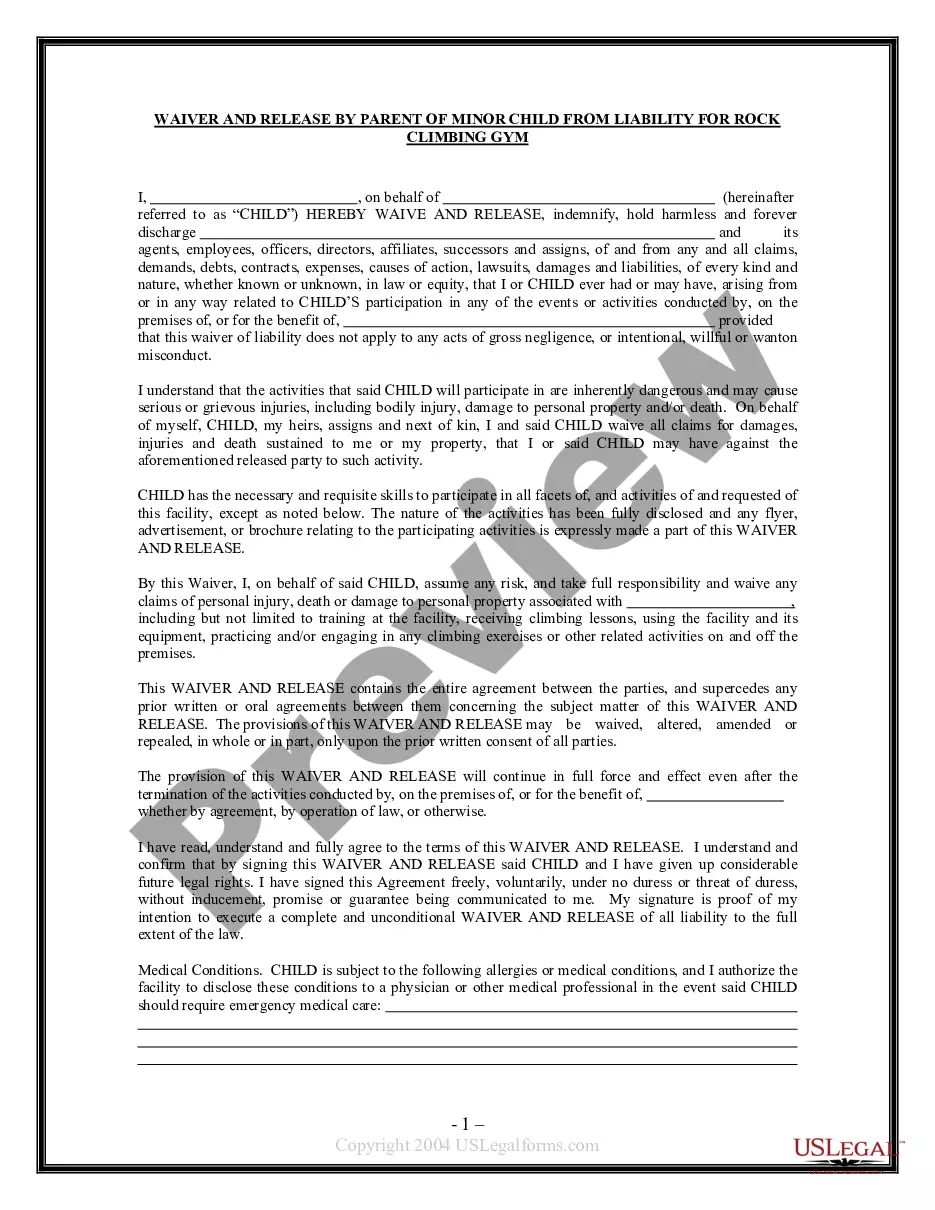
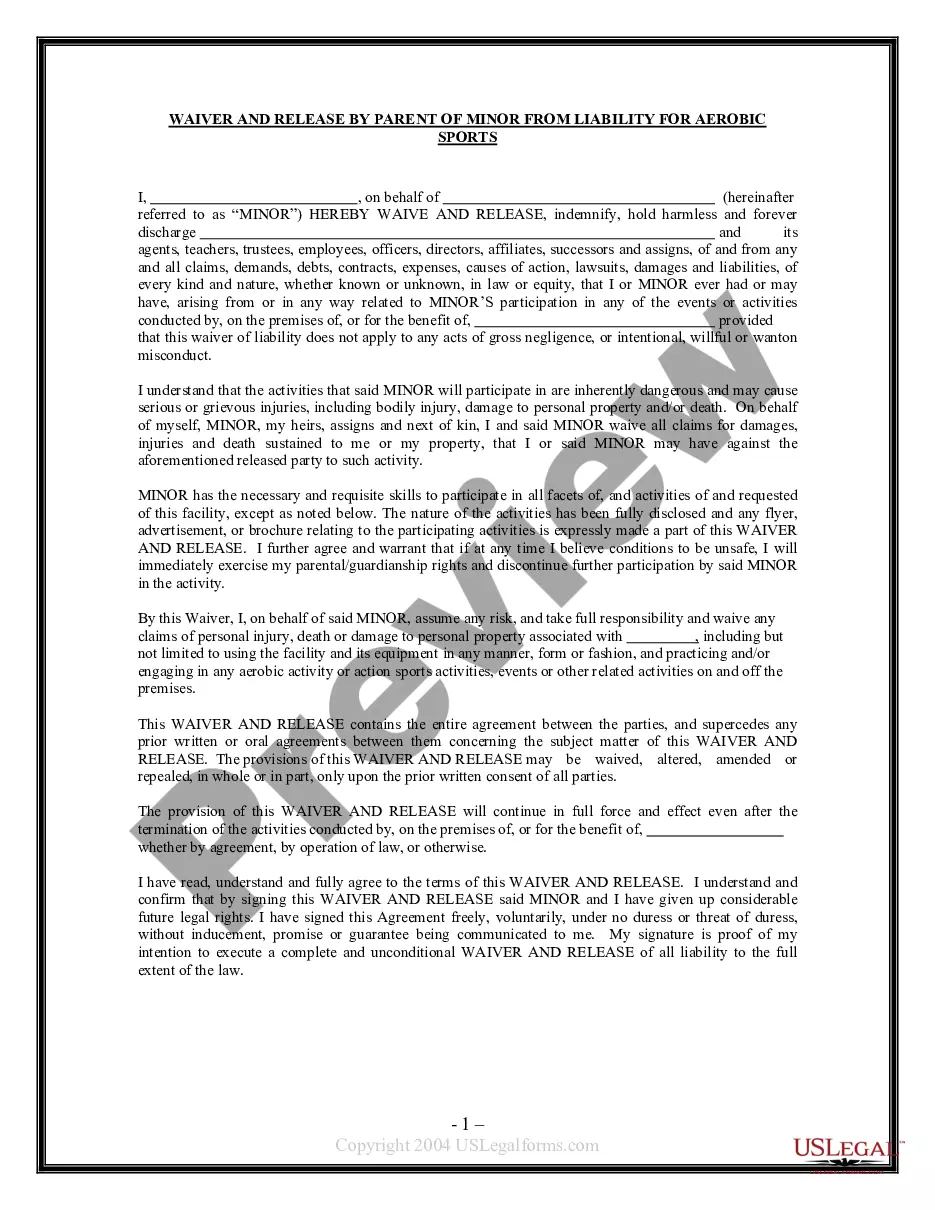
How to fill out Waiver And Release From Liability For Minor Child For Extreme Sports?
Are you in a circumstance where you will require documentation for either business or personal activities almost every day? There are numerous valid document templates accessible online, but obtaining forms you can trust is not easy. US Legal Forms offers thousands of form templates, such as the Washington Waiver and Release From Liability For Minor Child for Extreme Sports, which are designed to comply with federal and state regulations.
If you are already familiar with the US Legal Forms website and possess an account, simply Log In. After that, you can download the Washington Waiver and Release From Liability For Minor Child for Extreme Sports template.
If you do not have an account and wish to start using US Legal Forms, follow these steps: Obtain the form you need and ensure it is for the correct city/region. Use the Preview button to review the form. Read the details to confirm you have selected the correct form. If the form is not what you are looking for, use the Search field to find the form that meets your needs and requirements. If you find the right form, simply click Buy now. Select the payment plan you prefer, fill in the necessary information to complete your transaction, and purchase an order using your PayPal or credit card. Choose a convenient file format and download your copy.
- Find all the document templates you have purchased in the My documents menu.
- You can obtain an additional copy of the Washington Waiver and Release From Liability For Minor Child for Extreme Sports at any time, if needed.
- Click on the desired form to download or print the document template.
- Utilize US Legal Forms, one of the most comprehensive collections of legal forms, to save time and avoid errors.
- The service provides professionally crafted legal document templates that can be utilized for a variety of purposes.
- Create an account on US Legal Forms and start making your life a bit easier.
Form popularity
FAQ
To write an effective release of liability waiver, start by identifying the parties involved and clearly outline the activities covered. Include a detailed explanation of the risks associated with the extreme sports and ensure the language is straightforward. Utilizing a template from US Legal Forms can simplify this process, ensuring your Washington Waiver and Release From Liability For Minor Child for Extreme Sports is legally sound and adequately protects you.
Liability waivers are generally enforceable in Washington state if they meet specific legal criteria. The Washington Waiver and Release From Liability For Minor Child for Extreme Sports must clearly outline the risks and be signed voluntarily. Always consult with a legal professional to ensure your waiver complies with state laws and provides the necessary protection.
Yes, you can draft your own Washington Waiver and Release From Liability For Minor Child for Extreme Sports. However, it is crucial to ensure that the language is clear and comprehensive. Using a template from a reliable source, like US Legal Forms, can help you create a waiver that meets legal standards and effectively protects against liability.
To create a valid Washington Waiver and Release From Liability For Minor Child for Extreme Sports, ensure it includes clear language, voluntary consent, and an understanding of the risks involved. The waiver must explicitly state the activities covered and the potential dangers associated with them. By meeting these requirements, you can better protect yourself and the organization from future liability.
Excusing Negligence Under Contract Law The laws regarding adult waiver/releases vary from state to state. As far as adult injuries are concerned, waiver/releases can be very effective and may result in lawsuit dismissals in most states as long as the three above-listed conditions are satisfied.
A liability waiver, or release waiver, is a legal document that a company or organization requires members of the public to sign in order to protect their organization from being sued if you sustain an injury.
In California, waivers of liability are generally enforceable so long as they have been drafted correctly, are explicit as to the scope of coverage, are legible and use high-visibility text, and do not illegally waive unknown or unrelated claims.
Even if you state in writing that you waive the right to sue for negligence, liability waivers must comply with Washington's established legal standards. Hold harmless agreements, exculpatory clauses, releases of liability, and negligence waivers may be voidable or invalid if any of the following circumstances apply.
Generally, a liability waiver document is a legally binding agreement that relinquishes the right of one party to pursue legal remedy for injuries accrued on the property, regardless of fault involved.