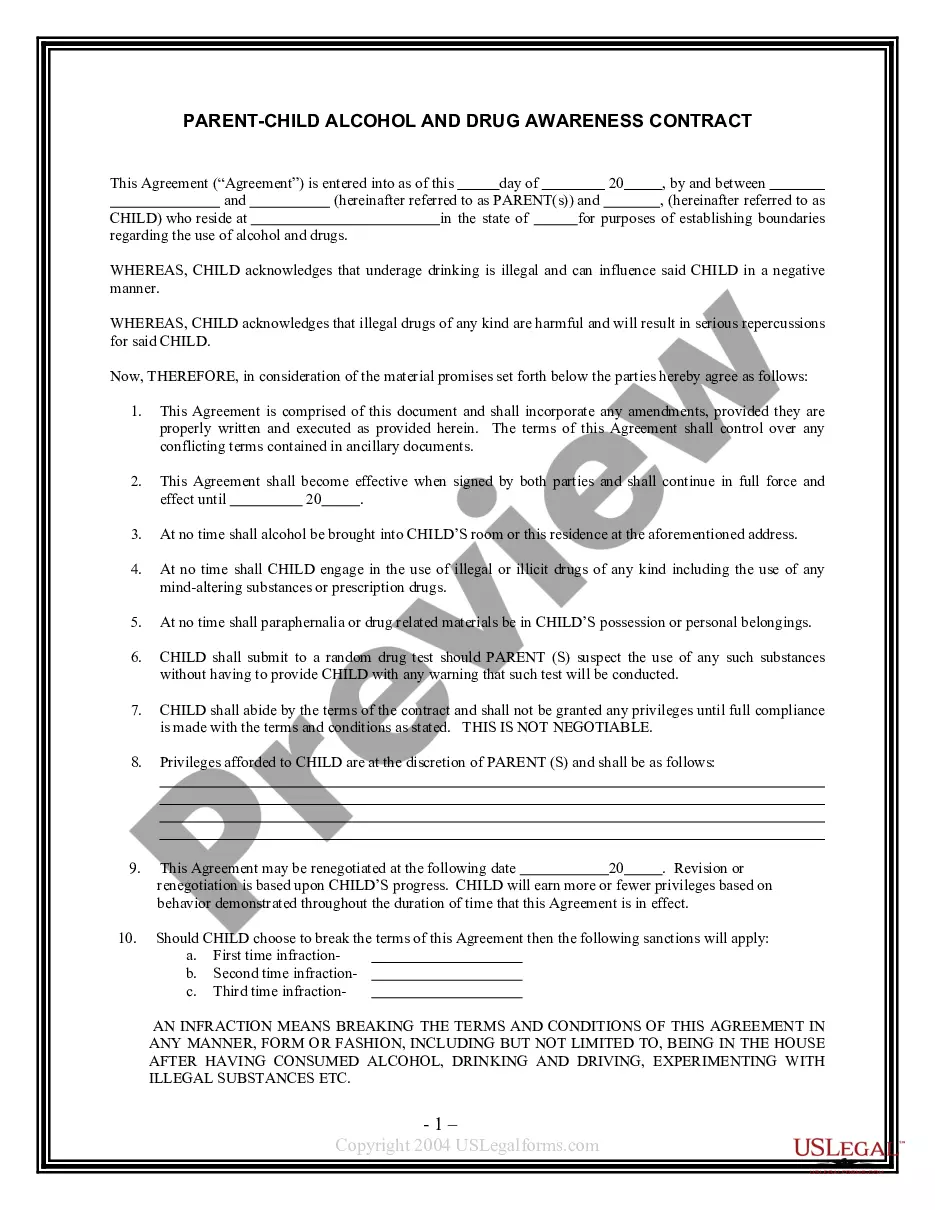
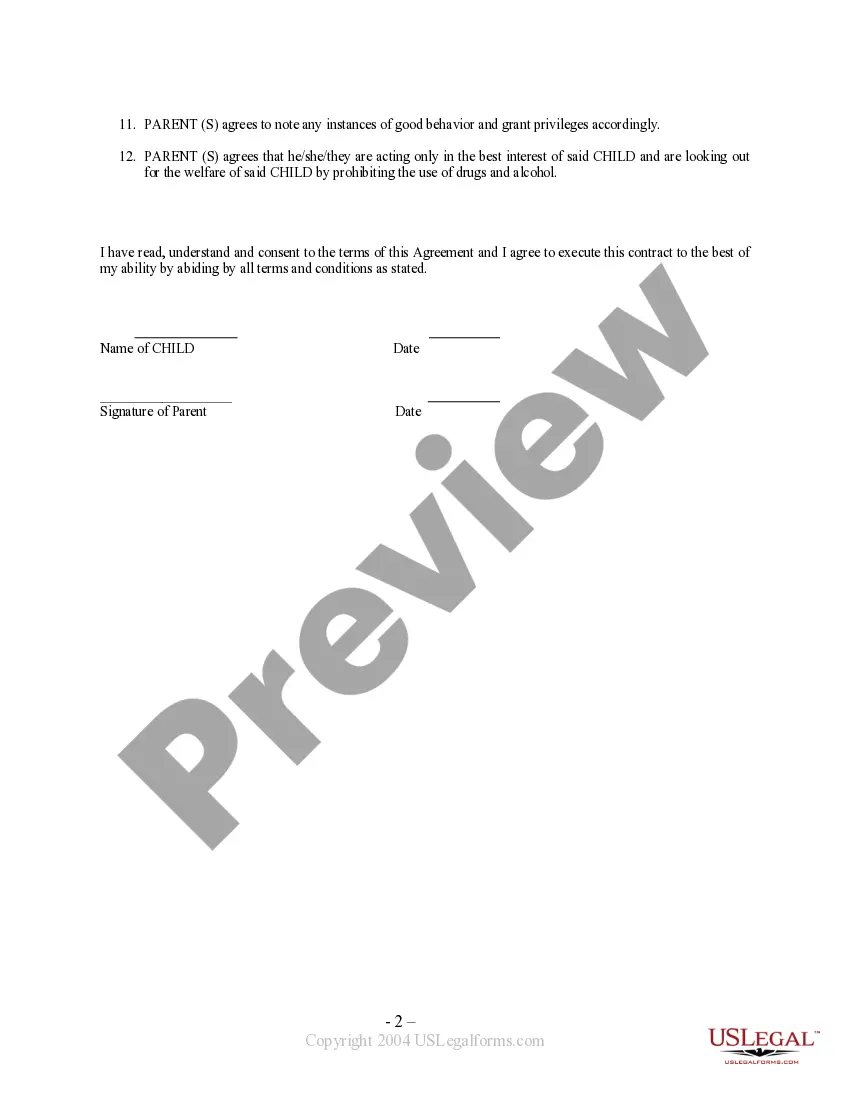
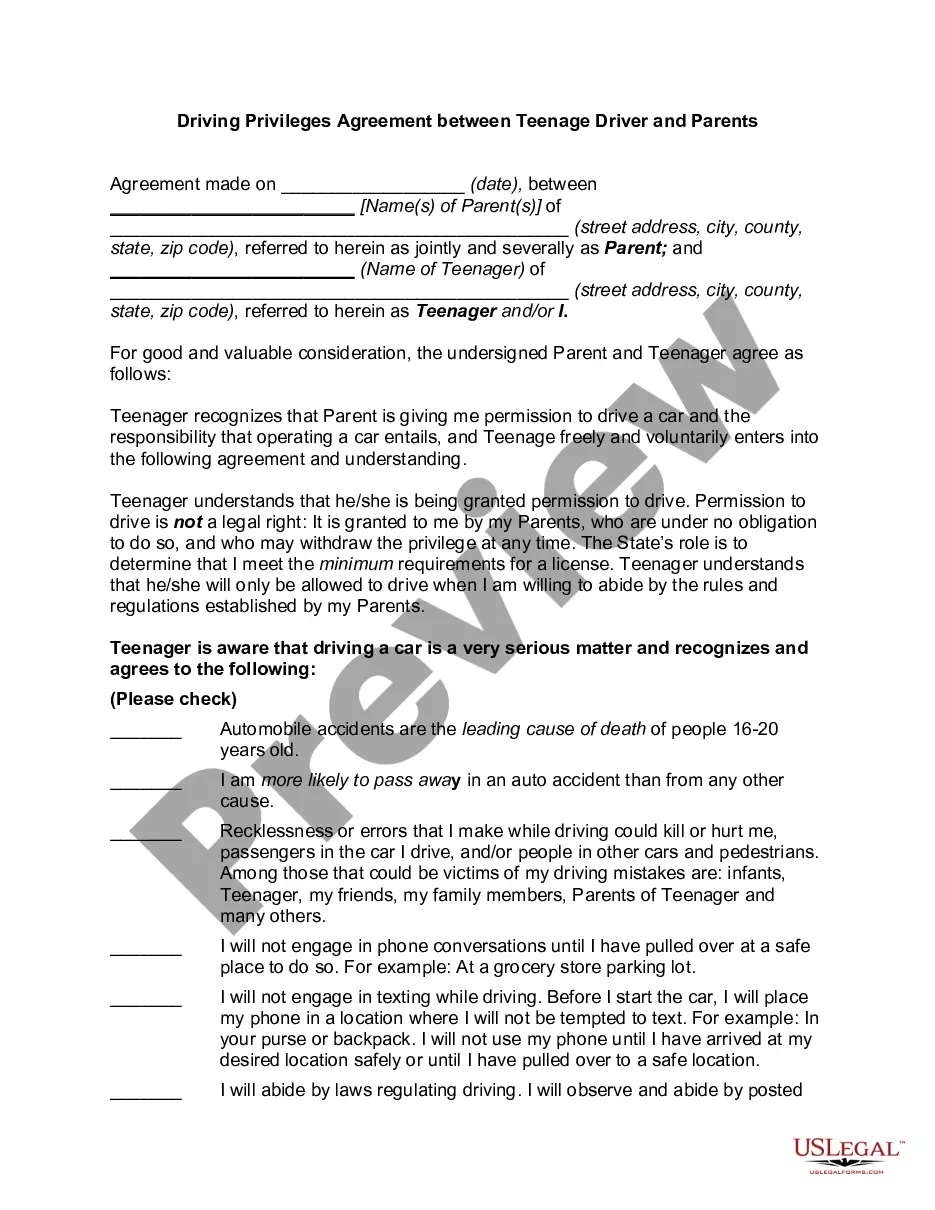
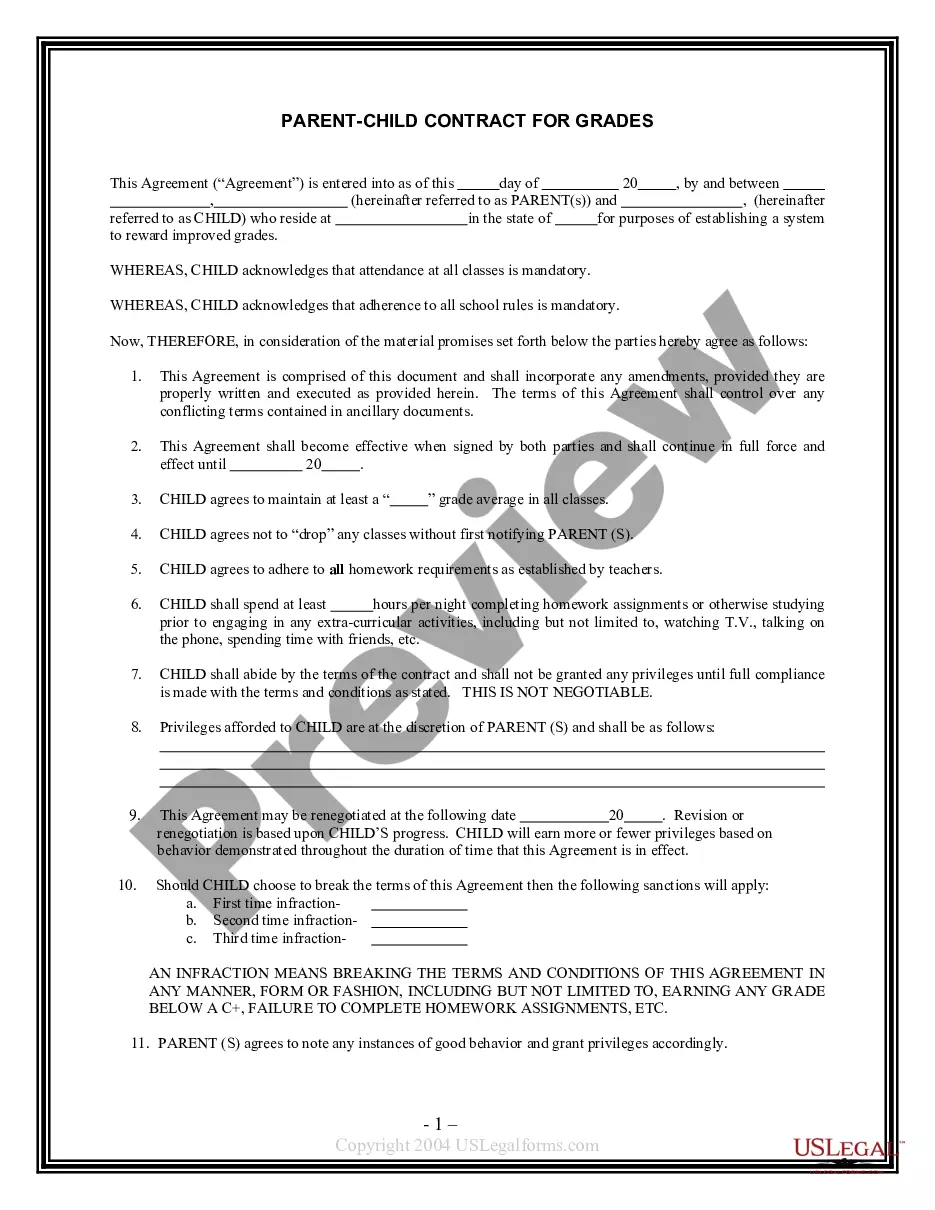
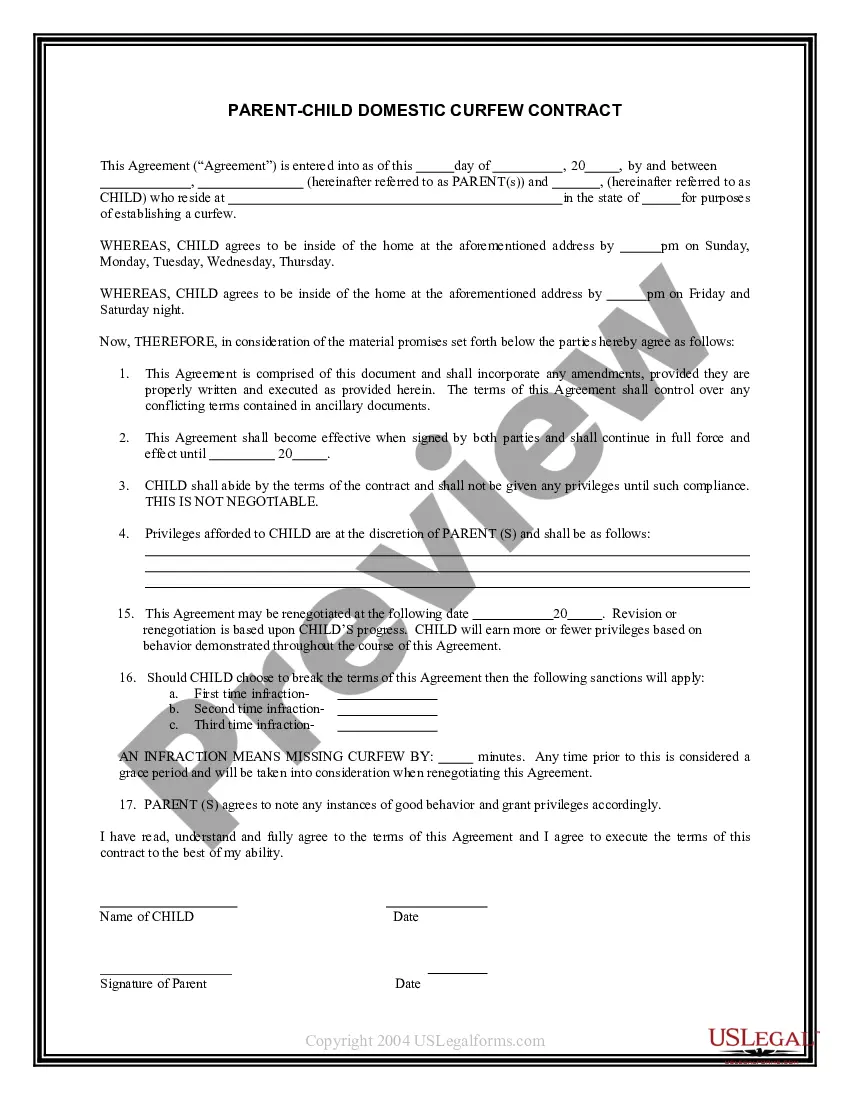
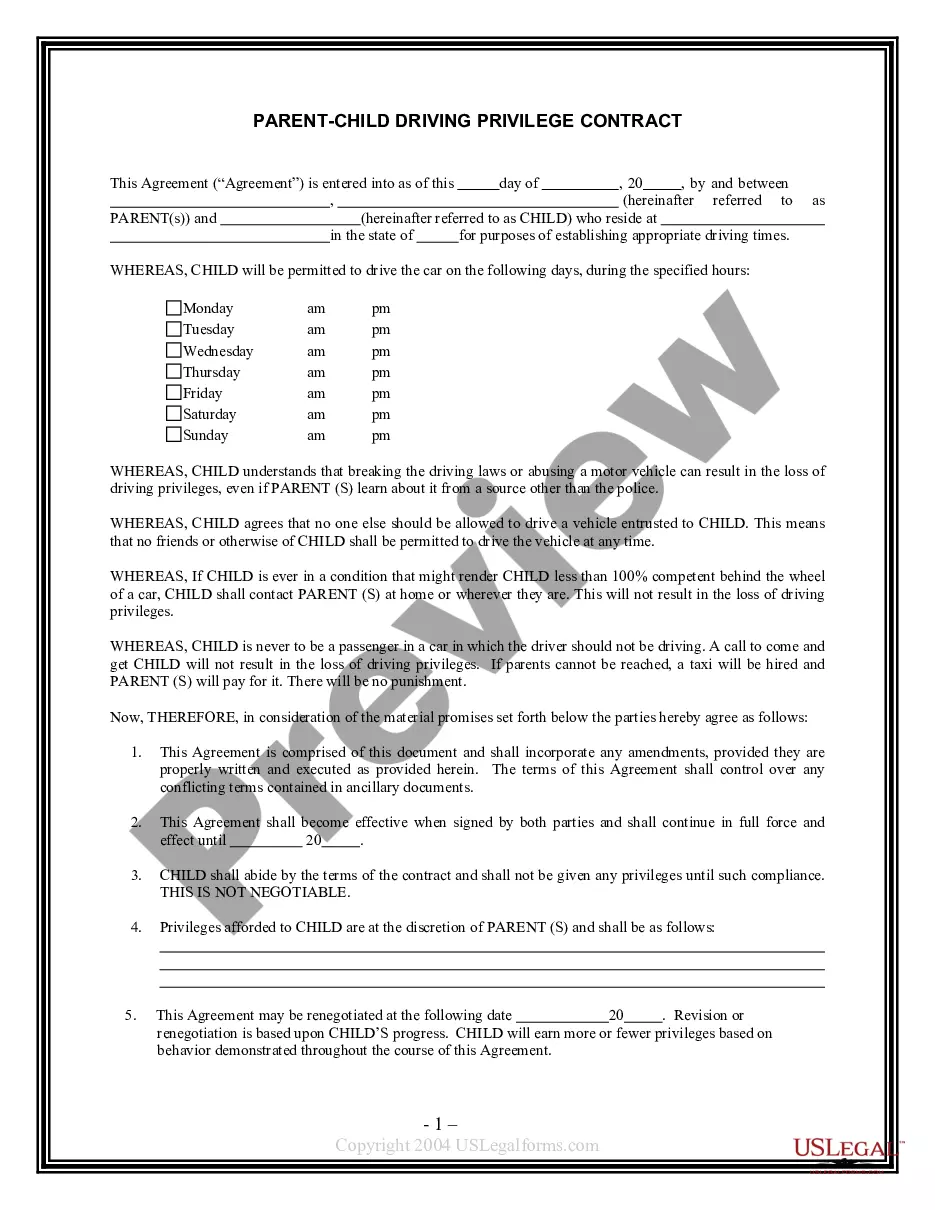
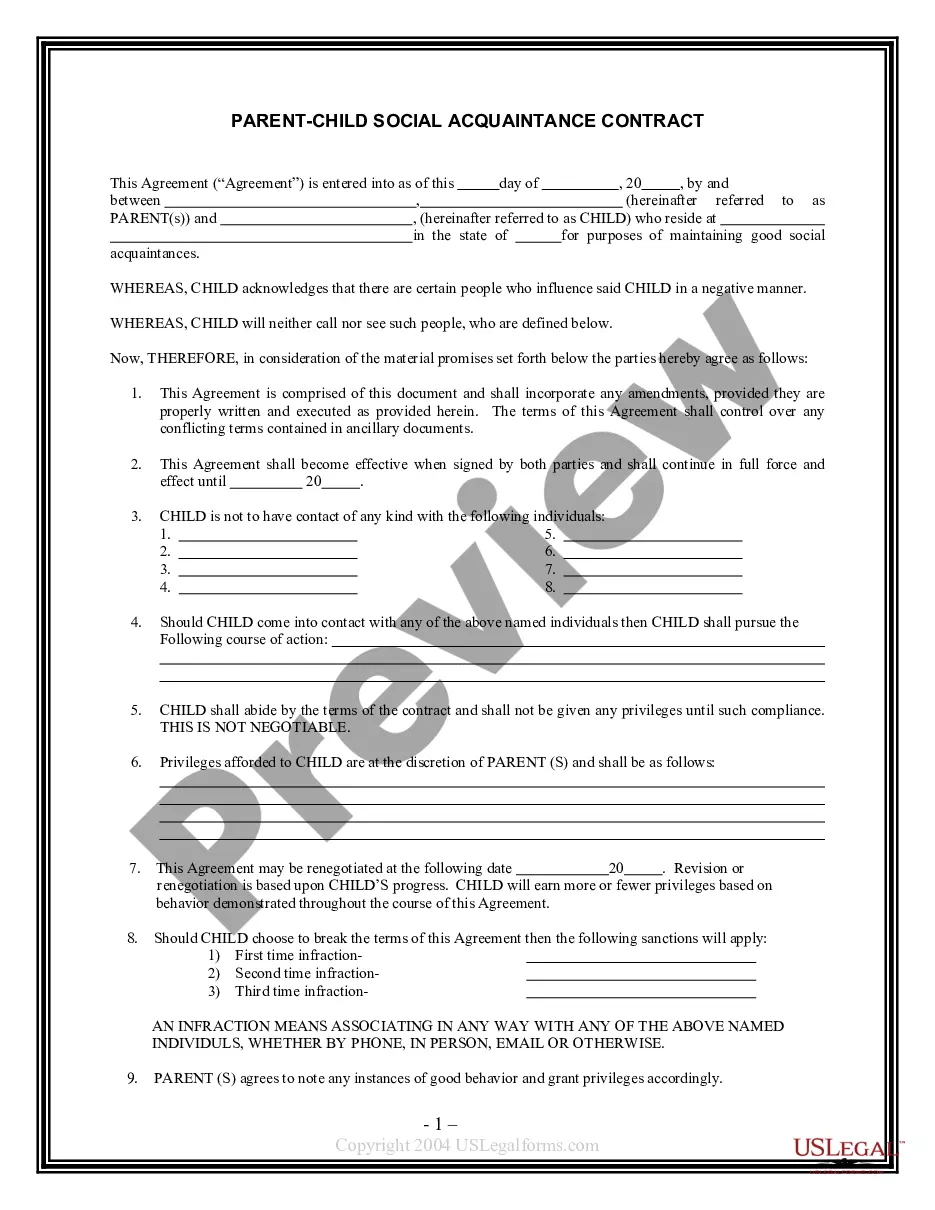
This is a contract between parent(s) and child regarding the use of drugs and alcohol and the repercussions for failing to abide by the terms as indicated. Child is also afforded certain privileges for good behavior as agreed upon by the parents.
Washington Parent - Child Contract For Alcohol And Drug Awareness
Category:
State:
Multi-State
Control #:
US-PC02
Format:
Word;
Rich Text
Instant download
Description
Free preview
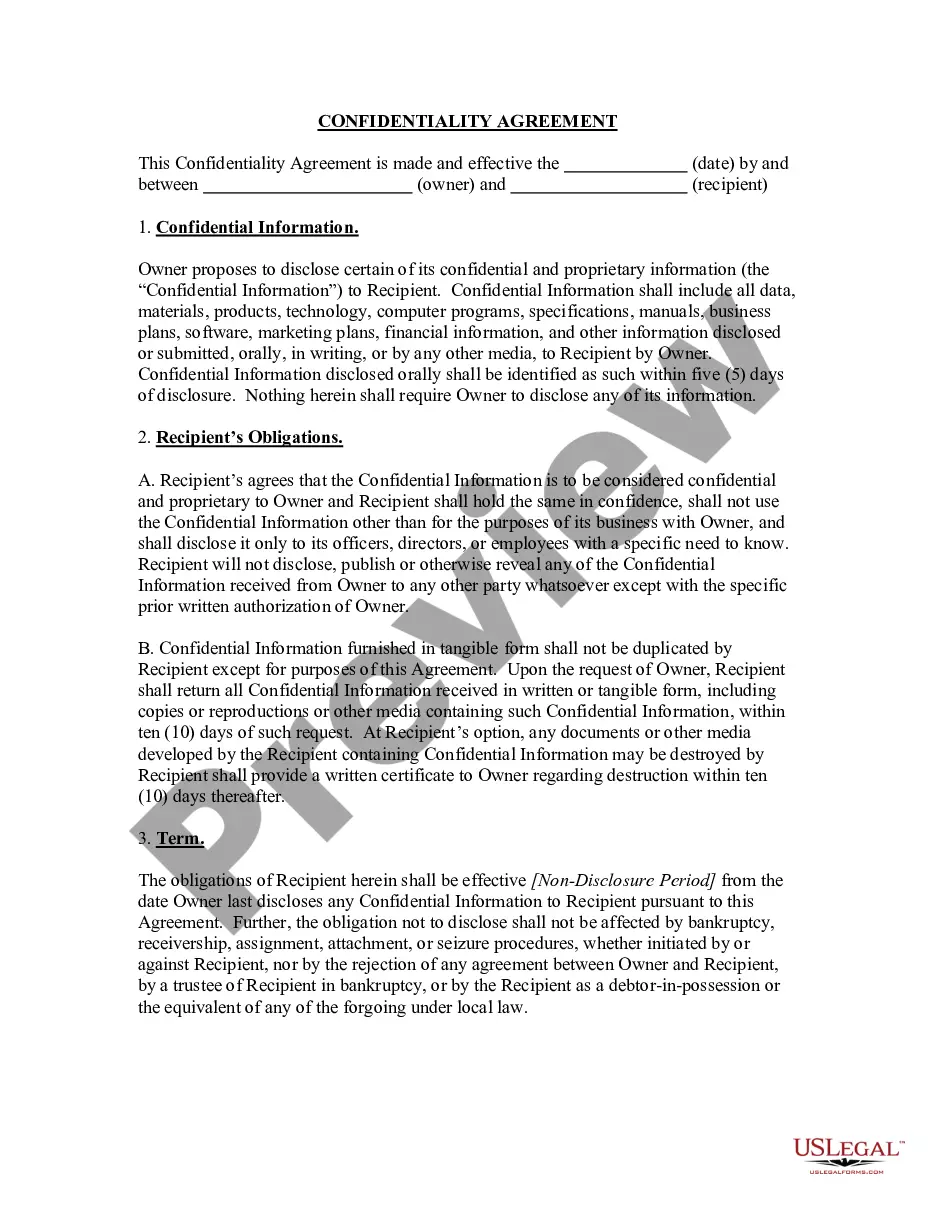
How to fill out Parent - Child Contract For Alcohol And Drug Awareness?
US Legal Forms - one of the most important repositories of legal documents in the United States - provides a broad array of legal document templates that you can download or create.
Through the website, you can access thousands of forms for business and personal purposes, organized by type, claims, or keywords. You will find the latest forms such as the Washington Parent - Child Agreement for Alcohol and Drug Awareness within moments.
If you already have a membership, Log In and retrieve the Washington Parent - Child Agreement for Alcohol and Drug Awareness from the US Legal Forms library. The Download button will appear on each document you view. You can access all previously downloaded forms in the My documents section of your account.
Select the format and download the form to your device.
Edit. Fill in, modify, print, and sign the downloaded Washington Parent - Child Agreement for Alcohol and Drug Awareness. Every document you add to your account has no expiration date and is yours indefinitely. Therefore, if you wish to download or print another copy, simply navigate to the My documents section and click on the form you need.
- Ensure you have selected the correct form for your state/region. Click on the Preview button to review the form's content.
- Check the form description to confirm you have selected the appropriate document.
- If the form does not meet your requirements, utilize the Search field at the top of the screen to find one that does.
- If you are satisfied with the form, validate your choice by clicking the Get now button.
- Then, choose the pricing option you prefer and provide your information to create an account.
- Process the payment. Use your credit card or PayPal account to complete the transaction.
Form popularity
FAQ
A sobriety clause in a custody agreement mandates that a parent must remain sober during their parenting time. This clause is vital in promoting the safety and well-being of the child. If you're navigating custody issues, incorporating a Washington Parent - Child Contract For Alcohol And Drug Awareness can be beneficial. It sets clear expectations regarding substance use, fostering a healthier and more secure atmosphere for your family.
In Washington, the law generally prohibits minors from consuming alcohol, even with supervision. However, there are specific exceptions for certain circumstances, such as religious ceremonies or events at home with parental consent. Understanding these nuances is crucial for parents, especially when considering creating a Washington Parent - Child Contract For Alcohol And Drug Awareness. This contract can help establish clear guidelines and expectations about alcohol use, ensuring a safer environment for your child.
Some people take their time while others go from zero to 60 in a short period of time. No matter how long your journey is, most rehabilitation counselors agree that there are four main stages of drug addiction: experimentation, regular use, risky use/abuse, and drug addiction and dependency.
Signs someone else is addicted:Changes in personality and behavior like a lack of motivation, irritability, and agitation.Bloodshot eyes and frequent bloody noses.Shakes, tremors, or slurred speech.Change in their daily routines.Lack of concern for personal hygiene.Unusual need for money; financial problems.More items...
The definition of addiction is explored. Elements of addiction derived from a literature search that uncovered 52 studies include: (a) engagement in the behavior to achieve appetitive effects, (b) preoccupation with the behavior, (c) temporary satiation, (d) loss of control, and (e) suffering negative consequences.
PSM adversely affects attachment, family dynamics and relationships. PSM significantly increases the risk of physical and emotional neglect. PSM is implicated in behavioural and mental health problems in children and young people. PSM often undermines school performance and academic attainment.
Goals and Effectiveness of TreatmentReducing substance abuse or achieving a substance-free life.Maximizing multiple aspects of life functioning.Preventing or reducing the frequency and severity of relapse.
Abstinence from alcohol involves completely avoiding intake of any alcohol and contrasts with controlled drinking that might help an alcohol addict to become a moderate and non-problematic drinker.
Certain factors can affect the likelihood and speed of developing an addiction:Family history of addiction. Drug addiction is more common in some families and likely involves genetic predisposition.Mental health disorder.Peer pressure.Lack of family involvement.Early use.Taking a highly addictive drug.
Marijuana Use. Marijuana remains the most commonly used illegal drug: Approximately 80 percent of current illicit drug users are marijuana or hashish users.Cocaine Use.Heroin Use.Methamphetamine Use.Nicotine Use (Cigarettes and Smokeless Tobacco)Inhalant Use.Hallucinogen Use.Anabolic Steroid Use.