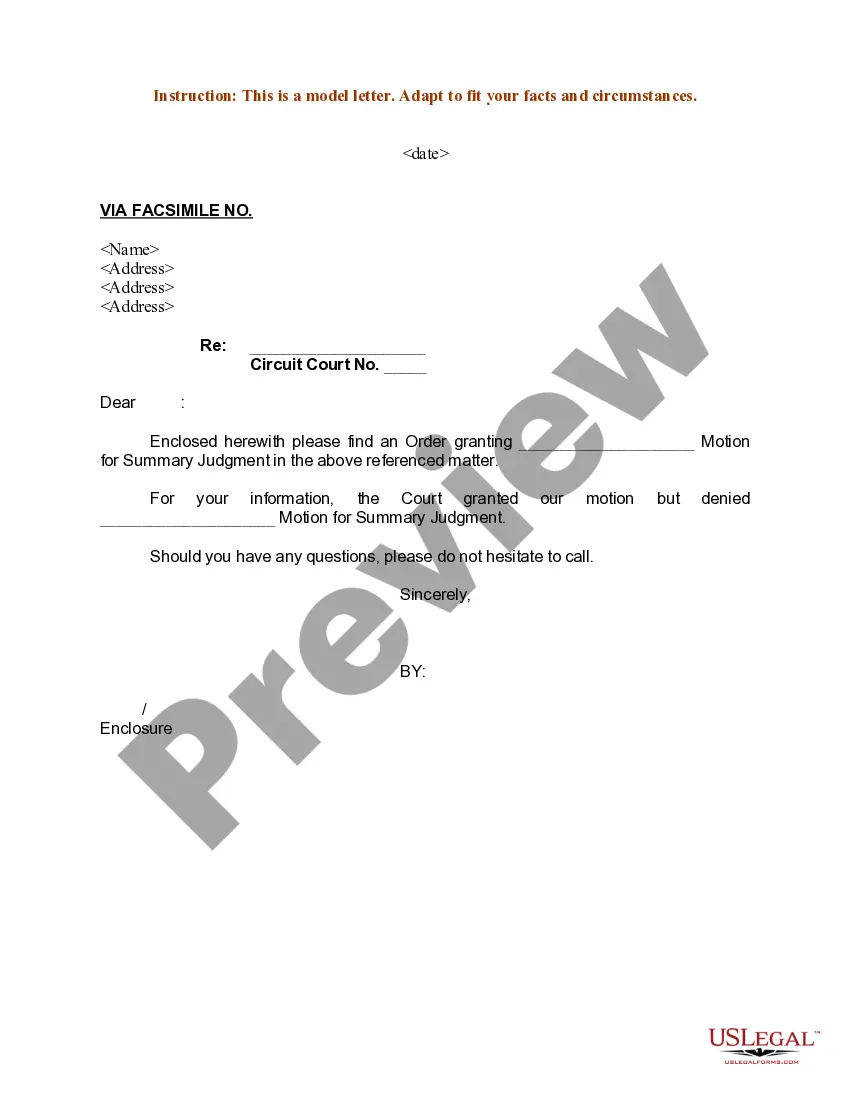
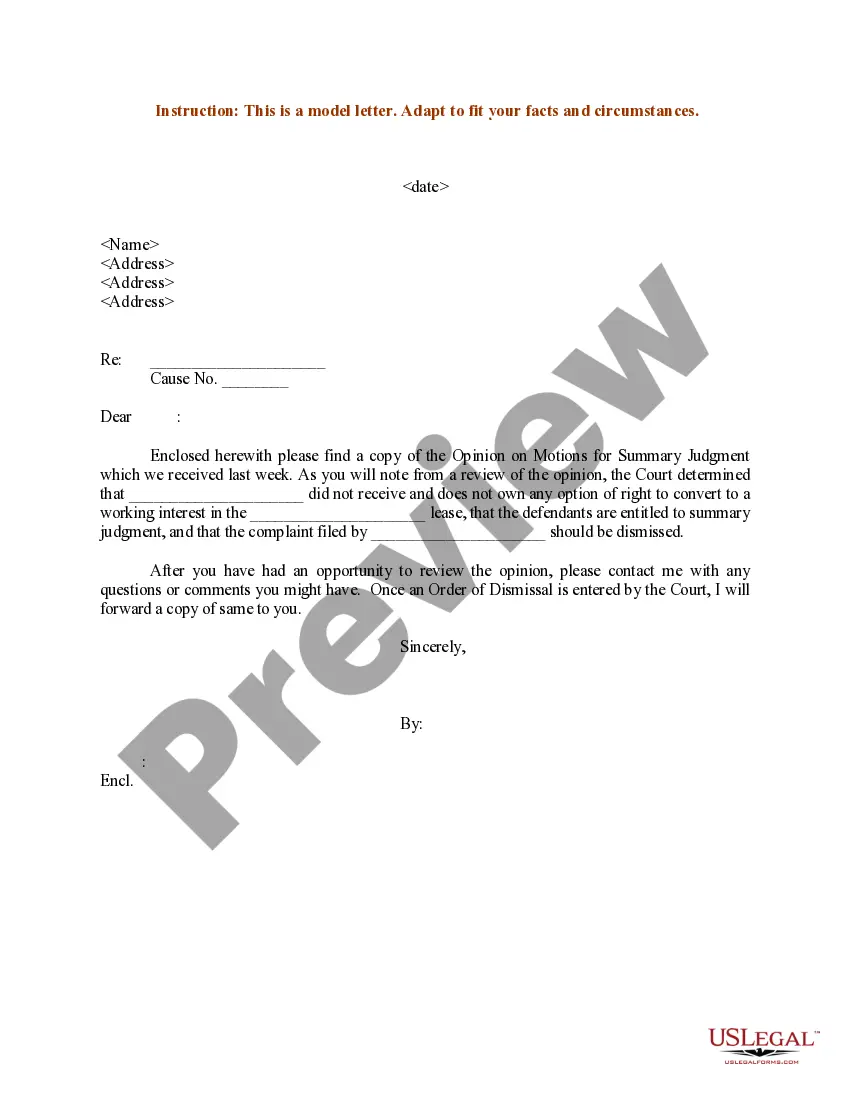
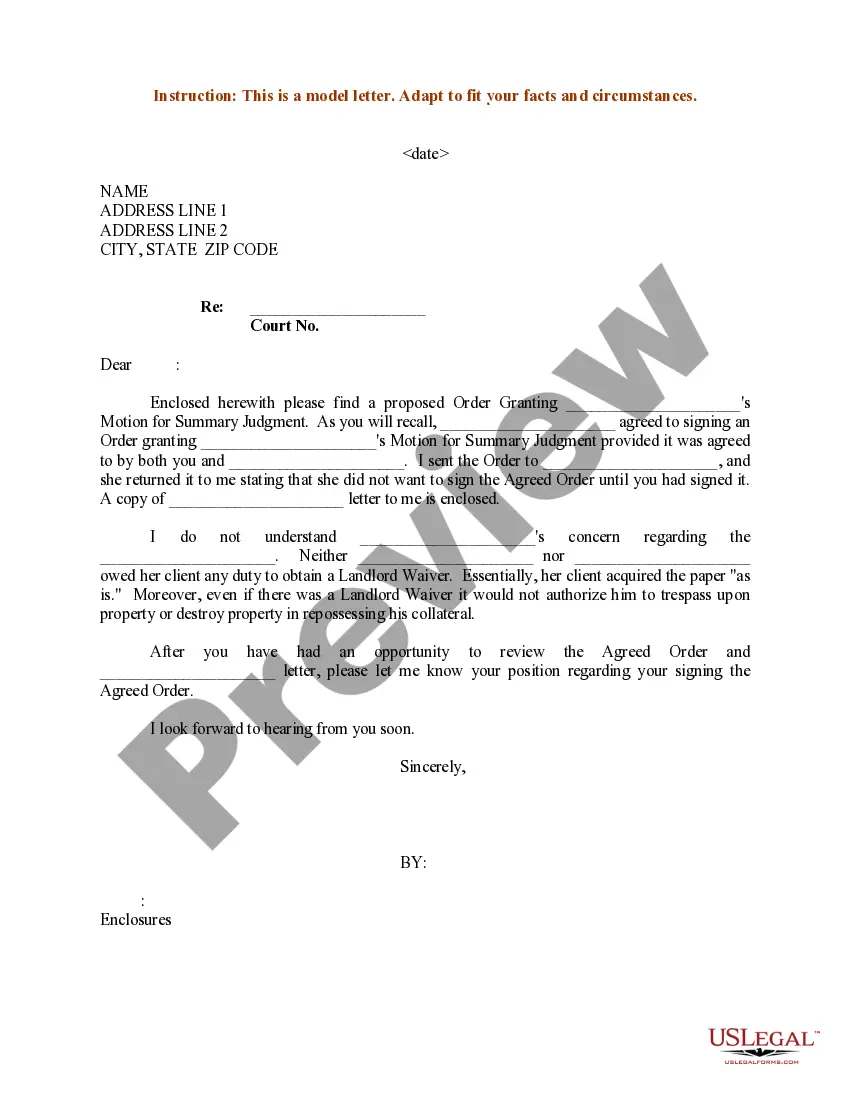
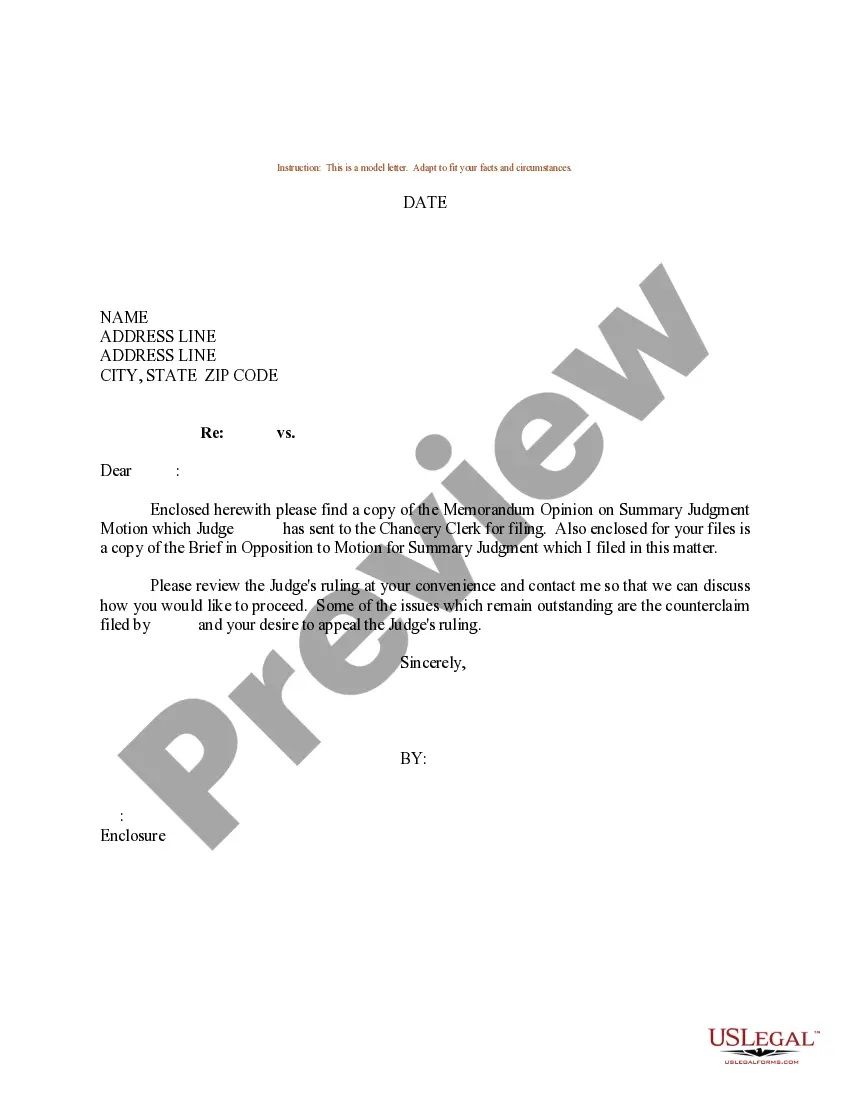
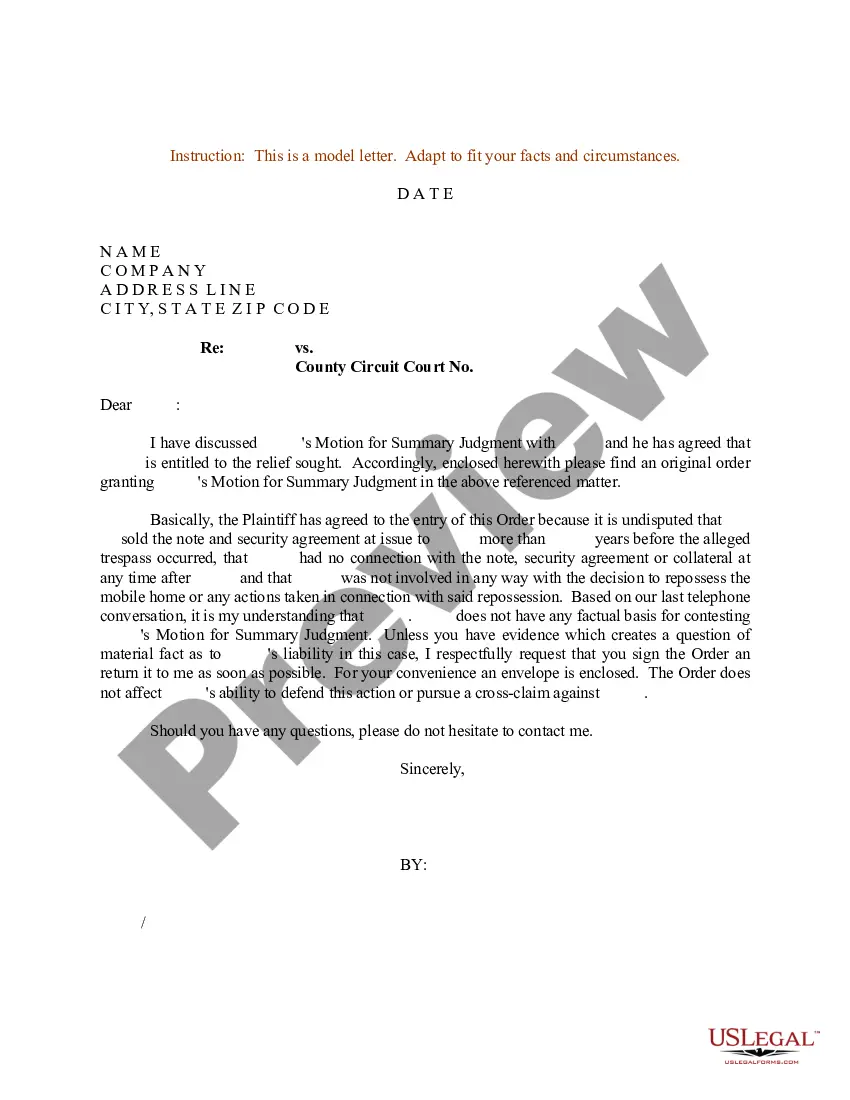
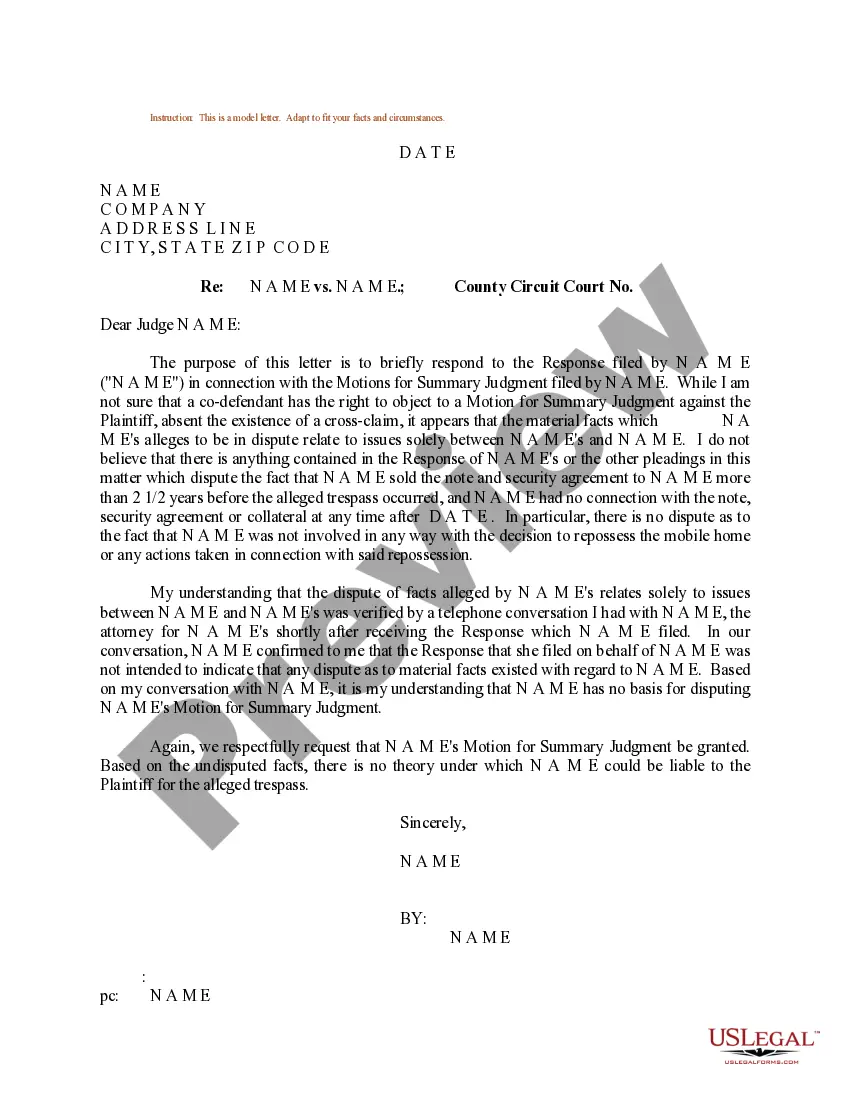
Washington Sample Letter for Order Granting Motion for Summary Judgment
Description
Get your form ready online
Our built-in tools help you complete, sign, share, and store your documents in one place.
Make edits, fill in missing information, and update formatting in US Legal Forms—just like you would in MS Word.
Download a copy, print it, send it by email, or mail it via USPS—whatever works best for your next step.
Sign and collect signatures with our SignNow integration. Send to multiple recipients, set reminders, and more. Go Premium to unlock E-Sign.
If this form requires notarization, complete it online through a secure video call—no need to meet a notary in person or wait for an appointment.
We protect your documents and personal data by following strict security and privacy standards.

Make edits, fill in missing information, and update formatting in US Legal Forms—just like you would in MS Word.

Download a copy, print it, send it by email, or mail it via USPS—whatever works best for your next step.

Sign and collect signatures with our SignNow integration. Send to multiple recipients, set reminders, and more. Go Premium to unlock E-Sign.

If this form requires notarization, complete it online through a secure video call—no need to meet a notary in person or wait for an appointment.

We protect your documents and personal data by following strict security and privacy standards.
Looking for another form?

How to fill out Sample Letter For Order Granting Motion For Summary Judgment?
If you desire to finish, acquire, or produce legal document templates, utilize US Legal Forms, the most extensive collection of legal forms available online.
Employ the site's user-friendly and efficient search to locate the documents you need.
Numerous templates for business and personal needs are organized by categories and states, or keywords. Use US Legal Forms to obtain the Washington Sample Letter for Order Granting Motion for Summary Judgment with just a few clicks.
Step 5. Process the transaction. You can use your credit card or PayPal account to complete the purchase.
Step 6. Choose the format of the legal form and download it to your device.Step 7. Fill out, modify, and print or sign the Washington Sample Letter for Order Granting Motion for Summary Judgment. Each legal document template you purchase is yours forever. You have access to every type you saved in your account. Select the My documents section and choose a form to print or download again.Stay competitive and download, and print the Washington Sample Letter for Order Granting Motion for Summary Judgment with US Legal Forms. There are millions of professional and state-specific forms you can utilize for your business or personal needs.
- If you are already a US Legal Forms user, Log In to your account and select the Download button to retrieve the Washington Sample Letter for Order Granting Motion for Summary Judgment.
- You can also access forms you previously saved in the My documents section of your account.
- If you are using US Legal Forms for the first time, follow the steps outlined below.
- Step 1. Ensure you have selected the form for your specific city/state.
- Step 2. Use the Preview feature to review the form's content. Be sure to read the description.
- Step 3. If you are not satisfied with the form, use the Search area at the top of the screen to find alternative versions of the legal form template.
- Step 4. Once you have found the form you need, click the Get now button. Choose the pricing plan you prefer and enter your credentials to register for an account.
Form popularity
FAQ
The outcome of a summary judgment application will be one of: Judgment in favour of the applicant. Striking out or dismissal of the claim.
The main disadvantage of summary judgment is that a Defendant need only create a smokescreen in order to successfully avoid summary judgment. The court will not analyse the issues in any great detail and so an application will only be successful if a case is overwhelmingly in your favour.
Ing to Federal Judicial Center research, summary-judgment motions are filed in 17% of federal cases.
The introductory paragraph should begin, "Defendant John Smith respectfully moves for summary judgment. As reasons for this motion?." Then list your arguments, as in the motion itself. Some practitioners state that you should not repeat language word for word, but I disagree.
Rule 56 of the Federal Rules of Civil Procedure governs summary judgment for federal courts. Under Rule 56, in order to succeed in a motion for summary judgment, a movant must show 1) that there is no genuine dispute as to any material fact, and 2) that the movant is entitled to judgment as a matter of law.
Rule 56(c)(4) provides that a formal affidavit or a written unsworn declaration that complies with 28 U.S.C. § 1746 can be used to support or oppose a motion for summary judgment.
Get a Fair Hearing in Court Show that the motion fails to list the specific facts and law supporting summary judgment. ... Show that a dispute exists on a material fact. ... Show that the law does not support judgment on the undisputed facts.
The chance of success in these cases is less than 10% [1]. Another study found that summary judgment is mostly granted in Title VII cases, for example, cases involving equal pay or employment discrimination [2]. When it comes to federal cases, summary judgments are filed in 17% of total cases.