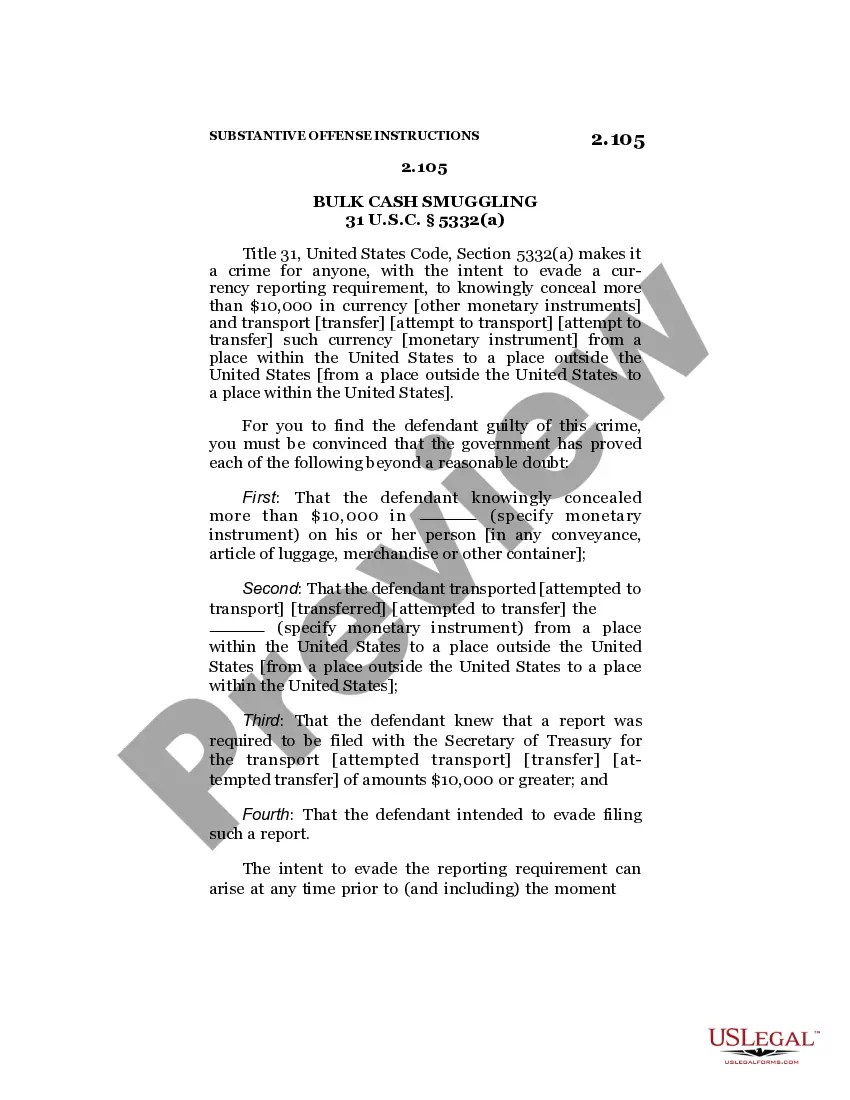
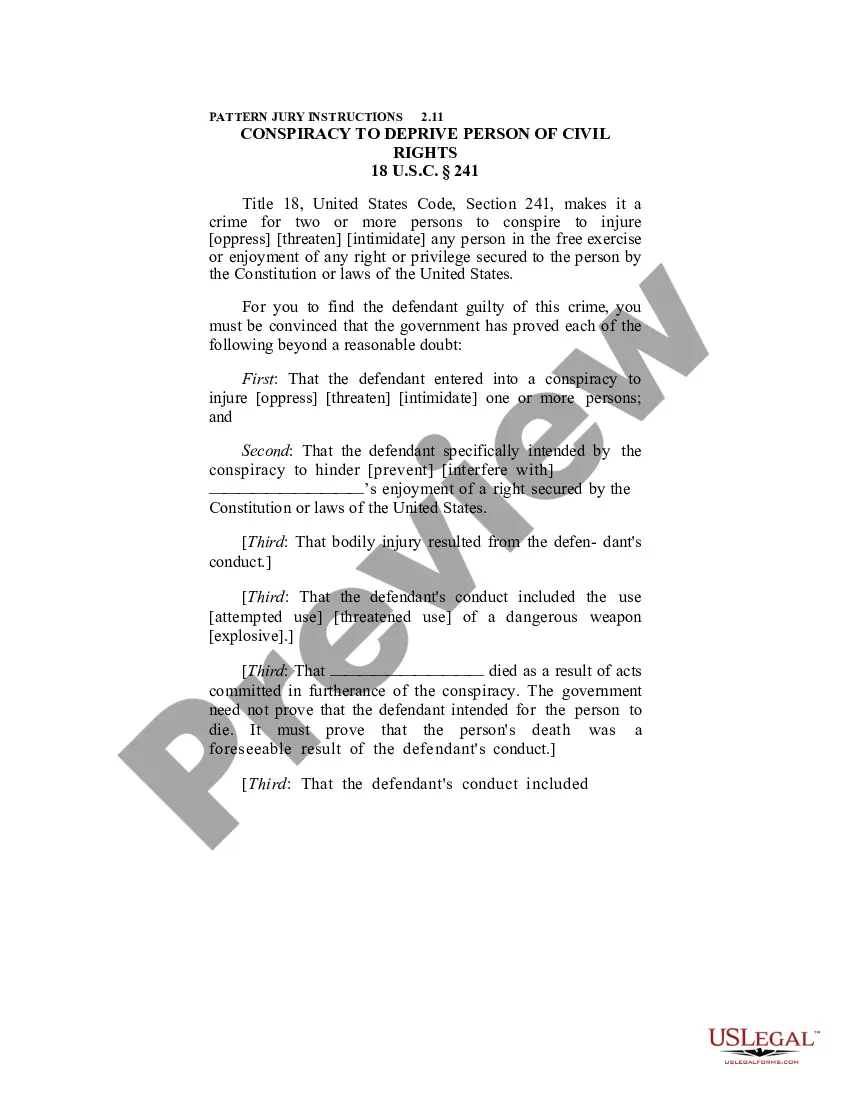
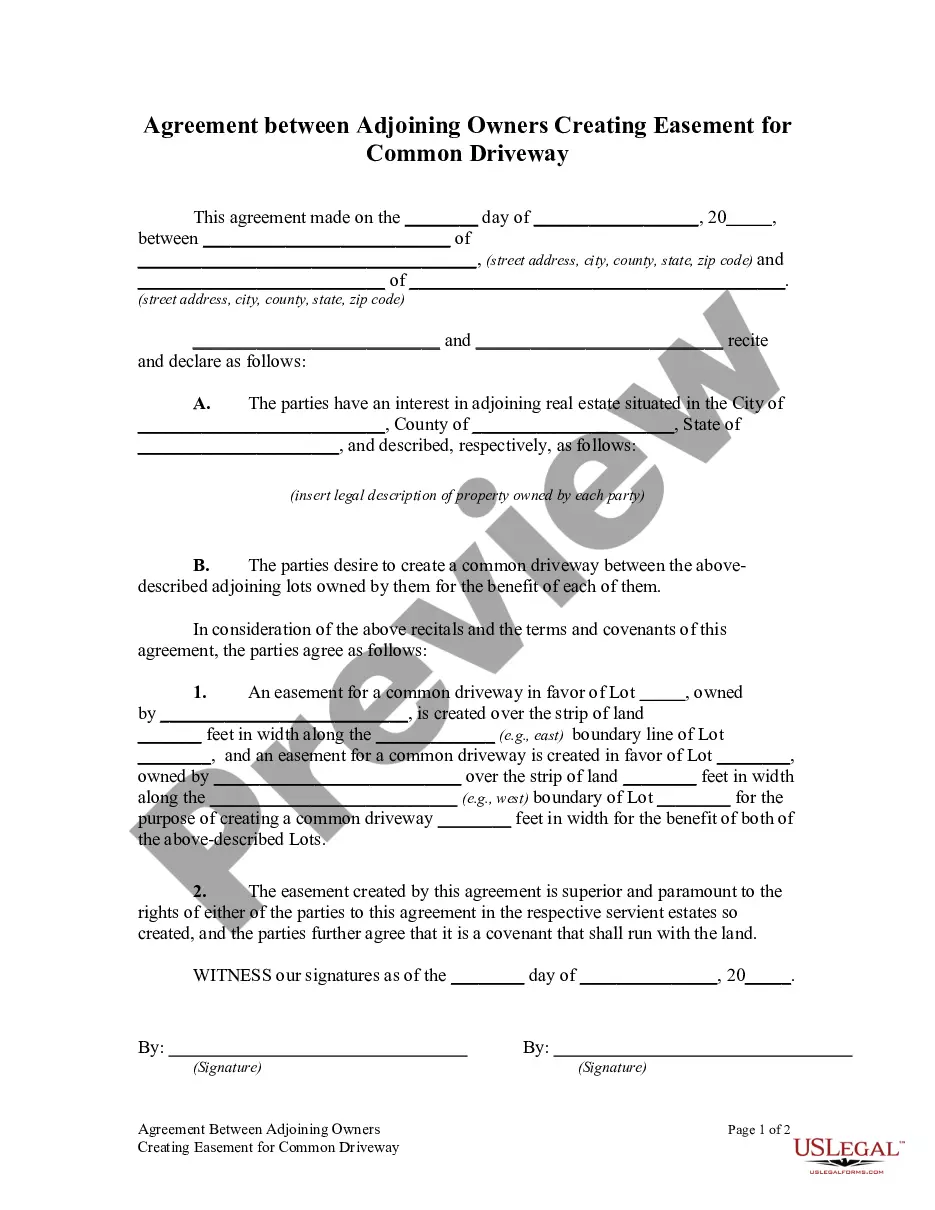
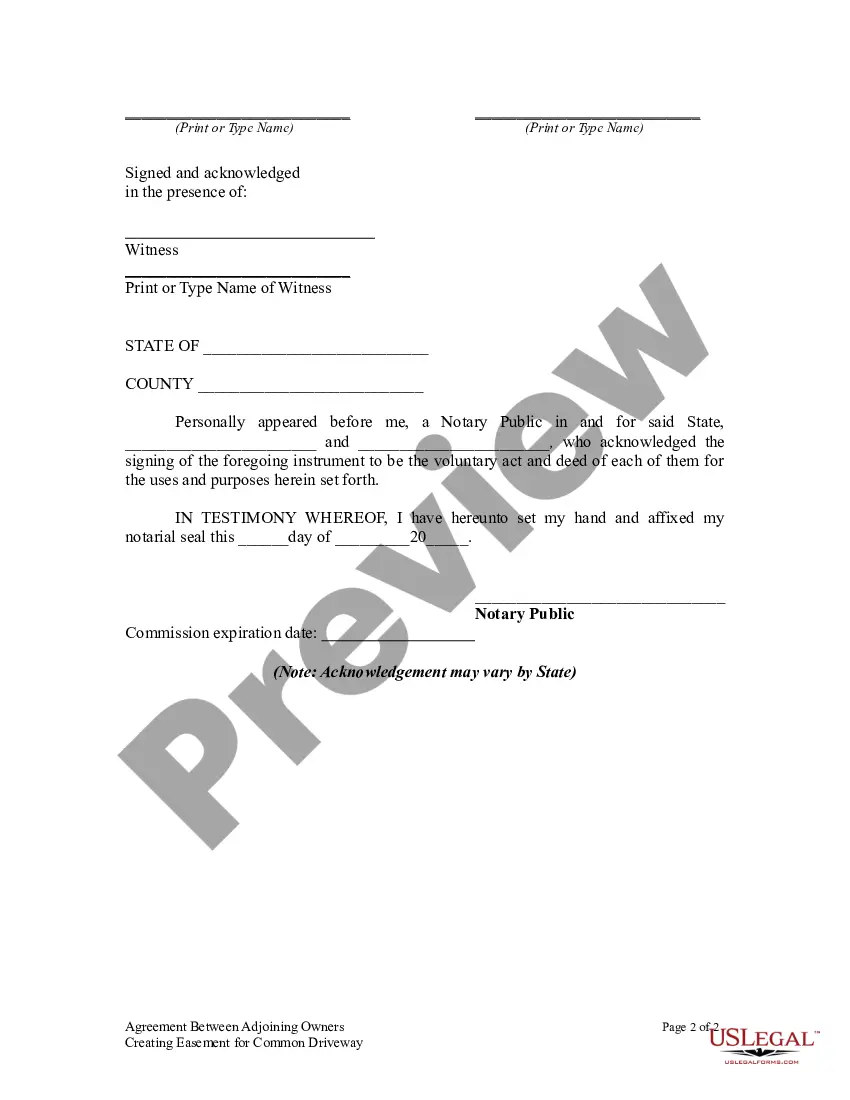
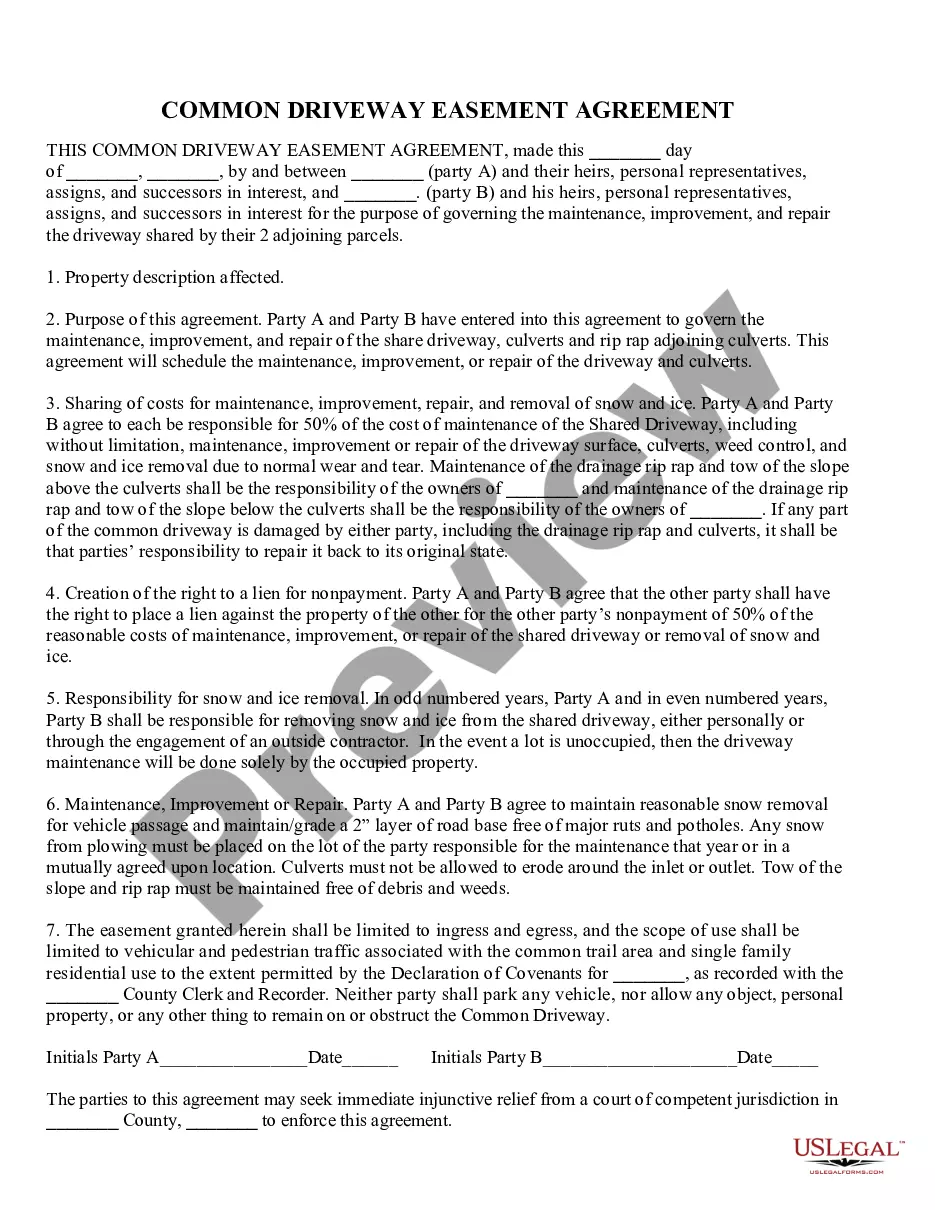
Washington Agreement between Adjoining Owners Creating Easement for Common Driveway
Description
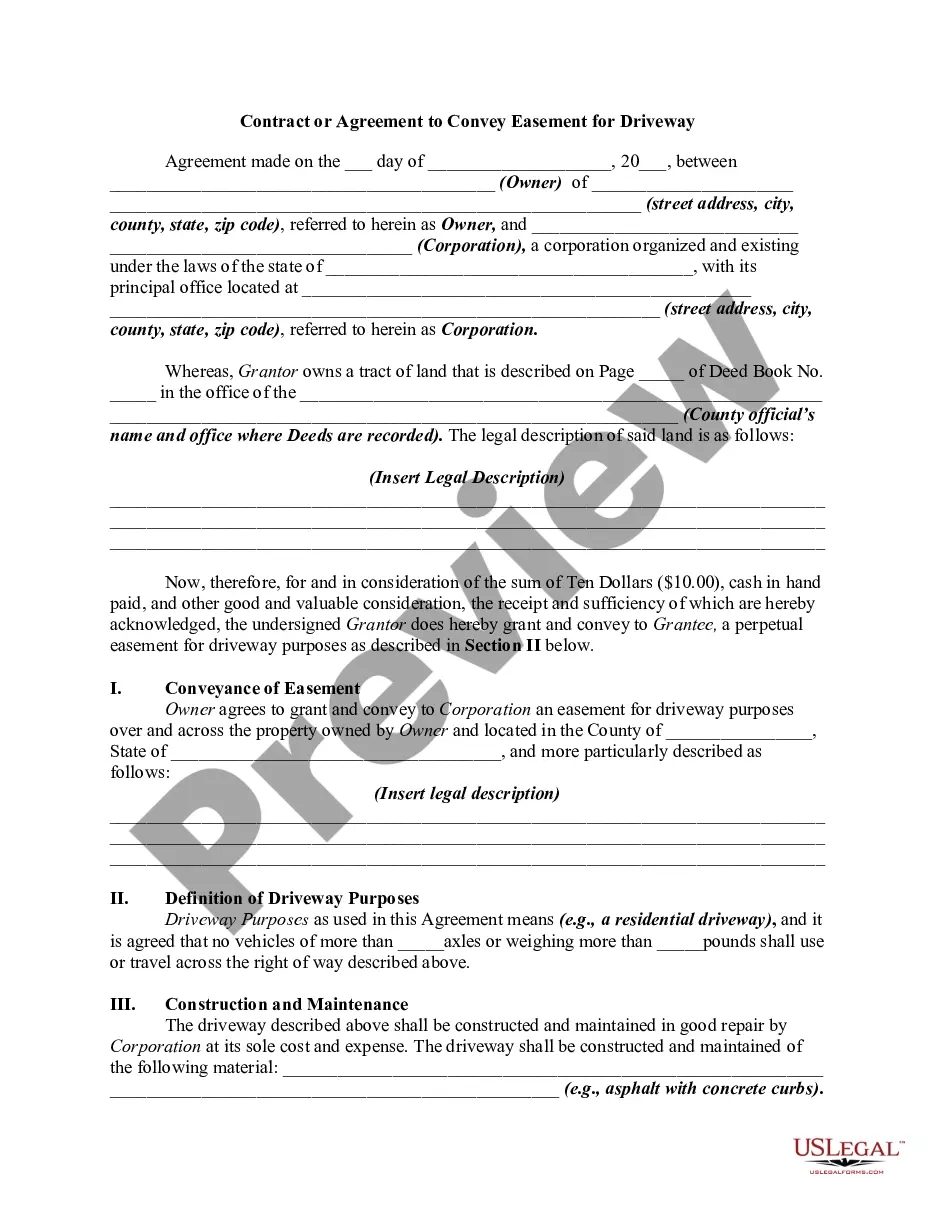
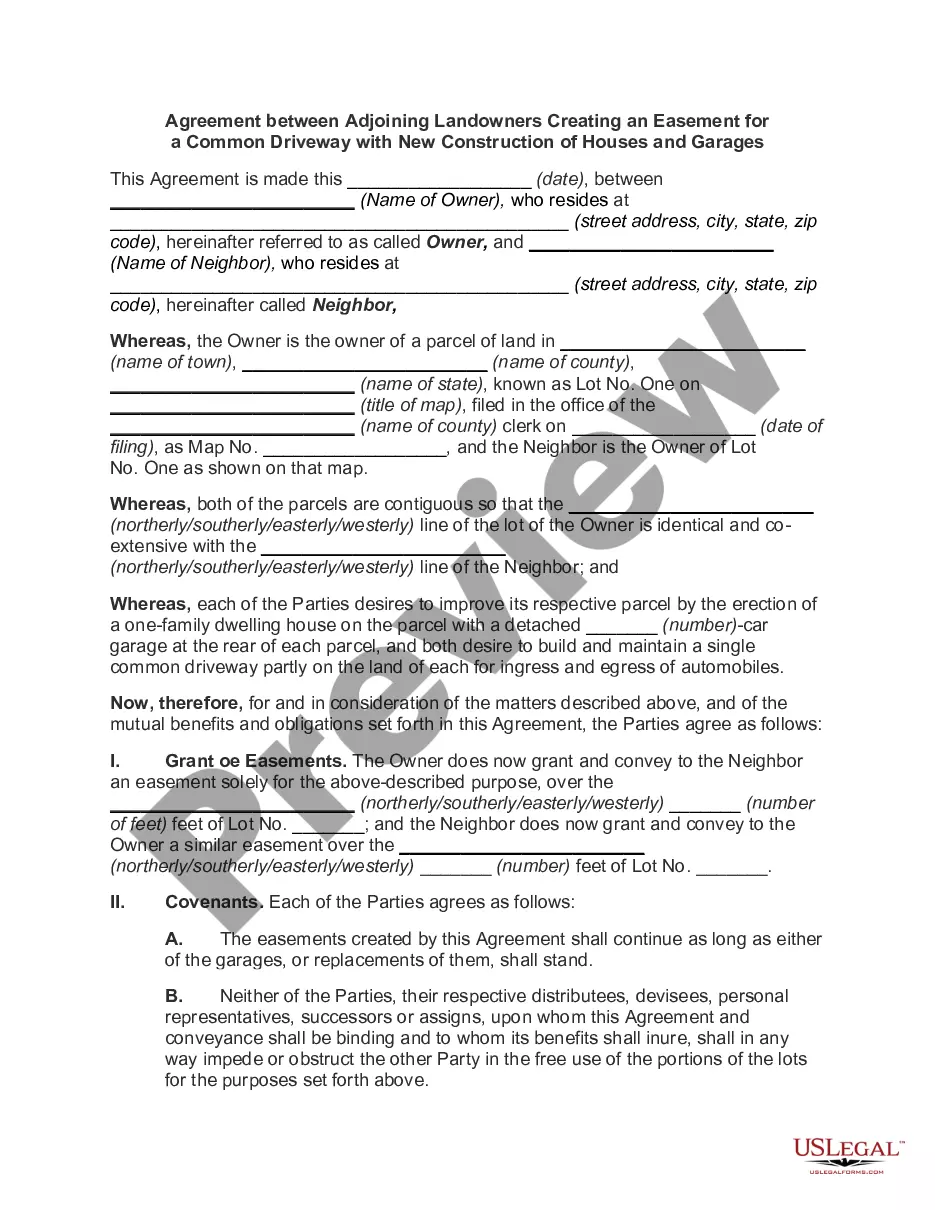
Get your form ready online
Our built-in tools help you complete, sign, share, and store your documents in one place.
Make edits, fill in missing information, and update formatting in US Legal Forms—just like you would in MS Word.
Download a copy, print it, send it by email, or mail it via USPS—whatever works best for your next step.
Sign and collect signatures with our SignNow integration. Send to multiple recipients, set reminders, and more. Go Premium to unlock E-Sign.
If this form requires notarization, complete it online through a secure video call—no need to meet a notary in person or wait for an appointment.
We protect your documents and personal data by following strict security and privacy standards.

Make edits, fill in missing information, and update formatting in US Legal Forms—just like you would in MS Word.

Download a copy, print it, send it by email, or mail it via USPS—whatever works best for your next step.

Sign and collect signatures with our SignNow integration. Send to multiple recipients, set reminders, and more. Go Premium to unlock E-Sign.

If this form requires notarization, complete it online through a secure video call—no need to meet a notary in person or wait for an appointment.

We protect your documents and personal data by following strict security and privacy standards.
Looking for another form?


How to fill out Agreement Between Adjoining Owners Creating Easement For Common Driveway?
US Legal Forms - one of the most prominent collections of legal documents in the United States - offers a broad selection of legal form templates that you can download or print. By using the website, you can find thousands of forms for business and personal purposes, organized by categories, states, or keywords.
You can access the latest versions of forms such as the Washington Agreement between Adjoining Owners Creating Easement for Common Driveway within moments. If you already have a monthly subscription, Log In and download the Washington Agreement between Adjoining Owners Creating Easement for Common Driveway from the US Legal Forms library. The Obtain button will appear on every form you view. You have access to all previously downloaded forms in the My documents section of your account.
To utilize US Legal Forms for the first time, here are simple instructions to get started: Ensure you have selected the correct form for your city/county. Click the Review button to examine the form’s details. Check the form information to confirm that you have chosen the right form. If the form does not meet your needs, use the Search field at the top of the screen to find one that does. If you are satisfied with the form, confirm your selection by clicking the Get now button. Then, choose the pricing plan you prefer and provide your information to register for an account. Complete the transaction. Use your credit card or PayPal account to finalize the transaction. Select the format and download the form to your device. Make modifications. Fill out, edit, print, and sign the downloaded Washington Agreement between Adjoining Owners Creating Easement for Common Driveway.
- Each template you added to your account has no expiration date and belongs to you indefinitely.
- So, if you want to download or print another copy, simply visit the My documents area and click on the form you desire.
- Access the Washington Agreement between Adjoining Owners Creating Easement for Common Driveway with US Legal Forms, the most extensive collection of legal document templates.
- Utilize thousands of professional and state-specific templates that meet your business or personal needs and requirements.
Form popularity
FAQ
Prescriptive easements ? To obtain a prescriptive easement in Washington, one property owner must openly, hostilely, and continuously use part of another's land for 10 years without permission. The laws for establishing a prescriptive easement are almost the same as the requirements for establishing adverse possession.
The holders of an interest in an easement must maintain the easement. Nothing prohibits holders from making agreements as to the allocation of maintenance and costs, including agreements that allocate the obligations to fewer than all holders. How costs are shared if there is an agreement.
The legal situation may not bother some people, but for others, it may. Most of the time, a property owner cannot block an easement that has already existed in the property's deed. When the property owner contests the easement's boundaries, a reputable local company in California can conduct a property survey.
The party with the easement rights to use the land is responsible for safety and maintenance, including any accidents.
Non-exclusive means that a number of different parties can use the easement. Non-exclusive can also mean that additional parties could be granted the right to use that same easement in the future. A common example of a non-exclusive easement is an access or roadway easement in a shopping center.
In Washington, a person claiming a prescriptive easement must prove that he or she (and/or a predecessor in interest) used another person's land for 10 years, and the use was (1) hostile; (2) open and notorious; (3) continuous or uninterrupted; (4) over a uniform route; and (5) exclusive.
Who should maintain a shared driveway? It's largely expected that both homeowners will do their bit to help maintain the conditions of a shared driveway. However, it is worth noting that neither homeowner has a right to store anything in the area, such as bins.
If your property is subject to an easement that you wish to dispute, you may be able to pursue a court order that restricts or removes the other party's easement rights. In some cases, you may be able to recover monetary damages to make up for any losses that the easement has caused.