Washington A Guide on When and How to Challenge, Seal, Vacate, or Expunge
Overview of this form
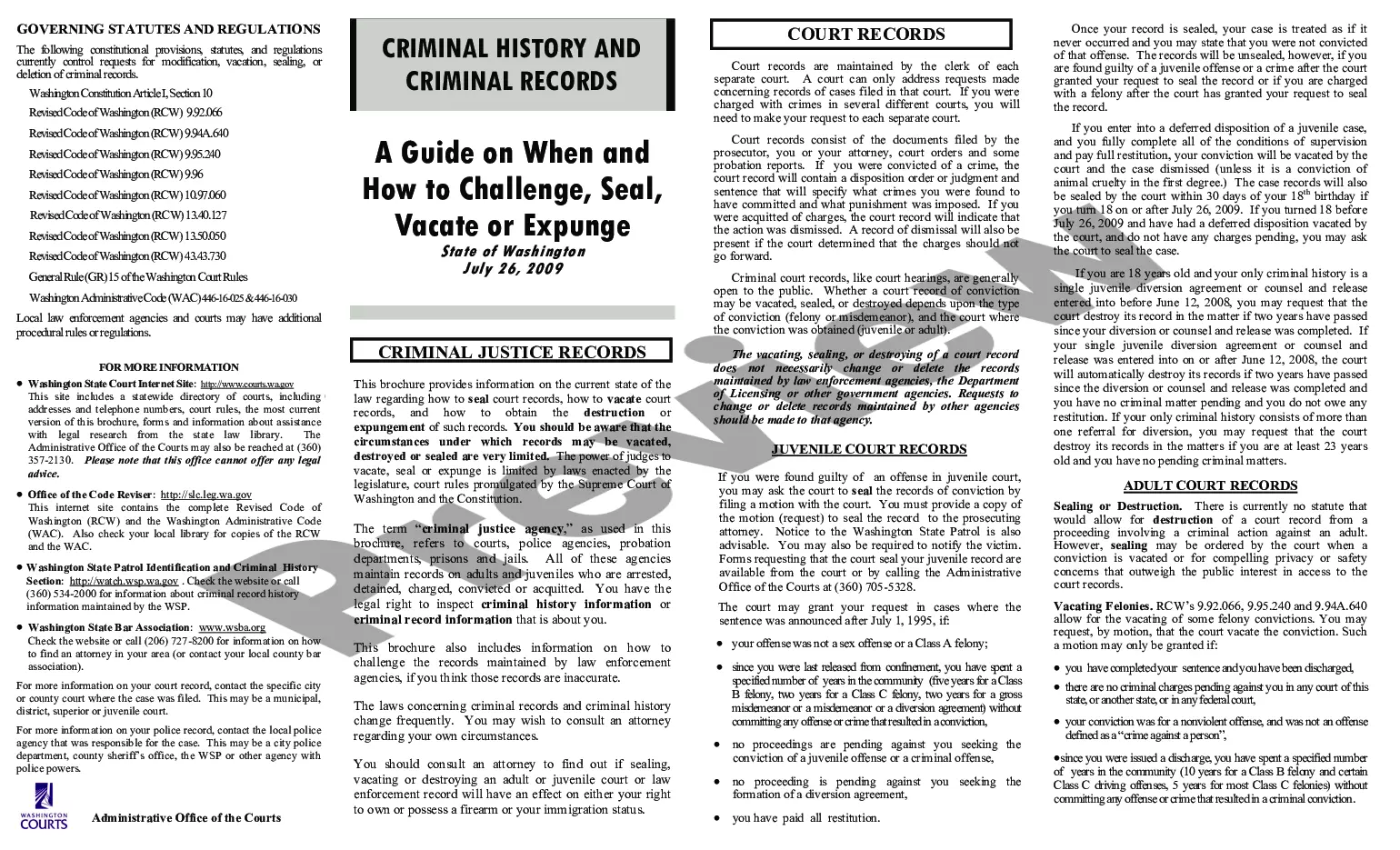
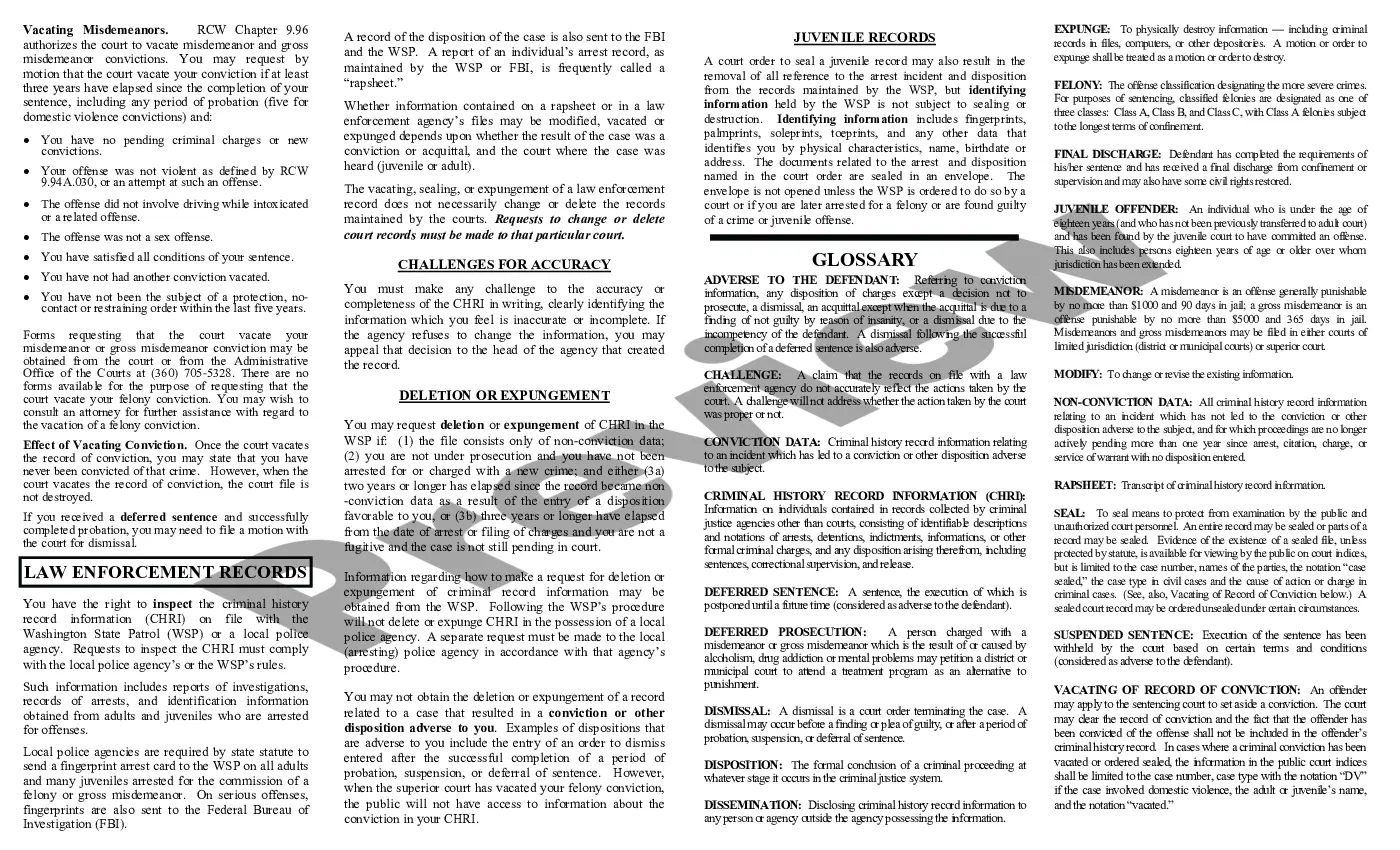
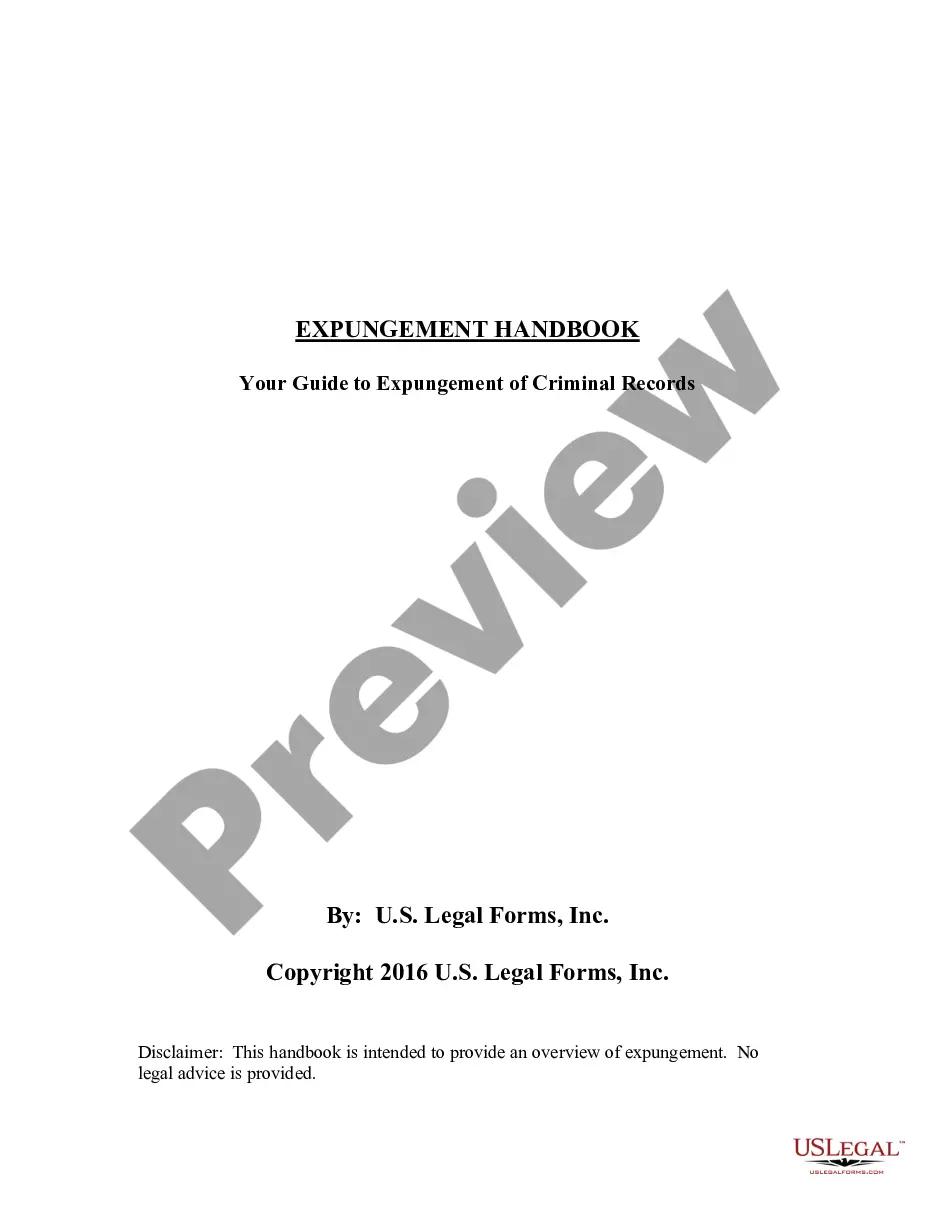
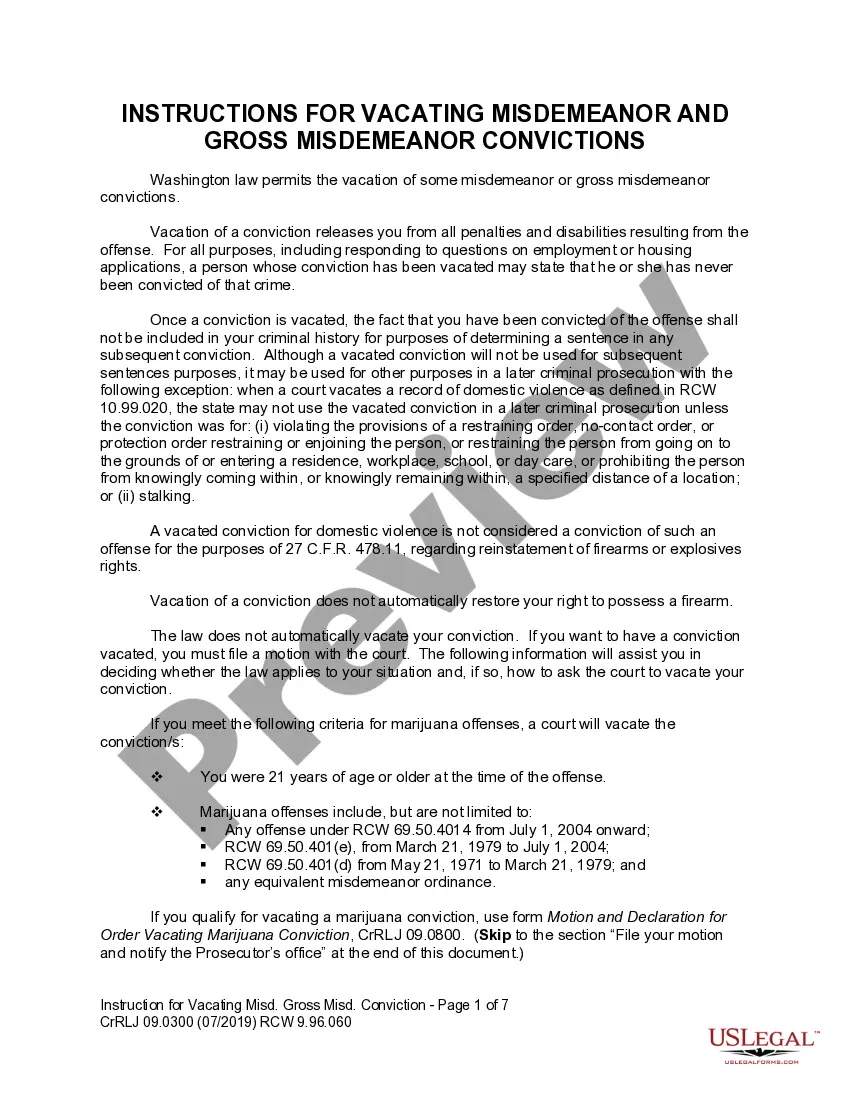
This guide provides essential information on how to challenge, seal, vacate, or expunge criminal history records in Washington State. It is designed to help individuals understand the legal processes involved in clearing their criminal records, whether for juvenile or adult offenses. This form is distinct from other legal documents as it comprehensively covers the methods available for different types of records and the circumstances under which these methods may be employed.
Key parts of this document
- Overview of criminal history and justice records.
- Steps to seal, vacate, or expunge records along with relevant legal citations.
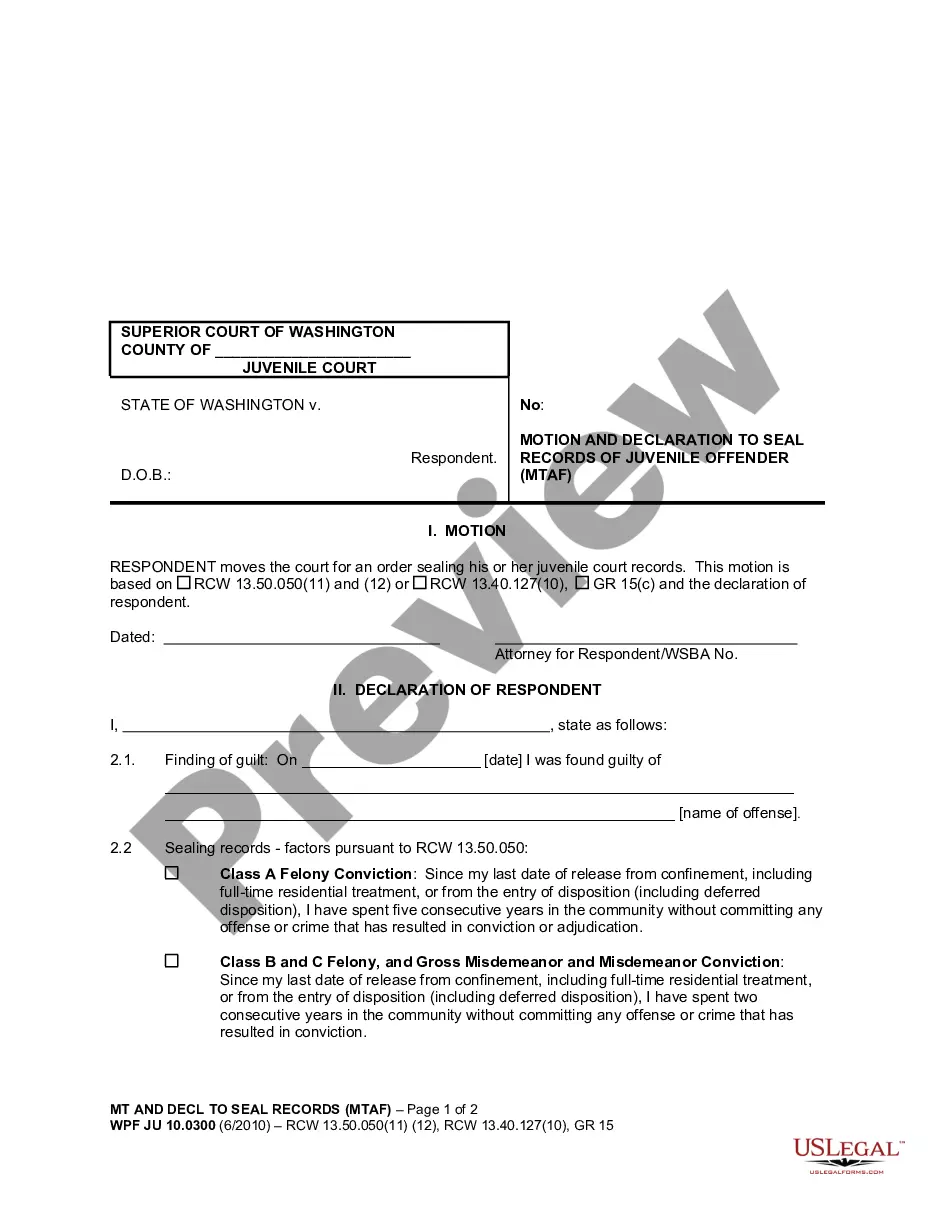
- Details on juvenile court records and the requirements for sealing.
- Information regarding adult court records, including conditions for vacating felony convictions.
- Guidance on how to correct inaccurate records with law enforcement agencies.
Situations where this form applies
This guide is essential when an individual seeks to clear their criminal history for various reasons, such as applying for a job, housing, or educational opportunities. It is particularly important for those who have completed their sentences and want to remove the stigma of a criminal record from their public history.
Who needs this form
This guide is intended for:
- Individuals with adult or juvenile criminal records looking to challenge, seal, vacate, or expunge those records.
- Those seeking clarity on their rights related to their criminal history information.
- Individuals wanting to ensure accurate records are maintained or corrected by law enforcement agencies.
How to prepare this document
To effectively use this guide, follow these steps:
- Review the types of records you may want to challenge, seal, vacate, or expunge.
- Gather relevant documents, including court records and law enforcement records.
- Identify the specific legal statutes that apply to your case.
- Prepare and file the necessary motions or requests with the appropriate court.
- Notify all relevant parties as required by law, including prosecuting attorneys and victims, if applicable.
Does this form need to be notarized?
This form does not typically require notarization unless specified by local law. However, ensure that the final submission complies with any specific requirements your local court may have.
Get your form ready online
Our built-in tools help you complete, sign, share, and store your documents in one place.
Make edits, fill in missing information, and update formatting in US Legal Forms—just like you would in MS Word.
Download a copy, print it, send it by email, or mail it via USPS—whatever works best for your next step.
Sign and collect signatures with our SignNow integration. Send to multiple recipients, set reminders, and more. Go Premium to unlock E-Sign.
If this form requires notarization, complete it online through a secure video call—no need to meet a notary in person or wait for an appointment.
We protect your documents and personal data by following strict security and privacy standards.

Make edits, fill in missing information, and update formatting in US Legal Forms—just like you would in MS Word.

Download a copy, print it, send it by email, or mail it via USPS—whatever works best for your next step.

Sign and collect signatures with our SignNow integration. Send to multiple recipients, set reminders, and more. Go Premium to unlock E-Sign.

If this form requires notarization, complete it online through a secure video call—no need to meet a notary in person or wait for an appointment.

We protect your documents and personal data by following strict security and privacy standards.
Common mistakes to avoid
- Failing to meet the required waiting periods before filing for a vacate or expunge request.
- Not notifying required parties when submitting a motion to seal records.
- Submitting incomplete or inaccurate information in applications, leading to delays.
- Overlooking local rules and procedures that may differ from state guidelines.
Advantages of online completion
- Convenience of having a comprehensive understanding of the sealing and expungement process.
- Access to legal forms drafted by licensed attorneys, ensuring they meet current legal standards.
- Ability to download and complete forms at your own pace without the need for legal representation.
Key takeaways
- Understanding the various methods to clear criminal records is crucial for those affected.
- Legal guidance is advisable to navigate specific situations effectively.
- Attention to detail is essential when filing motions to avoid common pitfalls and ensure accurate results.
- Challenge: A legal claim disputing the accuracy of criminal records.
- Expunge: To destroy or remove records from official files.
- Vacate: To nullify a prior conviction, effectively treating the offense as if it never occurred.
- Seal: To restrict access to records so they cannot be viewed by the public.
Looking for another form?

Form popularity
FAQ
Sealing juvenile records refers to closing them to the public, while expunging requires their complete physical destruction. Automatically sealing or expunging records requires no action by the juvenile.
Fill out the Notice of Respondent's Motion to Seal Records of Juvenile Offender. Once you have a hearing date, complete the Notice of Respondent's Motion to Seal Records of Juvenile Offender for each case for which you have filled out a Motion, - for each case that you want to seal.
To vacate any felony conviction, it remains a mandatory requirement that a person must first obtain from the court a Certificate of Discharge. (RCW 9.94A. 637). A person qualifies for a Certificate of Discharge once they complete all conditions of sentence.
Vacate means they change the record to reflect the case being dismissed. Expunged means they destroy the record. There is also sealed, which means the record is no longer publicly available.
No. Washington law does not allow you to remove any record of conviction in Washington, regardless of whether it is a felony, gross misdemeanor, or misdemeanor.
No, there is no way to seal the records and at this point, there is no way to get your federal gun rights back.
Will my sealed criminal records show up on a background check? Sealed convictions should not show up on any background check run by an employer or licensing agency, unless you are applying for a job as a police officer or a peace officer or you are applying for gun license.
Age. The person seeking the sealing must be an adult. When the offense was committed. Often, a juvenile record cannot be sealed until some period of time has passed. Type of juvenile offense. Subsequent arrests or convictions. File a petition. Pay a fee.
How Long Does a Youth Record Last?Once the access period ends, youth records are sealed and/or destroyed. However, if someone over the age of 18 with an open youth record commits another crime, the youth record will become part of that person's adult record.