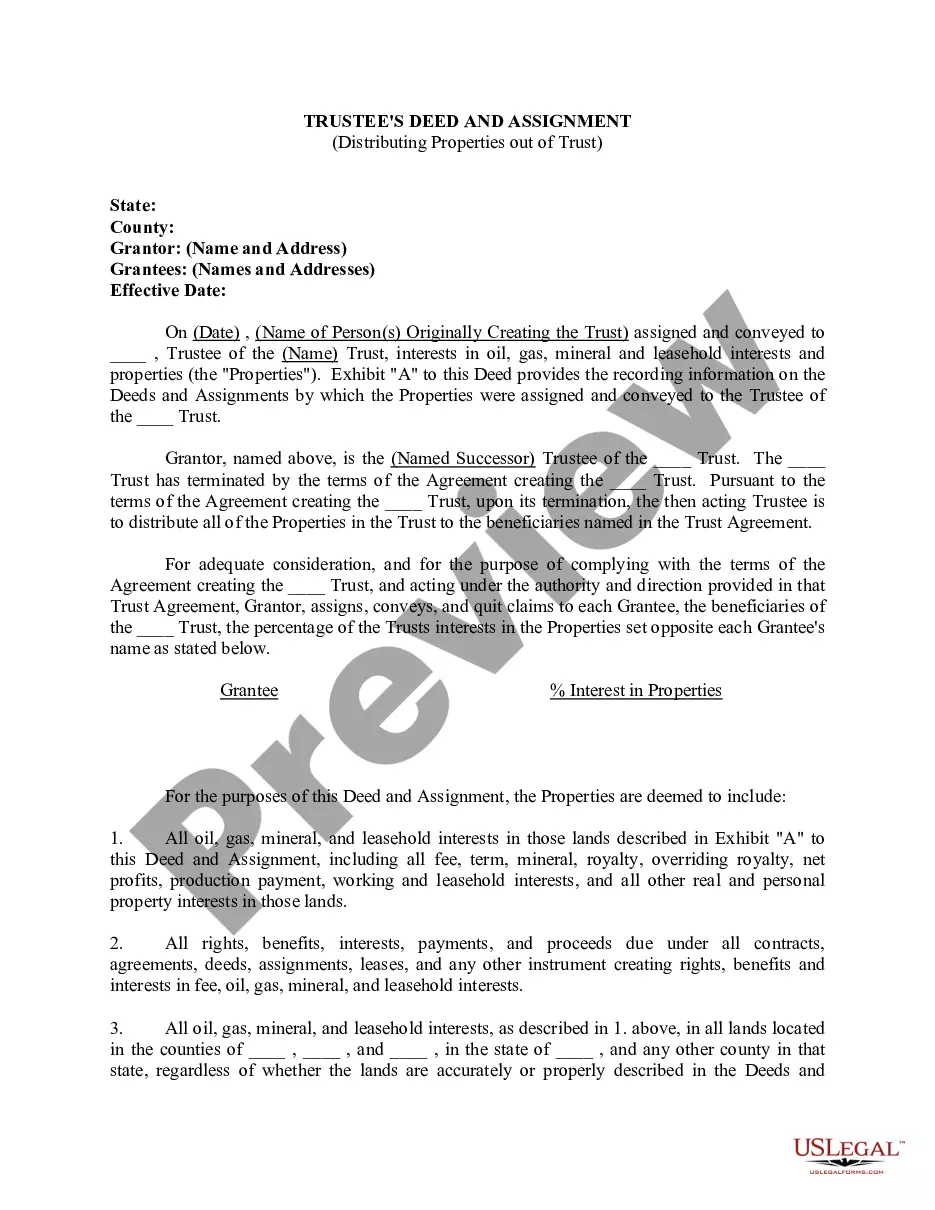
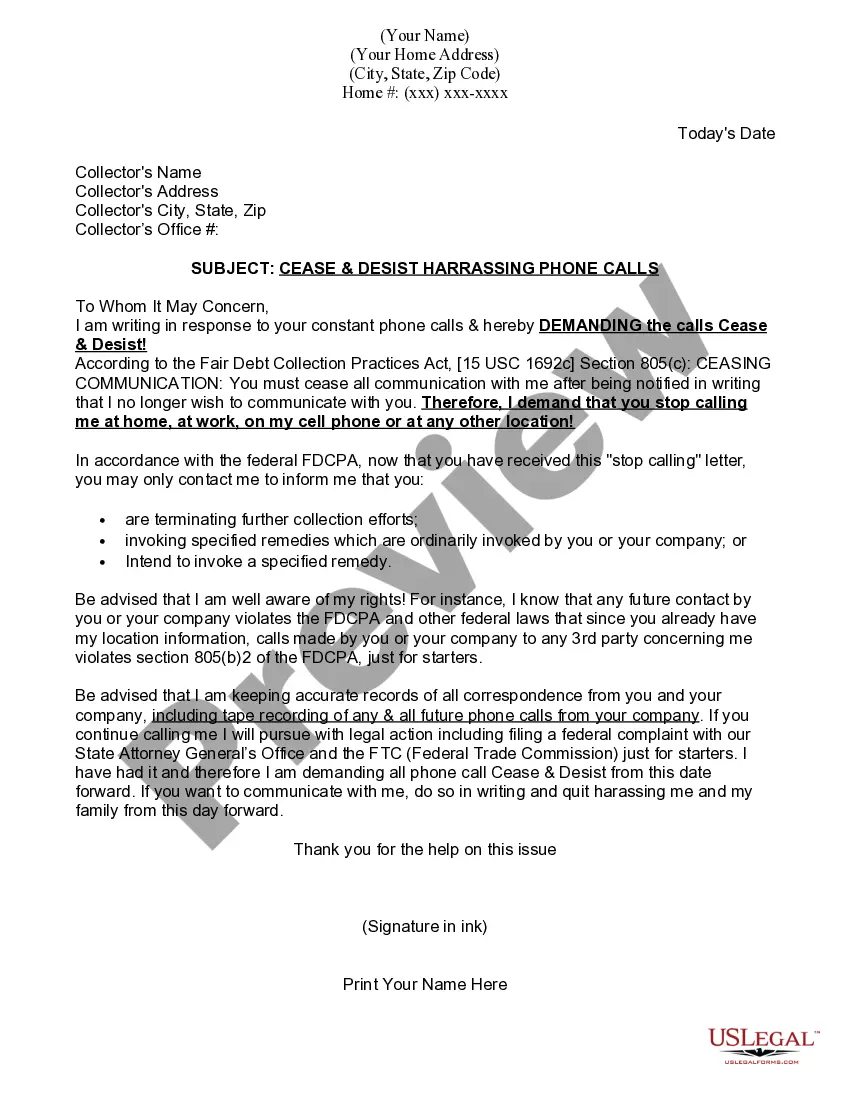
Vermont Cease and Desist for Copyright Infringement
Description
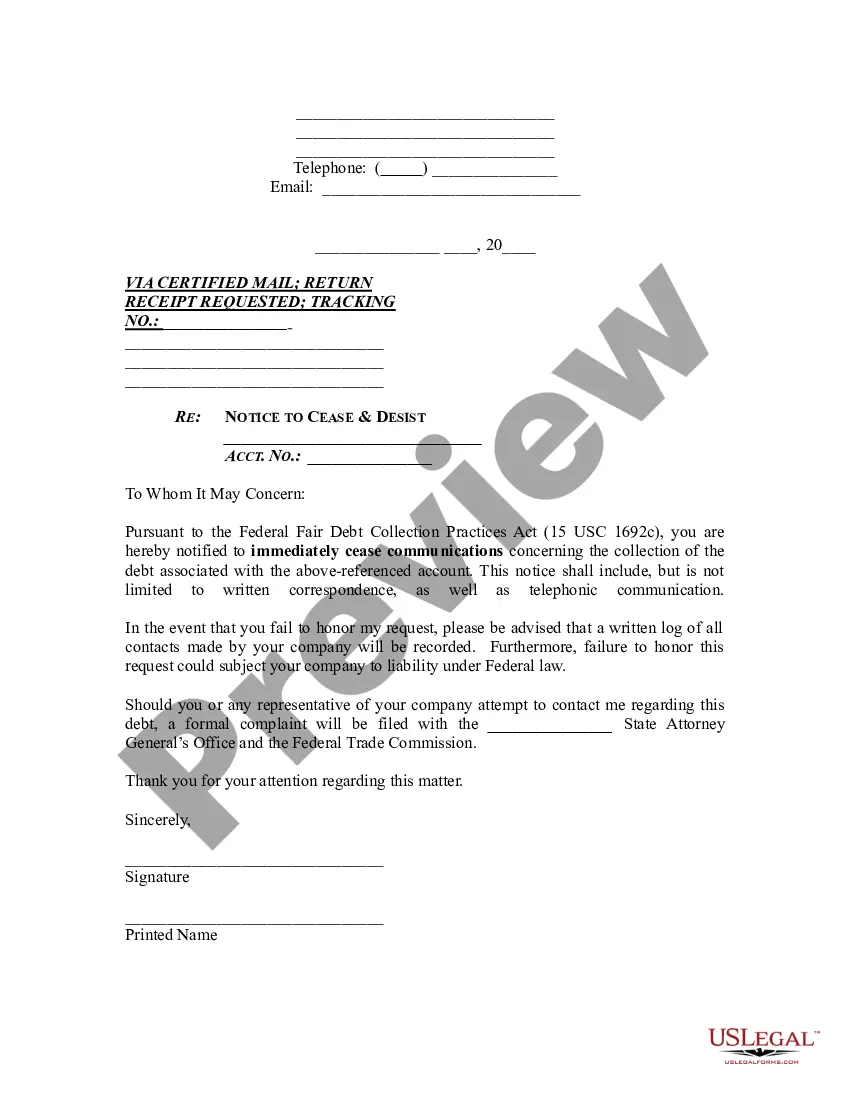
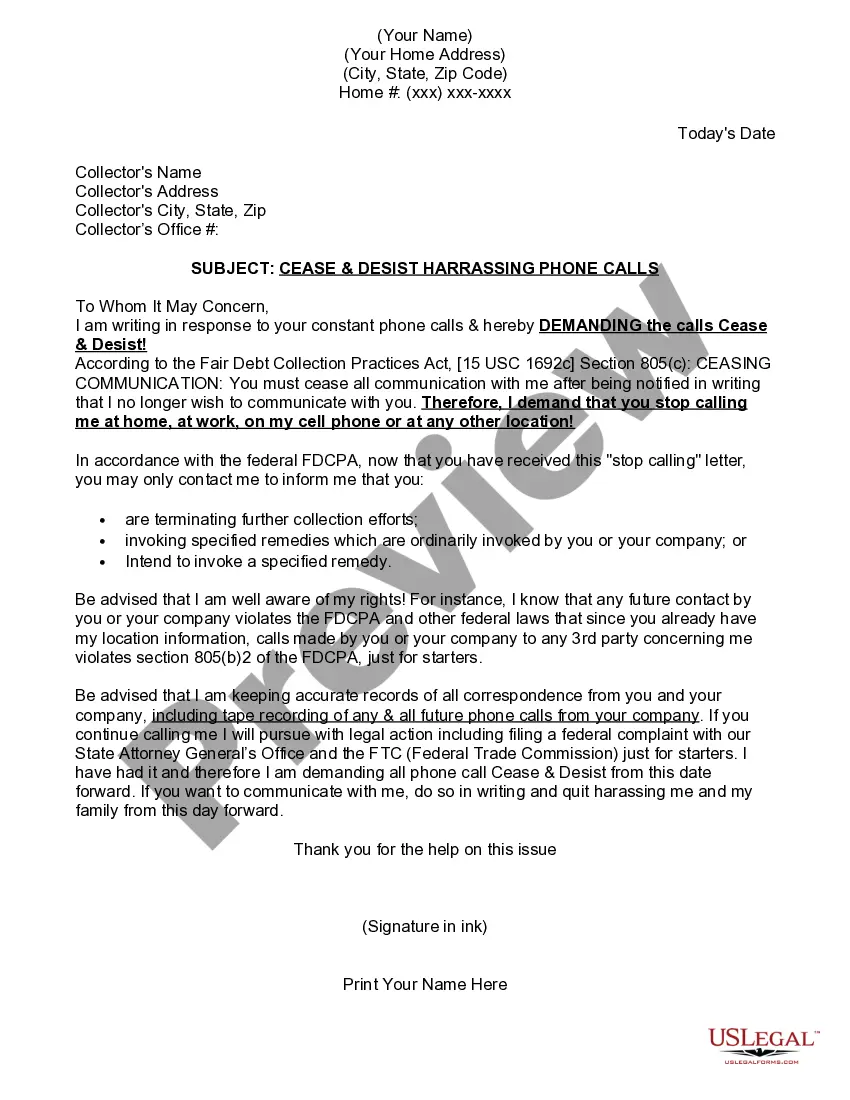
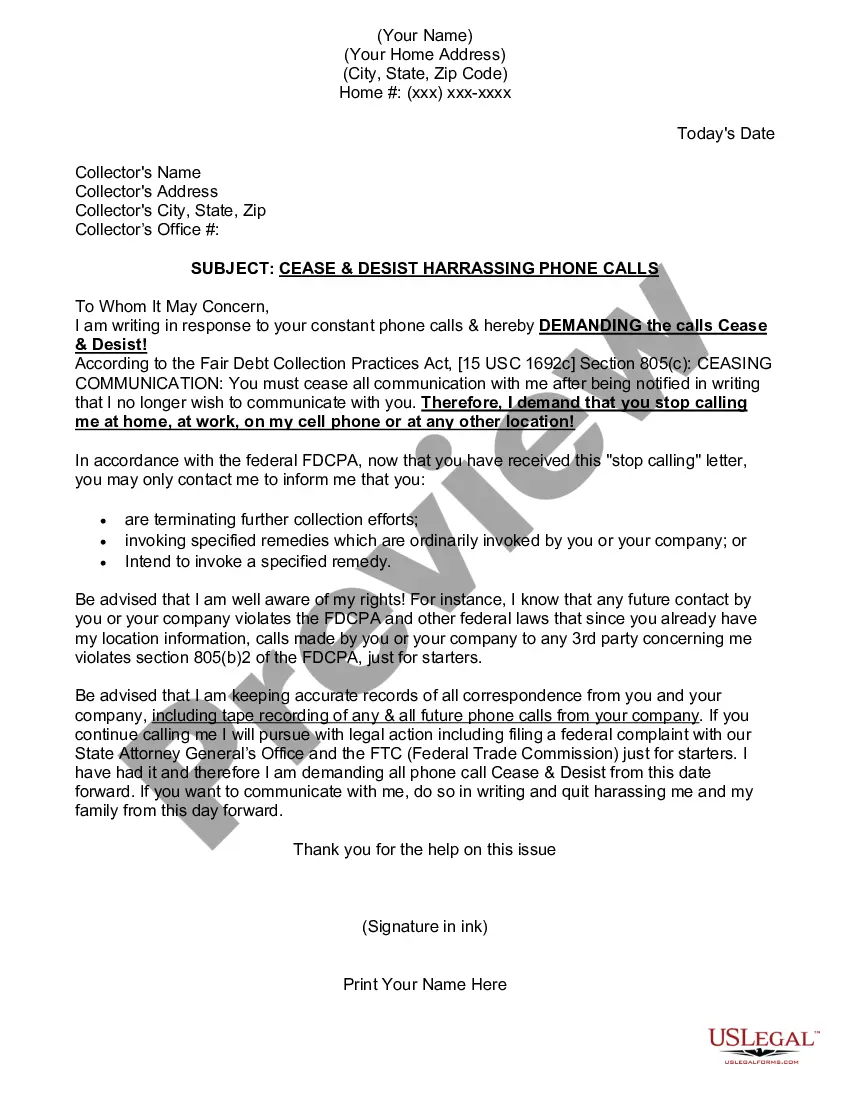
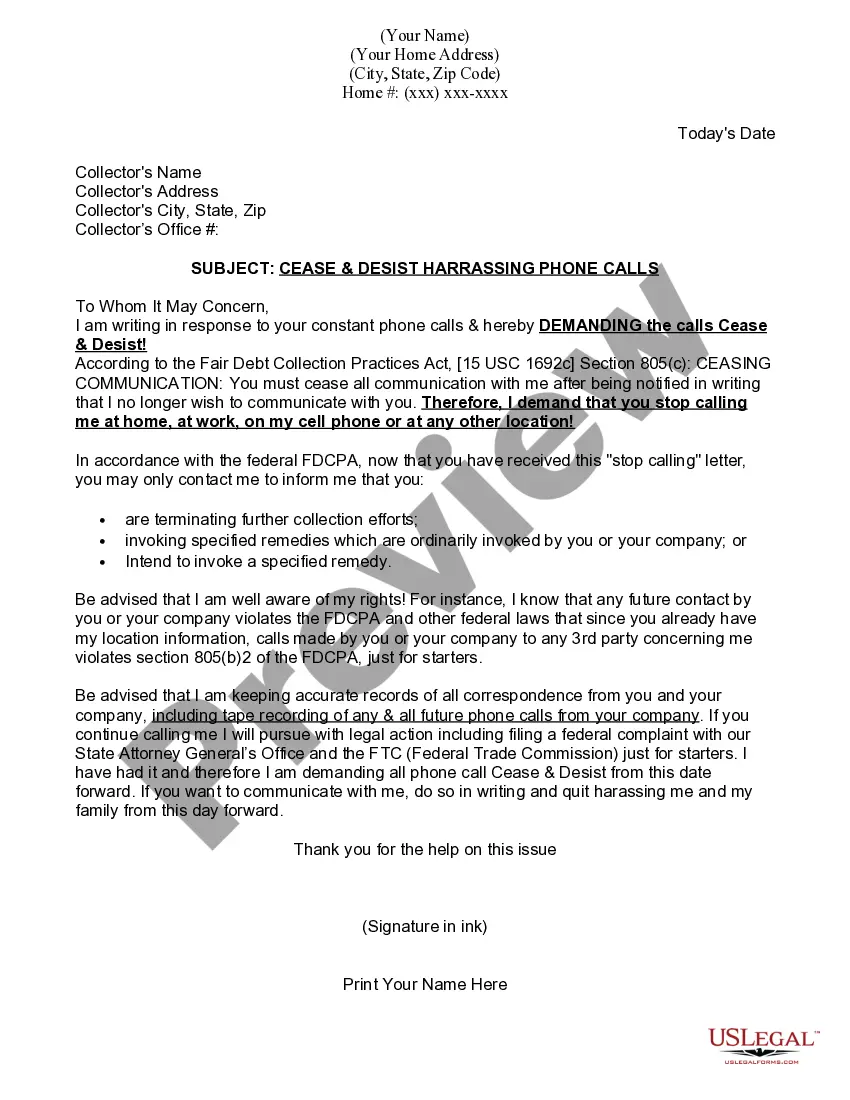


How to fill out Cease And Desist For Copyright Infringement?
Are you presently in a role where you require documents for either business or particular tasks every day.
There are numerous legal document templates accessible online, but finding ones you can trust is not straightforward.
US Legal Forms offers thousands of template options, including the Vermont Cease and Desist for Copyright Infringement, which are crafted to meet federal and state regulations.
Utilize US Legal Forms, the most extensive collection of legal documents, to save time and avoid errors.
The service provides professionally crafted legal document templates that can be used for a variety of purposes. Create an account on US Legal Forms and start simplifying your life.
- If you are already familiar with the US Legal Forms website and have an account, simply Log In.
- Then, you can download the Vermont Cease and Desist for Copyright Infringement template.
- If you do not have an account and wish to start using US Legal Forms, follow these steps.
- Obtain the document you require and ensure it pertains to the correct state/region.
- Use the Preview feature to review the form.
- Check the details to confirm that you have selected the appropriate document.
- If the document is not what you are looking for, utilize the Search field to find the form that meets your needs and requirements.
- Once you find the correct form, click Acquire now.
- Choose the pricing plan you want, fill in the necessary information to create your account, and pay for the transaction using your PayPal or credit card.
- Select a convenient document format and download your copy.
- Access all the document templates you have purchased in the My documents section.
- You can download another copy of the Vermont Cease and Desist for Copyright Infringement at any time if needed. Just click on the required form to download or print the document template.
Form popularity
FAQ
To send a cease and desist letter for copyright infringement, begin by drafting a clear and concise letter that outlines your claims. Include details about your copyrighted work, the nature of the infringement, and a request for the infringer to cease their actions. You can utilize services like uslegalforms to ensure your Vermont Cease and Desist for Copyright Infringement is professionally crafted and legally sound, enhancing your chances of a successful resolution.
When preparing a cease and desist, proof of ownership of the copyright is essential. This can include registration documents, dated copies of your work, and records showing the infringement. Having clear and compelling proof will strengthen your Vermont Cease and Desist for Copyright Infringement and help convey the seriousness of your claims.
To support a cease and desist letter, you need to gather evidence that shows your ownership of the copyright and the infringing party's misuse. This may include copies of your copyrighted work, documentation of the infringement, and any communications you have had with the infringer. Having solid evidence increases the effectiveness of your Vermont Cease and Desist for Copyright Infringement and prepares you for potential legal proceedings.
A cease and desist order is typically issued when there is evidence of unlawful activity that infringes upon your rights, such as copyright infringement. For a Vermont Cease and Desist for Copyright Infringement, you must demonstrate that your copyrighted work is being used without permission. This order aims to stop the infringing party from continuing their actions and can be an essential tool in protecting your intellectual property.
Rule 5.5 in Vermont pertains to the unauthorized practice of law. It prohibits individuals who are not licensed to practice law in Vermont from providing legal services or advice. Understanding this rule is crucial when dealing with a Vermont Cease and Desist for Copyright Infringement, as it ensures that you seek assistance from qualified legal professionals.
While it is not legally required to send a cease and desist before suing for copyright infringement, doing so can be beneficial. A Vermont Cease and Desist for Copyright Infringement serves as a formal warning and may encourage the infringer to stop their actions without further legal action. This step can also demonstrate to the court that you attempted to resolve the issue amicably, which may strengthen your case if it escalates.
When writing a cease and desist letter for copyright infringement, begin with a formal greeting, followed by a clear statement of your rights. Specify the infringing activities and include details about your copyright ownership. It's vital to request that the infringing party cease their actions by a certain date. Utilizing uslegalforms can help you format your letter correctly and ensure it meets legal standards.
Filling out a cease and desist letter for copyright infringement in Vermont requires specific information. Start by clearly stating your name and contact information, followed by the recipient’s details. Outline the nature of the infringement, provide evidence, and request that the infringing party stop their actions. You can use platforms like uslegalforms to access templates that simplify the process.
To support a Vermont Cease and Desist for Copyright Infringement, you need to provide clear evidence of the infringement. This includes documentation showing your ownership of the copyright, such as registration certificates or published works. Additionally, gather examples of the infringing material to demonstrate how it violates your copyright. Having strong proof significantly strengthens your case.