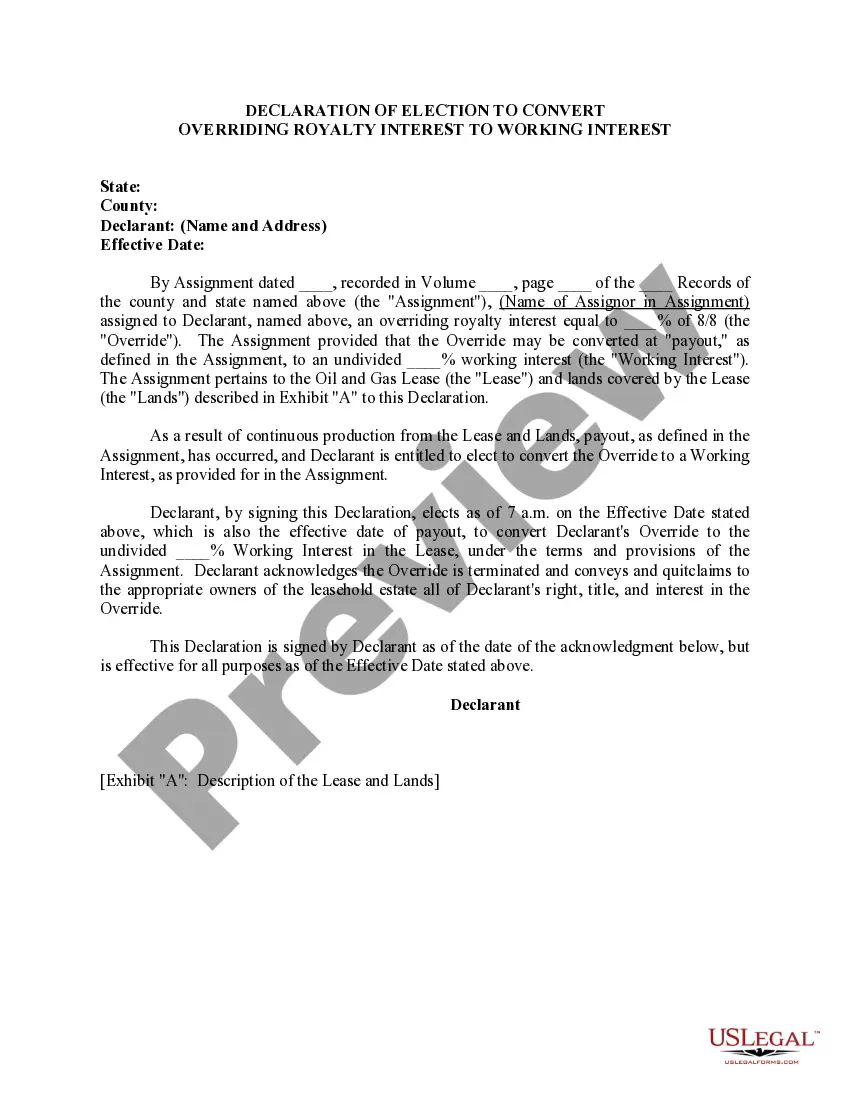
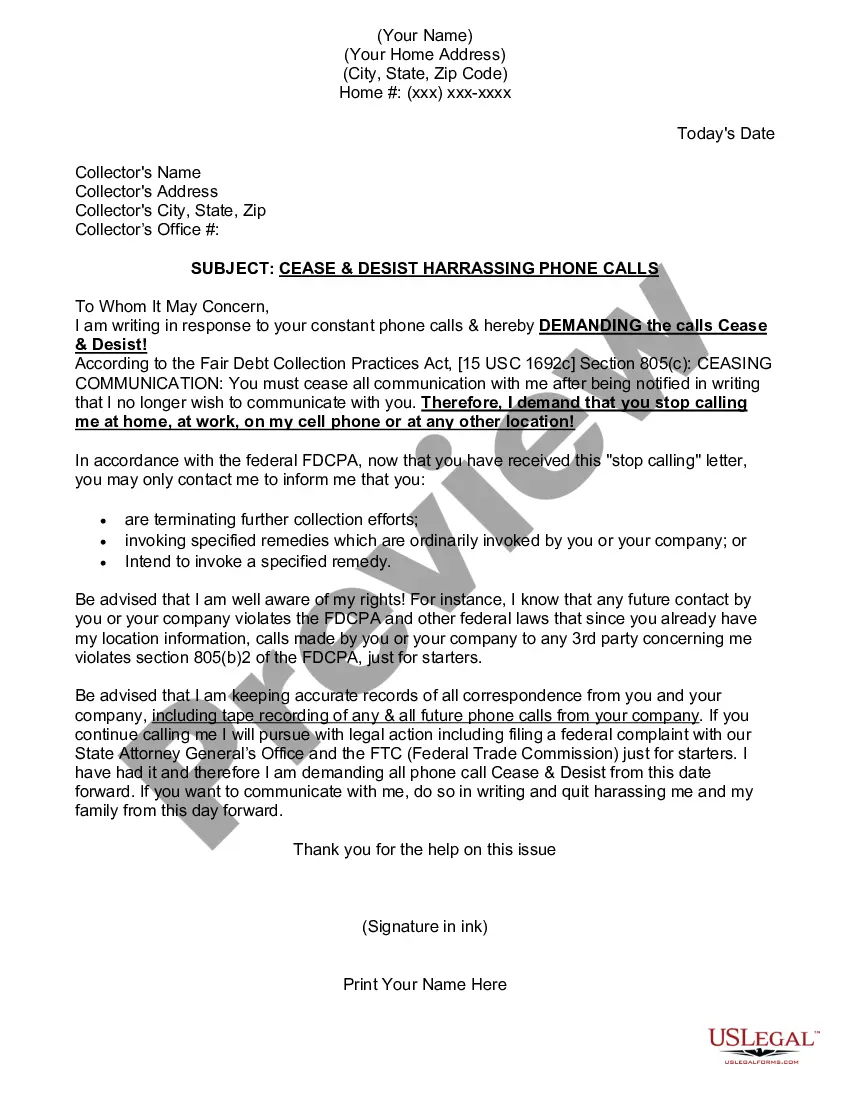
Vermont Cease and Desist for Non Compete
Description
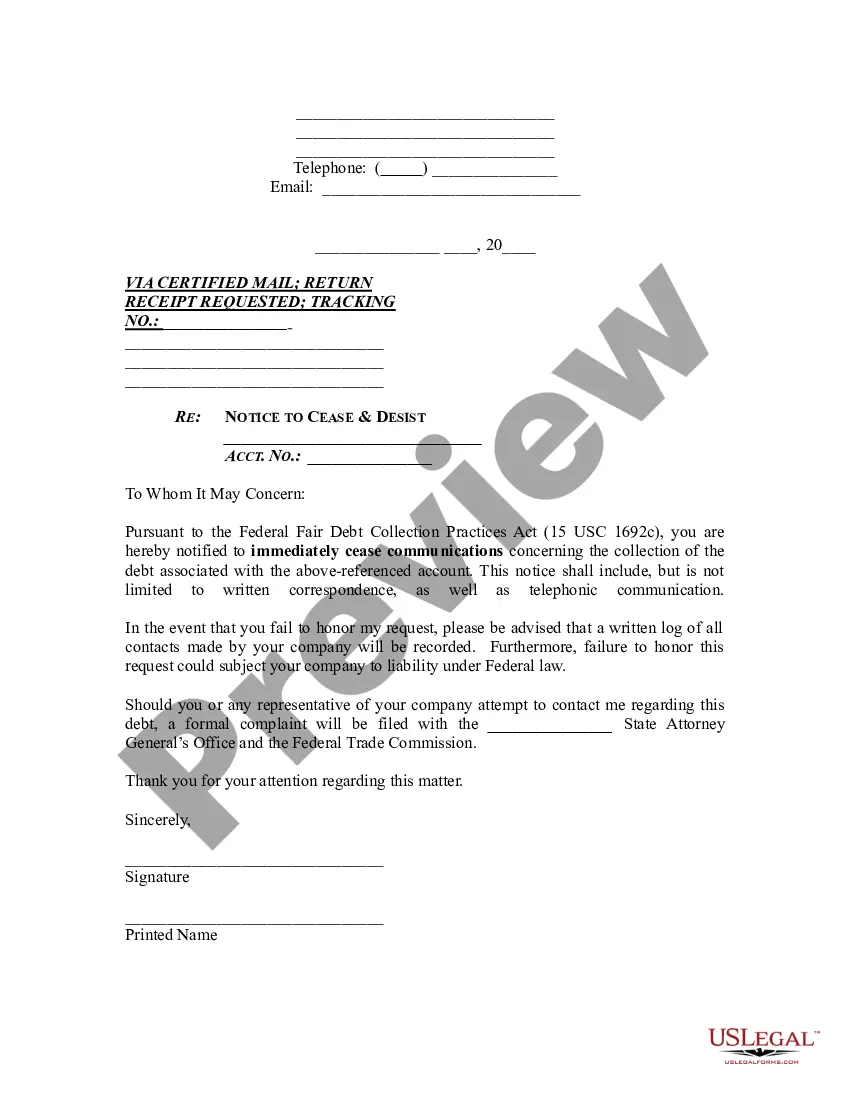
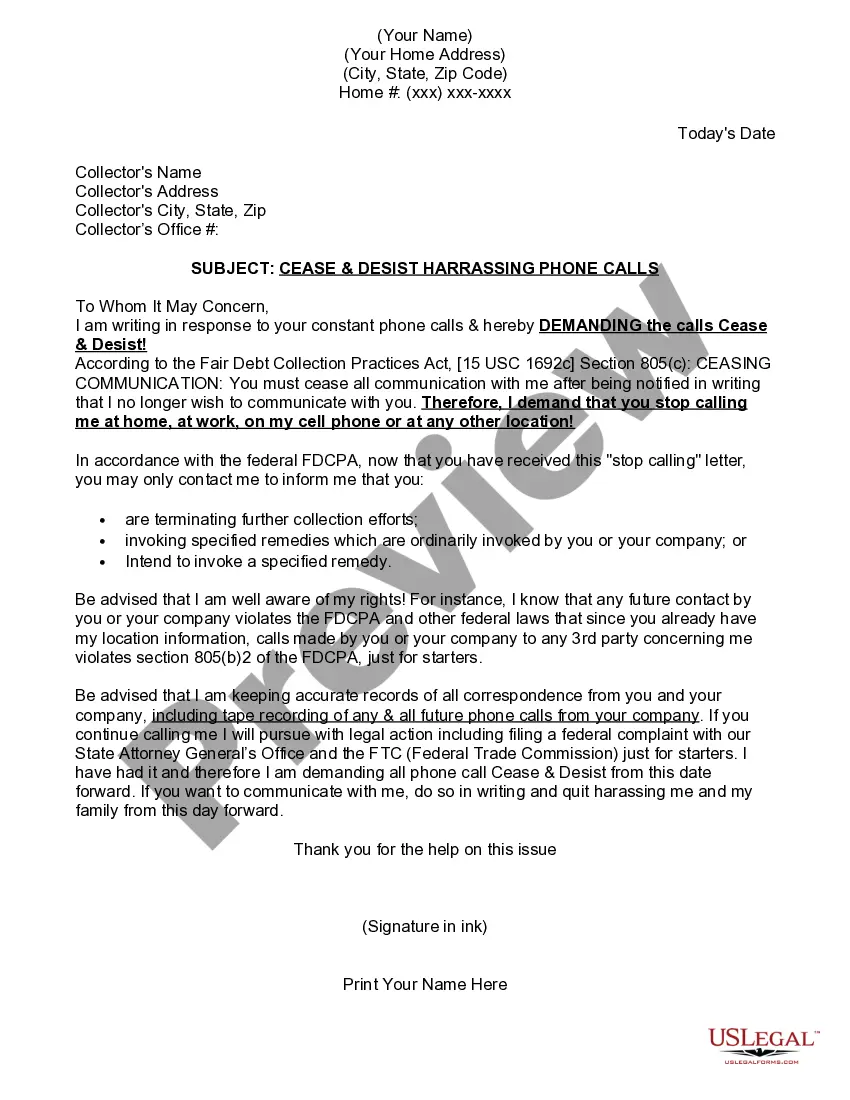
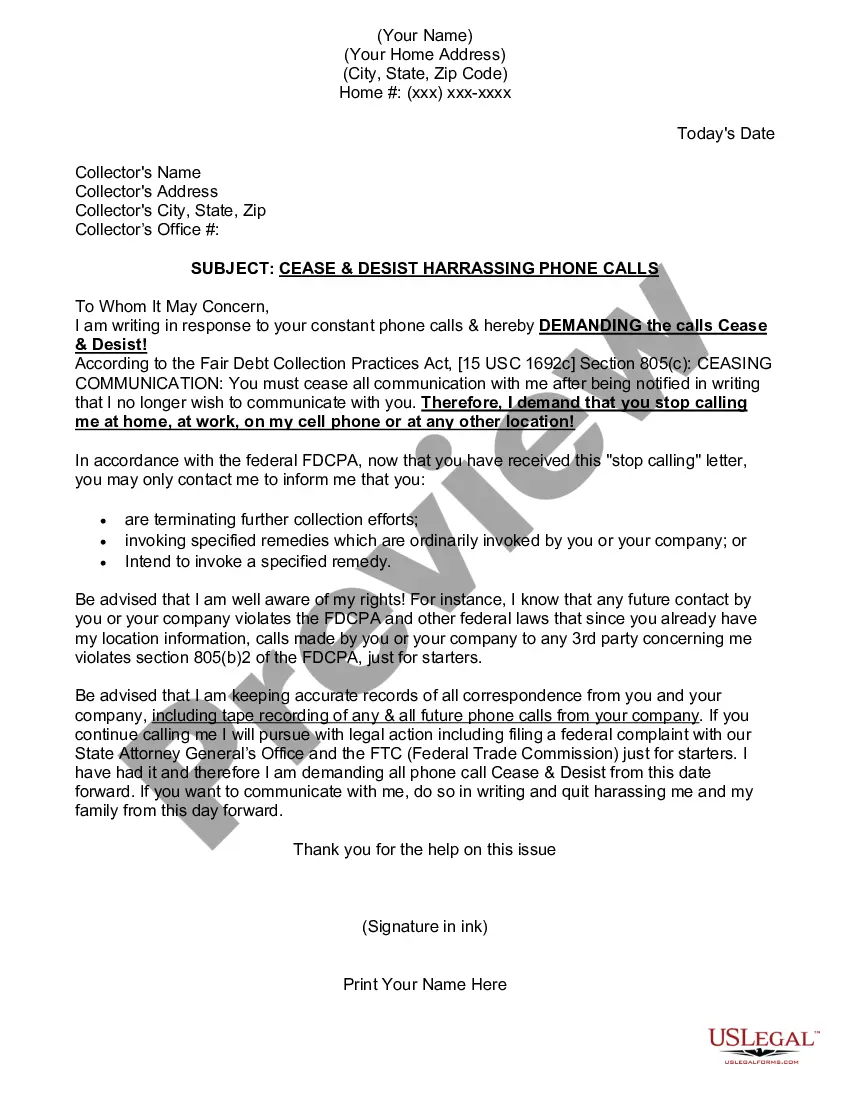
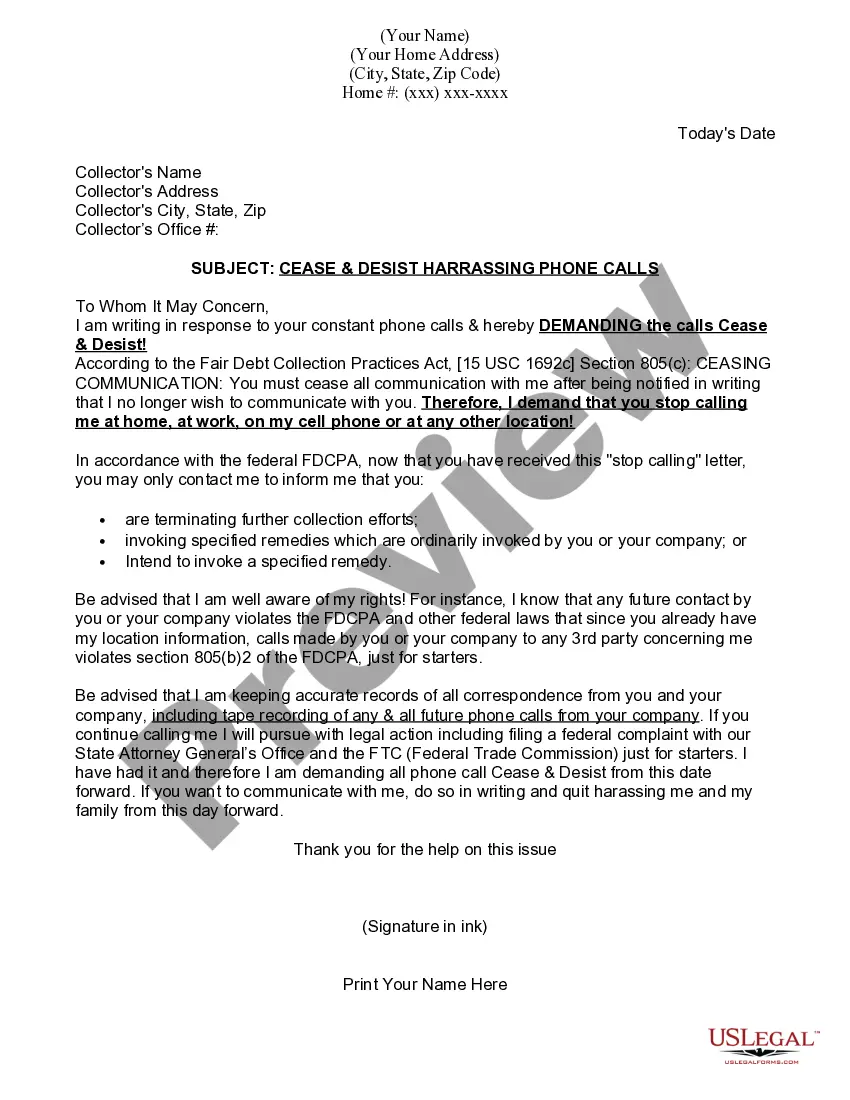

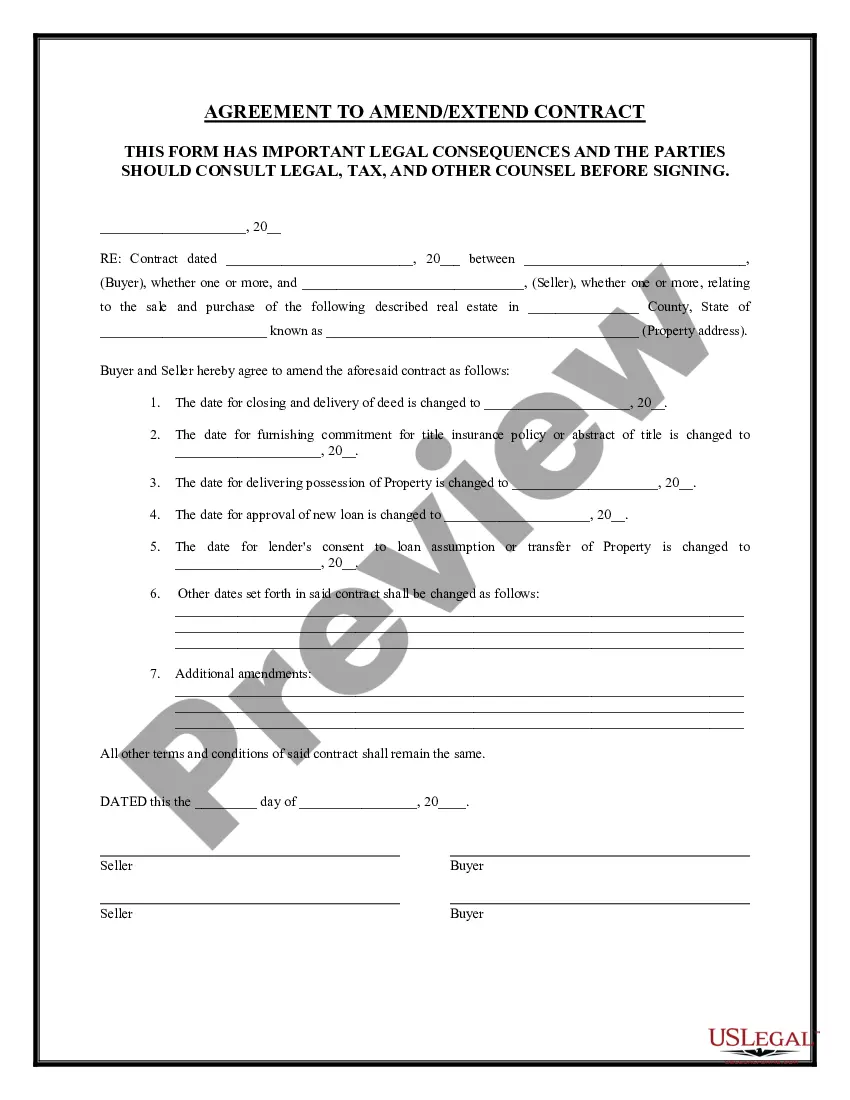
How to fill out Cease And Desist For Non Compete?
Are you currently in the location where you require documents for both business or personal reasons almost every day.
There are numerous legal document templates accessible online, but finding reliable ones is not easy.
US Legal Forms offers a vast collection of form templates, such as the Vermont Cease and Desist for Non Compete, designed to meet state and federal requirements.
- If you are already acquainted with the US Legal Forms website and possess an account, simply Log In.
- After that, you can download the Vermont Cease and Desist for Non Compete template.
- If you do not have an account and wish to start using US Legal Forms, follow these steps.
- Find the form you need and ensure it is for the right state/region.
- Utilize the Preview function to examine the form.
- Read the description to ensure you have selected the correct form.
- If the form does not meet your needs, use the Search box to find the form that best suits you and your requirements.
- When you locate the correct form, click Purchase now.
- Select the pricing plan you prefer, fill in the required information to create your account, and complete the transaction using your PayPal or credit card.
- Choose a convenient document format and download your copy.
- Access all of the document templates you have purchased in the My documents section. You can download an additional copy of the Vermont Cease and Desist for Non Compete at any time if needed. Just click on the required form to download or print the document template.
- Utilize US Legal Forms, the most extensive collection of legal forms, to save time and avoid mistakes. The service offers professionally crafted legal document templates that can be utilized for various purposes. Create an account on US Legal Forms and start making your life a bit easier.
Form popularity
FAQ
To issue a Vermont Cease and Desist for Non Compete, you typically need documentation that demonstrates the violation of the non-compete agreement. This may include a copy of the original agreement, evidence of the competing behavior, and any communication that supports your claim. Gathering these materials ensures that your request is clear and compelling. For assistance in preparing your cease and desist letter, consider using the resources available on the US Legal Forms platform.
Yes, Vermont does enforce non-compete agreements, but they come with limitations. The state requires these agreements to be reasonable in scope and duration. If you are facing a non-compete issue, a Vermont Cease and Desist for Non Compete can be a useful tool to protect your rights. Using platforms like uslegalforms can help you navigate this process effectively.
Non-compete agreements in Vermont are subject to strict scrutiny under state law. While they can be enforced, they must meet specific criteria to be considered valid. Generally, a Vermont Cease and Desist for Non Compete must protect legitimate business interests without imposing undue hardship on the employee. Therefore, it is essential to consult with legal experts to ensure compliance with Vermont's regulations.
To get out of a non-compete agreement, the simplest step is simply to ignore it. Set up your new business or get hired by the rival firm, and if your former employee does nothing to try to enforce the agreement then it's void.
Some states have enacted even broader restrictions on non-competition agreements. Later this year, the District of Columbia will join California, North Dakota, and Oklahoma as the only states that ban the use of employer/employee non-competition agreements in most circumstances. See D.C. Act 23-563.
Non-compete agreements are typically considered enforceable if they: Have reasonable time restrictions (generally less than one year) Are limited to a certain geographic area (specific cities or counties, rather than entire states)
Here are five ways to beat a non-compete agreement.Prove your employer is in breach of contract.Prove there is no legitimate interest to enforce the non-compete agreement.Prove the agreement is not for a reasonable amount of time.Prove that the confidential information you had access to isn't special.More items...
Under Vermont case law, a non-compete agreement must be reasonable and justified. Vermont courts enforce non-compete agreements unless they find the agreement either: Contrary to public policy. Unnecessary for the protection of the employer.
Stuck in A Non-Compete Agreement and Looking for a Way Out? Top 5 Ways to Get Out of your Agreement for GoodProve Breach of Contract by Your Employer.Prove Lack of Interest to Enforce.Contract is Unreasonably Long.What the Company Claims is Proprietary or Confidential is Widely Available.More items...?
California - Non-compete clauses are not enforceable under California law. However, LegalNature's non-compete agreement may still be used to prohibit the employee from soliciting customers and other employees away from the employer.