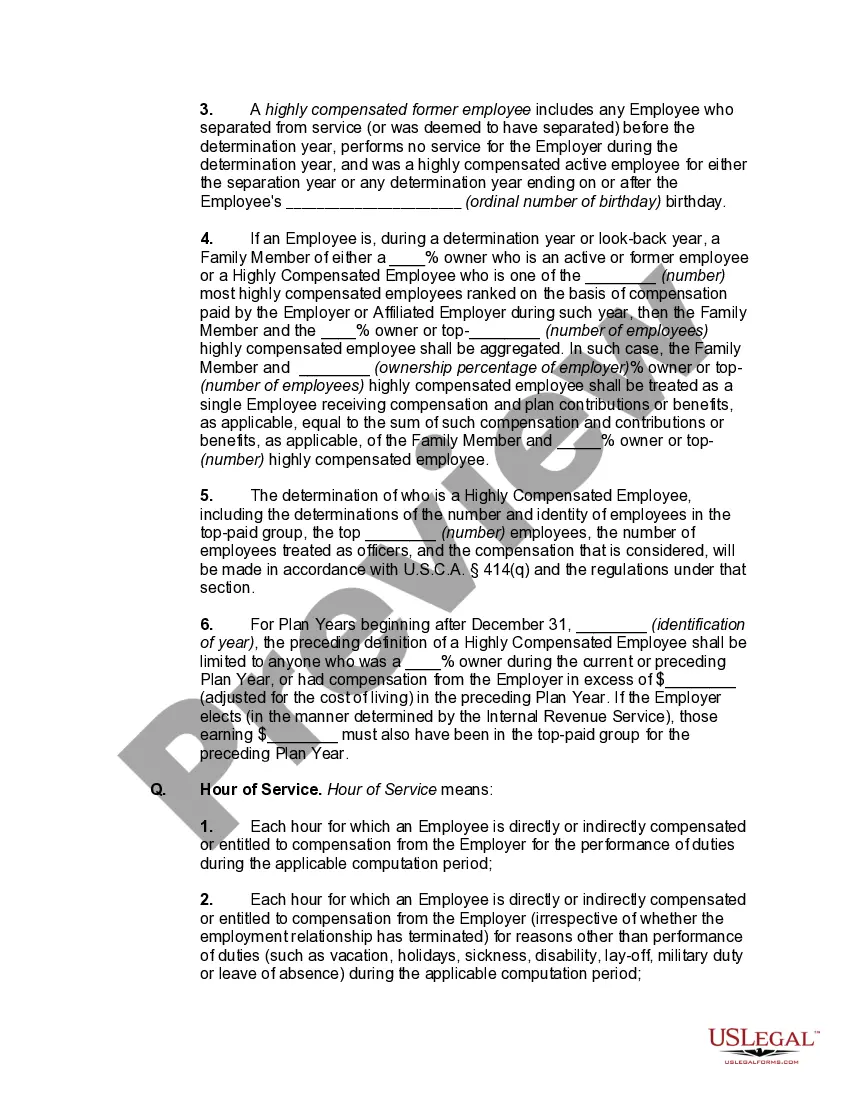
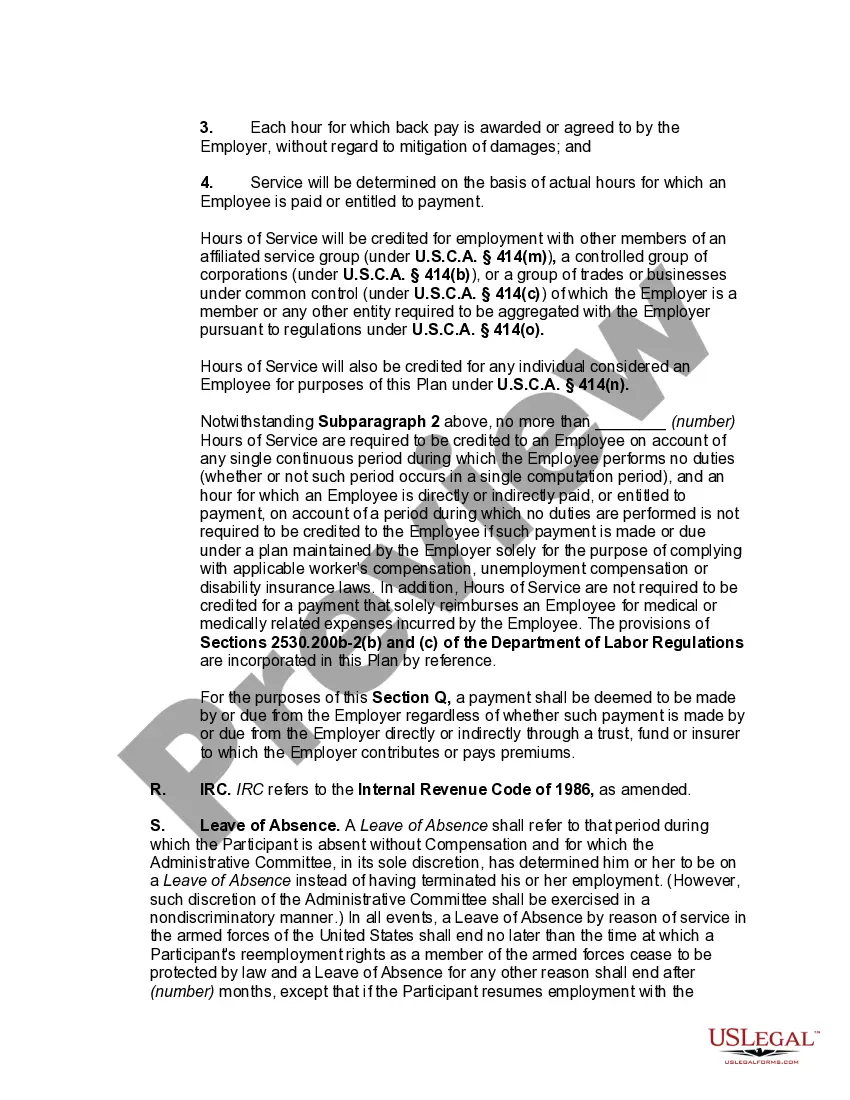
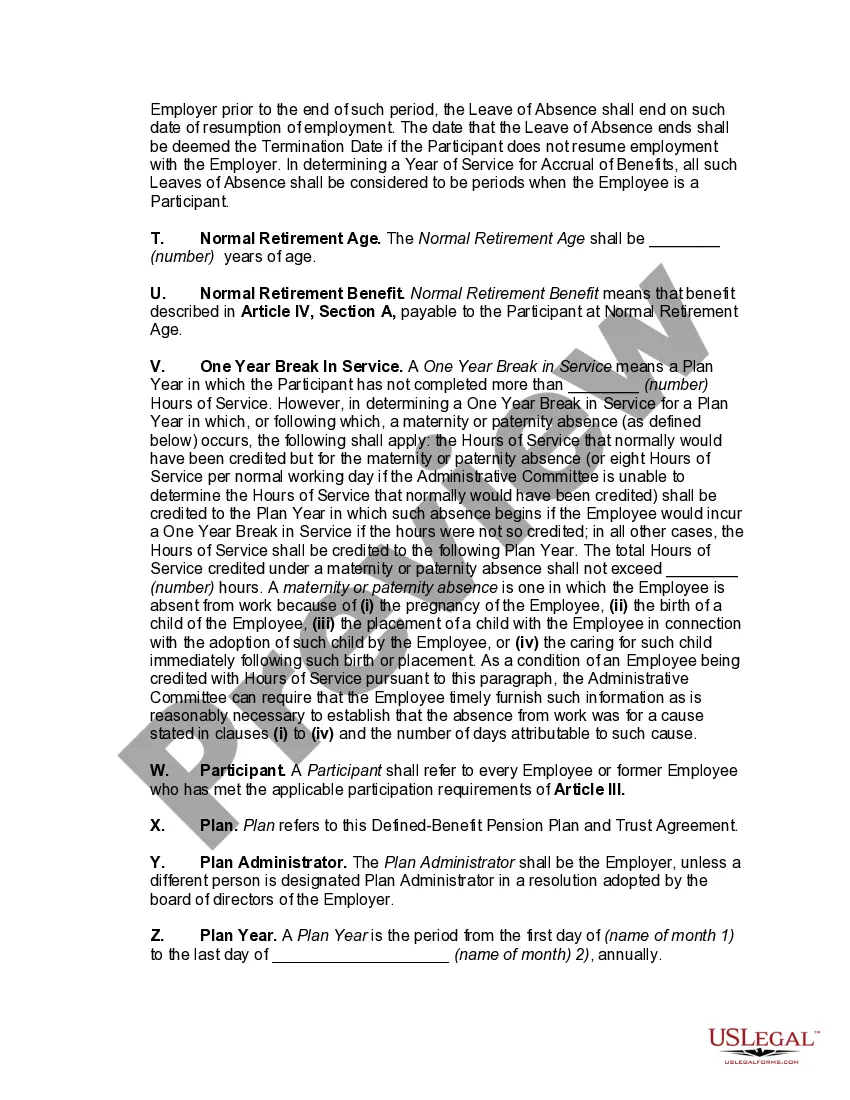
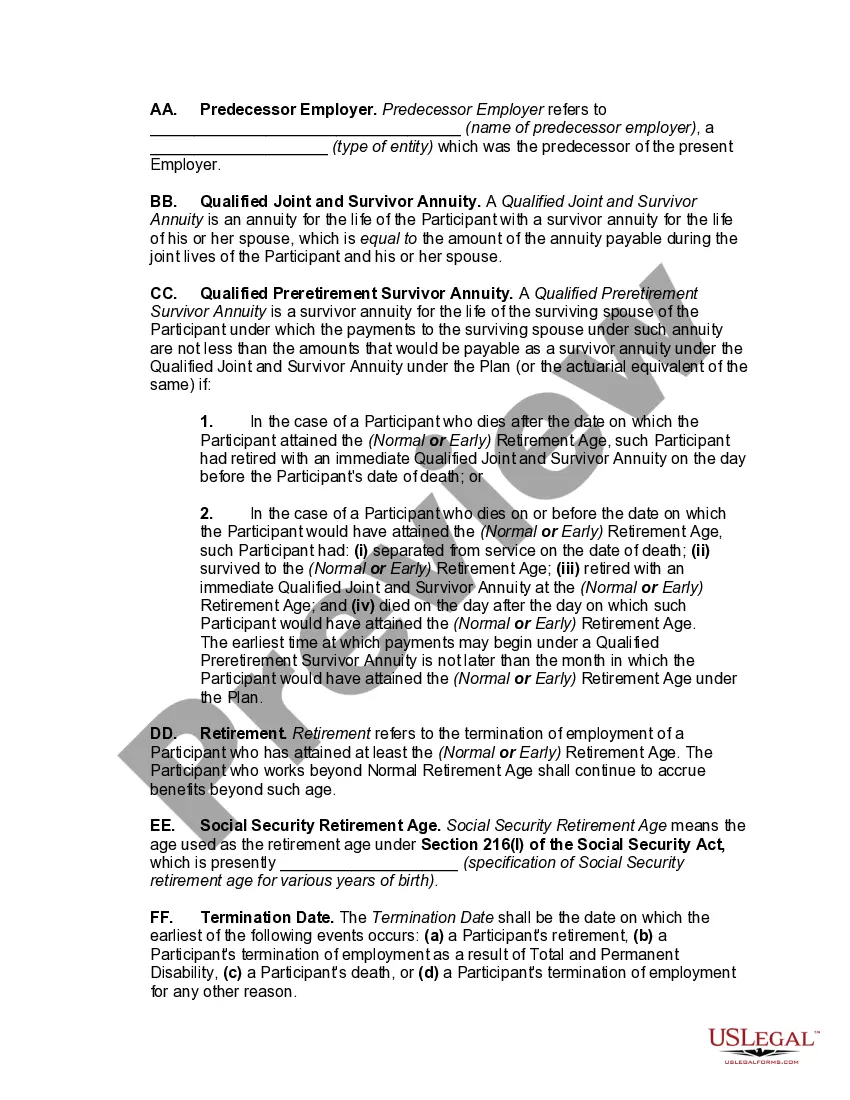
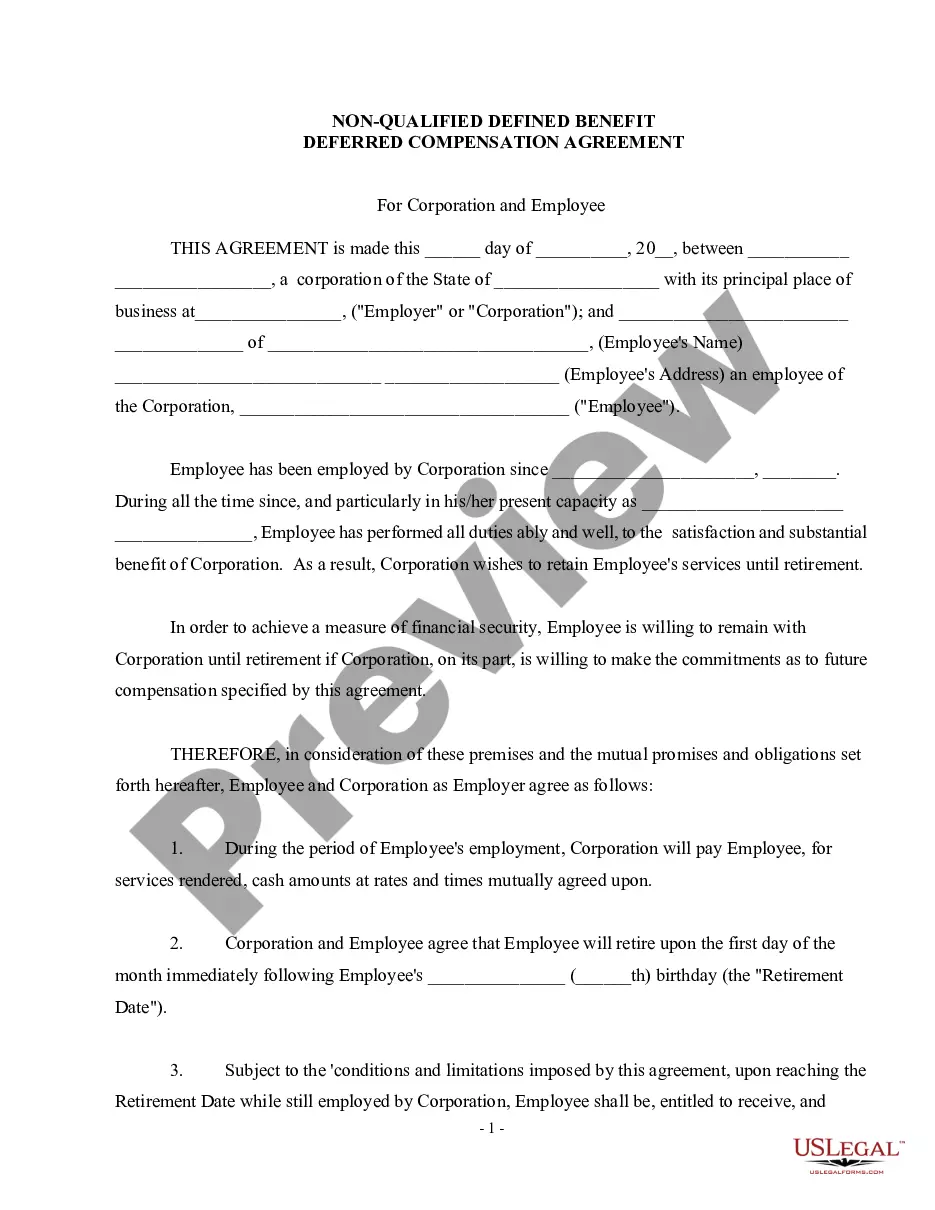
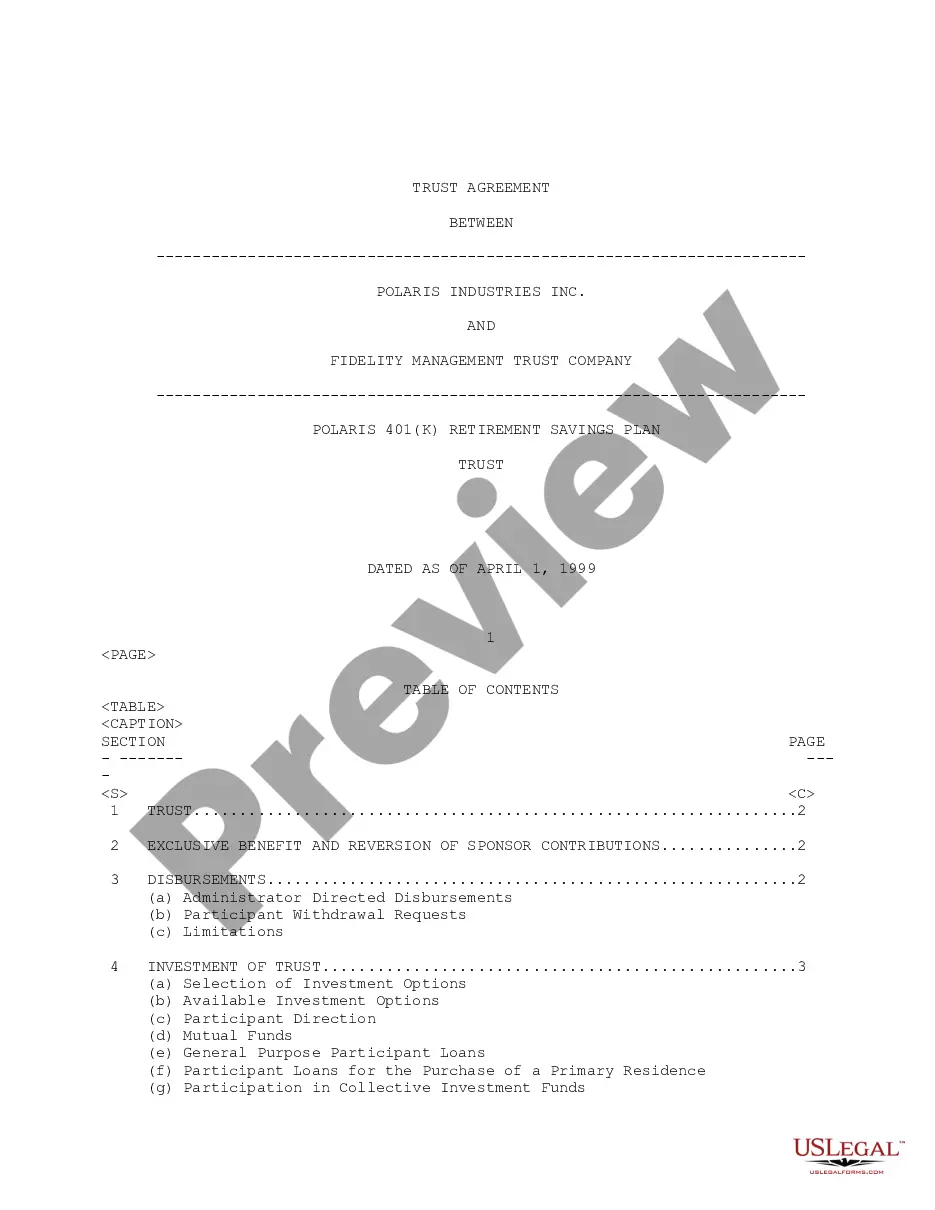
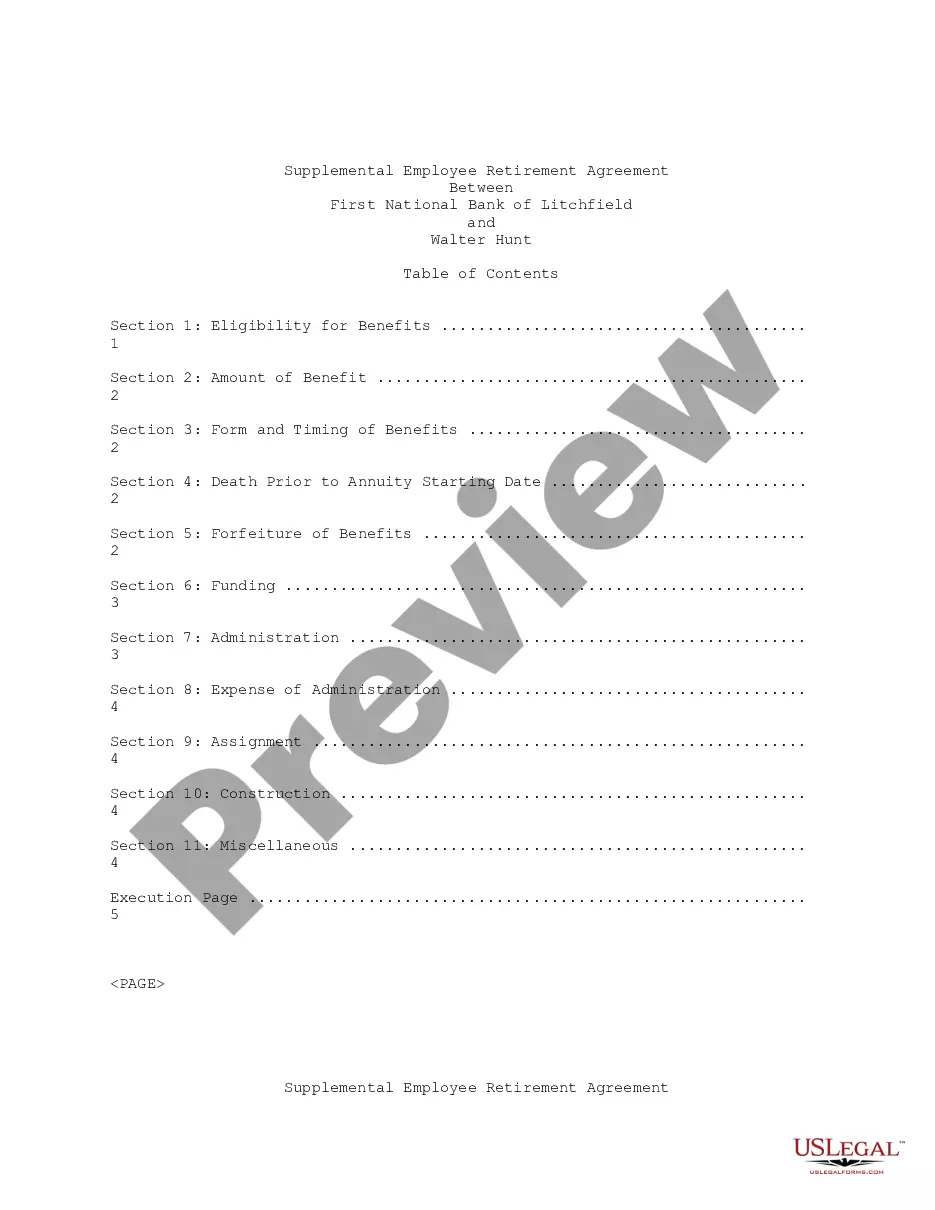
Vermont Defined-Benefit Pension Plan and Trust Agreement
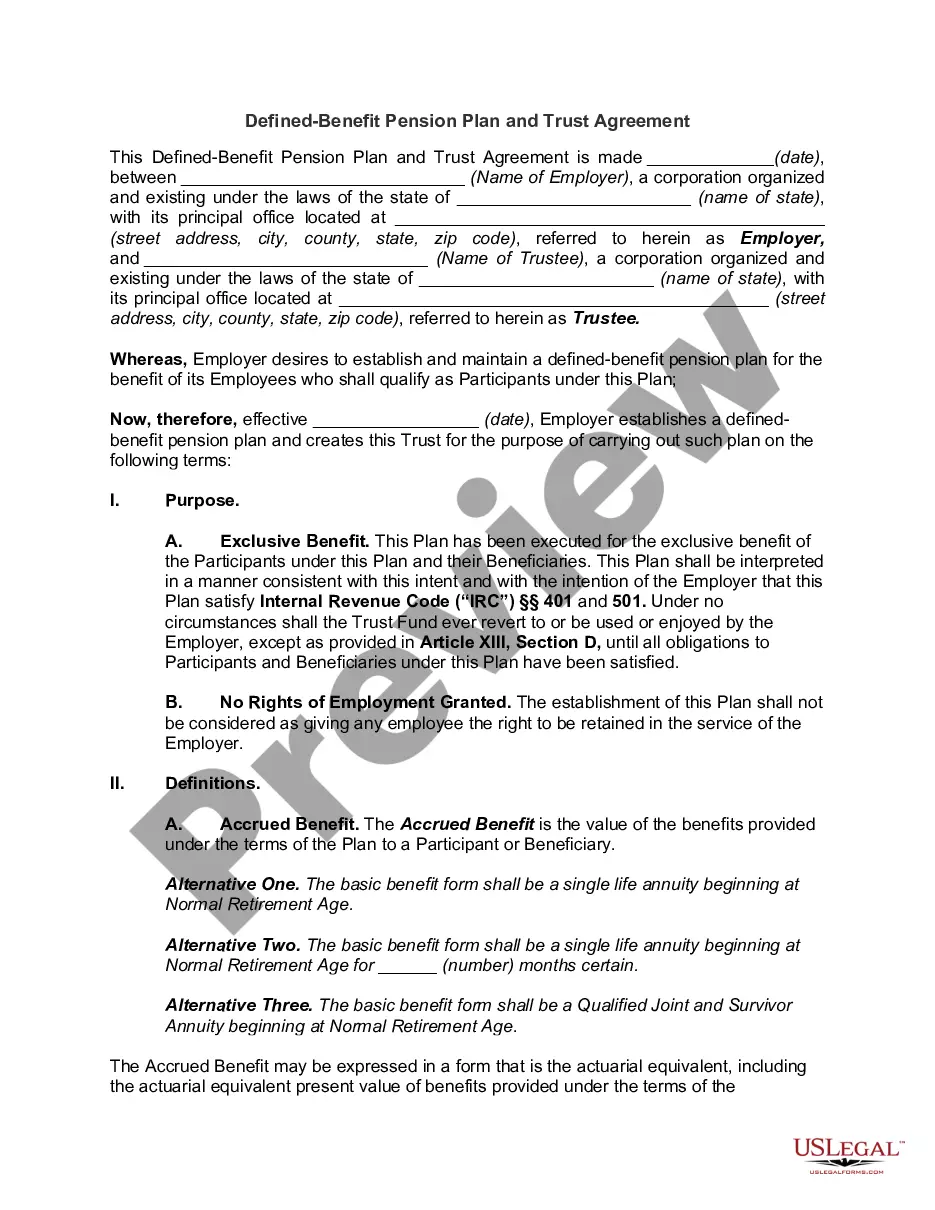
Description
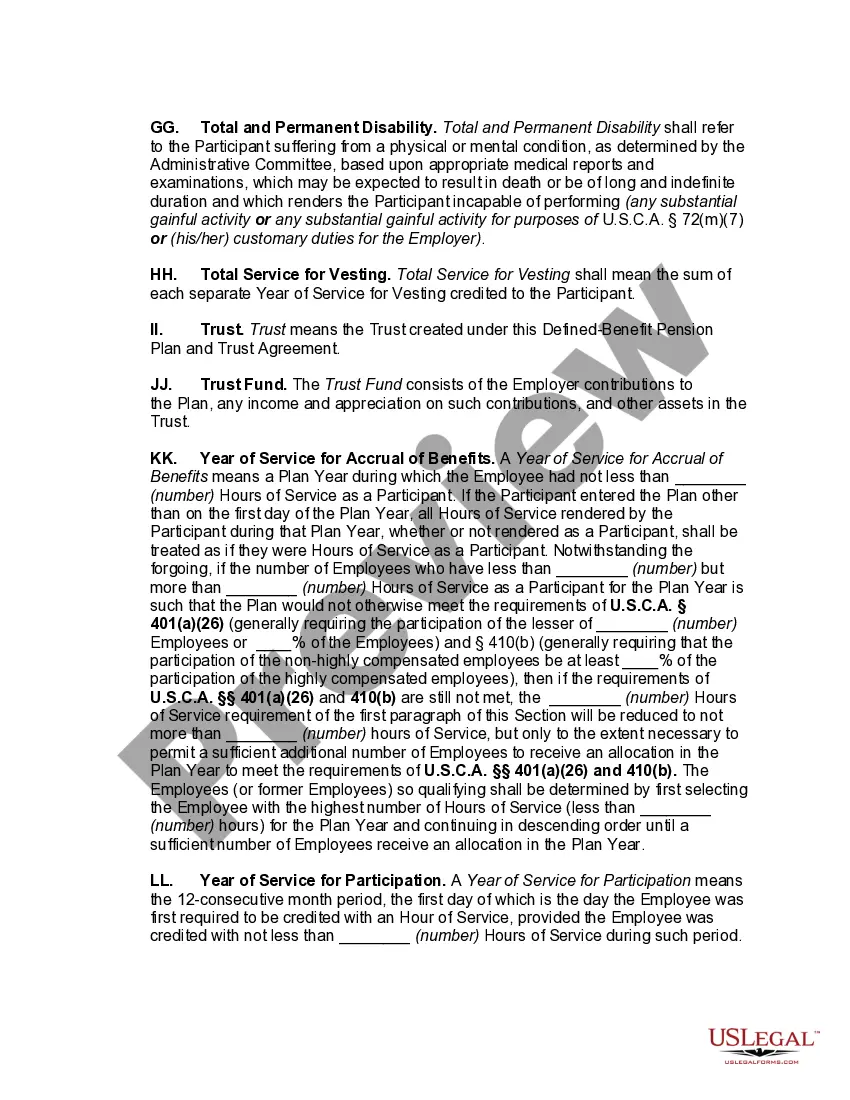
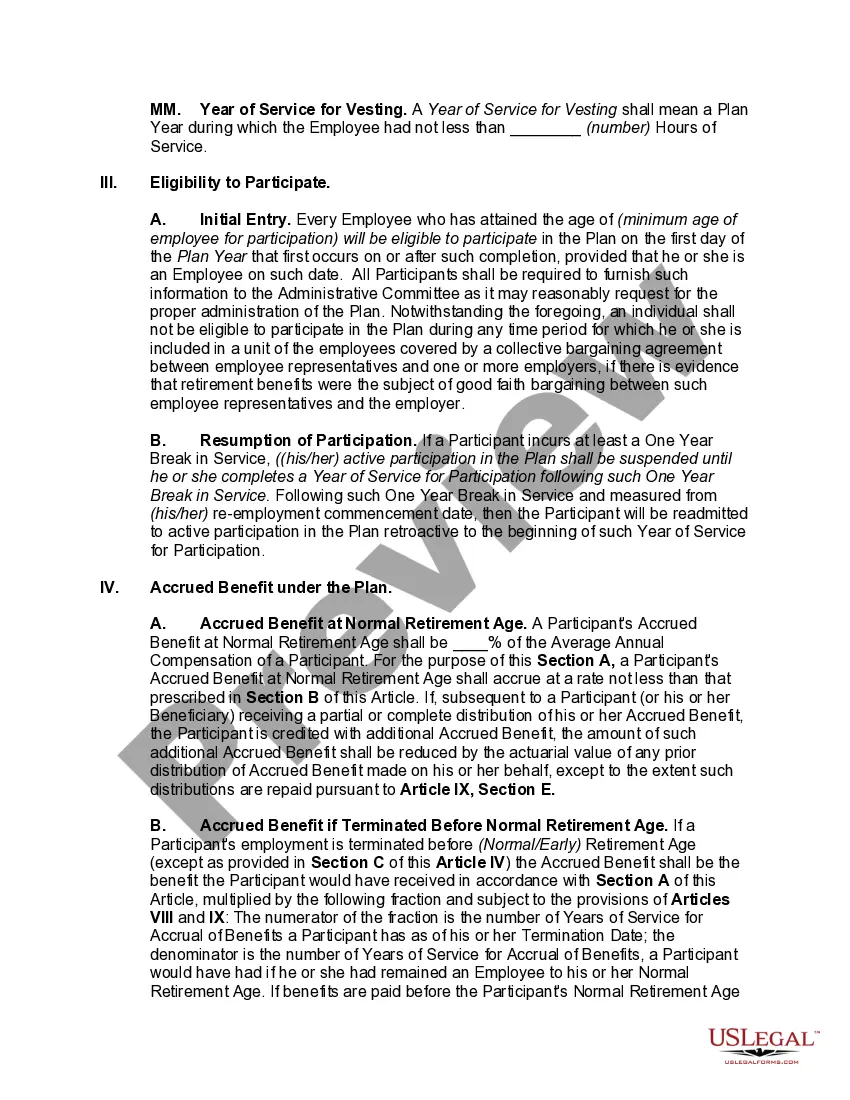

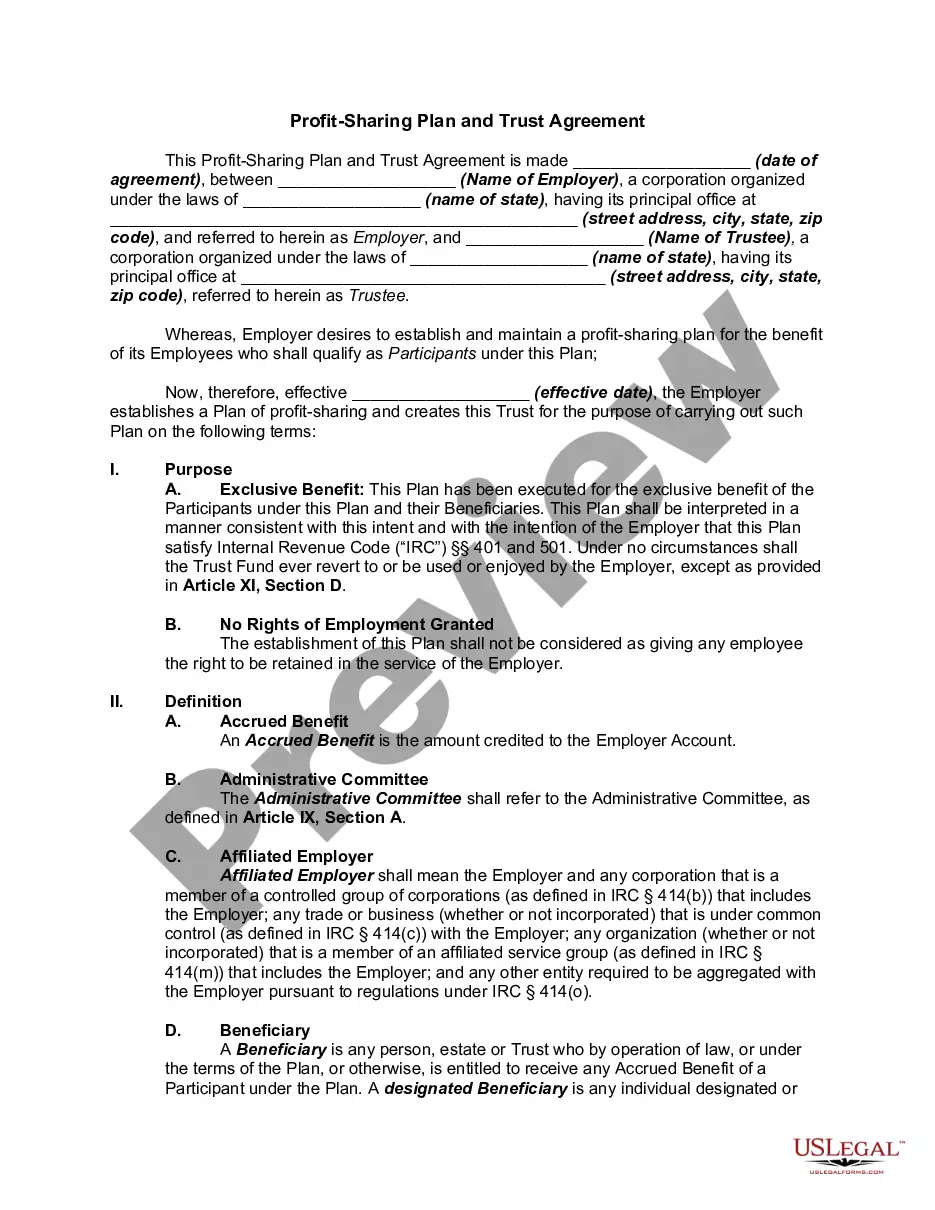
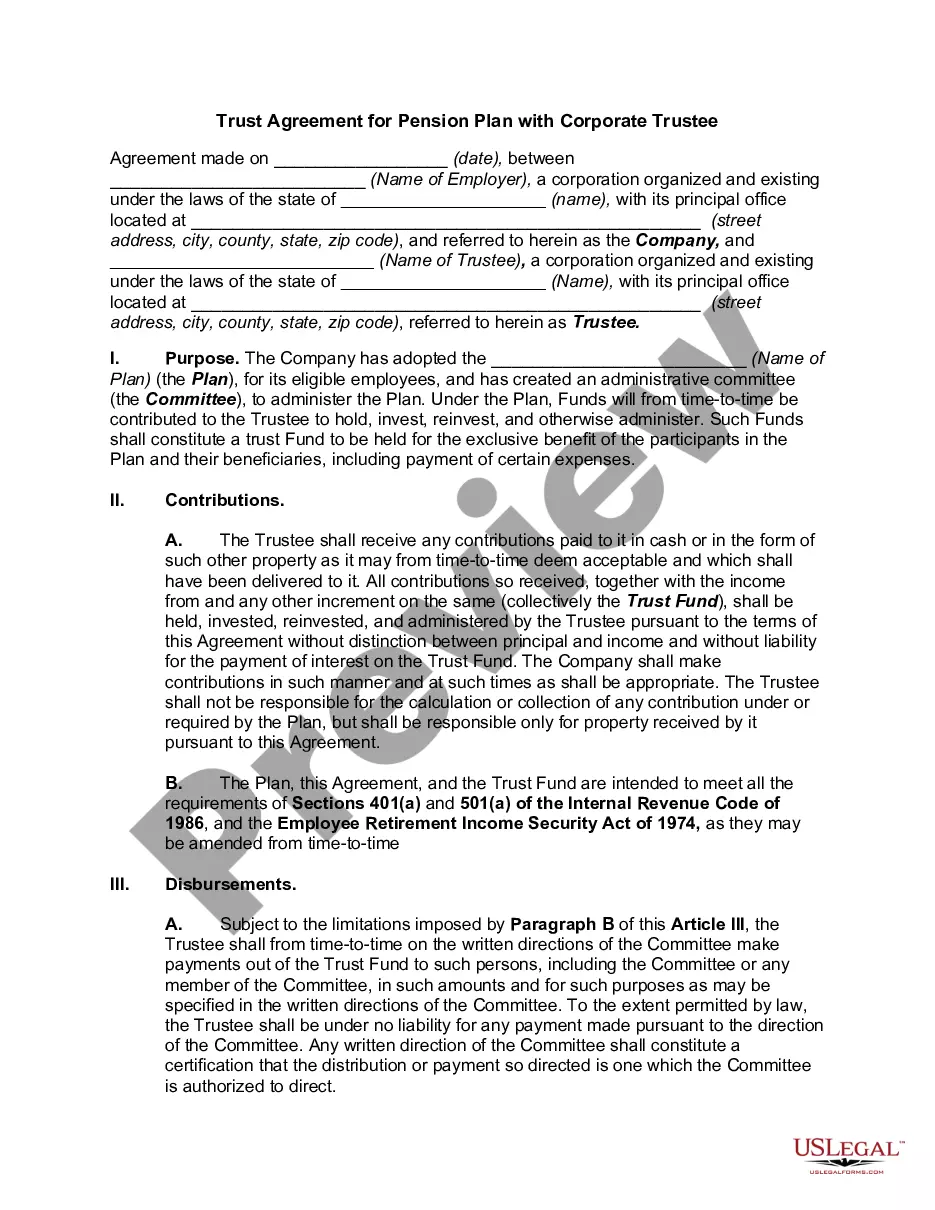
Get your form ready online
Our built-in tools help you complete, sign, share, and store your documents in one place.
Make edits, fill in missing information, and update formatting in US Legal Forms—just like you would in MS Word.
Download a copy, print it, send it by email, or mail it via USPS—whatever works best for your next step.
Sign and collect signatures with our SignNow integration. Send to multiple recipients, set reminders, and more. Go Premium to unlock E-Sign.
If this form requires notarization, complete it online through a secure video call—no need to meet a notary in person or wait for an appointment.
We protect your documents and personal data by following strict security and privacy standards.

Make edits, fill in missing information, and update formatting in US Legal Forms—just like you would in MS Word.

Download a copy, print it, send it by email, or mail it via USPS—whatever works best for your next step.

Sign and collect signatures with our SignNow integration. Send to multiple recipients, set reminders, and more. Go Premium to unlock E-Sign.

If this form requires notarization, complete it online through a secure video call—no need to meet a notary in person or wait for an appointment.

We protect your documents and personal data by following strict security and privacy standards.
Looking for another form?
How to fill out Defined-Benefit Pension Plan And Trust Agreement?
Have you been in a situation where you require documents for either business or personal reasons on a daily basis.
There are numerous legal document templates accessible online, but finding trustworthy ones isn't straightforward.
US Legal Forms provides thousands of form templates, such as the Vermont Defined-Benefit Pension Plan and Trust Agreement, crafted to comply with state and federal regulations.
Choose a convenient file format and download your copy.
Access all the document templates you have purchased in the My documents section. You can obtain another copy of the Vermont Defined-Benefit Pension Plan and Trust Agreement at any time if needed. Simply click the required form to download or print the document template. Use US Legal Forms, the most comprehensive array of legal forms, to save time and avoid mistakes. The service offers expertly designed legal document templates for a variety of purposes. Create your account on US Legal Forms and start simplifying your life.
- If you are already familiar with the US Legal Forms website and possess your account, simply Log In.
- Then, you can download the Vermont Defined-Benefit Pension Plan and Trust Agreement template.
- If you do not have an account and wish to start using US Legal Forms, follow these steps.
- Find the form you need and ensure it is for the correct city/county.
- Utilize the Preview button to check the form.
- Read the description to confirm that you have selected the correct form.
- If the form isn't what you need, use the Search box to locate the form that meets your needs and criteria.
- Once you find the right form, click Get now.
- Select the payment plan you desire, complete the required information to create your account, and process the payment using your PayPal or Visa or Mastercard.
Form popularity
FAQ
All employees, except certain appointed officials, are required to join the Maine Public Employees Retirement System (MainePERS)....Your normal retirement age is 62 if:before July 1, 1993, you had:less than 10 years of service credit and.reached age 60 with at least a year of service credit.
Currently, the full benefit age is 66 years and 2 months for people born in 1955, and it will gradually rise to 67 for those born in 1960 or later. Early retirement benefits will continue to be available at age 62, but they will be reduced more.
MainePERS is a defined benefit retirement plan that will pay you lifetime monthly benefits once you end your career. A mixture of employee and employer benefits fund these benefits in the plan, you'll contribute 7.65% of your salary while your employer's contribution rate varies from year to year.
The benefit is found by multiplying the defined % (less than 2%) of the average monthly earnings over their career by the number of years worked for the company.
When you initially enroll in your employer's pension plan, you'll be asked to name a beneficiary. The beneficiary is the person who will receive your pension when you die. Much like naming a beneficiary on a life insurance policy, you can name one or more individuals to receive the benefits of your pension.
You qualify to receive a benefit upon reaching your normal retirement age of 60, 62 or 65, whether or not you are in service, provided that you have earned creditable service of 5 or 10 years, whichever amount is applicable to you.
Can I borrow money from my retirement account for emergency purposes? A: No. If you terminate all MainePERS-covered employment, you may apply for a full refund of your contributions and accrued interest. MainePERS does not issue partial refunds.
Defined-Benefit PensionIf the member had not retired prior to death, the plan may pay out a lump sum to the designated beneficiary. This is typically worth a certain multiple of the member's salary because defined-benefit plans were designed to be linked to the length of employment and salary history.
The beneficiary is the person who will receive your pension when you die. Much like naming a beneficiary on a life insurance policy, you can name one or more individuals to receive the benefits of your pension.
A Pension Plan Trust Account is a subaccount that holds assets for a qualified pension. Pension Plan Trust client accounts are trust accounts containing assets beneficially owned by a number of underlying Pension Plan participants.