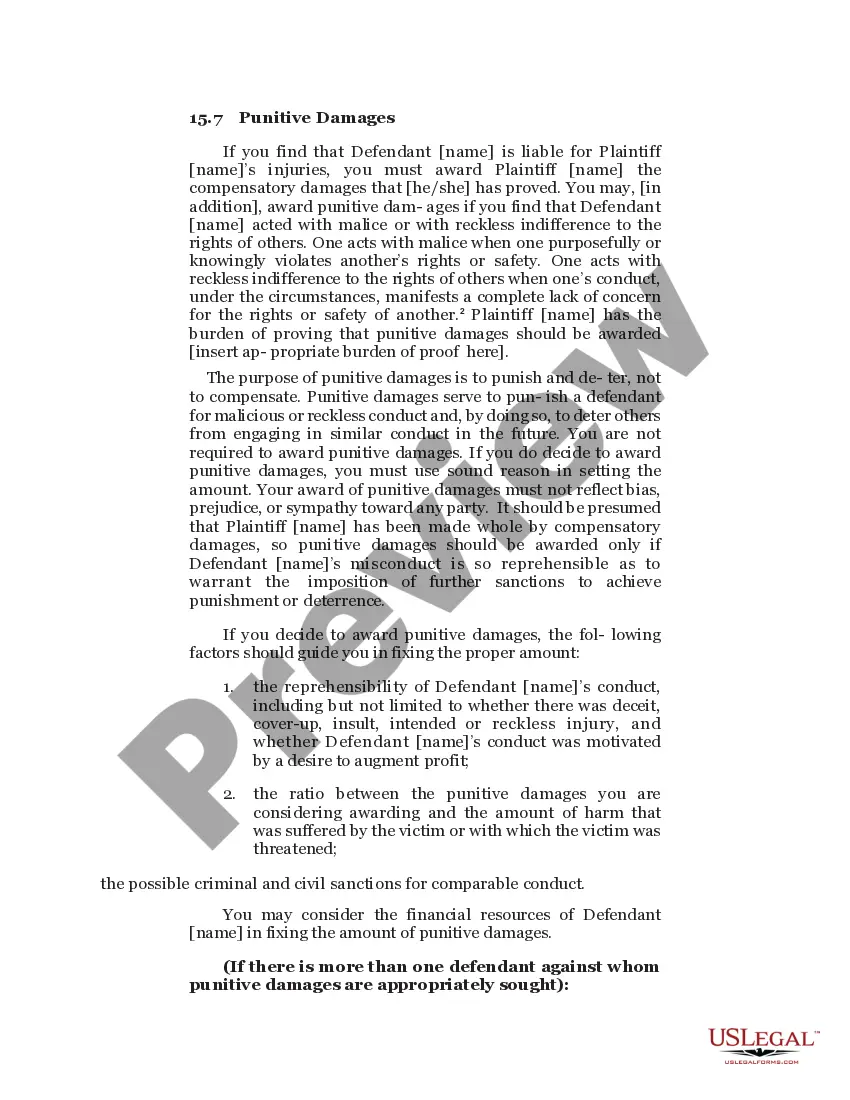
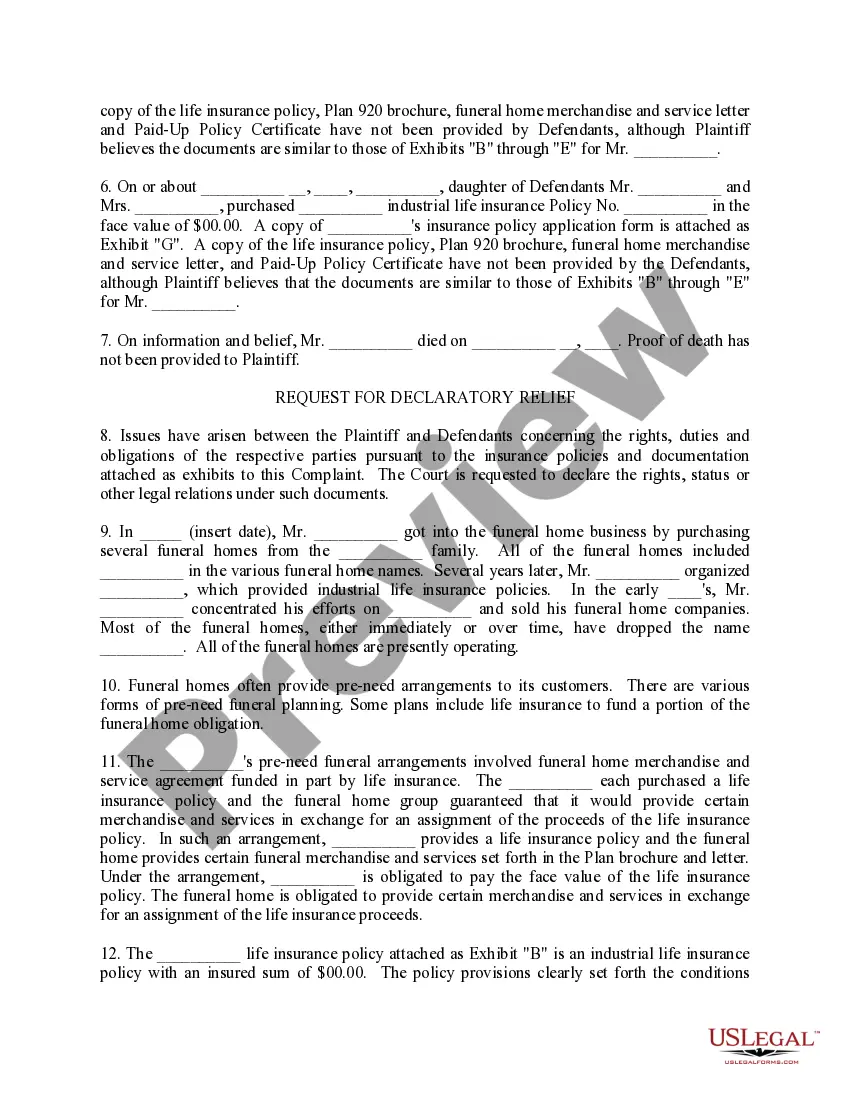
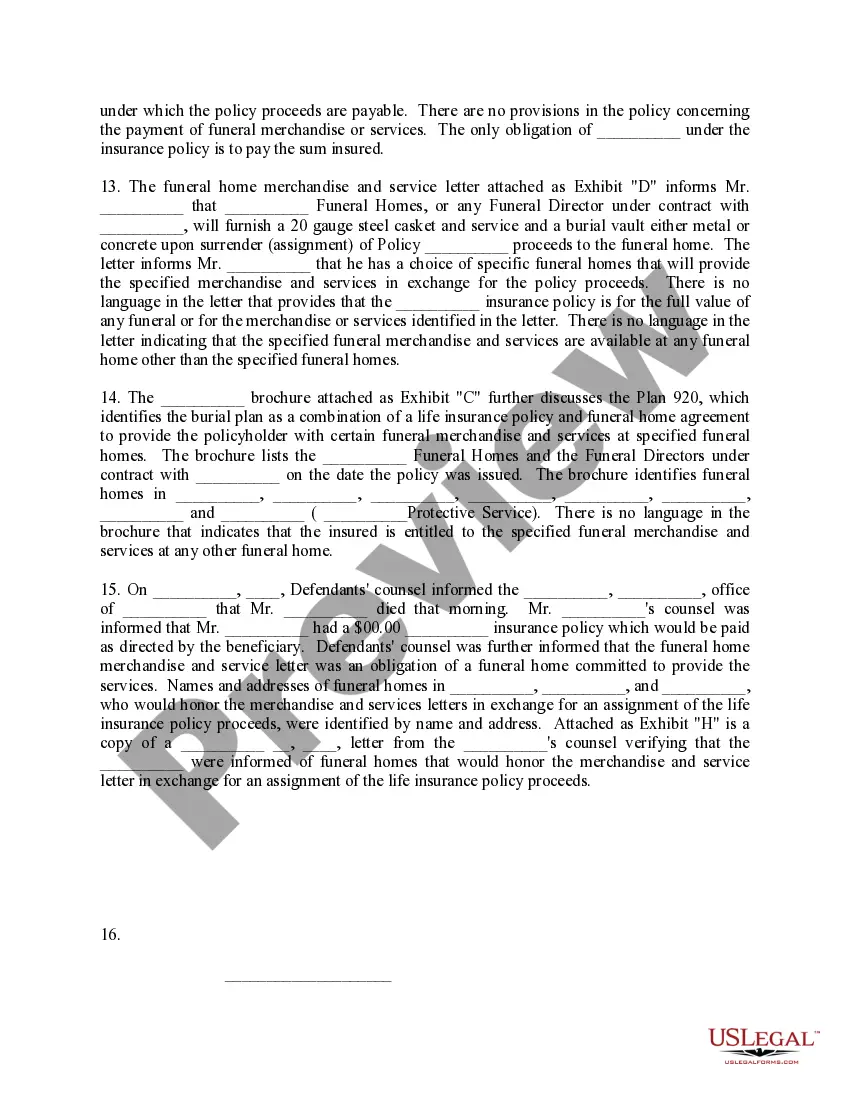
Vermont Complaint for Declaratory Judgment and Interpleader Action or Burial Policy
Description
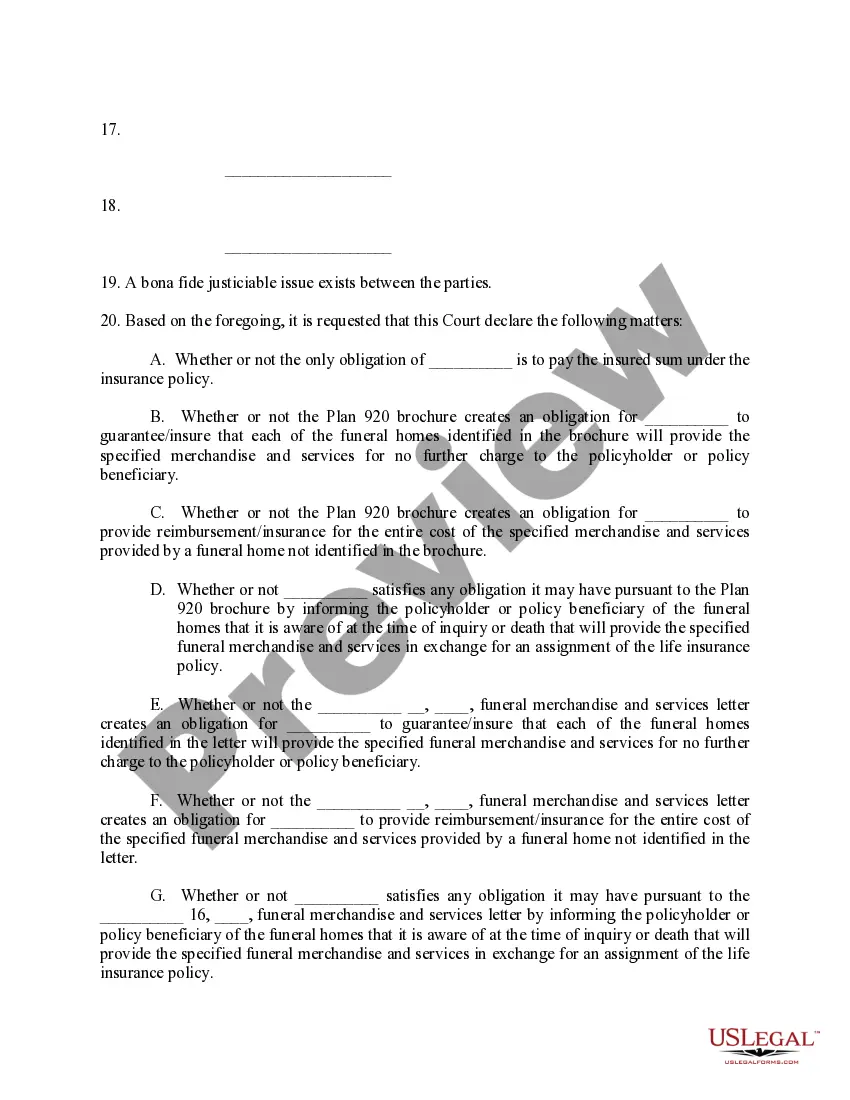
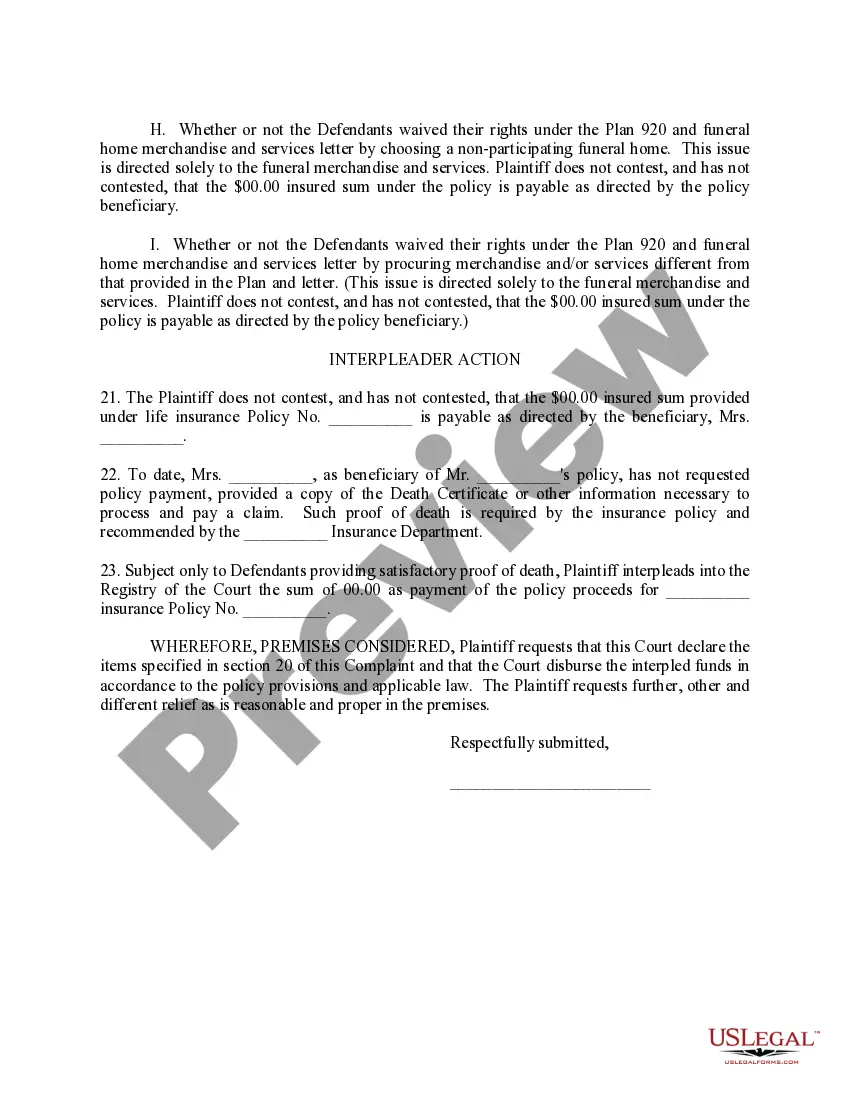
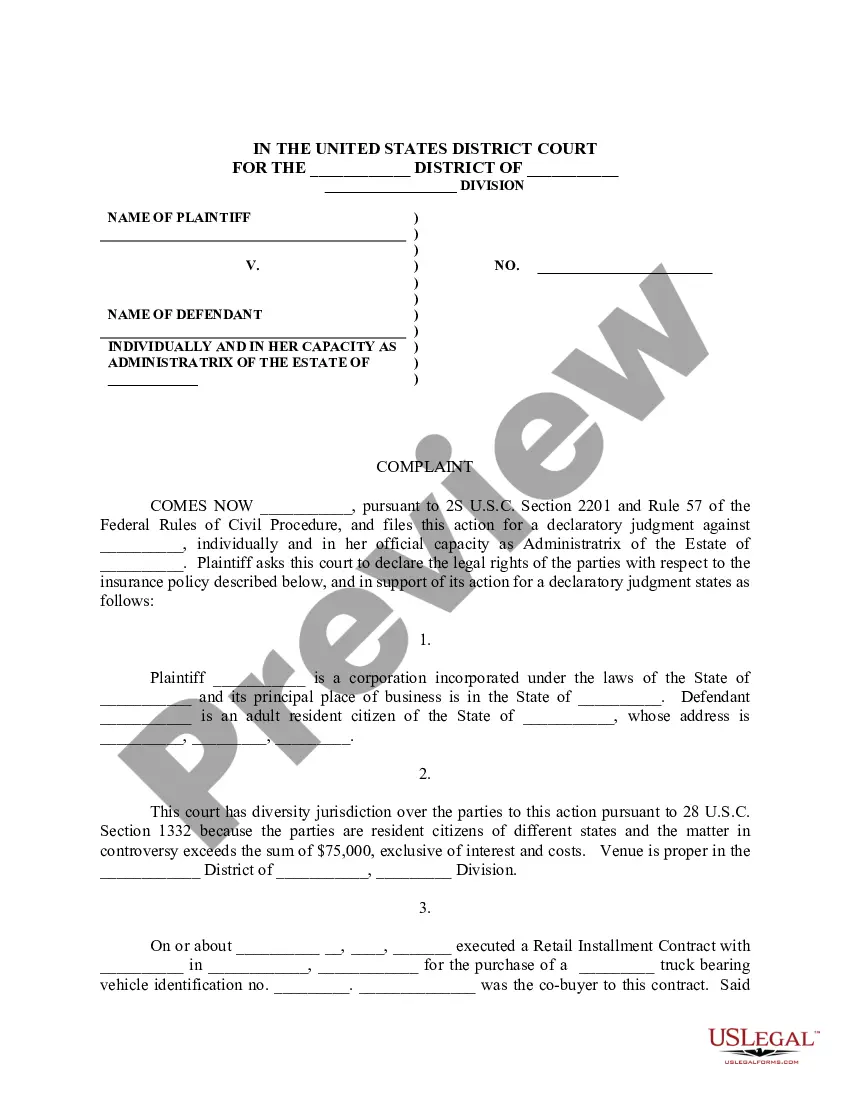


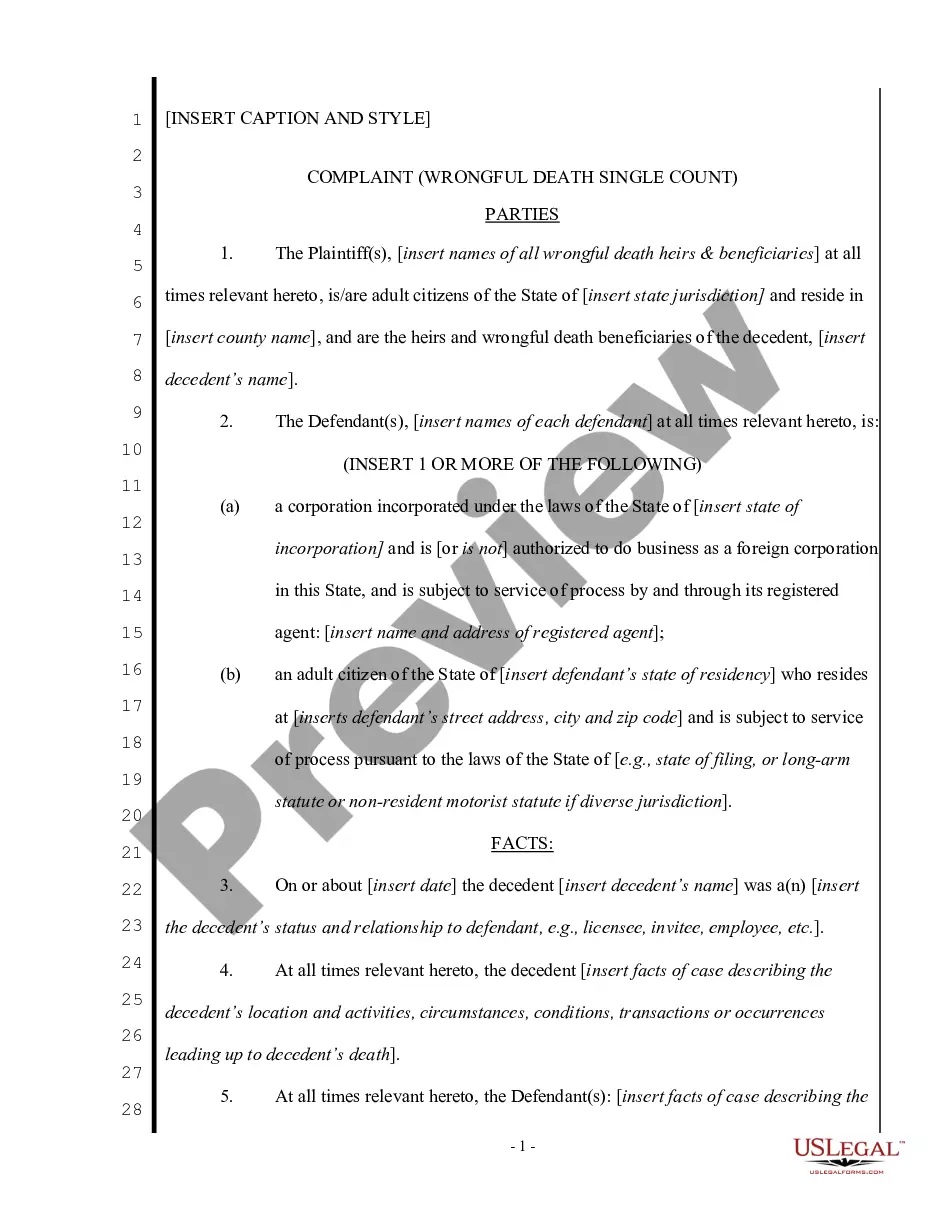
Get your form ready online
Our built-in tools help you complete, sign, share, and store your documents in one place.
Make edits, fill in missing information, and update formatting in US Legal Forms—just like you would in MS Word.
Download a copy, print it, send it by email, or mail it via USPS—whatever works best for your next step.
Sign and collect signatures with our SignNow integration. Send to multiple recipients, set reminders, and more. Go Premium to unlock E-Sign.
If this form requires notarization, complete it online through a secure video call—no need to meet a notary in person or wait for an appointment.
We protect your documents and personal data by following strict security and privacy standards.

Make edits, fill in missing information, and update formatting in US Legal Forms—just like you would in MS Word.

Download a copy, print it, send it by email, or mail it via USPS—whatever works best for your next step.

Sign and collect signatures with our SignNow integration. Send to multiple recipients, set reminders, and more. Go Premium to unlock E-Sign.

If this form requires notarization, complete it online through a secure video call—no need to meet a notary in person or wait for an appointment.

We protect your documents and personal data by following strict security and privacy standards.
Looking for another form?









How to fill out Complaint For Declaratory Judgment And Interpleader Action Or Burial Policy?
Are you presently in a scenario where you need paperwork for various business or specific purposes nearly every day.
There are numerous legal document templates available online, but finding reliable ones can be challenging.
US Legal Forms offers thousands of form templates, including the Vermont Complaint for Declaratory Judgment and Interpleader Action or Burial Policy, which are designed to comply with state and federal regulations.
Select the pricing plan you prefer, provide the necessary information to create your account, and complete the purchase using your PayPal or credit card.
Choose a convenient document format and download your copy. Access all the document templates you have purchased in the My documents section. You can obtain an additional copy of the Vermont Complaint for Declaratory Judgment and Interpleader Action or Burial Policy at any time if needed. Click on the required form to download or print the document template. Use US Legal Forms, the largest collection of legal forms, to save time and avoid errors. The service provides professionally crafted legal document templates that can be utilized for various purposes. Create an account on US Legal Forms and start simplifying your life.
- If you are already acquainted with the US Legal Forms website and have an account, simply Log In.
- Then, you can download the Vermont Complaint for Declaratory Judgment and Interpleader Action or Burial Policy template.
- If you do not have an account and wish to start using US Legal Forms, follow these steps.
- Find the form you need and ensure it is for the correct city/region.
- Utilize the Preview option to review the document.
- Check the description to verify that you have selected the correct form.
- If the form is not what you are looking for, use the Lookup field to find the form that meets your needs.
- Once you find the appropriate form, click on Acquire now.
Form popularity
FAQ
Eminent domain refers to the power of the government to take private property and convert it into public use, referred to as a taking. The Fifth Amendment provides that the government may only exercise this power if they provide just compensation to the property owners.
In Vermont, a house may be condemned if it poses an immediate danger to the health and safety of its occupants or the community. This could include structural issues, contamination, lack of utilities (such as water or electricity), or code violations.
There are no specific laws in Vermont addressing the recording of in-person, telephone or electronic conversations. However, under federal law, illegally recording an in-person, telephone or electronic conversation is punishable by a fine, imprisonment for not more than five years, or both. 18 U.S.C.
(d) No person shall intentionally conduct surveillance or intentionally photograph, film, or record in any format a person without that person's knowledge and consent while the person being surveilled, photographed, filmed, or recorded is in a place where he or she would have a reasonable expectation of privacy within ...
But the Fifth Amendment places two strict limits on eminent domain. First, private property can be taken only for ?public use,? or public works projects, like roads and bridges. Second, even if a property is taken for a public use, the owner must be paid ?just compensation.?
(a) Notwithstanding any other provision of law, no governmental or private entity may take private property through the use of eminent domain if the taking is primarily for purposes of economic development, unless the property is taken pursuant to 24 V.S.A. chapter 85 (urban renewal).
2d 1162 (Vt. 1983), the Vermont Supreme Court set forth the six prima facie elements of a defamation claim: (1) a false and defamatory statement concerning another; (2) negligence or greater fault, in publishing the statement; (3) publication to at least one third-person; (4) lack of privilege in the publication; (5) ...
In Vermont, eminent domain gives the government the power to take your property, even if you don't want to sell. But under the Fifth Amendment, eminent domain must be for a ?public use,? which traditionally meant projects like roads or bridges.