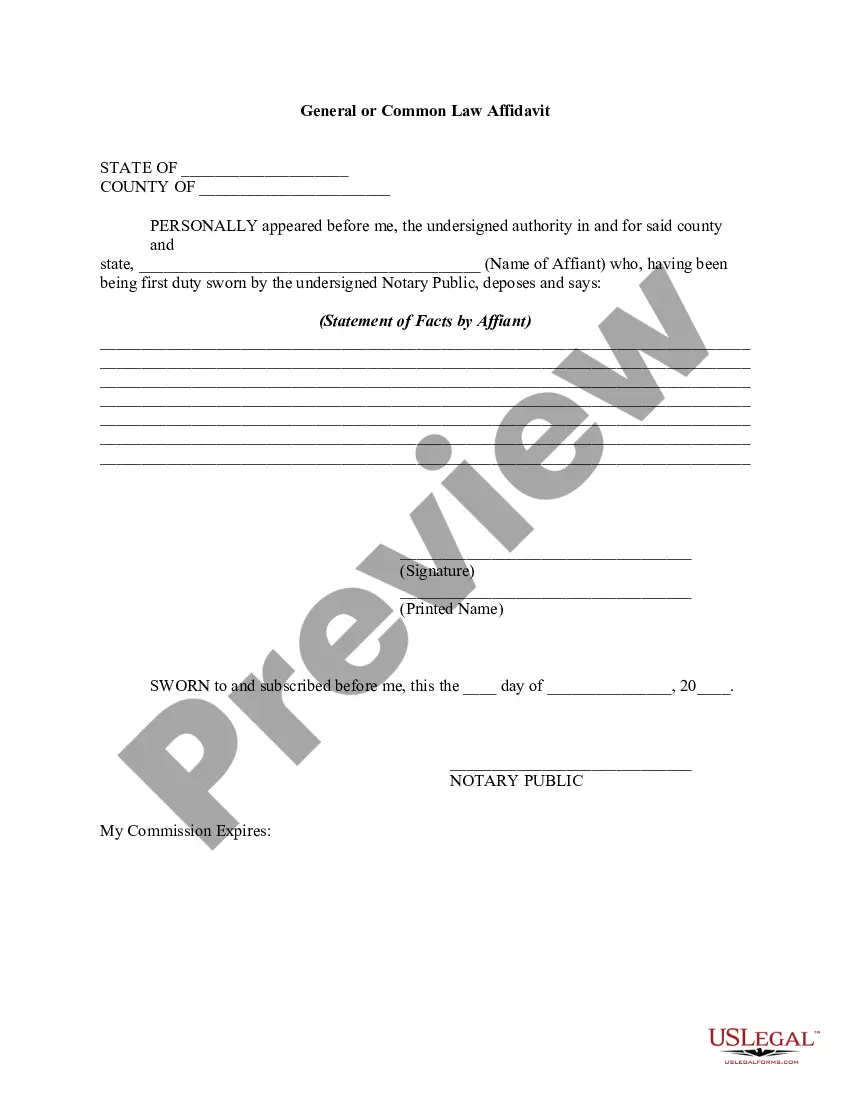
Vermont General or Common Law Affidavit

State:
Multi-State
Control #:
US-00479BG
Format:
Word; 
Rich Text
Instant download

Description

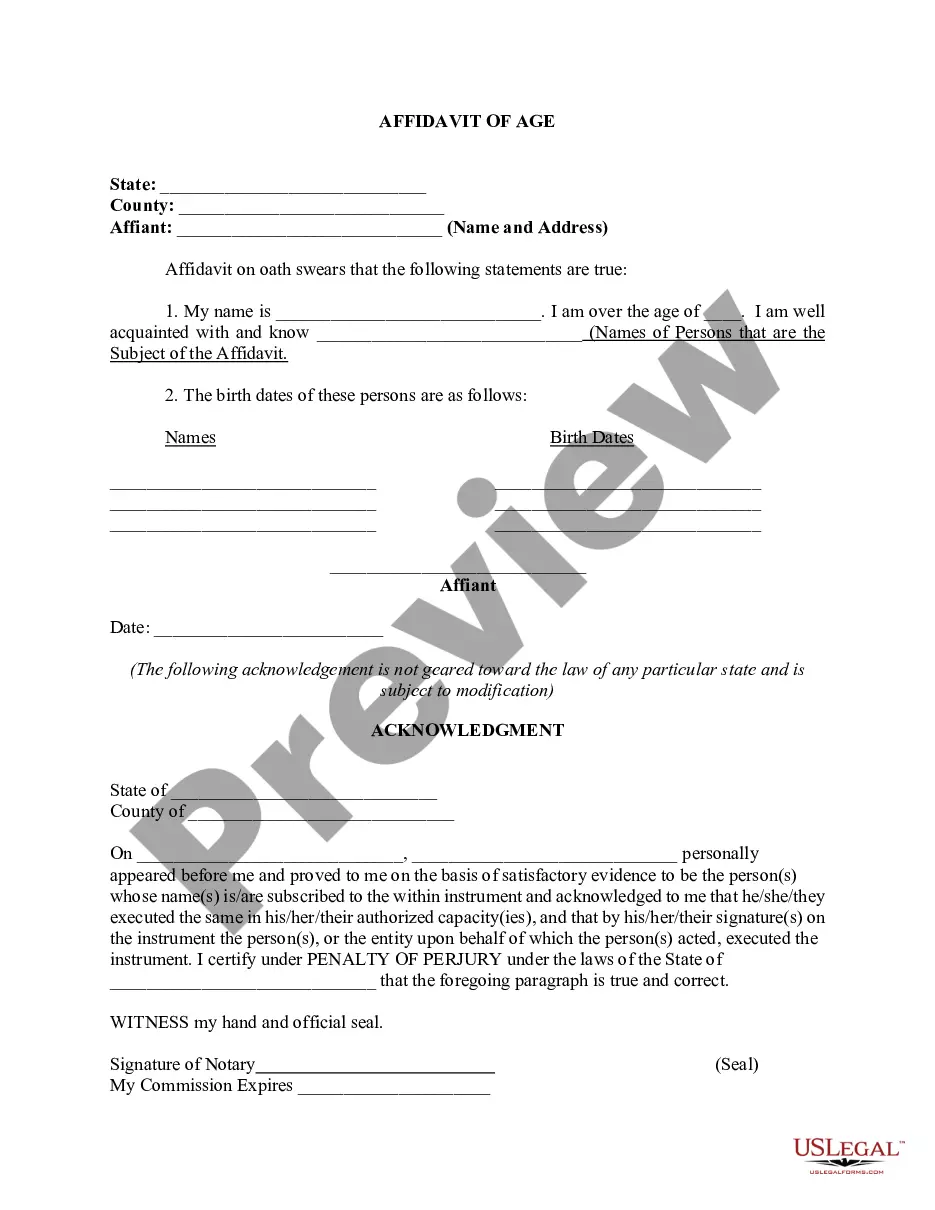
An affidavit must be in writing and be sworn to or affirmed before some legally authorized officer. Statutes of various jurisdictions ordinarily prescribe various formal requirements for the affidavits. These requirements may be just proper form or may be essential as to the legal effect of the affidavit.


The formal requirements of an affidavit usually are:

1. The identification of the place where the affidavit was taken (i.e., the venue);

2. The signature of the affiant (i.,e., the person giving the affidavit); and

3. The certificate evidencing the fact that the affidavit was properly made before a duly authorized officer (i.e. the jurat), which includes the proper authentication by the authorized officer.


It is essential to the validity of an affidavit that it be sworn to, or affirmed before, a notary public or some other officer authorized to administer oaths or affirmations. This may be done by having the officer administer the oath to the affiant or by having the affiant affirm to the officer, with the officers consent, the truth of the matters contained in the affidavit. It is also essential that the affiant be identified as to name, residence and, where appropriate or required by law, as to status or capacity. This is ordinarily done in the introductory paragraph to the affidavit.


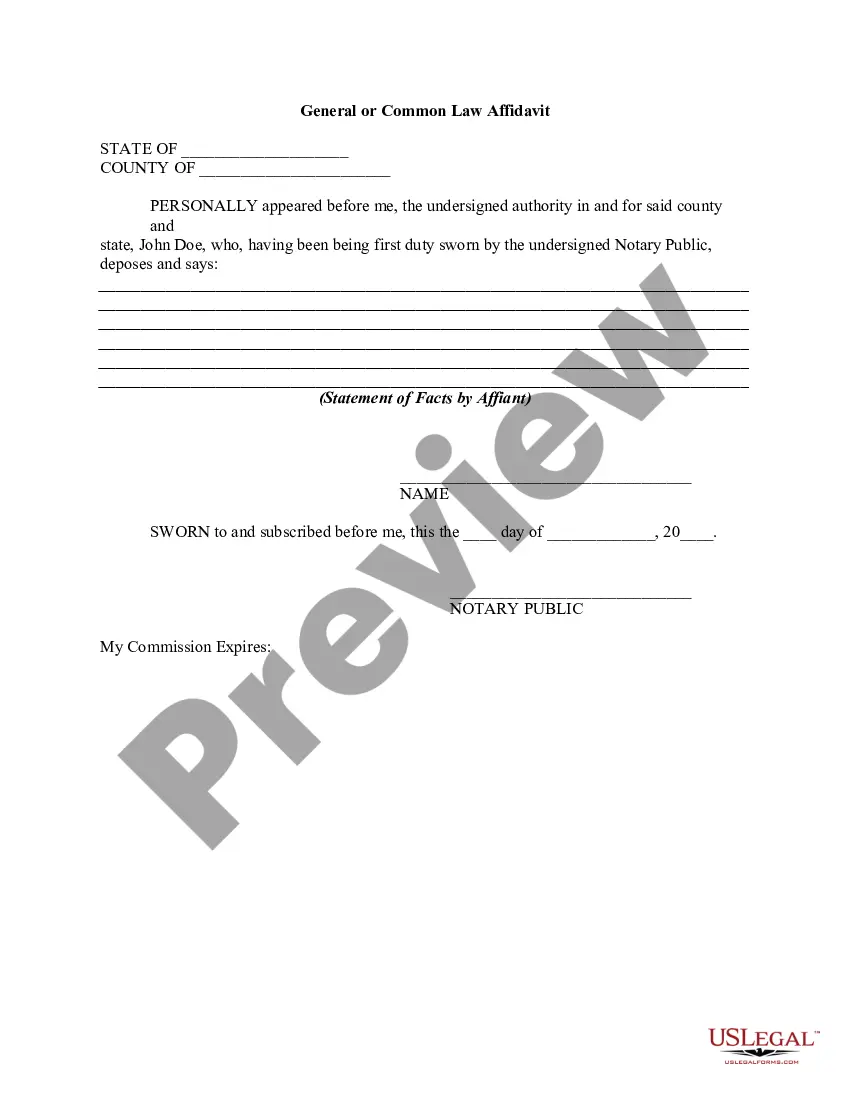
The following form is a very basic and general form which can be used in most jurisdictions if properly completed.

How to fill out General Or Common Law Affidavit?

Finding the appropriate valid document template can be challenging. Clearly, there is a range of templates available online, but how can you locate the exact type you need? Utilize the US Legal Forms website.

This service provides thousands of templates, such as the Vermont General or Common Law Affidavit, which you can utilize for both business and personal purposes. All forms are reviewed by experts and comply with federal and state regulations.

If you are currently registered, Log In to your account and click the Download button to acquire the Vermont General or Common Law Affidavit. Use your account to search for the legal documents you have previously obtained. Navigate to the My documents section of your account to retrieve another version of the document you need.

Complete, modify, print, and sign the downloaded Vermont General or Common Law Affidavit. US Legal Forms is the largest repository of legal documents where you can find various file templates. Utilize the service to download professionally crafted documents that comply with state requirements.

  1. First, ensure you have selected the correct document for your locale/region.
  2. You can review the form using the Review button and read the form description to confirm that this is the right one for you.
  3. If the document doesn’t meet your requirements, use the Search field to find the suitable form.
  4. Once you are confident that the document is appropriate, click the Get now button to obtain the form.
  5. Select the pricing plan you prefer and fill in the necessary information. Create your account and complete your purchase using your PayPal account or credit card.
  6. Choose the file format and download the legal document template to your device.

Form popularity

FAQ

During an enforcement hearing, the court evaluates evidence and arguments from both parties related to the motion for enforcement. This hearing is crucial to determine whether the other party has complied with a Vermont General or Common Law Affidavit. Depending on the findings, the court may issue a ruling that enforces compliance or imposes penalties for disobedience.

Writing a common law affidavit involves clearly stating facts that support your position, each backed by your knowledge or belief. You must include a statement of truth, as well as your signature, to validate the document. Utilizing templates available on platforms like USLegalForms can streamline the process, ensuring you cover essential elements required in a Vermont General or Common Law Affidavit.

A motion for enforcement is a legal request asking the court to ensure a party complies with terms set forth in a court order, including a Vermont General or Common Law Affidavit. This motion typically arises when there is a failure to adhere to the court's directives. The purpose is to obtain a judicial ruling that mandates compliance or imposes penalties for noncompliance.

While you do not strictly need a lawyer to file a motion for contempt, having legal guidance can be beneficial. A lawyer can help you effectively draft your motion and navigate the court process, improving the chances of a favorable outcome. If your motion pertains to a Vermont General or Common Law Affidavit, a lawyer's expertise may prove invaluable.

When you file a motion to enforce regarding a Vermont General or Common Law Affidavit, the court reviews the motion and determines if enforcement is necessary. This process often involves a hearing where both parties can present their arguments. If the court finds merit in your motion, it may issue an order compelling compliance with the original affidavit.

Probate in Vermont involves validating a deceased person's will and distributing their assets according to that will or state law. The process is crucial to ensure legal ownership is transferred properly. If you need assistance with probate matters, especially for preparing a Vermont General or Common Law Affidavit, the US Legal Forms platform can provide useful resources and forms.

To request access to court records in Vermont, you may contact the relevant court clerk’s office, or you can submit a formal request providing identification and details about the records you seek. Some records may also be available online. Having access to these documents can aid significantly when preparing a Vermont General or Common Law Affidavit.

A motion to enforce in Vermont is a legal request asking the court to implement or uphold a prior order. This motion is relevant in various cases, including those involving family matters or contracts. Understanding how this works can be crucial when filing a Vermont General or Common Law Affidavit.

Yes, you can look up divorce records in Vermont. These records are available through the Vermont Department of Health or specific court websites. Acquiring this information may be valuable when preparing a Vermont General or Common Law Affidavit, especially if divorce impacts your legal standing.

To look up a will in Vermont, you typically visit the probate court in the county where the deceased resided. You can also check online resources for digitized records. This process can be critical when drafting a Vermont General or Common Law Affidavit, especially if the will is a factor in legal proceedings.

Trusted and secure by over 3 million people of the world’s leading companies

Vermont General or Common Law Affidavit