This form is a Complaint For Judicial Review of Social Security Decision by Administrative Law Judge. Adapt to your specific circumstances. Don't reinvent the wheel, save time and money.
Vermont Complaint For Judicial Review of Social Security Decision by Administrative Law Judge
Instant download
Description
Free preview
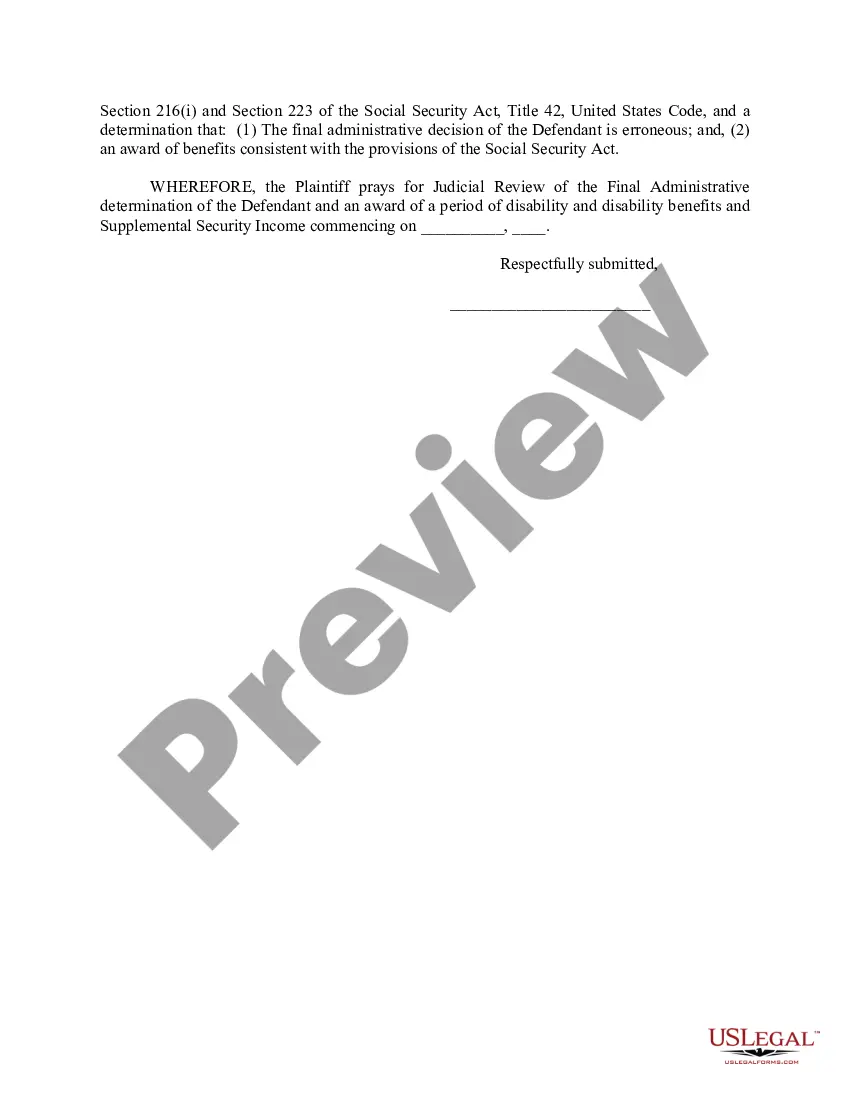
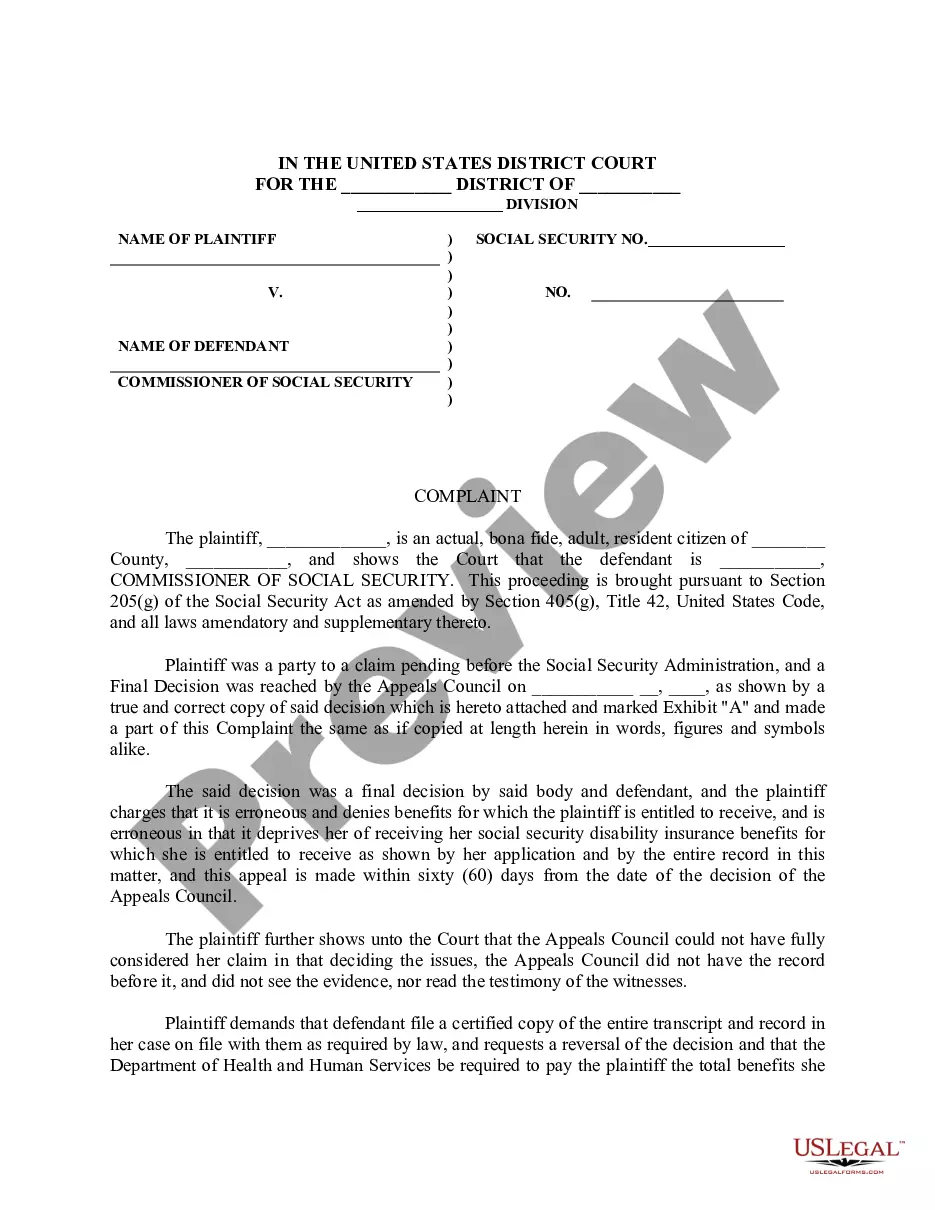
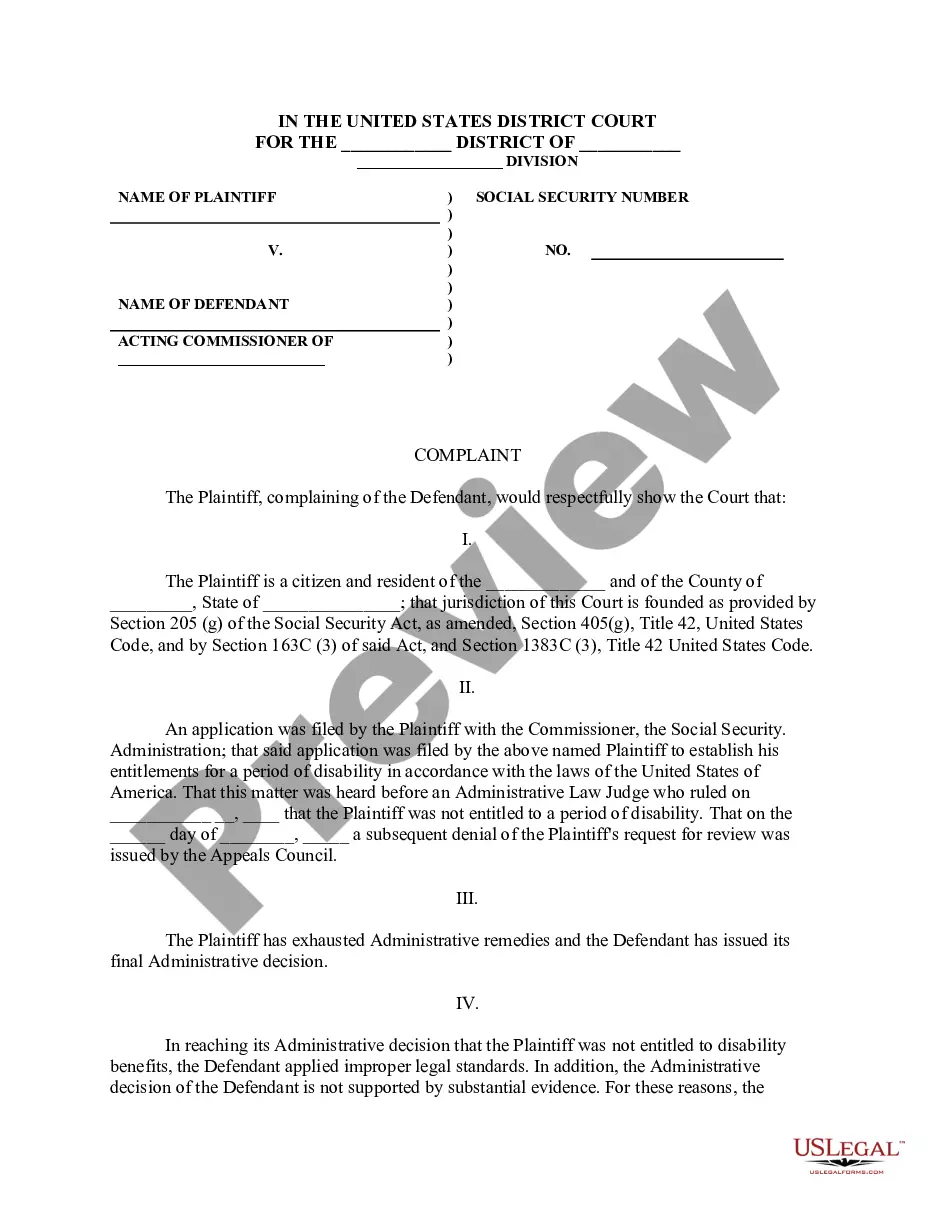
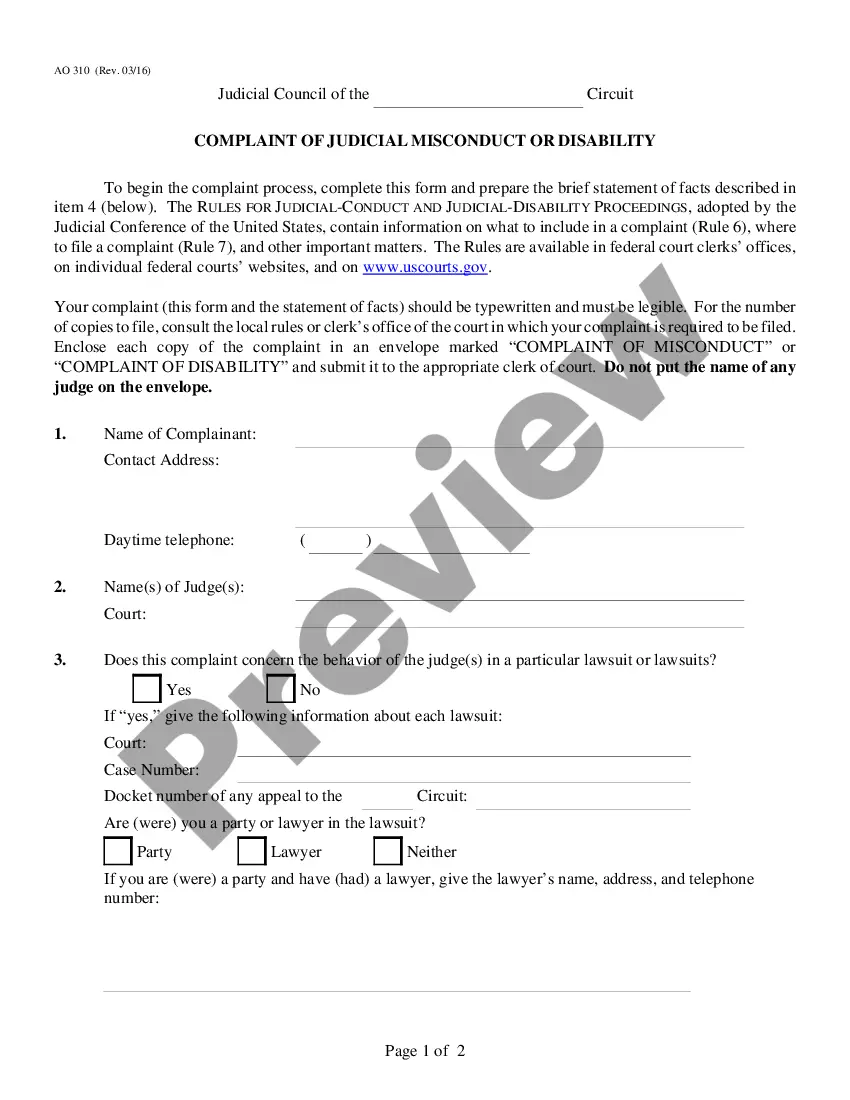
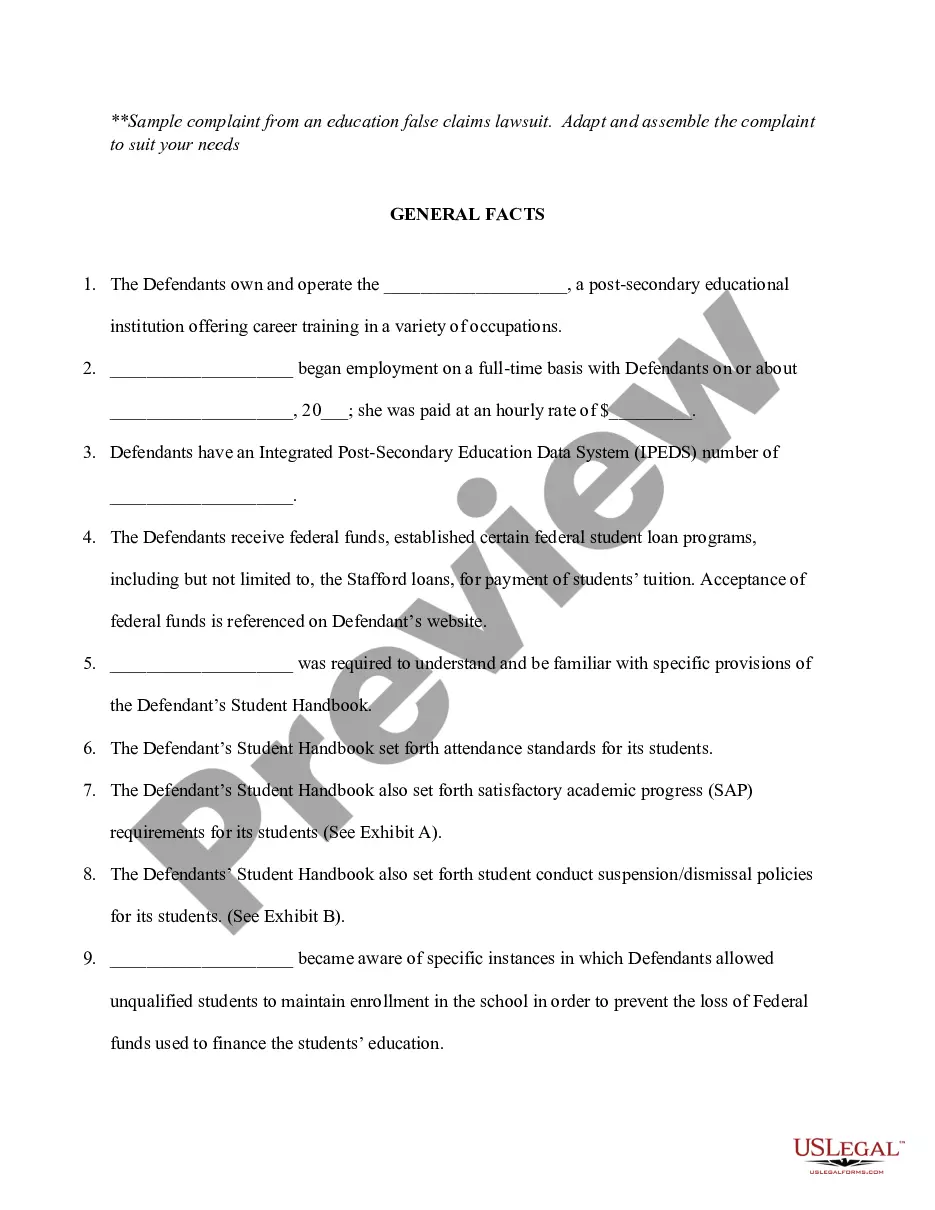
How to fill out Complaint For Judicial Review Of Social Security Decision By Administrative Law Judge?
US Legal Forms - one of the largest collections of legal documents in the United States - offers a broad selection of legal form templates that you can download or print.
While utilizing the website, you can find thousands of forms for business and personal purposes, organized by categories, states, or keywords. You can access the latest versions of forms like the Vermont Complaint For Judicial Review of Social Security Decision by Administrative Law Judge in just seconds.
If you already have an account, Log In and download the Vermont Complaint For Judicial Review of Social Security Decision by Administrative Law Judge from the US Legal Forms library. The Download option will appear on each form you view. You can access all previously saved forms from the My documents tab in your profile.
Complete the transaction. Use your credit card or PayPal account to finish the transaction. Choose the format and download the form to your device.
Make edits. Fill out, modify, print, and sign the saved Vermont Complaint For Judicial Review of Social Security Decision by Administrative Law Judge. Every form you added to your account has no expiration date and is yours indefinitely. So, if you wish to download or print another copy, simply visit the My documents section and click on the form you need. Access the Vermont Complaint For Judicial Review of Social Security Decision by Administrative Law Judge with US Legal Forms, one of the most comprehensive libraries of legal document templates. Utilize thousands of professional and state-specific templates that meet your business or personal needs and requirements.
- If you are using US Legal Forms for the first time, here are simple steps to get started.
- Ensure you have chosen the correct form for your city/county.
- Select the Preview option to review the form's content.
- Check the form description to confirm that you have selected the right form.
- If the form does not meet your needs, use the Search field at the top of the screen to find one that does.
- When you are satisfied with the form, confirm your selection by clicking the Purchase now button.
- Then, choose your preferred pricing plan and provide your details to create an account.
Form popularity
FAQ
The doctrine of judicial review holds that the courts are vested with the authority to determine the legitimacy of the acts of the executive and the legislative branches of government. The State as well as Federal courts are bound to render decisions ing to the principles of the Federal Constitution.
If your request for hearing is about whether you are disabled, the Administrative Law Judge (ALJ) will focus on your medical condition(s) and make a decision based on the evidence in your case file. The ALJ may also call witnesses to testify. For example, the ALJ may call a medical or vocational expert to testify.
Judicial review. (a) General. A claimant may obtain judicial review of a decision by an administrative law judge or administrative appeals judge if the Appeals Council has denied the claimant's request for review, or of a decision by the Appeals Council when that is the final decision of the Commissioner.
The administrative law judge shall issue a written decision which gives the findings of fact and the reasons for the decision. The administrative law judge must base the decision on the preponderance of the evidence offered at the hearing or otherwise included in the record.
When the decision is issued, you will receive a copy in the mail. If you were represented at the hearing, your representative will also be mailed a copy. If approved, your claim will be forwarded to the payment center to calculate what you are owed. You will next receive a Notice of Award.
Once the notice of decision is complete, it is reviewed by the judge and then mailed to you from your local Social Security office. Unfortunately, the ALJ does not have a deadline to complete this process. It can take as few as six weeks or may be over six months before the written decision is received.
When it comes to legal disputes, the courts are the final deciders of what the Constitution means. This authority ? known as judicial review ? gives the Supreme Court and federal courts the authority to interpret the Constitution.
Administrative law judges (ALJs) run the hearings. They are neutral judicial officers who conduct hearings and settlement conferences. If you do not win, you can ask the superior court to review the hearing decision.